Peugeot e-Rifter 2026 review | A hugely practical electric MPV
Peugeot Rifter cars for sale
4.0
Expert review
Pros
Hugely practical cabin
Long model has space for seven
Excellent value for money
Cons
Entry-level models are a bit basic
Lacks the image and style of an SUV
Connected services require a subscription after three years

The CarGurus verdict
The Peugeot e-Rifter isn’t trying to be glamorous or sporty, but as a practical electric MPV it’s hugely convincing. It offers lots of space for passengers and luggage, easy access via a pair of sliding rear doors, and flexibility that most crossovers cannot match. The electric range is modest by today’s standards, and the driving experience is forgettable, but for low running costs, practicality and fuss-free charm, the e-Rifter is one of the most sensible EVs you can buy.

What is the Peugeot e-Rifter?
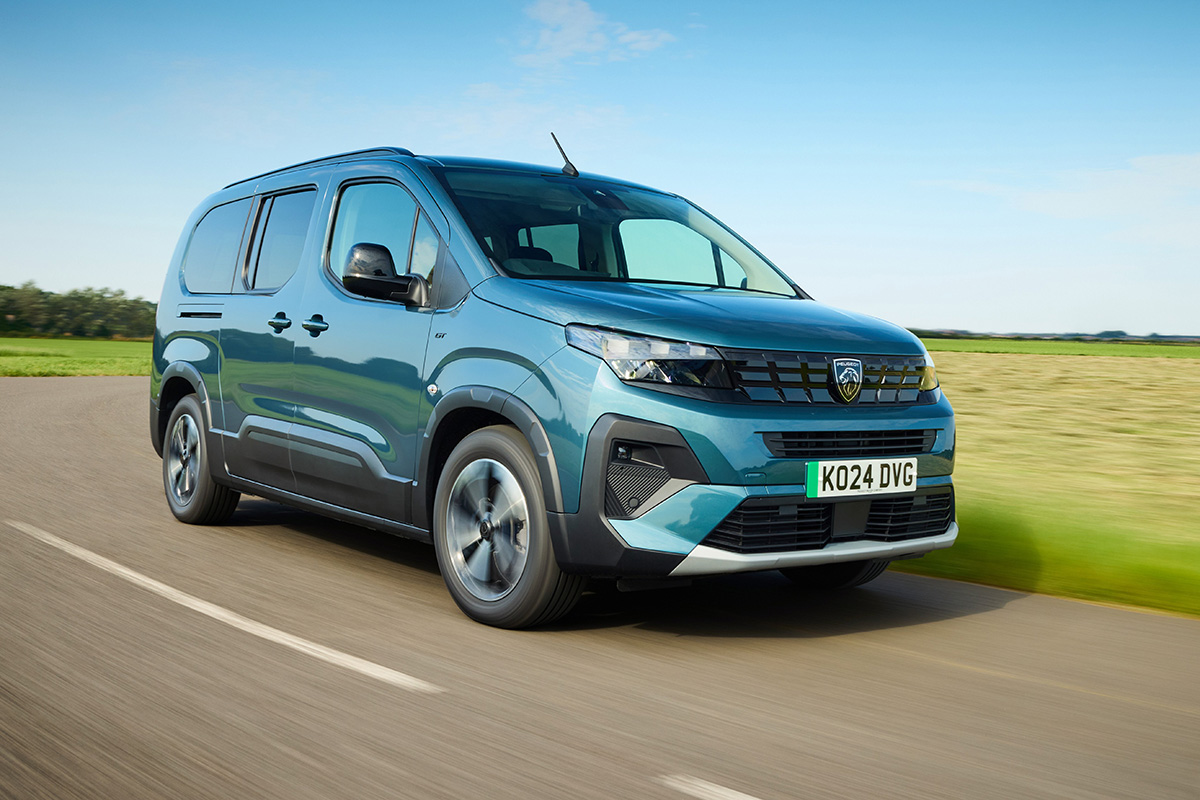
The Peugeot e-Rifter is an electric MPV designed for families who value space, practicality and easy access over the fashion-led appeal of an SUV. While MPVs have largely fallen out of favour, cars like the e-Rifter still make a compelling case for themselves by offering more usable interior space and flexibility than similarly sized crossovers.
First introduced in 2018 as a replacement for the Partner Tepee, the Rifter was originally available with petrol and diesel engines. However, in 2022, Peugeot dropped all combustion-engined versions from the UK range, leaving the electric e-Rifter as the only option for private car buyers. It was one of the first family MPVs to go fully electric.
The e-Rifter uses a 136bhp electric motor paired with a 52kWh battery, delivering an official range of 199 miles. All versions support rapid charging, with a 0-80% top-up taking around 38 minutes using a suitable public charger. It’s offered in two body lengths: the Standard model with five seats, and the Long version with up to seven seats.
Key rivals include the Citroen e-Berlingo and Vauxhall Combo Life Electric, which both share the same platform. It’s worth noting that the Citroen is also available as a standard Berlingo with a choice of petrol and diesel engines. Other alternatives include the Dacia Jogger and Ford Tourneo Connect, but the e-Rifter is a great option for family buyers seeking a zero-emissions MPV for the school run.

How practical is it?
Few cars are as practical as the Peugeot e-Rifter. It may lack the perceived glamour of an SUV, but if space and practicality are your priorities, this boxy five- or seven-seat MPV could make a lot of sense.
Passenger space is excellent, with both the Standard and Long versions offering a wide, flat rear bench with lots of legroom and headroom, helped by the van-derived shape and flat floor. Sliding rear doors make access easy in tight parking spaces, while the Long model is available with a third row of removable seats for seven-seat flexibility. Alternatively, the e-Rifter can be ordered without the third row for maximum boot space.
Speaking of which, a large boot is one of the e-Rifter’s main USPs. The Standard five-seat version offers up to 700 litres, while the Long provides 209 litres with all seven seats in place. Remove the third row and that increases to an estate car-trumping 1,050 litres, and with the middle seats folded you get a warehouse-rivalling 3,000 litres in the Standard model or 3,500 litres in the Long. You’ll never need to rent a van again. Choose the optional Style pack on the Standard Allure and you get an opening rear window in the tailgate, which is handy for quick loading in tight spaces.
Storage is another strong point, with the e-Rifter boasting vast door bins, under-seat trays, two gloveboxes and overhead compartments. There are also fold-out tray tables for rear-seat passengers – handy for those trips to the drive-thru on the way back from the seaside.
One thing to be aware of is Peugeot’s i-Cockpit driving position. The small, low-set steering wheel can partially obscure the instrument panel for some drivers, so it’s worth test driving the e-Rifter before you buy one. Getting comfortable shouldn’t be a problem thanks to the range of adjustment for the seat and steering wheel.
What's it like to drive?
The Peugeot e-Rifter feels most at home in towns and cities, where its electric drivetrain and van-based layout work in its favour. The steering is light and the i-Cockpit makes low-speed manouevres and parking easy, while the big windows and upright driving position provide excellent visibility. Even in the Long version, the turning circle is surprisingly tight, so parking and three-point turns aren’t the horror story you might expect. Like all EVs, the instant response from the electric motor makes for brisk pullaways from junctions.
On faster roads, the e-Rifter’s limitations rise to the fore. Its boxy shape means motorway efficiency isn’t great, and high speeds will put a big dent in the projected range, meaning you will rely more heavily on the public charging network on longer trips. Peugeot says you should expect 199 miles of range, but in reality you should expect a lot less. Wind and tyre noise are other issues, and the ultra-light steering, while great in town, can feel a bit vague on a country road.
Predictably, the body leans a lot if you get a bit over-enthusiastic when cornering. There is a Power mode, but the e-Rifter feels best in either Normal or Eco mode. Its suspension is tuned for comfort and is great on fast roads, but the ride can get a little unsettled at low speeds.
Overall, the e-Rifter is best viewed as a relaxed, urban-friendly MPV. If most of your driving is around town, on the school run or ferrying kids to and from their various sports clubs, it’s an easy and practical car to live with. Indeed, after spending time in the company of an MPV like the e-Rifter, you might think twice before buying an SUV.

Technology, equipment & infotainment
There isn’t really an entry-level trim level, with the Peugeot e-Rifter offered in Allure and GT guises only. Both are well equipped, even if the emphasis is on practicality rather than luxury.
Allure highlights include Peugeot’s latest 10-inch i-Connect touchscreen infotainment system with wireless Apple CarPlay and Android Auto, a DAB radio and satnav. There’s also a 10-inch digital instrument cluster, air conditioning, two USB-C charging ports, a heated steering wheel, automatic headlights, rain-sensing wipers and rear parking sensors. And there’s a comprehensive suite of driver assistance systems, including autonomous emergency braking, lane-keeping assist, traffic sign recognition, driver attention alert and cruise control.
The GT model adds the likes of dual-zone climate control, a 360-degree parking camera, adaptive cruise control with lane positioning assist, rear privacy glass and a host of cosmetic upgrades. It also rides on 17-inch alloy wheels (the Allure makes do with 16-inch steel wheels).

Peugeot Rifter running costs
As an all-electric MPV, the Peugeot e-Rifter should appeal to families looking to cut the cost of the school run. All versions use a 52kWh battery paired with a 136bhp electric motor, delivering an official range of 199 miles, although you should expect closer to 150 miles, or even less in winter or at motorway speeds.
Charging costs will depend on where you plug in. Home charging using a standard 7.4kW wallbox takes nearly seven hours for a full charge but will be significantly cheaper than recharging at a public charger – or indeed refuelling a petrol or diesel MPV. On the road, the e-Rifter supports rapid charging at up to 100kW, allowing a 0-80% top-up in around 38 minutes.
Company car drivers will appreciate the e-Rifter’s low Benefit-in-Kind (BiK) rate of just just 3%, which makes it far cheaper than an equivalent seven-seat MPV with a petrol or diesel engine. Servicing will also be cheaper thanks to intervals of 25,000 miles or two years, whichever comes sooner. Peugeot also offers a fixed-price service plan which covers the first three years of servicing plan for a small outlay.
Insurance is likely to be more expensive than an equivalent petrol or diesel Rifter, typically in groups 22-23, but this will be offset by the lower running costs. The electric drive battery is covered for eight years or 100,000 miles.

Peugeot Rifter reliability
Peugeot has something of a mixed reputation for reliability, but the 2025 What Car? Reliability Survey suggests that things appear to be improving. Peugeot finished 11th out of 30 manufacturers, just behind Lexus (ninth), but ahead of a host of premium brands.
Peugeot offers a three-year, unlimited-mile warranty on the e-Rifter, which is above the bare minimum but not as good as some of the five- or seven-year packages available from the likes of Hyundai and Kia.
There have been a handful of recalls on different versions of the Rifter since it launched. These were to fix potential issues with passenger seatbelts in the back, a dodgy handbrake mechanism, a suspect steering column and issues with the steering rack tie rods. All of these should have been fixed by the owners at the time, but it’s worth checking if the vehicle you’re looking at was affected and sorted. You can do this through any Peugeot dealer.
- Both inside and out, the Rifter is virtually identical to the Citroen Berlingo and Vauxhall Combo Life. There are small styling differences and obviously they get different badges, but in all other respects they are largely the same. One notable difference is that Citroen has reintroduced petrol and diesel versions of the Berlingo, so if you fancy a non-electric version of the Rifter, Citroen may have the answer.
- New diesel versions of the Peugeot Rifter do exist, but only through approved wheelchair-accessible vehicle (WAV) converters. These are supplied as base vehicles for conversion rather than for general sale, but it’s worth knowing if you need a Rifter-based mobility solution and would prefer a diesel engine.
- One way of improving a standard-length e-Rifter in Allure spec without upgrading to the GT line is to choose the optional Style pack. It’s a relatively inexpensive upgrade that adds 16-inch alloy wheels, an opening rear window in the tailgate, electric folding mirrors, roof bars and three individual rear seats. As a bonus, the e-Rifter rides better on smaller wheels.
- Best e-Rifter for value: If you want the most affordable way into e-Rifter ownership, the standard-length Allure makes the most sense. It comes with all the essentials you actually need – 10-inch touchscreen infotainment system, Apple CarPlay, Android Auto, digital instrument cluster, sliding rear doors and driver assistance tech – without the extra cost or weight of the longer or higher-trim models.
- Best e-Rifter for maximum luggage space: If boot space matters more than the number of seats, the e-Rifter GT Long is the one to go for. You get a noticeably larger load area than the e-Rifter Standard, making it ideal for dogs, pushchairs, bikes and a long family holiday.
- Best e-Rifter for small families: The Standard model in GT trim adds a welcome layer of comfort and convenience, including dual-zone climate control, a 360-degree parking camera and upgraded interior touches. It will suit smaller families who fancy the extra kit without the additional length of the Long model.
- Best e-Rifter for carrying people: If you regularly need to transport grandparents or your kids’ best mates, the Allure Long with seven seats is the only option. With space for seven and sliding rear doors, you’ll be the envy of your neighbours who are forced to squeeze their family and luggage into a five-seat compact SUV.

