Polestar 4 SUV 2026 review | Practical premium SUV – now with a rear window

CarGurus expert score
Pros and cons
What we like
Improved practicality, usability and overall appeal
Now drives like a Polestar should
Cheaper than Polestar 4 Coupe – and its key rivals
What to consider
Range and charging speed can’t match the best
Heavy reliance on touchscreen
Sheer spread of performance between rear motor and dual motor versions
The CarGurus verdict
The Polestar 4 SUV is a much more complete all-rounder than the Polestar 4 Coupe. It’s not just through having an actual glass rear window – although that’s a key factor – but by adding in the all-important rear seat and boot space practicality that premium electric SUV buyers are seeking. By going that bit more sensible, the firm has made the Polestar 4 SUV into a more well-rounded car with more universal appeal. Crucially, it’s still a great-looking car, too.
Pricing is keen, particularly given the standard spec, and it drives really nicely. The spacious interior, Google-based infotainment and sheer design-led allure are all further positive, too. It’s a shame range can’t match the best of the competition, though, and rapid charging speeds might also be a hindrance for high-mileage drivers. Narrowing the huge gap in performance between rear motor and dual motor versions would be worthwhile too. These, however, are relative niggles given how well-honed the Polestar 4 SUV now is in a sector that rewards clever, confident and driver-focused cars.
out of 5 expert review
What is the Polestar 4 SUV?
The Polestar 4 SUV is the more practical alternative to the original Polestar 4, which has now been renamed Polestar 4 Coupe. Unlike its sister car, this one has a rear window, along with an airier rear cabin and more useful boot. It’s now a more viable alternative to rivals such as the BMW iX3, and a car Polestar has high hopes for.
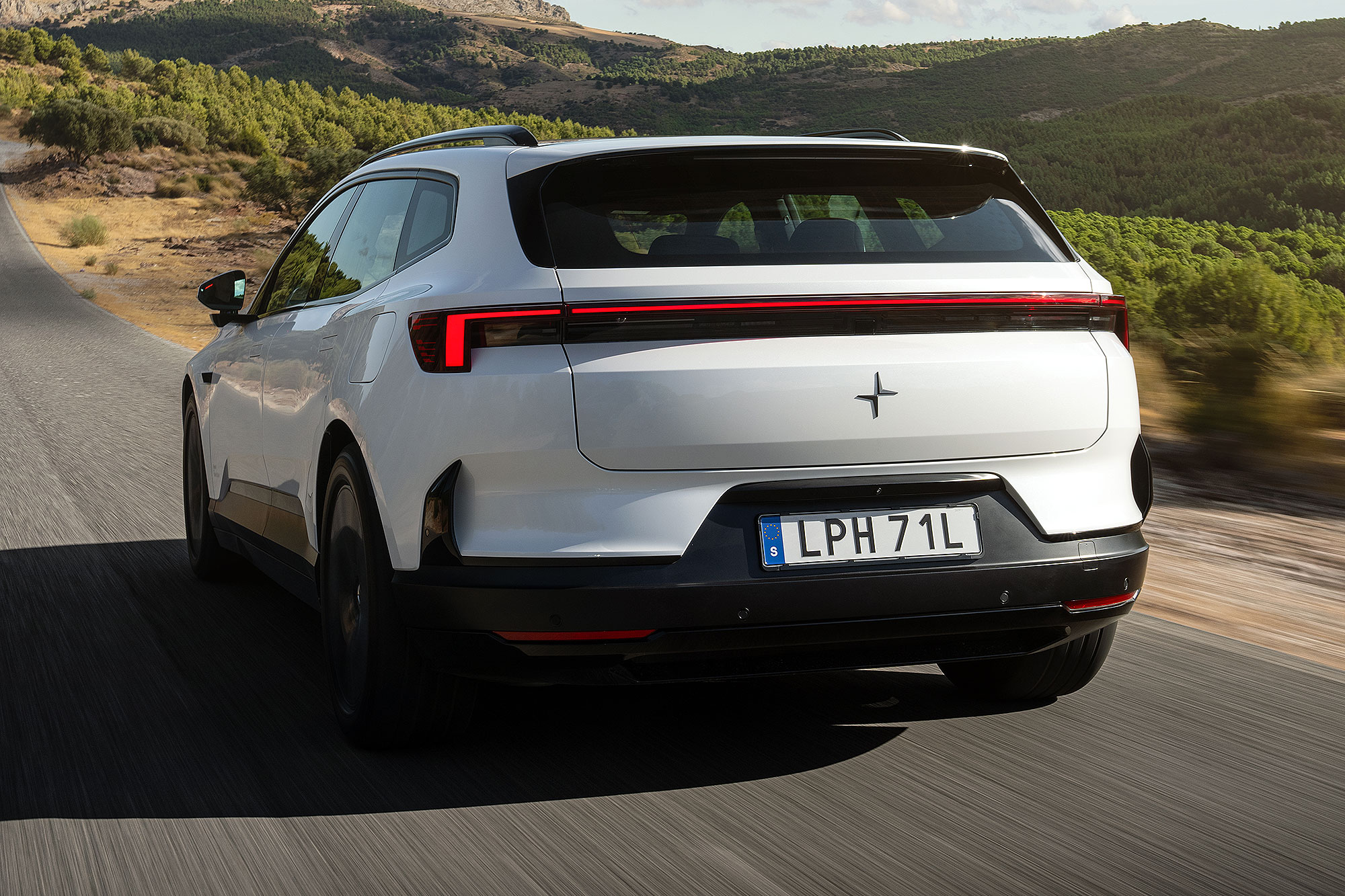
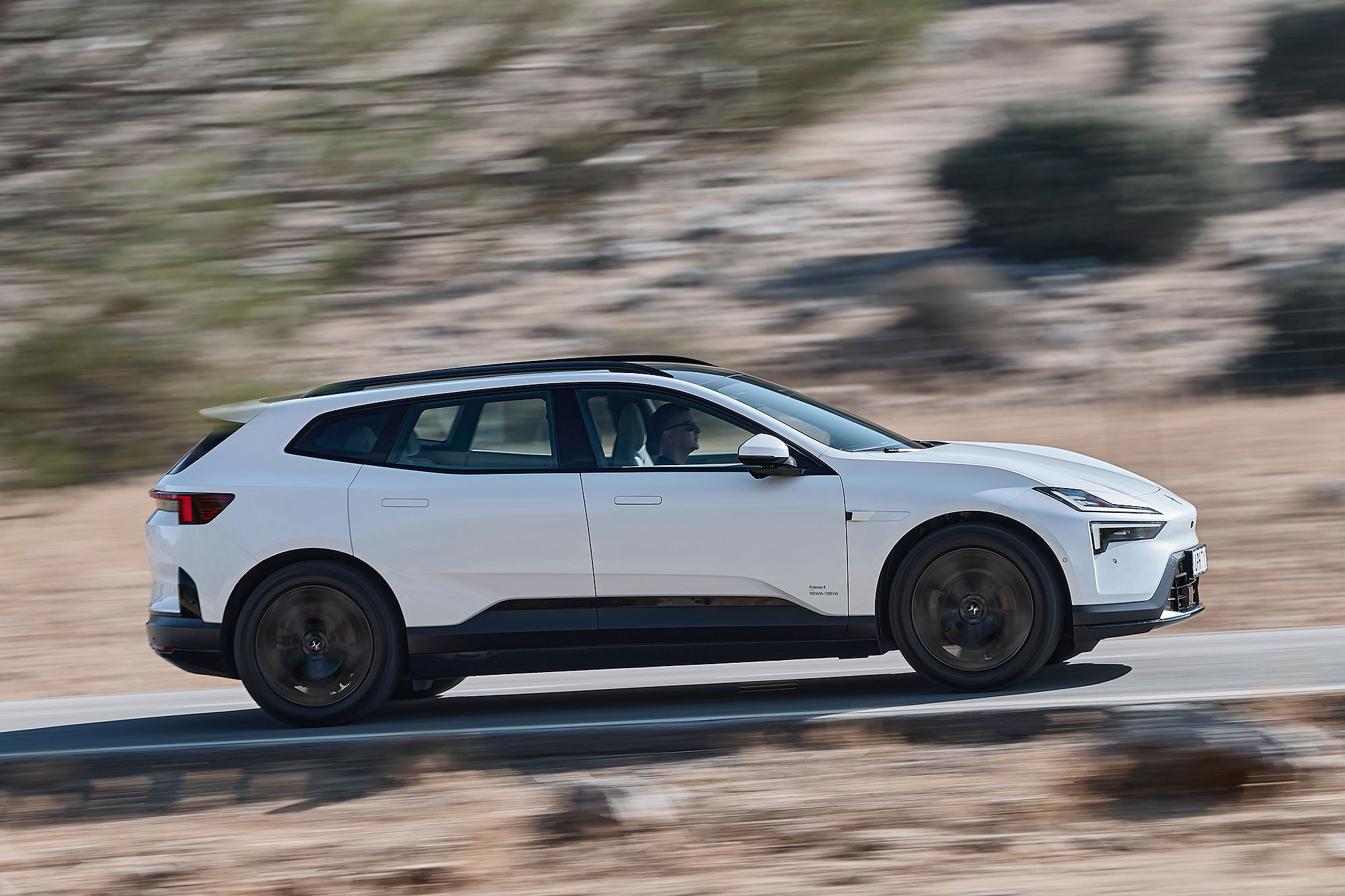
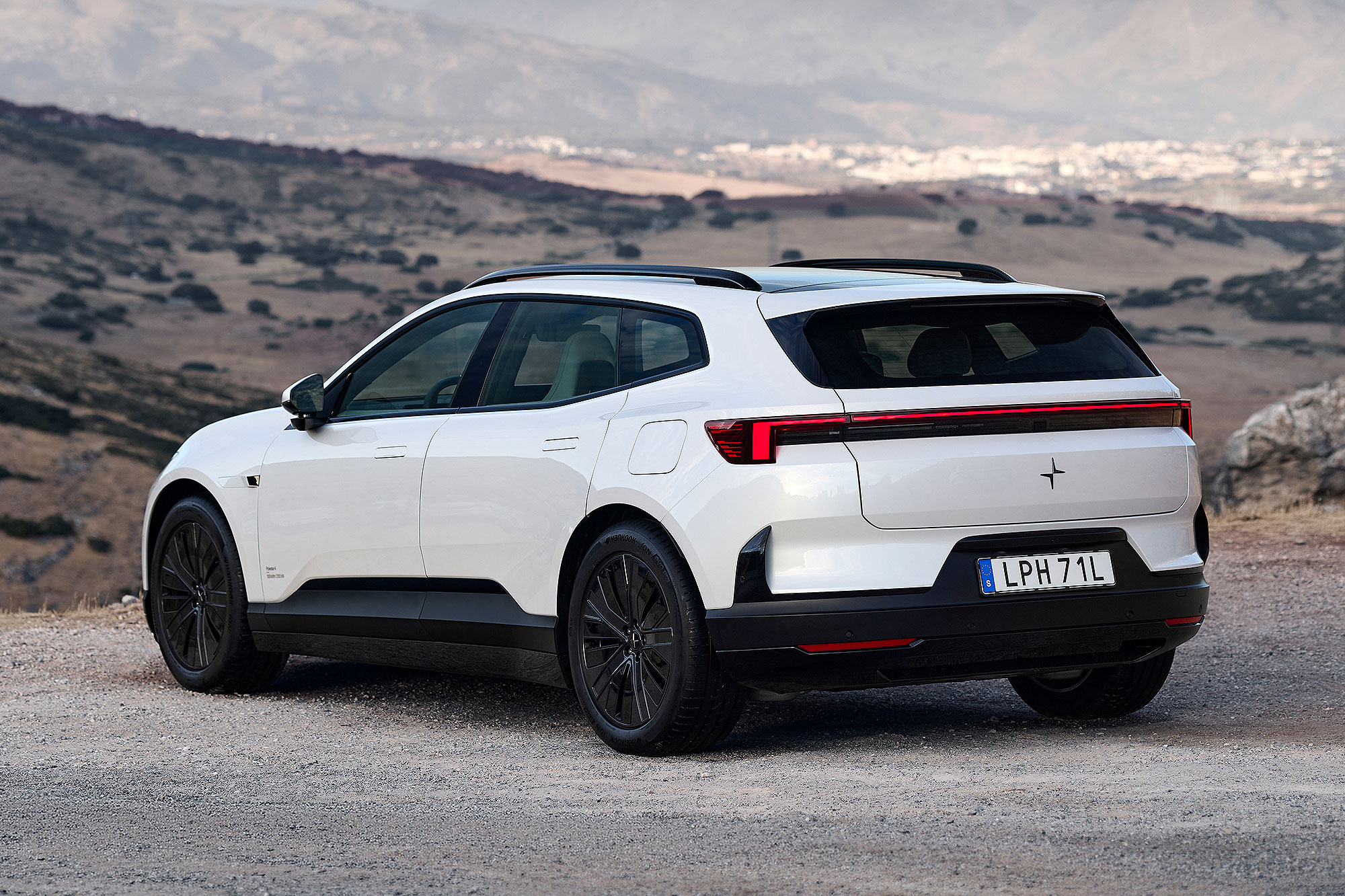
It’s striking how different the two cars look from the rear. That windowless back end has long been the standout feature of the Polestar 4 Coupe; in contrast, the chunkier, more upright profile of the Polestar 4 SUV gives it a very different character. You’d swear the changes were more far-reaching than they actually car – indeed, while the Polestar 4 SUV is 22mm taller, that only through the addition of roof rails.
Inside, the Polestar 4 SUV has more boot space, making it a more practical alternative to models such as the BMW iX3, Porsche Macan Electric, Mercedes-Benz GLC Electric and Audi Q6 E-Tron. It’s a temptingly-priced one too, starting from £54,750 for the entry-level rear motor version.
Like all Polestars, the Polestar 4 is electric. A 100kWh battery is standard across the model range, giving an EV range of up to 391 miles. This trails the 493-mile range of the BMW iX3, but Polestar will argue lower prices make up for it. The Polestar 4 SUV is cheaper than the Mercedes-Benz GLC Electric too, with which it’s more evenly-matched on range. As for drivetrains, choose rear motor, dual motor or performance.
A really stylish car, some people haven’t been able to get on with the Polestar 4 Coupe simply because of its windowless rear, and the resultant need to use the camera-based interior rear-view mirror. Indeed, it’s a car that grabbed headlines at launch simply because it had no rear window. The Polestar 4 SUV brings the rear window back, and aims to be a more practical car with more universal appeal as a result. So how does it stack up?
Practicality
How practical is it?
The Polestar 4 SUV is all about improving practicality. Redesigning the rear end, with a straighter roofline and more upright tailgate, yields more back seat space and a more practical boot. It also floods the rear cabin with more light and, yes, means the driver can now see out the rear window. For those who also want to see behind them when the boot is fully loaded, Polestar still offers the digital rear-view mirror – but this time it’s an option, rather than standard fit.
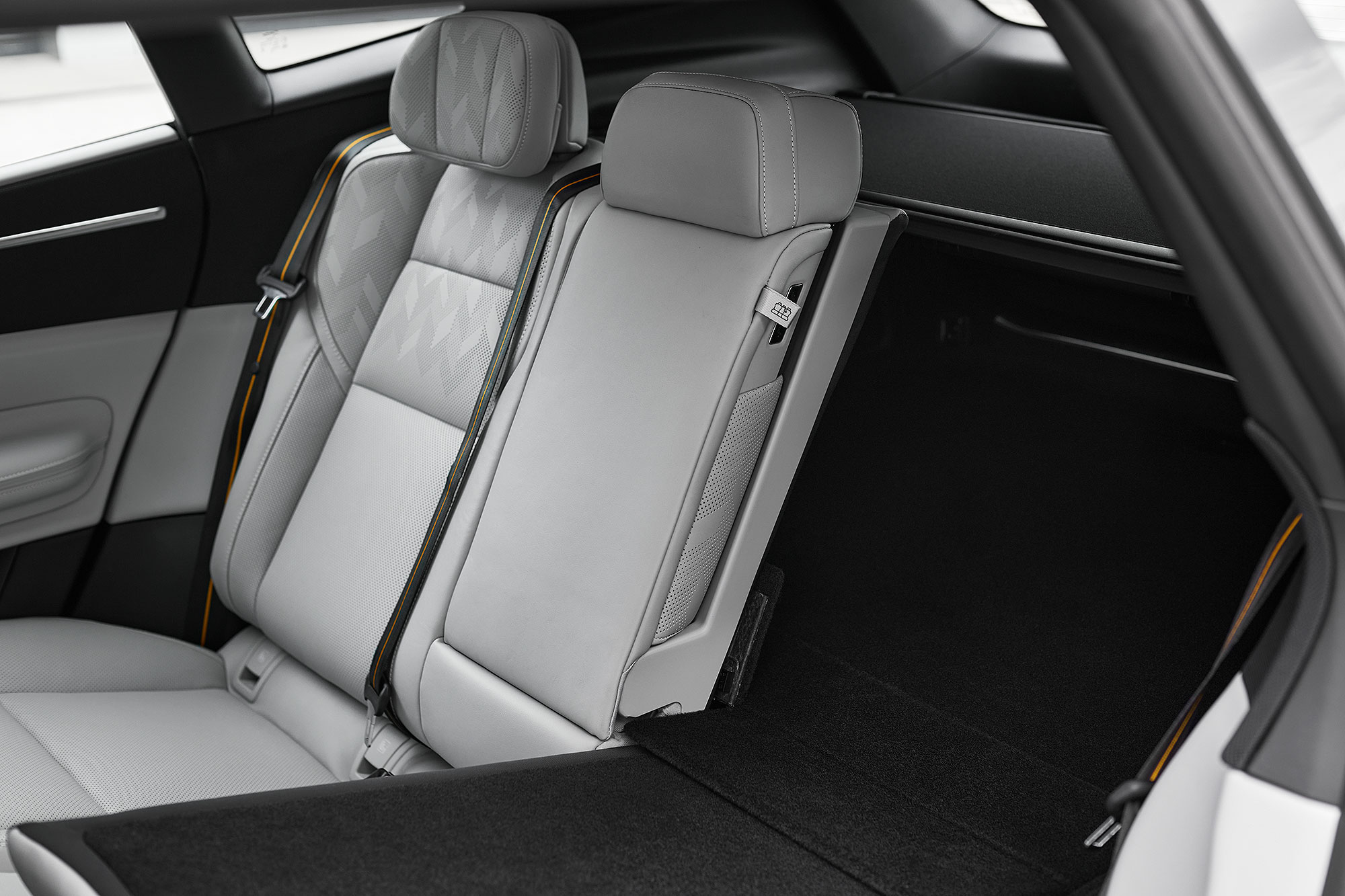
For rear seat passengers, the Polestar 4 SUV offers a useful 25mm more headroom. It’s very generous, as is rear legroom, although space under the front seats feels a tiny bit pinched if you have big feet. The rear seats still electrically recline, for a more relaxed seating position, while low window sills give a good view out and the large panoramic glass roof makes it feel airy. The hidden pop-out cupholders in the centre armrest are neat, too.
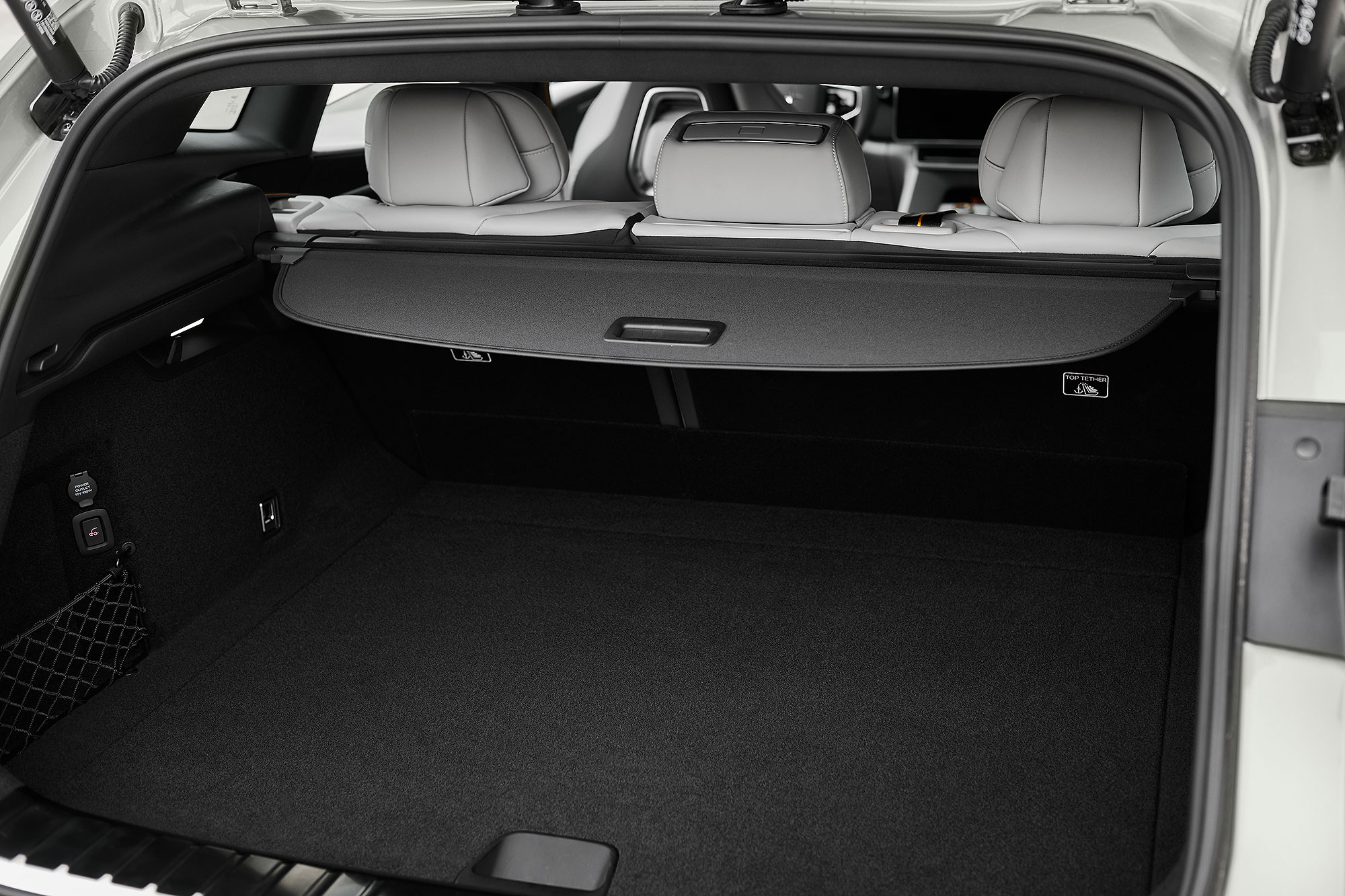
Boot space was already good in the Polestar 4 Coupe. It’s the extra practicality that lifts the Polestar 4 SUV. There’s 530 litres of space below the parcel shelf (a roll-out tonneau cover), which expands to 655 litres if you load it to the roof, and 1665 litres if you fold the (60:40 split) rear seats. The load floor is almost level with the boot lip, so it’s easy to haul heavy items in and out, and there’s extra space beneath the boot floor for charging cables. There’s also a 15-litre frunk up front if you want to leave them there instead.
Having a large hatchback to lean in to boosts the usability of the Polestar 4 SUV, made even easier by electric operation that, impressively, actually seems to work when you wave your foot under the rear bumper. The deep space is useful and the squared-off shape is ideal for wrangling in bulky boxes. The boot area is beautifully trimmed in plush carpet, and the stainless steel load sill is posher than scratchy plastic.
Up front, the seating position feels SUV-like, with a high-riding view out that gives plenty of confidence. Typically for a Polestar, the seats are supportive and comfortable. They’re trimmed in eco-friendly MicroTech as standard, with a lovely tailored knit upholstery as a £600 option, and Nappa leather costing £2600 but including seat ventilation, massage and headrest speakers.
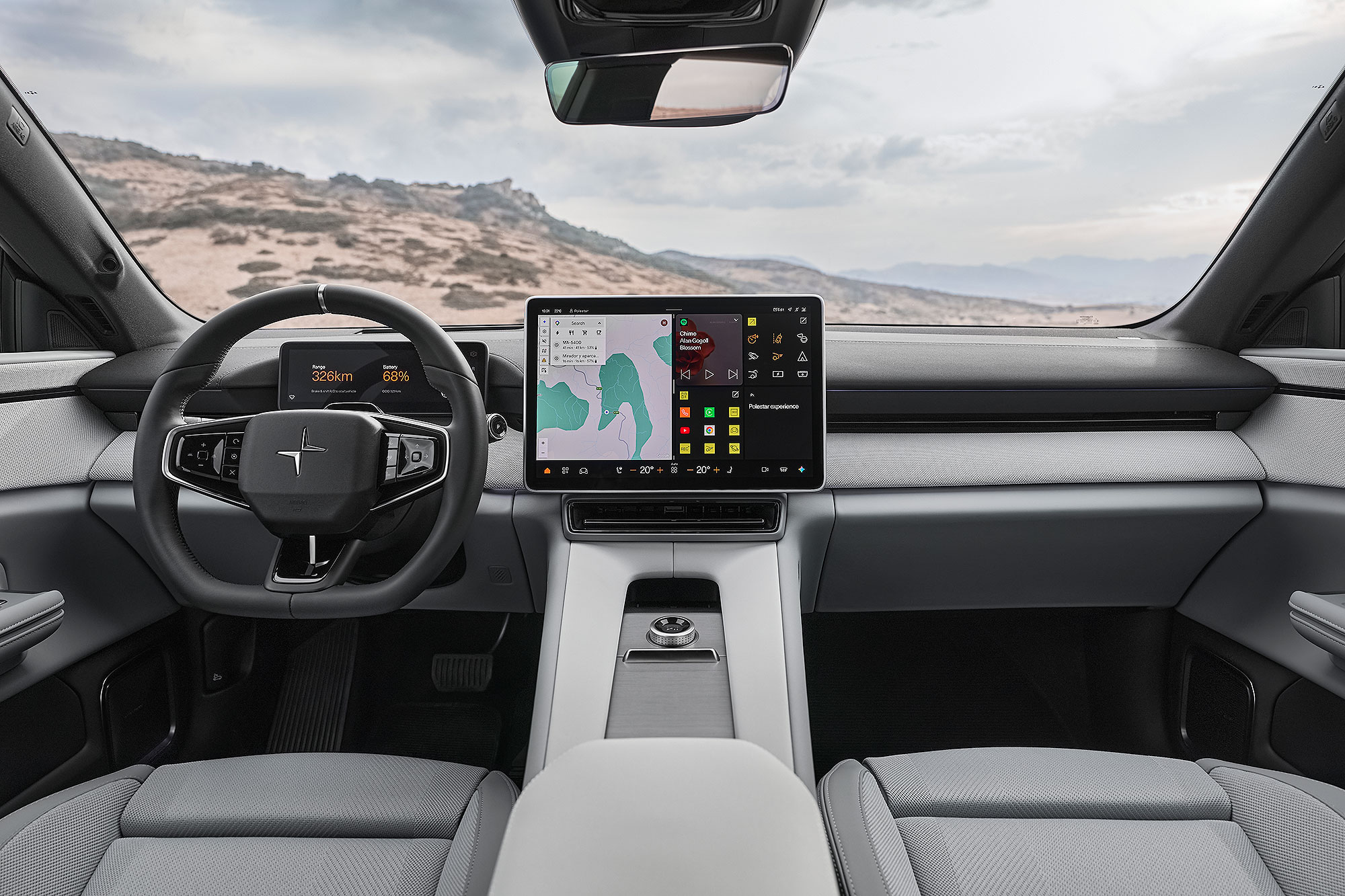
Polestar has listened to customers and now fits a steering wheel with proper buttons. It’s far easier to use as a result, and helps reduce reliance on the touchscreen. It makes you wonder why they weren’t included in the first place, but there we go. There are two column stalks, one for the gearshifter and the other for indicators and wipers; as with the Polestar 3, it’s a bit too easy to accidentally turn the wipers on when indicating. Having a proper interior rear-view mirror really is a big bonus, and Polestar’s frameless door mirrors are a model of clarity too.
The Polestar 4 SUV’s back window isn’t the deepest, but it still offers a decent view rearwards. The firm also fits a rear wash-wipe system, with the top-mounted washer integrated into the roof spoiler.
Driving
What's it like to drive?
The engineers have been busy at work on the suspension of the Polestar 4 SUV, with the aim of giving it a bit more of the driver-focused Polestar ‘feel’ than earlier Polestar 4 Coupe. There are new springs, recalibrated dampers, revised anti-roll bars and other detail tweaks, all to help make the cars feel more responsive and agile.
They certainly work. The Polestar 4 SUV drives very nicely, with a mature, grown up and very refined feel. It has real behind-the-wheel substance, which breeds confidence, but is also accurate, crisp and responsive when charging along twisting roads. Given that it’s quite a large crossover-style SUV, it’s surprisingly nimble and agile. The steering is particularly precise, with well-weighted, linear feedback and a natural build-up of weight in corners. The even, sporty ride is composed and well-controlled, too.
This engagement is ramped up even further with the Performance pack (only available on dual motor version). There’s an even more focused Polestar Engineered chassis, complete with 22-inch wheels fitted with grippy Michelin tyres, adaptive dampers which firm or soften at the push of a button, and a really powerful set of Brembo brakes with calipers finished in Swedish gold. I tested it around the challenging Ascari race circuit and really enjoyed chucking this heavy electric machine into corners, feeling it bite, and then charging back out with great balance and four-wheel traction.
Back out on the road, I mainly drove the rear motor version, With 264bhp, it has just enough power; acceleration is ample, although the surge we’ve become to expect from electrifying EVs these days is lacking. I never felt it slow or short of shove, but 0-62mph in 7.1 seconds is a little short of hot hatch pace these days.
Simply choosing the dual motor version resolves this, and then some. Power jumps up to a supercar-challenging 528bhp, and the 0-62mph acceleration time plummets to just 3.8 seconds. It feels immeasurably more intense as a result, and becomes a bit of a speed demon if you really work the accelerator. Rarely is there such a difference between two version of a car, particularly as the price jump to the dual motor is a mere £6000. In short, the rear motor is fine… but the real excitement comes with the dual motor.
All models have a nice and smooth braking system, with a well-weighted brake pedal. Most of the time, this uses regenerative braking rather than the discs themselves, and it’s particularly linear and well-judged, with none of the snatch that can afflict some EVs. The Polestar engineers add that if you have a Performance models and choose the sportiest settings, braking will be done only through the Brembo brakes, to give it that all-important driver-focused feel when you’re really motoring.
The Polestar 4 SUV is a serene cruiser, with low noise levels and, again, plenty of confident stability for the driver. Adding in a bit of that ‘Polestar’ feel is certainly evident, and the Polestar 4 SUV is a better car because of it. Pleasingly, the same set of changes will be coming to Polestar 4 Coupe versions, too.
Tech and equipment
Technology, equipment & infotainment
All Polestar 4 SUV have a comprehensive infotainment system. This is a Google-based system, with Google Maps, Google Assistant and the Google Play store all built-in. Th 15.4-inch central touchscreen is combined with a 10.2-inch driver display, both showcasing impressively crisp and detailed clarity.
The infotainment system has a fixed strip of shortcuts along the bottom. This features climate control temperature settings and quick access to parking cameras, along with apps and drive controls. There’s also a shortcut for Google Gemini, more of which shortly. While physical climate control buttons would be nice, the Polestar setup is easy to jab, and it’s less ‘noisy’ than some other touchscreens, making it easier to locate icons when on the move.
Being Google-based means sat nav operates via Google Maps; if you log in to your account, you’ll have all your favourites, along with previous searches, and you can ‘send’ routes to the car from the Google Maps smartphone app too. The EV route-planning tech is also superb. It’s child’s play to call up a long route and then see charging stops automatically factored in to your journey – you’ll even be able to see how long you need to be stopped at each charge point, and how much charge you’ll have at the end of your trip. Want to end the journey with, say, 50% charge? Simply add this to the settings and the mapping will factor it all in; it’s a brilliant system.
Google Gemini now expands on this. The AI successor to the old voice-based Google Assistant, Google Gemini brings more natural voice interaction, allowing owners to chat along as they drive, rather than having to issue strict voice commands. It’s contextual, understands complex dialogue and, if you’re logged in, also personalised. There’s even a Gemini Live productivity suite, allowing business users to brainstorm on the move. Over-the-air updates mean it will only become more intelligent in the future, too; for AI converts, this is a major fillip for the Polestar 4 SUV.
Another new piece of tech for the Polestar 4 SUV is camping mode. This turns a parked car into a climate-controlled space; when engaged, it keeps the air con turned on, and also ensures entertainment, ambient lighting and other vehicle functions will remain switched on, rather than powering down after a certain time. USB-C connectivity and the 12V outlet also won’t shut down.
The Polestar 4 SUV also offers vehicle-to-load (V2L) functionality – admirably showcased during the launch event by camping (well, glamping) at the Ascari race circuit with the car powering accessories such as lights, heater and power sockets. Via an adaptor, devices such as camping equipment power tools and coffee machines can be powered, all via a three-pin plug.
Even the standard panoramic glass roof has been given a tech makeover. The Polestar 4 SUV offers an optional electrochromic roof, which will tint at the press of a button. It can even offer tint in sections – meaning those in the front can sit beneath shade and those in the rear can enjoy the view, for example.
The Polestar 4 SUV’s 100kWh battery has DC rapid charging at speeds of up to 200kW. This is actually a bit tepid by modern standards; the BMW iX3, for example, literally doubles it, with DC speeds of up to 400kW. It will go from 10-80% charge in 30 minutes; rivals will charge more quickly and, thanks to their bigger batteries, offer more overall range at the end of it, too. This is an area Polestar would be advised to work on, if it’s not to be left behind by the competition.
Running costs
Polestar 4 SUV running costs
The Polestar 4 SUV will, like its electric rivals, benefit from low running costs in terms of powering it. If you can charge at home, it will cost just a few pounds to fully top up the battery. There are enormous benefits for company car drivers in terms of Benefit-in-Kind tax as well; for 2026-27, the Polestar 4 SUV has a mere 4% BiK rating. Add in prices starting from under £55k, and the money-saving appeal is clear.
The Polestar 4 SUV offers 20-inch wheels as standard, with 21-inch wheels optional, and Performance versions coming on 22-inch wheels. The latter use sporty Michelin Pilot Sport 4S tyres, but regular models use more mainstream Hankook rubber, which should be a bit more cost-effective to replace.
Polestar 4 SUV insurance groups will be well into the 40s, with the range likely to open at Group 43 for the rear motor version, and group 48 for dual motor models.
Polestar has a growing dealer network, but also offers servicing via sister brand Volvo outlets. This should help keep servicing costs competitive, and also boost the convenience of maintaining a Polestar 4 SUV.
Polestar 4 SUV reliability
The Polestar 4 is still a relatively new car, but in its time on sale, no major issues have arisen. It’s actually built in a high-tech Renault factory in South Korea, and the levels of quality, fit and finish evident on the test cars suggests it’s a facility more than capable of matching Germanic levels of robustness.
Polestar adds that it’s able to manage and mitigate many issues through over-the-air software updates. This means it can address challenges without owners having to visit a dealer – or, potentially, even knowing something has been tweaked. This system ensures the car can continually be improved in more visible ways too, such as updating the infotainment system or adding extra features.
As a brand, Polestar is still a little bit too small and fresh to feature in the What Car? Reliability Survey, but sister brand Volvo does feature, scoring a middle-ranking 88.7% reliability score. Hopefully the EV-only Polestar brand will score a little higher; time will tell.
In the UK, Polestar offers a three-year, 60,000-mile warranty, which is so-so these days – Kia offers a seven-year warranty, after all. However, the battery is guaranteed for eight years and 100,000 miles, and Polestar also offers optional one, two or three-year extended warranty packages.

What owners say
Three things to know
- The Polestar 4 SUV still has the electric-recline rear seat fitted to the Polestar 4 Coupe. This is a luxury touch not normally found in premium SUVs. It also means there’s a gap between the parcel shelf and the back of the rear seat – this is the space the seat reclines into. With the seat fully upright, you may wonder why it’s there…
- Polestar is a sustainability-focused company, btu still offers a leather seat option. But this itself is an eco approach, insists the firm, with the Scottish Bridge of Weir leather using hides that would otherwise go to waste. Bridge of Weir itself has the lowest carbon footprint in the global leather industry, too.
- The Polestar 4 SUV still has a limited colour range of designer-focused silvers, greys, blues and whites… but, for the first time, it does offer a fresh-looking green hue, called Aurora. It’s a £1050 option. You can also get two matt paint options – but only if you choose the Performance pack first.
Which one to buy
- If you want the most affordable: The Polestar 4 SUV rear motor is the entry-level version, priced from just under £55,000. Even this version has a comprehensive standard spec.
- If you want the longest range: Again, the Polestar 4 SUV rear motor has the best range, at up to 391 miles between charges.
- If you want a big hike in power: The Polestar 4 SUV Dual Motor sees power rocket from 264bhp to 528bhp, with 0-62mph plunging from 7.1 seconds to just 3.8 seconds. Not bad for a price hike of just £6000…
- If you want the most focused version: the Polestar 4 SUV dual motor with the Performance pack brings a Polestar Engineered chassis tune, Brembo brakes and Swedish gold detailing outside and in. It’s a bit of a bargain at just £3500.

