Audi Q6 E-Tron 2026 review | Refined and relaxed premium electric SUV
Audi Q6 E-Tron cars for sale
4.0
Expert review
Pros
Powertrains give good pace and refinement
Comfortable and sophisticated to drive
Well equipped as standard, better-than-average infotainment
Cons
Expensive, especially so in loftier forms
Interior not as posh as you might expect
Audi’s reliability record and warranty aren’t great
The CarGurus verdict
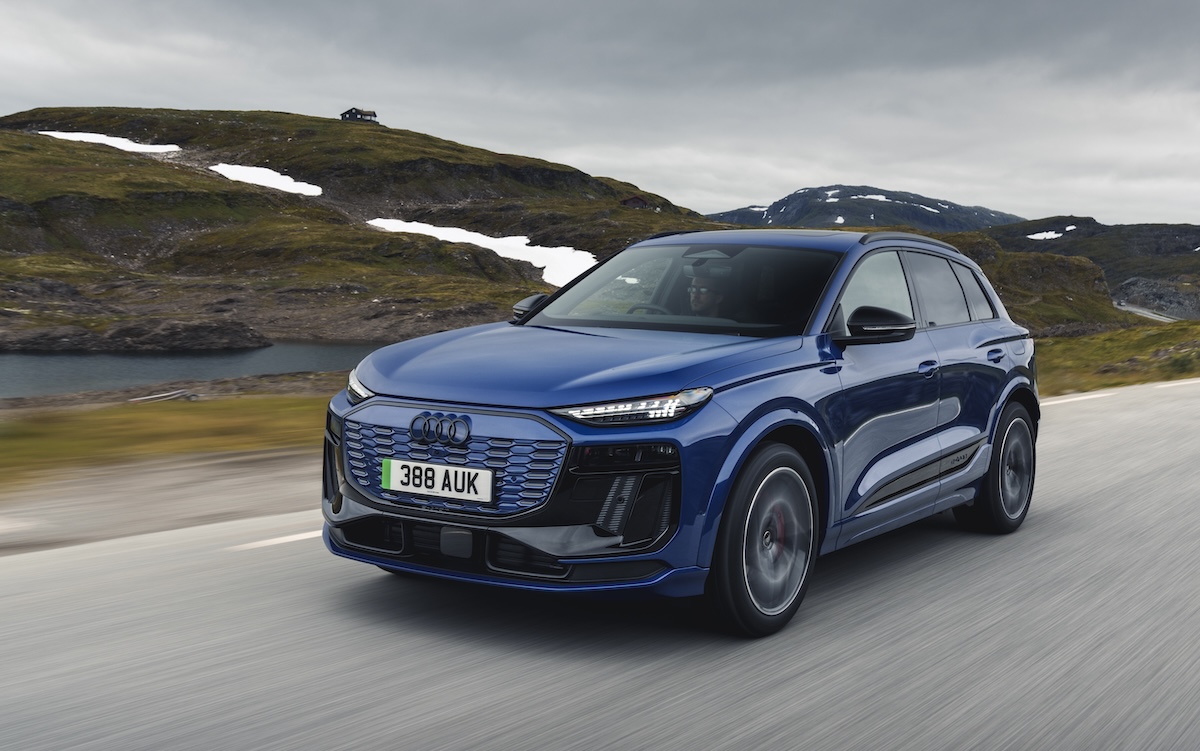
If you want a large electric SUV with an Audi badge on the nose, as many buyers will, then the Q6 E-Tron will suit you down to the ground. But, if you assess things a little more objectively, you’ll find that the Q6 E-Tron has strengths and weaknesses in fairly equal measure. On the plus side, you get very strong performance and impressive on-road comfort and refinement, while there’s generous space for people and luggage, and lots of luxury equipment and tech is provided, including a touchscreen infotainment system that’s easier to use than most.
On the not-so-positive side, there are some other ergonomic irritations, the interior doesn’t feel quite as upmarket as you might expect, Audi’s reliability record and warranty are distinctly underwhelming, and although you respect the way the Audi behaves on the road, you won’t fall in love with it. Most problematic for the Q6, though, is that it looks decidedly expensive, even next to most of its well-heeled rivals, which have it equalled for desirability.
What is the Audi Q6 E-Tron?
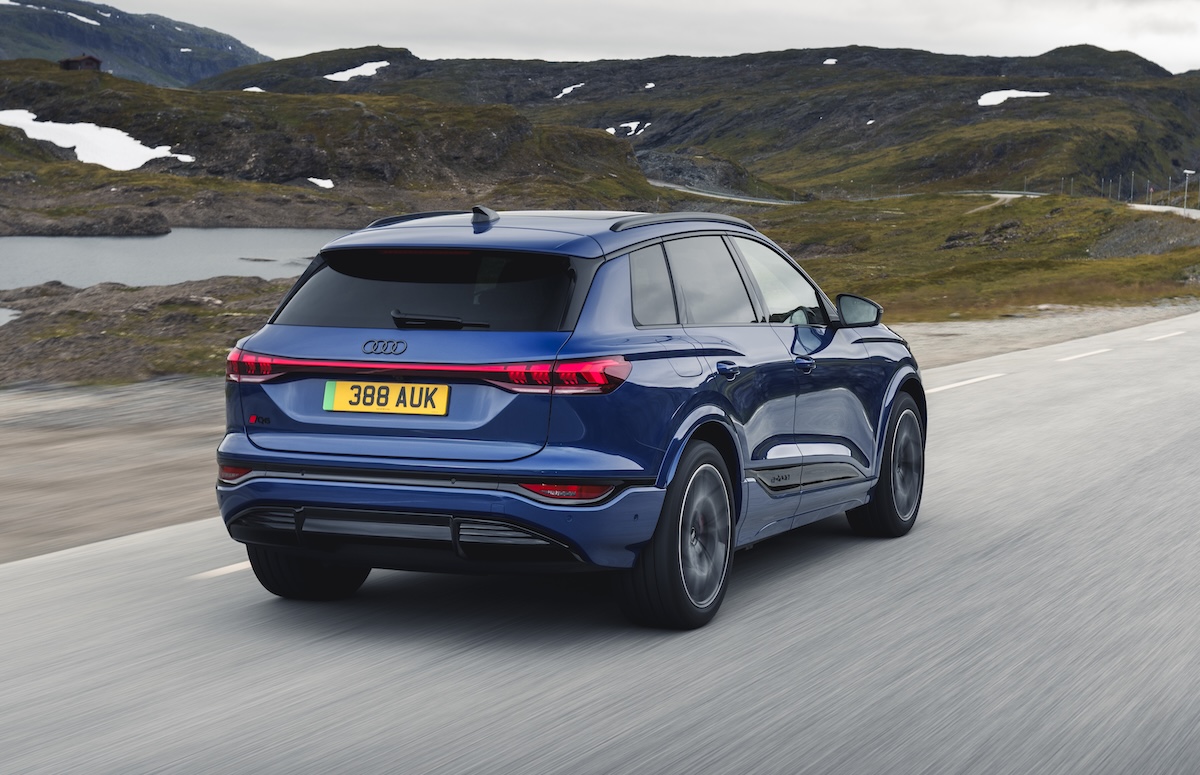
It’s a large five-seater electric family SUV from the German premium carmaker, and on that score, you could say it’s taken over from the now-defunct Audi Q8 E-Tron (formerly just the E-Tron between 2018 and 2023). However, despite its demotion by two numbers, the Q6 E-Tron is considerably more advanced than the old Q8 was, and that’s because it’s built on the company's very latest electric car architecture.
That architecture is called the PPE platform, and it’s shared with the Audi A6 E-Tron, as well as the Porsche Macan Electric and Porsche Cayenne Electric from elsewhere within the Volkswagen Group. Notice the absence of the Volkswagen Group's other brands from that list: that’s because PPE is being kept exclusively for the group's higher-end products, while EVs from VW, Skoda and Cupra will continue to use the MEB platform (and newer MEB Entry platform) that underpins the vast majority of the group’s existing electric-car line-up. Interestingly, that MEB platform also underpins the smaller Audi Q4 E-Tron, above which the Q6 sits in Audi’s EV range.
Like with most of Audi’s SUV models, the Q6 is available in two bodystyles, a regular SUV-shaped one, and a ‘Sportback’ version, which has a lower-slung coupe-style roofline. A selection of rear-wheel-drive and all-wheel-drive powertrains are offered, with various amounts of power and range provided according to how much you’re willing to pay.
In terms of the alternatives you might consider alongside the Q6 E-Tron, you’d certainly say that the Audi has its work cut out. The size and the price of the car is such that, at the lower end of the spectrum, you’ll also be considering rivals such as the BMW iX3, Mercedes GLC, Tesla Model Y and Volvo EX60, while at the loftier end of the range, the Q6 will be dusting it with the likes of the BMW iX, Mercedes EQE SUV and the Polestar 3. And as competitors go, it’s fair to say that those are not half bad.
How practical is it?
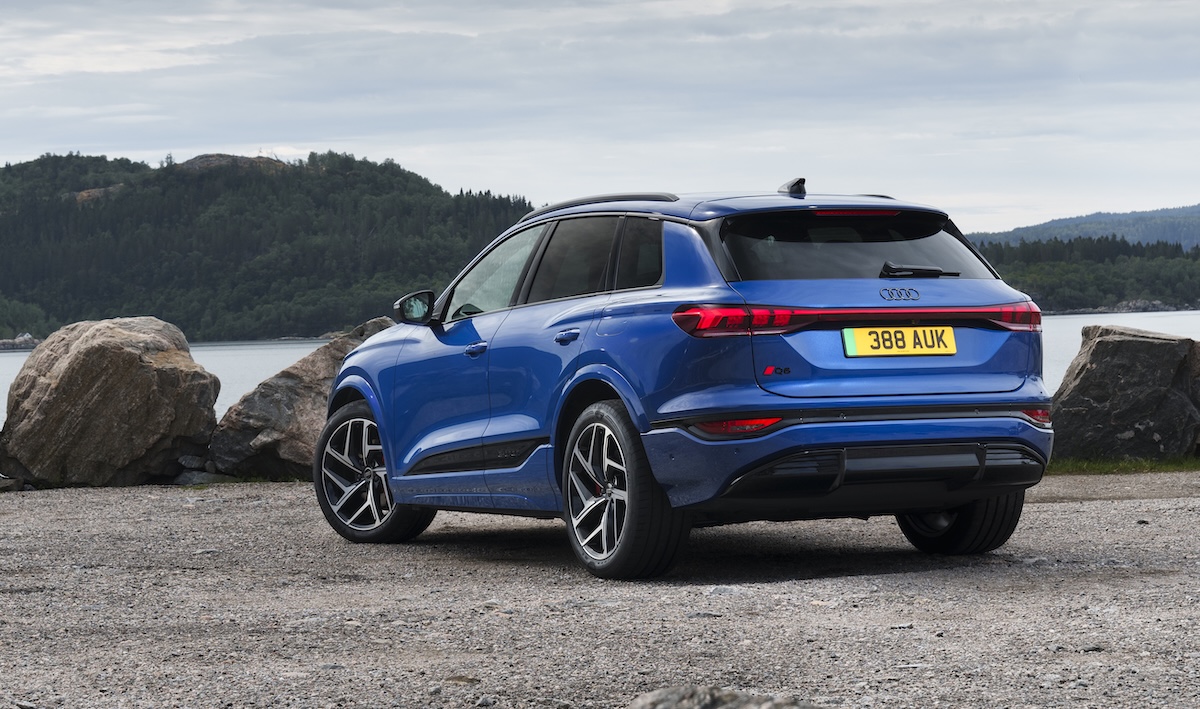
The Q6 E-Tron is a very large car at almost 4.8 metres long, so you’d expect a decent amount of space and practicality from a family SUV of such generous proportions. And thankfully, you get it.
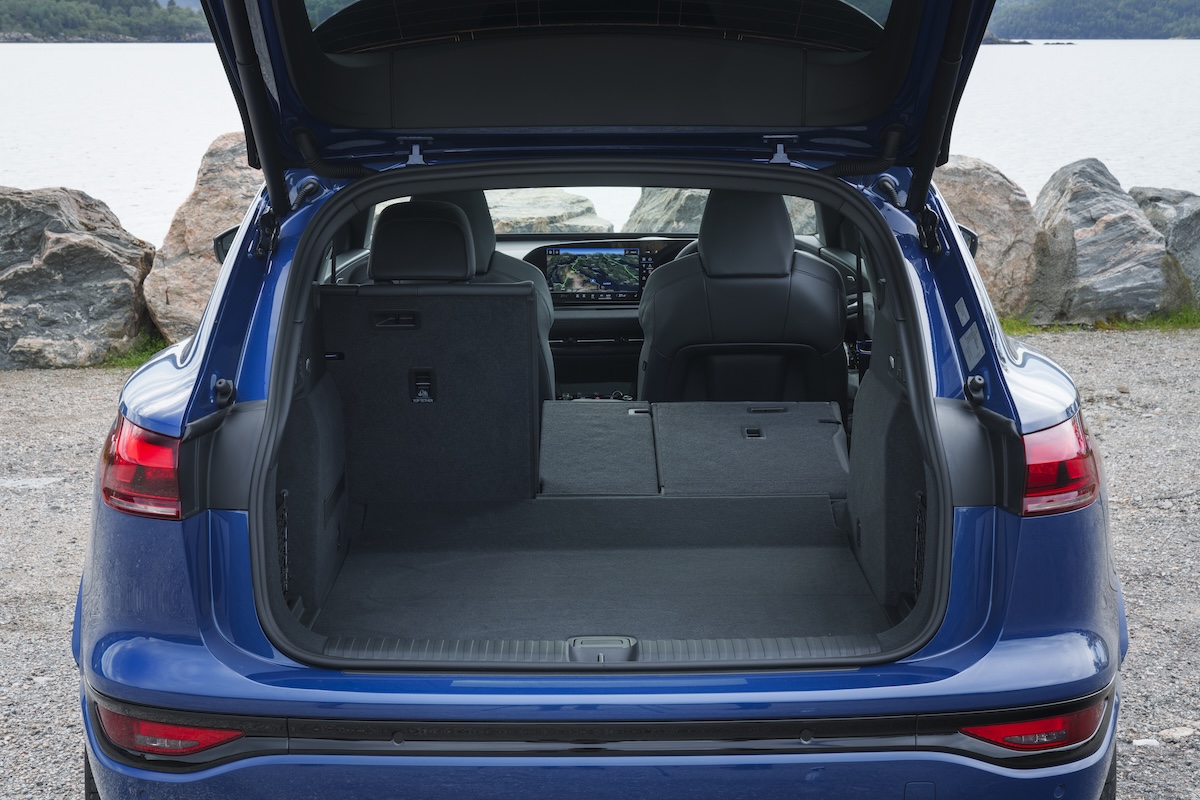
There’s a 64-litre ‘frunk’ under the bonnet that’s plenty big enough for storing your charging cables plus more besides. At the back of the car, you have a powered tailgate as standard across the range, concealing a large 526-litre boot, or 511 litres if you go for the more sleekly styled Sportback model. There’s a wee bit more space under the floor, too.
Towards the back of the loadbay, you’ll notice that the floor slopes upwards a little, and that’s to level off the step that you’d otherwise have when you fold down the rear seats, which lie at an angle when you do. So, although your extended load area doesn’t have a step, about half of it does have a distinct slope. Dropping those seats opens up a maximum of 1529 litres in the regular Q6, or 1373 litres in the Sportback.
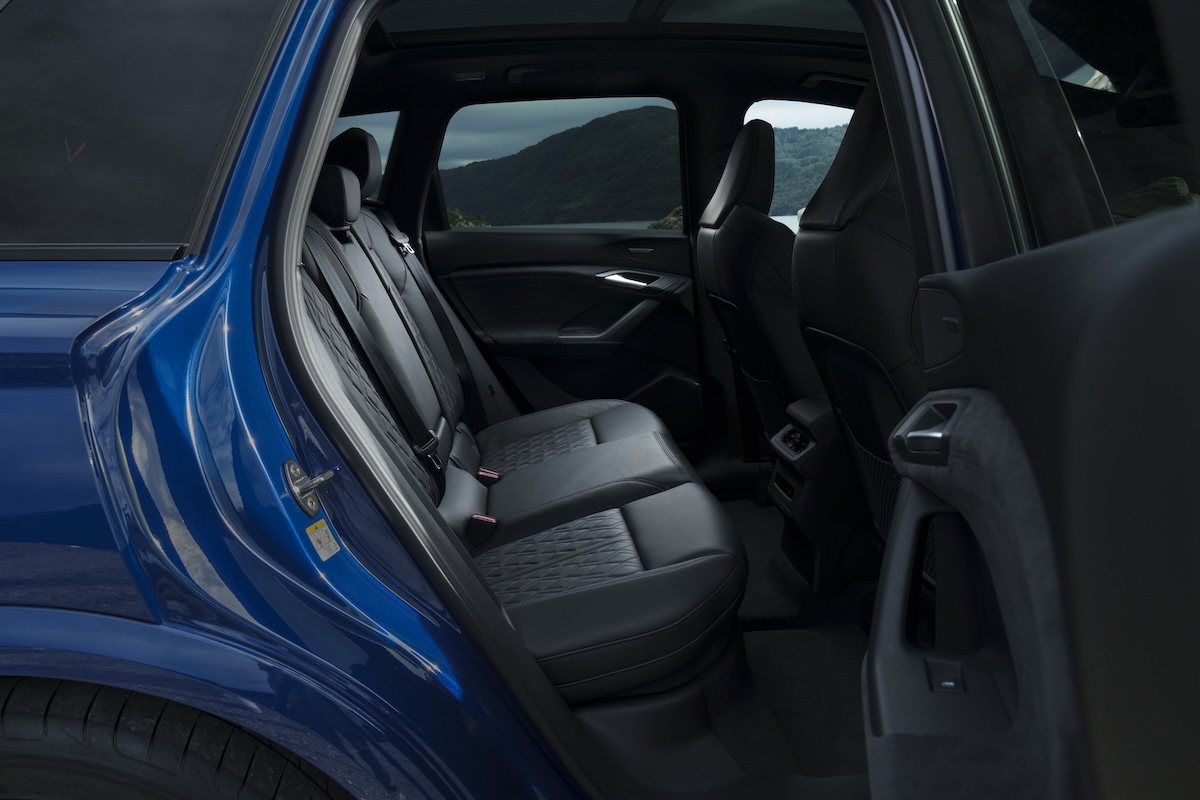
Plop yourself into the rear seats, and you won’t find sliding chairs like you do in some rivals, but you will find bags of space. Adults of well over six feet tall will be able to sit behind a driver of similar proportions and still have legroom to spare, while headroom is similarly generous, even with the optional panoramic sunroof fitted to our test car. That said, we haven’t tried a Sportback yet, so we don't know whether headroom feels any tighter in that version.
The cabin is wide enough that three passengers will be able to sit across the rear bench in relative comfort (we say ‘relative’, because it’ll still be a bit of a squeeze, just not quite as much as in some cars of this type), and the middle seat is also pretty wide, making things better. It is a little higher and harder than those either side, though, and although there’s almost a flat floor in the back, the middle-seat dweller will still have to sit with their feet on either side of the very small hump that’s there. That’s because the central partition between the driver and front passenger protrudes far enough into the rear footwell that there isn’t space for your feet on top of the hump.
Up front, there’s as much space as you’d expect, plus lots of electric adjustment in the driver’s seat, and two-way manual adjustment for the steering column, although some drivers might wish for slightly more travel in both directions. Forward visibility is nice and clear, and it’s pretty good at the rear, too. The rear screen is a little small, but it’s flanked by large quarterlight windows that really improve your over-the-shoulder view. All-round parking sensors and a reversing camera are standard across the range for greater confidence when parking.
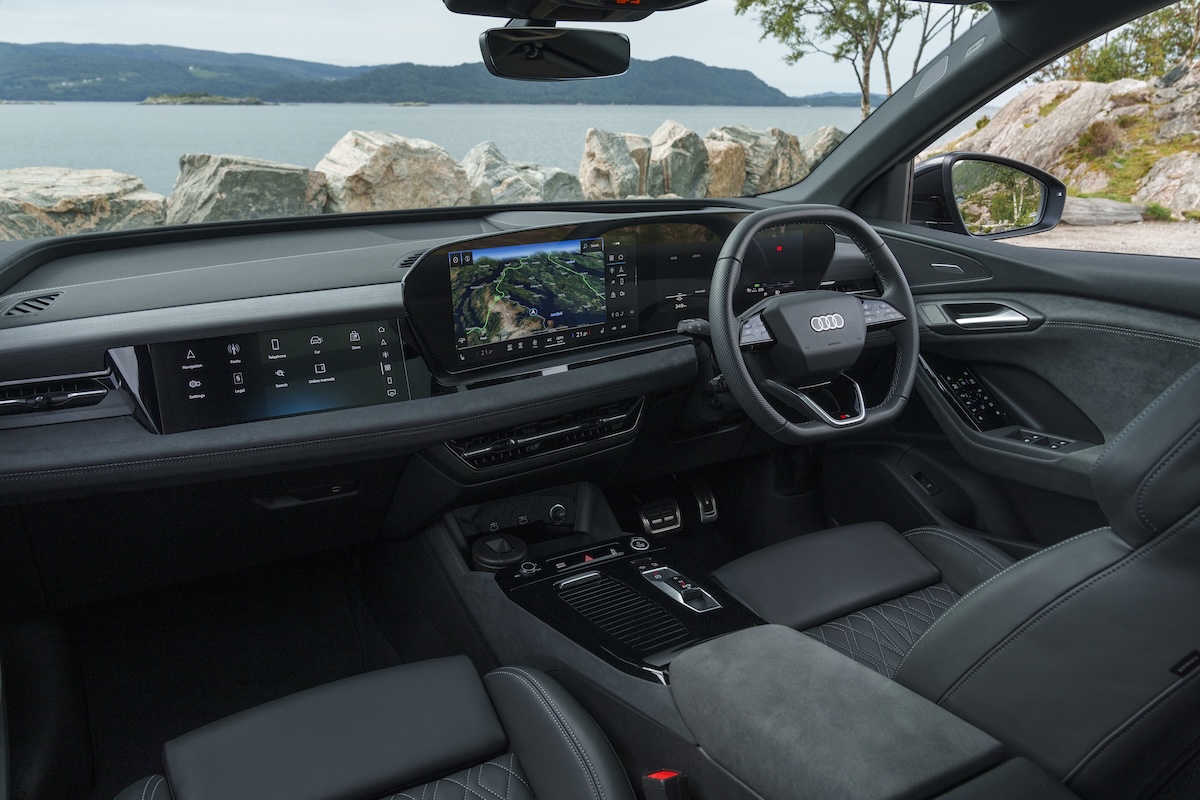
What you might not like so much when parking is the hexagonal steering wheel you get from S line trim upwards. We imagine it’s supposed to look sporty and futuristic, but it just gets in the way when you’re trying to feed the wheel through your hands. It’s annoying in most driving situations, but especially when you’re flinging the wheel around when trying to park.
A quick word on cabin quality at this point. Audi is a car company famed for its excellence in this area, but we’ve noticed a marked decline in recent years. And sure enough, the Q6 e-tron doesn’t feel as glitzy as you might be expecting from a high-end Audi. Don’t get us wrong, it’s certainly not bad, with enough in the way of tactile textured surfaces and glossy digital screens to convince as a high-end product. It’s just that some of the materials in more tucked-away areas (and some not-so-tucked-away areas to be fair) have a harder, less sophisticated feel than many Audi customers will be used to, and so a little of the lustre has been lost. We’re not fans of the vast amount of glossy piano black trim inside the car, either. Not only does it look chintzy when used in such quantities, but it also shows up fingerprints and dust like nobody’s business.
At least there’s a decent amount of storage dotted around, with deep door bins, a large glove box and various cubbies and cupholders in the central console.
You’ll also like the fact that the Q6 E-Tron has two EV charging ports rather than just one, one on either rear wing of the car. This is a genuinely useful feature when the space you’re charging in is slightly irregular in its shape or location, because it gives you more options on how you place the car to charge it. Just bear in mind that the port on the driver’s side is a Type-2-only port, while the full CCS port for rapid charging sits on the passenger side.
What’s it like to drive?
There are four all-electric powertrain options available in the Audi Q6 E-Tron, all of which have two power output figures depending on whether or not the car’s standard Launch Control function has been engaged. Because, naturally, you’ll want Launch Control in your family SUV…
The first of them does without a name, oddly, but it has a single motor under the boot floor driving the rear wheels. It has 249bhp under normal circumstances, giving a 0-62mph sprint time of 7.6 seconds, or 288bhp with Launch Control, trimming the sprint time down to 7.0 seconds. It’s fed by a lithium-ion battery with a usable capacity of 75.8kWh, which gives a combined range of up to 326 miles depending on the trim level - and thus, wheel size and weight - of the car.
Next up is the Performance model. This is still a single-motor, rear-wheel-drive arrangement, but this time with 302bhp in normal circumstances and 322bhp with Launch Control applied. The corresponding 0-62mph figures stand at 6.7 seconds and 6.6 seconds, respectively. Of more interest to most buyers than the extra power and performance, though, will be that the Performance model comes with a larger 94.9kWh battery pack, giving a range of up to 396 miles depending on trim level.
Then comes the E-Tron Quattro, which - as the name suggests - adds a second front-mounted motor for four-wheel drive. You get a combined 422bhp under normal circumstances, allowing it to rush from 0-62mph in 5.4 seconds, but that’s cut to 5.1 seconds once Launch Control hikes the output, temporarily, to 455bhp. The maximum range from the larger 94.9kWh battery is cut to 387 miles, though.
At the pinnacle of the range is the SQ6, with a twin-motor setup that delivers 482bhp in normal circumstances, or 510bhp with Launch Control. Regardless, the corresponding 0-62mph times are fairly dopey, at 4.4 seconds and 4.3 seconds, respectively. Unsurprisingly given the power on offer, the maximum range falls further to 364 miles. However, the top speed of the SQ6 is elevated to 142mph, where all the other versions are electronically pegged at a maximum of 130mph.
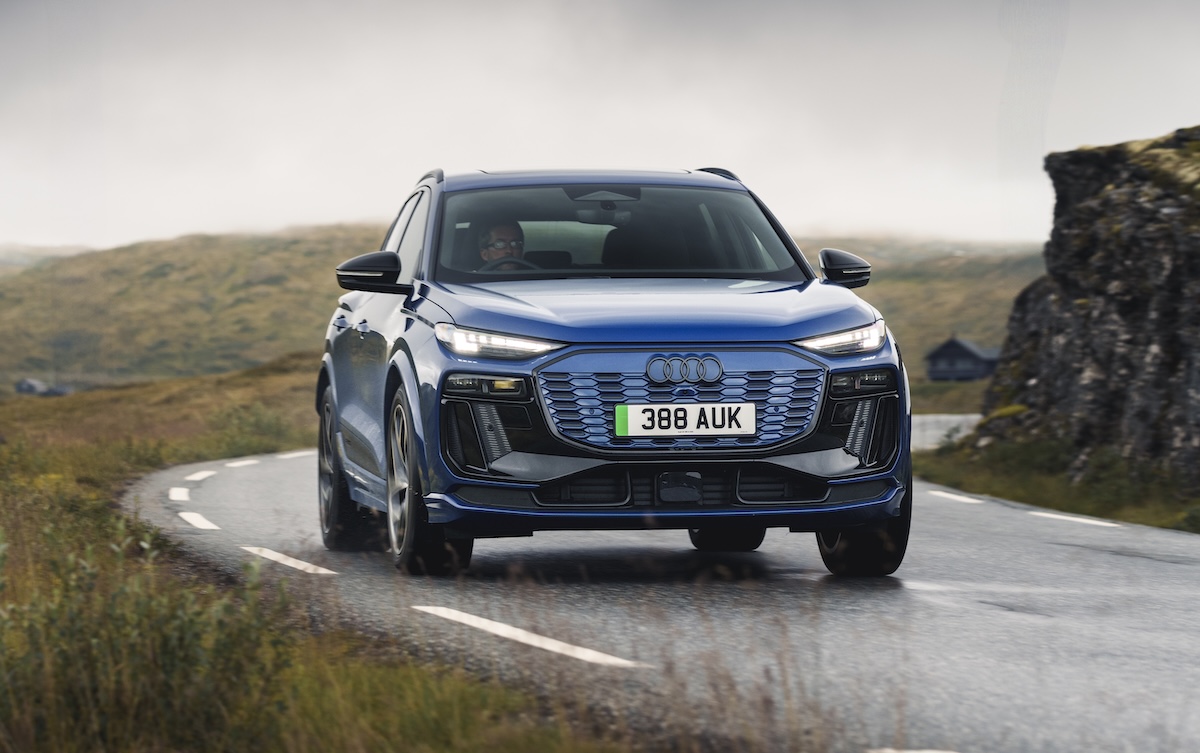
So, those are all the numbers, but what are the various versions like to drive? Well, so far, we’ve only had the opportunity to try the second-rung Performance version, and to be honest, we can’t imagine anyone needing or wanting much more. Launch Control or no Launch Control, nailing the accelerator pedal from a standstill results in a vicious surge of forward motion that actually feels stronger than the already-impressive acceleration figures suggest. That’s the case in all-but-one of the various driving modes, selectable through the appropriately named Drive Select control, and you won’t feel much difference between them in truth. The exception is the Efficiency mode, which reins in the ferocity of the power delivery quite considerably to conserve range. The power is still there - you just have to press the pedal harder and further to tap into it - and so the car still has the potential to be pretty quick even in this mode.
It’s not just the off-the-mark acceleration that impresses, either. Even when you’re already going at a fair old lick, you always feel like you have lots of oomph in reserve to easily dispatch overtakes or power away from tailgaters, and all it needs is a flex of your right ankle to get it. And there’s none of the lazy throttle response you get in many electric cars these days: move the pedal in either direction, and the car reacts instantly.
Even though we haven’t tried the other powertrains for ourselves yet, we can see this second-rung one being the pick of the bunch for its balance of pace and range, and like we say, we really don’t think most buyers will need any more pace than it delivers.
We also like the regenerative braking system, the severity of which can be varied through a couple of stages using paddles behind the steering wheel. Or, if you shift the gear selector to B mode instead of D mode, the regen’ becomes much stronger and the car will come to a complete stop without you touching the pedal, giving you the proper one-pedal experience. We particularly like the automatic mode, which uses cameras, sensors and navigation data to read the road ahead so that the car knows what’s coming up in terms of traffic or intersections, and apportions the appropriate amount of regenerative braking automatically. It’s really clever, and works really well.
Specify your Q6 E-Tron in Sport, S line or Black Edition trim, and you’ll get what Audi calls comfort suspension, which is a passive setup using conventional coil springs. The Vorsprung also gets the same passive hardware, but with a firmer sportier tune. Go for the SQ6, and you’ll get adaptive air suspension with a variety of different settings, and this is also available as an optional extra on most other versions.
So far, we’ve only tried the basic comfort suspension, and again, we can’t see that you’d want to go to all the expense and complexity of going for anything else. Indeed, comfort is what it does best, with an absorbent feel that deals well with bumps and ruts. It’s not completely impervious to jitters and jolts, but it takes a particularly nasty blemish in the asphalt to flummox it.
Excellent refinement contributes to the Q6’s easy-going and sophisticated feel. You barely hear a peep out of the powertrain, and road noise is also exceptionally well suppressed. Wind noise is the most prevalent source at high speed, but you only really notice it because there’s so little other noise to be heard. This is an exceptionally relaxed car at all speeds.
And despite the impressive comfort, there’s enough control in the springs that the Q6 doesn’t feel like an absolute pudding in corners, or when the road beneath you starts to undulate in dips and crests. There is a bit of vertical movement to be felt, and a bit of body roll when changing direction, but neither is unreasonable and you’ll have zero cause for complaint.
Even in rear-drive cars, the level of grip and traction on hand is mighty, so the car always feels secure when turning. Yes, you can feel a colossal amount of directional inertia as you turn, and as you pull up to stop, due to the vast mass and weight of the car, but that’s pretty inevitable when it weighs around 2.3 tonnes. There isn’t much feel in the steering or brakes, either, which also contributes to the fact that this isn’t a driving experience packed with sensory engagement, but the Q6 is comfortable, refined and effortlessly sophisticated, which will suit most buyers just fine.
Technology, equipment & infotainment
There are four equipment grades available with the Audi Q6 E-Tron, with availability of some depending on the powertrain you select. Sport is the entry point to the range, followed by the ever-popular S line, followed by Black Edition, followed by the range-topping Vorsprung.
Sport cars come with 19-inch alloy wheels, LED headlights with high beam assist, powered door mirrors, powered bootlid, all-round parking sensors, a reversing camera, adaptive cruise control, keyless entry and go, three-zone climate control, a heat pump, heated and powered sports front seats with integrated headrests, twin leather upholstery (combination of leather and man-made leather), ambient lighting, and a leather steering wheel. We’ll get to the infotainment element of the package in a few moments.
Many buyers will automatically make the upgrade to S line trim due to little more than muscle-memory, though, because just so many buyers do. The upgrade earns you mainly aesthetic upgrades including 20-inch alloys, S line bumpers, metallic paint and privacy glass, while on the inside, there’s a black headlining, stainless steel pedals and that infernal hexagonal steering wheel.
Black Edition cars have a similarly racy look, but with even more purpose thanks to 21-inch wheels and black exterior styling elements. Inside, there are more heavily bolstered sports front seats complete with massage function, and there’s also different interior trim with microfibre fabric and leather upholstery.
Sitting at the top of the range, Vorsprung cars come with a panoramic roof, extended cabin pre-conditioning, 360-degree parking cameras, and a heated steering wheel. That doesn’t sound like a whole heck of a lot for a range-topper, but the greater difference between Vorsprung and the other trims comes in the infotainment department.
You see, all other trims get a 14.5-inch central touchscreen with an 11.9-inch Virtual Cockpit digital instrument panel, and the system also includes DAB radio, navigation, wireless phone charging, Apple CarPlay and Android Auto, and two USB ports front and rear. The Vorsprung, meanwhile, adds to that a Bang & Olufsen 3D sound system, an augmented reality head-up display, and another 10.9-inch touchscreen for the front passenger. This is supposed to allow the passenger to tinker with navigation and audio settings while the driver concentrates on driving, although we’re not quite sure why they couldn’t just do this on the central screen, which is still within easy reach. We haven’t encountered this arrangement yet, so we can’t yet tell you for sure whether this extra screen is genuinely useful, or is indeed gimmickry for the sake of gimmickry.
That said, there’s a heck of a lot to like about the more basic system. Like so many manufacturers these days, Audi hasn’t been able to resist the temptation to cram almost every one of the car’s functions - of which there are a great many - into the touchscreen interface, so it has an awful lot to deal with. Regardless, though, the interface is uncommonly easy to use. The on-screen icons are intuitively designed so that it’s instantly obvious what they’re for, while they’re arranged in such a way that they don’t look cluttered on the screen. The various menus are logically arranged and simple to navigate, while the bank of shortcut icons on the right-hand side of the screen makes it simple to fast-track your way to the function you want. Audi really should be congratulated for the ease-of-use of this system, because so many other carmakers - other Volkswagen-Group brands included - get it so hopelessly wrong.
What’s more the graphics on both screens are crystal clear and effortlessly stylish, while the screen transitions are quick and slick. The choice of layouts for the digital instrument screen is sensible, and the responsiveness of the central screen to taps and swipes is both prompt and reliable.
It’s not perfect, of course. The far-right-hand side of the central screen is obscured by the rim of the steering wheel, so you have to crane your neck to see what’s there (not a lot, fortunately), and although the temperature controls are permanently displayed along the bottom edge of the screen, you still have to delve into an on-screen menu if you want to do anything else with the air-con system, such as change the fan speed or the direction of the air flow. Physical buttons and dials would be quicker and less of a faff, but those are quickly becoming things of the past these days.
Audi Q6 E-Tron running costs
You wouldn’t expect a large electric Audi SUV to be a cheap car, and it isn’t. Prices start at more than £60,000 for the most basic version, and rise very quickly from there as you progress up the range of trim levels and powertrains. By the time you reach the top-of-the-range versions of the high-performance SQ6, you’re knocking on the door of the £100,000 mark.
Compared with rivals, the Audi looks even pricier. The BMW iX3, electric Mercedes GLC and Volvo EX60 can all be had for less in basic form, and when compared version-for-version, the Audi looks like the most expensive car of the bunch, and by a not-inconsiderable margin.
The Q6’s range figures look pretty average compared with the competition, too. While the longest-legged versions have a maximum figure of less than 400 miles, the newer equivalents from BMW and Volvo have busted the 500-mile mark, and again, when compared version-for-version, the Audi looks to struggle a bit across the board.
As always with an EV, charging at home will be the most affordable way to run your Q6 E-Tron. A full charge of the smaller 75.8kWh battery found in the base-level car on a regular 7.2kW home wallbox charger will take around 10 hours and cost around £21, assuming that you pay for your domestic electricity at the UK’s national average rate. Within those same parameters, a full charge of the 94.9kWh battery pack found in the Performance, Quattro and SQ6 models will take around 13 hours, and cost around £26. However, do the smart thing and get your home put on a variable tariff that allows you to charge your car overnight on massively discounted off-peak power, and those costs will likely drop to around a third of those quoted.
Conversely, you can likely treble those costs every time you use a DC public rapid charger, because the power that comes out of those is exorbitantly expensive, so we’d recommend using them only when you have literally no other choice.
The entry-level car accepts DC rapid charging up to a rate of 225kW, while the Performance can charge up to 260kW, and the Quattro and SQ6 have a maximum speed of 270kW. Whatever the case, a 10% to 80% top-up can be delivered in a shade over 20 minutes.
The Q6 E-Tron’s price is such that higher-rate VED road tax is an inevitability, while insurance costs will also be high. All cars have a classification of between 1 and 50, with group 50 cars being the most expensive to insure, and the lowest group that any Q6 manages is group 44.
Audi Q6 E-Tron reliability
Audi doesn’t traditionally have the best reputation for reliability, and the latest What Car? Reliability Survey would suggest that not a whole lot has changed on that score. Out of the 30 carmakers considered in the manufacturer standings, Audi placed joint 22nd alongside old foe Mercedes, with both being a place behind Volvo in 21st, and way behind BMW in 6th spot.
Audi’s bog-standard new-car warranty probably won’t fill you with confidence, either. In a marketplace where warranties of seven or eight years, and up to 100,000 miles, are now becoming the rule rather than the exception, Audi buyers still make do with a three-year, 60,000-mile arrangement that looked stingy ten years ago. That’s not exactly the premium experience that the Audi badge promises, is it? The battery has an eight-year, 100,000-mile warranty, but that’s a legal requirement.
That said, service intervals are far longer than those of most combustion-engined cars, with work needed every two years. That should limit your inconvenience and help keep costs down a wee bit.
- You’d expect any new Audi - especially one this expensive - to come with a broad spread of standard safety equipment, and the Q6 E-Tron doesn’t disappoint. The standard roster includes adaptive cruise control, autonomous emergency braking, traffic sign recognition, various levels of lane assistance, rear cross traffic alert, attention and fatigue sensors, and a variety of airbags.
- The Q6 E-Tron was crash-tested by Euro NCAP in 2024, and achieved the full-five-star rating. Its scores were 91% for adult occupant protection, 92% for child occupant protection, 81% for protection of vulnerable road users, and 80% for safety assist.
- When the Q6 E-Tron first went on sale in 2024, it was offered in Sport, S line and Edition 1 trim levels. At the very end of 2025, some changes were made to the range for Model Year 2026. Edition trim was replaced by Vorsprung trim and Black Edition trim was added in just below. More standard kit was added to entry-level Sport models, and all grades benefited from improvements in tech and driver assistance.
- If you want the best all-rounder: We can’t see much essential kit missing from entry-level Sport trim, so we’d stick with that, but for most buyers, we can see the wisdom in upgrading from the entry-level powertrain to the Performance. That’s not just because of its extra pace, but because of its larger battery and greater range as well.
- If you want to keep costs down and don’t do too many miles: The entry-level Sport car with the basic powertrain is the cheapest on offer and it comes with all the kit you need. And, if you only ever do short-hop journeys, the more limited range won’t be of any concern to you.
- If you want the fastest one: Then you’ll want the SQ6, and it is undeniably very fast. But seriously, just how fast do you need your family SUV to be? It has a laugh-out-loud list price as well.


