Porsche Boxster 986 Review (1997-2005)
Porsche Boxster cars for sale
4.0
Expert review
Pros
Exquisite to drive
Plenty available
Stylish interior
Cons
Love-or-loathe looks
Patchy build quality
Some expensive potential problems
The CarGurus verdict
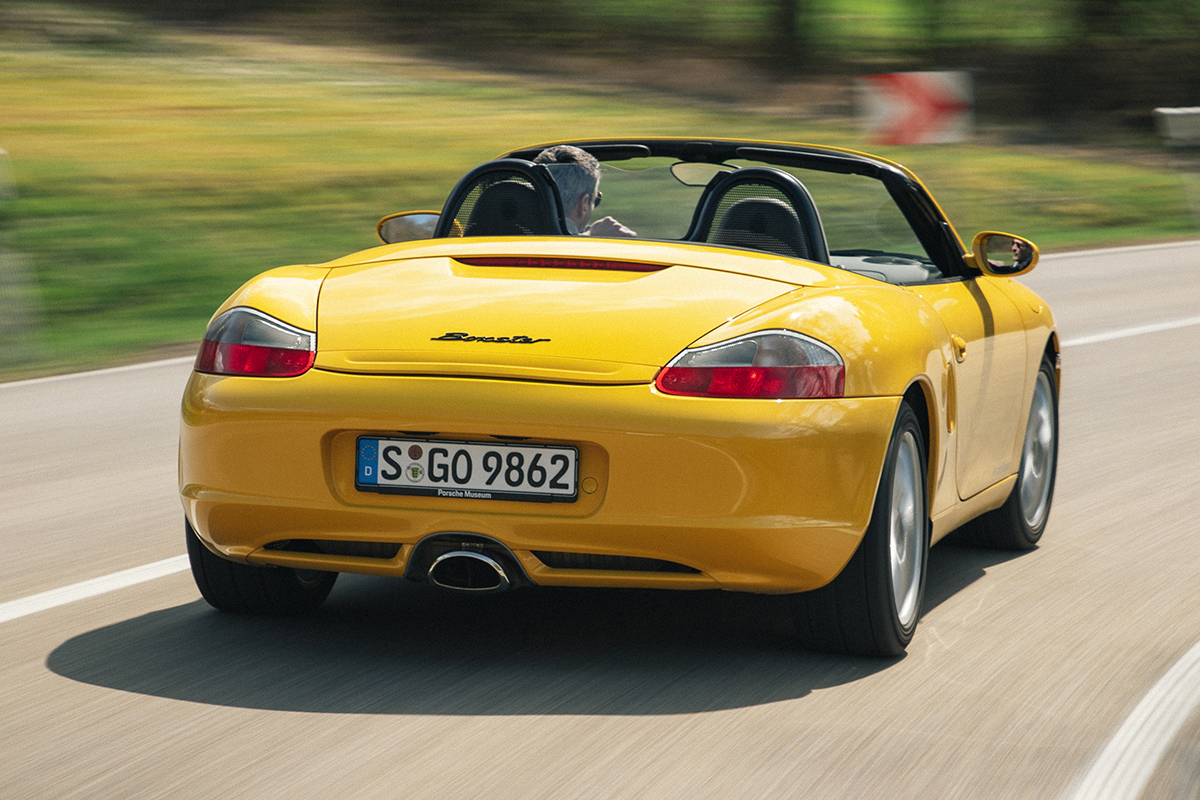
Frankly, the Porsche 986 Boxster should be a lot more expensive to buy given its prestigious badge and exhilarating driving experience. The reason it isn’t is the potential for terrifyingly expensive problems to crop up. However, it is possible to navigate your way around the majority of these with a combination of pre-emptive repair and sensible purchasing. You’ll also need to go in with your eyes open to the fact that maintenance costs can be rather steep, far more so than many cars that cost the same sort of money. And be aware that, given Boxsters are cheap, many owners do now skimp on maintenance, so it’s important to take your time and to find a car that’s been cherished.
Do so, and you’ll end up with a modern classic car that delivers serious driving pleasure – far more than you’d expect for the price – as well as the cachet of one of the most revered badges in performance motoring. After all, who doesn’t fancy the idea of owning their own Porsche? The Boxster lets you achieve that dream, and if you’re careful about how you buy, it can do so on a relatively modest budget, too.
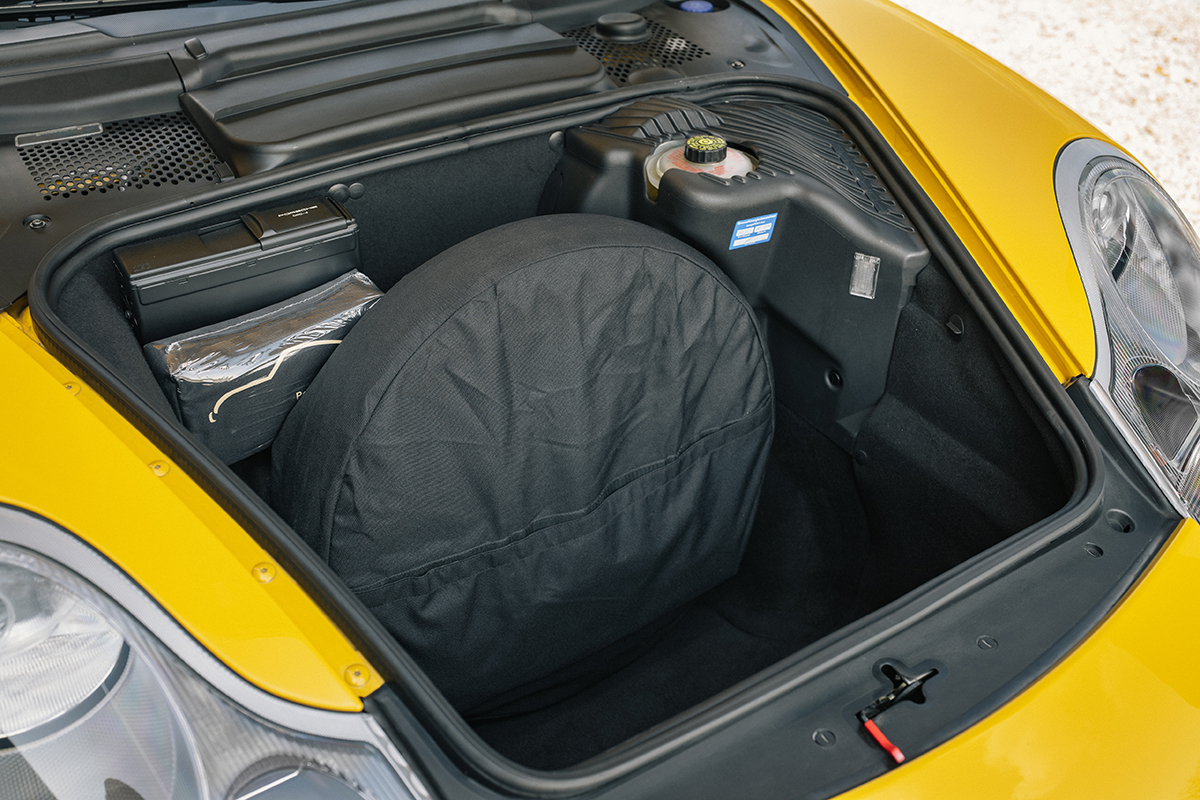
Surprisingly so, as two-seater sports cars go. Obviously, there are no back seats: if you need them, you’ll have to upgrade to a 911, or look at a more relaxed four-seat cabriolet alternative. But there’s quite a bit of room in the boots (there are two of them, one at the back, and a smaller locker under the bonnet), enough to fit in a weekly shop or sufficient luggage for a weekend away.
Meanwhile, the cockpit isn’t quite as spacious as the Boxster’s rivals’, but there’s still enough space and seat adjustment for all but the tallest or widest of occupants to get comfortable. There are some useful little cubbies for your odds and ends, too, but beware that Boxsters made before 2003 didn’t come with a glove compartment, which means storage for larger items inside is pretty limited.
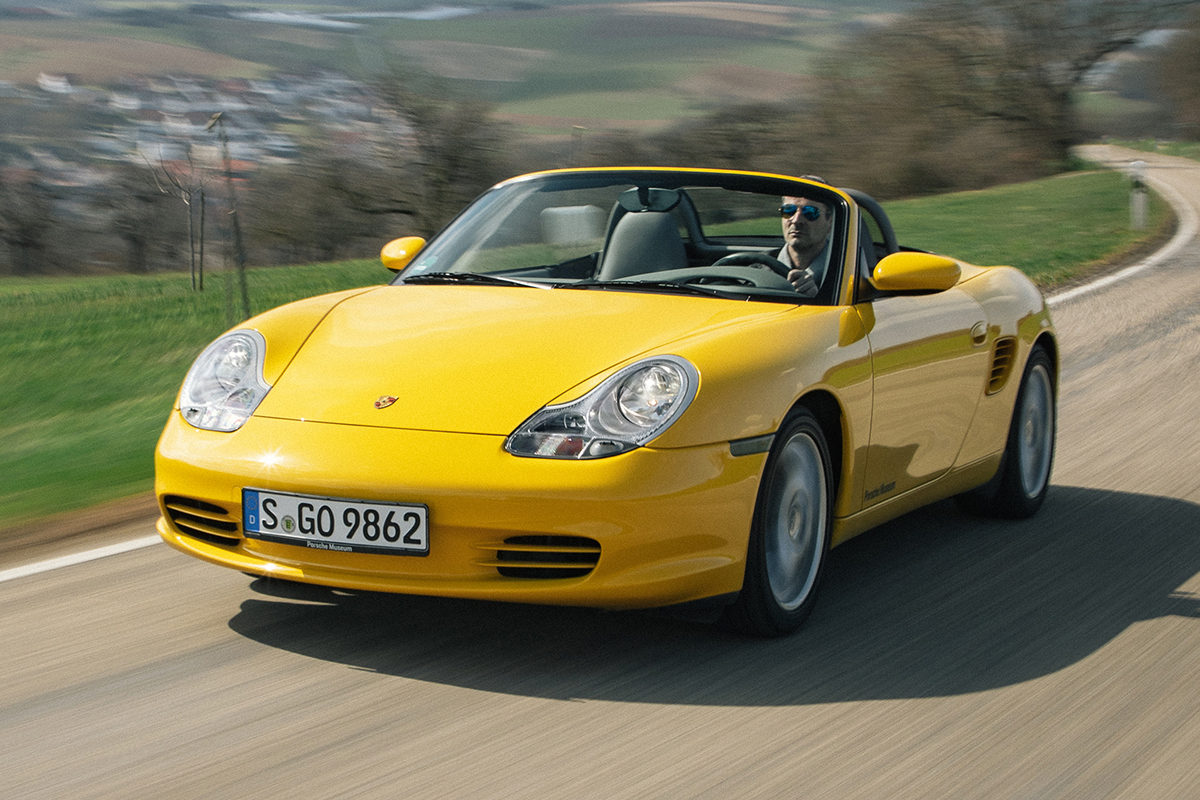
Well, quite simply, it’s one of the best driver’s cars of the 1990s. From its raw, hard-edged engine to its crisp steering and beautifully balanced chassis, the Boxster feels as though it carves you two tyre tracks in the Tarmac, and then follows them with exemplary precision.
For some drivers, its sheer competence is actually a turn-off. It’s so good, they say, that it lacks drama and character; it takes itself too seriously, in other words. But if you enjoy a crisp, clean driving experience a Boxster will prove immensely satisfying to bowl down a back lane, time after time, its rasping engine howling away behind your left ear.
When you aren’t in the mood, the Boxster can feel like a little bit of a compromise; the ride is quite harsh, and the S version in particular can be caught out by sharper-edged potholes. Then again, some would argue that this stiffness is the payoff for the Boxster’s brilliance: this is a sports car, after all, not a luxury saloon. And, having said all that, the ride is still better than many rival sports cars of the time.
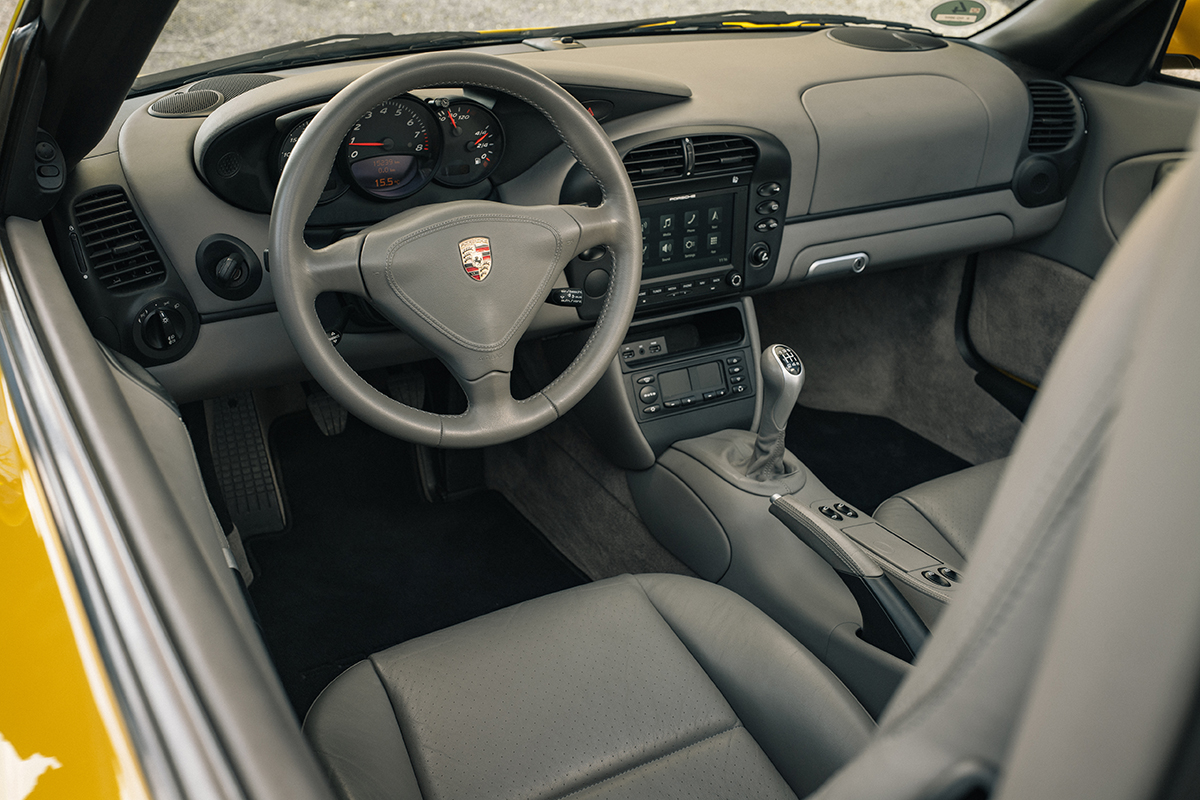
Early Boxsters didn’t come particularly well equipped, even by the standards of the time. Where some of its roadster rivals came with leather seats as standard and most had traction control, both were an expensive option on the Boxster. Cruise control, a trip computer and heated seats were all on the options list, too, as was air-conditioning if you opted for the base model (though it came as standard on the S). And while equipment levels were boosted as time went on, they were never lavish.
Inside, a standard Boxster was therefore a relatively simple thing; what was more, some of the switchgear – notably the indicator stalks and the switches on the centre console – were made from very cheap-seeming plastic, and felt flimsy to the touch. The dashboard was quite stylish, mind you.
Its big, naturally aspirated engine means the Boxster can’t compete on fuel economy with the Audi TT or the Honda S2000, although it does at least beat the Mercedes SLK 3.2 and any TVR you care to mention. In other words, it sits about mid-table among contemporary roadsters in terms of its usage of fuel. You can expect to see around 25mpg on average from a steadily driven Boxster, perhaps more on a long run with the roof up.
Where the costs do start to stack up, though, is on maintenance. Porsche servicing costs have always been fairly eye-watering; more so than most other used cars. Happily, the Boxster is at an age at which it doesn’t really need to go back to the Porsche dealer every year for its service, and can instead be taken to a specialist. However, even these can be pricey, simply because of the specialist knowledge they’re bringing to bear, and parts are expensive, too.
There’s no skimping on this stuff, either; a poorly maintained Porsche will only get more expensive as time goes on and costly bits start to fail. That’s why it makes sense to find the best looked-after example you can; preferably, one with a fully stamped service book that shows up years of timely servicing, and is backed up by a sheaf of invoices detailing what’s been done at every stage. Buying a neglected Boxster cheaply is likely to turn out to be a false economy: you’ll probably have to spend heaps more later on, fixing up whatever goes wrong.
Luckily, one area in which you can save money is on timing belt replacements. That’s because, instead of a rubber belt that needs changing every few years, as per the Audi TT, the Boxster comes with a metal timing chain that should last the lifetime of the car.
There are four very serious issues that can affect these first-generation Boxsters, and for which they’re renowned.
The issue that afflicts the most Boxsters is failure of the rear main oil seal, or RMS. It’s not a catastrophe when it does fail, but it does leak oil, and that can result in engine damage if you don’t keep the oil level topped up. The biggest problem with the RMS is its location; it requires the gearbox to be removed, which makes it a costly job to sort, and that’s why most specialists recommend waiting until the car’s clutch needs replacing, and topping up the oil until then, unless the leak is severe.
Less common is failure of the intermediate shaft bearing (IMS). This is thought to be most common on Boxsters produced from 2000 onwards, but can affect any Boxster, and it can cause very serious engine damage. When the bearing does let go, the engine will make a horrible racket, grinding and rattling noticeably. If your Boxster makes this sort of a noise, turn it off immediately – the longer you keep it running, the greater the chance of engine damage – and get it recovered to a Porsche specialist. IMS failure is hard to detect before it happens, but this is one reason you should always get your Boxster serviced regularly, and by someone who knows what they’re doing, too, because they should be looking out for metal shavings in the oil, seen during an oil and filter change, which are a sure sign of trouble.
Happily, the IMS can be upgraded with a stronger replacement that shouldn’t fail; it’s a costly job, because again, it requires the removal of the gearbox and clutch, but worth doing for the peace of mind it’ll bring you. Once again, something worth doing if your Boxster is due a clutch change anyway; for this reason, it can be a surprisingly good idea to buy a Boxster that needs a clutch, as long as you can factor the cost of replacement into the price you pay. Better still, find a Boxster on which the IMS and RMS work has already been done.
One more problem to be aware of is the failure of the ‘VarioCam’ variable valve timing system’s timing chain pulley. This pulley is lubricated by engine oil; if the oil isn’t changed often enough, it doesn’t provide enough lubrication, and the timing chain can wear away the pulley, causing metal debris to enter the oil, and clog the filter, which in turn can damage the engine. This is a hard issue to spot, but it shouldn’t affect a car that’s been properly maintained: yet another reason to push for a car with a spotless service history.
The final big issue that can affect the Boxster is cracking cylinder bore liners. This is a serious problem that requires a complete engine rebuild or a whole new engine. Thankfully, it seems the issue is limited to pre-2001 cars, and experts contend that if they’ve managed to make it to more than 50,000 miles, they’re probably going to be OK for good. The first sign of cracked bore liners is usually an overheating engine, caused by coolant seeping out into the oil. So check the underside of the oil cap and the dipstick for large quantities of mayonnaise-like residue, which is caused by emulsification (note: a tiny amount probably isn’t an issue, especially if the car’s been laid up for a while, as it can be caused by condensation).
These issues might seem daunting, but with a little outlay on prevention, they don’t have to be. Buy a Boxster well, or get the work done yourself, and it needn’t be any more troubling to own than any other two-seat sports car. However, given that so many of these problems are hard to spot for a layman, it’s a wise idea to get any potential purchase inspected by a Porsche expert before you part with your cash.
Sadly, we’re not done with the potential problems that can afflict the Boxster, though the rest are less catastrophic. They include leaking, defunct or worn out fabric roofs, squeaky or knocking suspension caused by worn bushes or broken springs, and damaged or corroded radiators, this latter problem caused by the front air intakes filling up with old leaves and other road debris.
On the test drive, you’ll also want to look out for engines that misfire or idle roughly, as these could be a sign of cracked ignition coils, and odd flat spots in the power delivery while accelerating, which could suggest that the mass air flow (MAF) sensor is on its way out.
- There were only two models of Boxster available, the standard car, simply badged Boxster, and the more powerful Boxster S. But this belies the fact that both models changed quite a bit throughout the car’s life. To start off with, the standard car came with a 2.5-litre, 201bhp engine and a five-speed gearbox, but this was upgraded in 2000 to a 2.7-litre unit boasting 217bhp. At the same time, the Boxster S was introduced, with a 248bhp 3.2-litre engine and a six-speed gearbox. This same basic engine line-up remained with the Boxster for the rest of its life, though a series of tweaks increased power outputs in 2003, to 225bhp for the standard car and 254bhp for the S.
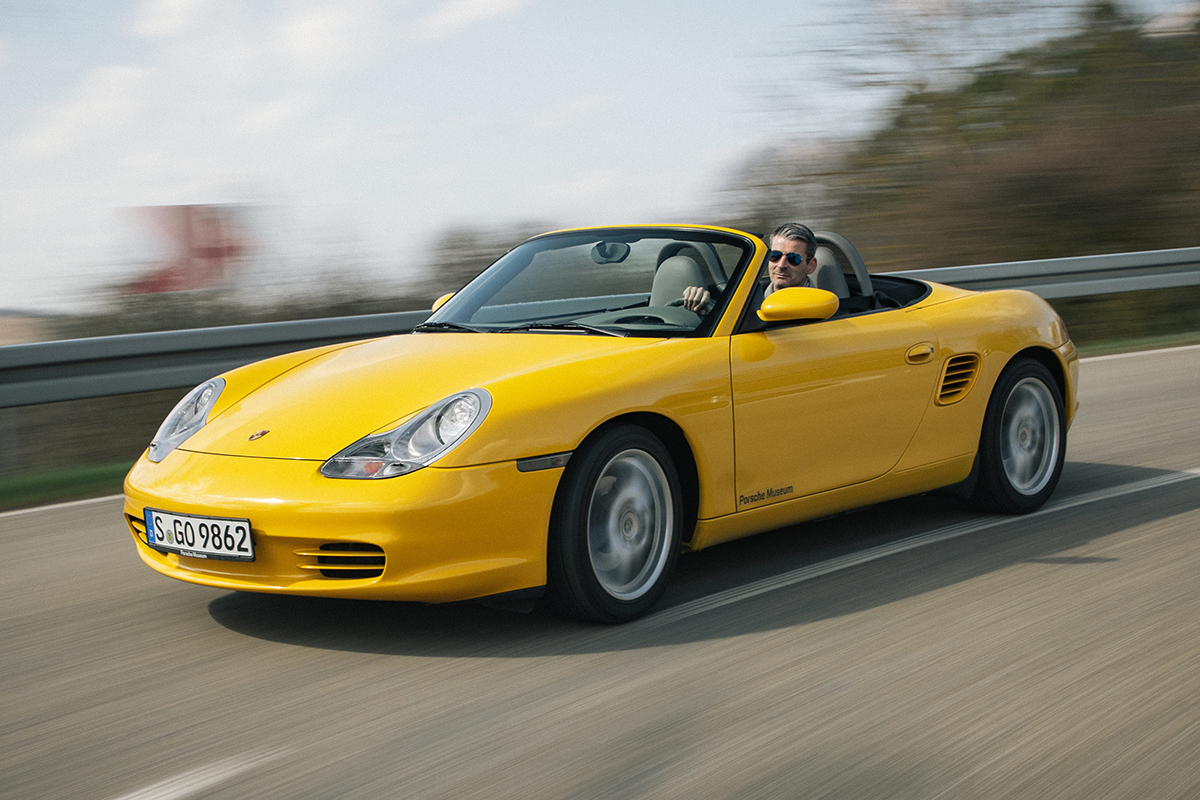
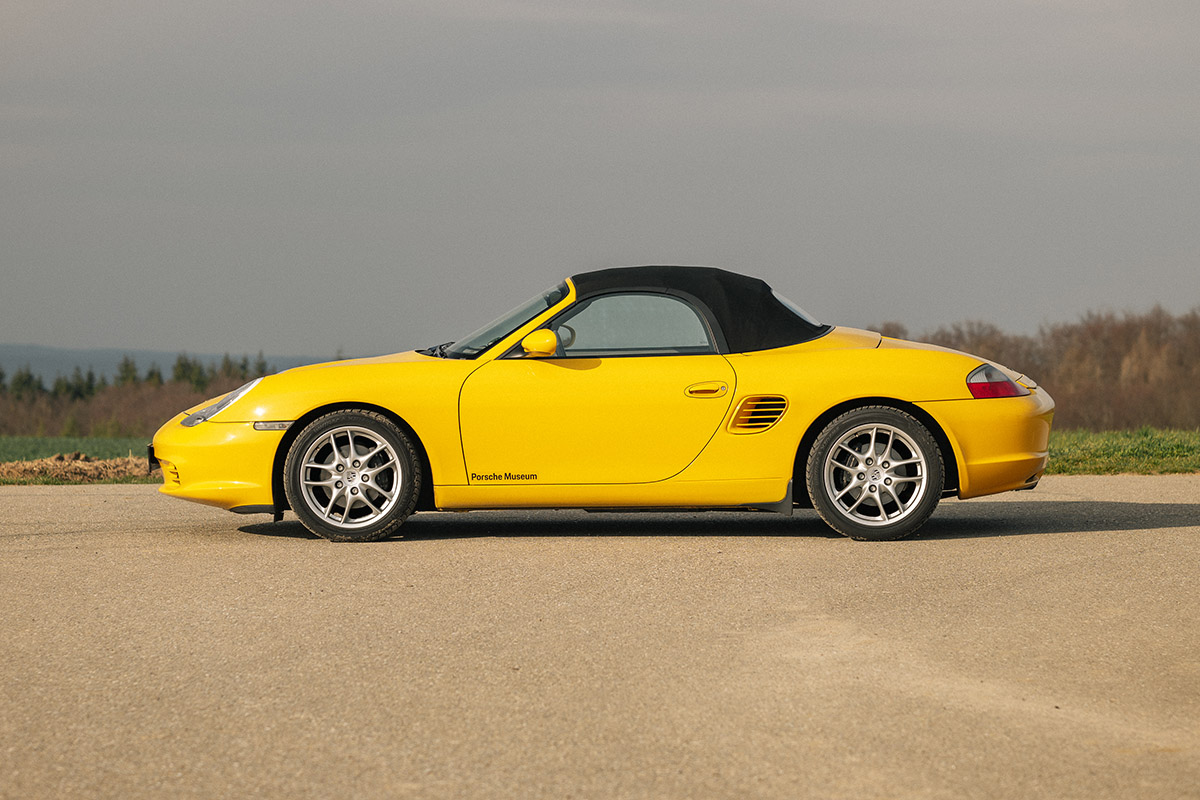
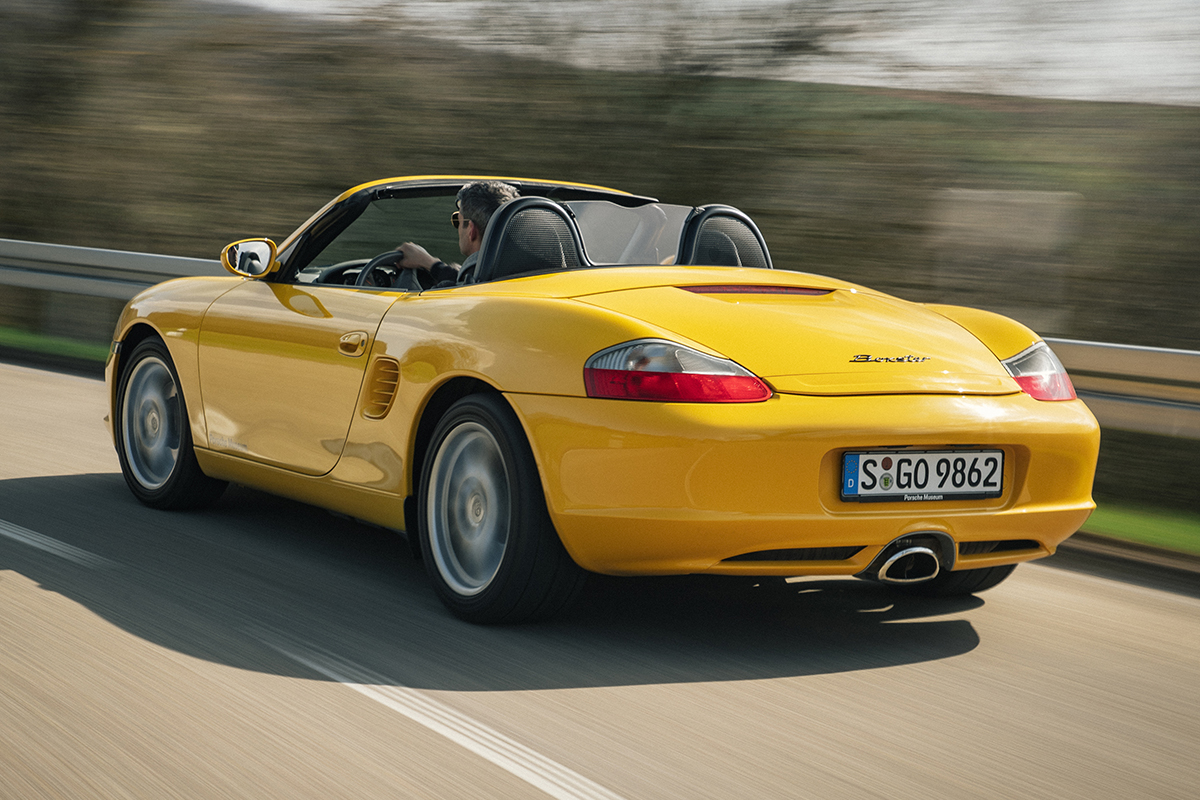
- The engines weren’t the only bits of the Boxster to be upgraded throughout its life. In 2000, the S gained a double-skinned roof, which cut down on wind noise and improved security (the standard car got the same roof a year or so later), and all Boxsters got improved side impact protection. The biggest change to the Boxster range, however, came in 2003, with a mid-life facelift that brought cosmetic tweaks to the front and rear bumpers, a glass rear window instead of the old plastic item, and clear indicator lenses (plus a new, improved gearbox and a new alloy wheel design for the S).
- Throughout the Boxster’s life, it was available with a five-speed automatic gearbox that Porsche branded ‘Tiptronic’. This was a traditional torque converter gearbox with a sequential manual mode that could be accessed either by shifting the gear selector to the left, or by using buttons fitted to the front face of the steering wheel. These days, the Tiptronic Boxsters are relatively rare, and widely considered to be the least desirable models on the market. The Tiptronic gearbox lacked the same sharpness as today’s PDK twin-clutch equivalent, a fact that was made plain by the way it knocked almost a second off the Boxster’s 0-62mph acceleration time. Having said that, the Tiptronic does give a Boxster driver the option to pootle along in traffic without having to use its relatively heavy clutch, so it is worth considering if you plan to drive your Boxster in town on a regular basis.
- Opinions vary as to which Boxster is the best, but our advice is to buy the best 2.7-litre example you can. The standard car lacks the extra power of the S, but it’s still brilliant to drive, and because its suspension is slightly softer, it’s far more tolerable on a ragged British country road. The later the car, the better: that gives you the benefit of the upgrades the Boxster 2.7 received throughout its life, and if you buy a post-2003 car, you get the most powerful version of this engine.
- If, however, you do want the fastest Boxster of all, you’ll have to spend a bit more to get the Boxster S 3.2. The same advice applies, however. In fact, that advice is even more pertinent, because after 2003, the S gained an even better manual gearbox.
- And if you plan to use your Boxster in heavy traffic on a regular basis, the Tiptronic model is worth considering. Not only is it cheaper to buy than the manual car, but the automatic makes it much easier to drive in such conditions. The compromise, of course, is that the Tiptronic is less involving when the road opens up, but weighed up against the extra effort of using the clutch whenever you’re in town, that might feel like a small price to pay.
- Want to buy a Boxster to keep in the garage as an investment, in case values rise? Your best bet is probably to buy an early Boxster 2.5; their comparative rarity means these cars are set to be the most sought after, so if you’re hoping to make money from your purchase, that’s your best chance.

