Porsche Cayenne Review (2003-2010)
Porsche Cayenne cars for sale
3.0
Expert review
Pros
Quick and sporty for an SUV
Sensible used prices if you choose a V6
Practical for passengers and luggage
Cons
Awkward looks
Very expensive to run
Big and unwieldy around town
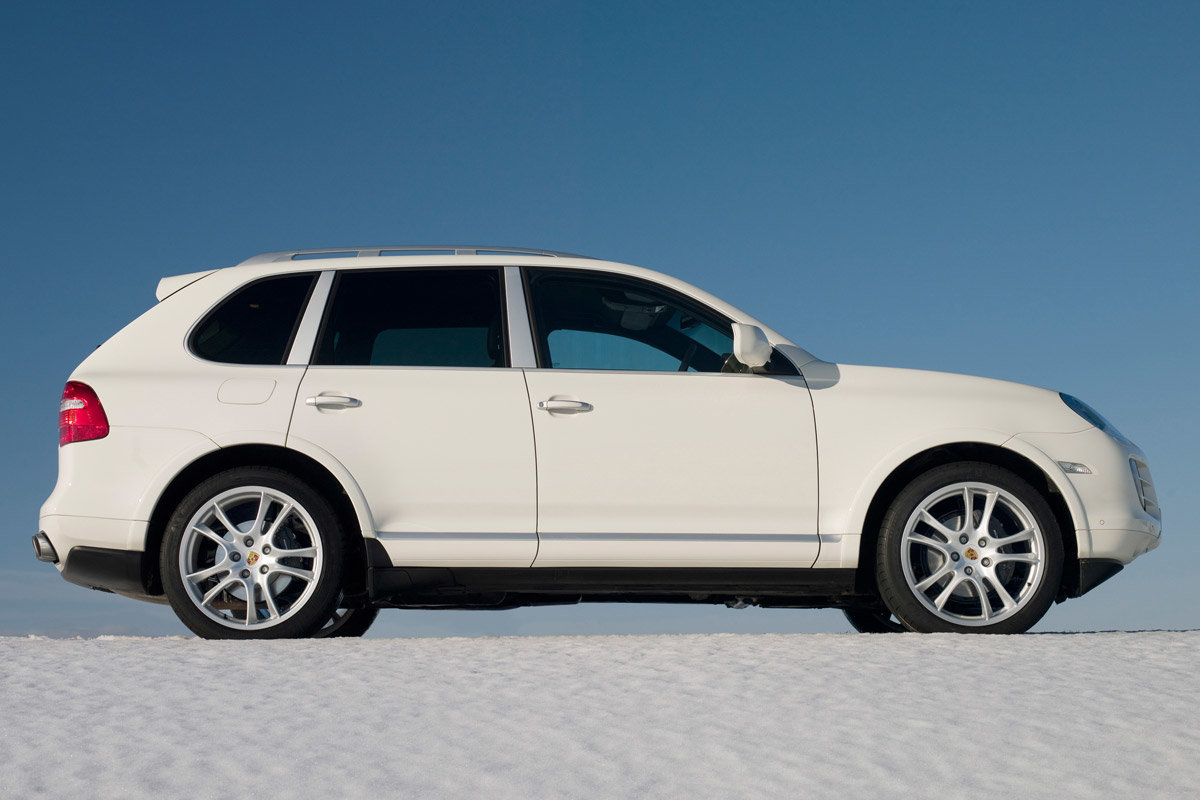
The CarGurus verdict
There are facets of the first-generation Cayenne line that are appealing. Versions such as the Turbo and Turbo S are unquestionably rapid, and driving one is a remarkable experience. Even the lesser variants are compelling to drive, too, and aspects such as the interior are factors in the Cayenne’s favour.
However, any Cayenne will be expensive to run, and if you get one that suffers a major failure, it could quickly lead to significant financial distress. You must be mindful of the potential pitfalls: a used Cayenne might appear cheap but, age-related wear and tear aside, even at best it’ll still have the running costs of a premium German sports SUV that costs tens of thousands of pounds when new.
Its sheer size can also prove problematic, with most variants being around 4.8 metres long and two metres wide. If you have to tackle smaller parking spots, or tighter lanes, the bulk of a Cayenne may prove undesirable. Otherwise, if you must have a Porsche Cayenne and are willing to accept the risks, you’ll find much to enjoy, especially if you’re going for one of the more powerful versions.
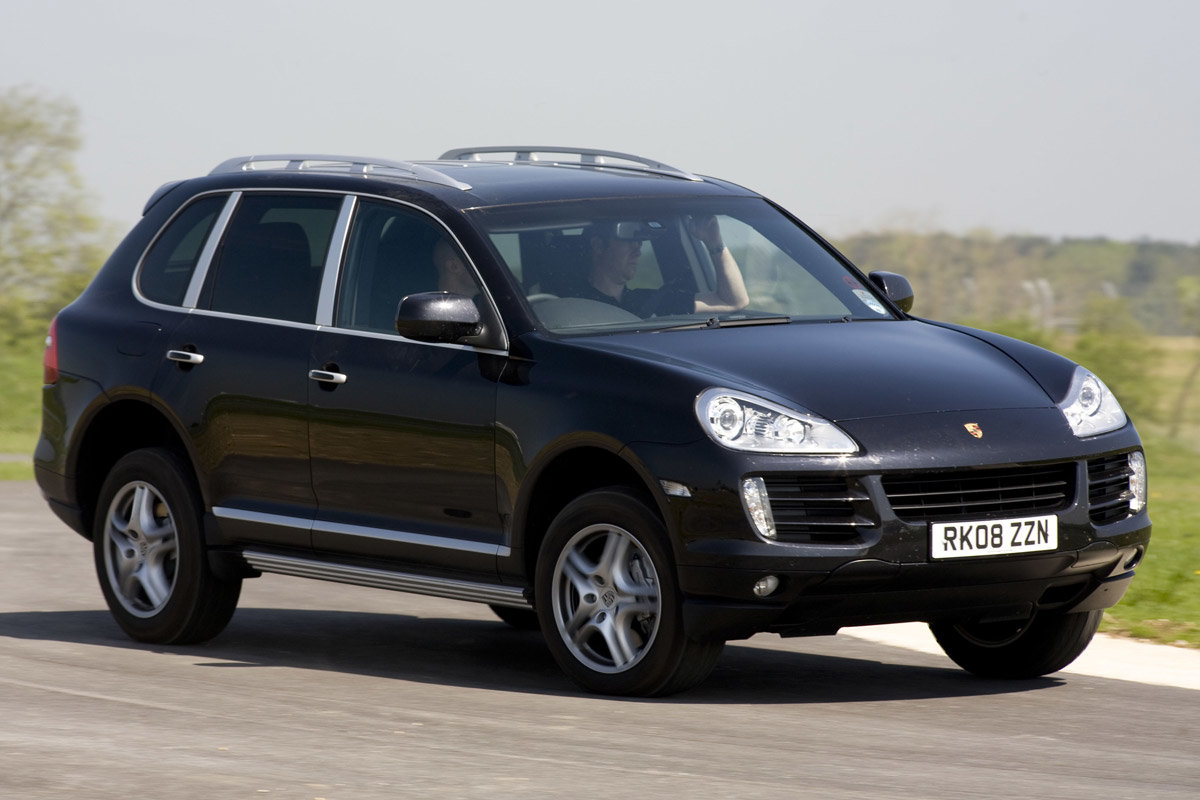
Many were aghast when Porsche launched the first-generation Cayenne in 2003. It was a vast, heavy and complicated SUV, for starters, so drew much disdain from fans of Porsche’s sports cars.
Few were convinced by its styling, too, which took elements of the fabled 911 and stretched them over a bulbous, tall frame. It certainly wasn’t as clean-cut and sharp as the Range Rover Sport that would follow shortly, or the popular BMW X5.
Not that Porsche was bothered, mind; the Cayenne was exactly what many of its customers wanted and it proved to be a tremendous sales success. It wasn’t lacking on the performance and specification front, either, and served up the capabilities that were expected of such a premium high-performance SUV.
In order to bolster its appeal, the Cayenne’s styling was heavily revised in late 2006. It received new headlights, reworked wheel arches, a new front end and more muscular looks, which took the edge off the gawkiness of the earlier model.
New technology, such as direct fuel injection, was added along with options such as Porsche Dynamic Chassis Control – PDCC - which was a set of active anti-roll bars. The new body design also cut drag, which in conjunction with the revised engine line-up, boosted the Cayenne’s efficiency and dynamic performance.
Perhaps the most galling addition for Porsche purists who struggled to come to terms with the Cayenne was the addition of a diesel model in 2009. However, with its lusty 3.0-litre V6 this model still had the poke customers expected, yet it added a welcome injection of parsimony, too.
Unsurprisingly, aside from being costly when new, the Cayenne was expensive to run, even in basic form. And, given that all are at least a decade old, those costs are now only being exacerbated by age and mileage. As a result, if you are set on a Cayenne, you really need to bear in mind just how significant those costs could be, and whether the experience justifies the premium.

While the Cayenne looked like a Porsche (just) and drove like a Porsche, for many new customers it was the car’s space and practicality that were the biggest draw. And the same is true today, because even more than 20 years on from its introduction, the big German machine remains a family-friendly choice.
Its large five-door body covers an interior that will comfortably accommodate almost anything you want to throw at it. Those sitting the back get plenty of leg- and headroom, while there’s even space for a third adult, provided they don’t mind perching on the raised middle seat.
Those sitting up front have an even better deal, with plenty of space and, thanks to the elevated ride height and seating position, a commanding view out. There’s also plenty of seat- and steering wheel adjustment, meaning drivers feel as cosseted behind the wheel as they do in the brand’s 911 sports car. There’s also a decent amount of space to put all the various odds and ends that families acquire on every trip, with a large air-conditioned glovebox, deep door bins and various handy cubbies.
Opening the large hatchback tailgate reveals a generous 540-litre boot, while folding the 60/40 split/fold rear seat flat frees-up a very useful 1,770 litres of carrying capacity. And if you manage to fill the boot, it’s worth bearing in mind the Cayenne can tow an impressive 3,500kg, which means it can pull even the biggest trailers.
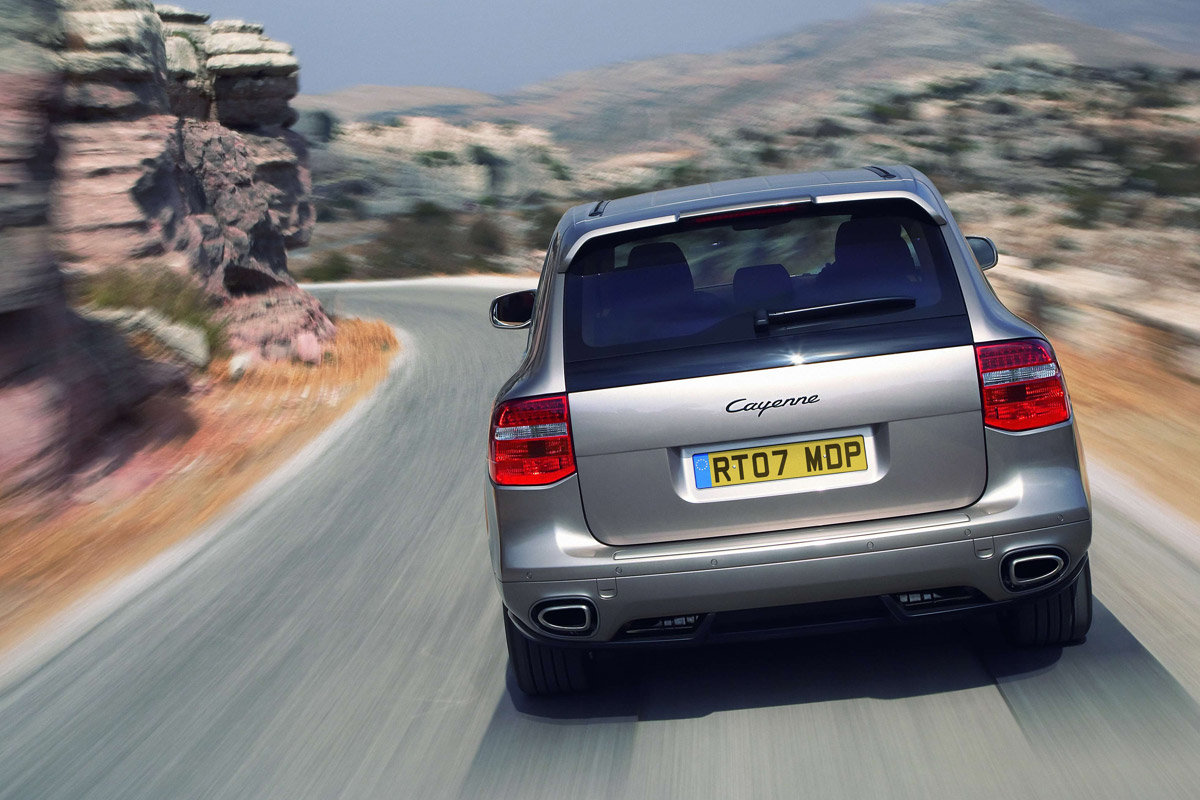
It’s hard to overstate just what a revelation the Cayenne was when it launched in 2003. Up until this point, SUVs had been soft, wallowy and imprecise machines to drive, but using all its sports car know-how, Porsche created an off-roader that was great on the road.
Compared to modern rivals, the Cayenne rolls a little and its steering feels a little slow, but it turns into corners far more keenly than anything this big and heavy has a right to, plus it clings on gamely even when carrying plenty of speed. And of course, with standard four-wheel drive, traction is excellent, even in slippery conditions. More importantly, while there’s some body movement, it’s well controlled and the Porsche feels far more nimble than any contemporary rivals - and some new ones for that matter.
Yet the Cayenne combines this appetite for fun with a refined and easy-going manner when you just want to cruise. The low-speed ride is firm on models without the optional air springs, particularly pre-2007 models, but once up to speed the Porsche cruises in a smooth and serene manner. Perhaps more surprising is how confidence-inspiring the Cayenne feels on crowded city streets, its bulky exterior offset by a high-set driving position and excellent visibility that makes it a doddle to drive.
At launch, customers could pick from a naturally aspirated 4.5-litre V8 S model with 335bhp or the range-topping Cayenne Turbo model, which offered 444bhp. The base V8 would sprint from 0-62mph in 7.2 seconds, which was impressive given the weight and scale of the Cayenne, but the Turbo would achieve the same in just 5.6 seconds.
The Cayenne line-up quickly expanded, though, to include the more affordable 247bhp 3.2-litre V6 – actually a narrow-angle VR6 engine, like that found in a Volkswagen Corrado. It had to work harder but, even so, it could still accelerate the Cayenne from 0-62mph in a reasonable 9.1 seconds. This unit was replaced by a more desirable 285bhp 3.6-litre V6 that arrived in 2006 and shaved a second off the benchmark acceleration test.
At the top of the performance tree is the Turbo S model, which scorches from 0-62mph in 5.2 seconds, which is quick enough to pull down the pants of some seriously high performance sports cars in the traffic light grand prix.
However, arguably the best of the bunch as an all rounder is the frugal Diesel that arrived in 2009. The Audi-sourced 3.0-litre V6 TDI delivered similar outright acceleration to the 3.2-litre petrol V6, but served up far more mid-range torque, making it a quicker car in the real world. Better still, this engine is quiet and refined on the move and capable of returning more than 30mpg on a run.
Amazingly, a six-speed manual gearbox was available on the standard, S and GTS models, but given that most cars were bought as luxury family runarounds most are fitted with the six-speed automatic.
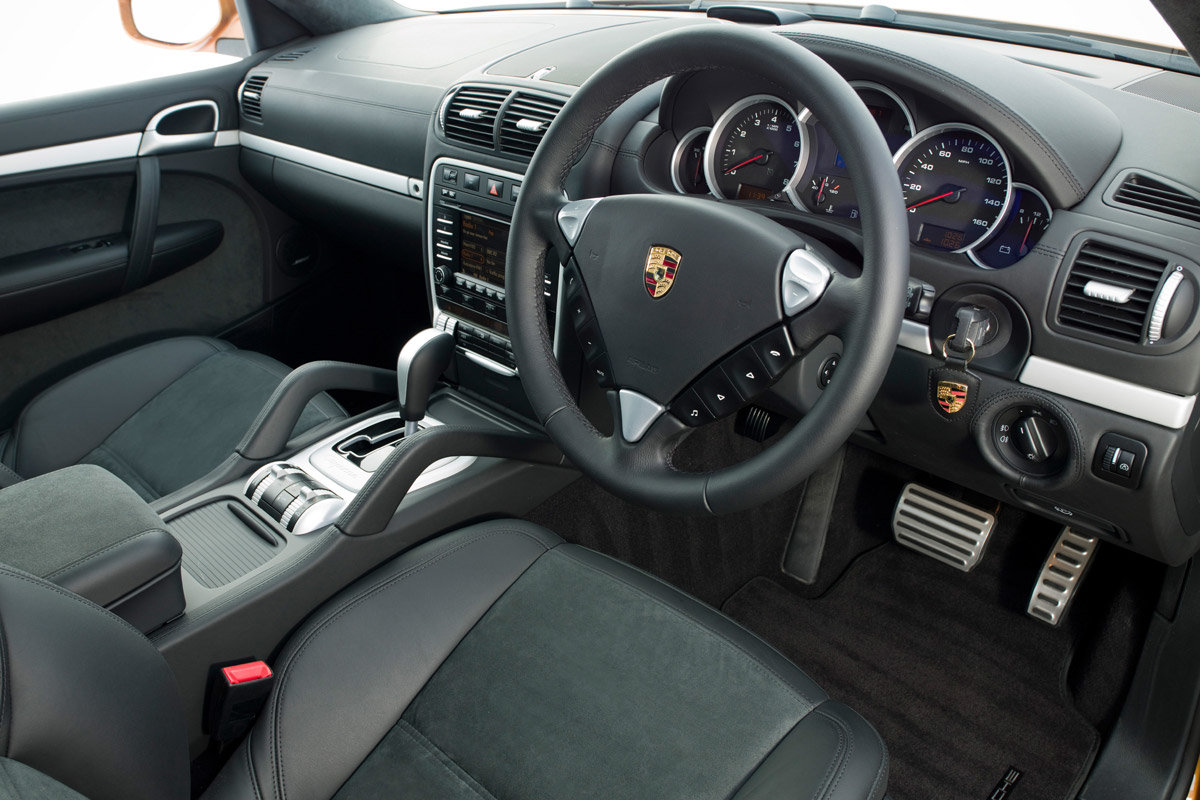
At launch, standard equipment for the Cayenne S included climate control, a ten-speaker stereo, an alarm, on-board computer, electric windows, electrically adjustable front seats and 40/60 split rear seats. The entry-level model lost a few of these gadgets, but overall it’s fairly well equipped.
The Turbo versions benefitted from upgrades that included self-levelling air suspension, Porsche Active Suspension Management, the Porsche Communication Management infotainment system, extended leather trim, heated rear seats, parking sensors and an electrically adjustable and heated steering wheel.
However, as with many Porsche models, the first owners tended to get a little carried away when ordering optional extras. As a result, it’s a good idea to carefully check exactly what any potential purchase is fitted with, as individual examples can vary wildly. Upgraded hi-fi is always worth looking for, as are the upgraded sports seats that are supremely supportive.
When it comes to infotainment, the original Porsche Communication Management set-up feels a bit old hat these days. The graphics are dated and many lack basic connectivity options such as Bluetooth. However, it’s fairly easy to upgrade to a modern system, while buyers with deep pockets can even purchase an official Porsche upgrade unit that packs features such as Apple CarPlay, DAB radio and USB sockets.
If you’re worried about fuel costs, hefty tax bills and four-figure repair and servicing invoices, you should run – not walk – from a Cayenne. These are not inexpensive cars to run or maintain properly, and doubly and triply so if you’re talking about the V8, Turbo and Turbo S versions.
These aren’t new cars now, either, so the costs are rising as age and mileage – and possibly neglectful ownership as well – take their toll. The Cayenne is a big and heavy car, too, so it gets through consumables such as brakes and tyres at a vast rate if worked even remotely hard.
Annual VED costs, to break things down a little, are high. Most fall into the £250 or £585 annual tax band, even the more frugal diesel version. Fuel efficiency is awful, just because the Cayenne’s so heavy, with most versions returning around 20mpg in the real world if driven gently.
Many versions, however, will dip into the low teens or single-figure range if driven as Porsche intended. Refilling the Porsche’s 100-litre fuel tank might make many wince, too, especially given that it’ll often be dry again after some 300 miles.
Running costs will otherwise vary considerably depending on which model you buy, with the lighter and less complicated V6 variants being cheaper to keep going than the naturally aspirated V8s, while the densely packaged and equipment-laden Turbo versions will be the most expensive. Basic annual servicing costs for Cayennes weren’t outrageous when new, often just involving fluid and filter changes, but keeping on top of all the ageing and worn-out parts means that yearly checks and refreshes can quickly get costly. You need to be mindful of consumable costs, too; versions with 21-inch wheels, for example, need tyres that can cost north of £200 apiece.
Independent specialists can help resolve problems and service the cars for less than a main dealer, though, and may also be able to offer upgrades and fixes that are more affordable.
Even from the outset, there were some issues with Cayenne reliability, but on the plus side, at least owners had the impressive Porsche dealer network to fall back on.
There’s even more to look out for today, however. Excessive front tyre wear, engine failures on early 4.5-litre S models, build quality problems, propshaft issues, leaking coolant pipes and tired braking and suspension systems are all things worth keeping an eye out for.
The problem is that any first-generation Cayenne will be getting a bit long in the tooth. Additionally, depreciation has also made many versions cheap. This means that some will have fallen into the hands of those not able or willing to maintain them properly. Consequently, many examples will transpire to be an absolute money pit due to neglect and overlooked issues.
If you want a used Cayenne, as a result, it’s worth going for the best you can afford, but even so, you’ll still want to keep several thousand quid aside for emergency repairs, especially if you buy one of the more powerful versions. That’s not to say that you’ll need to spend that money, as some get by with just regular servicing and the odd repair, but you don’t want to buy one and have nothing to fall back on.
There have also been several recalls, including some for potential fuel leaks, detaching headlights, gear selector issues and seat frame problems. Many of these apply to Cayennes built right up until the end of production, so if you’re looking at a used example then check carefully to see if it has been attended to. You can use the online “Check vehicle recalls” website to find out if a car you’re interested in is due a recall, and then check its history to ensure the required updates have been carried out. If in doubt, though, speak to a dealer.
Depending on the age of the Cayenne in question, you might be able to source one through Porsche’s Approved Pre-Owned cars scheme, and in this case the company does offer warranties for cars up to 15 years old with up to 125,000 miles on the clock. Check the conditions carefully, though, as myriad problems and a lack of history might make your potential purchase ineligible for a warranty.
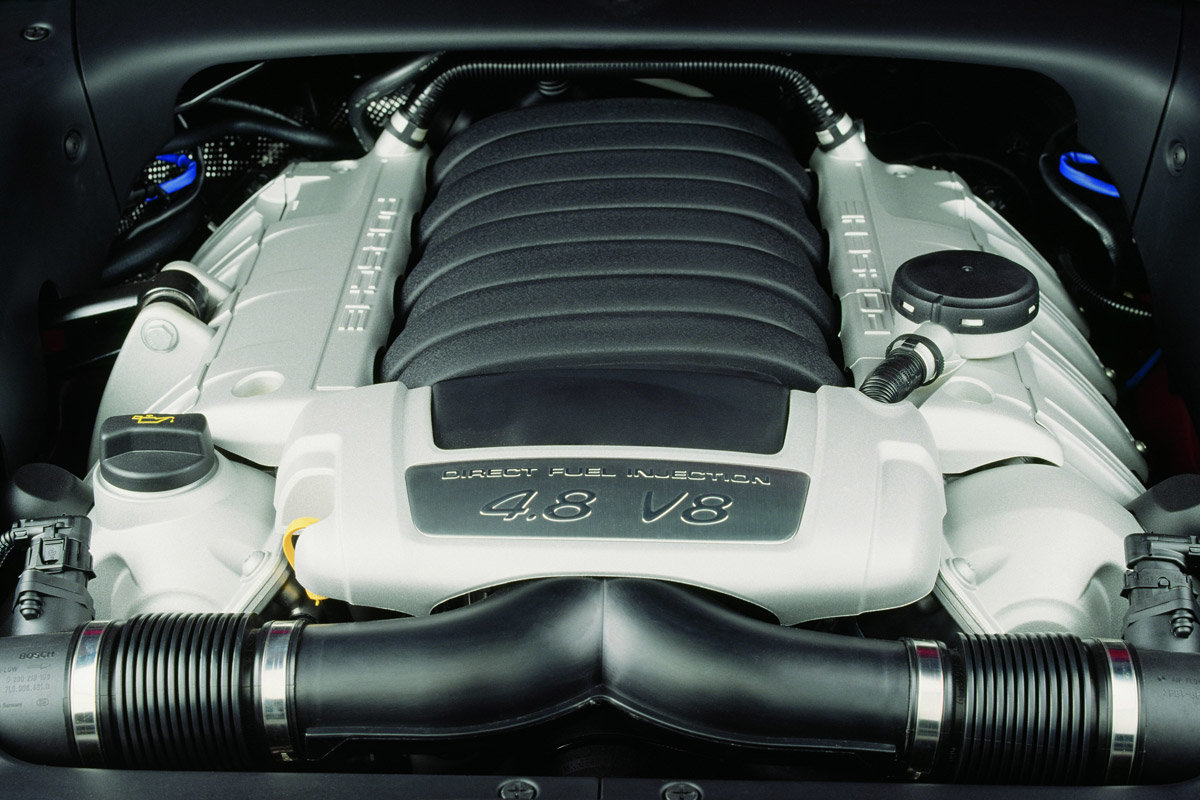
- If you’re a keen driver, then it’s worth seeking out the relatively rare GTS model, which featured lowered and stiffened conventional steel sprung suspension and the option of a six-speed manual gearbox. It was fractionally lighter than the S, yet used a tweaked, 399bhp version of that car’s 4.8-litre V8, which delivered 399bhp, 0-62mph in 5.7 seconds and a bombastic, NASCAR-style soundtrack. The result was a Cayenne with an even more engaging driving experience, closer in spirit than the others to the brand’s legendary sports cars.
- For those Cayenne enthusiasts that crave rarity, then the Transsyberia is the version to look out for. Built to compete in the gruelling 4,000-mile rally of the same name held in 2007, just 26 of these special models were built. Based on the 4.8 S, they featured many modifications, including uprated suspension, extra rooftop lights, underbody protection, a rollcage and off-road tyres. In 2009 Porsche then released a special celebratory road-going edition, which was based on the GTS and limited to 600 examples.
- It’s unlikely many Cayenne owners will head off the beaten track in their pride and joy, but it’s reassuring to know the Porsche is up to the task of tackling rutted tracks if required. Not only does the sophisticated four-wheel-drive system automatically shuffle torque to the axle with most traction, there’s also a low range setting for the gearbox, which helps when crawling up and down steep hills. Locking differentials were also available as an option, while the air suspension had an off-road setting that raised the ride height for maximum ground clearance.
- The best used buy: If you’re set on owning a used first-generation Cayenne, we’d try and go for the later facelifted 3.6-litre V6 model. Aside from looking better, it’s less complicated and should prove cheaper to run. It won’t have the performance of the V8 variants, but it’ll still be a gratifying car to drive. They’re also often sensibly priced, too.
- The most efficient: No Cayenne is particularly economical, which won’t surprise anyone. Even if you go for the automatic 3.0-litre diesel version, you’ll do well to get more than 30mpg out of it, and the rest all return 20mpg or less. The V6 is among the better of the petrol models in terms of efficiency, but the standard V8 S can also return around 19mpg in the real world as it doesn’t have to work as hard as the V6. Early V8s can be problematic, however.
- For maximum performance: The later 4.8-litre Turbo S is devastatingly quick. Its twin turbochargers help its engine churn out 542bhp, which is enough to slingshot the 2355kg Cayenne from 0-62mph in just 4.8 seconds. Flat out, it’ll do 174mph. These versions are more complicated and costly to run than the standard Turbo and V8-engined models, though, so tread carefully.
- For driving thrills: Take a look at the GTS model if you want the sportiest experience, as this version of the Cayenne is available with a six-speed manual gearbox and packs a potent V8 engine, special sports suspension and a range of interior and exterior upgrades.

