Ssangyong Musso Review (2018-present)
Ssangyong Musso cars for sale
4.0
Expert review
Pros
Great value for money
Surprisingly pleasant inside
Strong and refined engine
Cons
Poor ride comfort
Likely to depreciate comparatively heavily
Not as affordable to run as some rivals
The CarGurus verdict
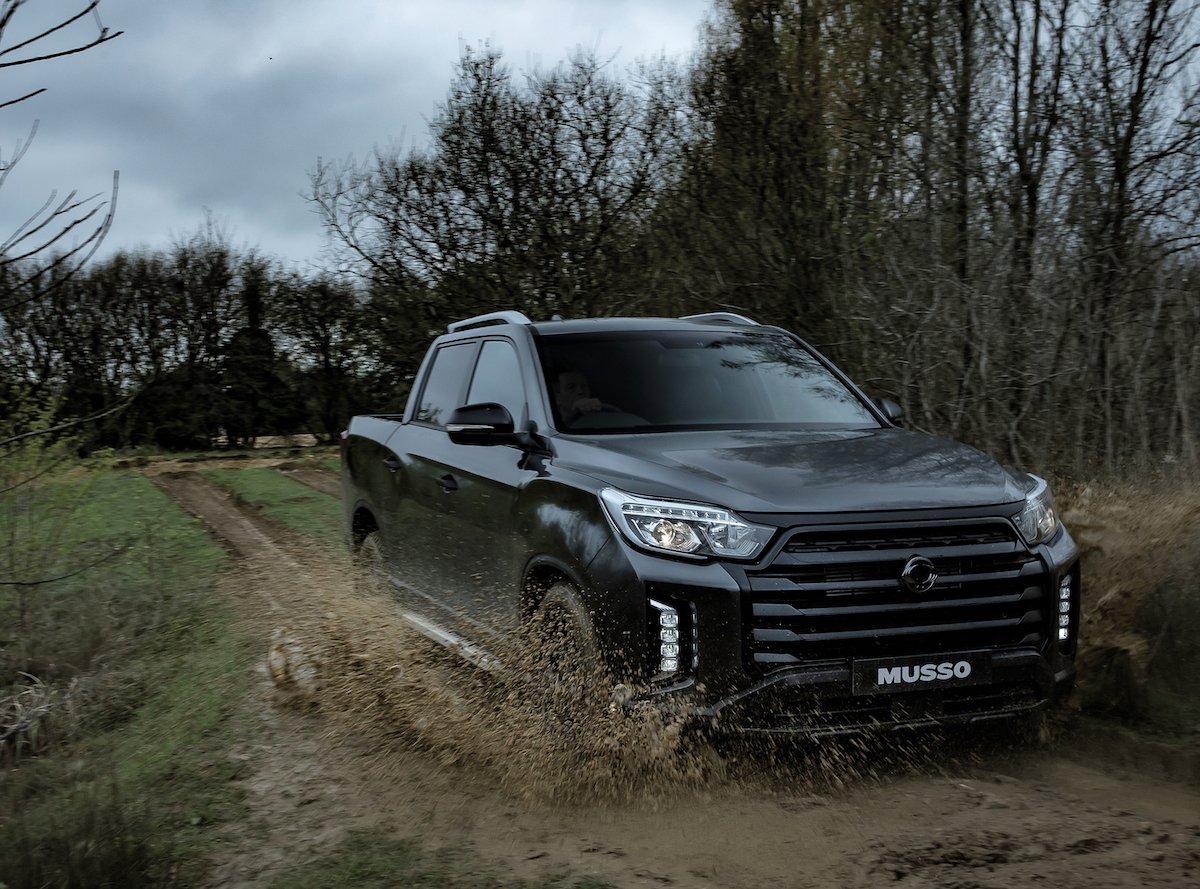
The SsangYong Musso is an accomplished pickup that deserves to be viewed on its own merits, not just its bargain pricing. On the plus side, there’s impressive refinement by pickup standards, competitive performance and excellent towing capabilities. On the other hand, the woolly steering means that the Musso isn’t especially engaging to drive, but more critically, the juddery ride means it’s not as relaxing as it could be, either. Running costs and depreciation are likely to be somewhat higher than some of its competitors.
Ultimately, it represents a lot of truck for the money. Bear in mind that four-wheel drive is standard, an automatic gearbox is included on all barring the EX model, and equipment levels are good across the board. Throw in an impressive warranty and SsangYong’s reputation for producing tough, durable vehicles, and it’s clear that the Musso is a genuine contender in this competitive market.
What is the SsangYong Musso?
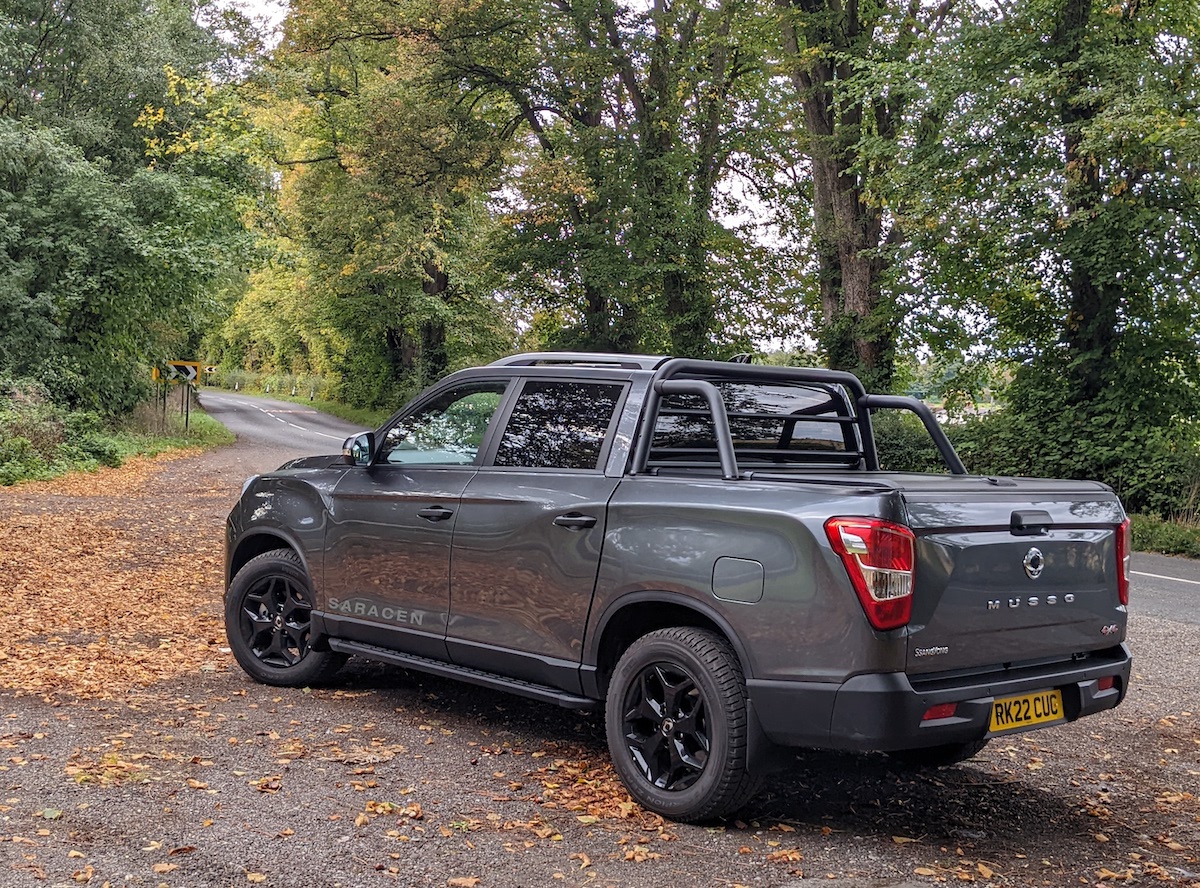
These days, the pickup market is awash with household names, but unless you’re a fan of old school 4X4s you might not be that familiar with SsangYong (which changed its name to KGM in 2023). The South Korean company is an SUV specialist. In fact, in the UK, it’s all it does aside from the Musso pickup, which is itself based on the Rexton SUV.
In some respects, that gives the Musso the best of both worlds. The sturdy ladder frame chassis and torquey 2.2-litre diesel engine shared with the Rexton mean that it’s more than up to the job as a pickup, while the interior feels like a well-equipped SUV.
It’s not without its foibles – we’ll get onto those in a minute – but the Musso is up there with the best of the bunch in a lot of key areas, and it undercuts its main rivals by thousands of pounds in most instances. The key to this value for money is that the Musso only comes in four-door crew cab format, and all apart from the entry-level EX model have four-wheel drive and automatic transmission as standard. Equipment levels are pretty generous, too, and there are no real options to consider, so the prices that you see advertised reflect what you’re actually likely to pay, starting with the EX at just over £27,000 (excluding VAT).
For those still nervous about this little-known brand’s bargain basement prices, it’s worth pointing out that SsangYong offers a very generous seven-year warranty and it has a reputation for building robust workhorses.
If you’re considering a brand new Musso, rivals will include the Ford Ranger, Toyota Hilux and Izuzu D-Max, and that’s about it as the vast majority of the traditional pickup truck models have now been discontinued and all-new vehicles. If you’re considering a used Musso, however, rivals will be more plentiful and include the Nissan Navara, Volkswagen Amarok and Mitsubishi L200.
How practical is it?
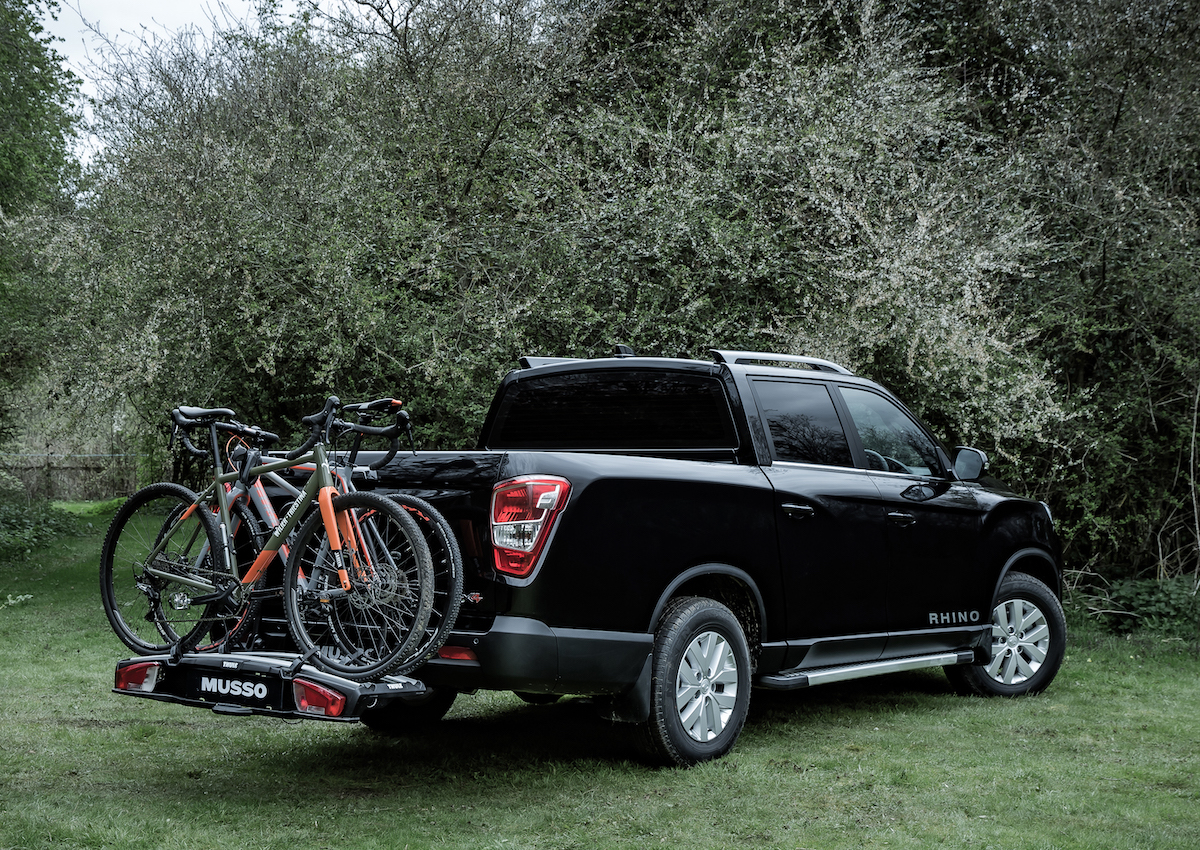
There’s no single cab option for the Musso, so you get four doors and five seats on all versions. In terms of practicality, the only real choice to be made is whether to go for the standard model or the extended wheelbase Musso Rhino model, which is only available in top spec trim.
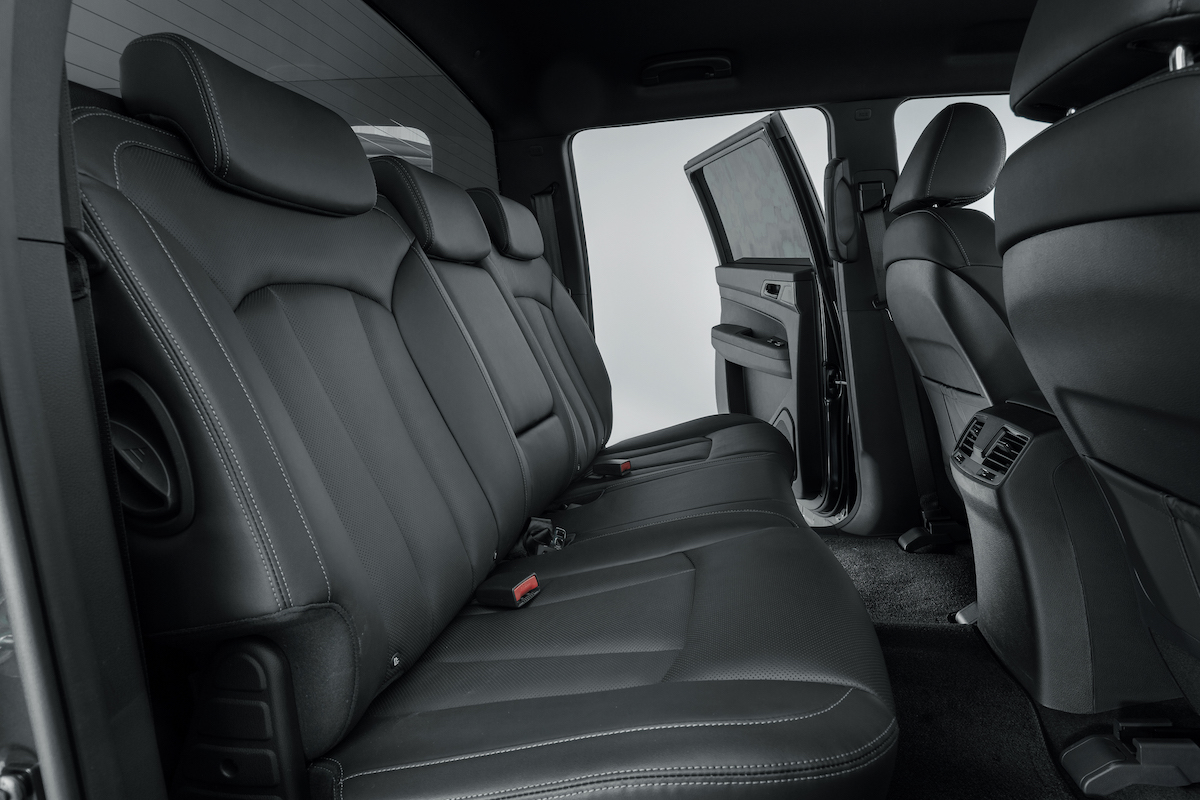
There’s plenty of space inside the cabin. In fact, the Musso offers more room in the back than a lot of its rivals. We found the front seats to be a little flat on the move, but eight-way adjustability on the driver’s seat (in Saracen or Rhino trim) helps with finding a good driving position. You sit high, with a commanding view of the road in front and behind. There’s also plenty of space for bits and pieces, with large door bins front and rear, plus a central storage compartment and a pair of cupholders.
The Musso’s payload and trailer towing capacities match the best in class. It can tow a braked trailer of up to 3.5 tonnes (3.2 tonnes for the EX with manual transmission) at the same time as hauling a payload of more than a tonne (1,095kg for the standard wheelbase auto). While the manual version loses out on braked towing capacity, it actually has a slightly higher payload at 1,105kg.
In standard wheelbase form, the load bed measures 1,570mm wide and 1,300mm long. That’s big enough to take a standard-sized Euro pallet, and it’s a sensible shape with modest wheel arch intrusion and plenty of anchorage points, but it’s slightly smaller than most of its competitors. The load bed on the Ford Ranger Double Cab, for instance, measures 1,575mm wide and 1,560mm long. It’s principally the length of the load bay that lets the standard Musso down. Switch to the long-wheelbase Rhino version and the situation reverses, with one of the longest and largest load bays on the market at 1,570mm wide and a whopping 1,610mm long.

What's it like to drive?
Pickups are becoming increasingly car-like to drive, and the Musso is no exception. Its 2.2-litre diesel engine is among the brawniest turbodiesel offerings in the class, with 441Nm of torque in automatic form, and yet it’s also one of the smoothest and quietest. It can’t quite match the refinement of a modern SUV, but it’s not far off.
All that grunt makes short work of heavy loads, but the Musso’s still no athlete. Although its 11.9-second 0-62mph time is quicker than the Isuzu D-Max, it doesn’t feel as punchy as the Ford Ranger or the 2.8-litre version of the Toyota Hilux. The six-speed automatic gearbox isn’t the sharpest either, although the shifts are smooth and unobtrusive.
It’s a similar story with the handling. The steering has a nice chunky-yet-manageable weight to it, but it’s slow to respond and lacks feel. The biggest issue, however, is the ride. Even by unladen pickup standards, the Musso feels unsettled, with a ceaseless onslaught of jolts and judders through the chassis. It’s unlikely to be a deal-breaker if you’re looking for a truck to use for work, but it is one area where the Musso struggles against its more expensive competitors.
Technology, equipment & infotainment
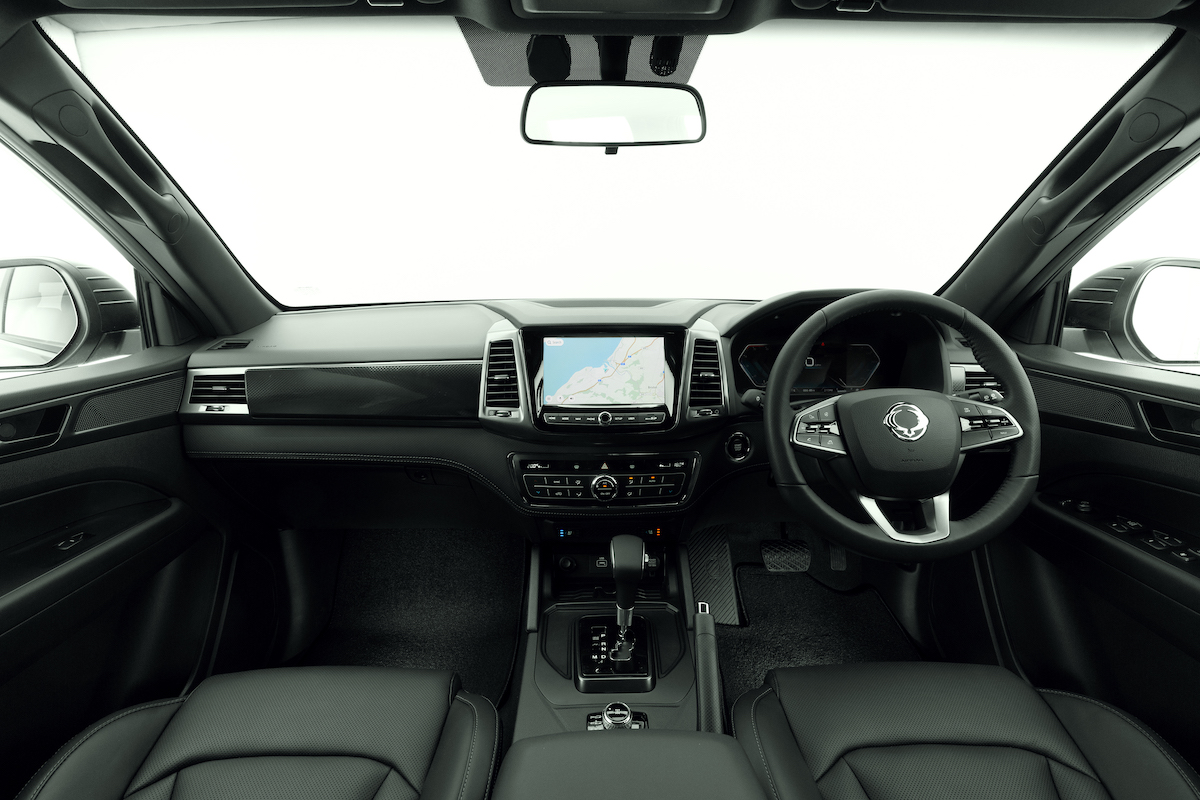
One thing you won’t be left wanting for is equipment. The entry-level EX model is comparatively spartan, but even that comes with manual air-conditioning, DAB radio and Bluetooth. Step up to Rebel specification and you get faux leather seats with heating and ventilation, a heated steering wheel, a reversing camera and an 8.0-inch touchscreen infotainment system with Apple CarPlay and Android Auto connectivity.
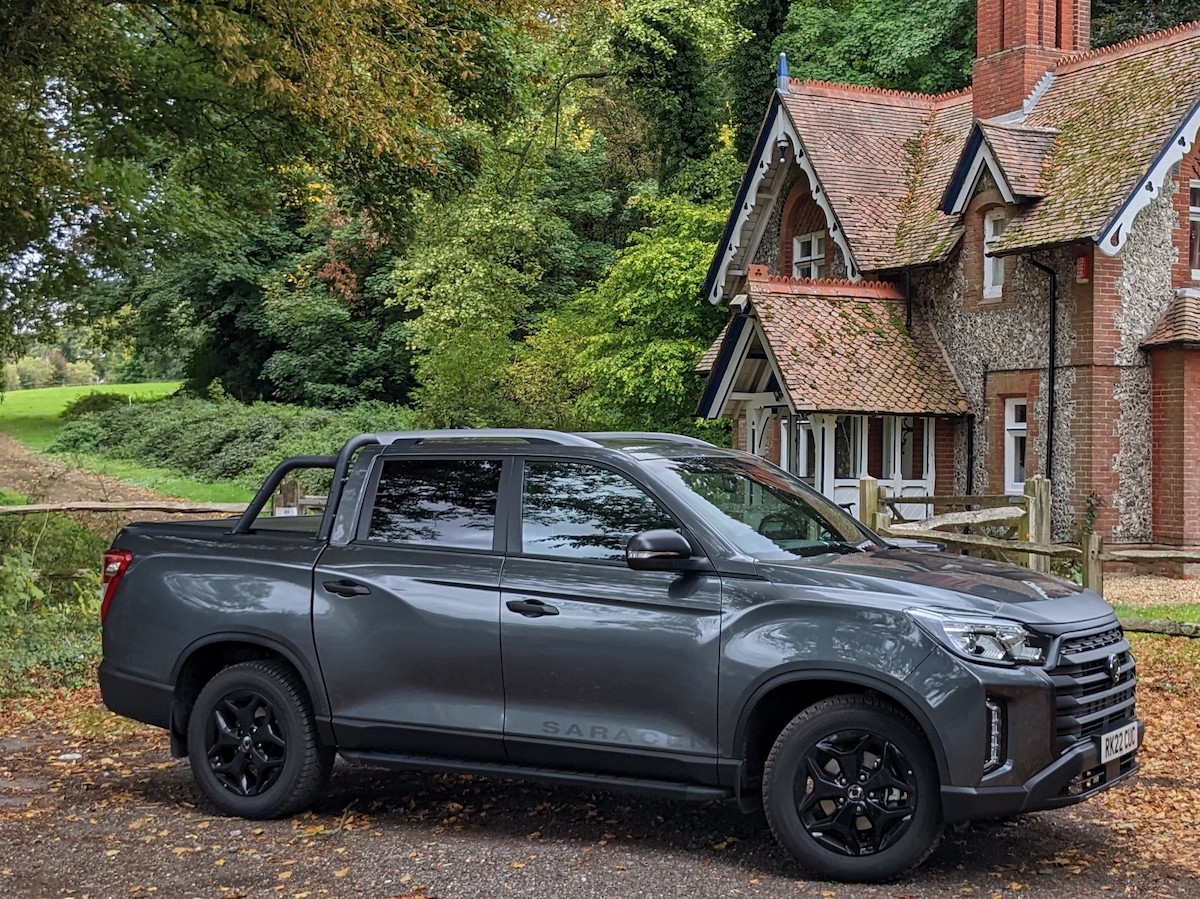
Next up is the Musso Saracen, which is distinguished by its own exterior styling pack with LED daytime running lights and slightly larger 18-inch wheels. Inside, you get Nappa leather seats, which are electrically adjustable in the front and heated in the back. There’s also dual zone climate control, front- and rear parking sensors, cruise control and an upgraded infotainment system with a larger 9.2-inch screen and the addition of TomTom navigation. This was the infotainment system fitted to our test car, and despite taking a moment to boot up it responded crisply and proved straightforward to use.
The long-wheelbase Rhino features essentially the same equipment as the Saracen, although it actually rides on the smaller 17-inch alloy wheels. Both get rear privacy glass, plus a suite of driver assistance features including automatic emergency braking, Blind Spot Detection, Lane Change Assist and Rear Cross Traffic Alert.
If you’re buying privately, we’d at least aim for Rebel trim, but all examples come with selectable part-time four-wheel drive, Trailer Sway Control, Hill Descent Control and six airbags. However, like most regular cars these days, there’s no spare wheel, with a tyre repair kit provided instead.
Ssangyong Musso running costs
According to the WLTP test, the standard wheelbase Musso with automatic transmission returns fuel economy of 31.5mpg, with the EX manual and the long wheelbase Rhino coming in at 33.8mpg and 30.2mpg, respectively. Those figures are about what you’d expect for a 4X4 pickup, although they are a few mpg behind the likes of the Ford Ranger. As with any vehicle, you’re unlikely to match these laboratory figures in the real world: expect to see high 20s in normal use.
All versions of the Musso come with a payload of more than 1,000kg, which means they’re classed as light commercial vehicles for taxation purposes. As such, they fall into the £290 flat-rate bracket for vehicle excise duty (road tax). They’re also eligible for VAT reclaims if purchased by a VAT registered company. Similarly, those who do a mixture of business and personal use will be able to apply the fixed-rate benefit in kind (BiK) ratings reserved for commercial vehicles, potentially saving thousands of pounds a year compared to running a regular company car.
One thing to watch out for is insurance, with all versions of the Musso falling into the highest group, 50D. The Ford Ranger, for comparison, tends to come in at around group 40, depending on spec. This doesn’t automatically mean that you’ll pay more – insurers take a number of other factors into account for each individual quote – but it will be worth checking.
The Musso’s service interval of 12,500 miles or 12 months is competitive with other diesel pickups. SsangYong offers a standard service plan for £27.99 per month, which is roughly in line with other pickup manufacturers, although fractionally more than some.
Perhaps the biggest factor to consider is depreciation. The Musso is one of several recent SsangYong models that are helping to improve the brand’s reputation. As such, residual values are improving, but the Musso still won’t hold its value as well as something like a Toyota Hilux. However, the SsangYong’s long warranty and its low purchase price should help to offset any money that you lose when it comes to trade-in time.
Ssangyong Musso reliability
SsangYong is a 4X4 specialist with a reputation for producing rugged, dependable vehicles. This bodes well for the Musso, although there’s not a great deal of information out there on the latest model’s reliability. It’s only sold in relatively small numbers in the UK, which means that the Musso doesn’t tend to figure in the usual reliability surveys.
The previous generation Musso used a Mercedes-sourced diesel engine, but the current model comes with the firm’s own 2.2-litre diesel. Based on SsangYong’s years of experience with vehicles of this type, we wouldn’t anticipate any issues from the company’s decision to go it alone. Indeed, if fellow South Korean manufacturers Kia and Hyundai are anything to go by, we’d expect SsangYong’s reliability to compare favourably to its European counterparts.
There are a handful of anecdotal reports online of minor issues. These mostly seem to relate to the electrics, such as the infotainment system freezing, the windows opening by themselves and the remote central locking failing to activate on the key fob. Such reports are uncommon, however, suggesting that faults are rare.
Most importantly, the Musso comes with one of the best warranties in the business, offering seven years and 150,000 miles of cover as standard, including faulty parts, materials and workmanship at the time of manufacture. For comparison, the Toyota Hilux’s warranty runs for an additional three years, but only covers the first 100,000 miles, and that ten-year cover is reliant on you getting the vehicles serviced with the Toyota main dealer network, which could prove pricey. Meanwhile, the Isuzu D-Max and Ford Ranger offer five years/120,000 miles and three years/60,000 miles, respectively.
- The current Musso was launched in 2018. It’s a far more accomplished car than the model it replaced, which traded heavily on its budget price tag. Since then, the basic recipe has stayed the same, but the Musso received a cosmetic facelift in late 2021. Changes included a revised front bumper, a new chrome radiator grille and large upright fog lamps in place of the smaller round items on its predecessor. Saracen models also got a new 18-inch wheel design.
- Another notable change came at the start of 2022 with an upgraded engine. Cars sold from 2018 to the end of 2021 came with a slightly lower powered version of the same 2.2-litre turbocharged diesel engine. These produced 179bhp and 420Nm of torque, while later models come with 199bhp and 441Nm.
- The Musso has never offered the most engaging drive, even by pickup standards, but it does have an unusual claim to fame. The previous generation model was used as the basis of the UK’s first – and only – production-based pickup racing series. It ran for one season in 2017, using modified versions of the standard Musso. These were converted to rear-wheel drive, remapped for extra power and put on a crash diet that saw them shed nearly half a tonne of weight. The series was a marketing hit for SsangYong, but it has yet to be repeated.
- If you’re on a budget: There’s no auto option and it loses out on some of the creature comforts, but the EX is a rugged and capable pickup for a bargain price. If you don’t plan on towing, it will do everything that the more expensive Mussos can do.
- If you’re looking for a tow car: Go for one of the automatic models. It’s not so much that you’re likely to need the extra towing capacity – the manual Musso’s 3,200kg is more than enough for a large caravan or a mini digger on a trailer – but it will make life far easier in stop-start traffic. If you can stretch to the Rhino, the extra wheelbase (no pun intended) should give you even greater stability, too.
- As a family car: All Mussos have a five-seat crew cab layout with Isofix points on the rear outer seats and six airbags. Features like dual-zone climate control and heated rear seats are likely to go down well on the Saracen and Rhino models if you regularly have passengers in the back. Plus, there’s nicer seat materials and better trim, which help to create a more sophisticated environment. These feel especially plush in comparison to other pickups, in fact, thanks to high-grade plastics and study assembly.
- For the ultimate load-lugger: The Rhino offers an additional 45kg of payload capacity over the regular automatic, taking the total to 1,140kg. This may be the most expensive model in the range, but the £1,000 premium (before VAT) that you pay for this long wheelbase model strikes us as good value for the extra space that you get.