Subaru Forester Review (2018-2024)

Pros and cons
What we like
Handles wet and wintery weather with ease, thanks to permanent four-wheel drive
Roomy for people and their luggage
Excellent safety standards
What to consider
The petrol engine is short on power
Expensive to buy as a new car
Poor fuel economy and emissions
The CarGurus verdict
The Subaru Forester is a frustrating car. In many respects it's very good indeed, but the limited range and high price count against it.
Comfortable and roomy, the Forester is practical car with lots of space for people and luggage. What's more, it will go further off road than many of its rivals. Equipment levels are very comprehensive, even if you choose the entry-level car, and the Forester's safety rating from Euro NCAP is reassuring.
However, even with the boxer petrol engine and the electric motor working together, performance is merely steady, and the car's fuel economy and emissions are uncompetitive. It may be a hybrid, but it's nothing like as efficient as most petrol-electric SUVs. The Forester is easy to like, but hard to whole-heartedly recommend, and most buyers would be better served with a Kia Sportage, Seat Ateca or Skoda Karoq.
out of 5 expert review
What is the Subaru Forester?
Go back to 1997, and the original Subaru Forester was a four-wheel drive estate. Over the years it has steadily moved towards conventional SUV territory, although there's still something quite estate-like about the Forester's shape and styling when viewed from the side.
It's a niche offering that serves as a rival for everything from conventional family SUVs to some of the more prestigious German brands. The fifth-generation Forester, reviewed here, was replaced by a new model in 2024.
Practicality
How practical is it?
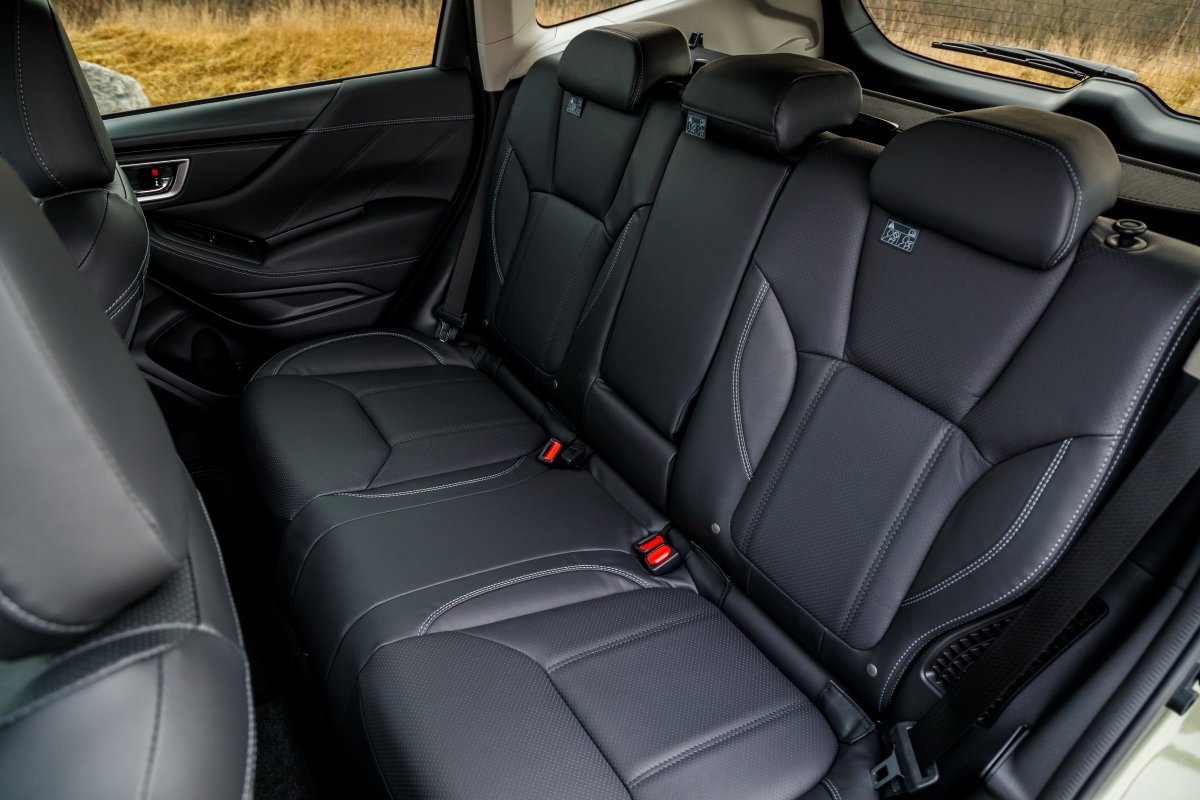
This version of the Forester offers good practicality as well as being good to drive. It's longer and wider than earlier generations, with a comfortable driving position and plenty of head- and legroom, whether you are travelling in the front or the back of the car. Air vents between the front seats should keep rear-seat passengers at a comfortable temperature.
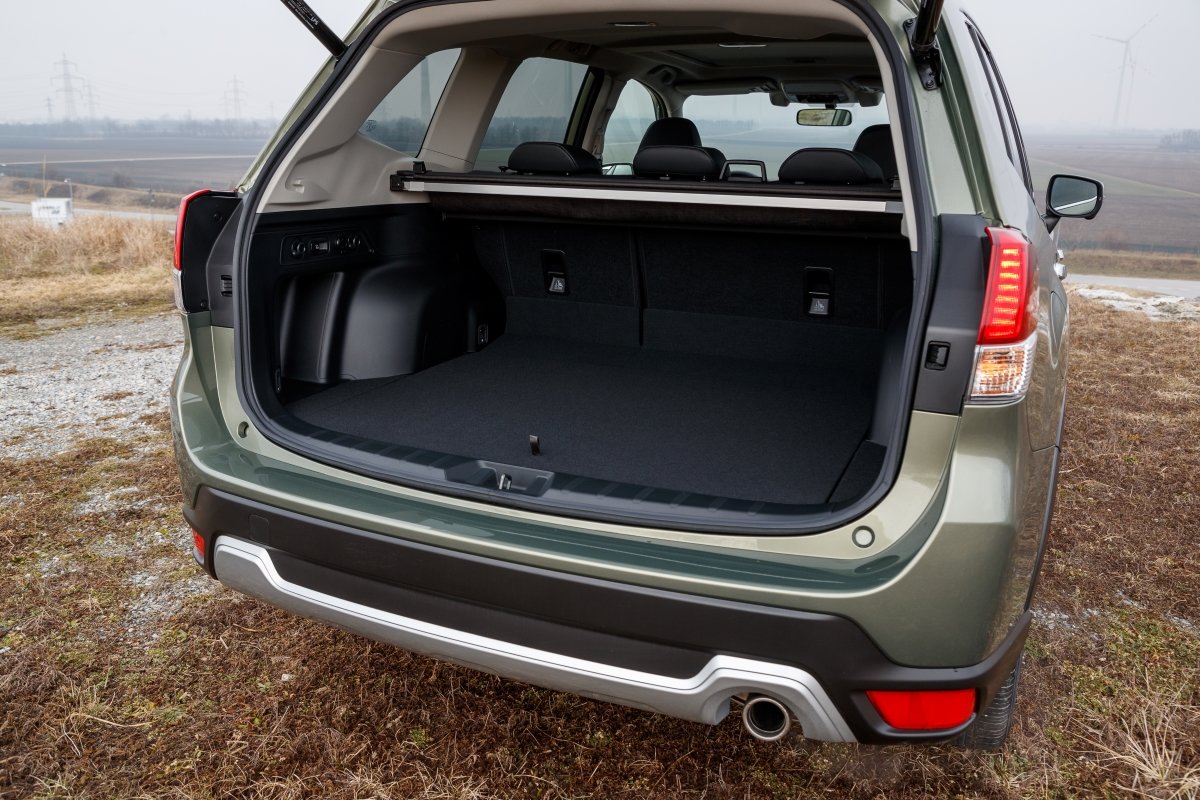
With 520 litres of space for luggage, the boot capacity is healthy, and levers either side of the tailgate quickly fold the back seats flat if more room is needed.
Driving
What's it like to drive?
Subaru has kept things simple with the latest Forester. Whereas the model it replaced was available with petrol and diesel engines, and a high-performance XT model, there's just one engine and gearbox combination for today's Forester. The e-Boxer hybrid powertrain combines a 2.0-litre petrol four-cylinder boxer engine with some gentle electrical assistance. It can run on electric power alone at speeds of up 25mph in theory, although in practice the petrol engine is likely to wake up before this speed is reached.
With 148bhp and just 145lb ft of torque, this isn't a quick car, and anyone with fond memories of the Subaru Impreza WRX will be disappointed. But the Lineartronic automatic gearbox does a reasonable job of using the available muscle. Although it's a continuously variable transmission (CVT) – a type of automatic gearbox that often makes for noisy acceleration as the engine revs hard while the gear ratio changes to build speed – there are fixed 'steps' in the Lineartronic CVT that the driver can control using paddles behind the steering wheel.
If you can live with the car's modest acceleration, the Forester is a likeable car to drive. It sits on the Subaru Global Platform, which also underpins the Levorg and XV models. The platform contributes to the Forester's comfortable ride and tidy handling. The suspension smooths bumps in the road well, but resists lean when cornering quickly. The steering is direct and accurate. In fact, you get the feeling the Forester could comfortably handle more power.
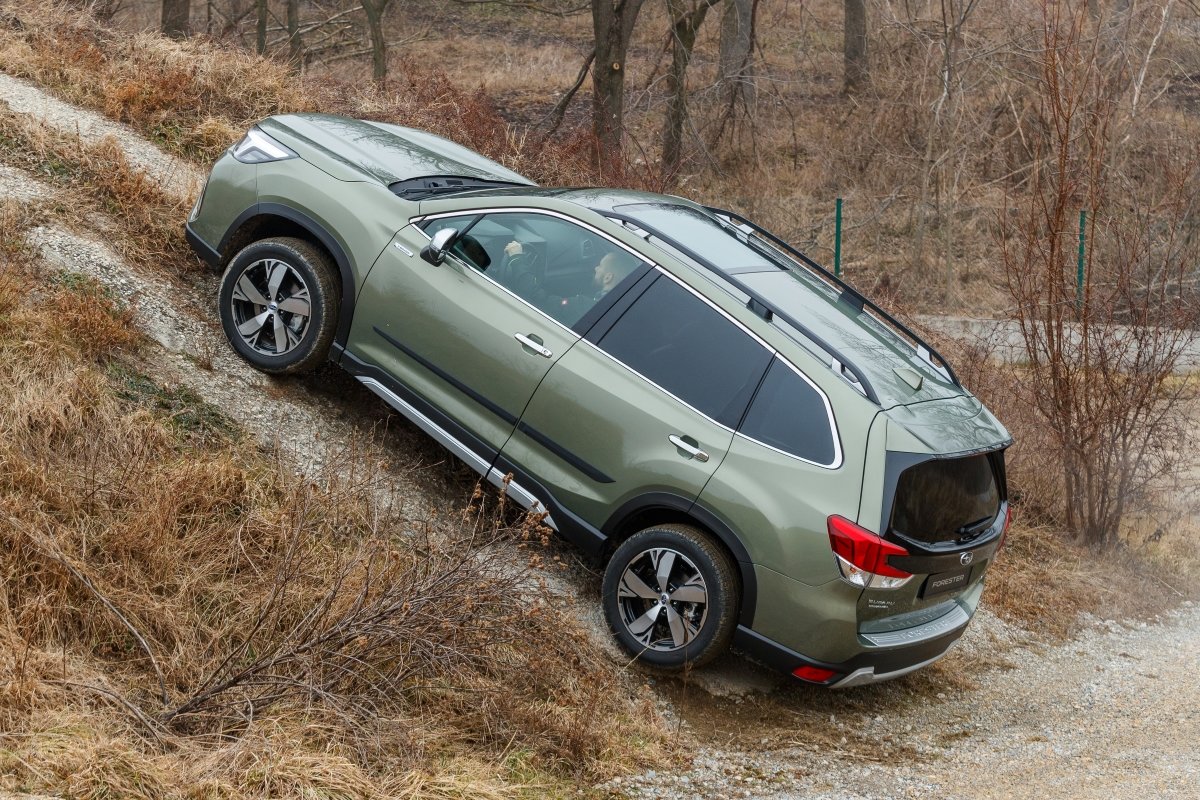
It's also an impressive off-roader, thanks to the all-wheel-drive system and generous ground clearance.
Tech and equipment
Technology, equipment & infotainment
Every Forester is a true 4x4. The sophisticated AWD system shifts power to the wheels with the most traction. If you head off road, the X-Mode system helps the driver to get the most of the Subaru's abilities. It has two settings - Snow/Dirt and Deep Snow/Mud - to adjust the engine response, transmission, brakes and 4x4 system to suit the conditions.
The Forester is also fitted with Hill Descent Control to maintain a constant low speed when driving down a steep slope, leaving the driver to concentrate on steering. It probably won't take you as far into the wilderness as a Land Rover will, but it's much more able in the rough stuff than a typical crossover or small SUV.
The Forester e-Boxer's hybrid engine has three modes. In EV driving mode, the car travels on electric power alone at speeds of up to 25mph with a range of around a mile. However, in practice it takes a very gentle right foot to reach 25mph without waking up the engine.
Motor Assist Driving is for what Subaru describes as "medium speeds". The petrol engine and electric motor work together. The electric motor produces lots of torque from low speeds, which helps when offroading or towing.
Engine Driving is for higher speeds, such as motorway driving. The petrol engine is the only source of power used, while the battery recharges.
Running costs
Subaru Forester running costs
If you are looking at the Subaru Forester as a new car, you'll need surprisingly deep pockets to buy one. At the time of writing (spring 2021), prices started at over £36,000. That's a lot of money for a car of this size and performance, although in fairness the Subaru is very well equipped.
Arguably the Forester makes more sense as a used car, although modest sales on the new car market mean it's only available in relatively small numbers on the used market.
There's just one engine and gearbox combination, so there's very little difference between the Forester XE and XE Premium in terms of running costs.
You'd think that a hybrid would promise good fuel economy and low emissions, and Subaru says the system delivers a 10% improvement in fuel economy in urban driving. In reality, while the hybrid system takes the edge off the petrol engine's thirst, this isn't a particularly fuel-efficient car.
The official combined economy is 34.7mpg, which is a poor mpg figure compared with rivals such as the Kia Sportage or Skoda Karoq. Carbon dioxide emissions of 185g/km are also uncompetitive. It's a shame Subaru no longer offers a diesel, or a plug-in hybrid with a bigger battery and a longer all-electric range.
On the plus side, insurance bills should be reasonable. The XE model sits in group 19, while the XE Premium is in group 20. However, that compares with group 15 for the equivalent Skoda Karoq Scout, so the Skoda should be cheaper to insure.
At the time this car review was written, both models cost less than £40,000, even with an upgraded paint finish. That's good news when the car tax bill falls due, as it avoids the £325 annual premium for cars which cost more than £40,000. As the Forester is a hybrid, it's classed as an alternative fuel car and so the annual Vehicle Excise Duty cost is £140, rather than £150 for a non-hybrid petrol car.
Subaru Forester reliability
We'd be surprised if the Forester didn't prove itself to be a tough and reliable car. Subaru normally performs well in reliability and customer satisfaction surveys.
If something does go wrong, the Forester's new car warranty lasts for five years and up to 100,000 miles. That beats the likes of Seat and Skoda by two years, and is broadly similar to the cover a Hyundai Tucson (five-year/unlimited mileage) or Toyota RAV4 (five-year/100,000 miles) owner would enjoy. If you plan to keep your Subaru for a long time, the warranty can be extended at extra cost. This could be a smart move, as although the cars are very reliable, they can cost more to repair than those of some other brands.
If you are thinking of buying a used Subaru Forester, check the underside of the car for signs of offroading. Look for any damage from rock strikes. If the car is fitted with a towbar, listen out for signs of strain or any odd noises from the transmission. The Forester is capable of towing, but regularly pulling a heavy caravan or trailer may take its toll.
Subaru Proven is the brand's approved used scheme. All cars come with a warranty lasting at least a year, and have been through an extensive pre-sales check. There's also a year's home and roadside assistance included.


What owners say
It’s nice and tidy car. There’s not much you don’t need and everything you do. Me personally, I’d put it up next to something like a jeep compass for size and a Kia sportage for the features it has
1 April 2025Probably the best 4x4 system out of all the manufacturers,, Tough and built to last. Not fancy soft touch, but fit for purpose
14 December 2021Three things to know
- The Forester is a very safe car, with a five-star rating from the experts at Euro NCAP. It scored 97% for adult occupant protection and 91% for child occupant protection. The pedestrian protection score of 80% and safety assist rating of 78% are also very high. Driver assistance systems include Adaptive Cruise Control and Pre-Collision Braking, which use two cameras mounted either side of the rear-view mirror. Subaru Rear Vehicle Detection and a Driver Monitoring System are also fitted as standard to both the XE and XE Premium specifications.
- It's a shame there isn't a stronger engine variant, perhaps a turbo or a diesel, to make the Forester a better car for towing. This is a niche the Forester has served well in the past, but it's a little underpowered for towing caravans and trailers. A diesel Skoda Karoq is better suited to tow car work.
- The Forester's biggest problem as a new car is price; it's simply too expensive compared with rivals like the Kia Sportage, Nissan Qashqai, Honda CR-V and Mazda CX-5. As a used car, you'll have to look hard to find one, as this Forester has not been selling in big numbers.
Which one to buy
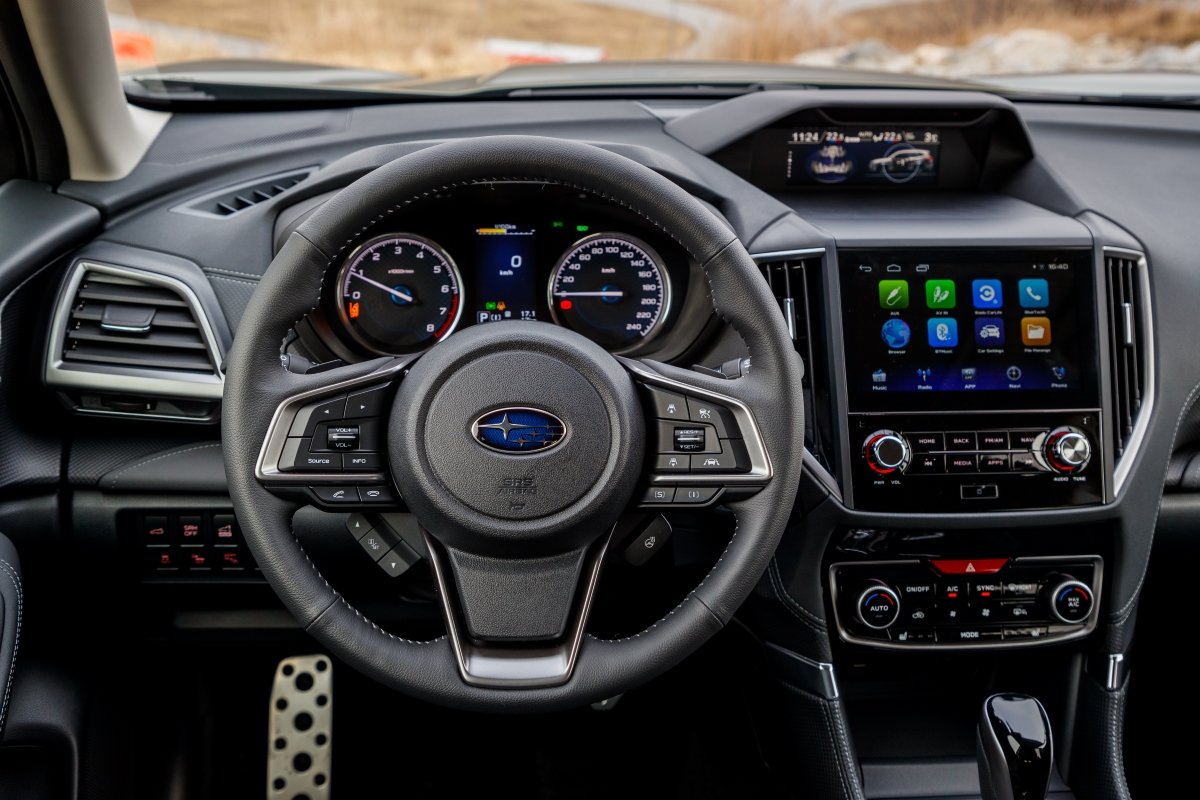
- If you want the best value: choose the XE. This model comes with automatic LED headlights, High Beam Assist to dip the headlights to avoid dazzling oncoming traffic, front- and rear foglights, 17-inch alloys, heated front seats, split/fold rear seats, dual-zone climate control, a colour touchscreen infotainment system, a DAB radio, Apple CarPlay and Android Auto, plus a whole lot more. It's a very comprehensive spec for an entry-level model, although to be fair it should be as even the more basic Forester is quite pricey.
- If you want all the toys: go for the XE Premium. There are just two models in the range, and as you can guess from the name, the XE Premium has all the XE's features plus some extra luxury touches. The alloy wheels are 18 inches in diameter rather than 17 inches, and you also get satellite-navigation, leather upholstery, privacy glass, a sunroof, heated rear seats and a powered tailgate.


