TVR Chimaera Review (1993-2003)
TVR Chimaera cars for sale
3.0
Expert review
Pros
Fabulous performance and soundtrack from V8 engine
Big boot for a sports car
Rewarding to drive, so long as you are careful...
Cons
Lacks modern safety kit
Expensive to run
Rusty chassis and leaking roofs are common
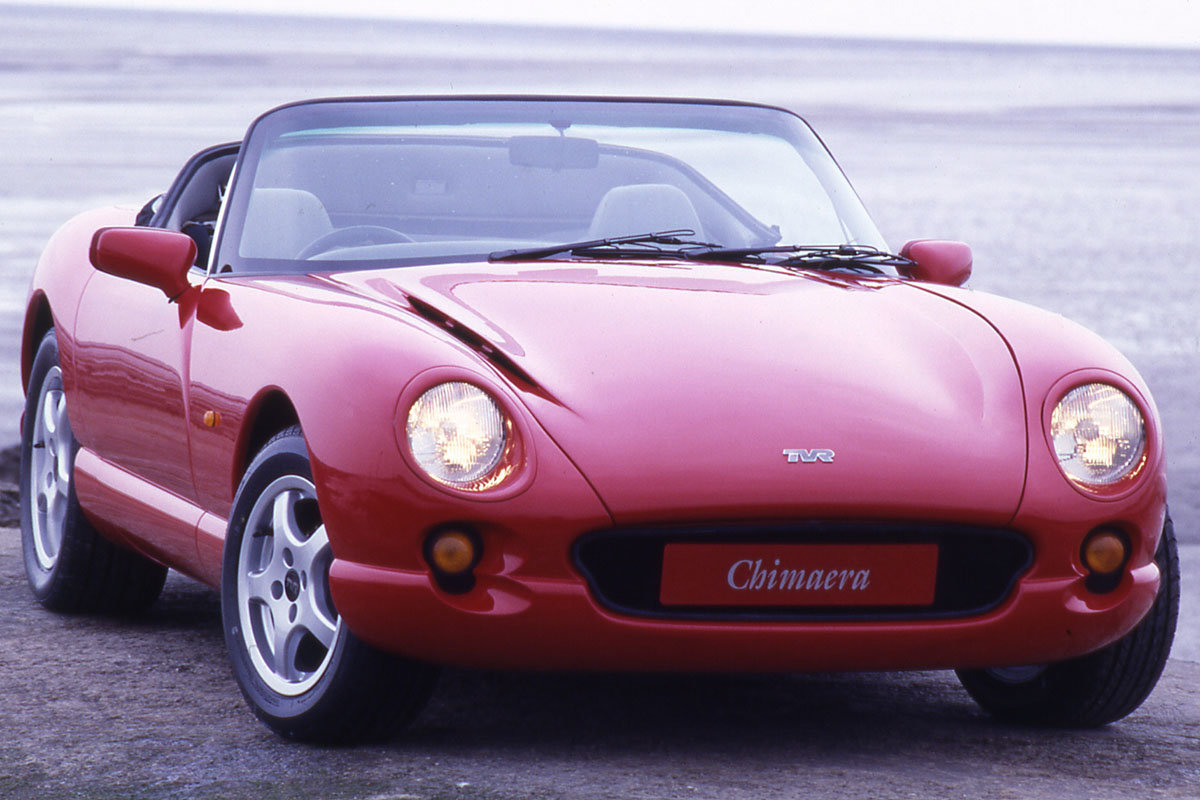
The CarGurus verdict
A TVR Chimaera is without doubt a specialist car, and it needs the kind of owner who’s willing to put it up with its foibles. If you want a car that’s easy to use and easy to drive, perhaps something you can use every day but that can deliver a thrill or two when you’re in the mood, then you're probably better off looking elsewhere.
If, however, you’re after a car for high days and holidays that can deliver sheer, unbridled drama off the bat, and you’re prepared to take extra care when driving it, keeping in mind its lack of safety kit, then you’re in the right place.
Buy a well-maintained example and it should even be pretty dependable, and those simple mechanicals are easy to fix when they do go wrong. A good Chimaera is immensely rewarding, and on a sunny day it’s a wonderful thing to to bring out of the garage and enjoy.
What is the TVR Chimaera?
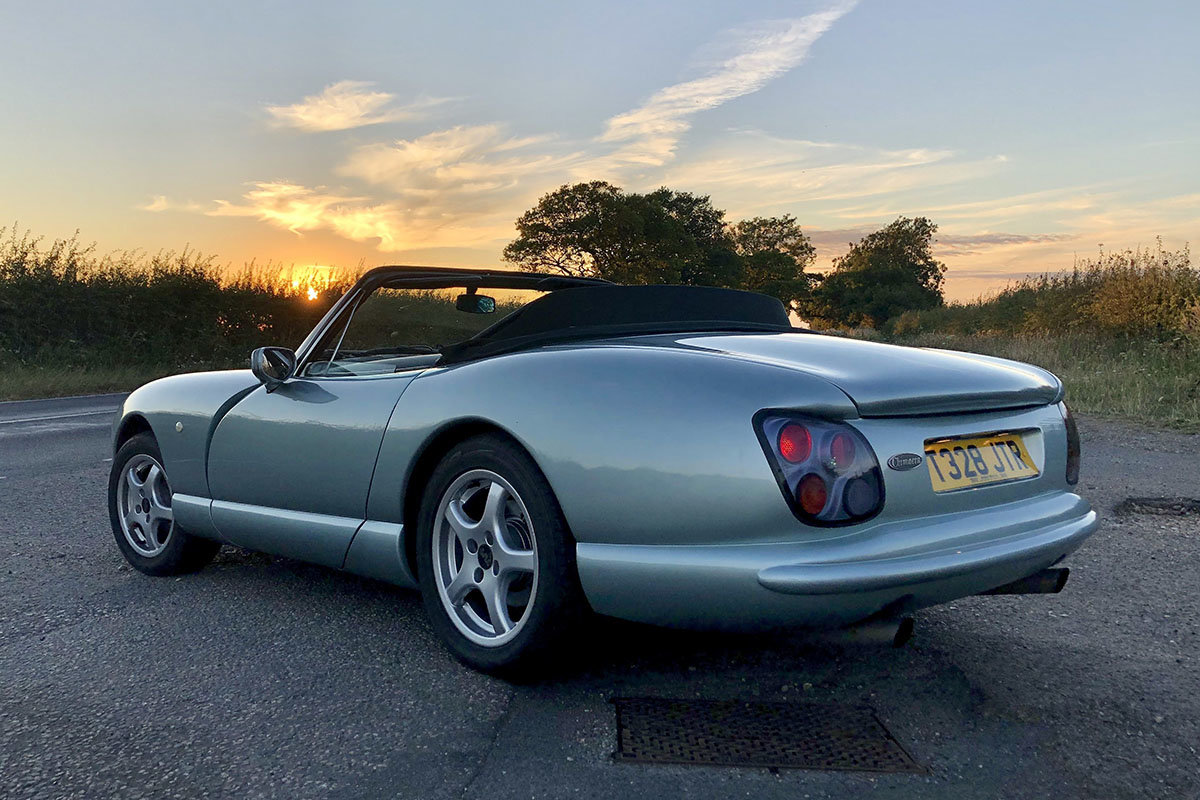
TVR is not a name that everyone will have heard of. This small British sports car manufacturer was founded in 1946, but sank into liquidation in 2006. Today, an attempt at a resurrection is underway, but for now, most who know the name will associate it most strongly with the company’s heyday in the 1990s. Back then, it was under the stewardship of owner Peter Wheeler and the most popular TVR model was the Chimaera.
Released in 1992, off the back of the success of the curvaceous Griffith, the Chimaera was billed as a slightly softer TVR; more of a cruiser and less of a bruiser than its hairy-chested stablemate. Of course, these things were relative, and the Chimaera adhered to TVR’s brawny ethos of the time: lots of power, and a lightweight chassis, all put together by hand in a small factory in Blackpool. And with no driver aids.
How practical is it?
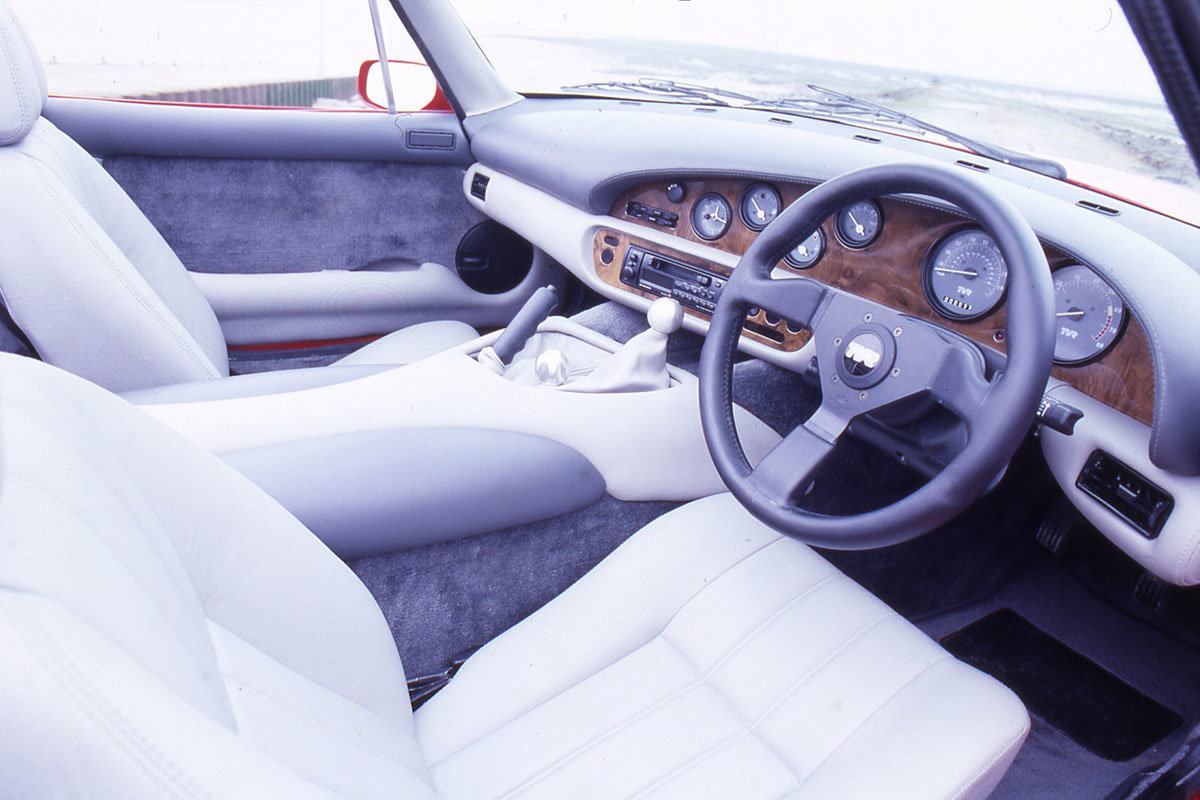
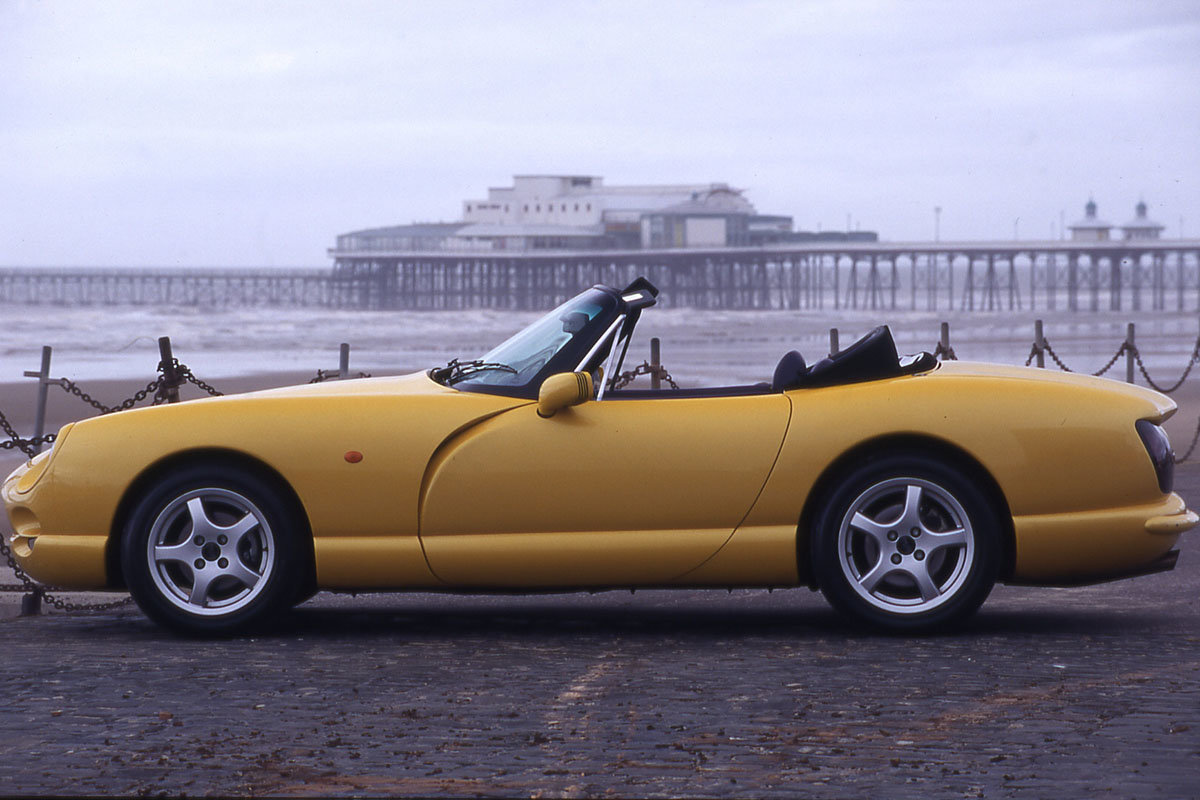
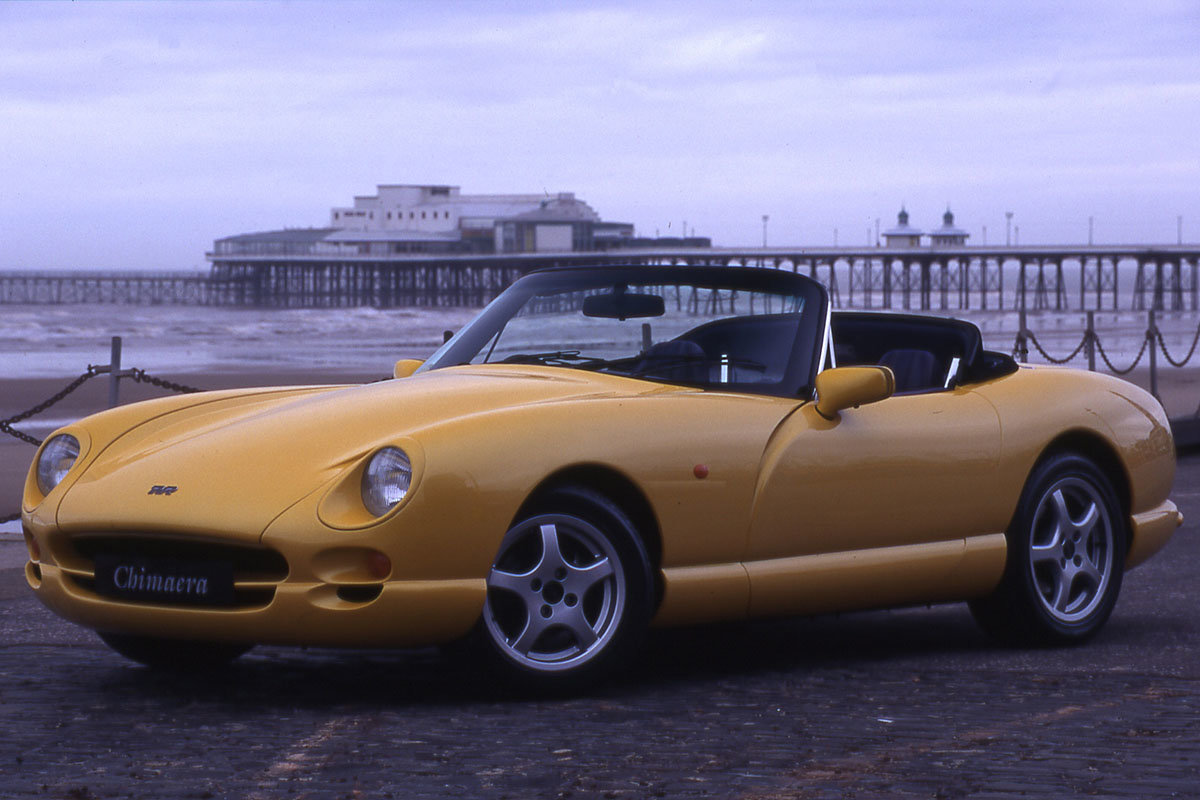
Few cars feel like a Chimaera to sit in. You don’t get conventional door handles. Instead, you open the doors by pressing a button, either on the rear wing or beneath the door mirror. And once inside, you’re ensconced in a wild, swooping, curving world of leather.
The seats are surprisingly comfortable, but the huge console in the centre of the car – beneath which sits the engine and gearbox – means space is at a premiumm but practicality is surprisingly good. The boot is big, and there’s more luggage space on a shelf behind the seats, which makes a Chimaera a more usable proposition than you might think.
For all that, though, it’s a hardy soul who’ll drive a Chimaera every day, especially through the winter. Lots of power and rear-wheel drive make it tricky to deal with on an icy road, and the roof isn’t entirely watertight.

What's it like to drive?
The Chimaera is a car that demands a lot of respect, and one you need to drive very consciously. The gear change is short, but the gear knob needs a hefty shove to get it to move through the ratios. The clutch is heavy, and the steering is too if you don’t choose a car with power steering fitted. The brakes, while sharp, are also rather snatchy, so it’s easy to lock the wheels up and skid if you aren’t careful. And the accelerator pedal travel is long, though if you prod it too exuberantly, it's still very easy to spin the rear wheels.
It sounds like a death trap, right? So why on earth would you drive one? Put simply, driving a TVR is like nothing else; a feast of noise, drama and tactility you simply can’t find elsewhere. It is, in short, one of the very best cars with which to have huge amounts of fun out on the road.
First, there’s the way the Chimaera sounds. All versions use one basic V8 engine, which was bought in from Rover and then tweaked by TVR to provide a variety of different power outputs. It's mated to a custom exhaust system that delivers a warm, mellifluous burble at low speeds, rising to a glorious, angry bellow when you accelerate hard.
And you’ll want to accelerate hard. Even the least powerful Chimaera 400 models, with their 4.0-litre engines, can boast 240bhp and achieve five-second 0-60mph times; upgrade to the 430, 450 or 500 (which, as you’ve probably guessed, relate to engines of 4.3, 4.5 and 5.0 litres, respectively), and the pace only quickens.
What’s more, the Chimaera handles well. It doesn’t have the precision of a Porsche, and the optional power steering system makes the steering a little too light and reduces feel. But there’s lots of grip and the body stays flat even when you’re cornering hard, so once you’ve learned its limits, you can lean on a Chimaera on the way out of a bend, feeding in the throttle as the road straightens to enjoy the blast of acceleration and noise delivered by that engine.
Technology, equipment & infotainment
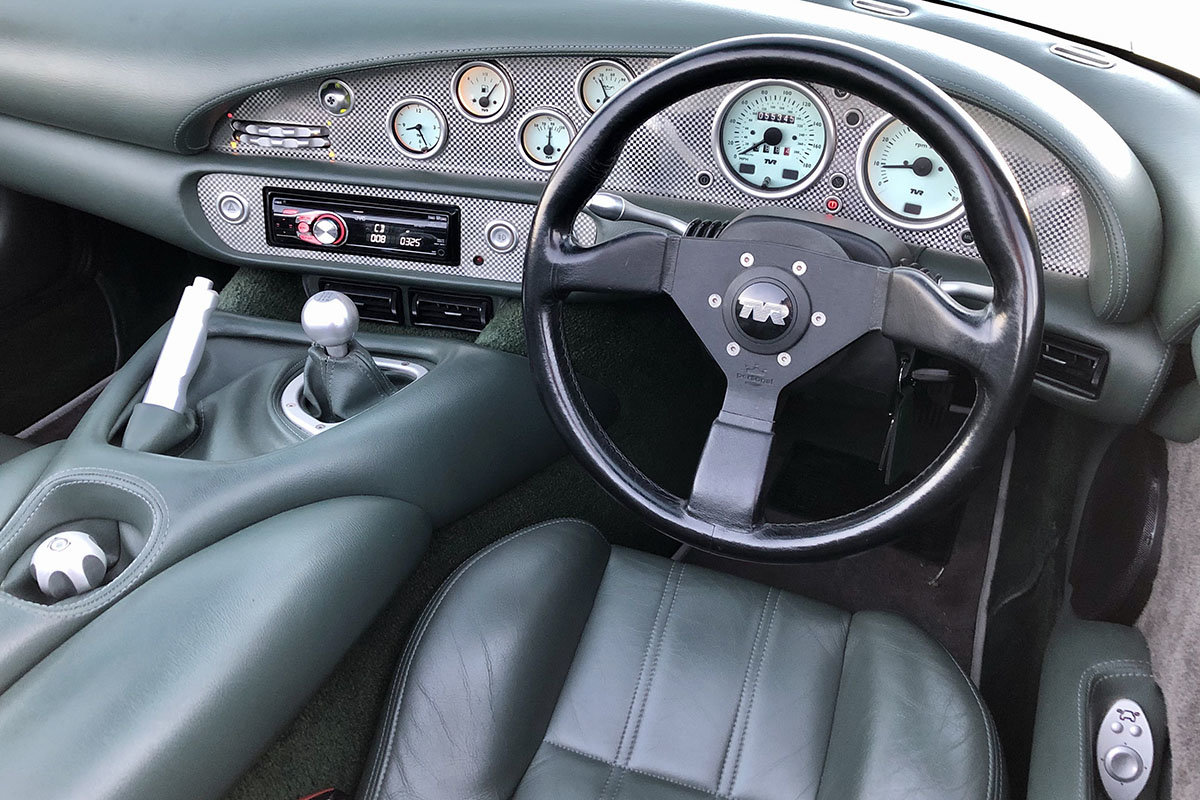
This is not the part of the review where the Chimaera excels. There are no anti-lock brakes, traction control, stability control, or even airbags.
Power steering, meanwhile, became available in 1994, but only as an optional extra. Adding a modern aftermarket radio will at least give you phone connectivity in the form of Bluetooth to stream music.
TVR Chimaera running costs
It probably won’t come as a great surprise to learn that a hand-built two-seater sports car with an old-fashioned V8 engine of 4.0 litres, if not more, will not be cheap to run. Having said that, the TVR Chimaera is at least light weight, and as a result, you can expect to see around 25mpg on average, which isn’t far short of what you’d get from its similarly powerful contemporary rivals.
More of a concern will be maintenance. Servicing costs aren’t ruinous; after all, the mechanicals are very simple, and there are plenty of specialists around who know their way around a TVR Chimaera like the backs of their hands. However, most Chimaeras are now more than 20 years old, and as with most cars of that age, old parts will now be wearing out and in need of replacement. While some TVR parts are relatively affordable, others aren’t. Having said that, compared with the costs involved in running similar cars of a similar age, the Chimaera’s bills should be roughly on a par.
There’s one large but infrequent outlay, though, that you will have to budget for: the separate chassis will need either preservation or refurbishment, which is an expensive job, and depending on how much work needs doing when the body is lifted off it for inspection, the bill could enter five-figure territory. A car that needs this work imminently will therefore be worth far less than one on which the work can wait for a few years.
One cost you won’t need to worry about, however, is the cost to replace a rubber timing belt. TVRs don’t have them; instead, they use a metal chain that is intended to last the life of the car.
All TVRs are taxed at the pre-2001 tax rate, even if they were built thereafter, because they were so low-volume that TVR didn’t have to provide emissions figures. So if you buy a Chimaera built after 2001, you’ll pay much less than you will for some similarly powerful sports cars of the same age.
TVR Chimaera reliability
The Chimaera is verging on becoming a classic car, if it isn't one already, so while we’ll cover the most important stuff here, we’d recommend investing in one of the excellent buyers’ guides that are out there, or speaking to a specialist, before you part with any cash.
As we’ve already discussed, a rusty chassis is the most important thing to check for, and can make or break a Chimaera. The first signs of rust will usually form along the outriggers – the strips of metal chassis that run beneath the side sills of the car – so if these look in poor shape, the chances are the rest of the chassis is, too. If they’re in good condition, on the other hand, it suggests the chassis will last a long time before it needs to be refurbished.
Engines are generally robust, but the most reliable cars are those that have been impeccably maintained, so look for a sheaf of invoices or a stamped service history book. One thing to keep in mind is that Chimaeras generally have low mileage, so many owners ignore servicing for a few years, when really it should be carried out annually. Evidence that a car has been serviced every year, on the dot, suggests fastidious ownership and careful maintenance elsewhere, too.
You won’t spot any rust on the fibreglass bodywork, but look out for rippling, cracks or peeling lacquer, which could all be signs of an impact that’s been repaired. Check the convertible hood carefully, too; the plastic rear windows are prone to wearing out, and can split or puncture along the line where they fold in half when the roof is lowered.
If you can, pour a bottle of water over the joins where the main roof panel meets the roll hoop and windows, to see whether any of the water makes it into the passenger compartment. And avoid a car with damp carpets, as that could suggest a pretty bad leak.
When you’re out on your test drive, listen out for knocks and rattles from the suspension, and be conscious of any odd behaviour from the engine, such as flat spots when accelerating, as well as rattles or taps. These could suggest problems that will need tracing and fixing further down the line.
- TVR tweaked the Chimaera more or less continuously throughout its life, which means rather than one large facelift, improvements bled their way in as time went on. Variously, these include restyled front and rear bumpers, repositioned door opening buttons, a reprofiled tail end that aped that of the more recently-launched Cerbera, better-quality switchgear, tweaks to the engine and running gear, and restyled rear lights. If you want all of these upgrades therefore, your best bet is to choose a later car. This is further recommended on the basis that build quality improved throughout the car’s life, with these later examples generally feeling better screwed-together than earlier cars.
- When the Chimaera was launched, it was only available with 240bhp 4.0-litre and 280bhp 4.3-litre Rover V8 engines, the latter of which was soon replaced with a ‘high compression’ version of the 4.0-litre badged, somewhat unsurprisingly, HC, and putting out 275bhp. However, buyers craved more power, and so in 1996, the 340bhp 5.0-litre was added to the range; shortly after this, the 285bhp 4.5 replaced the 4.0 HC, and together with the standard 4.0, which remained available throughout the car’s life, it was this engine lineup which saw the Chimaera out.
- The Chimaera’s convertible roof is a little different to the norm. It consists of a solid, fabric-covered roof panel that slots into the top of the windscreen, and is supported on its rear edge by the roll-over hoop, also fabric-covered. The hoop is rotated into place manually, bringing with it the flexible rear section, which includes the plastic rear window, and can be left in place independently of the roof panel, which stows in the boot when not needed. Thus you have the option to run the Chimaera either with the roof up or fully down, or as a targa, with the rear section in place but the roof panel removed.
- If you want to keep the budget down: A Chimaera 4.0, or 400 as later cars were badged, is the most benign way into TVR ownership, but it still offers huge thrills. It also costs the least, which is why we'd recommend it. Choose one with power steering to maximise usability, or without if you prize involvement and want to remove some of the steering's slackness.
- If you’re an adrenaline junkie: Should you need your Chimaera to deliver the biggest fix possible, the other end of the spectrum would be an early Chimaera 500 with no power steering fitted. However, do keep in mind that the 500 suffers from a poorer reputation for reliability than other engines in the range.
- If your tastes lie somewhere in-between: Then we’d recommend either a 400 HC or a 430, both of which offer a good balance of power and reliability.


