Toyota Supra Review (2019-2023)
Toyota Supra cars for sale
4.0
Expert review
Pros
Extremely refined and comfortable for a sports car
Tremendous 3.0-litre engine
Practical, so long as two seats are enough
Cons
Based on a BMW, which doesn't appeal to fans of Toyota
Unlike the Supra, a BMW M2 has rear seats
Not as tactile or engaging as the very best sports cars
The CarGurus verdict
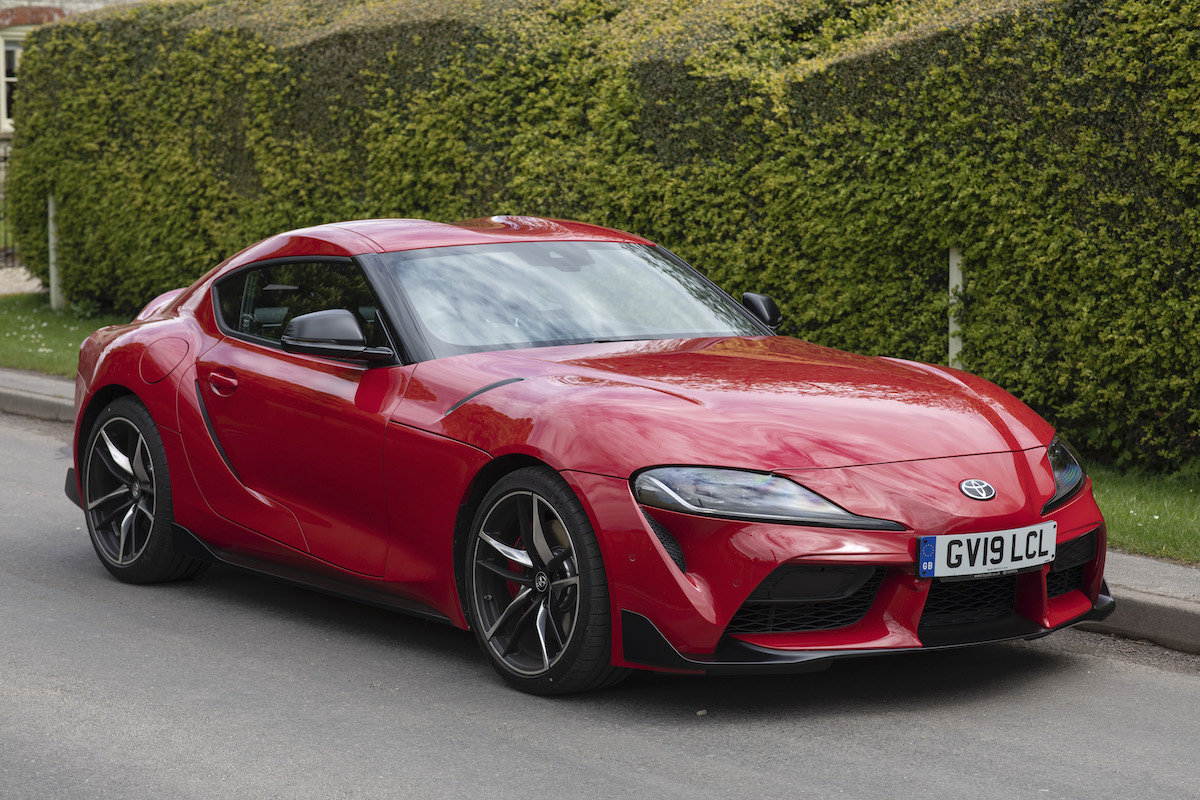
For certain buyers – the most diehard Toyota fanatics, for instance – the BMW collaboration will be reason enough to walk away altogether. They’ll say this GR Supra isn’t a real Supra at all. But they would be missing out, because the fifth model in the series is a characterful machine with plenty to recommend it, making this a fine reimagining of the time-honoured Supra recipe for the modern era. Besides, were it not for that collaboration, the new GR Supra wouldn’t exist at all.
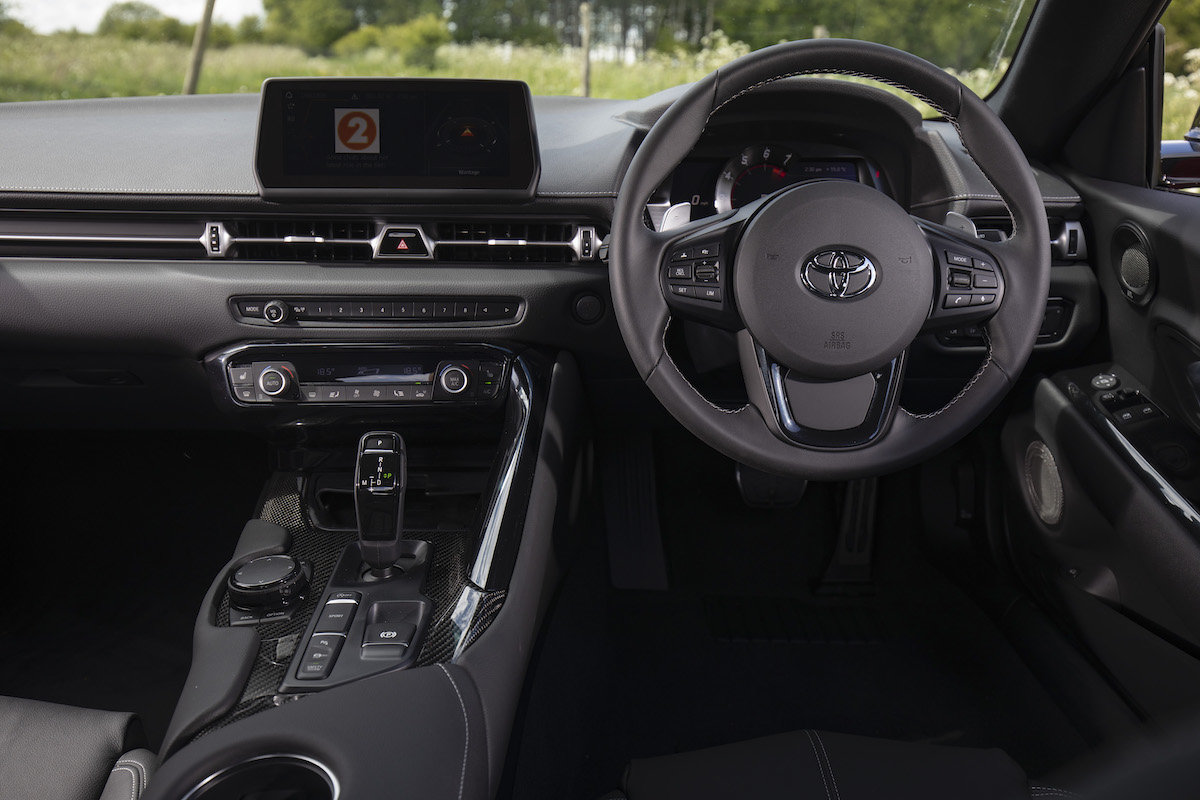
The BMW partnership is most obvious within the cabin, where much of the switchgear, the automatic's gear lever and the entire infotainment system have clearly been dropped in unchanged. Get beyond that and you’ll find an entertaining sports car that goes hard, that’s easy to live with and that has boundless tuning potential.

What is the Toyota Supra?
Supra is one of the most iconic nameplates Japan has to offer, right up there with Honda’s NSX. For 17 years you weren’t able to buy a Toyota sports car with that badge on the back, but in 2019 the fifth-generation model arrived, labelled GR Supra. Throughout its four decades on sale the Supra has been a favourite among the JDM tuning and modifying community, and this new car is currently finding favour with that same crowd.
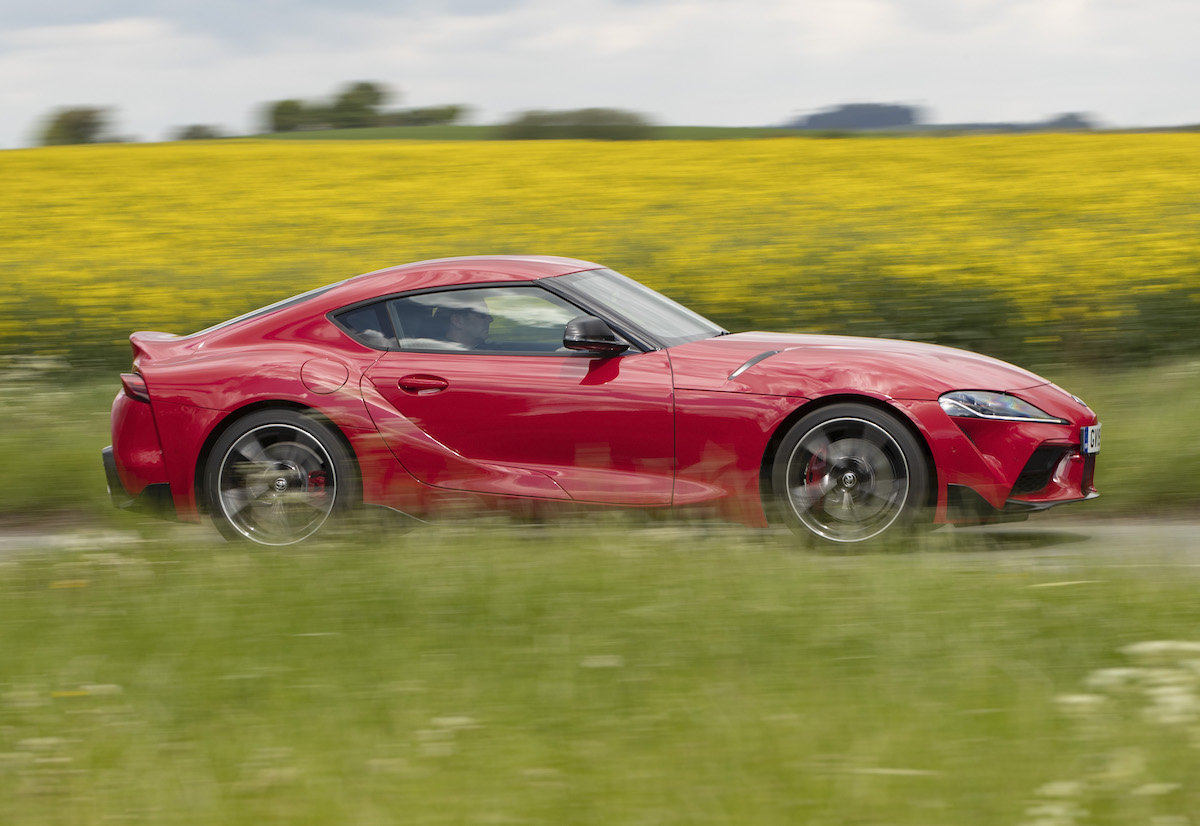
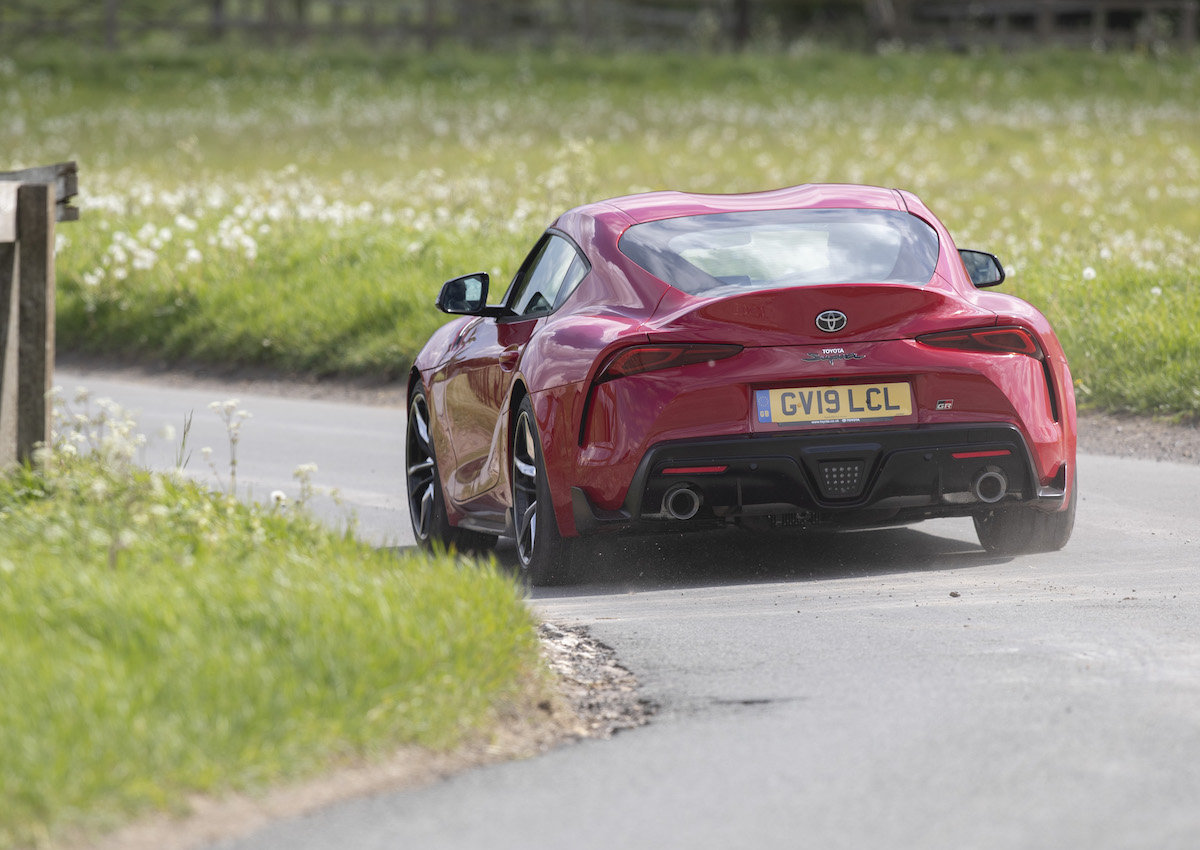
The GR Supra’s exterior styling is unmistakably Japanese with its double-bubble roof, aggressive front end, swooping lines and complex forms. Not much else about the car is actually Japanese, though. It’s built by contract manufacturing firm Magna Steyr in Austria, its turbocharged, 3.0-litre, six-cylinder engine is borrowed from BMW and its platform is shared with that company’s own rear-wheel drive, two-seater sports car, the droptop BMW Z4. Even the GR Supra’s cabin is littered with BMW buttons and switches.
That’s because the GR Supra is the result of a technical partnership with the German company, and is therefore a sister car to the BMW Z4. The two companies worked together to create shared mechanical bits to reduce the cost of development. Without that tie-in, says Toyota, there would have been no fifth-generation Supra at all.
Toyota pulled the plug on the GR Supra quite suddenly in late 2023, and no successor was announced.
How practical is it?
Chief rivals include the Porsche 718 Cayman and Alpine A110, and compared to both of those, the GR Supra feels like a very grown up kind of machine, almost more grand tourer than out-and-out sports car. It comes loaded with creature comforts, headroom is good, the seats are big and plush, the leather upholstery feels upmarket and ride comfort is first-rate.
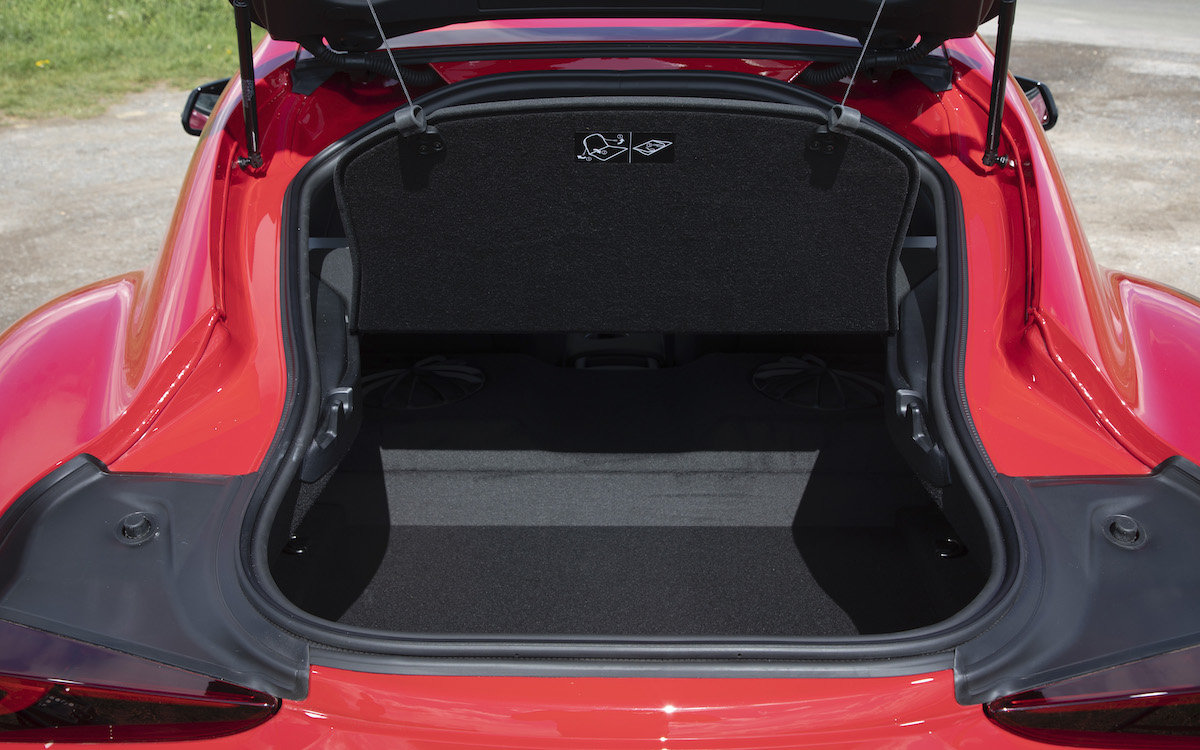
Meanwhile, the iDrive infotainment system it also sources from BMW is among the very best of its type and comes with satnav, Apple CarPlay and Android Auto. A decent 290-litre hatchback boot means it scores well for practicality as well.
What's it like to drive?
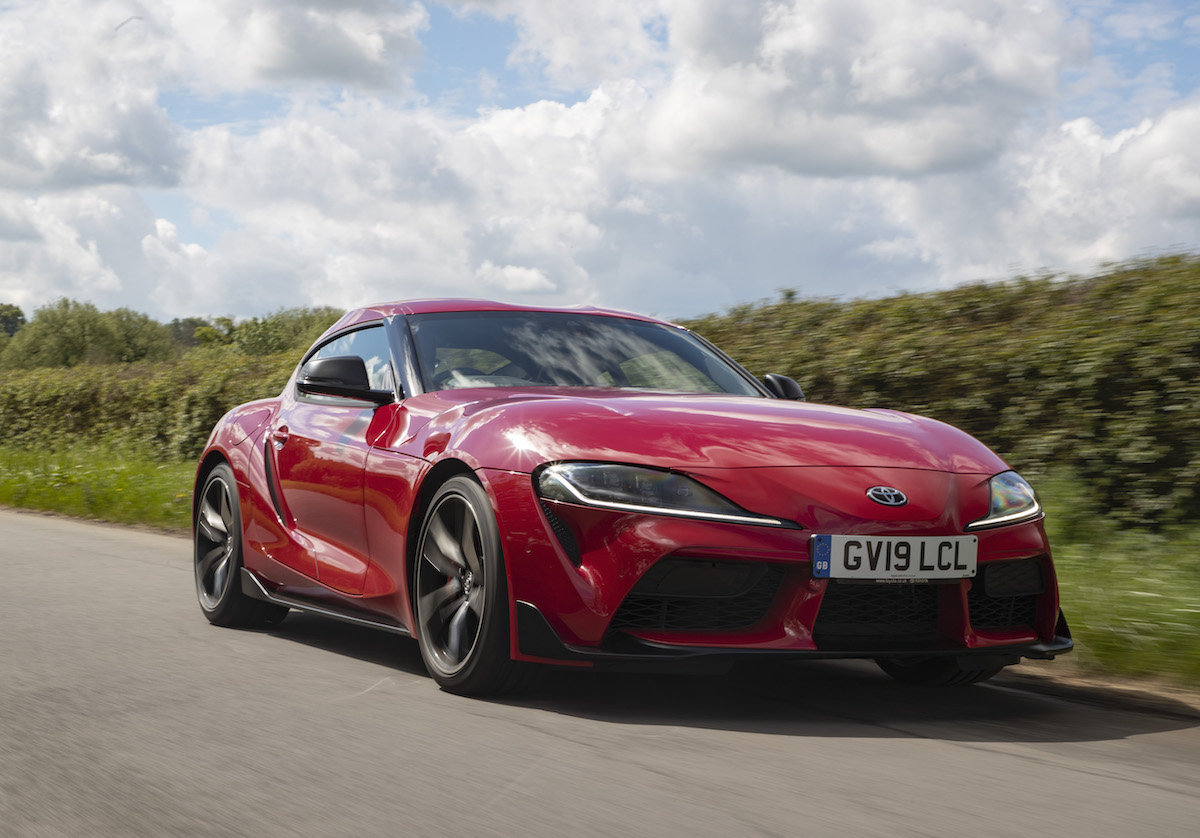
Whether that BMW cross-pollination bothers you or not, what cannot be denied is that the GR Supra is a very broadly capable sports car. It’s fast, it’s good to drive quickly, it sounds and goes the way a Supra should.
There are two engines available: a 2.0-litre, four-cylinder turbo with 254bhp and 295lb ft of torque, or a turbocharged six cylinder with 335bhp and 369lb ft. The four-cylinder engine is good, but really you're going to want the silky smooth six for its free-revving nature and very smooth power delivery, plus the tuneful soundtrack. It might be a BMW engine, but it's absolutely worthy of the Supra badge. Expect 0-62mph in 4.3 seconds, and a top speed of 155mph.
The Toyota is available with an eight-speed automatic gearbox or a six-speed manual. The latter might sound like the better choice for keen drivers, but in reality its shift action isn't as good as the best gearboxes on the market. All things considered, we rate the automatic as a better match for the Supra.
Technology, equipment & infotainment
There are two versions of the GR Supra currently on sale in the UK. The Toyota Supra 3.0 comes equipped as standard with 19-inch wheels, adaptive cruise control, various safety systems, front and rear parking sensors, a 10-speaker hifi and electric seats.
Meanwhile, the range-topping Supra Pro gets wireless phone charging and an upgraded JBL 12-speaker stereo. Mechanically, the two variants are exactly the same.
All versions of the GR Supra also come with adaptive dampers, which goes some way to explaining how the car marries ride comfort with body control so well.
Toyota GR Supra running costs
It would be naive to go into GR Supra ownership expecting very low running costs; nothing with this level of performance can possibly be cheap to run. For one thing, when driven enthusiastically, the engines will slurp through fuel at a frightening rate. Toyota says you’ll see a fuel economy of 34mpg from the 3.0-litre in mixed driving, although the real world MPG figure will be closer to 30 and somewhat lower than that should you tap into the car’s performance very often.
Reckon on paying something like £600 for a full set of tyres. Year one road tax will cost £870, dropping to the premium rate of £475 thereafter. Depending on specification, the GR Supra sits in either group 37 or 38 (out of 50) for insurance, meaning premiums can be an area of significant outlay as well.
Toyota recommends annual servicing as a minimum – any highly-tuned performance car should be meticulously maintained to keep it at its very best – and the company offers service plans so that owners can spread the cost over a period of time.
Toyota GR Supra reliability
It’ll be a number of years yet before we know how reliable this new GR Supra is. However, the BMW-sourced 3.0-litre straight-six (codenamed B58) has been around for a little while and is known to be a tough and durable engine. There are some relatively minor common issues with it, though, including a mysterious coolant loss problem. The solution is to simply keep a close eye on the coolant level and top it up when required.
Engine oil can leak in small quantities from the valve cover gasket, too, typically after 70,000 miles or so. Furthermore, oil filters have been known to shear off at the bottom when being removed, an issue that should be put right under warranty by the dealership.
The GR Supra is covered by a very comprehensive three-year manufacturer warranty, but Toyota will extend this to 10 years or 100,000 miles so long as the car is serviced at one of its dealers. For a thoroughbred sports car such as the Supra, that's an amazing proposition. Meanwhile, Toyota guarantees against paintwork and surface rust for three years, and against corrosion and bodywork perforation for 12 years. Finally, included in the purchase price of a new GR Supra is 12 months of roadside assistance in the UK and Europe.
- The Supra's power is transferred to the road with very little wastage by a clever limited-slip differential (LSD). Similar to the type that BMW M cars and Ferraris use, it’s a mechanical but electronically-controlled differential that can open or lock in real time to give good traction away from a corner, but not cause too much understeer on the way in, which can be a major drawback of purely mechanical LSDs.
- The GR Supra certainly isn’t short on performance. Toyota quotes a very swift 0-62mph time of 4.3 seconds and a top speed of 155mph. There is a belief among some road testers and owners that the official horsepower figure of 335bhp is actually very conservative. For those owners who want more performance still from their GR Supras, Toyota has put the foundations in place. The BMW-sourced engine is very tuneable, and the engineers have also incorporated a series of blanked-off vents that can be opened up to meet the cooling demands of a heavily upgraded engine.
- The four-cylinder engine develops up to 255bhp while using less fuel, making it a more affordable alternative to the straight-six.
- If you want the less obvious choice: In European markets, the Toyota GR Supra feels like a left-field choice in the £50,000-plus sports car segment. It’s certainly less obvious than rivals from Porsche and BMW. For those looking for a more civilised sort of two-seat sports car, the Toyota deserves serious consideration.
- If you need more space: For many buyers, two seats simply will not do. The BMW M2 Competition is actually more exciting to drive at the limit than the Toyota, and with its very usable rear seats and bigger boot, it’s also more practical.
- If you want the purist's choice: Weighing only 1,100kg, the Alpine A110 is a very different proposition to the GR Supra. Its lightweight construction means it’s spellbindingly good to drive – particularly along bumpy roads that cause rival cars real trouble – but its cabin isn’t as well appointed as the Toyota’s and it doesn’t come packed with as much comfort and convenience kit.
- If you want the obvious choice: if you’re in the market for a two-seat sports car, you really cannot overlook the Porsche Cayman. It's brilliant to drive while also being very usable day-to-day.


