Vauxhall Antara Review (2007-2015)

Pros and cons
What we like
Cheap as a used buy
Lots of standard equipment
Later diesel engines were punchy
What to consider
Drab interior
Many rivals are more practical
Not that great on the road
The CarGurus verdict
If you’re looking for an affordable five-seat SUV, the Antara has its strengths. Even the entry-level models are well equipped, and the post-facelift 2.2 diesels perform strongly.
However, there are more weaknesses than strengths. For an SUV of this size, running costs are high, and from the driver’s seat, the Antara is bland. The facelifted version is certainly an improvement, but it’s still nothing like as enjoyable to drive as a Mazda CX-5.
There’s enough room for five to travel in reasonable comfort, but the boot is small for a car of this size and it looks and feels cheap inside. Reliability is another weakness. If you want an SUV you can depend on, the Honda CR-V or the Toyota RAV4 make a whole lot more sense. Good value the Antara may be, but you can buy better.
out of 5 expert review
What is the Vauxhall Antara?
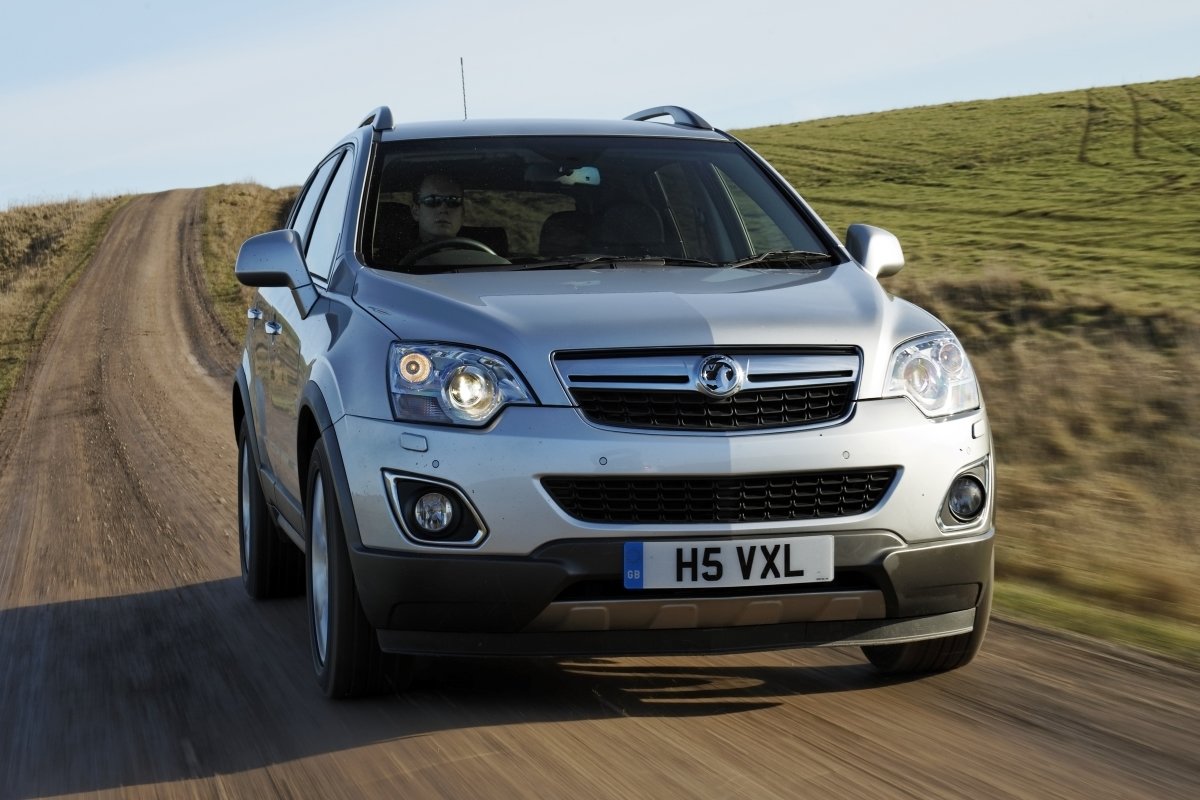
The Vauxhall Antara majored on price when it arrived in UK showrooms in 2007. Entry-level models started at less than £20,000, which was extremely good value for an SUV.
That sub-£20k price was for the 2.4-litre petrol in basic E specification, which was the only petrol model in the original Antara line-up.
Back in 2007, diesel was a lot more popular than it is today, so most buyers went for the 2.0 CDTi diesel instead, which cost more. It was discontinued in 2015.
Practicality
How practical is it?
The Antara isn’t a small car, but it isn’t all that practical, either, especially when you consider that some of Vauxhall’s other models, such as the Zafira MPV, trade on their flexible cabins.
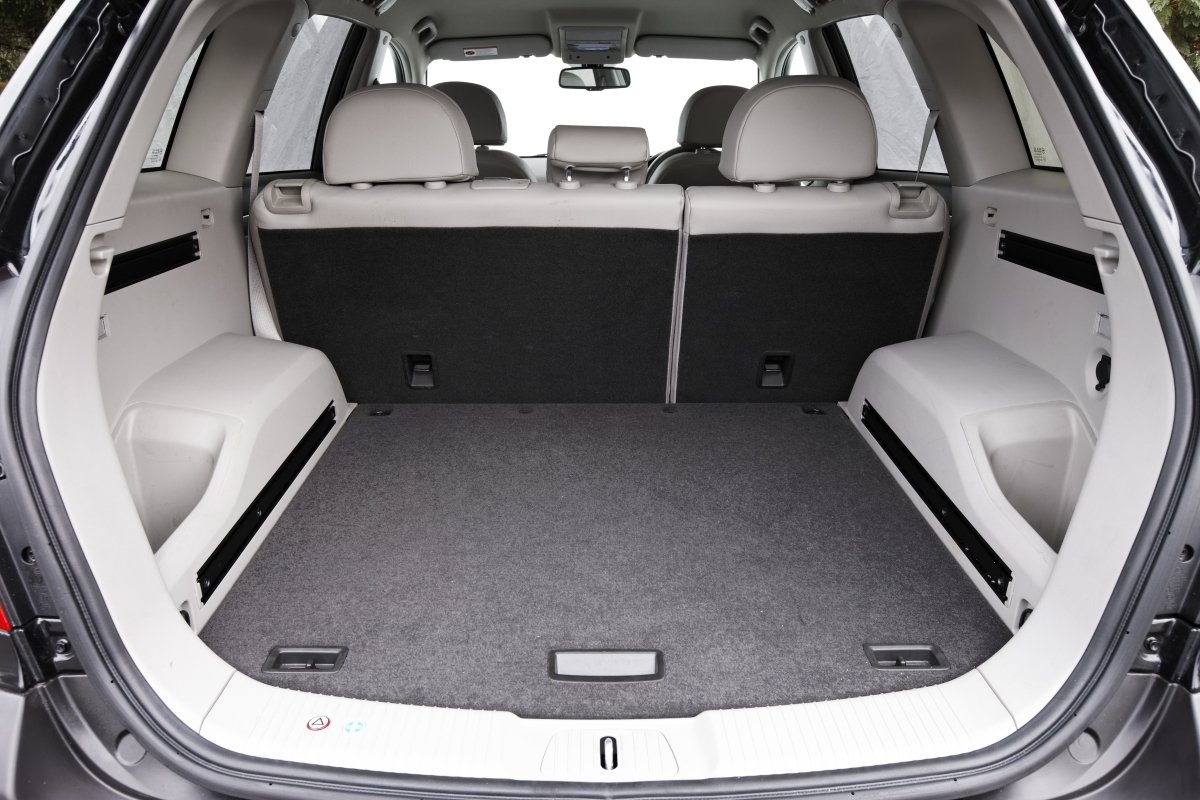
The interior is a bit low-rent, and boot space isn’t great, either. There are 420 litres with the rear seats upright, and 1,420 when they’re folded flat. It is not hard to find an SUV of the same era that can beat that, the Hyundai Santa Fe and the Toyota RAV4 among them.
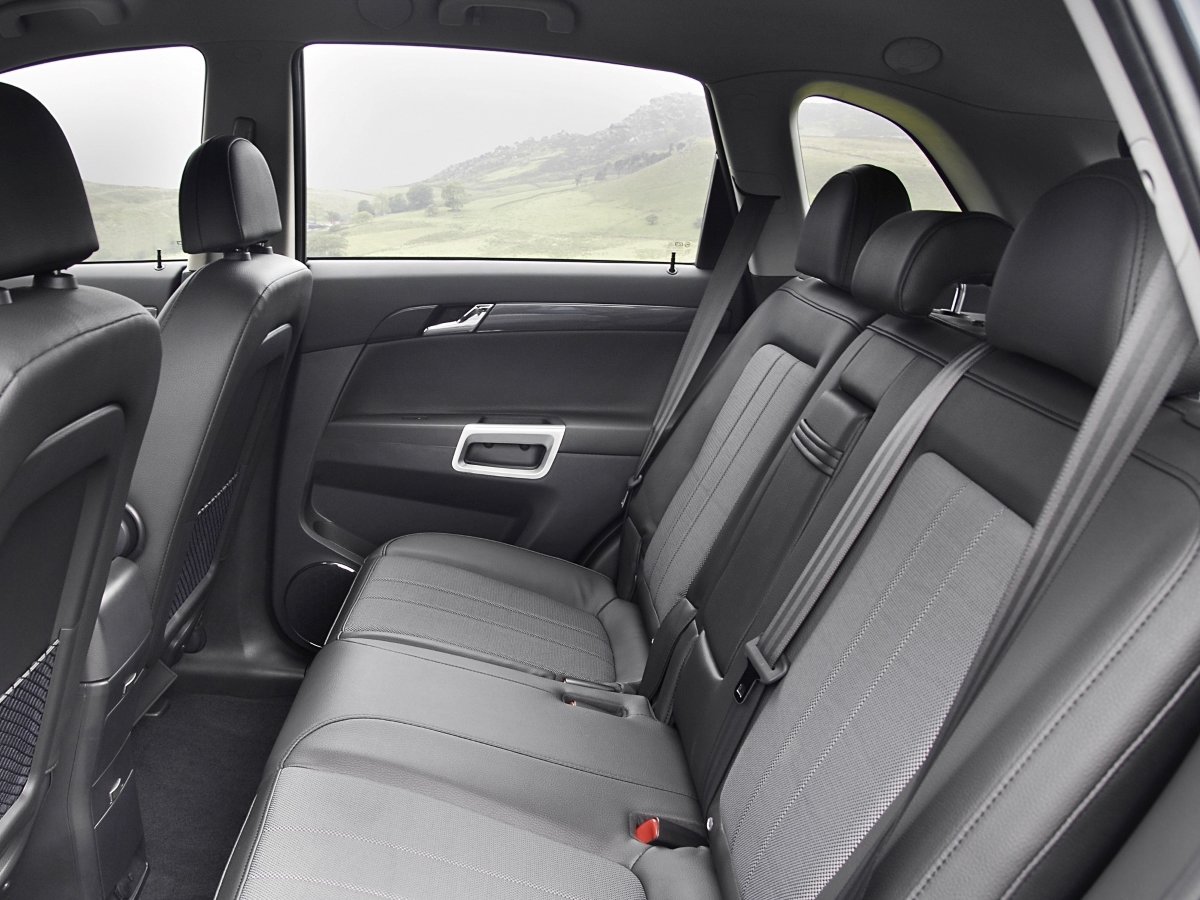
What’s more, the closely related Chevrolet Captiva offers space for seven, while the Antara is strictly a five-seater. There is plenty of room for five in the main part of the cabin, though.
Driving
What's it like to drive?
The diesel is definitely the pick of the two engines. Although its 150bhp output doesn’t match the petrol engine’s 167bhp, it has much stronger mid-range pull.
Better was to come in late 2010, when Vauxhall replaced the 2.0-litre diesel engine with a choice of 2.2-litre diesels with either 161bhp or 181bhp. Either of the 2.2 CDTi engines are good bets if you’re shopping for a used Antara today. The less powerful of the two was offered with front-wheel drive and four-wheel drive, while the higher-powered engine was always matched to a 4x4 system. By this time, Vauxhall had stopped selling the petrol Antara.
Unfortunately for Vauxhall, car reviews were lukewarm at best. Suspension revisions to the later models did improve the car, and tackled its wobbly handling, but a Ford Kuga of the same age is far more comfortable and enjoyable to drive.
It’s reasonably capable off road, but unless that’s your priority (and again, there are better off-roaders), the Antara is disappointing from the driver’s seat.
Tech and equipment
Technology, equipment & infotainment
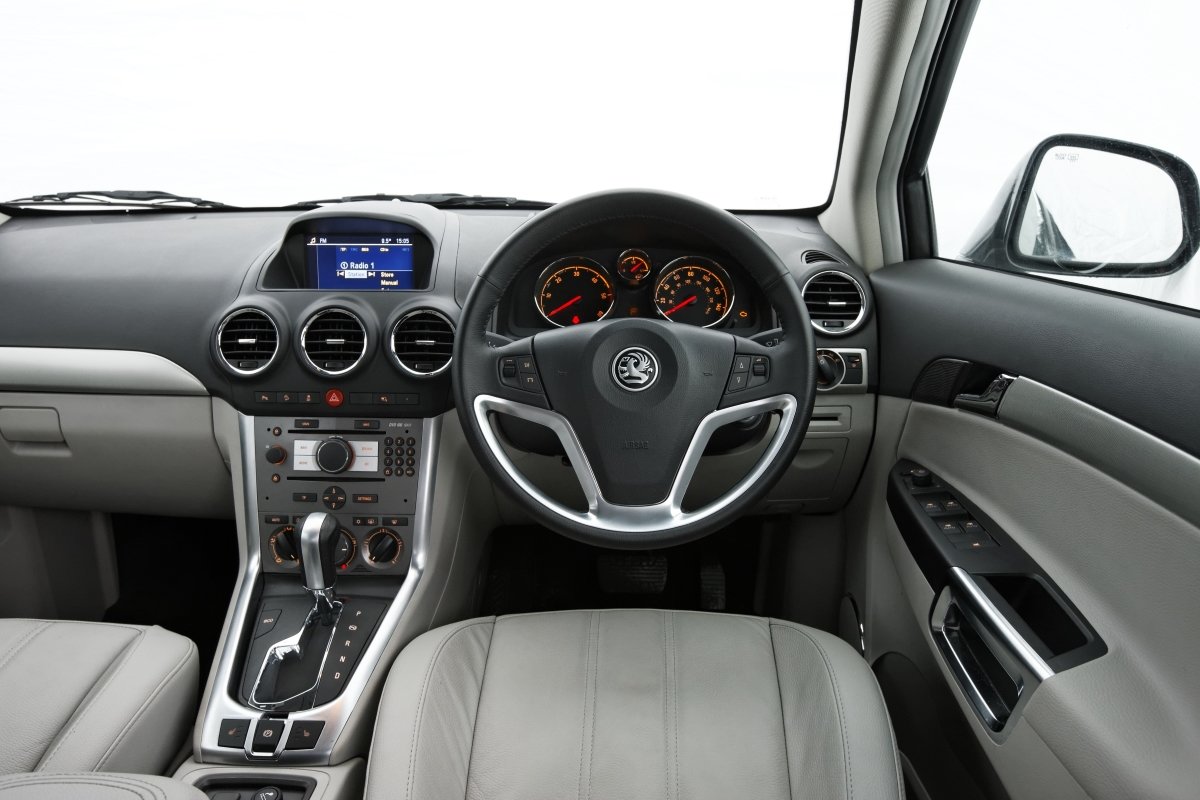
The Antara may be dull to drive and fails to match a Honda CR-V for practicality, but it does have lots of kit. From the 2007 launch, even the basic E models had stability control, four-wheel drive, hill descent control, air-conditioning, front fog lights, roof rails and a CD player.
The S trim level added climate control, heated front seats, 18-inch alloy wheels, self-levelling suspension, and rain-sensing wipers. SE models had more goodies, including Bluetooth, satnav and a six-disc CD changer.
As well as the new diesel engines, Vauxhall updated the Antara's looks with a new grille featuring a more prominent Griffin logo in 2010. More safety kit was added, the interior finish improved, and Exclusiv, SE, and SE Nav specification levels were added.
And just as the Antara was good value as a new car, it’s now very affordable used. While it’s certainly no class leader, the price and long list of equipment mean we wouldn’t completely dismiss it.
Running costs
Vauxhall Antara running costs
What you make of the Vauxhall Antara’s running costs is partly a question of perspective. If you’re downsizing from a large SUV, you’ll probably be pleased with the savings, but judged against compact SUVs and crossovers of a similar age, the Antara’s costs are middling at best.
The petrol is particularly thirsty, despite modest performance. Early versions averaged 29.4mpg according to the official figures, which improved to 32.1mpg later in the model’s life. In everyday driving, expect closer to mid 20s mpg.
Unsurprisingly, the diesels make each gallon stretch considerably further. Of the launch models from 2007, the 2.0 CDTi manual had the best official economy figure of 37.2mpg. However, reckon on 27-29mpg in reality.
Things improved with the arrival of the 2.2 CDTi engines in late 2010. As well as delivering more punch, they reduced emissions and improved mpg figures. In lab tests, the front-wheel drive version could return economy of 46.3mpg. Knock around 10mpg off that for a more realistic estimate.
The 4x4 will be a little thirstier, and choosing an Antara with an automatic gearbox rather than a manual will shave off around 4mpg.
The official economy figures stack up reasonably compared with those of rivals of the time. In practice some SUVs of similar age and size are more efficient. For example, we expect a Honda CR-V 2.2 i-CTDi manual to return close to 40mpg.
Insurance groups start from group 19E for the Antara 2.4 E. That rises to group 28E for a high-spec 181bhp 2.2 diesel 4x4.
None of the engine options in the Antara range have particularly low emissions, so annual Vehicle Excise Duty bills are steep, and the petrol is by far the costliest.
Vauxhall Antara reliability
It’s not good news, unfortunately. Whether you look at reliability surveys or owner satisfaction studies, the Antara is firmly rooted to the bottom half of the league table.
Trouble with diesel particulate filters (DPF) is something that afflicts many makes and models, and the Antara seems to have more than its fair share. Short journeys in stop-start traffic don’t allow the exhaust to reach a high enough temperature for the DPF to cleanse itself. If the car doesn't have a longer run at higher speeds on a reasonably regular basis, a replacement DPF could be needed. Fitting a replacement could result in a four-figure bill.
In fact, the Antara’s DPF problems can be even more serious than that, with reports of cars made between 3 November 2010 and 26 May 2015 catching fire.
We've also heard of throttle bodies needing to be replaced at low mileages, faulty electronic control units, and plenty of niggly electrical issues.
Given the frequency with which the Antara goes wrong, we'd be more inclined than usual to look for a car with a full service history. We’d also use the Gov.uk recall checker to make sure any recall work has been carried out.
Buying a car from a dealer offering a good aftermarket warranty is sensible, or otherwise consider arranging your own mechanical breakdown insurance.


What owners say
"The Vauxhall Antara is often praised by its owners for its reliability, spacious interior, and comfortable ride, making it a solid choice for families. Many find the Antara to be a good value when compared to similar SUV models. However, some drivers express concerns about the road tax bracket, which they see as a potential drawback for buyers considering this vehicle."
The car is great without faults and very neat. The price matches the value
20 June 2023Very good and reliable car and is good value. I would think it compares very favourable with other cars of the same type
4 July 2021Lovely comfortable ride,spacious interior and great ride height, good sized boot. Not impressed with the road tax bracket.
6 May 2024What owners say
The car is great without faults and very neat. The price matches the value
20 June 2023Very good and reliable car and is good value. I would think it compares very favourable with other cars of the same type
4 July 2021Lovely comfortable ride,spacious interior and great ride height, good sized boot. Not impressed with the road tax bracket.
6 May 2024Looks excellent, I would go for the SE Nav 163 and try to find one with a sunroof. I would compare it to the Ford Kuga in lots of ways. The Antara is probably a better tow car though.
17 September 2021Great big comfy car, plenty room in it, family car
20 September 2022Love the car lovely to drive and lots of room inside.
23 September 2022I was looking at suvs with a budget of 4k , I honestly hadnt heard of Vauxhall Antaras before but I found one and I am so happy with it , lovely drive .
6 December 2024Three things to know
- The Antara was built on the same mechanical underpinnings (known as the Theta platform) as the Chevrolet Captiva. The exterior and interior of the two cars marked them apart but, under the skin, the Antara and Captiva were very similar. The two cars have the same wheelbase (the distance between the front- and rear wheels) but the Captiva is longer overall. Chevrolet used this extra space for another row of seats, making the Captiva a seven-seater. Like the Antara, the Captiva was good value new and makes a sound alternative to the Vauxhall second-hand.
- Until the 2010 facelift, when Vauxhall introduced a front-wheel drive model, every Antara had four-wheel drive. The part-time or ‘intelligent’ 4x4 system runs in front-wheel drive most of the time, which improves economy, because power goes to the rear wheels only if the front wheels struggle for traction. It reacts quite quickly and smoothly, so most of the time, you’ll struggle to notice when power is transferred. Hill descent control was standard, which is another plus if you take your Antara off road.
- The Vauxhall Antara was sold across the world with many different names. In Europe, it was badged Opel, in Australia, much the same car was sold as the Holden Captiva MaXX, then later the Holden Captiva 5. It was known as the GMC Terrain in the Middle East, and the Saturn Vue in the United States. As well as being sold under many names, it was built in several different places, including factories in South Korea, Mexico and Russia.
Which one to buy
- For towing: Choose the 181bhp 2.2 CDTi 4x4 and take your pick from six-speed manual and six-speed automatic gearboxes. Either way, this model has the pulling power to cope with a caravan, a horsebox or a trailer.
- The most economical: Pick the front-wheel-drive 161bhp 2.2 CDTi manual. This is the most efficient of the engines offered in the Antara, and it’s lighter than other models. According to official figures, this version returns 46.3mpg. Mid-30s MPG or better should be achievable, which isn’t great, but it’s better than the rest of the range.
- The best all-rounder: Go for the 161bhp 2.2 CDTi 4x4. As with the more powerful Antara 2.2, you’ll be able to choose between versions with a manual gearbox and automatics. We’d take the 161bhp model over the 181bhp car for its lower prices and slightly better fuel economy.
- If you must have a petrol: Buy the 2.4. There’s only one petrol engine in the Antara, so it’s that or nothing. You’ll have to look quite hard for one, though. Most buyers preferred diesel power, so the 2.4 isn’t available in huge numbers. On the plus side, if you do track one down, it should be very cheap.


