Vauxhall Zafira Tourer Review (2011-2018)
Vauxhall Zafira Tourer cars for sale
4.0
Expert review
Pros
Very cheap to buy as a used car
Flexible and practical cabin for seven
Efficient and punchy diesel engines
Cons
The 1.8-litre petrol is weedy
Some MPVs have more space in the third row
A Ford S-Max is more enjoyable to drive
The CarGurus verdict
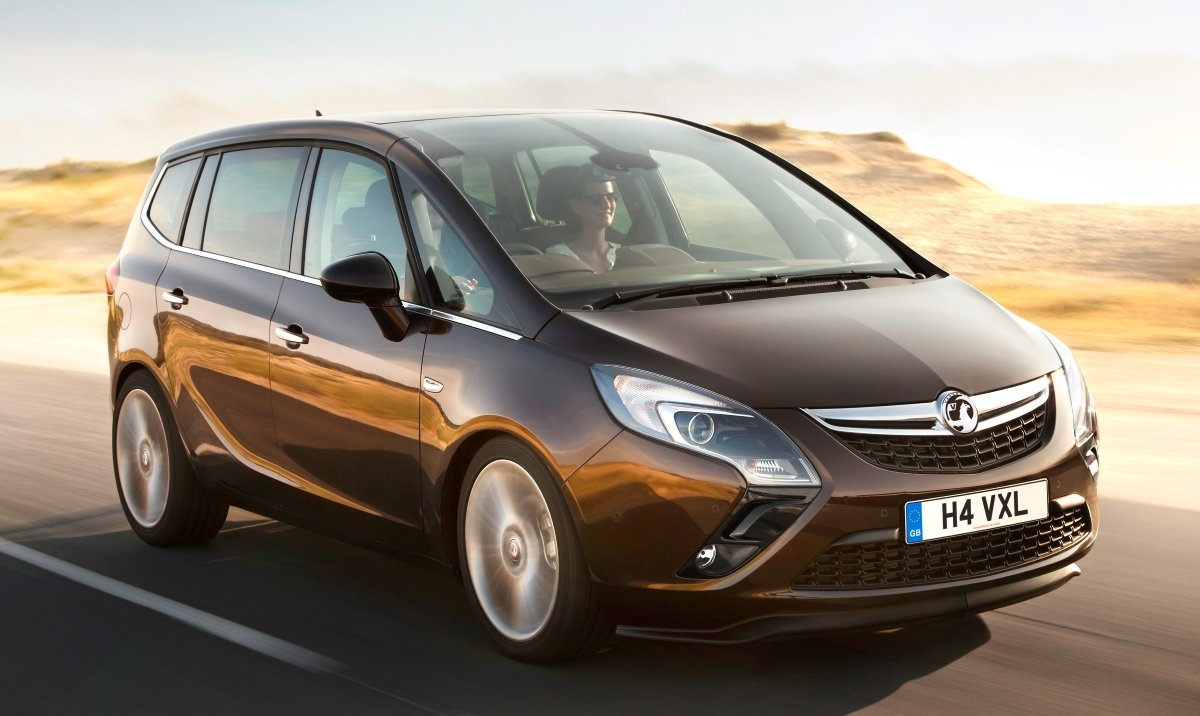
As a new car, the Vauxhall Zafira Tourer was good but not great. As a used car, it has the advantage of being extremely cheap. You really do get a lot of car for your money, and lots of toys if you choose a high-spec SRi or Elite model.
Any MPV is all about practicality, and the Zafira Tourer has a roomy and flexible cabin with seats that perform more than the usual amount of MPV tricks. Some rivals offer a bit more space, but as long as you don’t plan to regularly shoehorn adults into the third row, the Zafira Tourer is a useful and well-thought-out family car.
We’d ignore the weedy 1.8, and go for the 1.4-litre turbo if you must have a petrol, but the diesels are best unless you plan to stick to urban driving. The 134bhp 1.6 CDTi is quiet, while the 168bhp 2.0 CDTi combines strong performance with good fuel economy.
Buyers have largely turned their back on MPVs in favour of SUVs, which means used prices for the former are low. If you’re happy to ignore motoring fashion, the Zafira Tourer is a bargain of a family car.

What is the Vauxhall Zafira Tourer?
The third generation of the Vauxhall Zafira was first shown in concept form at the 2011 Geneva motor show, before the production car arrived later in the year. Vauxhall added ‘Tourer’ to the name to differentiate the new car from the second-generation Zafira, which was still sold alongside the new model for a while.
Compared with the standard Zafira, the Tourer is both bigger and better finished, with a solid interior and a neat if unoriginal design. If you want an MPV with more flair inside, look to the Citroën Grand C4 Picasso. The Vauxhall, meanwhile, suits more conservative tastes.
As you'd expect, Vauxhall (and Opel in markets outside of the UK) offered the Zafira Tourer with a choice of petrol and diesel engines.
How practical is it?
Longer and wider than the second-generation car, the seven-seater Zafira Tourer offers considerably more space, despite being closely related to the Astra. Whereas the older model was similar in size to the Ford C-Max, the Zafira Tourer’s dimensions are closer to those of the Ford S-Max.
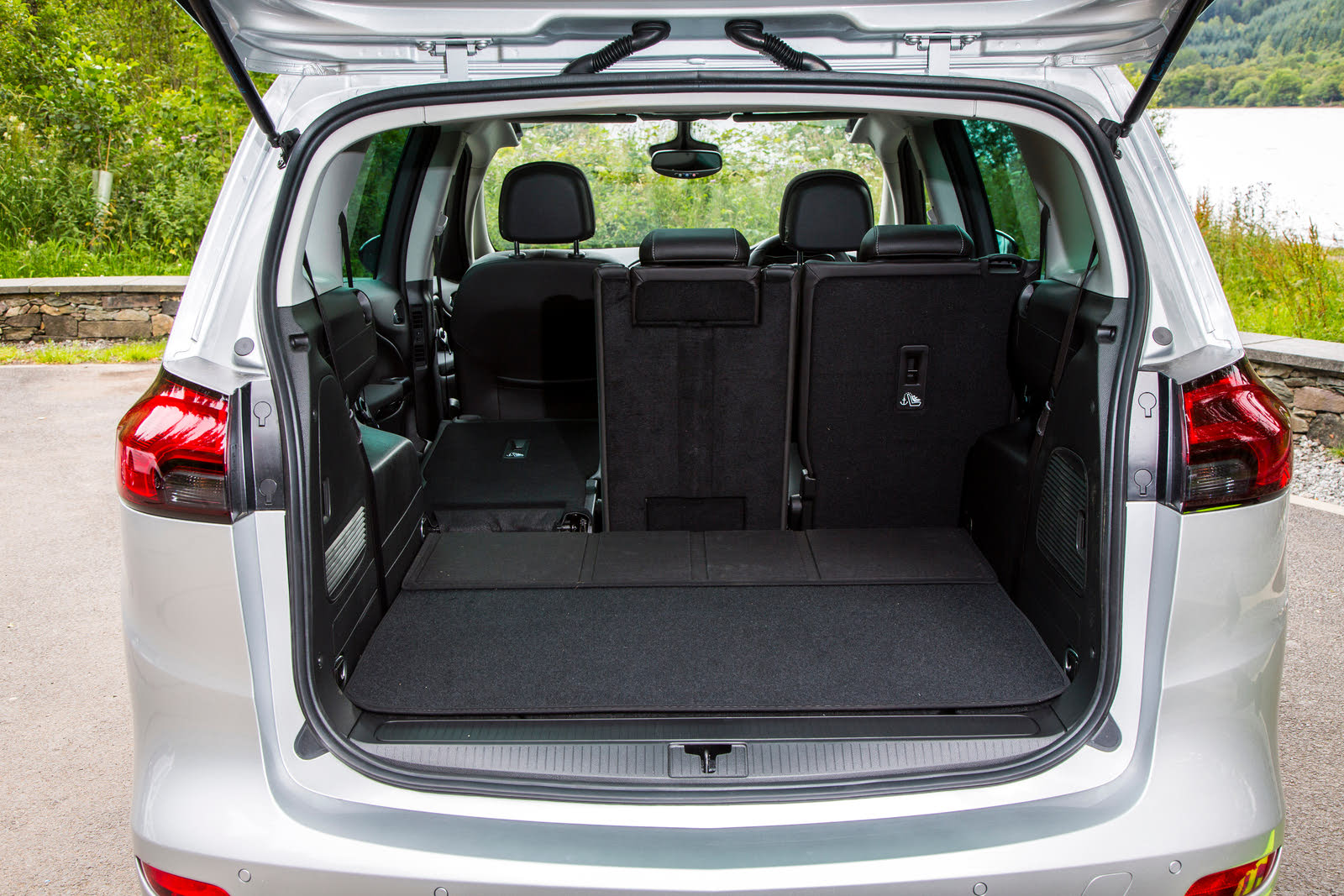
The Flex7 seating system folds, slides, and lowers every which way (more on that below in Three Things to Know) and there are lots of storage areas throughout the cabin. Luggage space is tight with every seat in place, but there’s a huge 710 litres for bags with the third row stowed away in the floor.
New car reviews of the time were mostly positive, praising the Zafira Tourer for its comfortable seven-seat cabin and flexible seating. However, it was criticised for modest head- and legroom in the third row, a narrow middle seat in the second row, and noisy diesel engines.
What's it like to drive?
The entry-level petrol engine was a 138bhp 1.8-litre unit with a five-speed manual gearbox. Oddly, Vauxhall also offered a 1.4-litre turbocharged engine with exactly the same power, but more mid-range pull and better economy. This engine was matched to a six-speed manual transmission or a six-speed automatic.
At launch, the diesel engines were all 2.0 CDTi units, with either manual or automatic six-speed gearboxes. Power outputs ranged from 108bhp, through 128bhp, to 163bhp, but they make a bit of a racket.
That was addressed by the 1.6-litre CDTi engine, introduced in 2013. As well as being smoother and quieter than the older 2.0-litre diesel, this new engine produced 134bhp and a healthy 236lb ft of torque, as well as fuel-sipping mpg figures.
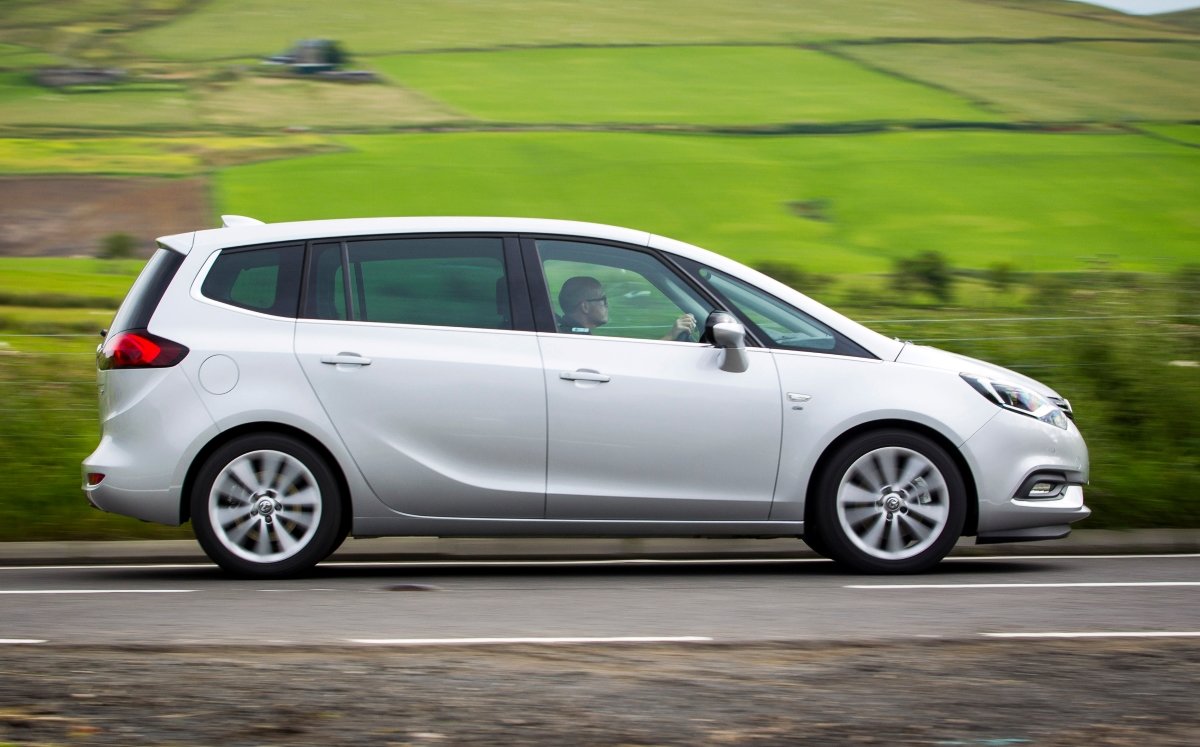
Whichever engine is doing the work, the original car reviews did have a point: the Zafira Tourer doesn’t drive with the verve or the agility of a Ford S-Max, nor does it have the rear-seat space of a Ford Galaxy.
Technology, equipment & infotainment
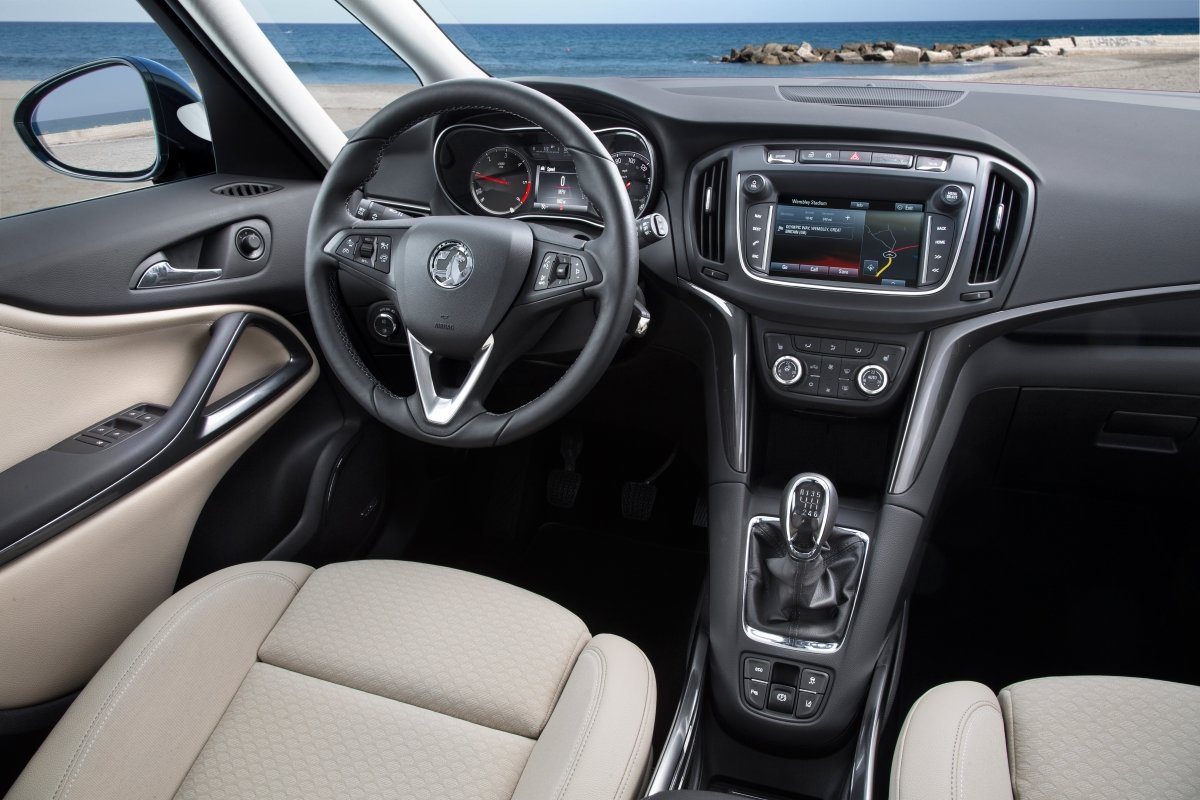
The Zafira Tourer is well equipped, even if you chose the basic model. Air-conditioning, cruise control, and six airbags were standard. Step up through the trim levels to SRi or Elite, and you have lots of toys to enjoy.
An uprated touchscreen Intellilink infotainment system was introduced when the Zafira Tourer was facelifted in 2016, and brought a much-needed improvement to the Vauxhall’s in-car tech.
Specification levels were Design, Energy, SRi, SRi Nav, SE, Tech Line, Elite and Elite Nav. These facelifted cars have a DAB radio, Apple CarPlay, and Android Auto.
Vauxhall Zafira Tourer running costs
For a car of this size with space for seven, the Zafira Tourer is quite affordable to run. Diesels may be falling out of favour, but they’re the ones to choose for the lowest fuel bills. If you’re shopping for one of the pre facelift cars, the 1.6-litre diesel is capable of 62.8mpg according to the official figures. In reality, close to 50mpg is more likely. The other early diesels should return 40-45mpg or thereabouts.
The 168bhp diesel in post-facelift cars achieves an official combined figure of 54.3-57.7mpg with a manual gearbox. Again, 40-45mpg should be achievable, or high 30s if you buy the auto.
Unsurprisingly, petrol cars are thirstier. The 1.8 is the worst, both judged by the official figures and in terms of real-world economy. You can expect 30-33mpg.
The 1.4-litre turbo is a slightly better, with economy in the mid-30s, although it’s still much thirstier than the diesels. Choosing the auto over the manual will knock around 5mpg from the fuel consumption.
Vauxhall has service plans available to spread the cost of routine servicing over a series of monthly payments. Servicing is needed once a year or every 20,000 miles, whichever comes first.
By franchised standards, Vauxhall dealers tend to be reasonably good value when it comes to servicing and maintenance. However, a good independent dealer will almost certainly charge you less, and they’re usually the go-to for cars of the Zafira Tourer’s age.

Vauxhall Zafira Tourer reliability
The Zafira Tourer tends to finish mid-field in reliability studies and owner satisfaction surveys. It’s unlikely to prove as reliable as a Toyota Verso, but as long as you find a car that’s been looked after, the Vauxhall shouldn’t give you too many headaches.
Electrical faults are quite common, so when checking a car over, make sure the likes of the central locking and the electric windows work as they should. Use any minor gremlins to chip away at the asking price, or better still, ask for them to be fixed before you take delivery.
As an MPV, many Zafira Tourers will have been used for the school run. That doesn’t necessarily do an engine with a diesel particulate filter (DPF) much good, because the exhaust may not get hot enough for the filter to cleanse itself. Don’t assume a low-mileage diesel is a better buy than one with a higher mileage, because cars that are regularly used for longer journeys are less likely to develop DPF trouble. All that stop-start driving can also wear the clutch prematurely.
Family life can be tough on the interior of an MPV, so check that every seat folds, slides and adjusts as it should. Check the exterior carefully for parking bumps and scrapes, and any damage to the alloy wheels.
The Zafira’s recall over the risk of fire is well known, but this applies to the previous generation model, not the Zafira Tourer. However, the Zafira Tourer has been recalled for faulty roof rails, which can detach in a rear-end collision.
Before committing to buy, check if any Zafira Tourer has recall work outstanding by using the recall checker on the gov.uk website. All you need is the reg number.
- Vauxhall called the seven-seat set-up in the Zafira Tourer Flex7. With all three rows upright, boot space is very tight, and adults won’t want to travel in the third row for long. However, the three individual seats in the middle row can slide backwards and forwards to create a little more legroom for those in the back. If the rear two seats are folded away, the same feature can free up more boot space. With both the second and third rows folded, there’s loads of luggage space for trips to the tip or collecting the eldest from uni.
- The Zafira Tourer was facelifted in 2016, and the main styling change was a new nose to bring the MPV into line with Vauxhall's more recent designs. Beyond the looks and equipment, there were no significant mechanical changes, so these later cars still don’t drive as well as a Ford S-Max. And as before, a Galaxy, a Seat Alhambra, or a Volkswagen Sharan offer more space for seven.
- The lowest-emitting pre-facelift Zafira Tourer models were badged Ecoflex. These cars were fitted with a stop-start system to cut the engine while stationary. This was enough to reduce CO2 emissions to a modest 119g/km for the 128bhp 2.0 CDTi fitted to the pre-facelift Zafira Tourer. At the time, that reduction was of most relevance to company car drivers, who paid less in tax compared with a Zafira diesel without the stop-start technology. The Ecoflex badging was dropped when the car was facelifted, but the 168bhp 2.0-litre CDTi engine was fitted with a stop-start system so long as the driver chose a manual rather than an automatic gearbox.
- If you cover lots of motorway miles: Go for the 2.0 CDTi with 168bhp. This engine delivers strong performance, even when the car is fully loaded with people and luggage. It’s economical as well as powerful, and well suited to high-mileage driving. We’d go for the manual for the best fuel economy, although if you’d rather give your left leg a rest, an auto was also available.
- If you want a petrol: Choose the 1.4 turbo, because it’s a better bet than the ageing 1.8. You might think a 1.4-litre engine would struggle to handle a car of the Zafira Tourer’s size, but thanks to turbocharging, there’s more punch than you’d expect, and a choice of manual and automatic transmissions.
- If you’re on a budget and you want good economy: Pick a 2.0 CDTi Ecoflex. These pre-facelift cars have 128bhp, enough for reasonable acceleration even with a full car; they’re relatively and fuel bills are reasonable. The stop-start system will save diesel when driving around town.
- If you want lots of toys: buy an Elite Nav. From 2016, the range-topping spec came with satnav, 18-inch alloy wheels, a panoramic sunroof, heated seats, leather upholstery, dark tinted rear windows, climate control, Bluetooth, the OnStar personal assistant, and front fog lights. That’s a lot for your money if you want a used MPV with some luxury features.

