Volkswagen CC Review (2012-2017)

Pros and cons
What we like
More stylish than a Passat
Cheaper than a BMW 3 Series
Roomier than an Audi A4
What to consider
More expensive than a Passat
Not as good to drive as a BMW 3 Series
Smaller than a Passat Estate
The CarGurus verdict
The CC is a car for those that like everything about the Volkswagen Passat apart from the way it looks. It’s a sexy Passat, and that’s not damning it with faint praise: it looks great and brings over much of what makes the Passt a good car. It’s quiet on the move, comes with a selection of strong and economical engines, and as a used car it represents lots of machinery for your money.
It could be a bit more special inside, and we’d keep a careful eye on service histories with the questionable reliability in mind. It’s nothing particularly special for the driving enthusiasts, either, and those that need to transport adults in the back should look elsewhere. But for a stylish, comfortable cruiser with plenty of toys and rakish silhouette, you could do far worse.
out of 5 expert review
What is the Volkswagen CC?
Four-door coupes are very much en vogue these days, but in the mid-2000s the concept was still quite novel. Mercedes-Benz had found success with the CLS, and before long, other manufacturers decided to get in on the action.
Volkswagen figured that a four-door coupe would be a good way of introducing a new, more upmarket model, and in 2008 introduced the Passat CC, which was a four-door coupe version of the Passat saloon. The Passat CC had sharper looks than its namesake, and a more premium feel inside.
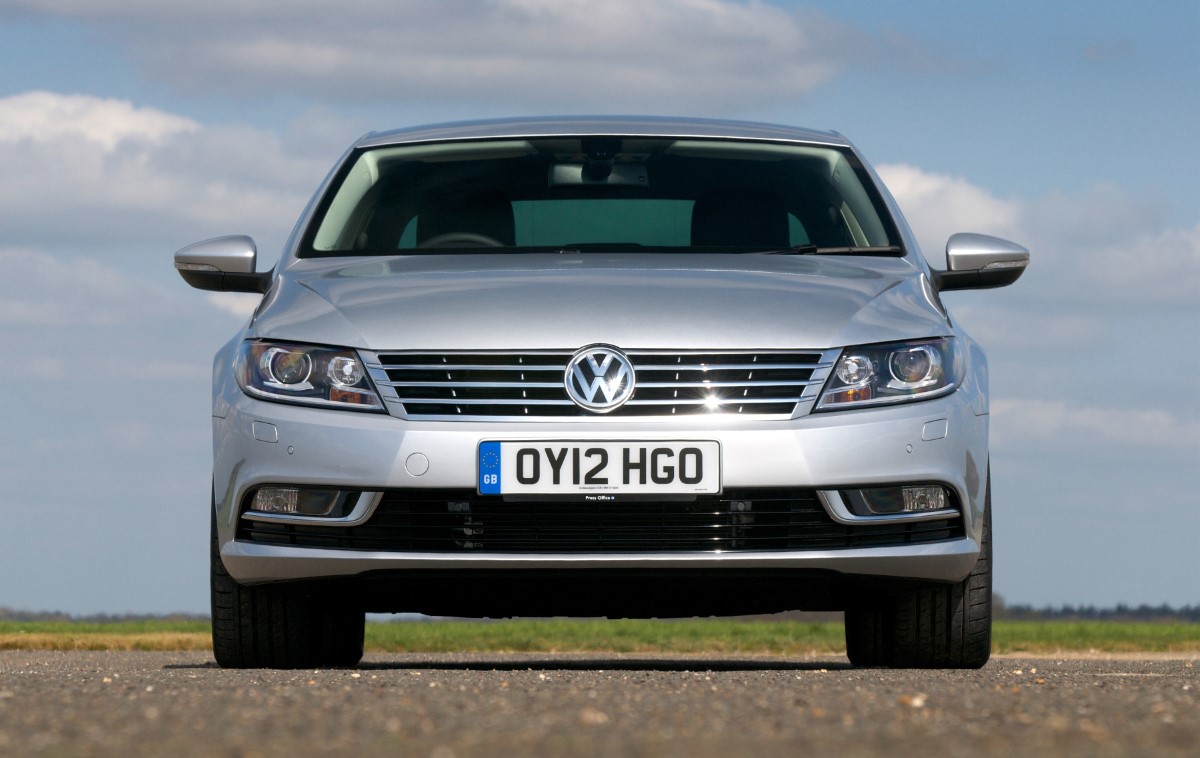
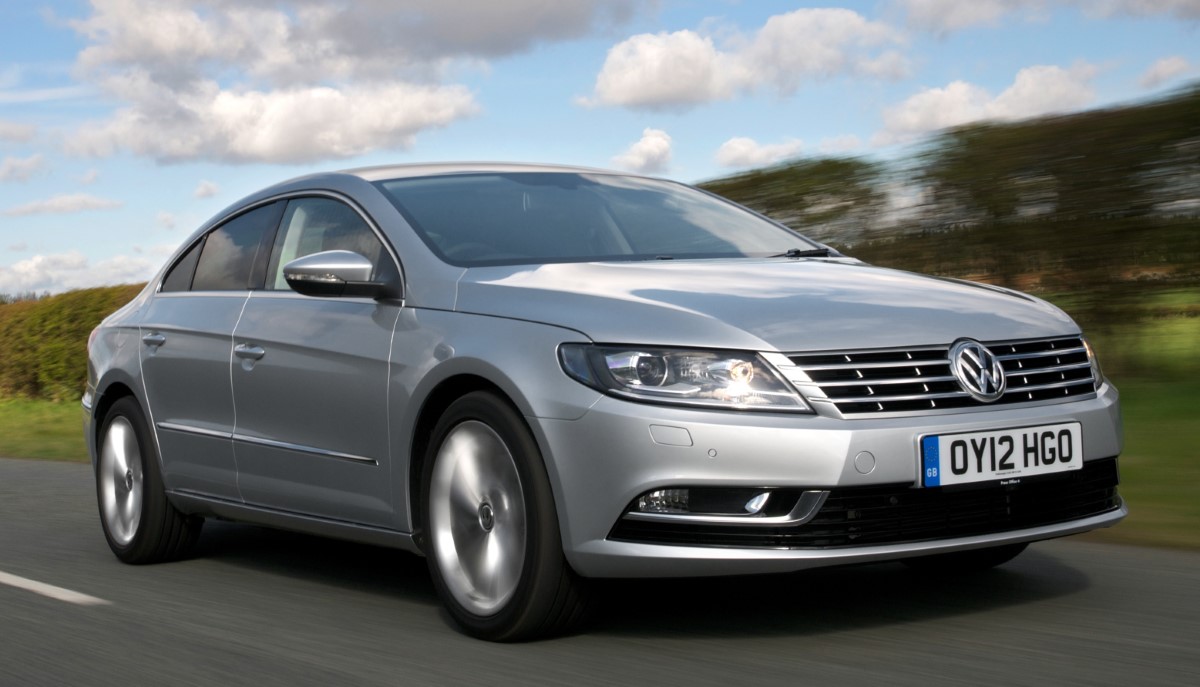
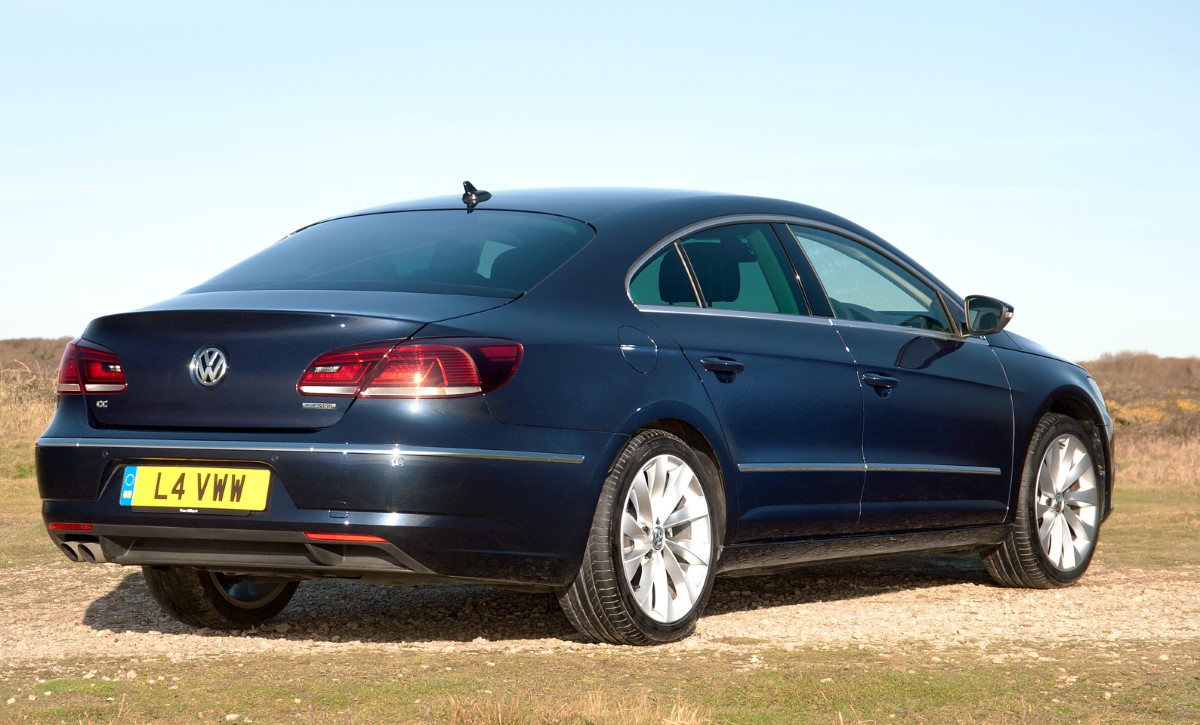
In 2012 it got a heavy facelift and a rebrand; the Passat name was dropped, leaving us with the CC model that we’re looking at here. Mechanically, it’s still largely the same as the Passat under the surface, but that’s not a bad thing. It doesn’t quite have the practicality of the regular Passat, but that’s the price you pay for style; it has arguably more attractive styling, plenty of features and some strong engines, too.
The CC was discontinued in 2017, and replaced by the Volkswagen Arteon.
Practicality
How practical is it?
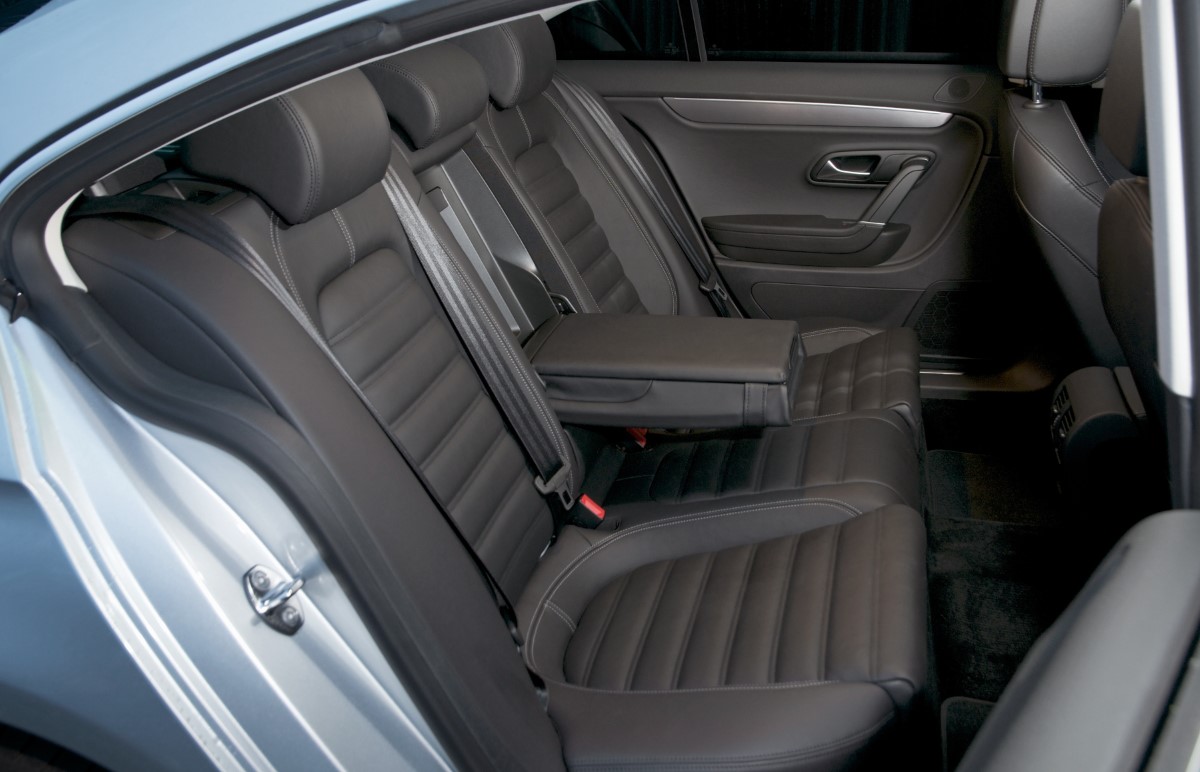
By sloping the roofline to achieve that coupe-like shape, the CC lost some of the rear headroom of the Passat, and the doors are smaller, too, which is worth considering if you’re loading child seats in and out. But it’s still a four-door saloon with a decent amount of space inside. Taller adults will likely grumble that their hair is getting messed up in the rear seats, but kids will have no issues.
The boot is a very usable size, too, at 452 litres in capacity (down from 586 in the Passat). If you need more space, then the rear seats drop down in a 60/40 split, and you can drop them from the boot rather than having to run around to each side of the car. The downside of the boot is that the saloon-style boot lid, hinged at the bottom of the windscreen, doesn’t give you a huge aperture through which to load stuff.
Inside there’s a small, covered cubby hole ahead of the gear stick, a covered storage area between the front seats with two cup holders built into it, and another cubby hole beneath the armrest. There’s also a decent-sized glovebox, which can be chilled via the aircon.
Driving
What's it like to drive?
The V6 engines available in the Passat CC were ditched along with the Passat name, so CC customers had a choice of four-cylinder petrol and diesel engines. That said, most of the used examples on the market will be diesels, as that fuel was dominant at the time, and a lot of CCs were used for long-distance business cruising. These were 2.0-litre units with either 138bhp or 177bhp. Later models were given a boost to 148bhp and 181bhp, respectively.
All are strong enough for everyday duties, and which you prefer depends on how much shove you’d like at your disposal. The 138/148bhp models will give the best fuel economy.
If you do want a petrol, there were 1.4-, 1.8- and 2.0-litre options available, and they’re all nice and strong, but they’re thin on the ground when it comes to used examples. Both six-speed manual gearboxes and a seven-speed dual-clutch DSG automatic were available, and both are solid performers with smooth, slick shifts.
The driving experience has a slight edge of sportiness to it, thanks to firm suspension, but there's not much more engagement than that. The CC is designed largely as a cruiser rather than a car to put a smile on your face. While it’ll stay well composed through the bends, there’s not a huge amount of feedback through the steering and it doesn’t feel particularly agile. GT and R-Line models have big wheels that add extra firmness to the ride quality, although GT models equipped with adaptive dampers can be set to Comfort mode to take the edge off.
The CC is at its best on the motorway, where it’s impressively quiet, thanks to a lot of soundproofing and acoustic treatment to the windscreen and (optionally) the side windows.
Tech and equipment
Technology, equipment & infotainment
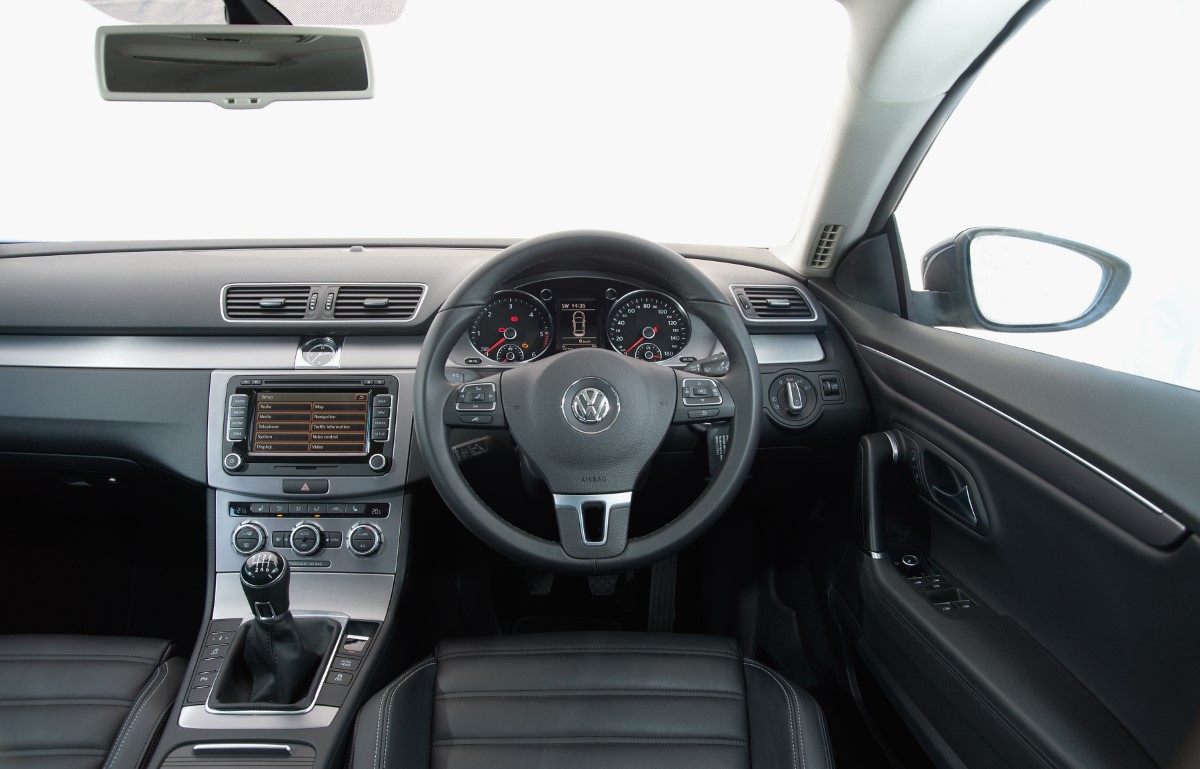
The CC has more than a passing resemblance to the contemporary Passat inside, but that’s not necessarily a criticism. The material quality is excellent and the design, while understated, is far from offensive.
It doesn’t feel as high-class as an Audi, but it’s a cut about anything from Ford and Vauxhall. There’s even an analogue clock in the centre of the dial, lifted from Volkswagen’s then-flagship luxury car, the Phaeton.
Even early cars come with Bluetooth and a DAB radio, although you won’t find Apple CarPlay or Android Auto on the touchscreen infotainment system. It does have satnav, though the maps will likely be getting on a bit unless the previous owner updated them. And you can plug your iPod in, if you still have one.
Running costs
Volkswagen CC running costs
Used prices for the Volkswagen CC are rather attractive when you consider how much style and equipment you could get as standard. Later R-Line models will be the priciest and most desirable, but early high-mileage models are dipping below £5,000.
When it comes to fuel economy, stick with diesels if you’re doing longer distances. The later engines are a bit more economical, and the pick of the bunch will be the 148bhp 2.0 TDI, which promises 62.8mpg. The petrol models, as you might expect, get thirstier with more power, with the top-spec 207bhp 2.0 TSI giving up to 38.7mpg with a manual gearbox, or 36.7mpg with an automatic.
Insurance groups start at 23 and rise up to 30 (of 50), so premiums won’t be the cheapest out there, but they shouldn’t break the bank either.
When it comes to servicing, the CC operates on a variable schedule, depending how you drive it. Those that drive around 10,000 miles or less per year will want to stick to a fixed schedule, which means getting it looked at every 12 months. Those that do more miles or a lot of longer journeys (more than 25 miles) are better with a flexible service schedule. Onboard sensors will determine when your car needs looking at it and will alert you accordingly; it could be up to every two years or 24 months. You can change the schedules from fixed to flexible during the vehicle’s life, but only when a full inspection service is due.
Volkswagen offers several fixed-price service plans, and the cost will vary depending on the age of the car you’re looking at. You may want to consider a non-dealer VW specialist, especially for older models, as the manufacturer warranty will have long-expired, and they’ll likely be more affordable.

Volkswagen CC reliability
The CC is based on well-established Volkswagen engineering and there isn’t anything particularly unusual or scary about its components that should have you unusually worried about long-term reliability. It sold in relatively small numbers so didn’t often feature in contemporary reliability and customer satisfaction surveys.
However, the CC is based in large part on the Volkswagen Passat, which didn’t fare too well in a lot of those studies. Volkswagen as a brand at the time also wasn’t going through one of its finest periods of reliability. That means more than ever that it’s best to look for examples with full service history that show signs of being well looked after.
The only regular issue we’ve heard about is a problem with the electric parking brake sticking, which is usually due to a seized caliper motor. Fixing it requires replacing the whole caliper, so check the operation of it during your test drive.
When looking at past paperwork, make sure DSG automatic models had their gearboxes serviced every 40,000 miles, as they’re prone to (expensive) failure if not properly looked after.

What owners say
The CC is an absolutely stunning looking car. It definitely lives up to the CC (Comfort Coupe). It is incredibly comfortable, all switches, buttons etc are very well laid out and tactile. Everything has a very good solid feel and feels like a premium quality car.
24 August 2025There are luxury 10 out of 10 cars that cost a great deal of money, there are cars that do great individual things for a great deal of money, and theres the Volkswagen cc that does everything very very well for much less money than any of the above, and the bonus buy? it looks really really cool
16 June 2023Three things to know
- At launch, the CC was available only in two trims – CC and GT. These were both well equipped, with 17-inch and 18-inch alloys, respectively, bi-xenon headlights and two-zone climate control as standard. GT added heated nappa leather upholstery, front- and rear parking sensors and adaptive chassis control. At the end of 2013, the R-Line trim was added, with sportier looks and similar specification to the GT model, and there was an R-Line Black Edition, too, which had (as the name suggests) black elements inside and out.
- Keep an eye out for cars that had the options list heavily ticked. Extras included high beam assist, which automatically dips the main headlight beam for oncoming traffic, and adaptive cruise control with automatic city emergency braking. A rear view camera was also available, as were front seats with a massage function.
- If you want slightly more impressive handling, look for a car with the more powerful petrol or diesel engines. These were fitted with an electronic XDS differential, which improved traction on acceleration and made the CC a bit more competent through the bends.
Which one to buy
- If you want the best fuel economy: Go for one of the diesels. The early 138bhp 2.0 TDI manual promises 60.1mpg, although that’s measured using the outdated NEDC testing method, rather than the later WLTP procedure. Real-world MPG will be lower, but still better than the other versions. The later 148bhp 2.0 TDI should be even better, with an official MPG of 62.8, but it’ll be more expensive to buy.
- If you want the most fun: None of the CC variants are particularly engaging to drive, but you’ll get the best handling from cars with adaptive chassis control. This lets you stiffen up the suspension when you want it, or soften it off for more comfort. It was a standard feature on GT cars and the R-Line models.
- If you want the best-looking: Looks are a very subjective thing, but for some extra flashiness, look at the R-Line models, which get sportier exterior fixtures and fittings courtesy of big wheels and a bodykit.
- If you want the fastest model: The CC with the most grunt is the 2.0-litre TSI petrol, which has 207bhp. That engine was only available on earlier models, as it was dropped later in the CC’s life. If you’re set on a later model, then the most powerful is the diesel-powered 2.0 TDI with 181bhp.


Pricing trends
Starting RRP
£19,700
Current avg. market price
£7,321
Trending up by 11.1% this month
April 2026 - October 2026

