Volkswagen ID. Buzz 2026 review | A spacious and stylish family bus
Volkswagen ID.Buzz cars for sale
4.0
Expert review
Pros
Fantastic styling
Good to drive
Beautifully finished interior
Cons
Hugely expensive
Charging cables cost extra
You’ll have to wait for the campervan version
The CarGurus verdict
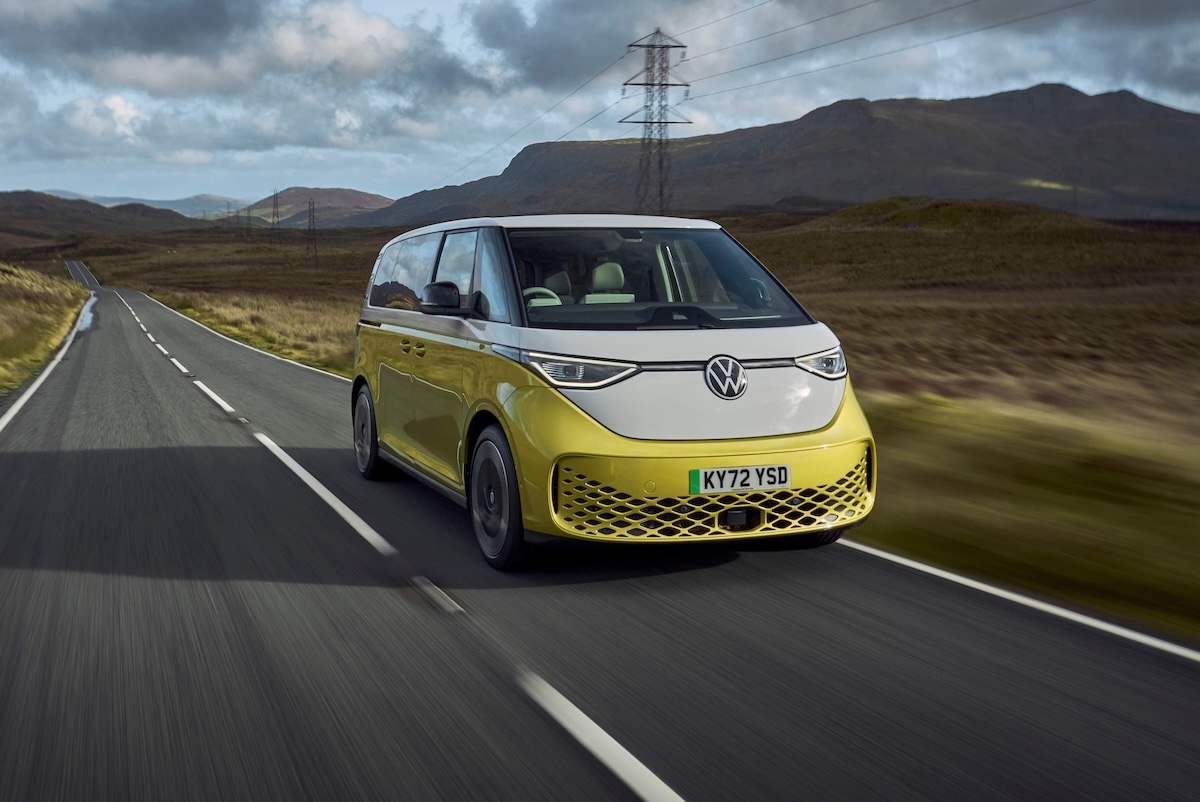
The Volkswagen ID. Buzz is a brilliant EV, and an even better lifestyle van or MPV. Still, there’s no doubt it could be improved with more reasonable option prices, and more logical dashboard controls. Should a family EV from the brand of the people cost £60,000? We’ll leave that for you to decide.
Given the space and versatility the ID. Buzz offers, as well as its style kudos and tech features, it makes a convincing case. Yes, a Tesla Model Y will go further on a charge, a Hyundai Ioniq 5 is more affordable, and the Ford Mustang Mach-E is more fun to drive. But the ID. Buzz is unique in what it offers, and its balance of common-sense, versatility and ice-cold coolness is unmatched by anything else.
What is the Volkswagen ID. Buzz?
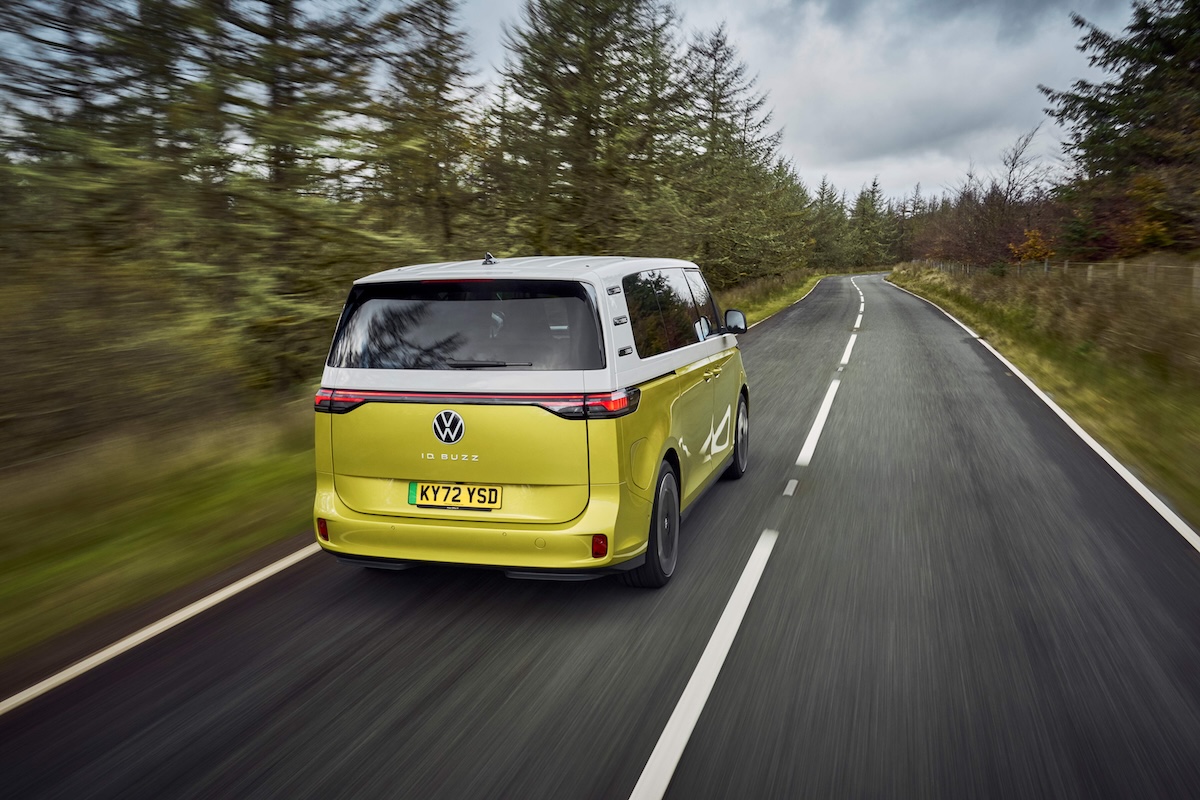
The Volkswagen ID. Buzz is a large electric vehicle that unmistakably evokes the style and ethos of the iconic VW T1 Camper. At 4.7 metres long and just under 2.0 metres tall, the ID. Buzz is just about compact enough to fit into an average multi-storey car park, yet it is also vastly roomier than comparable SUVs: the Tesla Model Y, Hyundai Ioniq 5 and Ford Mustang Mach-E, for example. In effect, the quirky styling transforms what is essentially a cross between a van and an old-school MPV into something very cool indeed.
This is one of the larger vehicles in the Volkswagen stable to be based on the modular MEB platform, the very same that underpins the ID.4 and Audi Q4 E-tron, amongst others.
The ID. Buzz, available with five or six seats, gets a 84kWh (79kWh of which is usable) lithium-ion battery, complete with rear-wheel drive and a WLTP-tested driving range of up to 283 miles: slightly more than when it was first launched in 2022. The long wheelbase ID. Buzz, launched in 2024 and available with either six or seven seats, gets a larger 91kWh (86kWh usable) battery for a range of up to 293 miles.
For anyone interested in a more spirited driving experience, the twin-motor, all-wheel-drive ID. Buzz GTX is available in both short- and long-wheelbase variants. The ID. Buzz range is still expected to expand with a camper version, but those are your options for the time being.
The design of the ID. Buzz is one of its real star qualities. There are six different two-tone paint options, including two blues, one silver, one red, one green and a vivid, metallic yellow. The two-tone finish is an option cost around £3,000 on all versions, though: a £1,000 hike compared to its cost at launch in 2022. In fact, only straightforward metallic silver paint is standard on ‘regular’ ID. Buzz models, or the single tone red on the GTX variants. Every other paint finish costs aaround £1,000 or upwards.
The VW ID. Buzz is hardly a cheap car, either, Prices start at just over £60,000 for the ID. Buzz Life, £64,000 for the Style and £68,000 for the flagship GTX. However you look at it, that is costly for a family car.

How practical is it?
The ID. Buzz is extremely practical, whether you opt for the standard- or long-wheelbase version. The former is available with five or six seats (in a two-plus-three format, or three rows of two), the latter with six or seven seats three rows of two, or two-plus-three-plus-two). In fact, while it’s likely the style kudos that will attract most buyers to the ID. Buzz, its interior space and versatility are just as likely to be what clinches the deal.
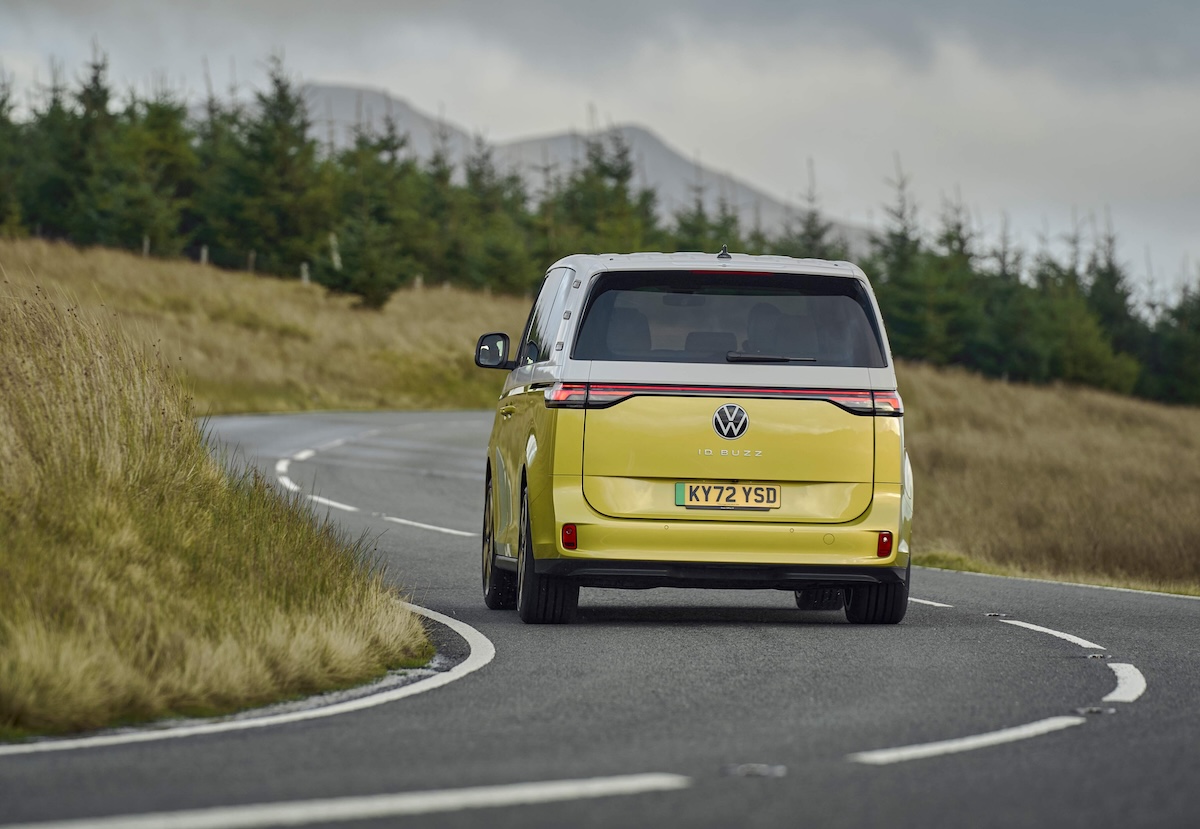
The boot is a particular highlight. In the standard-wheelbase model, there’s a whopping 1,121 litres of space with five seats in place, making it truly van-like in its roominess. Fold the rear seats down and you’re left with a colossal 2,205 litres of space. You can also add an optional raised boot floor (the ‘Multiflex board’, standard on the Style model), which creates a huge hidden space for charging cables and much more, and means that the boot floor lies flush with the folded middle row of seats. You can even get a double mattress in there if you drop the rear seats.
However, the raised floor is a mixed blessing because it also makes for a high load lip, and it’s only one third of the ‘upper’ floor that raises on hydraulic arms. The rest of the load floor is fixed, and will require spanners if you want to remove it.
In the long-wheelbase ID. Buzz, which is stretched by 250mm, there’s a respectable 306 litres of space behind the third row, increasing to 1,340 litres with the rearmost seats folded, and a whopping 2,469 litres when the second and third rows are down.
The third-row seats in the standard-wheelbase ID. Buzz slide and recline in a 60:40 format, and the flat floor means that even middle-seat occupants will be comfy. For some context, there’s usefully more rear legroom and headroom than in something like a Volkswagen ID.4, Skoda Enyaq iV or Tesla Model Y. The sliding doors on both sides of the vehicle make for fantastic access even in tight parking spaces, too.
Up front, the dashboard is a really lovely combination of textures and colours, and a huge step up from the ID.4 in terms of finish and design. The ‘Buzz Box’ is a large centre console that is full of useful stowage space. It also slides or can be removed.
What's it like to drive?
The driving position is good: high-set and complete with an adjustable centre armrest. You do step up into the ID. Buzz more than you do a conventional family SUV, and the lofty height and big glass area all contribute to the unmistakable sense that this is a ‘bus’ and not an SUV. All good, then. The materials and colours make it feel special, quirky and cheerful. This is an expensive car, but Volkswagen has done a good job of making a halo model feel worth its premium price tag.
Once on the move, the ID. Buzz is a seriously comfortable and serene way to get about. The steering is light and devoid of any real sense of connection, but it weights up well enough to give you confidence, whether you’re wheeling through town or settling in for a long motorway run. The turning circle of 11.1 metres is useful, too, and is closer to what you’d expect from a family hatchback than a van.
There’s very little electric motor whine, and while the 20-inch wheels on our test car did create a fair bit of tyre noise over certain surfaces, the ID. Buzz is impressively quiet even by EV standards. It’s really comfortable as well. Yes, you get a sense of how heavy the ID. Buzz is when it thumps over a sunken pothole (in its lightest form, it weighs 2,540kg, and in its heaviest, you’re looking at 2,910kg), but the good damping and body control keep it from feeling wallowy. It also soaks up all but the worst blemishes on the road surface.
In non-GTX forms, the ID. Buzz is not terribly fast. The 282bhp rear-mounted electric motor whirrs VW’s electric ‘bus’ up to 62mph in 7.6 seconds in the standard-wheelbase model, or 7.9 seconds in the long-wheelbase version. It feels more than fast enough for sprightly getaways into fast-moving traffic, though.
The dual-motor GTX is somewhat different, as you’d expect, with 335bhp in total. The 0-62mph sprint is done in 6.1 or 6.4 seconds (SWB versus LWB), which is plenty quick enough, but you must seriously ask yourself the question: do you really need a fast VW bus? Granted, the all-wheel drive will prove useful in poor weather conditions, while the added get-up-and-go will be handy for rolling overtakes. Still, to our minds, the firmer ride and reduced range aren’t worth it when compared to the regular ID. Buzz models.
Regenerative braking, used to help recharge the batteries, is very straightforward. In normal Drive mode, it’s barely noticeable, so you won’t feel unsettled by it even if you’ve never experienced an EV before. You can increase the brake regen' by toggling to ‘B’ mode, which brings heavier braking, but is still way off the one-pedal driving mode you might experience in, say, a Hyundai Ioniq 5.
Overall, the ID. Buzz has its strengths in being a delightfully comfortable yet well-controlled and confident car. Exactly what you’d want from a large family and ‘active lifestyle’ vehicle, in other words.
If you're buying used, bear in mind that the earliest versions of the car came with a less powerful 204PS motor, an smaller 77kWh batter, and a poorer range of 258 miles.
Technology, equipment & infotainment
This may be a retro remake of the classic Camper, but VW is also pitching the ID. Buzz as a technical extravaganza.
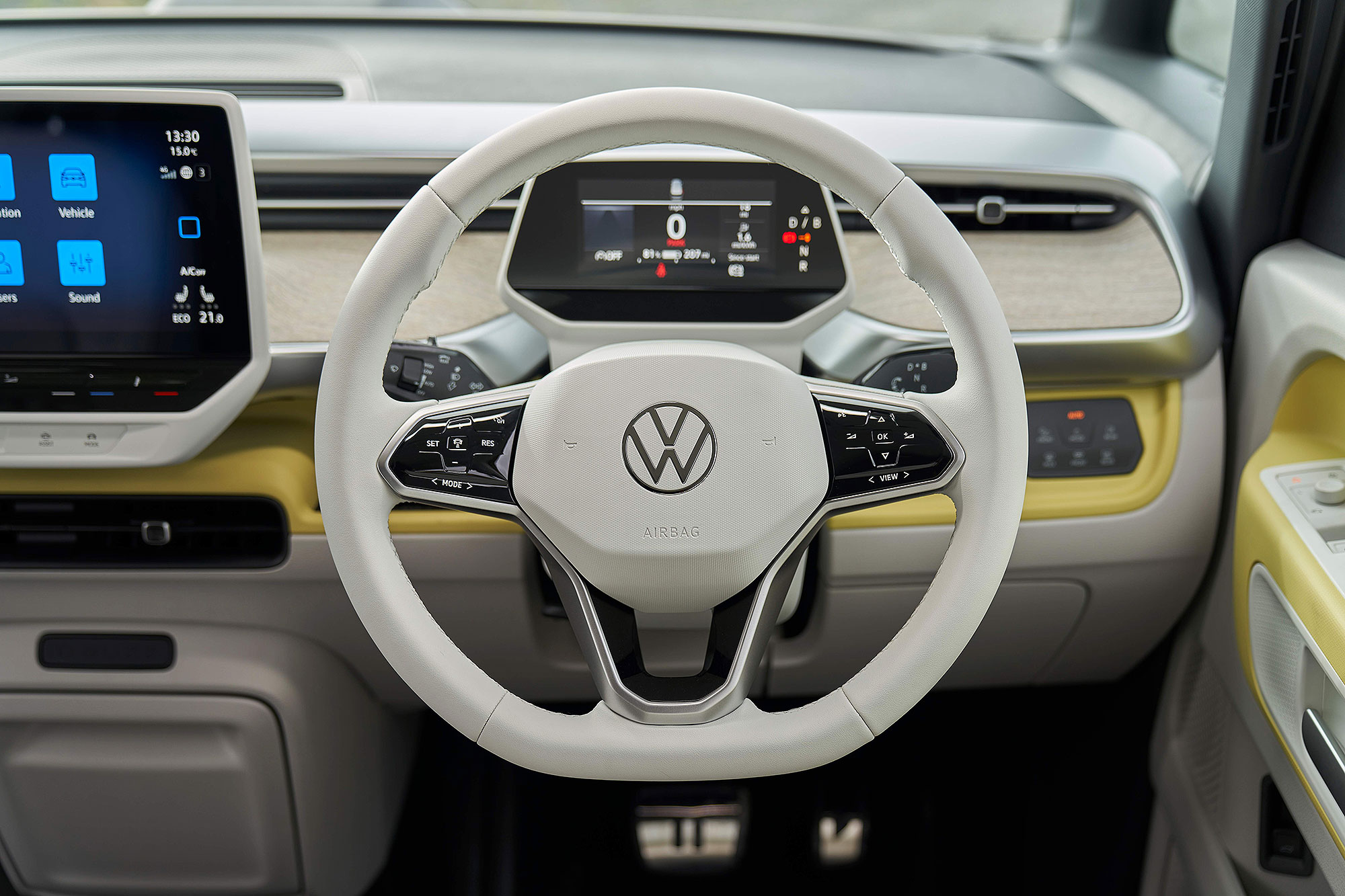
Naturally, the interior gets a big digital driver’s display and a 12.9-inch colour touchscreen with satnav, Apple CarPlay, Android Auto and voice control. Style-spec versions also have a head-up display and a premium Harman Kardon sound system.
The infotainment system is just fine, then. The big problem is that the touch-sensitive pads on the steering wheel are rather too easy to press by accident. And the touch-sensitive temperature and volume control bars beneath the screen are also way too easy to knock when you’re aiming for the screen. At least Volkswagen’s software is said to have been upgraded (again) to deliver far better reliability and response, to avoid the infamous screen-freeze issue that the VW ID.3, Golf and other models suffered at launch.
There’s also 10-way ambient lighting (30-way in the Style), plus an ‘ID. Light’ that runs along the far edge of the dashboard to subtly indicate what direction you need to take for your next nav-guided turn, or what the car’s charging status is. Wireless phone charging and USB-C points dotted around the cabin (seven in total) are also to be expected of a car that pitches itself as the ultimate lifestyle transporter, and considering how much money you need to part with for the pleasure of owning one.
Adaptive cruise control with stop-and-start, lane-keep assist, voice control, a reversing camera and traffic sign recognition are standard equipment, as are LED headlights. You have to upgrade to the Style to get fully automatic Matrix LED lights, though (known as IQ. Light).
Once optional, the 360-degree parking camera known as ‘Area View’ is now standard-fit, as is the automatic parking system called ‘Park Assist Plus’. This has a memory function that will remember your regular parking space and how you like the car to manoeuvre into it.
A powered tailgate and electric seat adjustment for the front seats are also standard on Style spec, but you’ll pay extra for electrically sliding side doors and keyless entry. Every ID. Buzz gets heated front seats, a heated steering wheel and a heated windscreen. Keyless entry is now standard as well.
Ultimately, while equipment is fairly generous, it’s still too easy to spend a lot of extra cash on options. It’s annoying that you have to pay more than £400 for a three-pin plug on the base of the front passenger seat, for instance, so that you can plug in your laptop or other devices. At this price, it seems reasonable to expect that as standard.
Other tech highlights include ‘vehicle-to-home’ charging, which means that you can use your ID. Buzz to power your home or to feed power back into the grid. You do need a compatible home charger, though, and they’re only just coming onto the market. There are also over-the-air software updates, and even ‘swarm technology’, which allows the ID. Buzz to use anonymous information from other vehicles to improve its safety and semi-autonomous driver aids. This technology is being rolled out across other Volkswagen Group vehicles, further expanding the data field.
VW has also ensured that the ID. Buzz can run all of its ancillaries – climate control, radio, etc – while the vehicle is switched off. The 12V battery is supported by the high voltage EV battery when necessary.
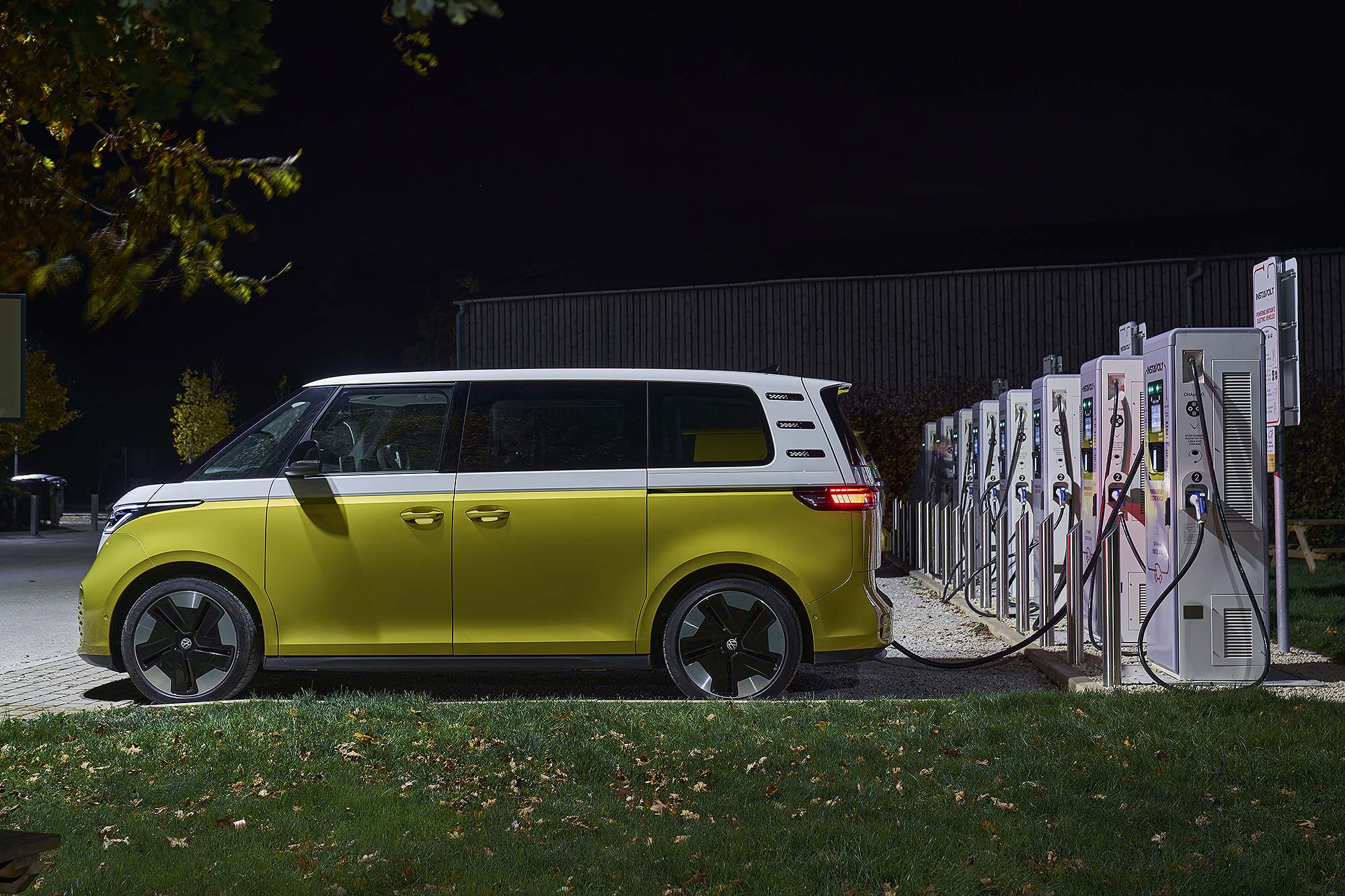
Volkswagen ID. Buzz running costs
The ID. Buzz isn’t a cheap car, with prices starting from £60,005 at the time of writing. However, it is something of a unique prospect, being far roomier and more versatile than any large SUV alternative. Many would argue that it looks cooler and has a stronger image, too.
So, while ID. Buzz prices are a bit eye-watering, they’re justifiable in the context of potential rivals. If your budget is limited, the VW Caravelle and Citroen SpaceTourer are both cheaper to buy. Or if you don’t need the Buzz’s cavernous boot space, take a look at more conventional alternatives such as the Volkswagen ID.4.
Generally speaking, the ID. Buzz will be cheaper to fuel than an equivalent petrol or diesel vehicle if you charge it at home. If you must rely on (much pricier) public EV chargers, you might be better off running a diesel-engined Caravelle. Company car drivers can make substantial savings on Benefit-In-Kind tax by choosing an EV, however. And while electric cars are no longer exempt from VED (road tax), annual costs are still comparatively low, at £10 for the first year and £195 thereafter. Don’t forget, though, that since all versions of the ID. Buzz cost in excess of £50,000 (the ‘luxury car tax’ threshold for EVs), you will be billed an additional £425 per annum for five years after the first year the vehicle is taxed.
Insurance costs for the ID. Buzz aren’t too prohibitive for entry-level models, which fall into groups 31-33 (out of 50). At the opposite extreme, the sporty ID. Buzz GTX is rated in insurance group 42. Volkswagen will cover the cost of your first MOT (due after three years), together with your first three services. Beyond that, lengthy two-year service intervals should help to keep running costs in check.

Volkswagen ID. Buzz reliability
The ID. Buzz is still too new to have been rated for reliability by owners. It comes with a three-year, 60,000-mile warranty, while the drive battery is covered for eight years and 100,000 miles. The former is stingy, and while the latter is better, it's also required by law.
Unfortunately, Volkswagen is one of the less reliable car brands in the UK, according to the 2024 What Car? Used Car Reliability Survey. The German company took joint 24th place overall with Ford, out of a total of 30 brands. If you do buy an ID. Buzz, be sure to report any issues with your dealership, and do your best to read the vehicle’s warranty to ensure you don’t do anything to compromise it.
As for battery longevity, data from the last 12 years of mainstream electric cars shows that you can expect to lose around 15-20% of the car’s potential maximum driving range over 100,000 miles. Ultimately, modern lithium-ion batteries are proving to last longer than the vehicles themselves, but you should consider that you will lose some of the car’s potential range over the years. Avoiding routine rapid charging, and only charge to 80% capacity when you don’t need the full range (you can set this limit in the car’s menus) to keep your battery in good health.
- The standard-wheelbase ID. Buzz can charge at up to 185kW via the CCS port in its rear flank (a 15kW increase compared to launch-spec), while the long-wheelbase version charges at up to 200kW. Both are really good charging speeds, and faster than plenty of comparable premium electric SUVs. Plug into a rapid charger that is powerful enough (in the UK that essentially means 350kW ultra-rapid stations) and you’ll get an 80% battery charge in around 30 minutes, or a 100-mile top-up in just 10-15 minutes. Of course, all versions of the ID. Buzz can be replenished at home with a standard 7kW home charger. Owners can use the mobile phone app to define charging hours and climate control pre-sets, so the car is ready to go when needed.
- Environmental responsibility was a focus with the ID. Buzz, so many of the materials inside the car are from recycled sources, and there is no real leather available. Volkswagen has also stated that it will take back all of the used batteries from its EVs – ID. Buzz or otherwise – for re-use as stationary storage and/or for recycling into new batteries. The intention is to eventually have enough recycled rare earth metals from second-hand battery cells to create a ‘cyclical’ process where VW can rely almost entirely on recycled materials for its new batteries. It’s long-term plan that BMW and Tesla have also stated as an ultimate goal for sustainability in the electric era.
- Volkswagen added the AirConsole in-car app in 2025, which allows users to stream video games via the car’s infotainment system while charging, using their mobile phones as wireless controllers. Previously, there have been games saved to the car’s infotainment system that are controlled via the switches on the steering wheel or central screen. Games that can be streamed include Pac-Man and Ludo, with more to be added in the future.
- If you want the best value: The cheaper Life trim with the standard wheelbase is the only one to go for. It still gets most of the comforts, but consider adding the raised boot floor and the three-pin domestic charging socket if they will help you make the most of the ID. Buzz. And don’t forget the Type 2 charging cable, too.
- If you want the coolest looking one: It’s got to be the ID. Buzz Style, as the name suggests, then add one of the four two-tone paint finishes. They are pricey, at around £3,000, but if it’s style kudos you want then don’t hesitate. We particularly like the Candy White with Starlight Blue Metallic two-tone and the Bay Leaf Green metallic.
- If you want the best family car: The standard Life model with the shorter wheelbase has most of the features you need for a family motor, including keyless entry and a powered bootlid. The powered doors of the Style model would be a blessing, for sure, as would the extra space of the long-wheelbase version, but most of what you need comes with the standard ID. Buzz.
- If you cover a high mileage: The long-wheelbase models with the larger 86kWh battery do offer a tad more range than the 79kWh, standard-wheelbase versions, but there’s so little between them it makes very little difference. Having said that, the range of the GTX versions is lower, so they’re best avoided if you’re powering along motorways regularly.


