Volvo C40 Review (2021-2024)
Volvo C40 cars for sale
3.0
Expert review
Pros
Relaxed and comfortable ride
Classy and restrained interior
Very rapid acceleration
Cons
Not as much fun to drive as it could be
The Volvo XC40 Recharge is a lot more practical
Volvo's subscription service is pricey

The CarGurus verdict
Those looking for a sportier driving experience from their coupe-like electric SUV will probably gravitate towards the Ford Mustang Mach-E, while those drawn to more conventionally shaped premium SUV models and manufacturers will most likely be taken with something like a BMW iX3.
The C40 certainly has its place, though, and it will no doubt find some very satisfied customers. Its easygoing, relaxing ride differentiates it from its Polestar cousin, while comfortable seats and a delightfully restrained interior really set it apart from glitzier German rivals, and the chintzy Mustang Mach-E. Meanwhile, the sheer punch of its electric motors mean instant overtaking ability is only a twitch of the accelerator away.

What is the Volvo C40?
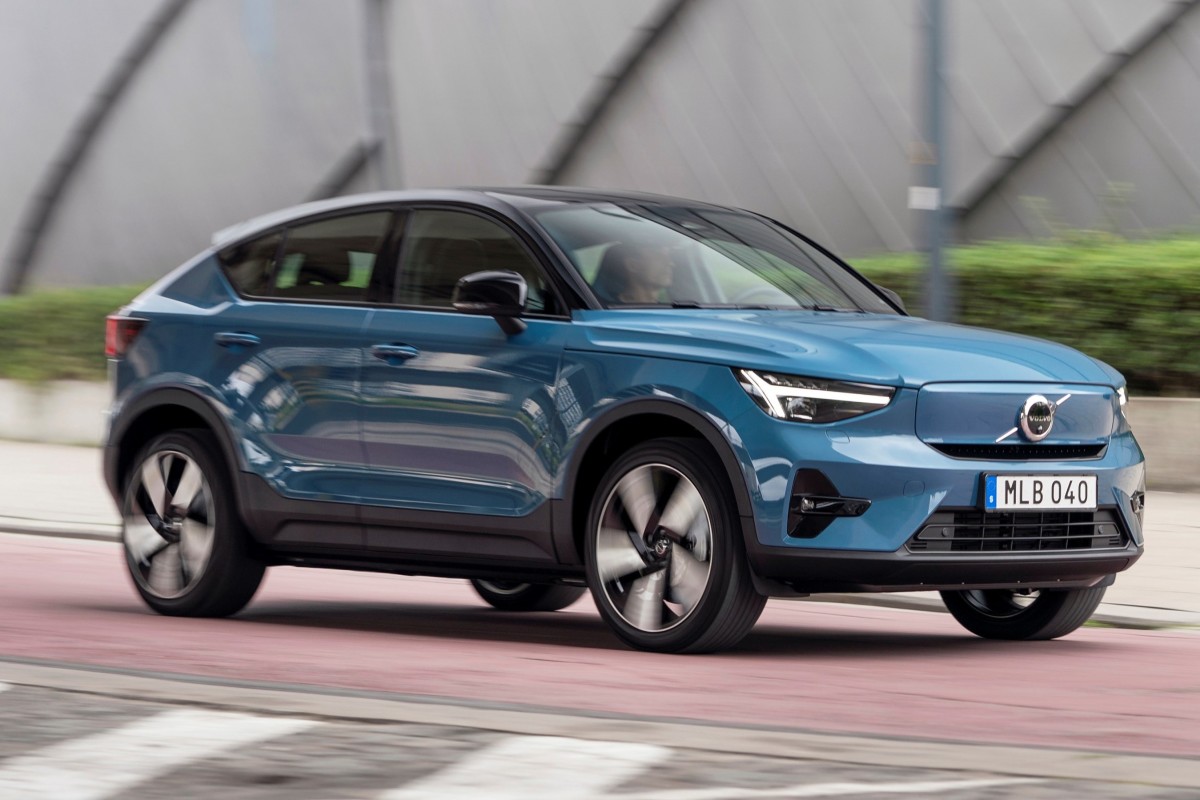
In many ways, the Volvo C40 was an inevitability. There’s an appetite for swoopily styled coupe-SUV crossovers, so the XC40 was always likely to be joined by a coupe cousin. And it’s the Volvo XC40 Recharge that lends its platform and bottom-half styling to the C40. The result is a bit awkward from some angles, but there’s no doubt that it’s a dramatic-looking thing.
Unlike the XC40, however, the C40 is an electric car only: no combustion-engined or plug-in hybrid variants here. In fact, it was the Swedish firm’s first solely electric model. The powertrain is the same as in the first versions of the XC40 Recharge, meaning twin electric motors driving all four wheels and delivering more than 400 horsepower, and a 78kWh battery that delivers a range of 273 miles, according to official figures. More sensible versions with less power and a greater range followed.
You might notice the C40's short lifespan at the top of this page, existing from 2021 to 2023, but that's no because it was discontinued. It was simply rebranded in 2024 due to the company changing the naming structure of its electric SUVs, and so it became the Volvo EC40 instead.

How practical is it?
Inside, the C40 is almost entirely the same as the XC40, which means a beautifully comfortable driving position, a well thought-through layout and a generally impressive level of build quality, even if the outright quality isn't quite up there with that of the Mercedes EQA.
There are some new C40-only touches, though. These include a backlit dash design that mirrors topographical maps of mountains in northern Sweden, and a blue carpet made from recycled plastic bottles that echoes the interiors of Volvos from the 70s and 80s.
Rear legroom is fine, but unfortunately, the more raked roofline hurts rear headroom a little – six-footers will just about fit but they’ll feel very hemmed-in – and the view out through the rear window could be described as letter box-like at best, abysmal at worst.
At 413 litres, the boot is rather average for the class, but is significantly smaller than those of quite a few rivals including the Volkswagen ID.4 and

What's it like to drive?
On the road, the C40's steering is light and responsive, while the ride is deeply impressive. It’s not pillow-soft, but considering the test car we drove was fitted with large 20-inch wheels (as indeed for now are all other C40s) it’s very comfortable indeed, even over rough and broken road surfaces. Given that the extra weight of all the batteries means EVs often need to be stiffly sprung to compensate, a ride this comfy is quite an achievement.
Then there’s the acceleration. Which is thumpingly powerful. Given that it’s got 402bhp, and power delivery is instant thanks to 660NM of electric torque, that’s perhaps not surprising. And when you look at the numbers it’s not really any more accelerative than something like a Golf R. But it feels much more punchy, allowing you to accelerate into gaps in traffic without you having to wait for a gearbox to get itself together. More sensible versions with less power and a greater range followed later.
So it gets big ticks in the boxes for ride and acceleration, but what about for driving fun? Unfortunately, when the roads get twisty, the news is not so good. Although there’s all-wheel-drive grip and traction (at least there is on the single model available from launch), the car feels like it leans a fair bit in corners, and you can’t always tell exactly how much grip there is. Even though there is always more than enough, it doesn’t inspire confidence.

Technology, equipment & infotainment
The C40's 9.3-inch portrait-aspect touchscreen infotainment system will at first glance be familiar to anyone who’s spent time in a new-ish Volvo from the late 2010s onwards. But in fact this is one of the C40’s star turns, as there’s a whole new operating system, developed with Google. And it’s basically ace.
It’s kept healthy and current via over-the-air updates, runs the latest Google maps and you can download apps via Google Play. Android Auto is present and correct, and although Apple CarPlay wasn't initially avaiable it could later be added via an over-the-air update. If we’re being picky, the absence of physical buttons or rotary dials isn’t ideal, but the touchscreen itself is responsive and effectively lag-free.
The C40 gets Volvo’s full suite of driver aids, including Pilot Assist, which will help accelerate, brake and steer the car on motorways and dual carriageways. Plus, being a Volvo it’s bristling with safety aids. These include full automatic emergency braking that can detect pedestrians and cyclists, plus a blind spot warning system with automatic braking, steering assist, an alert for traffic crossing behind you and a rear collision warning system.

Volvo C40 running costs
Despite a rather high sticker price, the actual running costs should be pretty minimal. How much it costs to ‘fill up’ your battery of this electric Volvo depends on the cost of the electricity you’re putting into it, of course, but overall you should expect to get around 2.8 miles for every kilowatt hour of energy.
That’s not hugely dissimilar to the electric XC40 (itself later rebadged as the EX40), but Volvo has made careful incremental improvements, including better aerodynamics, lower-friction wheel-bearings and software improvements (which XC40 buyers will also benefit from via over-the-air updates) to make marginal improvements to fuel efficiency. This is particularly noticeable at a motorway cruise, where we actually saw the instant energy consumption readout improve compared with stop-start urban driving, which is not normally the case in electric cars.
When you do need a top up, charging should take around eight hours on an 11kw wall charger or around 10 minutes to add 50 miles of range if you can source a 150kw public charger.
But by far the cheapest way to run a C40 is as a company car, because benefit-in-kind tax bills are super-low on EVs right now, and will be for the next couple of years at least.
Volvo C40 reliability
One of the appealing aspects of an electric car is its mechanical simplicity; there are far fewer moving parts in an electric motor than with an internal combustion engine and there’s no gearbox, either, so there’s a lot less to go wrong. Electric cars wear out components like brakes more slowly, too.
The C40's comparative rarity means there isn't all that much reliability data to go on, but it's very closely related to the XC40, which is a lot more common. That car came 8th overall in the Auto Express 2021 Driver Power customer satisfaction survey, with its reliability being particularly praised.
Its battery systems should be robust and dependable, too. Volvo – like most other makers of modern electric cars – works hard to carefully manage the temperature of the lithium-ion battery so that its capacity doesn’t degrade too much over time. For example, the batteries will be pre-conditioned by the car’s electronic brain to ensure that they are in the optimum state to receive charge if you enter a public charging station as a destination in the car's satnav.
In terms of warranty, the C40 is covered for three years or 60,000 miles, though the battery’s warranty is eight years and 100,000 miles.
- Volvo has made driving the C40 Recharge a really rather simple process. It very much is just a case of ‘get in and go’. There’s no starter button and not even a parking brake switch – whether and electronic or manual. Instead all you do is unlock the car, hop in the driving seat, select ‘drive’ with the stubby gear selector, and off you go. It’s just a shame Volvo has blocked off the place where the starter button would go with such a cheap-looking plastic disc.
- Even though the C40 is the first Volvo to be designed purely as an electric car, it’s sort of also been designed around traditional internal combustion engines. This is because it’s based on the same underpinnings as the XC40 (Volvo calls it its Compact Modular Architecture, or CMA) which does use petrol and diesel engines. So while its battery pack doesn’t intrude on passenger or luggage space, it isn’t quite as much a pure-bred EV as something like a Tesla Model Y or Jaguar I-Pace.
- Spoiler alert: there’s no leather in this car. At all. It's completely leather-free. We’d be tempted to call it a Vegan Volvo – if only for the alliteration – but actually there are some parts of the car (for example some glues) that the company can’t guarantee are free of animal-derived products. So it’s not quite vegan. But there’s no animal hide to be found anywhere in the trim or upholstery.
- If you want the fast one: The C40 Twin Pro, with its two electric motors, 402bhp and four-wheel-drive, is incredible fast, plus it has a standard equipment list longer than your receipt for your Christmas food shopping. It is expensive, but it does have everything you could possibly want in terms of creature comforts and high-tech safety equipment.
- If you want a more practical alternative: The reigning CarGurus Electric SUV Champion, as identified in our massive 10-car group test video, is the Skoda Enyaq. And a large part of that success was because it’s the most practical car of its type, and as a result, the best family car. Loads of space, a massive boot, loads of clever family-friendly touches and a comfortable, civilised driving experience.
- If you want a more prestigious alternative: Not quite as practical as the Enyaq, but not far off and just as polished to drive, the Audi Q4 E-Tron is still an excellent all-rounder. Has more glamorous looks, too, especially if you opt for the more swoopily styled Sportback version, and the Q4 also has the prestige of a four-ringed badge on the nose.
- If you want a more fun alternative: Arguably the raciest car of its type, the Ford Mustang Mach-E is terrific fun to drive, with blistering performance and very tidy handling. Holds its own on practicality, too, although perhaps not as roomy as you’d expect such a massive car to be, limiting its functionality. Interior quality is also rather ordinary, and the firm ride isn’t ideal in a family SUV.


