Volvo S60 Review (2010-2018)
Volvo S60 cars for sale
3.0
Expert review
Pros
A refreshingly subtle alternative to a German Executive saloon
Superbly comfortable on long-distance drives
Fuel-efficient diesel engines
Cons
A BMW 3 Series or Jaguar XE is more entertaining to drive
Rather a small boot
Entry-level diesel a little underpowered
The CarGurus verdict
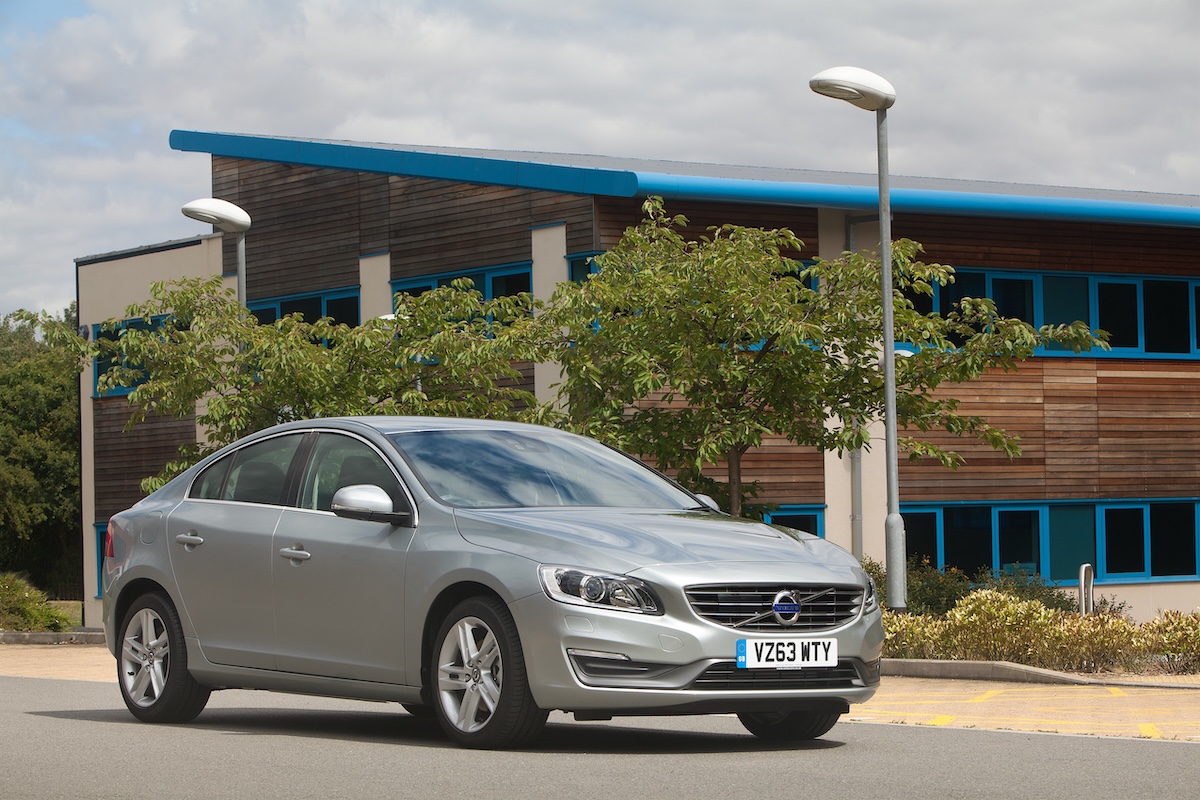
The Volvo S60 isn't the best compact executive saloon of the 2010s. We'd give that title to the BMW 3 Series. But if you are looking for a more individual alternative to the default choice BMW, a used Volvo S60 has a lot to recommend it.
It's good value as a used car and generally undercuts a prestige Audi, BMW or Mercedes saloon of similar age and mileage. And it stands out among compact executive saloons for its subtle but handsome styling.
The S60 thrives on long drives. The front seats are extremely comfortable, so travelling from one end of the country to the other should cause no aches and pains. It's not quite so compelling on country roads, mind; it handles well, but lacks the involvement of a BMW 3 Series or Jaguar XE.
Go for a T5 or T6 petrol, and the S60 is very rapid. But our money would be spent on a D4 diesel, combining serious pace with excellent fuel economy.
What is the Volvo S60?
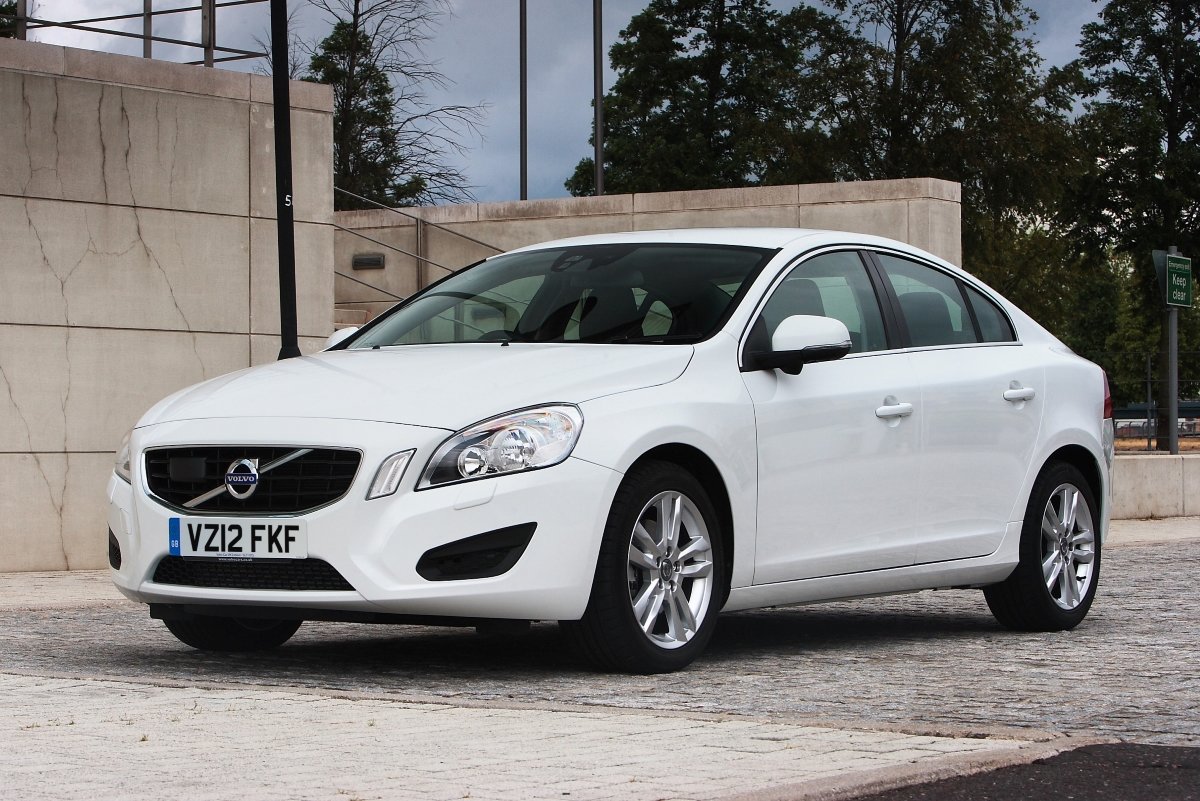
The second-generation Volvo S60 launched in 2010 to mostly positive car reviews. Here was a saloon that could stand comparison with anything made in Germany, although it wasn't a clear class leader.
From launch, the S60 saloon was offered with a choice of two diesels and one petrol engine. The solitary petrol was a feisty 3.0-litre six-cylinder engine with four-wheel drive. Badged T6, it produced 300bhp and accelerated to 62mph in just 6.5 seconds.
As tempting as the high-performance six-cylinder engine was, most buyers chose one of the diesel engines. The 2.0-litre five-cylinder D3 developed 161bhp, enough for brisk performance. The twin-turbo D5 diesel was much quicker, though. With peak power of 202bhp, it could reach 62mph in 7.8 seconds.
The third-generation Volvo S60 arrived in 2019.

How practical is it?
There's plenty of space in the front of the S60 and the driver's seat is extremely comfortable. Rear-seat space isn't quite so generous. Legroom is okay but the sloping roofline steals some headroom.
The luggage capacity is 380 litres, which is actually quite small for a car of this period and this class. It lags behind the 480 litres of boot space in the Audi A4 and 475 litres in the Mercedes C-Class.

What's it like to drive?
As time went on, Volvo added more engine options, including a fuel-sipping 1.6-litre D2 diesel. This engine initially had 113bhp, with later versions developing 118bhp. Either way, the S60 D2 is a slow car so you really have to value economy over performance. From the 2016 model year, the D3 Drive-E produced 148bhp and the D4 produced 187bhp. At the same time the D5 was uprated to 222bhp.
In 2011, the petrol line-up grew with the addition of the 148bhp 1.6-litre T3 and the 178bhp 1.6-litre T4. These made a petrol S60 a more affordable and sensible choice than the thirsty and expensive T6.
In many respects, it's the mid-range engines which work best in the S60. Despite Volvo's best efforts, the S60 doesn't handle with the poise of a BMW 3 Series or a Jaguar XE. The ride is on the firm side of comfortable, so A-roads and motorways suit the S60 better than lumpy B-roads.
Technology, equipment & infotainment
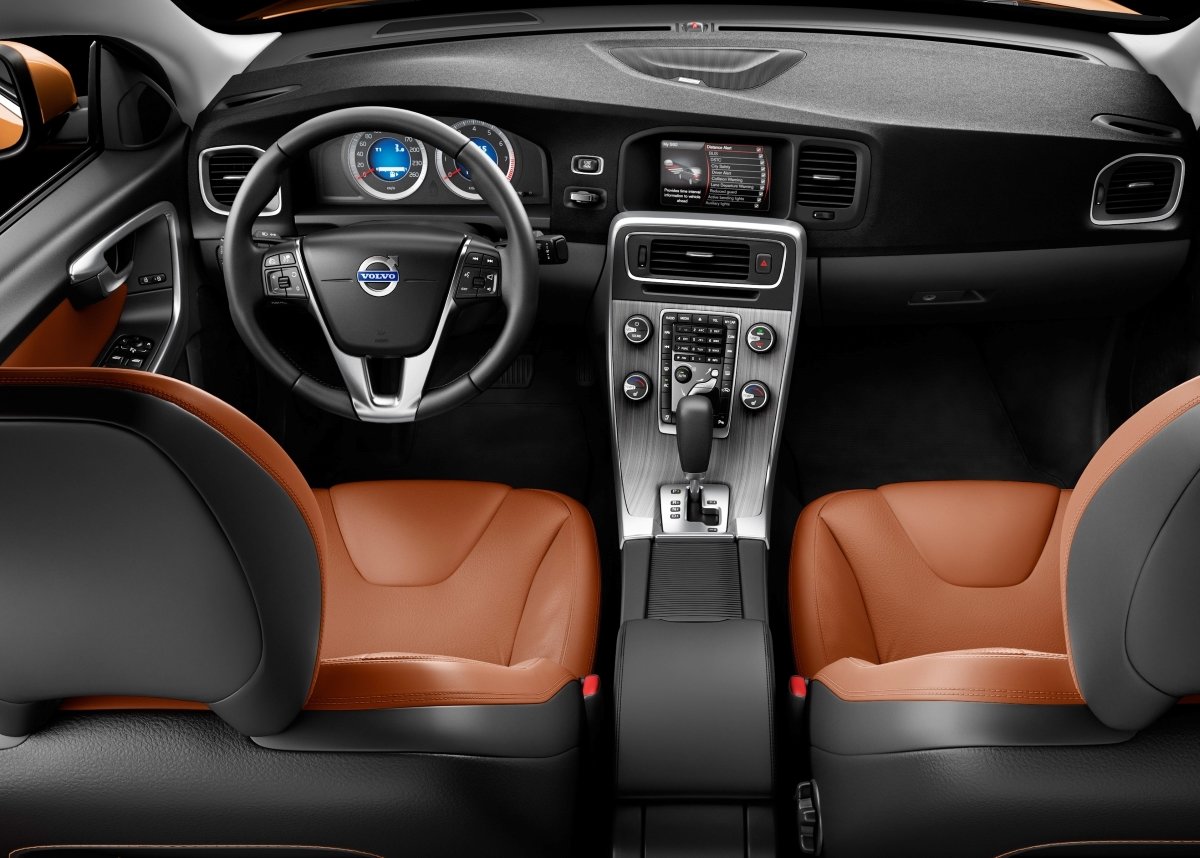
There have been lots of different trim levels over the years. From launch, buyers could choose between ES, SE and SE Lux. Even the entry-level ES came with climate control, steering wheel mounted audio controls, 16-inch alloy wheels, and a five-inch colour screen infotainment system. The R-Design model proved very popular, with sportier looks and stiffer suspension, although if comfort is a priority the regular springs and dampers are more forgiving of rough surfaces.
You expect lots of safety kit if you choose a Volvo, and the S60 was packed with some cutting-edge tech for 2010. It was one of the first new Volvos to feature City Safety, Volvo's autonomous emergency braking system. This was standard across the board. In addition, DSTC (dynamic stability and traction control), WHIPS (Whiplash Protection System), SIPS (Side Impact Protection System) and Inflatable Curtain airbags that protect the driver and occupants were all included in the price.
Volvo S60 running costs
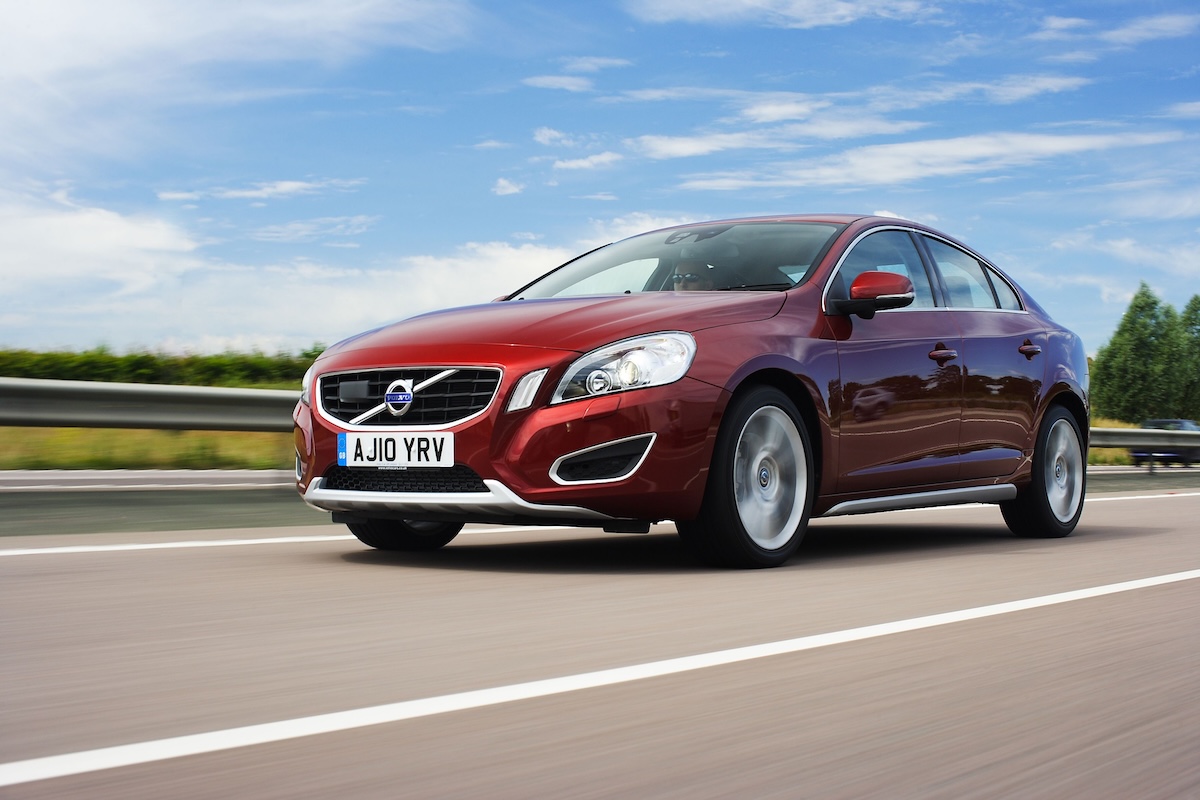
For a compact executive saloon, the S60 is affordable to run, provided you choose wisely. The obvious exception to this rule is the 300bhp T6. It's very fast indeed, but the fuel gauge will drop almost as quickly as the speedo can rise. Reckon on low- to mid 20s mpg if you make use of the performance. It sits in group 35 of 50 for insurance, so it will cost more to cover than other S60 models. Mind you, group 35 isn't that bad for a 300bhp car.
For the lowest running costs, it's better to steer clear of the petrol cars completely, and look at one of the diesels. The D2 has very optimistic official combined figures, but 50-55mpg should be achievable in regular driving. It's cheap to insure, too, sitting in group 18.
There's a big step up in performance if you choose the D3, without a hefty penalty at the pumps. To our mind the D4 is better still. Either should be capable of mpg in the high 40s or low 50s, with the Geartronic autos returning slightly worse figures than the manuals.
The D5 is at the top of the tree for performance, but it will cost more to fuel than the less powerful diesels. Reckon on 40mpg or slightly better if driven gently.
If you really don't want a diesel, the T3 or T4 are the sensible petrol options. The T4 in particular has enough poke to be fun to drive, without the T6's ruinous thirst for fuel. Either of these two engines should achieve 35-40mpg.
The T5 ups the performance ante without being as expensive to run as the T6. Reckon on 27-30mpg.
Servicing is due once a year or after 18,000 miles, whichever comes first. Volvo offers service plans that spread the cost of servicing over a series of interest-free monthly payments. If you are in two minds whether to have your S60 serviced at a franchised dealer or an independent specialist, it's worth knowing that Volvo will price match any service using genuine Volvo parts and the correct oil within five miles of a Volvo dealer.
Volvo S60 reliability
As a rule, Volvo tends to perform respectably in owner satisfaction and reliability surveys. It's generally on a par with its German rivals in these studies, if not a little above them.
Not a lot should go wrong with the S60. However, we'd be wary of any diesel with a very low mileage. The diesel particulate filter (DPF) may not cleanse itself if used for short trips, as the exhaust temperature may not be high enough. Longer drives at higher speeds are needed to keep the DPF operating as it should.
We've also heard some owners have trouble with the adaptive cruise control, so if you are test driving a car with this feature, make sure you give it a try before you spend your cash.
The S60 has been the subject of a number of safety recalls. One relates to air bubbles becoming trapped in the coolant after topping up the cooling system. This can cause the engine to overheat, leading to damage or even a fire in extreme cases. Cars made from 2014 to 2017 are affected.
Another recall relates to the seat belt's fixing cable weakening over time, making it less effective in a crash. This recall applies to cars made between 21 May 2010 and 14 August 2018.
A Volvo dealer should be able to tell you if a car you are thinking of buying has any recall work outstanding, or you can enter the reg number in the recall checker on the gov.uk website.
- The Volvo S60 was facelifted in 2013. Both the inside and outside of the car was updated, with a wider choice of alloy wheels, integrated tailpipes on some models, and new sports seats for R-Design spec cars. Interior upgrades included new upholstery colours, new wood inlays, a new headliner, and the silk metal frames around the air vents and light controls. The new Sensus Connected Touch infotainment system was introduced. The touchscreen could be used even when wearing gloves, which Volvo claimed as a world first.
- The S60 was offered with the 4C active chassis. Short for Continuously Controlled Chassis Concept, cars fitted with 4C can be tuned to suit the driver's priorities. In the 'Comfort' setting the shock absorbers are softened for a smoother ride over poor road surfaces. In 'Sport' the shock absorbers are firmer, for tighter control over body moments and less lean when cornering hard. The 'Advanced' setting is even stiffer, and Volvo advises it should only be used on very smooth surfaces. The 4C active chassis does broaden the S60's appeal, but don't pay over the odds for a car with this option fitted.
- Volvo launched the Drive-E family of 2.0-litre four-cylinder diesel engines in late 2013. These new powertrains were used in the V60 estate and XC60 SUV as well as the S60 saloon. The 2.0-litre D4 was available with a six-speed manual or a new eight-speed automatic gearbox. The new engine was the first to use what Volvo called 'i-Art' technology. This features pressure feedback from each fuel injector rather than using a single pressure sensor in the common rail, making it possible to continuously monitor and adapt fuel injection in each of the four cylinders. The benefit of the system is that the amount of fuel injected can be controlled with great precision, improving fuel economy and lowering emissions.
- If you want the best all-rounder: go for the D4 diesel. Ideally, we'd choose one of the later cars with 187bhp, but the earlier 179bhp D4 is no slouch. The D4 delivers really strong performance, but this front-wheel-drive diesel returns impressive fuel economy figures if driven gently. You'll get far better mpg on a long motorway drive than if you choose one of the petrol cars.
- If you want the most fuel-efficient S60: pick the D2. The 113bhp version has an official combined economy figure of 70.6mpg. You'll need to drive like a saint to get near that figure, but even allowing for the over-optimistic NEDC economy test this is a very fuel-efficient car. It is slow, though.
- If you want a petrol: choose the T4. It's only a little thirstier than the T3, but there's a noticeable step up in performance with the T4. Early versions had 178bhp. From the 2016 model year this increased to 187bhp. That's plenty in a car of this size, so we'd resist the temptation to buy the thirstier T5 or T6 AWD.
- If you want plenty of standard equipment at a fair price: find a Business Edition. This was the entry-level model in the later part of the S60's time on sale, but despite being at the affordable end of the range it came with parking sensors, Bluetooth, sat nav, climate control and alloy wheels.

