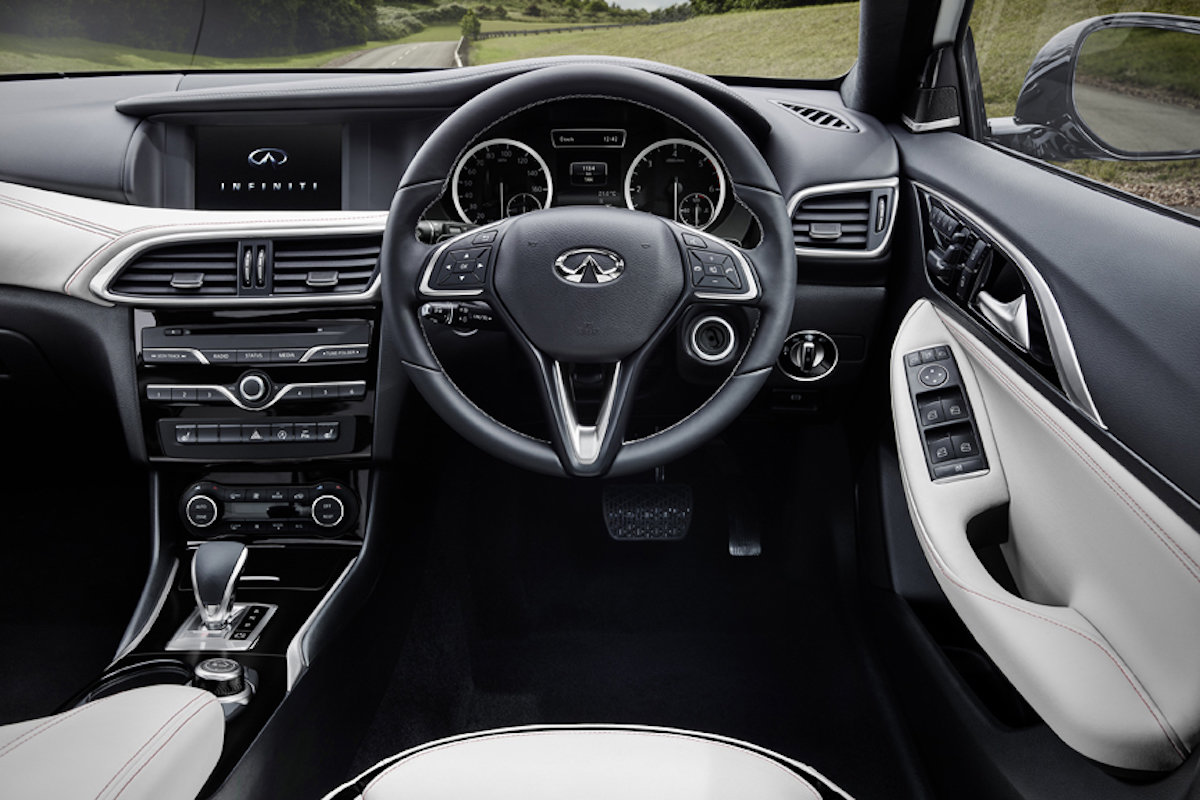
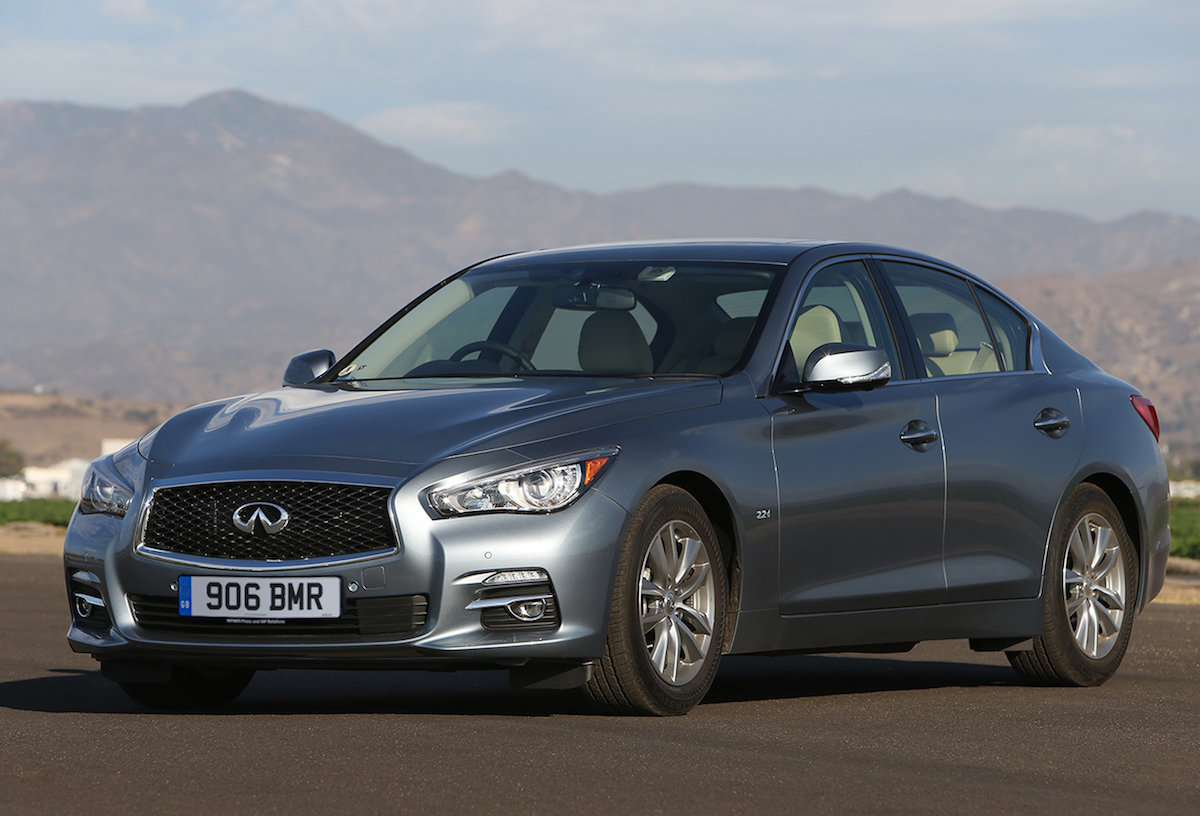
“To infinity and beyond,” said Toy Story’s Buzz Lightyear. Yet for Infiniti the car-maker, there is no beyond: in early 2020 it pulled out after just a decade in the UK. So what went wrong, and should you consider buying a used Infiniti model?
Well, it’s fair to say that launching any sort of new car brand into the badge-obsessed European market is always going to be fraught. But in Infiniti’s case it could be argued that the marque, which serves as Nissan’s luxury division in the same way that Lexus does to Toyota, lacked the right amount of glamour, investment, or models with the appropriate drivetrains to take on the Germans as well as other luxury brands such as Volvo, Jaguar Land Rover and Lexus in Europe.
Infiniti Cars in the UK: What went wrong and is now the time to buy a used one?
- Infiniti in International Markets
- Why did Infiniti Struggle in the UK?
- Why the Infiniti Q30 and QX30 Came Closest
- Should I Buy a Used Infiniti?
- Why Infiniti Saloons and SUVs Might Make Sense as Used Buys
- Is My Infiniti Warranty Still Valid?
Infiniti in International Markets
Infiniti is largely an American phenomenon, though quite a small one. Its models are unashamedly aimed at key US markets: big SUVs (think Infiniti QX80), big saloons (Infiniti Q50), and big crossovers (Infiniti QX50). Yet with total annual new Infiniti sales in the US of about 150,000 between 2017 and 2020, and not much growth since then, the marque has a less than one per cent market share.
China, where such American-influenced luxury vehicles find a ready audience, hasn’t been a rich picking ground, either. Annual sales crawled up to 28,886 in 2018, giving a market share of just 0.12 per cent.
Modest though they might be, these numbers still tower over what Infiniti achieved in Europe. Total sales since the brand arrived in 2008 equate to just 60,000 units, only around 10,000 of which were accounted for by the UK. Which does, of course, somewhat limit the number of used Infiniti cars for sale.
Why Did Infiniti Struggle in the UK?
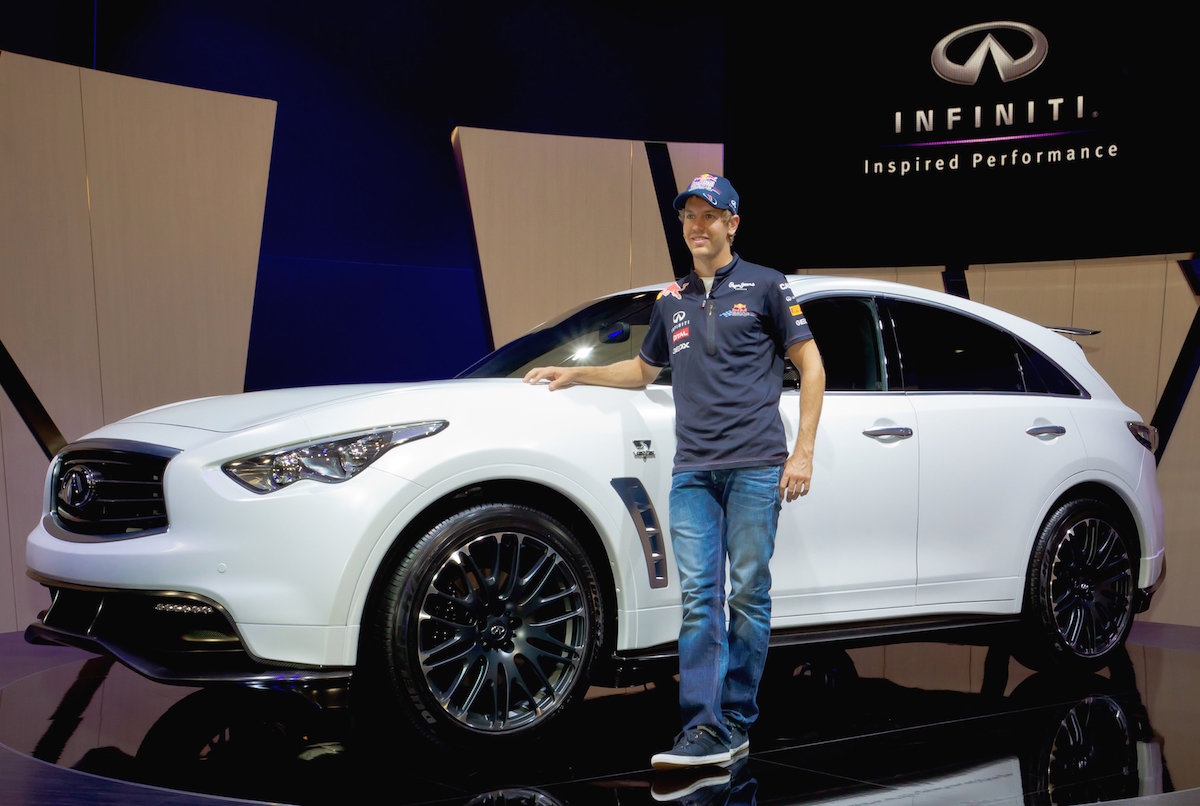
An example of the company’s hubris was the ill-fated limited-edition Sebastian Vettel FX (pictured above), a 2013 spin off from Infiniti’s sponsorship of the Red Bull Formula One team. This 186mph, 414 bhp, 5.0-litre V8-powered AWD SUV was priced at over £100,000, and posits the idea that what four-time F1 champions really want to climb into after a race is a wildly powerful SUV with lots of carbon-fibre trim.
Beyond that, polarising designs, poor MPG from drivetrains of both fuel types, and a revolving door of senior management are partly to blame for Infiniti’s troubles. On the plus side, Infiniti vehicles are proving to be generally reliable, although Nissan’s practice of using Infiniti to introduce new technology first has sometimes resulted in electrical and infotainment/sat-nav niggles. Infinitis are also pretty good to drive and certainly not short of go.
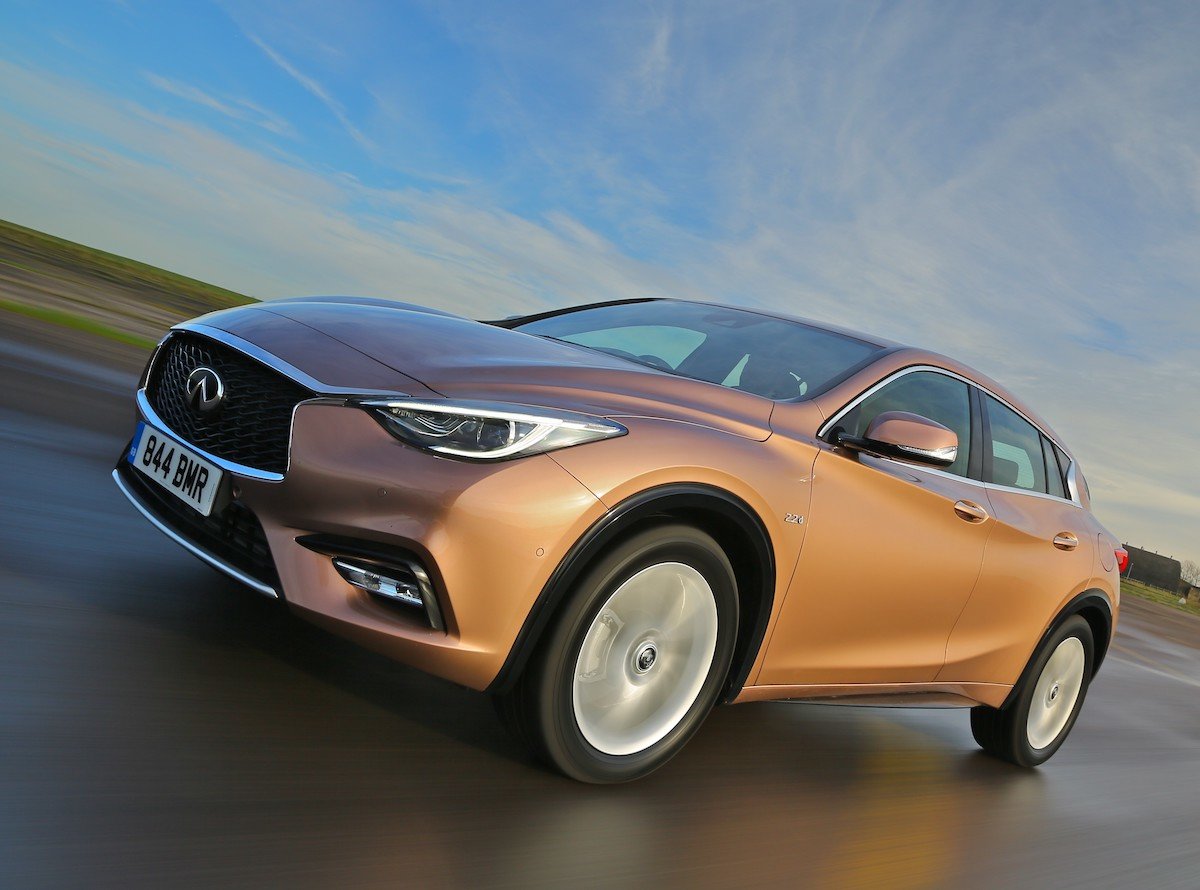
Why the Infiniti Q30 and QX30 came Closest
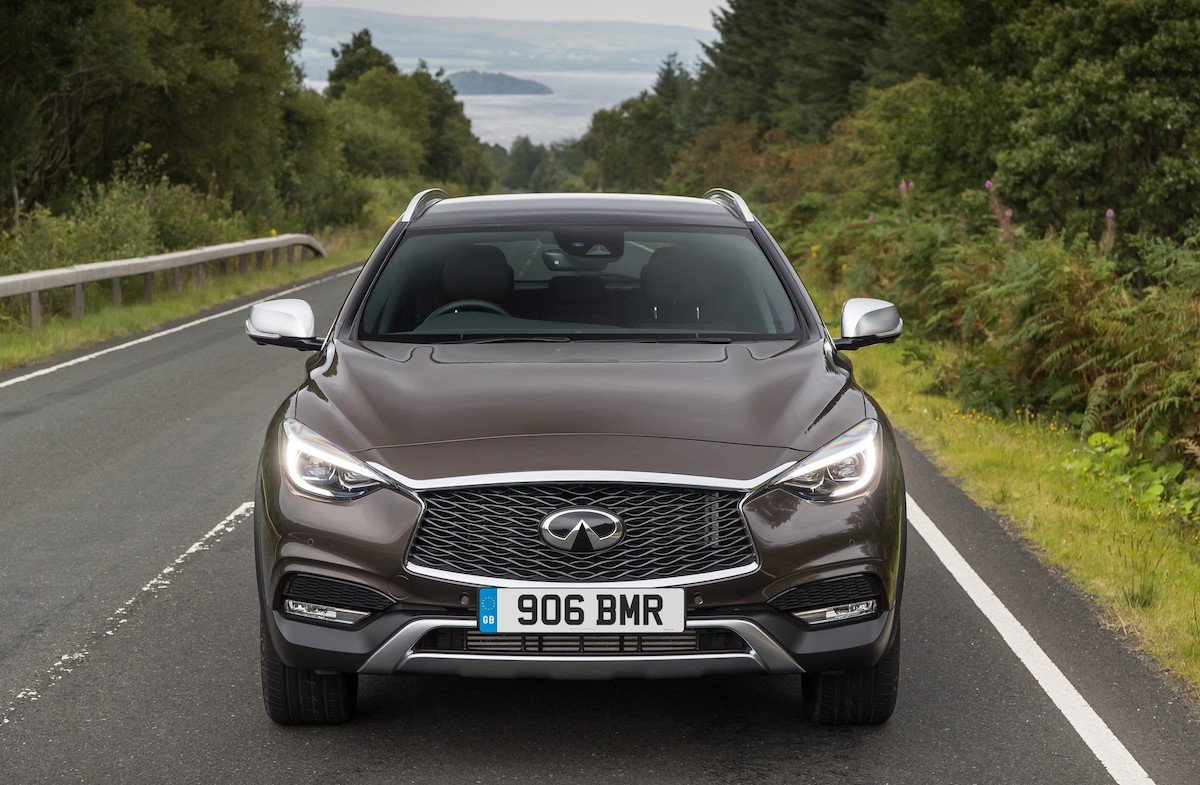
But the fact is that in the United Kingdom, you are more likely to see Elvis on a scooter than a pretty much any Infiniti, except perhaps one, the Q30/QX30 (pictured above, these were the same car, but with a 30mm increase in ride height for the latter to give it the look of an SUV/crossover). Launched in 2015, these models came about as a result of the Renault/Nissan Alliance tie up with Mercedes-Benz, and were based on a Mercedes A-Class hatchback. Built at Nissan‘s Sunderland plant, they also came with what was seen then as an all-important turbodiesel option, as well as a dual-clutch DCT automatic gearbox. The Infiniti Q30 hatchback was intended to be a rival to the Audi A3, BMW 1 Series, Lexus CT and Mercedes A-Class, while the Infiniti QX30 took aim at the Mercedes GLA.