The Mazda CX-5 is Mazda’s breakthrough SUV. In the years leading up to its introduction in 2012, the brand had sold a few SUV models with niche appeal in the UK, but the CX-5 was something different: a rival for cars such as the Nissan Qashqai that could compete with them on level terms.
As well as providing the practicality and range of engines that the market demanded, the CX-5 brought the kind of design flair that Mazda has become known for since the mid-noughties. When launched, Mazda described the first-generation CX-5 as its first production car to embody its ‘Kodo’ design philosophy, which aimed to capture the sense of motion in a stationary object. The CX-5 was also the first car to use its new ‘Skyactiv’ technologies, which were designed to improve fuel efficiency while retaining the fun-to-drive character its cars had become known for. In practice, this meant lightweight construction techniques and new high-compression petrol and diesel engines.
As with most Mazdas, the CX-5 has never offered an especially broad range of variants, but the first-generation car was available with 2.0-litre petrol or 2.2-litre diesel engines, front-wheel drive or four-wheel drive, and with a manual or automatic gearbox. In common with other Mazdas of the time, it was keenly priced and well-equipped for the money.
The second-generation Mazda CX-5, introduced in 2017, is even sleeker and sportier-looking than the first. And whereas the first model’s interior is rather dour, the second-generation car is arguably even more stylish on the inside than on the outside, with a beautifully designed interior. A similar model lineup includes 2.0-litre petrol and 2.2-litre diesel engines, and adds a new 2.5-litre petrol. With its large-capacity, non-turbocharged petrol engines, the CX-5 looks slightly out of step with many rivals, although mild-hybrid technology was added to petrol models in early 2023 to improve fuel economy.
Our guide to the model history of the Mazda CX-5 covers the two generations of the car, looking at how it’s evolved and which are the best and worst versions you can buy.
Frequently Asked Questions
Which Mazda CX-5 years are the best?
The post-2017 Mazda CX-5 is the best of the two model generations available. It’s more stylish, delivers an engaging driving experience, and has a reasonably good reliability record. It costs more but it’s good value and worth the extra outlay.
Which Mazda CX-5 years are the worst?
The 2012-2017 Mazda CX-5 has the worst reputation for reliability of the two versions you can buy. All versions have a windscreen that’s unusually vulnerable to cracking, while diesel models can suffer from fuel injector issues, turbo failure and excessive carbon build-up.
Is a used Mazda CX-5 a good deal?
The Mazda CX-5 can be a great deal if you choose your car carefully. The second-generation model, in particular, is one of the most stylish, fun-to-drive mid-size SUVs and it’s also practical and well-equipped. While it might not offer the breadth of choice you get with some rival cars, the Mazda CX-5 gives you more of a feelgood factor than many mainstream alternatives can offer.
Mazda CX-5 Pros and Cons
Pros:
- Looks great, especially in second-generation form
- More enjoyable to drive than most mid-size SUVs
- Good value for money
Cons:
- Limited choice of engines
- Rather dated infotainment systems
- No full-hybrid option
Mazda CX-5 Generations
2nd Generation (2017-present)
Bodystyles:
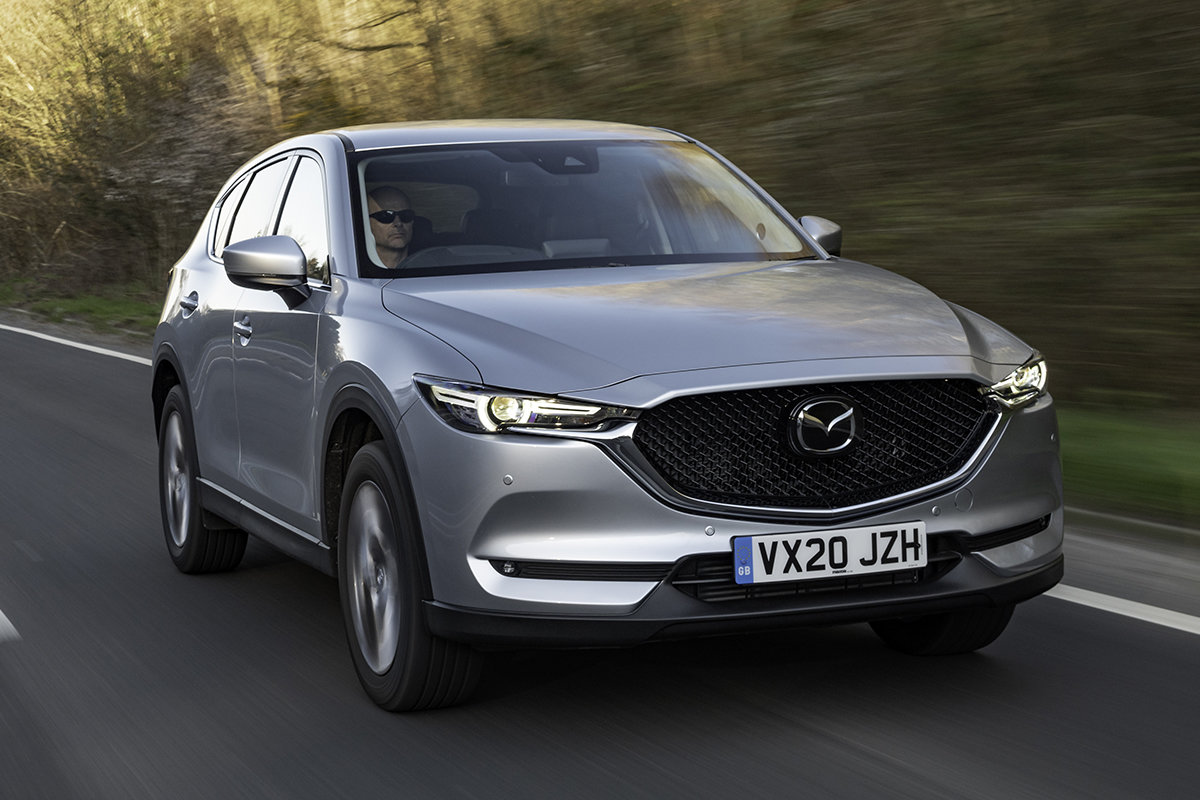
While the first-generation Mazda CX-5 is a great-looking car, the second-generation model introduced in 2017 is drop-dead gorgeous. Even now, towards the end of its life cycle, it remains one of the most attractive, well-proportioned cars in its class. And if the exterior looks good, the interior is arguably even better, with a minimalist design and top-quality materials that give it a premium look and feel.
While its sleeker shape and long front end make the second-generation car appear longer than the first one, their exterior dimensions are almost identical and the wheelbase is unchanged. The engine lineup looks familiar, too. As before, there’s a 2.0-litre SkyActiv-G petrol engine with 163bhp and a choice of two 2.2-litre diesels; a lower-powered version with 148bhp and a higher-powered model with 173bhp. The petrol is front-wheel-drive-only; at various points during the model’s life cycle both diesel models have been available with front-wheel drive or all-wheel drive (AWD). All versions are available with either a 6-speed manual or 6-speed automatic transmission.
Equipment levels were unusually high from the off, with entry-level SEL-Nav trim including features such as LED headlights, 17-inch alloy wheels, power-folding door mirrors, dual-zone climate control, automatic lights and wipers, DAB radio, smart city brake support and a satellite navigation system. Sport Nav trim adds features such as a reversing camera, powered tailgate, nappa leather upholstery, heated and electrically adjustable front seats, heated steering wheel, keyless entry and a Bose audio system.
Mazda has continually updated the CX-5 over the years to keep it competitive. In 2018, the power output of the higher-powered diesel was boosted to 181bhp, while extra safety features were also added as standard. These included Mazda radar cruise control, adaptive LED headlights with adaptive front lighting system, lane keep assist, rear cross traffic alert, and blind spot monitoring. In 2019, Apple CarPlay/Android Auto support became standard for all models, the suspension was tweaked to improve comfort and a new GT Sport Nav+ trim level was added. In 2020, cylinder deactivation was added to manual petrol models to reduce CO2 emissions, while in early 2021, a new 2.5-litre four-cylinder petrol engine with 191bhp was added to the lineup. At the same time, the infotainment system was upgraded and the automatic gearbox was tweaked for faster responses. A major update in 2022 gave the CX-5 updated looks, with redesigned lights, bumpers and front grille. The trim levels were adjusted and renamed as SE-L, Newground, Sport, Sport Black and GT Sport, while changes to the bodyshell, suspension and seats aimed to improve comfort. Later in 2022, all petrol models gained e-SkyActiv-G mild-hybrid technology, wireless Apple CarPlay/Android Auto support was added, and the trim levels were renamed again, becoming Centre-Line, Newground, Exclusive-Line, Homura and Takumi.
Mazda’s reliability record as a brand has been solid during the time that the latest CX-5 has been on sale and the model itself has generally scored well in surveys such as the Auto Express Driver Power Survey and What Car? Reliability Survey. It’s not immune to problems, however, with some owners citing issues with their car’s infotainment or braking system. It’s good, however, that in 2025, Mazda increased its three-year, 60,000-mile warranty to six years or 100,000 miles, to better rival brands like Toyota and Kia.
Mazda CX-5 Mk2 review
Search for a Mazda CX-5 on CarGurus
1st generation (2012-2016)
Bodystyles:
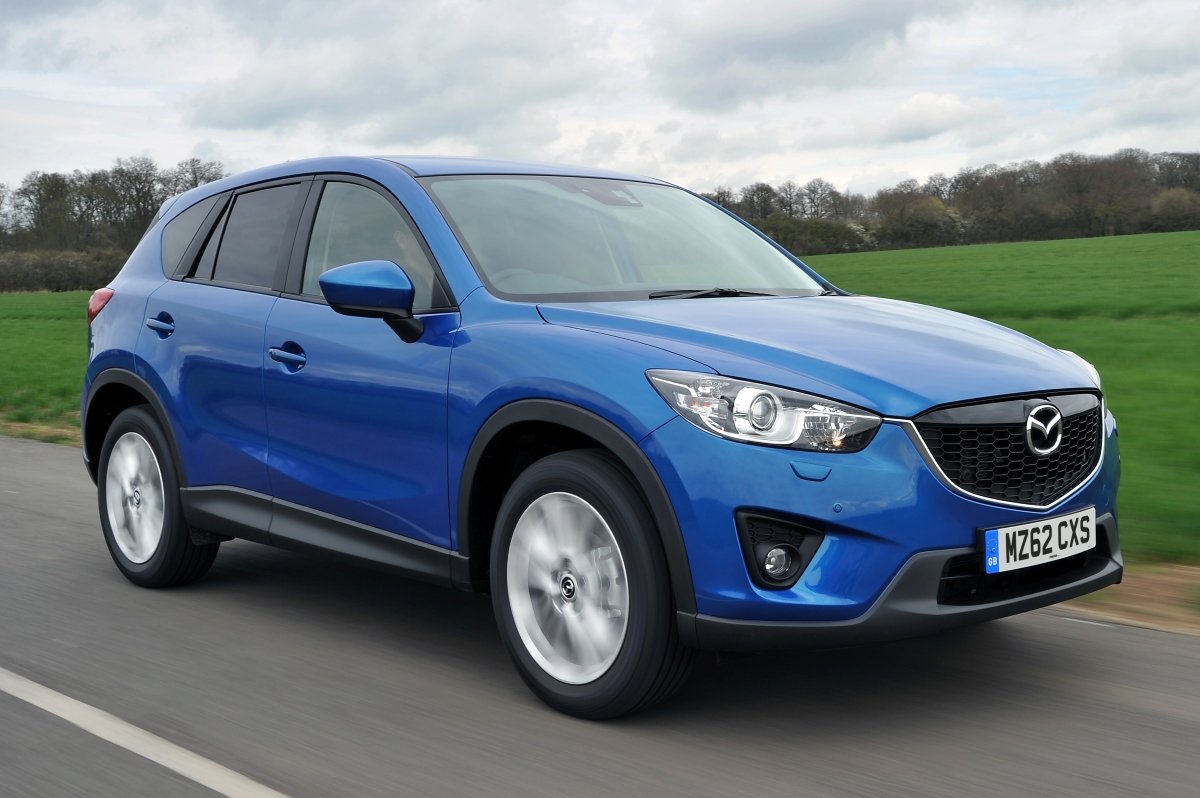
After giving us some of the most distinctive, fun-to-drive saloon and hatchback models of the time, Mazda turned its attention to the mid-size SUV market with the introduction of the new Mazda CX-5 in 2012.
Using the same basic platform as the third-generation Mazda3 hatchback, the CX-5 was the first production car created using Mazda’s ‘Kodo design' philosophy. It translates into an unusually curvy, sleek-looking SUV for the time, with exterior dimensions slightly larger than average, but placing it into direct competition with cars such as the Ford Kuga, Nissan Qashqai and Volkswagen Tiguan. The new car’s mildly sporty design was mirrored by more nimble driving dynamics than most equivalent SUVs. A choice of three new ‘Skyactiv’ engines give performance to match, although there are no really sporty options. The single petrol engine is a 2.0-litre with 163bhp, only available with front-wheel drive and a six-speed manual gearbox. There are two 2.2-litre diesels to choose from, with outputs of either 148bhp or 173bhp. Both are available with either a six-speed manual or six-speed automatic gearbox, and with either front-wheel drive or four-wheel drive.
The trim levels from launch were SE-L and Sport, with SE-L Nav and Sport Nav adding – you guessed it – sat nav. Standard equipment was very generous for the time, with SE-L including features such as 17-inch alloy wheels, front- and rear parking sensors, automatic headlights and wipers, a USB port, Bluetooth, cruise control, dual-zone climate control and electrically folding door mirrors. Extra features for Sport trim include 19-inch alloy wheels, xenon headlights, keyless entry, leather seats, an electrically adjustable driver’s seat, heated front seats, rear-view camera and Bose sound system. All versions also had advanced active safety features for the time, with a city braking system standard across the range.
New mid-range SE-L Lux and SE-L Lux Nav trim levels were added to the lineup in late 2013, while an update in early 2014 included revised suspension designed to improve comfort, along with minor spec changes for some trim levels. Early in the 2015 model year, the CX-5 had a mid-life update that included minor cosmetic changes inside, the addition of a new electronic parking brake, an updated infotainment system and the switch to LED headlights for Sport Nav models.
The 2012-2017 Mazda CX-5 has a fairly average record for reliability. The design of the windscreen means that it’s prone to cracking, while diesel models can suffer from a number of expensive-to-fix engine issues. Premature brake wear is also something to look out for.
Mazda CX-5 Mk1 review
Search for a Mazda CX-5 on CarGurus
Related Topics: