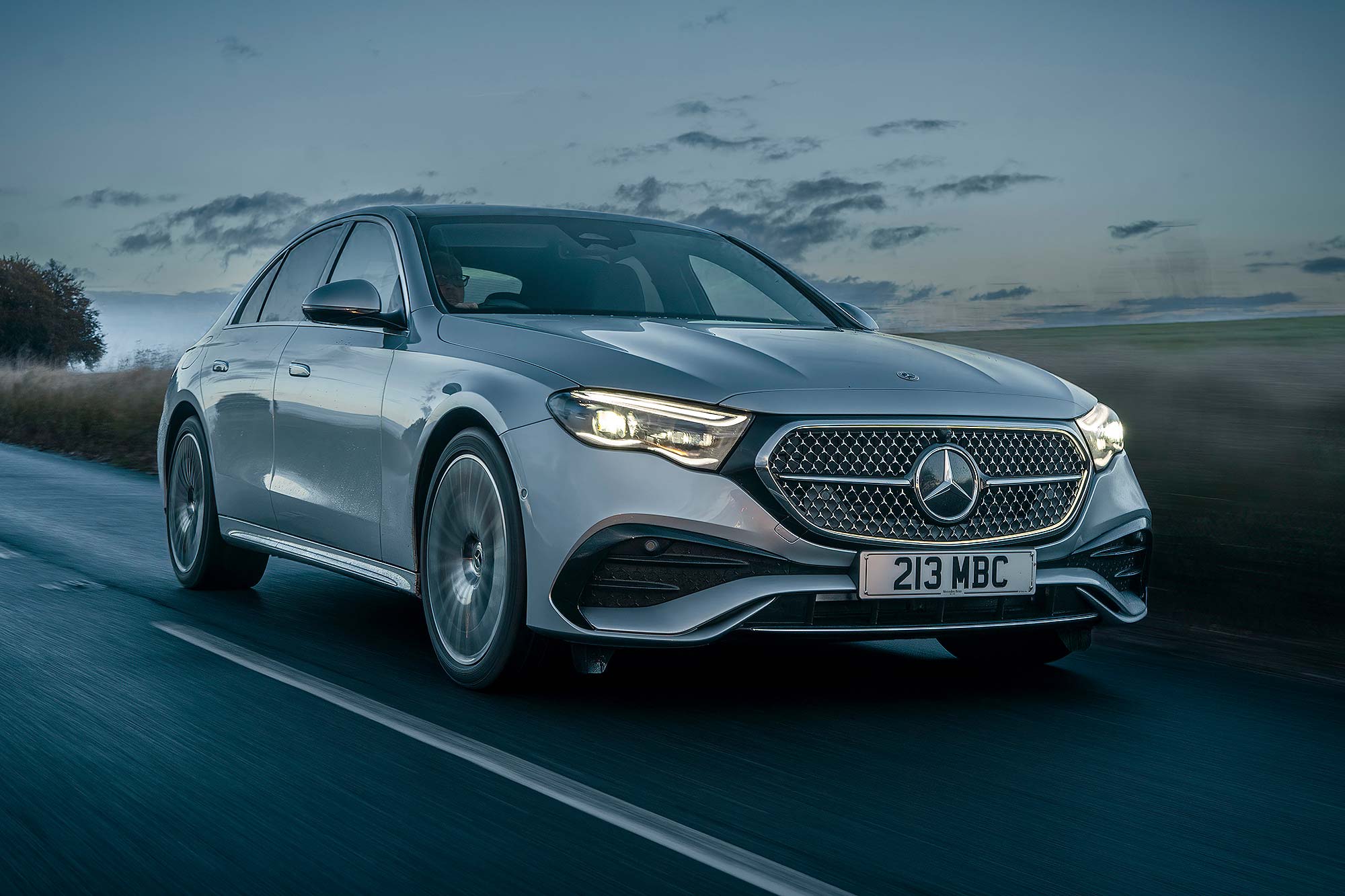
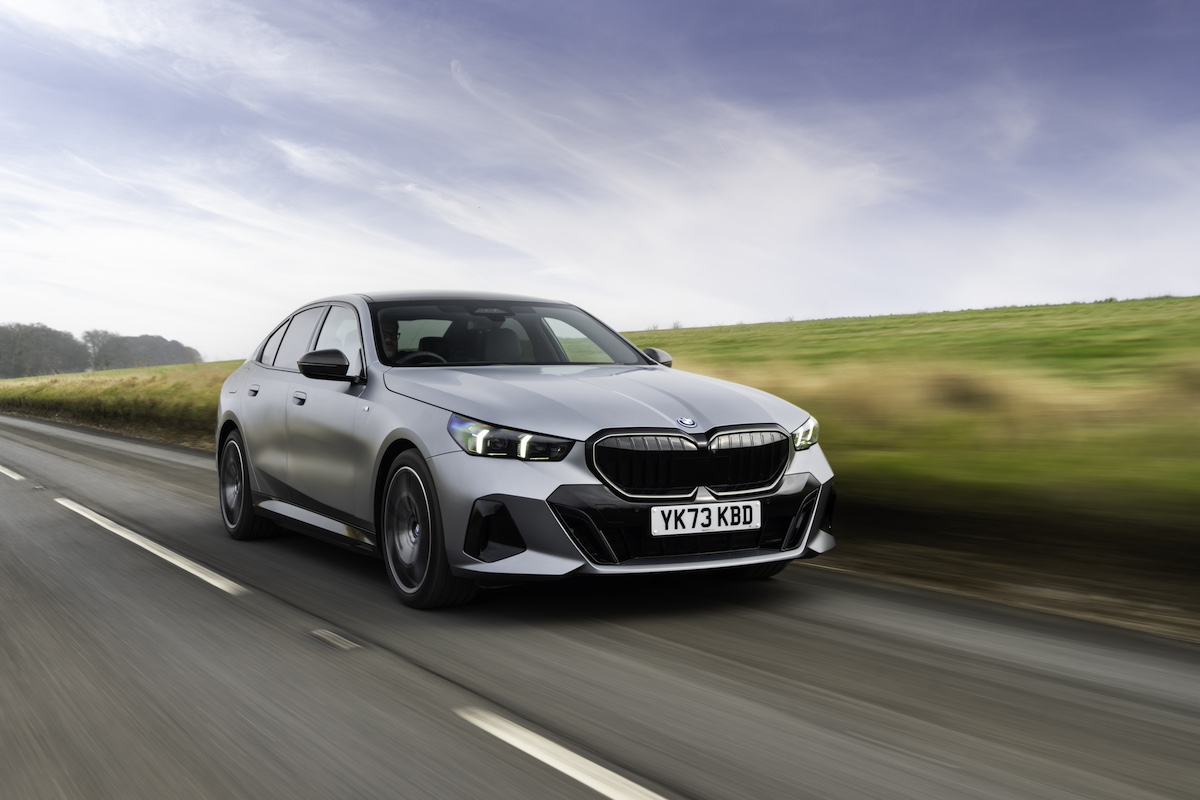
If you're in the market for a premium executive saloon, you're likely looking at two of the most famous badges in the business: the Mercedes-Benz E-Class and the BMW 5 Series. While SUVs have taken over much of the market, these two traditional four-door models still offer a good blend of comfort, technology, and prestige.
The E-Class leans into its heritage with a focus on serene comfort and a well-finished cabin. The 5 Series, meanwhile, aims to deliver a sharper driving experience alongside its own suite of modern features. Both are available with efficient plug-in hybrid powertrains, so which of these German competitors is the right choice for you?
Mercedes-Benz E-Class vs BMW 5 Series
Practicality
Mercedes-Benz E-Class practicality score: 3/5
BMW 5 Series practicality score: 4/5
When it comes to passenger space, both cars perform well. The E-Class offers reasonable room, easily accommodating adults in the front and back. The interior feels high-quality, but boot space takes a hit in the plug-in hybrid models, dropping to 370 litres in the saloon due to the battery placement. Standard mild-hybrid models fare better with 540 litres.
The 5 Series takes the edge here. It comfortably seats four adults, and crucially, its boot space remains a generous 520 litres regardless of whether you choose a standard combustion engine or a plug-in hybrid. While both cars have the usual saloon boot opening that can make loading bulky items a bit awkward, the BMW's consistent cargo volume gives it a clear advantage.
Driving Impressions
Mercedes-Benz E-Class driving score: 4/5
BMW 5 Series driving score: 5/5
The Mercedes-Benz E-Class prioritises a relaxed feel. It isolates you from the outside world, offering a smooth, comfortable ride that makes long motorway journeys feel effortless. The steering is light and precise, and the cabin remains quiet, especially in electric mode. It's not the sharpest car to drive on a twisty road, but it excels at comfortable cruising.
The BMW 5 Series manages to balance comfort with a more engaging driving experience. With its adaptive suspension, it handles bumps effectively while remaining nimble and poised in the corners. The plug-in hybrid powertrains are smooth and responsive, delivering a good blend of performance and refinement. If you enjoy driving, the 5 Series offers a bit more entertainment without sacrificing the comfort expected of an executive car.
Technology and Equipment
Mercedes-Benz E-Class technology and equipment score: 4/5
BMW 5 Series technology and equipment score: 4/5
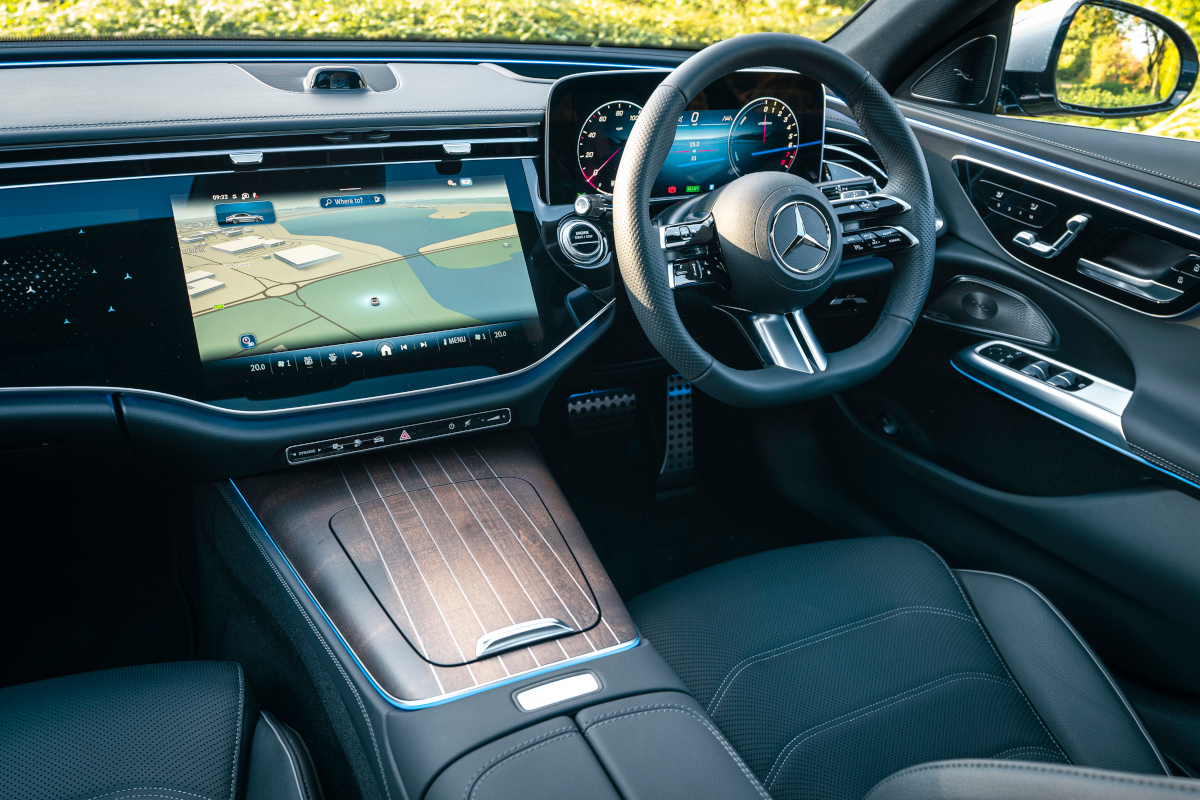
Both of these cars are packed with technology. The E-Class features a large 14.4-inch touchscreen as standard, with the option to upgrade to the expansive MBUX Superscreen that covers almost the entire dashboard. It includes features like wireless smartphone connectivity and augmented reality navigation, though the menu layouts can take some getting used to.
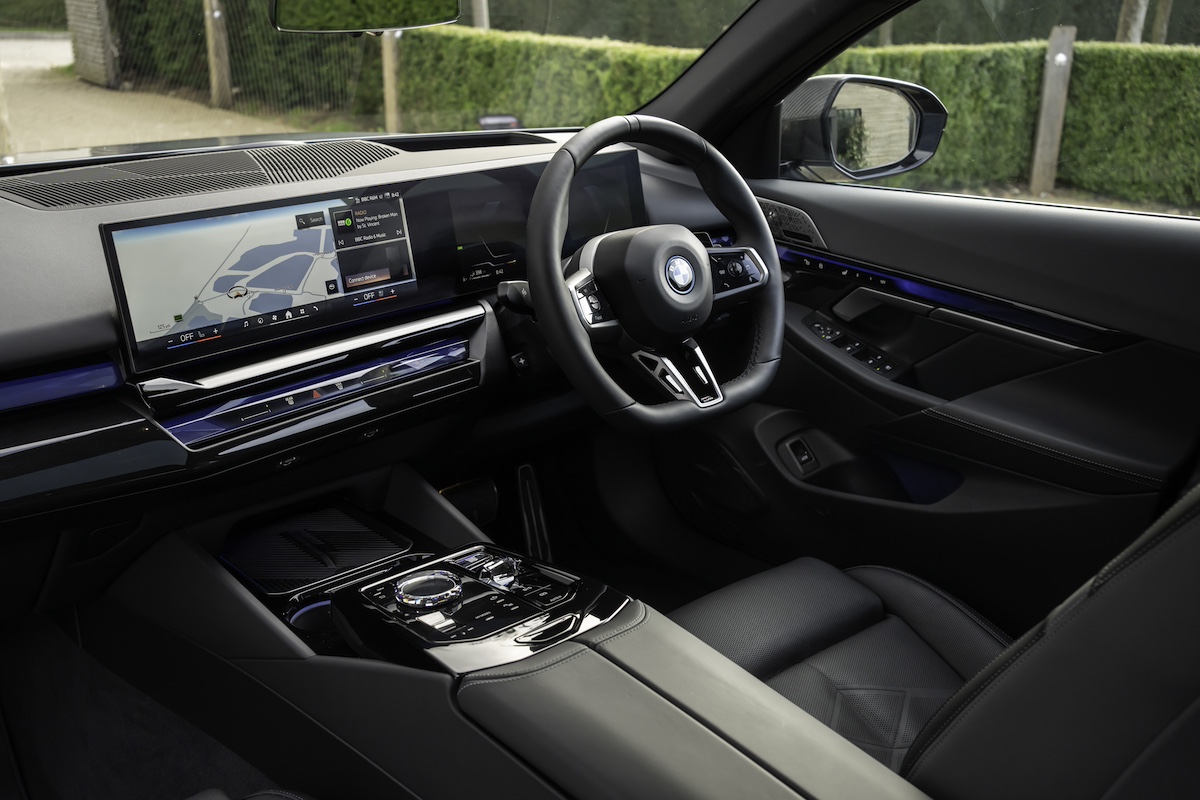
The 5 Series counters with a slick curved display that combines a 14.9-inch central screen and a 12.3-inch digital instrument cluster. It retains BMW's traditional iDrive rotary controller, which makes navigating the menus on the move a bit easier than relying solely on a touchscreen. It also features the 'Interaction Bar', a touch-sensitive light strip across the dash. Both cars offer strong tech options, resulting in a tie for this category.
Running Costs
Mercedes-Benz E-Class running costs score: 4/5
BMW 5 Series running costs score: 4/5
Running either of these premium saloons will require a decent budget, as list prices are high. However, the plug-in hybrid models can keep day-to-day costs low. The E-Class PHEV offers an electric-only range of around 70 miles, while the 5 Series PHEV manages up to 63 miles. If you charge regularly at home, your fuel bills could be minimal.
For company car drivers, these long electric ranges mean both cars sit in very low Benefit-in-Kind (BiK) tax bands, making them appealing choices for business users. If you prefer standard combustion power, both brands offer mild-hybrid petrol engines that return respectable fuel economy for cars of this size, while Mercedes still offers a diesel option for high-mileage drivers.
CarGurus Buyer Insights
|
Mercedes-Benz E-Class |
BMW 5 Series |
| CarGurus expert rating |
4 out of 5 |
4 out of 5 |
| CarGurus user rating |
4.8 out of 5 |
4.6 out of 5 |
| Percentage of good/great deals available on CarGurus* |
33.7% |
33.8% |
| Overall CarGurus rating |
4.4 out of 5 |
4.5 out of 5 |
The Verdict
Mercedes-Benz E-Class Overall CarGurus rating: 4.4/5
BMW 5 Series Overall CarGurus rating: 4.5/5
Choosing between the Mercedes-Benz E-Class and the BMW 5 Series is tough, as both are capable executive saloons. They offer high-quality interiors, advanced technology, and efficient plug-in hybrid options.
However, based on our CarGurus Buyer Insights, the BMW 5 Series takes the win. It edges ahead with a slightly higher overall rating, helped by a marginally better percentage of good and great deals. Beyond the numbers, the 5 Series offers a more engaging driving experience and better boot space in its plug-in hybrid models, making it a slightly more rounded package.
That said, the Mercedes-Benz E-Class remains a strong choice. If your priority is ultimate ride comfort and a truly serene cabin, it is hard to ignore. But for an executive car that balances comfort, practicality, and driving enjoyment, the BMW 5 Series is our top pick.
Mercedes-Benz E-Class Pros and Cons
| Pros |
Cons |
| Serene and soothing comfort |
Expensive for private buyers |
| Broad range of engine options |
Bewildering array of trims and options |
| Traditional feel with high-tech equipment |
E450 d is astonishingly expensive |
BMW 5 Series Pros and Cons
| Pros |
Cons |
| Spacious and beautifully trimmed interior |
Still don’t know how it drives on standard passive suspension |
| Shedloads of tech |
Saloon bodystyle hampers boot access |
| Sensational to drive on adaptive suspension |
One too many gimmicks |
*The Overall CarGurus rating: that informs these recommendations is based on CarGurus' proprietary market data from June 2026, CarGurus expert reviews, and CarGurus user reviews.
Read Our Full Reviews: