Honda CR-V Review (2017-2023)
Honda CR-V cars for sale
3.0
Expert review
Pros
The CR-V is a very reliable family SUV
Very good fuel economy if you choose the hybrid
Practical and roomy cabin
Cons
Fiddly infotainment system
Seven-seat models have less luggage space
Top-spec cars are expensive

The CarGurus verdict
The Honda CR-V is a comfortable, practical and safe option that is well equipped and good to drive. The availability of hybrid, all-wheel drive and seven-seat versions lend it further appeal, although the usefulness of the seven-seat model is admittedly limited.
Altogether, especially for those who want a straightforward and reliable SUV, it’s not a bad choice by any stretch. However, the family SUV sector is so competitive that issues such as the petrol model’s unremarkable efficiency and emissions, and the archaic infotainment system, make it hard to recommend as a go-to option.

What is the Honda CR-V?
The fifth-generation Honda CR-V is a large SUV that rivals seemingly countless mainstream offerings, including the Ford Kuga, Hyundai Tucson, Volkswagen Tiguan, Kia Sportage, Toyota RAV4 and Skoda Kodiaq.
Overall, the Honda offers a lot that makes it an appealing and sensible choice for those after a practical, safe and relaxing family SUV. It’s not a stand-out option, though, as the competition is so competitive in this sector. A Skoda Kodiaq, for comparison, has a slightly lower starting price, a wider array of refined engines and the option of a dual-clutch automatic, which is more enjoyable to use than the Honda’s CVT. For some buyers, however, the availability of the hybrid option may give the Honda an edge over its rivals.
The fifth-generation model was replaced by an all-new Honda CR-V in 2023

How practical is it?
Few will have complaints about interior space, as the cabin of the CR-V is vast; the second row can comfortably accommodate three adults, and they’ll enjoy more space than in most rivals. There are practicality compromises if you opt for the seven-seat model, though. The cramped rearmost row will only be tolerated by most for short journeys. What’s more, the seven-seater has a smaller boot than the huge one you get in the five-seater due to the fact that the rearmost seats fold down onto the boot floor, rather than into it, meaning the floor is higher. Lift up seats six and seven, and the boot is reduced to almost nothing. In terms of pure numbers, there's 497 litres of space in the five-seat configuration and 1,694 litres with all the rear seats folded down.
Compared to its predecessor, the fifth-generation CR-V has a more ergonomic cabin that uses better materials. It’s not as stylish as in some alternatives, however, and the infotainment system is dated. Fortunately, Apple CarPlay and Android Auto are available in most models, so you can avoid having to interact with it much.

What's it like to drive?
On the driving front, there’s quite a lot to like about the Honda. Its steering is heavier than some rivals, which helps make the CR-V feel more reassured and easy to control, while its smooth ride and capable suspension make it a refined and composed companion, even on twisty country routes. The engine options are good, too, but it’s worth opting for the more powerful and flexible variants if you’re regularly going to be carrying lots of luggage or passengers.
At launch, the only engine option was a 1.5-litre turbocharged petrol. A six-speed manual transmission was standard but a continuously variable transmission (CVT), which is automatic in its operation, was also available. Customers could also opt for all-wheel drive. A frugal five-seat hybrid CR-V was introduced shortly after the initial launch, and it’ll be this version that’ll appeal to most buyers.
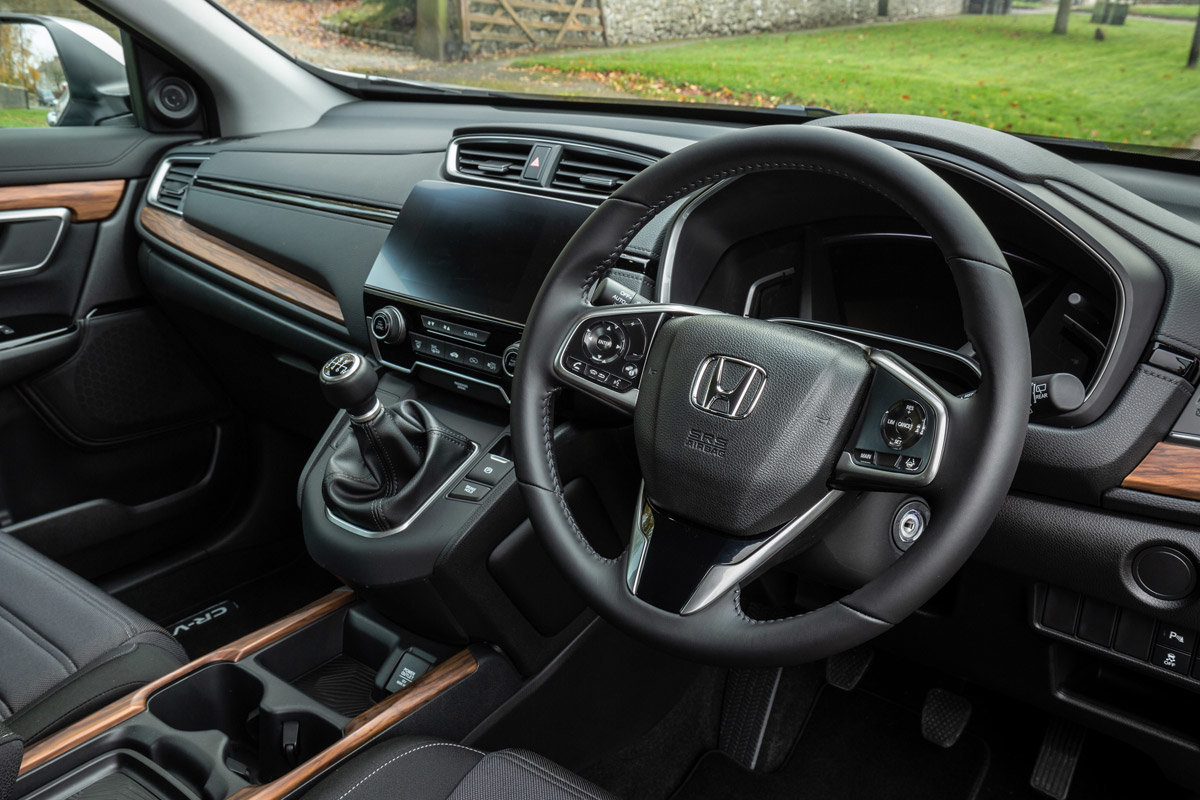
Technology, equipment & infotainment
The CR-V range is straightforward, with four trim levels, dubbed S, SE, SR and EX. Equipment levels are generous, with even the base model getting automatic LED headlights, DAB and Bluetooth, single-zone climate-control, start-stop, adaptive cruise control and a vast array of safety systems.
All that safety equipment, which includes lane-keeping assistance and a forward-collision warning system, is among the reasons the CR-V performs so well in crash testing. It scored the maximum five-star rating from crash testing experts Euro NCAP and achieved adult and child occupant protection scores that were better than or almost equivalent to many a more expensive alternative.
Honda CR-V running costs
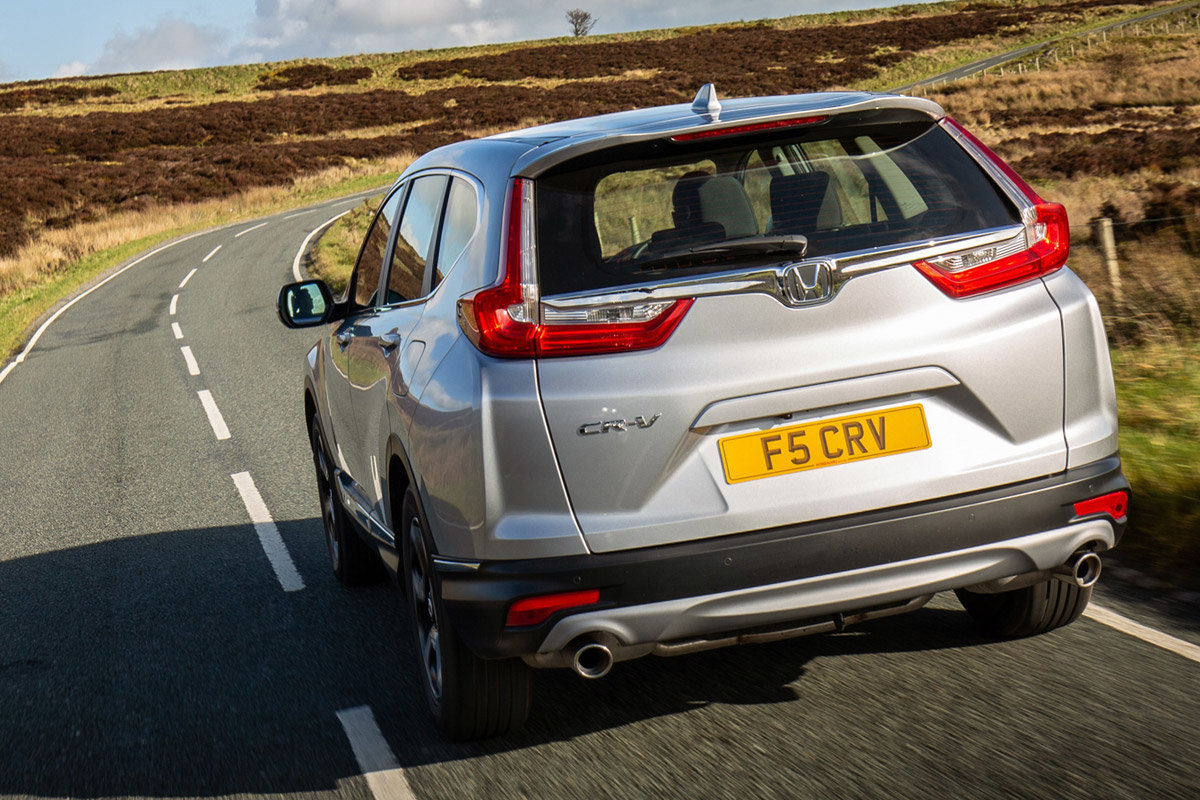
A Honda CR-V won’t cost a tremendous amount to run, regardless of which version you go for, but there are a few things worth bearing in mind. For starters, there’s no diesel version, so if you’re doing starship-like mileages each year, a CR-V might not be the best option.
Even the most efficient model, the 2WD hybrid, averages a best of 40.9mpg on the more stringent WLTP test cycle, whereas some diesel alternatives can average over 50mpg. There are so many variables, though, that you’ll need to consider the type of driving you're doing to land the most efficient choice. If you’re doing lots of urban driving, then the hybrid CR-V might prove more efficient than a conventional petrol or diesel alternative.
The hybrid is the best option if you’re otherwise just looking for a comparatively clean and efficient SUV, because it averages up to 40.9mpg and emits 156g/km of CO2 on the WLTP cycle. Some owners have also reported matching, if not exceeding, the claimed economy figure.
The standard petrol models aren’t terrible on the economy front, however. The base 1.5 VTEC Turbo, in two-wheel-drive manual form, is reputed to average 38.7mpg and emit 166g/km of CO2. Expect them to be a little less frugal in the real world, though.
The all-wheel-drive and CVT variants are thirstier and less clean, which won’t come as a surprise; the 1.5 VTEC Turbo CVT AWD model of the CR-V averages 32.5mpg and emits a minimum of 196g/km of CO2.
To help keep costs manageable, Honda also offers both fixed-price and tailored service plans. The fixed-price plan, for cars up to eight months old with no more than 8,000 miles on the clock, costs £895 and covers five years or up to 62,500 miles of servicing. The plan is transferable, too, should you sell your car to someone else.
The tailored service plan is for cars outside the mileage and age range required for the fixed-price scheme, and can run for one to four years. As the name suggests, however, the cost will be dependent on the age, use and condition of the car in question. But, in any case, it’ll allow you to get a fix on upcoming costs and budget accordingly.

Honda CR-V reliability
When new, the CR-V was covered by a three-year, 90,000-mile warranty. It’s a fairly average warranty, compared to those on many rivals, with Toyota, Hyundai and Kia offering longer and more comprehensive cover. So, if minimal fuss is a deciding factor in your family SUV purchase, you may want to consider alternatives such as the RAV4, Tucson or Sportage.
That said, you can extend the Honda warranty on a CR-V by up to two years. Honda quotes around £500 for year four alone, or £900 for years four and five together. If you’re considering long-term ownership, it could be worth investing in for peace of mind.
Beneficially, Honda generally has a very good reputation for customer satisfaction and reliability. It also has an extensive dealer network, so if a problem occurs then it shouldn’t prove difficult to get it resolved. in the 2023 What Car? Reliability Survey, this generation of CR-V finished 4th out of the 24 cars in the large SUV class. Honda as a brand meanwhile finished 6th out of the 32 brands included.
- The standard 1.5-litre petrol option produces 170bhp, which is enough to accelerate the front-wheel-drive manual CR-V from 0-62mph in 9.3 seconds. It’s a good engine, coupled to a slick manual gearbox, which suits the Honda well. It doesn’t make a huge amount of torque, though, so if you’re regularly carrying more passengers or luggage then you may find it feels a little breathless. A manual all-wheel-drive model is also offered, which takes 9.8 seconds to hit 62mph and is predictably slightly less efficient.
- If you’re set on a non-hybrid automatic model, it’ll come with a more powerful version of the 1.5-litre petrol engine. It produces 190bhp but it’s only available coupled to a CVT. Because of the transmission, and increased weight and losses of the AWD system, it takes a slower 10 seconds to reach 62mph from a standing start. It can be noisier when worked hard but it is easier to drive, and it feels a little more flexible, so it’s not an option that should be discounted immediately.
- The more expensive hybrid model blends a naturally aspirated 144bhp 2.0-litre petrol engine with a powerful electric drive motor, and a flexible starter/generator unit, which makes it the quickest of the bunch. It’s a refined, relaxing choice that’s offered in both front- and all-wheel-drive form, and the 2WD model is capable averaging 40.9mpg on the WLTP test cycle and can achieve a 0-62mph time of 8.8 seconds. You can’t get seven seats in the hybrid, though, only five.
- The best all-rounder: We’d go for a two-wheel-drive manual 1.5 VTEC Turbo model in SE trim. It’s quicker, more efficient and lighter than the all-wheel-drive version, and if you do need to tackle rougher conditions, a set of appropriate tyres should help keep it moving along. SE trim features the Honda Connect infotainment and navigation system with useful Apple CarPlay and Android Auto support, among other upgrades, so it’s worth the premium.
- For the eco-minded: Opt for the 2.0 i-MMD eCVT Hybrid model, in two-wheel-drive specification, if maximum mpg is the order of the day. The petrol-electric hybrid can average up to a claimed combined 40.9mpg on the WLTP test cycle, while its CO2 emissions are rated as low as 156g/km.
- If you’re on a budget: The cheapest model in the CR-V range is the 1.5 VTEC Turbo, with a manual transmission and two-wheel drive, in basic S specification. It’s still good to drive, and comes with equipment including single-zone climate and adaptive cruise, so doesn’t feel an entirely budget affair.
- For the best practicality: The seven-seat petrol options might seem best for maximum practicality but the usability of the third row is limited and their fitment also reduces the luggage capacity, both with the seats up or down. Hybrid versions have a smaller boot, too, so – if you don’t need seven seats – go for a front-wheel-drive, five-seat model if you want the most practical CR-V.

