Volvo XC60 Review (2008-2017)
Volvo XC60 cars for sale
4.0
Expert review
Pros
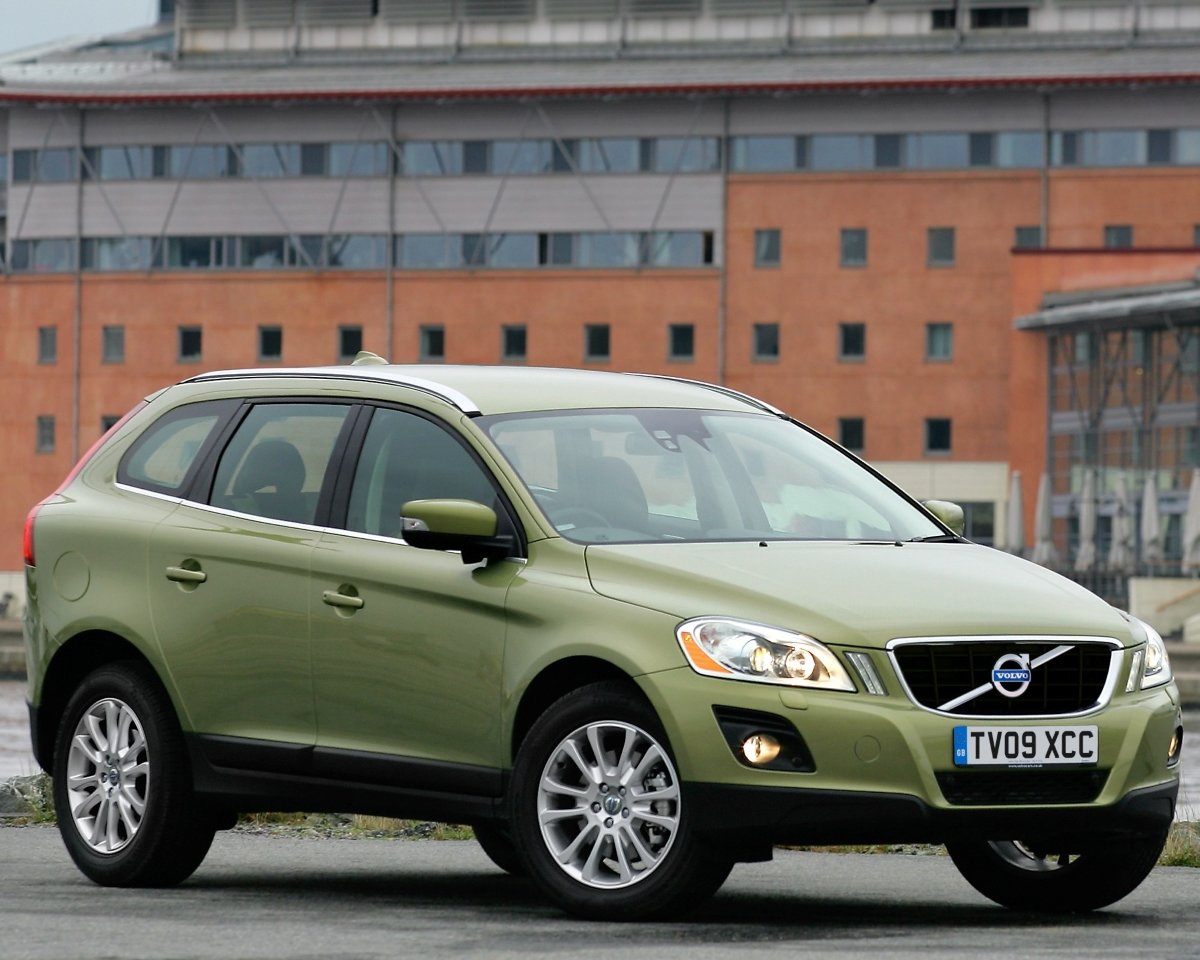
Handsome styling and a premium feel
Impressive equipment, including high-tech safety kit
Powerful and efficient engines
Cons
A BMW X3 is slightly better to drive
Diesels can sound a little gruff
Automatic gearboxes can be a little slow to react
The CarGurus verdict
The first XC60 played an important part in Volvo's move upmarket. It preserved The first XC60 played an important part in Volvo's move upmarket. It preserved the safety and practicality that Volvo's traditional customers appreciate, while adding design flair to tempt buyers away from the Audi Q5, BMW X3 and Land Rover Freelander.
A used Volvo XC60 may not be the most exciting car to drive, but otherwise there's so much to like. The diesel engines are strong and reasonably economical, and the ride is comfortable so long as you avoid the R-Design with its stiffer suspension. The cabin is very well built, and can take high mileages without undue signs of wear and tear.
With the City Safety autonomous braking system, the XC60 was well ahead of most rivals. It's not just this clever tech that makes the Volvo one of the safest SUVs of its kind, though, because EuroNCAP crash tests show that it holds up very well in a crash, too.
The petrols are thirsty, but a diesel XC60 makes a very good used car.
What is the Volvo XC60?
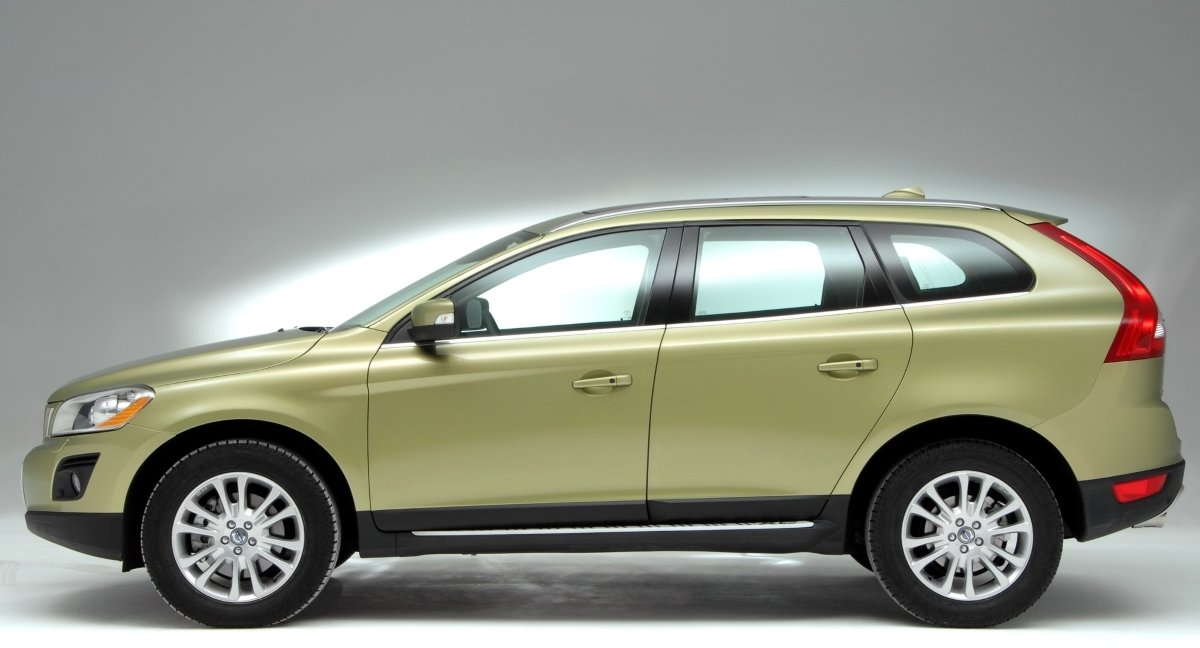
Over the past 20 years or so, Volvo has transformed itself from a functional, mainstream brand into a maker of desirable, upmarket cars. Looking back, the original XC60 was an important step on that journey.
Marking a clear shift from the boxy, super-sensible Volvos of the past, the XC60 (and the larger XC90) showed Volvo's Swedish sense of style without being entirely fashion-led. This is still a practical car.
It was replaced by the second-generation XC60 in 2018.

How practical is it?
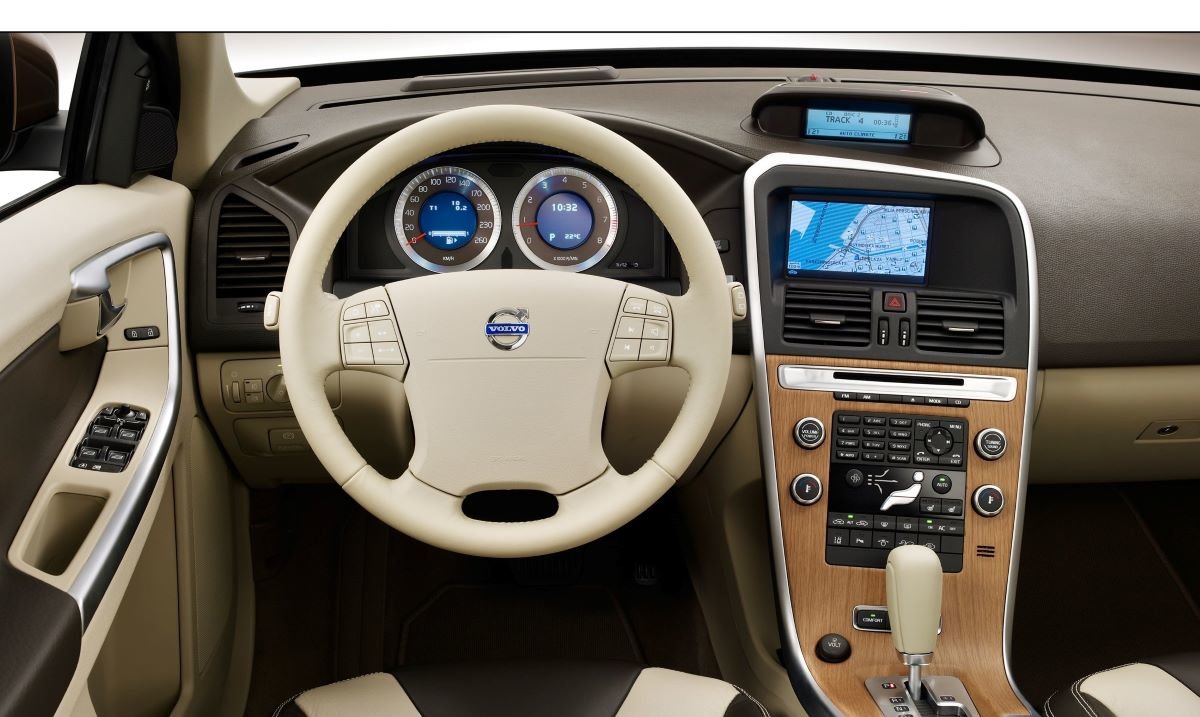
Inside the five-seat cabin, the Volvo offers plenty of head and legroom in the front and rear seats. The raised driving position gives a good view of the road ahead but the neat and minimalist design sets the XC60 apart from more rugged off-roaders. Build quality is very good, and the cabin design has aged well.
There are many examples of clever thinking dotted throughout the cabin, like the floating centre console with open storage behind it.
As for the boot, it's a reasonable size at 495 litres, but rivals can better it.

What's it like to drive?
What's more, you don't need to go beyond the entry-level engine to get decent performance. The 163bhp 2.4-litre diesel has enough poke to cope with a car full of people and luggage.
The more powerful D5 is based on the same 2.4-litre five-cylinder engine, tweaked to produce more power. Volvo upgraded this engine during the car's life, so while the D5 started out with 183bhp it had 220bhp at the end of its life.
In 2010 the 2.0-litre D4 diesel joined the range. With 163bhp, performance is broadly on a par with the earlier entry-level 2.4, but with better economy and lower emissions. The 136bhp D3 joined the range in 2013, maximising fuel efficiency at the penalty of fairly pedestrian performance.
Most of the range are true four-wheel drives, but in mid-2009 the front-wheel-drive DRIVe (Volvo's capitals, not ours) was introduced. With its lower kerb weight and less energy lost in the transmission, this was the most economical XC60, with an official combined fuel economy of around 47mpg. Despite its green and clean remit, the DRIVe is no slouch. With 175bhp it achieves a 0-62mph time of 9.8 seconds. Later DRIVe models used a 2.0-litre D3 diesel, trading some power for even better economy (49.6mpg).
For most of the first-gen XC60's life, diesel wasn't yet a dirty word, so although petrol models were offered, they didn't account for many sales. The 237bhp T5 (later 242bhp) and the T6 (281-324bhp depending on the exact model and age) are both quick but thirsty.
From behind the steering wheel, the XC60 puts comfort first, with a more pliant ride than a BMW X3 of the same age offers. It's not as nimble on a twisty road, however, and the diesels can sound gruff, especially the D5. And if you choose the Geartronic automatic gearbox over the manual, gear changes are sometimes a bit hesitant.
Technology, equipment & infotainment
What's more, even SE trim came with generous standard equipment, including climate control, leather seats and electric windows. You don't need to pay more for higher-spec versions to get an acceptable level of kit, but if you want to upgrade to the R-Design model, you do get sportier looks into the bargain. Just be aware that the bigger wheels and stiffer suspension mean the R-Design isn’t quite as comfortable.
You can't write a Volvo XC60 review without mentioning safety. The car upheld Volvo's reputation for safety with a five-star rating from Euro NCAP in 2009.

Volvo XC60 running costs
The XC60 is a big, heavy car, so when it's powered by a petrol engine, it has a serious thirst. You can forget the over-optimistic official figures, and will have to accept that around 26-27mpg is more realistic if you run a T5 or T6.
Fuel bills will be easier to swallow if you choose a diesel. The DRIVe has an official combined figure of 47.1mpg, and a real-world mpg in the low 40s is achievable. The later D3 model promises similar efficiency.
Most other diesels can break into the low 40s mpg if driven gently, or high 30s if you use all the performance. Geartronic automatics will travel around a couple of miles less on every gallon than the manuals. The D5 is the thirstiest diesel. Expect around 34-36mpg.
To keep Vehicle Excise Duty to a minimum, choose the DRIVe. With carbon dioxide emissions of 159g/km, the annual tax bill is £205. Later DRIVe models with the D3 engine emit less than the earlier model, with the CO2 reduction to 149g/km enough to shift the XC60 into the £165 per year tax band.
At the opposite end of the range, the thirsty T6 emits 284g/km of CO2, so the annual tax bill is a hefty £580. If you want strong performance but more affordable car tax, the D5 AWD is a better choice, with emissions of 199g/km for an early manual car and a £305 tax bill.
As for insurance costs, the 2.4 DRIVe sits in insurance group 28, as does the 2.4 diesel AWD, while the D4 AWD will be slightly cheaper to insure as it's in group 25. The D5 is in group 30.
The powerful petrol models will cost a little more to cover, with the T5 and T6 sitting in group 34 to 37 depending on the exact spec.
Generally speaking, Volvo tends to charge a little less for servicing and maintenance than the prestige German brands. Servicing is needed once a year or every 18,000 miles, whichever comes sooner. The same schedule applies to petrol and diesel models.
Volvo offers servicing plans to used car owners as well as someone buying a brand-new Volvo, so long as the car is no more than six years old. The plans last for up to six years, and divide the cost of servicing, parts and labour into an interest-free monthly payment. Wear-and-tear items like brake pads and discs aren't included, and the plans don't cover the cost of any work outside of scheduled servicing.
Volvo XC60 reliability
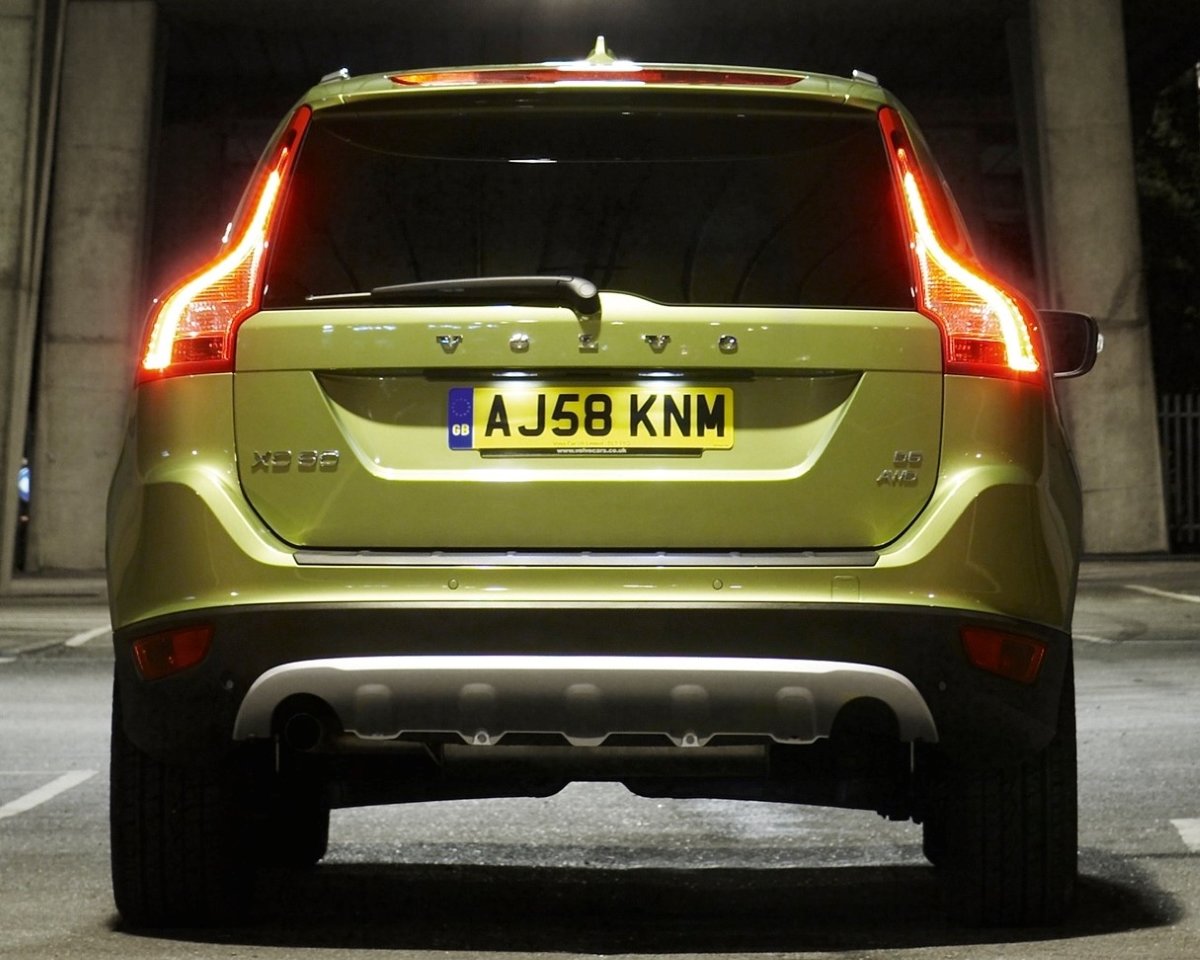
While not in the same league as a Lexus for reliability, the XC60 is largely robust. In general, it has achieved midfield finishes or better in reliability and owner satisfaction surveys.
The engines are all well proven, and have seen service in a variety of Volvo models over the years. So the major mechanical components should go the distance, especially if the owners have stuck to Volvo's service schedule. What's more, interior build quality is a strong point.
There are some known issues, however. A number of owners have experienced power steering faults, with a fluid leak leading to a loss of assistance. Fuel leaks can occur on cars with an incorrectly assembled fuel rail, and a software malfunction can reduce the effectiveness of the air conditioning.
More worryingly, 2.0-litre diesel cars built from 2014 onwards have a fault with a plastic intake manifold on the engine which can melt and even catch fire. The problem applies to almost 70,000 cars in the UK (not just the XC60), and was subject to a recall in 2019.
A further recall relates to the front seatbelt fastening, which may reduce in strength over time. It applies to XC60 cars built between 2008 and 2016, although the fault only develops under certain circumstances and Volvo describes it as "extremely rare".
As with any used car, if you want to confirm if any XC60 you are thinking of buying has any outstanding recall work, use the recall checker on the gov.uk website.
- When a new SUV is launched today, it's no surprise if there's a plug-in hybrid model. But back in 2012, Volvo was ahead of the curve with its XC60 Plug-In Hybrid Concept. Shown at the 2012 North American International Auto Show, the concept had a 270bhp petrol engine driving the front wheels, and a 70bhp engine powering the rear wheels. Volvo claimed the car was capable of travelling 35 miles on electric power, with a total range of around 600 miles. Despite these promising numbers, the concept was never put into production, although there are plug-in hybrid versions of the second generation XC60, sold from 2017.
- It's unusual for a car to remain on sale for nearly a decade, and Volvo kept the XC60 competitive against newer competition with a number of updates through its life. Changes under the bonnet improved power and efficiency, while in 2010, the R-Design spec was introduced with colour-matched styling and a more sporty chassis set-up. Revisions for the 2014 model year brought in a number of cosmetic changes, including a new grille and the loss of the black cladding on the lower body. Inside the cabin, Volvo added new materials for a more upmarket finish.
- Volvo has a storied history of safety innovation, and one of the most important safety features of recent years was fitted as standard to the XC60: City Safety. This is Volvo's term for autonomous emergency braking (AEB), which applies the brakes to avoid a collision or reduce its severity if the driver fails to react. Just a year after the XC60 was launched, Volvo upgraded City Safety with radar and camera sensors in addition to the original laser sensor. In 2013 a cyclist detection function was added, and the operating speed increased from a maximum of 19mph to 31mph.
- If you want to tow a caravan or trailer: Choose the D5 AWD. This model was highly praised in both of Britain's big tow car testing programmes. The 2.4-litre diesel may have a gruff character, but it's got plenty of pulling power for towing. The XC60's hefty kerb weight help makes it a very stable car, so you can tow long distances on the motorway in confidence.
- If you value fuel economy: Pick the DRIVe. Unless you are going to head off road, you won't necessarily miss the XC60's 4x4 drivetrain. And despite being an eco model, the DRIVe is no slouch. Expect miles per gallon in the 40s. Initially the DRIVe model came with a manual gearbox. Later versions had an automatic gearbox as an option, but this does hurt the car's economy and emissions.
- If you want more aggressive looks: Go for an R-Design. The XC60 didn't have the driver involvement of a BMW X3, and the original design was attractive but understated. When it arrived in 2010, the R-Design gave the XC60 more visual impact. It was also fitted with firmer suspension to deliver a sharper drive, although ride comfort did suffer.
- If you want a petrol: Take the T5. You'll have to look reasonably hard for one, as petrol versions of the XC60 were nothing like as popular with new car buyers as the diesels. We'd go for the T5 over the more powerful T6 as it's still reasonably quick but without the T6's epic appetite for unleaded.


