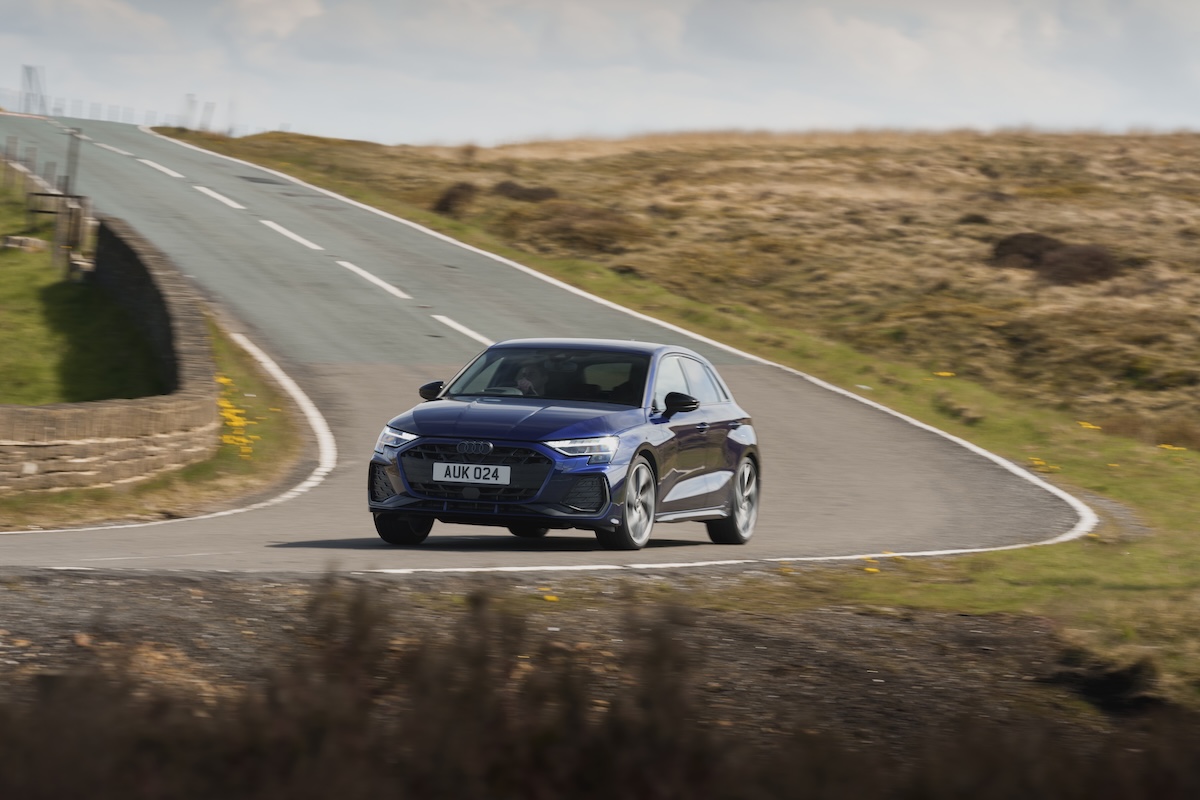
If you're in the market for a premium family hatchback, the choice has long been dominated by two German heavyweights: the BMW 1 Series and the Audi A3. Both offer the desirable badge, high-quality interior and sophisticated driving experience that buyers in this class expect.
The latest BMW 1 Series continues to pitch itself as the driver's choice, focusing on sharp handling and an engaging feel. The Audi A3, meanwhile, counters with a blend of high-tech features, comfort, and all-round practicality. With both cars offering a strong package, deciding between them can be tough. Let's break down how they compare.
BMW 1 Series vs Audi A3
Practicality
BMW 1 Series practicality score: 2/5
Audi A3 practicality score: 4/5
While both are compact cars, the Audi A3 has a clear advantage when it comes to everyday usability. Boot capacity is identical at 380 litres, but the A3 offers a more versatile 40/20/40 split-folding rear seat on most trims, which is an optional extra on the BMW. The A3 also provides slightly more generous legroom and headroom for rear passengers, making it the better choice if you regularly carry adults in the back.
The 1 Series is by no means cramped, and its switch to a front-wheel-drive layout has freed up more cabin space compared to older models. However, it's not class-leading. Both cars have high-quality interiors, but the latest 1 Series has lost some physical buttons for things like climate control, making it a bit more fiddly to use on the move than the A3.
Driving Impressions
BMW 1 Series driving score: 5/5
Audi A3 driving score: 4/5
This is where the BMW 1 Series plays its trump card. It has long been the driver's choice in this class, and even without its traditional rear-wheel-drive layout, it offers an engaging and agile experience. The steering is precise and the car feels composed and eager on a twisty road, making it the more entertaining of the two.
The Audi A3 takes a different approach, prioritising comfort and refinement. Its ride is a little more forgiving than the BMW's, and while it handles neatly and safely, it doesn't provide the same level of driver involvement. The A3 does offer a wider range of powertrains, however, including efficient diesel and plug-in hybrid models, which you can't get in the 1 Series. For pure driving fun, the BMW wins, but the A3's comfortable nature and broader engine choice will appeal to many.
Technology and Equipment
BMW 1 Series technology and equipment score: 3/5
Audi A3 technology and equipment score: 4/5
Both cars are packed with modern tech, featuring large digital screens for the driver and infotainment. The Audi's system, with its 10.1-inch central touchscreen and standard digital driver's display, is logical and easy to navigate. It also comes with wireless Apple CarPlay and Android Auto across the range.
The BMW's curved display looks impressive, but the latest version has removed the excellent iDrive rotary controller and other physical shortcuts. This means more functions are buried in touchscreen menus, which can be distracting to use while driving. While both cars are well-equipped, the Audi's more user-friendly interface gives it the edge in the technology race.
Running Costs
BMW 1 Series running costs score: 4/5
Audi A3 running costs score: 3/5
For the petrol-powered models, there isn't much to separate the 1 Series and A3 in terms of fuel economy and insurance costs. Where the Audi gains a significant advantage is with its plug-in hybrid (PHEV) option. This model is particularly attractive for company car drivers due to its low Benefit-in-Kind tax rates, and for private buyers who can charge at home for cheap, electric-only commuting.
It's worth remembering that for both cars, adding a few options can easily push the price over the £40,000 threshold, which brings an extra annual road tax surcharge. Servicing costs will also be higher than for a mainstream brand, but both BMW and Audi offer service plans to help owners budget for maintenance.
CarGurus Buyer Insights
|
BMW 1 Series 2026 review | Still the best family car for those who love driving |
Audi A3 Mk4 Review (2020-present) |
| CarGurus expert rating |
4 out of 5 |
4 out of 5 |
| CarGurus user rating |
4.4 out of 5 |
4.8 out of 5 |
| Percentage of good/great deals available on CarGurus* |
39.1% |
34.2% |
| Overall CarGurus rating |
4.3 out of 5 |
4.4 out of 5 |
The Verdict
BMW 1 Series Overall CarGurus rating: 4.3/5
Audi A3 Overall CarGurus rating: 4.4/5
In this close-fought battle between two of the best premium hatchbacks on sale, both cars make a strong argument. The BMW 1 Series is the undisputed choice for those who prioritise driving enjoyment, offering a sharper and more engaging experience from behind the wheel.
However, it's the Audi A3 that takes the overall win in this comparison. According to our CarGurus Buyer Insights, it scores a higher Overall CarGurus rating of 4.4 out of 5, boosted by a notably strong user rating of 4.8 out of 5. The A3 is the better all-rounder, offering more practicality, a more comfortable ride, and a more user-friendly infotainment system. The availability of a plug-in hybrid powertrain is another major advantage that broadens its appeal.
If your heart is set on the most entertaining drive, the BMW 1 Series won't disappoint. But for the buyer looking for the most complete and well-rounded premium hatchback, the Audi A3 is the one to choose.
BMW 1 Series Pros and Cons
| Pros |
Cons |
| Engaging and agile handling |
Less practical than the A3 |
| High-quality interior feel |
Infotainment is less user-friendly |
| Strong range of petrol engines |
No plug-in hybrid or diesel option |
Audi A3 Pros and Cons
| Pros |
Cons |
| Comfortable and refined ride |
Not as fun to drive as the 1 Series |
| Spacious and practical cabin |
Interior quality not a huge step on |
| Plug-in hybrid option available |
Some rivals have larger boots |
*The Overall CarGurus rating that informs these recommendations is based on CarGurus' proprietary market data from May 2026, CarGurus expert reviews, and CarGurus user reviews.
Read Our Full Reviews: