
For decades, the compact executive saloon class has been dominated by a fierce rivalry from Germany: the BMW 3 Series versus the Mercedes-Benz C-Class. It’s a classic head-to-head that pits driving pleasure against outright comfort.
The 3 Series has long been the benchmark for those who love to drive, offering a blend of sharp handling and performance that few rivals can match. The C-Class, on the other hand, has traditionally played the role of the junior S-Class, prioritising a luxurious ride and a high-tech, opulent cabin. Both now offer efficient plug-in hybrid power and a premium experience, but which one is the better all-rounder?
BMW 3 Series vs Mercedes-Benz C-Class
- Practicality
- Driving Impressions
- Technology and Equipment
- Running Costs
- CarGurus Buyer Insights
- Verdict
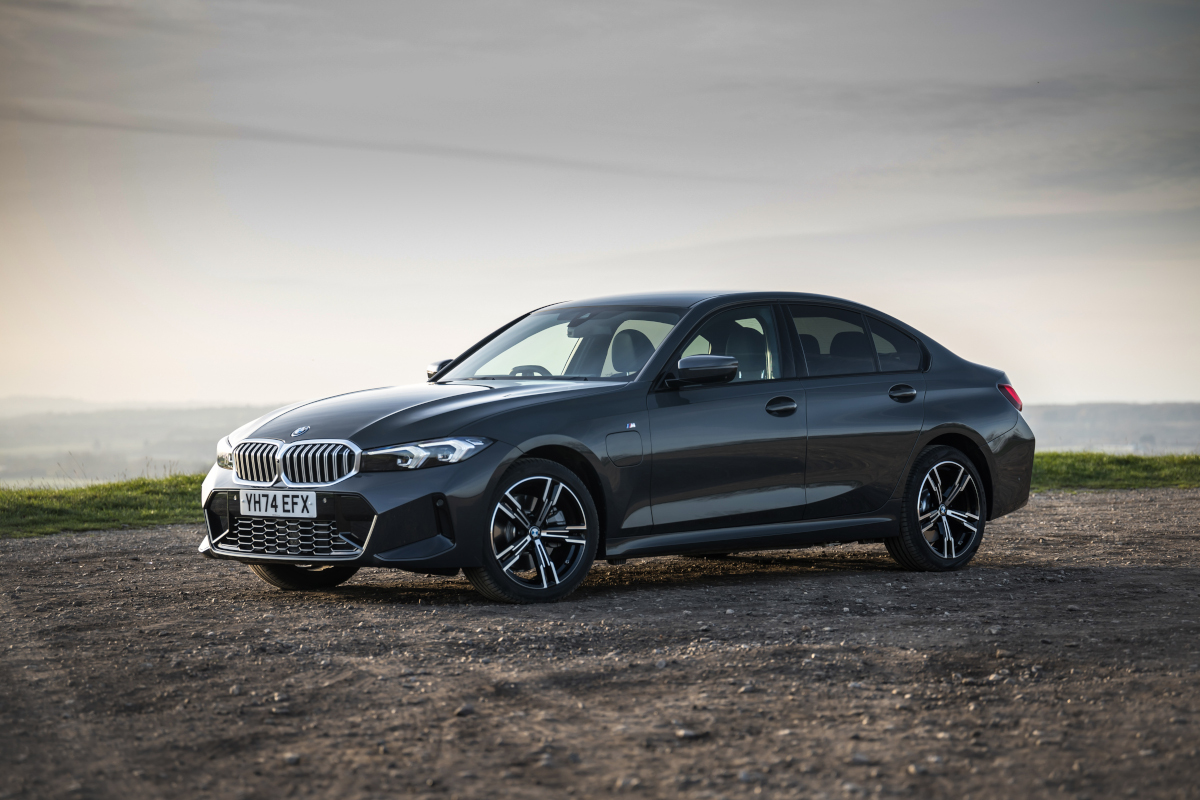
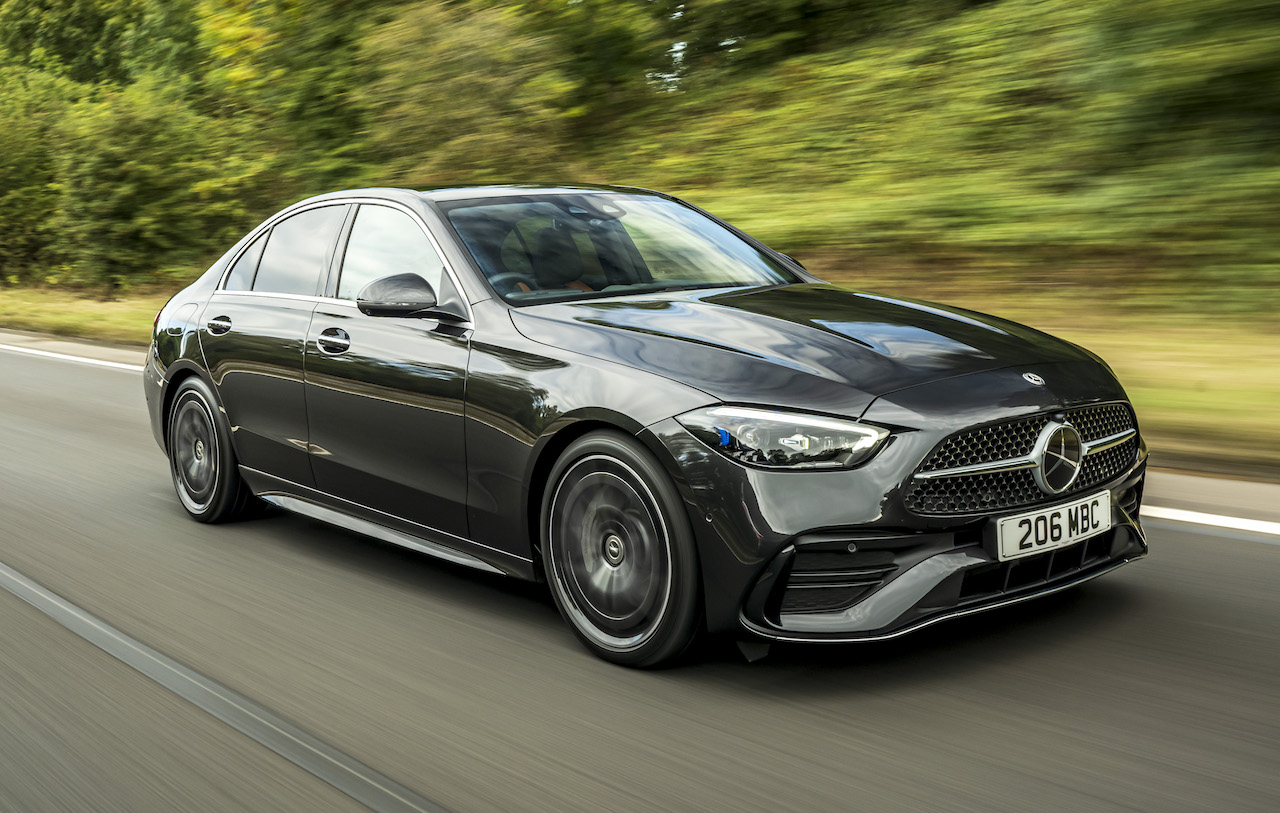
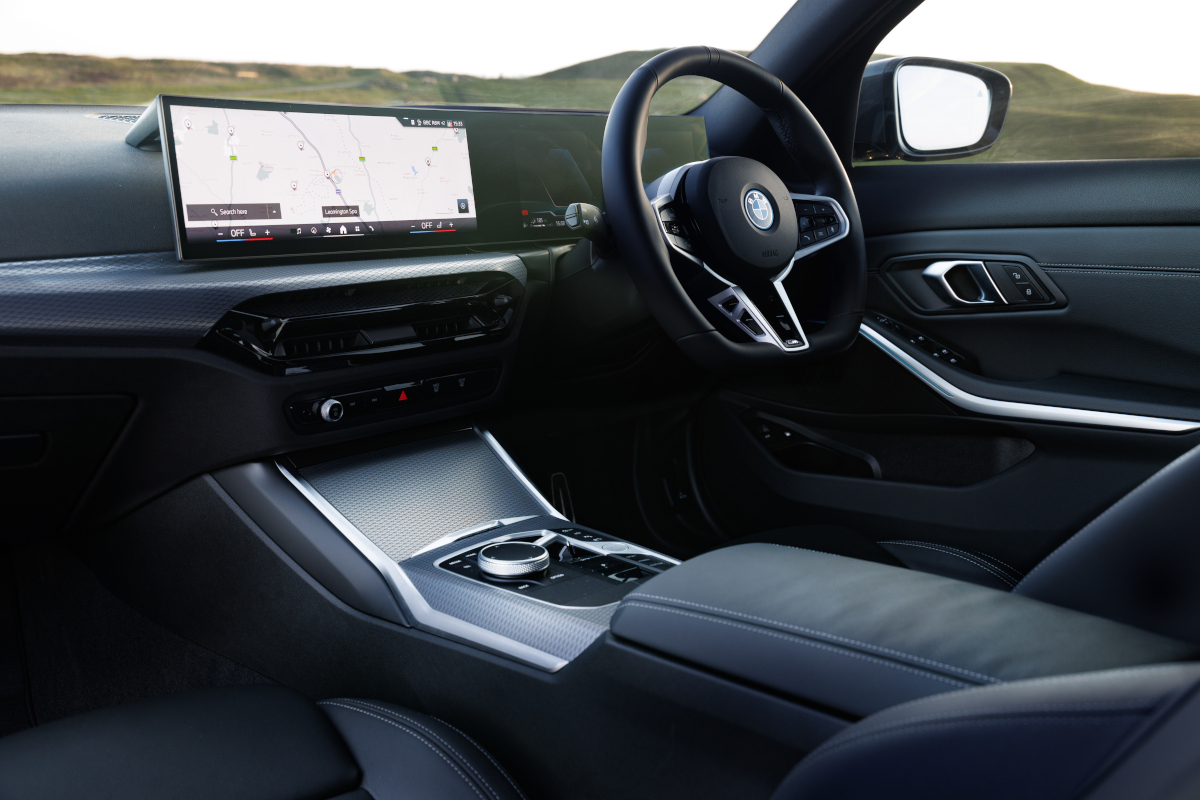
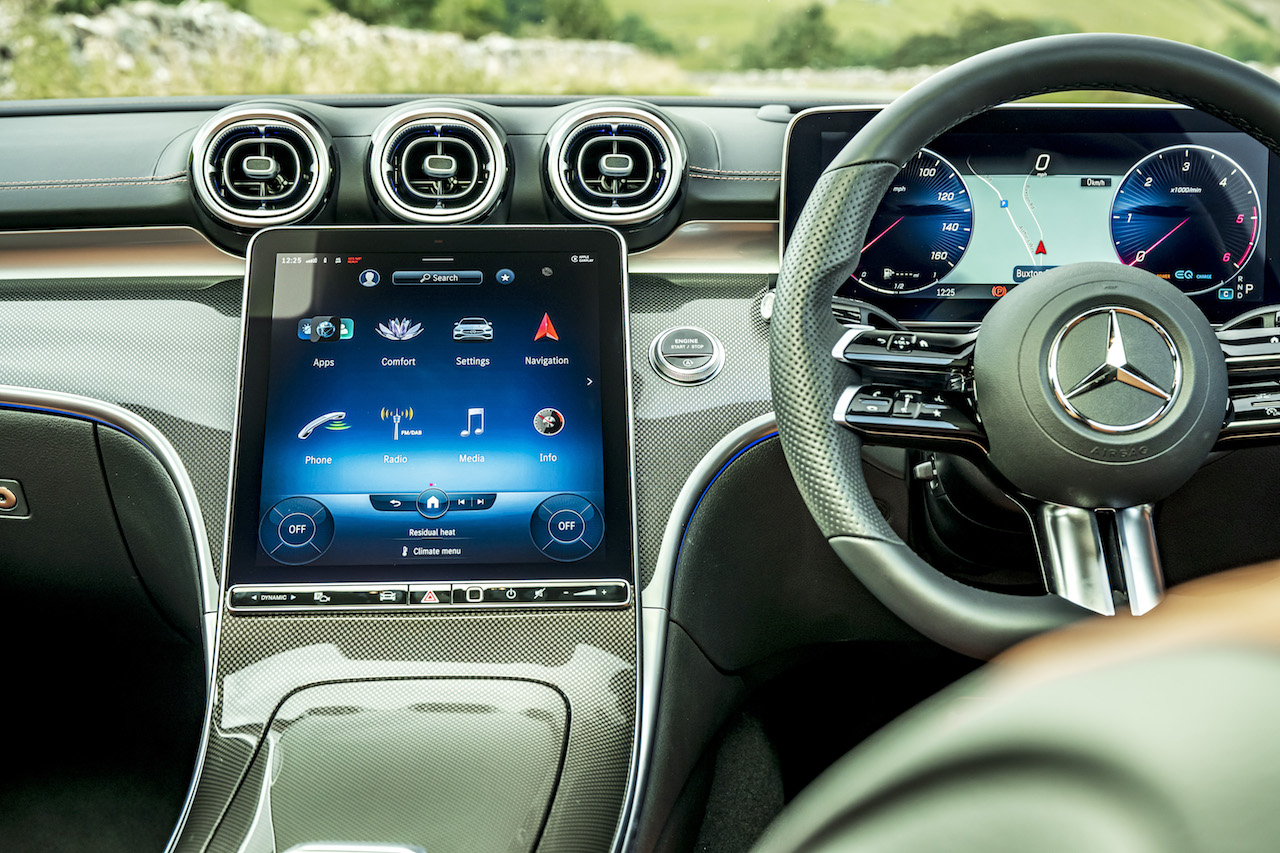
Practicality
BMW 3 Series practicality score: 4/5
Mercedes-Benz C-Class practicality score: 3/5
As a family car, the BMW 3 Series saloon is surprisingly capable. It has a useful 480-litre boot, which is on par with its key rivals, and there’s enough room in the back for a couple of adults to sit comfortably on a long journey. If you need more space, the 3 Series Touring (estate) model offers a bigger and more flexible load bay.
The C-Class is a little less accommodating. Rear-seat space is tighter than in the BMW, so taller passengers might feel a bit cramped. The boot is also smaller, at 455 litres. It’s worth noting that in both cars, the plug-in hybrid models lose some boot space to make way for batteries. For outright practicality, the 3 Series has the edge.
Driving Impressions
BMW 3 Series driving score: 5/5
Mercedes-Benz C-Class driving score: 4/5
This is where the 3 Series has always excelled, and this latest generation is no different. It’s the driver’s choice in this class, with beautifully weighted steering, agile handling, and a sense of connection to the road that makes any journey enjoyable. It manages this without sacrificing comfort, feeling settled and refined on the motorway.
The C-Class takes a different approach, putting comfort above all else. Its soft suspension does a great job of soaking up bumps, making it a relaxing car to drive, particularly over long distances. The trade-off is that it doesn't feel as sharp or engaging as the BMW on a twisty road. If you want a car that isolates you from the outside world, the C-Class is excellent, but if you enjoy the act of driving, the 3 Series is the clear winner.
Technology and Equipment
BMW 3 Series technology and equipment score: 4/5
Mercedes-Benz C-Class technology and equipment score: 4/5
Both cars are packed with the latest technology. The C-Class makes a big first impression with its huge, portrait-style central touchscreen, which dominates the dashboard. It runs the slick MBUX infotainment system and looks impressive. However, the reliance on the touchscreen for most functions can be a bit distracting while driving.
The BMW’s iDrive system, controlled via a rotary dial between the seats, is more user-friendly on the move. Post-facelift cars feature a large, curved display that combines the driver’s instruments and the central screen into one seamless unit. Both cars come with plenty of standard equipment, including satellite navigation, climate control, and a host of safety features, so you won’t feel short-changed with either.
Running Costs
BMW 3 Series running costs score: 4/5
Mercedes-Benz C-Class running costs score: 4/5
As premium German saloons, neither car will be cheap to buy or run, but they can be surprisingly efficient. The plug-in hybrid (PHEV) models are the standouts for low running costs, especially for company car drivers, thanks to low Benefit-in-Kind (BIK) tax rates. The BMW 330e and Mercedes C300e can both cover significant distances on electric power alone.
The C300e has a larger battery, giving it a longer official electric range of over 60 miles, which is a real advantage for those with a typical daily commute. The diesel and petrol engines in both ranges also offer a good balance of performance and economy. Servicing and insurance will be in line with other premium rivals.
CarGurus Buyer Insights
| BMW 3 Series | Mercedes-Benz C-Class | |
|---|---|---|
| CarGurus expert rating | 5 out of 5 | 4 out of 5 |
| CarGurus user rating | 4.3 out of 5 | 4.4 out of 5 |
| Percentage of good/great deals available on CarGurus* | 36.2% | 35.9% |
| Overall CarGurus rating | 4.5 out of 5 | 4.4 out of 5 |
The Verdict
BMW 3 Series Overall CarGurus rating: 4.5/5
Mercedes-Benz C-Class Overall CarGurus rating: 4.4/5
This is an incredibly close contest between two of the best compact executive cars on sale. The Mercedes-Benz C-Class is a brilliant choice if your priority is comfort. It has a stunning interior and a cosseting ride that makes it a superb long-distance cruiser.
However, the win goes to the BMW 3 Series. According to our CarGurus Buyer Insights, it scores a higher overall rating, thanks in large part to its perfect expert rating. It proves that you can have a car that’s both engaging to drive and comfortable enough for the daily grind. It’s also more practical than the C-Class and has a more user-friendly infotainment system. It’s this fantastic blend of abilities that makes the 3 Series the better all-rounder and our winner.
BMW 3 Series Pros and Cons
| Pros | Cons |
|---|---|
| Class-leading handling and driver enjoyment | Ride is firmer than in the C-Class |
| User-friendly iDrive infotainment system | Interior design isn't as flashy as the Mercedes |
| Strong and efficient range of engines | PHEV model loses some boot space |
Mercedes-Benz C-Class Pros and Cons
| Pros | Cons |
|---|---|
| Supremely comfortable and quiet ride | Not as engaging or fun to drive as the 3 Series |
| Stunning, high-tech interior design | Less rear passenger room than the BMW |
| Excellent electric range on PHEV model | Touchscreen controls can be distracting |
*The Overall CarGurus rating: that informs these recommendations is based on CarGurus' proprietary market data from January 2026, CarGurus expert reviews, and CarGurus user reviews.