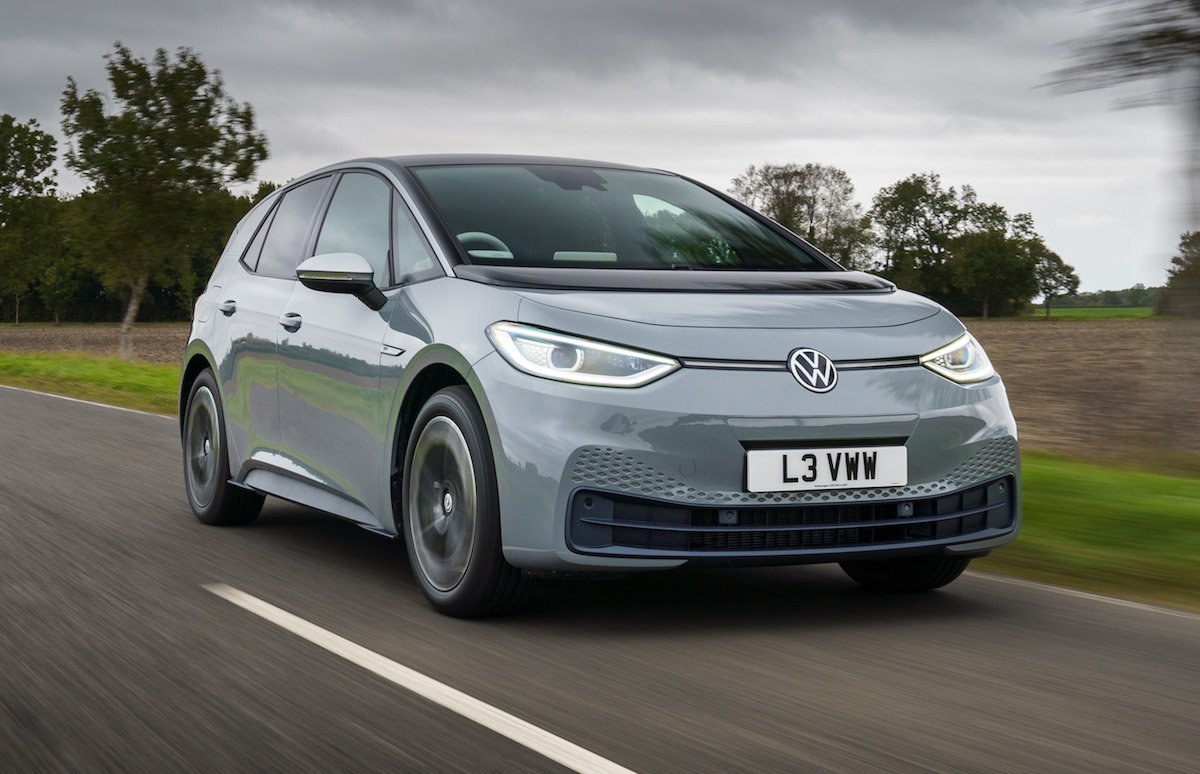
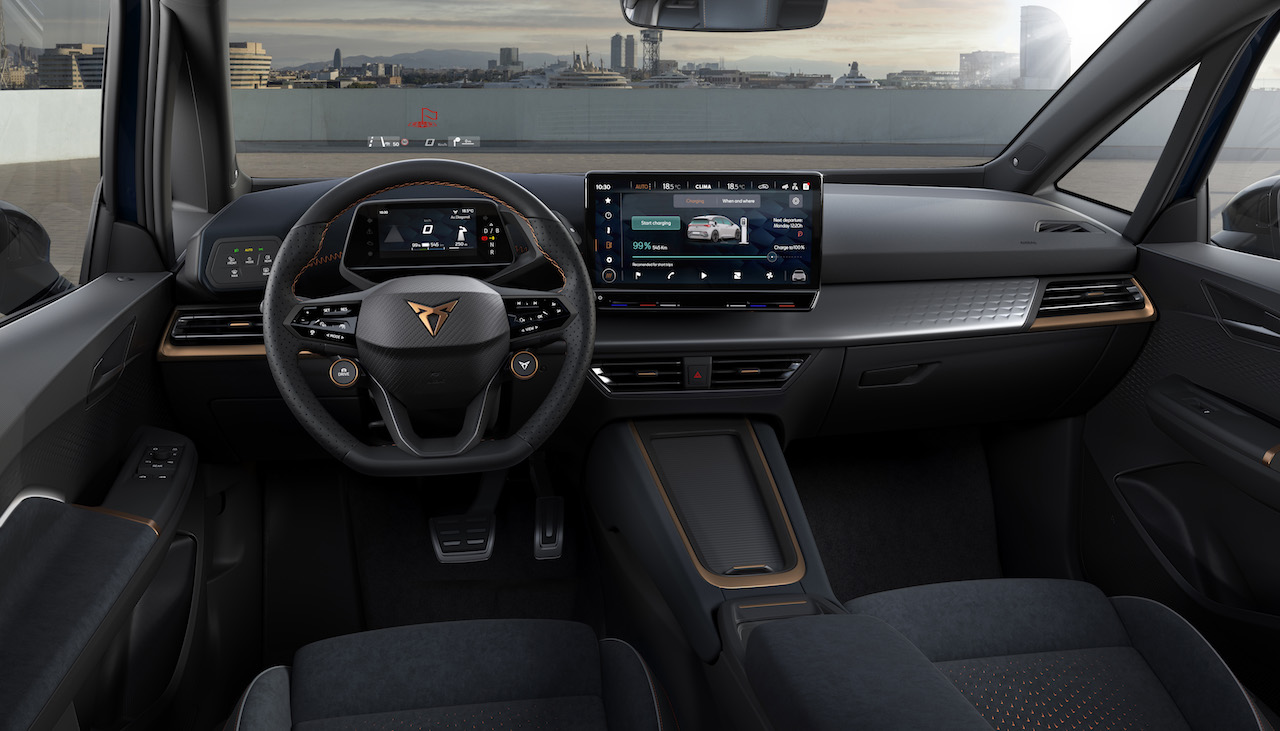
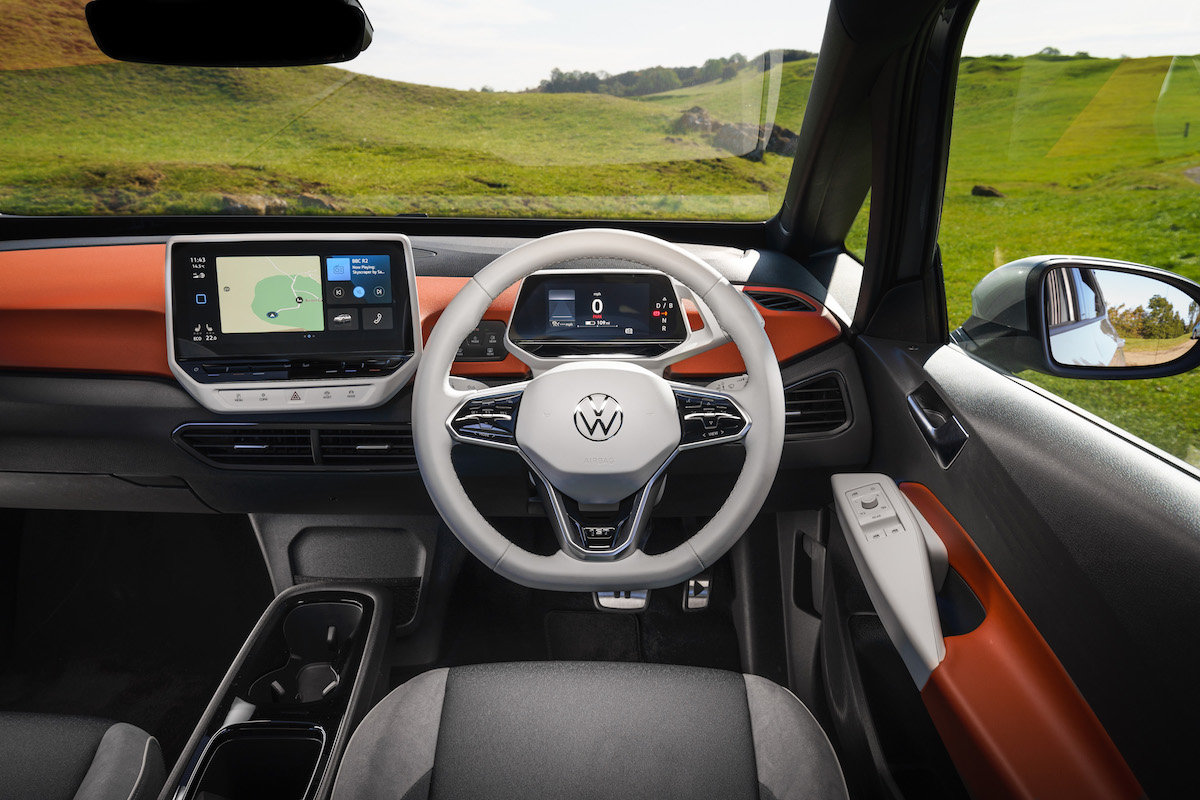
If you're looking to switch to an electric family hatchback, the Volkswagen Group offers two strong options: the Cupra Born and the Volkswagen ID.3. They share the same fundamental electric technology, but each has been given a unique flavour.
The Born is the first all-electric model from Cupra, SEAT's sporty offshoot, and it aims to bring a bit of hot-hatch excitement to the EV world. The ID.3, on the other hand, is Volkswagen's vision of an electric car for the masses, a spiritual successor to the Golf for the battery-powered era. So, which of these electric cousins is the better all-rounder?
Cupra Born vs Volkswagen ID.3
Practicality
Cupra Born practicality score: 3/5
Volkswagen ID.3 practicality score: 4/5
As family hatchbacks, both the Born and the ID.3 need to be practical, and they do a good job. Thanks to their electric-only design, there's no bulky engine or transmission tunnel, which means passenger space is generous in the front and back. Both cars also offer an identical 385-litre boot, which is on par with a VW Golf and big enough for the weekly shop or a weekend away.
However, the ID.3 has a slight edge in usability. Higher-spec models come with a variable-height boot floor, which makes it easier to load heavy items and creates a flat floor when the rear seats are folded. The Born's underfloor storage is more limited. While the Cupra's sporty seats offer good support, the ID.3's cabin feels a little more versatile for family life. Both cars can rapid charge at speeds up to 170kW, allowing for a quick top-up on longer journeys.
Driving Impressions
Cupra Born driving score: 4/5
Volkswagen ID.3 driving score: 4/5
This is where the two cars really show their different personalities. The Cupra Born lives up to its sporty branding with sharper steering and firmer suspension. It feels more agile and engaging on a twisty road, giving it a hot-hatch character that's rare in the EV world. The trade-off is a ride that can feel a bit firm and busy on broken town roads.
The Volkswagen ID.3 is tuned for comfort and refinement. It feels planted and secure, with light steering and suspension that does a better job of soaking up bumps. It's a relaxing car to drive, whether you're in the city or on the motorway, and it's quieter than the Born at speed. It's not as exciting as the Cupra, but for many drivers, its easy-going nature will be a better fit for the daily grind. Both offer brisk acceleration thanks to the instant response of their electric motors.
Technology and Equipment
Cupra Born technology and equipment score: 4/5
Volkswagen ID.3 technology and equipment score: 3/5
When it comes to standard kit, the Cupra Born has a clear advantage. Even entry-level models come well-equipped with a 12-inch touchscreen, LED headlights, a rear-view camera, and adaptive cruise control. The Born's infotainment system also feels a bit more modern, with sharper graphics than you'll find in the ID.3.
The Volkswagen isn't poorly equipped, but you'll need to look at higher-spec models to match the kit that comes as standard on the Born. Both cars suffer from a reliance on touch-sensitive controls for functions like climate and volume, which can be fiddly to use on the move. However, the ID.3's system can feel a little slower to respond. For sheer value and user-friendliness, the Born's tech package is more appealing.
Running Costs
Cupra Born running costs score: 4/5
Volkswagen ID.3 running costs score: 4/5
As you'd expect from two cars that share so much technology, running costs are similar. Both will be cheap to run compared to a petrol or diesel equivalent, especially if you can charge at home on an off-peak electricity tariff. A full charge for the common 58kWh battery will cost around £17 on a typical home rate.
The ID.3 is slightly more efficient on paper, meaning it can squeeze a few more miles out of each charge, which could make a small difference for high-mileage drivers. However, the Cupra Born often represents better value at the point of purchase, as it offers more standard equipment for your money. Servicing costs should be comparable for both, making this category a dead heat.
CarGurus Buyer Insights
|
Cupra Born Review (2022-present) |
Volkswagen ID.3 Review (2020-present) |
| CarGurus expert rating |
4 out of 5 |
4 out of 5 |
| CarGurus user rating |
0.0 out of 5 |
0.0 out of 5 |
| Percentage of good/great deals available on CarGurus* |
28.7% |
33.9% |
| Overall CarGurus rating |
3.8 out of 5 |
3.9 out of 5 |
The Verdict
Cupra Born Overall CarGurus rating: 3.8/5
Volkswagen ID.3 Overall CarGurus rating: 3.9/5
Both the Cupra Born and Volkswagen ID.3 are solid electric family cars, but they appeal in different ways. The Born is the sportier, more stylish choice, and it offers more standard equipment for the money. If you want an EV that's fun to drive and packed with tech, it's a strong contender.
However, based on our comprehensive CarGurus ratings, the Volkswagen ID.3 takes the win. Its higher overall score reflects its stronger showing in the deals currently available on CarGurus. The ID.3's more comfortable ride, quieter cabin, and slightly better efficiency make it a more relaxing and practical car for everyday family duties. While it might not have the flair of the Cupra, its blend of comfort, practicality, and value on the used market gives it the edge in this close contest.
Cupra Born Pros and Cons
| Pros |
Cons |
| Sporty and engaging to drive |
Firmer ride than the ID.3 |
| Generous standard equipment |
Infotainment can be fiddly |
| Stylish exterior and interior design |
Boot isn't as versatile as the ID.3's |
Volkswagen ID.3 Pros and Cons
| Pros |
Cons |
| Comfortable and refined ride |
Less standard equipment than the Born |
| Slightly more efficient with good range |
Not as exciting to drive |
| Practical and versatile cabin |
Infotainment system feels a bit dated |
*The Overall CarGurus rating that informs these recommendations is based on CarGurus' proprietary market data from May 2026, CarGurus expert reviews, and CarGurus user reviews.
Read Our Full Reviews: