Only yesterday, we brought you a First Drive review of the all-new Vauxhall Astra GSe hatchback (and Astra Sports Tourer GSe), the first of Vauxhall’s models to wear the new GSe badge. As a reminder, GSe stands for Grand Sport electric, and signifies models that have both a sporty attitude and an electrified powertrain. And no sooner have we told you about the Astra than it’s already time to bring you the lowdown on the second new car in the GSe line-up, the new Grandland GSe.

Like the Astra, the Grandland GSe is a plug-in hybrid, but as befits its larger size, it’s also considerably more powerful. While the Astra gets 225 metric horsepower from the combination of its 1.6-litre turbo petrol engine and single electric motor, the Grandland gets a second electric motor, and that helps boost the car’s overall output up to 300 horsepower (296bhp in old money), and the additional motor also brings with it all-wheel drive.
Styling and Interior
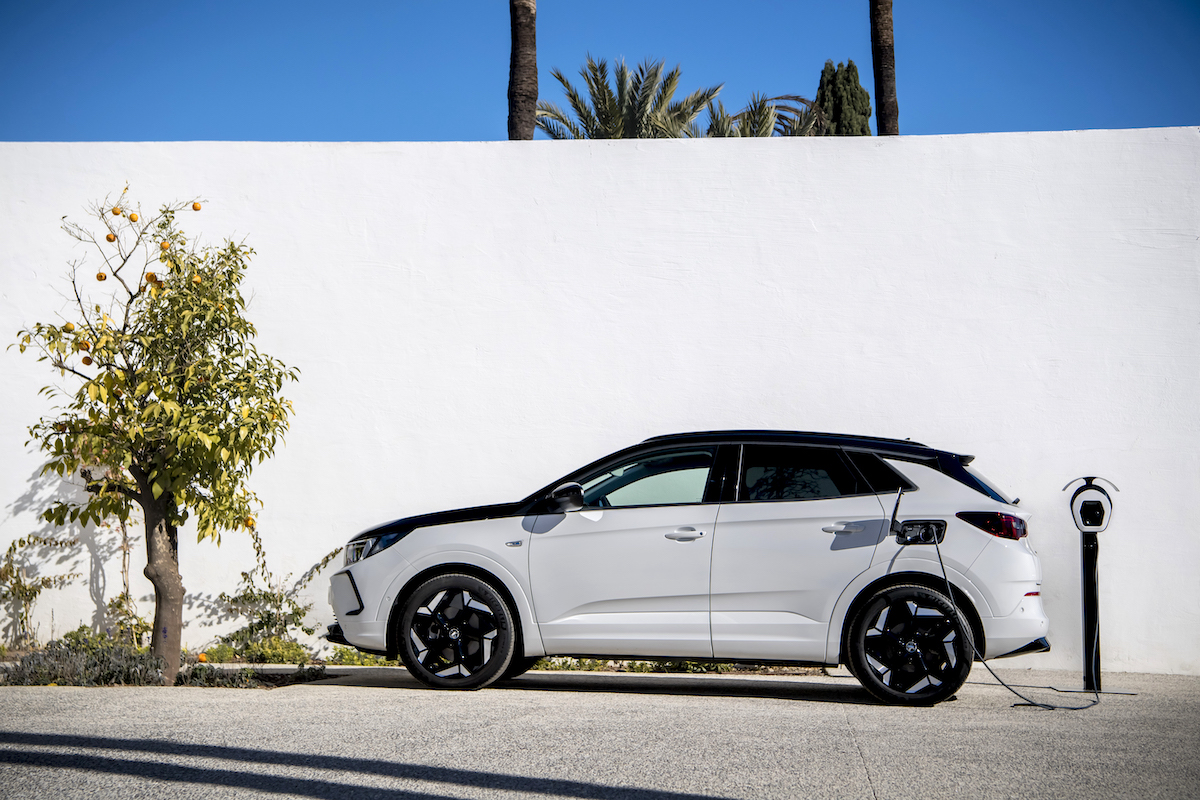
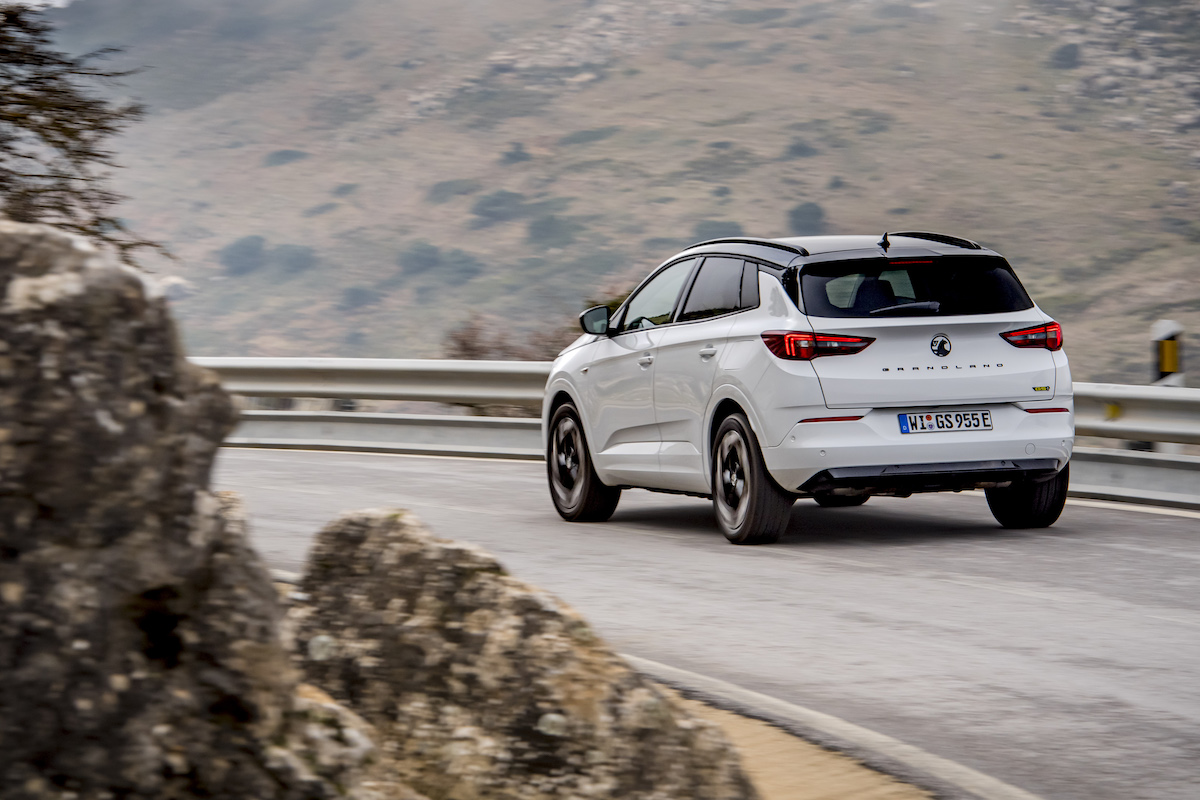
Now we’ll get to the results of all that in a little while, but first, let’s take a look at the sporty visual makeover that the Grandland GSe has enjoyed. It has the same contrasting black roof as the Astra, while the bonnet has also been given the same treatment for a rather more lairy look. The Grandland also has the same funky design of alloy wheel as the Astra, a design inspired by the Manta GSe concept car, although here, they’re a shade bigger at 19 inches. The badging and rear diffuser have also been restyled.
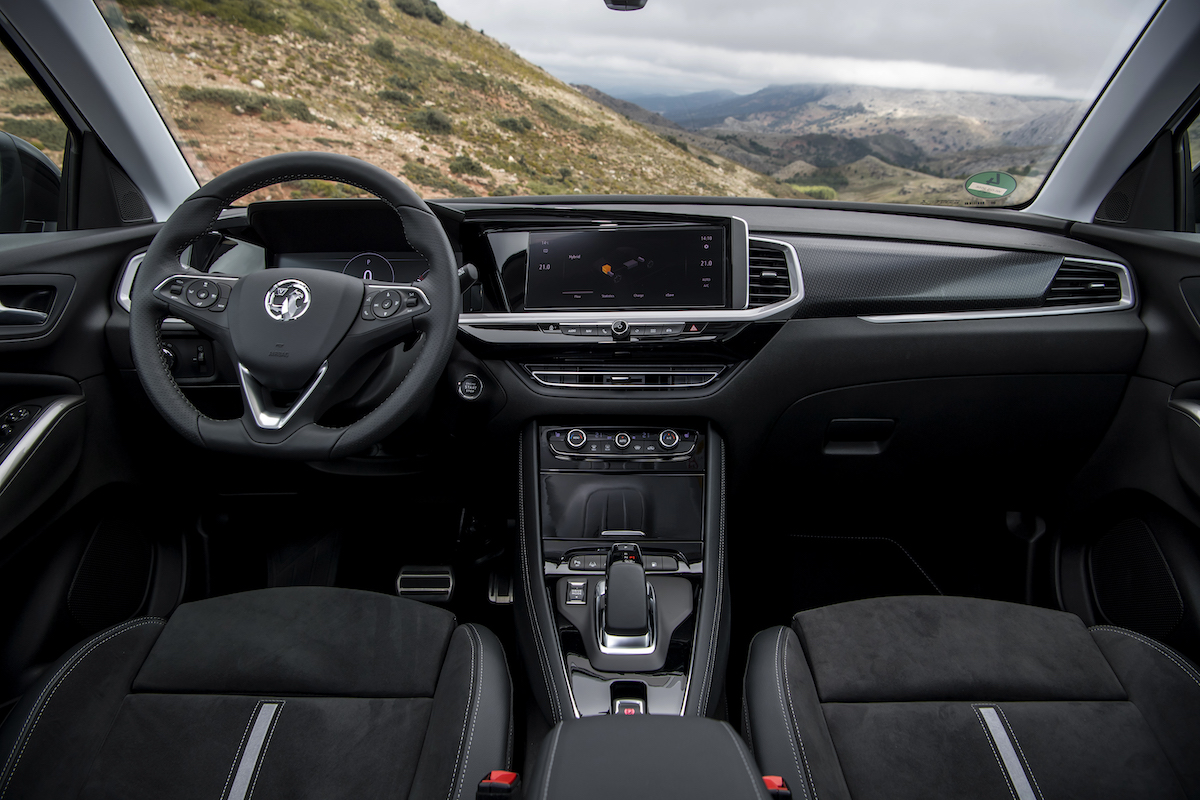
Inside, you get the same GSe-specific Alcantara-trimmed sports seats that you get in the Astra GSe, and they’re just as supportive and comfortable. Otherwise, though, the interior is much the same as any other Grandland’s, both in terms of its design and its quality. You get the same twin-screen arrangement for your digital instrument panel and infotainment. With the instruments you can change the nature and the layout of the information you get by twiddling the end of the indicator stalk, and there are lots of different layouts to choose from. With the central touchscreen, meanwhile, things aren’t quite so good because the software is a bit slow to respond and the operating system isn’t as intuitive as it could be.
You do get physical air-con controls on the dashboard, but not a full set, so if you want to do anything more complicated that changing the temperature or fan speed – such as changing the direction of the air flow, for example – you have to delve into distracting on-screen menus.
The biggest drawback with the interior, however, is that it feels a bit dull, with many of the materials feeling decidedly dour, and there are plenty of rivals that feel plusher.
Space and Practicality
Just like with the Astra, the GSe’s extra motors and batteries mean you do lose some boot space compared with non-plug-in-hybrid versions of the Grandland. Capacity drops from a very useful 514 litres to just 390 litres. That’s quite a big jump, and it’s not actually much more space than you get in a Volkswagen Golf, despite the Grandland being quite a bit bigger.
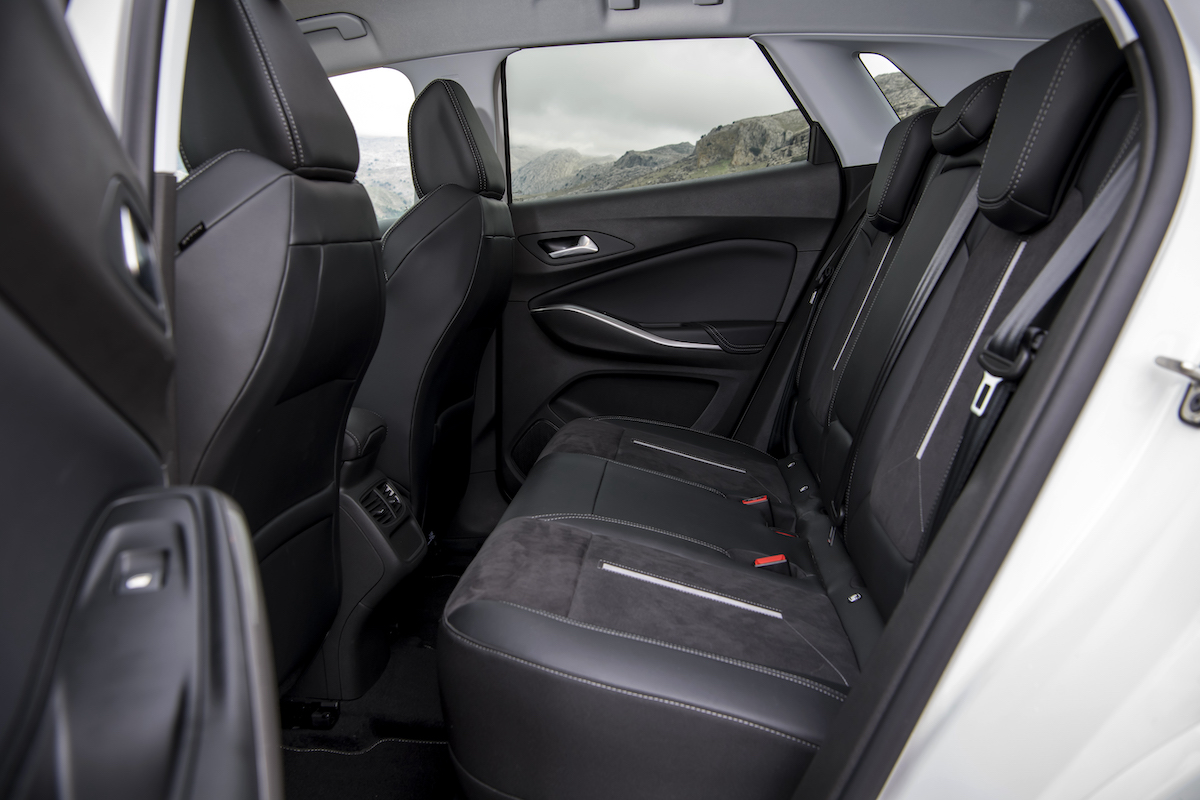
The rear seats fold down in a 60/40 split for when you need more space, and the load area you get is nicely flat and level when you do. Rear passenger space is fine, with space for a couple of reasonably tall adults to sit comfortably, although some rivals provide more space in every direction, not to mention sliding seats.
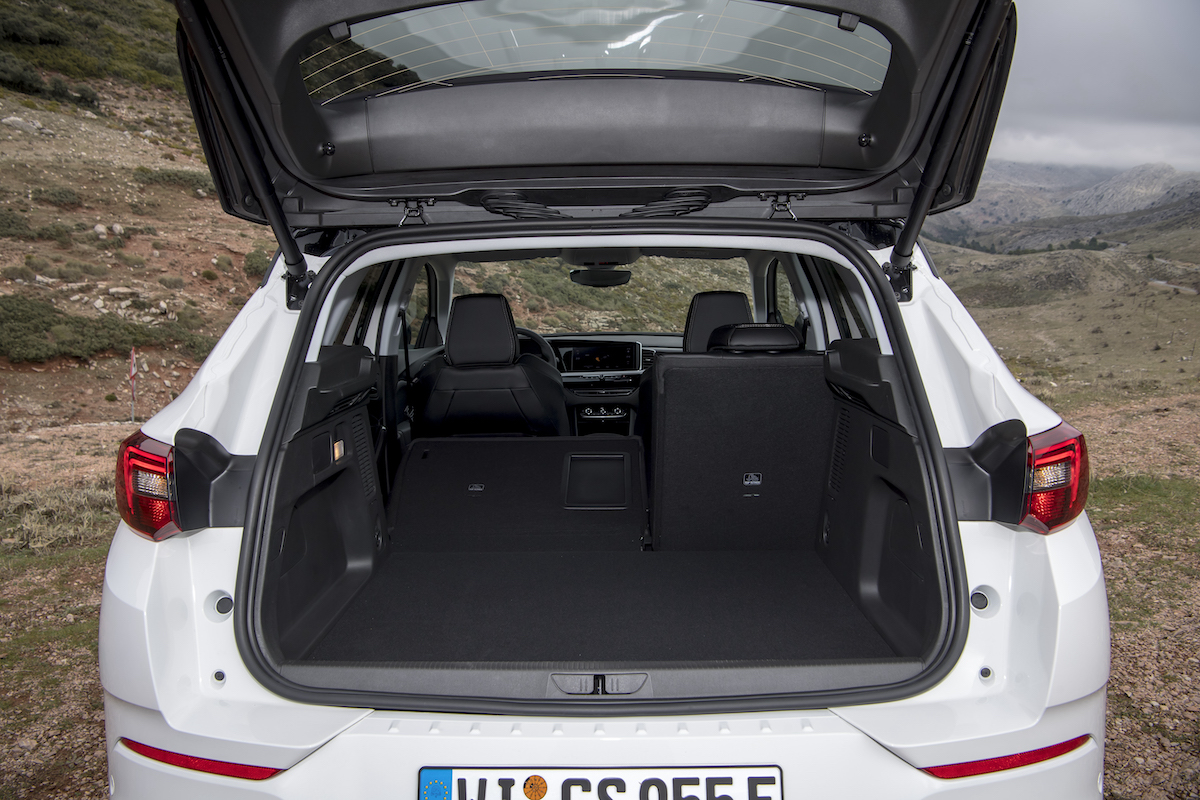
Whether the rear seats are up or down, however, there’s not a lot of underfloor storage, so your reduced boot space will probably be reduced further by have your charging cables kicking around.
Power and Performance
So that’s how the Grandland GSe performs as the family car it undeniably is, but how does it perform as the part-SUV-part-sports-car that Vauxhall says it is? Well, on paper, it actually makes a very convincing start. As we mentioned earlier, the Grandland GSe develops 300 metric horsepower, and that actually makes it the most powerful Vauxhall model currently on sale. And to be fair, that’s a proper hot hatch level of power, which is befitting of the GSe badge.
However, is the level of performance as impressive as the level of power? Well, kind of yes, and kind of no. Yes, in that the 0-62 sprint takes 6.1 seconds, so this is undeniably a quick car. But no in that a Cupra Ateca, which is an SUV of about the same size that also has 300 horsepower, does that same dash more than a second quicker.

The way the power is delivered can be a bit inconsistent, too. The level of acceleration available in electric-only mode isn’t as strong as it is when the petrol motor is running, and when you’re running around at moderate speeds, it’s not always clear whether the combustion engine has switched itself off or not. That means that when you bury the throttle on the move, half the time you get full acceleration, and the other half, you accelerate a bit, but you then have to wait a few seconds for the petrol engine to pipe up before you get full power.
And once it does, the GSe feels just about fast enough to convince as a performance SUV, but not until. And like we said, it never feels as ballistically fast as rivals like the Cupra Ateca.
Charging, Range and Fuel Economy
What a Cupra Ateca can’t do, however, is roll around on electric power alone. The Grandland has an all-electric range of up to 41 miles on a full charge of the 14.2kWh lithium-ion battery, and can run in electric mode at speeds of up to 84mph. And when it does so, your progress is as quiet and serene as you’d expect. Like in the Astra GSe, the petrol engine can make a bit of a racket when you work it hard, but it’s not as shouty as in the Astra, and at least the noise results in a proper feeling of acceleration. Driven more moderately, the eight-speed automatic gearbox manages the engine’s work rate well, so engine noise stays in the background most of the time.
Plugging the car into a conventional three-pin domestic socket will deliver a full charge to the 12.4kWh lithium-ion battery pack in around five and a three-quarter hours, but a 7.4kW hookup – like you get with a wallbox home charger or public charger - will do the job in a shade under two hours. But, only if you pay an extra £500 for the optional 7.4kW on-board charger. Otherwise, the standard 3.7kW on-board charger will take four hours to deliver the same charge.
The other area where the GSe has a Cupra Ateca licked is on official fuel economy. Cupra buyers can expect an official figure of up to 31.7mpg, while the GSe’s official figure stands at 235.4mpg. However, here comes our normal warning regarding the official fuel economy of a plug-in hybrid. It’s a figure borne out of laboratory tests that are unrealistically flattering to PHEVs, and to get anything like that in the real world, you’ll need to charge up regularly and confine yourself to short trips, so that you spend the vast majority of your time running on electric-only power. Do bear in mind that, as soon as your electric power runs dry, and the petrol engine is required to haul around all the extra weight of the batteries and motors, so the GSe will become very thirsty indeed.
Ride and Handling
Powertrain aside, though, does the GSe feel as sporty as it arguably should in other areas. Vauxhall’s engineers have put in plenty of effort to make it so, having applied many of the same tweaks to the Grandland GSe’s suspension as they have to the Astra GSe’s. That includes stiffer springs, more sophisticated dampers, recalibrated steering for more responsiveness and a stability control system that cuts in later.
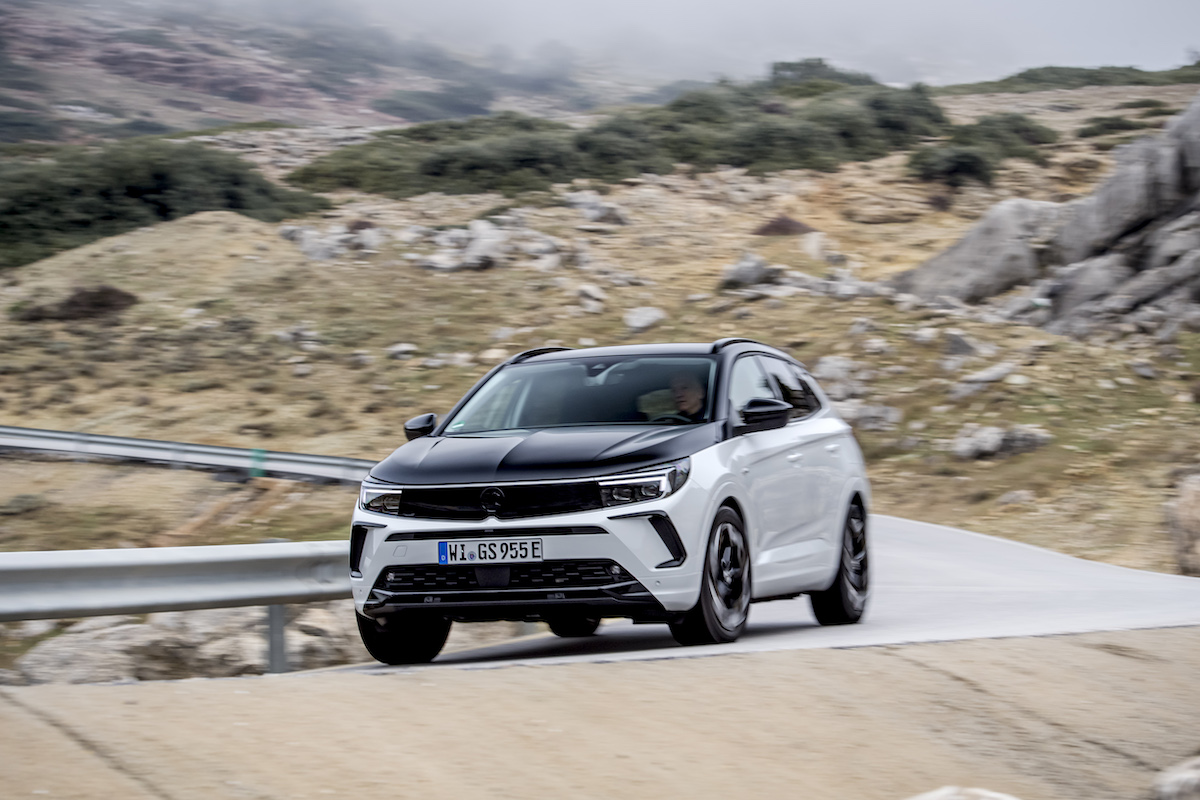
The car certainly controls its body movements well for a tall, heavy car, and there’s no shortage of grip and traction, probably thanks in part to that four-wheel drive system. Like with the Astra, you can feel rather pronounced weight transfer as you turn, especially in tighter corners, but given the car’s lofty stance, it actually feels surprisingly tidy, if not quite as lithe or as fluid as the Cupra, or even a less performance-focused version of the Ford Kuga.
The steering has improved quite a bit, mind, thanks to those keener responses and satisfying weight. And, like with the Astra, it felt on the smooth Spanish roads of our test drive like the regular Grandland’s ride comfort has been maintained, although we’ll need to try the car on a battered British road before we can be absolutely certain of that.
Equipment and Technology
Sitting at the top of the Grandland range, the GSe is generously equipped. Standard specs includes front- and rear parking sensors with a 360-degree camera, keyless entry and start, heated front seats and steering wheel, climate control, automatic wipers, powered tailgate, wireless phone charging and an infotainment system that includes navigation, six speakers, front-and rear USBs, Apple CarPlay and Android Auto.
There’s also a generous roster of safety kit provided as standard, which includes automatic emergency braking with pedestrian detection, blind spot alert, lane departure warning, lane keep assist, traffic sign recognition and high-beam assist.
Verdict
As a high-performance SUV, then, there are alternatives that are faster, more fun and generally more convincing than the Grandland GSe. That’s not to say that it’s not an enjoyable car in its own right, however – it is – but there are just several rivals that generally do the job better.
However, with the vast majority of those rivals not being plug-in hybrids, what they can’t do is match the Grandland GSe on official CO2 emissions, with a figure of 27g/km. Not the sexiest figure to boast about, perhaps, but it is one that stands to save you a huge amount of cash if you’re a company car driver, because it means you’ll pay benefit-in-kind tax on just 8% of the GSe’s value. Looked at through that lens, the Grandland GSe quickly becomes a lot more compelling, so for BIK-paying fleet drivers who are after a family SUV with a sporty attitude, the car becomes worthy of much more serious consideration.
Search for a Vauxhall Grandland on CarGurus
Fact File
Price: £43,700.
Fuel type: Petrol-electric plug-in hybrid
Powertrain: 1.6-litre turbocharged, four-cylinder petrol plus two electric motors, four-wheel drive, eight-speed automatic gearbox
Power: 296bhp
Torque: 384lb ft
0-62mph: 6.1seconds
Top speed: 146mph
MPG: 235.4mpg (WLTP)
Verdict: There are more enjoyable sporty SUVs out there, but thanks to its PHEV drivetrain and low emissions, it makes a lot of sense for company car drivers after a little bit of excitement.


