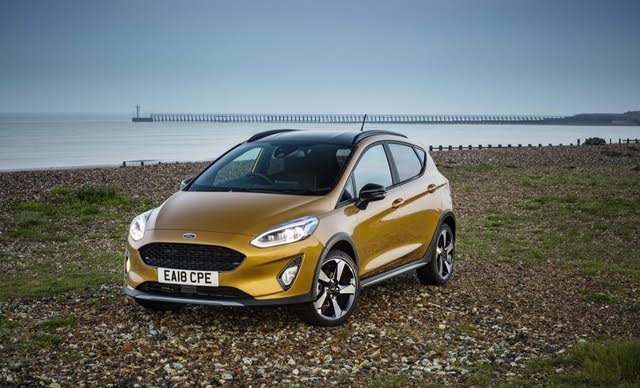
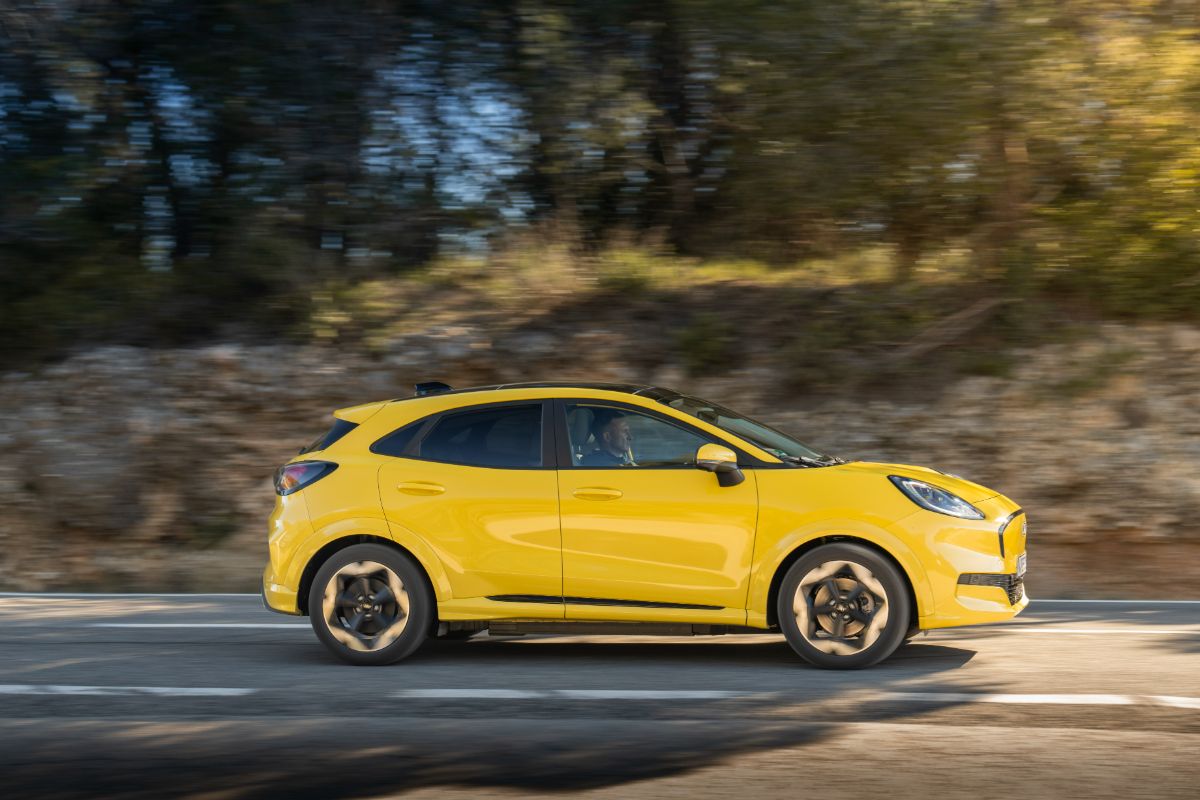
For decades, the Ford Fiesta was the go-to small car for British buyers, a supermini that proved affordable transport could also be fun. But with the Fiesta now discontinued, its spiritual successor is the Ford Puma, a small crossover that promises more space and practicality while retaining that typical Ford sense of driver enjoyment.
The Fiesta is now only available on the used market, where it represents strong value. The Puma, on the other hand, is a current model that has recently been updated and is even available as a fully electric car, the Puma Gen-E. So, should you stick with the classic hatchback or move with the times to the crossover?
Ford Fiesta vs Ford Puma
Practicality
Ford Fiesta practicality score: 3/5
Ford Puma practicality score: 4/5
As a traditional supermini, the Fiesta's practicality is adequate but not its main selling point. There's enough room up front, but adults will find the rear seats tight on longer journeys. Its 292-litre boot is acceptable for the weekly shop, but some rivals in its class offer more space.
This is where the Puma pulls out a significant lead. Its crossover body style and slightly larger dimensions translate into a much more spacious cabin, with comfortable seating for four adults. The real party piece is the boot; at 456 litres, it's larger than many cars from the class above. What's more, it features the ingenious 'Megabox' – a deep, waterproof storage area under the boot floor that's perfect for muddy boots or wet gear. For family life, the Puma is the clear winner.
Driving Impressions
Ford Fiesta driving score: 5/5
Ford Puma driving score: 5/5
If there's one thing Ford knows how to do, it's make a mainstream car that's fun to drive. The Fiesta has long been the benchmark in its class for handling, with sharp steering, an agile chassis, and a general sense of enthusiasm that makes even a trip to the shops enjoyable.
The good news is that Ford has managed to transfer much of that magic to the Puma. Despite its higher ride height, it corners with precision and minimal body roll, feeling almost as nimble as its smaller sibling. It's one of the most engaging small crossovers you can buy. While the Fiesta remains the purist's choice for outright driving fun, the Puma gets impressively close and offers a more comfortable ride on broken surfaces.
Technology and Equipment
Ford Fiesta technology and equipment score: 3/5
Ford Puma technology and equipment score: 4/5
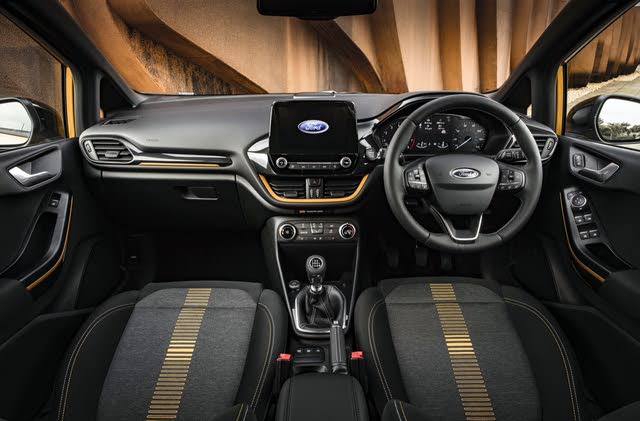
The Fiesta is well-equipped for a car of its era, with most models featuring an 8-inch touchscreen with Apple CarPlay and Android Auto. Higher-spec versions add desirable features like a B&O sound system and digital driver's display. However, the overall cabin design and material quality are starting to feel dated compared to newer rivals.
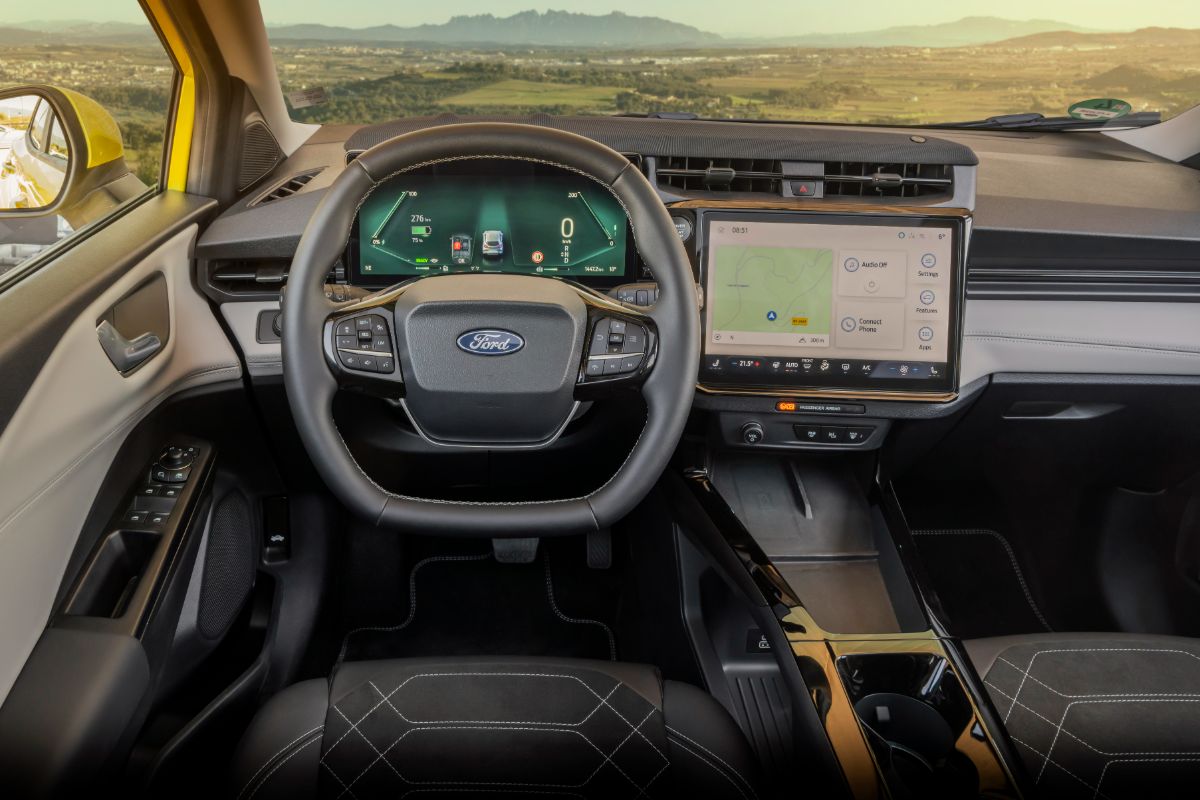
The Puma feels a generation ahead inside. Recent updates have brought in a large 12-inch central touchscreen running Ford's latest SYNC 4 software, alongside a crisp digital instrument cluster. The layout is user-friendly and the perceived quality is a step up from the Fiesta. With more modern software and a fresher design, the Puma takes the lead on technology.
Running Costs
Ford Fiesta running costs score: 4/5
Ford Puma running costs score: 5/5
Thanks to its efficient 1.0-litre EcoBoost petrol engines, the Fiesta has always been an affordable car to run, with most versions capable of returning around 50mpg. As a used buy, it represents good value, though insurance groups can be a little higher than some rivals.
The Puma builds on this with the addition of mild-hybrid technology as standard on its petrol engines, which gives a small boost to fuel economy and performance. This helps it achieve similar, if not slightly better, mpg figures to the Fiesta. The ace up the Puma's sleeve, however, is the all-electric Gen-E model. For company car users or those who can charge at home, the EV offers the potential for much lower running costs.
CarGurus Buyer Insights
|
Ford Fiesta |
Ford Puma |
| CarGurus expert rating |
4 out of 5 |
5 out of 5 |
| CarGurus user rating |
4.5 out of 5 |
5.0 out of 5 |
| Percentage of good/great deals available on CarGurus* |
33.1% |
34.6% |
| Overall CarGurus rating |
4.4 out of 5 |
4.6 out of 5 |
The Verdict
Ford Fiesta Overall CarGurus rating: 4.4/5
Ford Puma Overall CarGurus rating: 4.6/5
The Ford Fiesta is a fantastic used car. It's brilliant to drive, cheap to run, and there are plenty of examples to choose from. If you don't need a huge amount of space and prioritise driving fun above all else, it remains a superb choice.
However, the numbers don't lie, and with a higher Overall CarGurus rating, the Ford Puma takes the win. It manages to retain most of the Fiesta's fun-to-drive character while offering significantly more practicality, a more modern interior, and a wider range of powertrain options, including the fully electric Gen-E. It successfully adapts the Fiesta formula for the modern age, making it a more versatile and family-friendly package. For those reasons, it's our winner.
Ford Fiesta Pros and Cons
| Pros |
Cons |
| Superb fun to drive |
Rear seats are cramped for adults |
| Efficient engines and low running costs |
Interior feels dated compared to newer cars |
| Great value on the used market |
Discontinued, so no new models available |
Ford Puma Pros and Cons
| Pros |
Cons |
| Excellent practicality and huge boot |
Not quite as sharp to drive as the Fiesta |
| Engaging handling for a crossover |
Higher purchase price |
| Modern tech and EV option available |
Some rivals feel more premium inside |
*The Overall CarGurus rating that informs these recommendations is based on CarGurus' proprietary market data from May 2026, CarGurus expert reviews, and CarGurus user reviews.
Read Our Full Reviews: