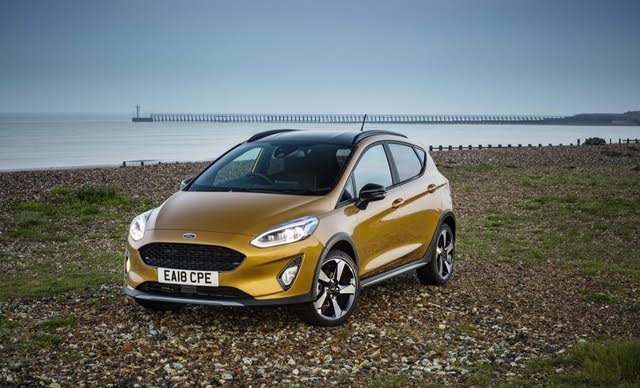
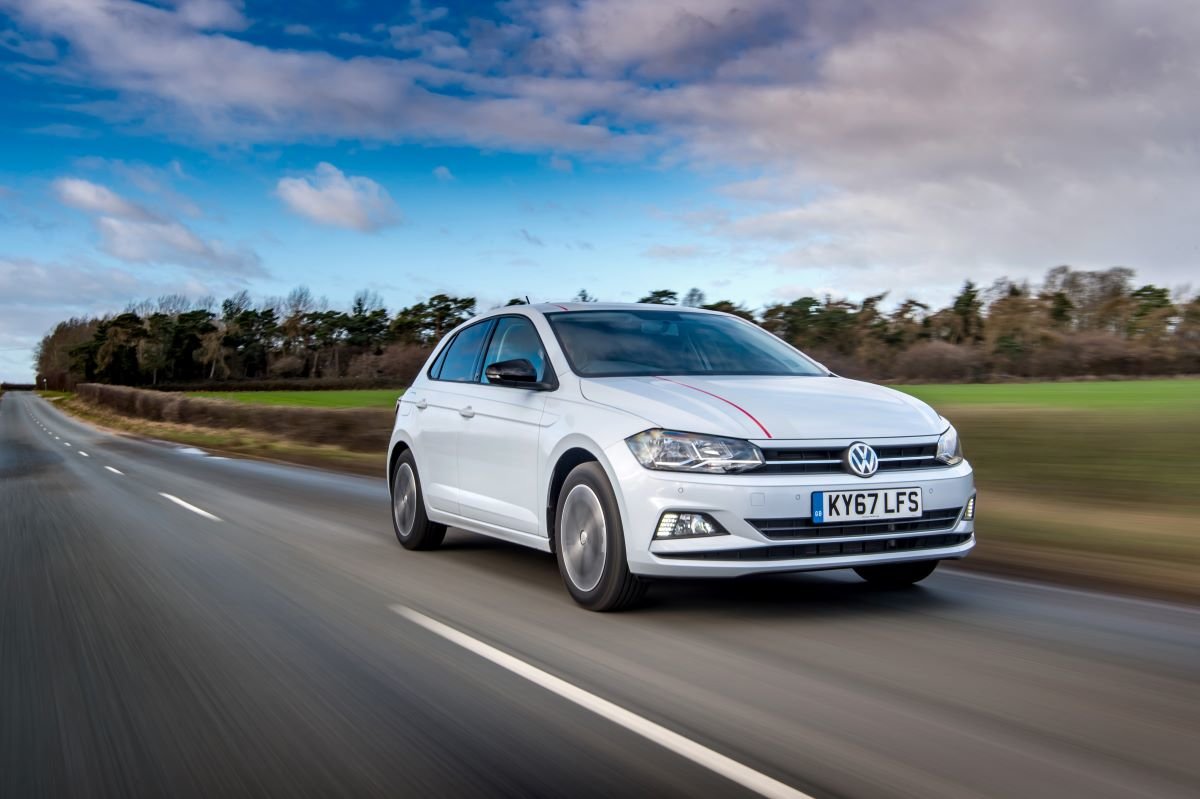
For decades, the Ford Fiesta and Volkswagen Polo have been the go-to choices for anyone after a brilliant small car. They represent two different philosophies: the Fiesta has always been the fun one, the car you choose for an entertaining drive, while the Polo offers a slice of big-car quality and comfort in a compact package.
With Ford having now discontinued the Fiesta, it's a used-only proposition, but its rivalry with the still-new Polo is as fierce as ever on the second-hand market. The Fiesta promises sharp handling and low running costs, while the Polo counters with a more practical, premium-feeling cabin. So, which of these supermini titans is the better buy?
Ford Fiesta vs Volkswagen Polo
Practicality
Ford Fiesta practicality score: 3/5
Volkswagen Polo practicality score: 5/5
If you need your supermini to be as practical as possible, the Volkswagen Polo is the clear winner. It boasts a 351-litre boot, which is not only much larger than the Fiesta's 292 litres but is competitive with some cars from the class above. The Polo also offers more generous rear passenger space, making it a more comfortable choice if you regularly carry adults in the back.
That's not to say the Fiesta is impractical. For a small car, it's perfectly usable, and four adults can fit for shorter journeys. Its boot is still a decent shape and will swallow a weekly shop without issue. However, there's no getting around the fact that the Polo feels like a more spacious and versatile car, making it the better option for small families or those who prioritise carrying capacity.
Driving Impressions
Ford Fiesta driving score: 5/5
Volkswagen Polo driving score: 4/5
This is where the Ford Fiesta has always excelled, and this generation is no exception. If you enjoy driving, the Fiesta is the one to have. Its agile handling, responsive steering, and slick gearshift make it genuinely fun, even on a mundane trip to the shops. The ST-Line models add a sportier suspension setup that enhances the experience without ruining the ride.
The Volkswagen Polo takes a different approach, prioritising comfort and refinement. It's quiet and composed on the motorway and does a better job of soaking up bumps around town, making it a more relaxing car to live with day-to-day. While it handles safely and predictably, it lacks the final layer of engagement and feedback that makes the Fiesta so rewarding. For keen drivers, the Ford is the easy choice, but for those who value a calm and quiet journey, the Polo's more mature character will appeal.
Technology and Equipment
Ford Fiesta technology and equipment score: 3/5
Volkswagen Polo technology and equipment score: 4/5
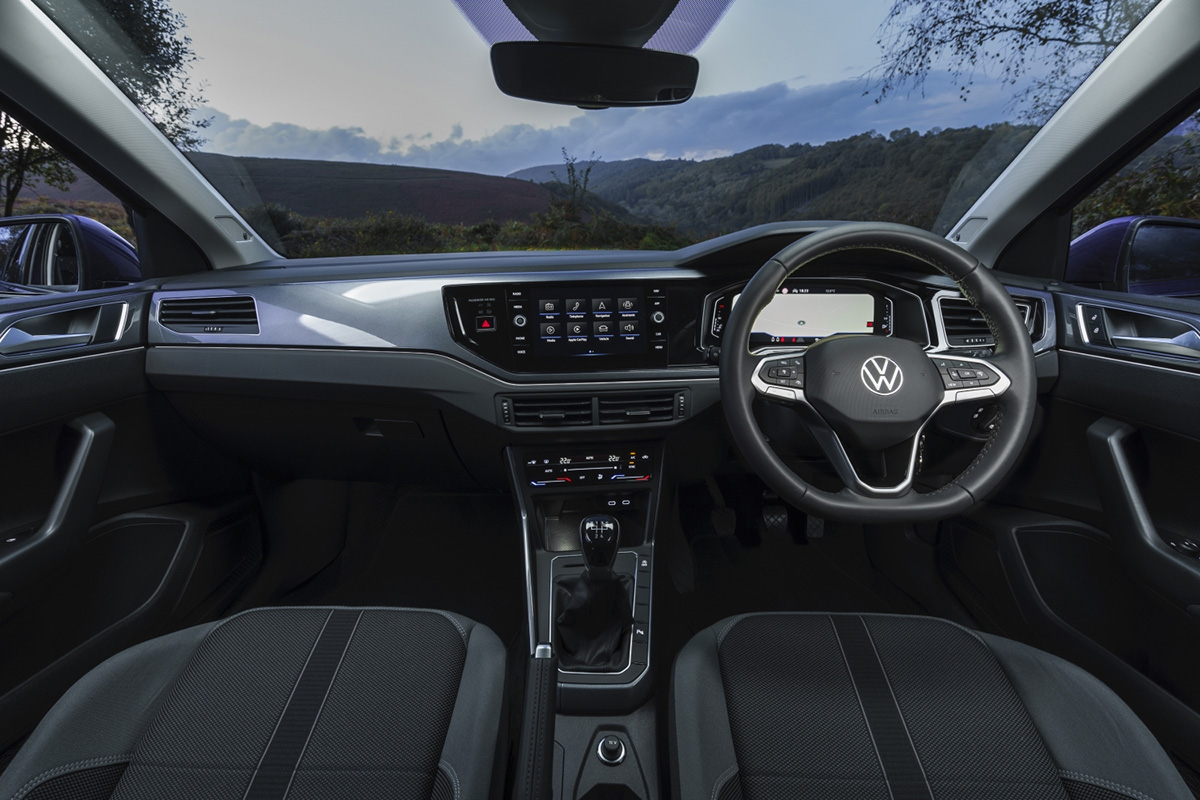
Both cars come with the modern essentials, but the Polo generally feels a step ahead, reflecting its more premium positioning. Even entry-level Polos come with a clear digital instrument display, while post-facelift (2021 onwards) models get LED headlights and a central touchscreen with smartphone mirroring as standard. Higher-spec models add features like dual-zone climate control and adaptive cruise control.
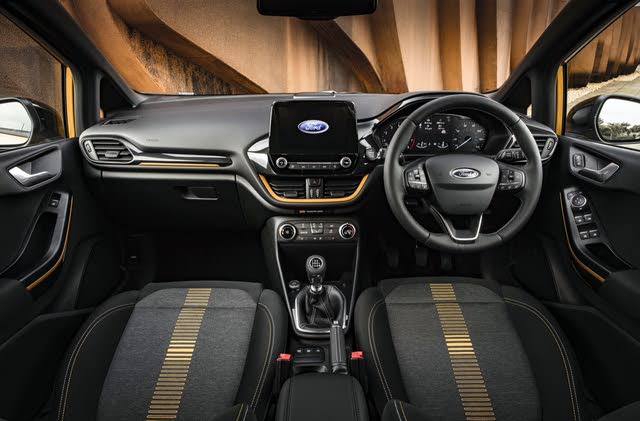
The Fiesta isn't spartan, with all models getting a touchscreen with Apple CarPlay and Android Auto. However, the cabin design and materials don't feel quite as upmarket as the Polo's, and you need to look at higher trim levels for features like a digital driver's display or an upgraded sound system. While both cars are well-equipped for the class, the Polo's tech and cabin quality give it the edge.
Running Costs
Ford Fiesta running costs score: 4/5
Volkswagen Polo running costs score: 4/5
On paper, the Ford Fiesta is the cheaper car to run. Its popular 1.0-litre EcoBoost petrol engines are efficient, with mild-hybrid versions capable of more than 55mpg. Insurance groups are also typically lower than the Polo's, making it an attractive choice for younger drivers.
However, the Volkswagen Polo plays a strong hand with its residual values. It tends to hold its value better than the Fiesta, meaning you could get more of your money back when it's time to sell. This can offset its slightly higher purchase price and insurance costs. Fuel economy from its 1.0-litre TSI petrol engines is also competitive, returning around 50mpg. Ultimately, the Fiesta is cheaper day-to-day, but the Polo's slower depreciation makes the long-term ownership costs for both cars surprisingly close.
CarGurus Buyer Insights
|
Ford Fiesta |
Volkswagen Polo |
| CarGurus expert rating |
4 out of 5 |
4 out of 5 |
| CarGurus user rating |
4.5 out of 5 |
4.5 out of 5 |
| Percentage of good/great deals available on CarGurus* |
33.8% |
35.3% |
| Overall CarGurus rating |
4.4 out of 5 |
4.5 out of 5 |
The Verdict
Ford Fiesta Overall CarGurus rating: 4.4/5
Volkswagen Polo Overall CarGurus rating: 4.5/5
This is an incredibly close contest between two of the best small cars you can buy. The Ford Fiesta remains the benchmark for driving fun, and its strong user rating shows just how much owners love its blend of sharp handling and low running costs. If having an engaging drive is your top priority, the Fiesta is still the one to beat.
However, based on our comprehensive CarGurus ratings, the Volkswagen Polo takes a narrow victory. Its superior practicality, more refined driving experience, and higher-quality interior give it a broader appeal. While it may not be as exciting as the Fiesta, its all-round competence and 'big car' feel in a small package are hard to ignore. The Polo's slightly stronger performance in our overall rating, factoring in expert reviews and market data, is enough to give it the win. It's the more complete supermini, and for that reason, it's our champion in this head-to-head.
Ford Fiesta Pros and Cons
| Pros |
Cons |
| Fun and engaging to drive |
Less practical than the Polo |
| Agile handling |
Interior doesn't feel as premium |
| Lower running costs |
Discontinued, so used only |
Volkswagen Polo Pros and Cons
| Pros |
Cons |
| Spacious and practical cabin |
Not as engaging to drive |
| High-quality, premium-feeling interior |
Higher purchase price |
| Comfortable and refined ride |
Insurance can be more expensive |
*The Overall CarGurus rating that informs these recommendations is based on CarGurus' proprietary market data from June 2026, CarGurus expert reviews, and CarGurus user reviews.
Read Our Full Reviews: