
If you're in the market for a Ford SUV, you're probably looking at two of the UK's most popular models: the compact Puma and the larger Kuga. While they share the same badge, they're designed for slightly different buyers.
The Kuga is the sensible family choice, offering more space and a range of efficient powertrains, including a plug-in hybrid. The Puma, on the other hand, is all about style and driving fun. It's based on the brilliant Fiesta, and it shows in the way it handles. With the all-electric Puma Gen-E now part of the range, it also offers a zero-emission option. So, which Ford crossover is the right fit for you?
Ford Kuga vs Ford Puma
- Practicality
- Driving Impressions
- Technology and Equipment
- Running Costs
- CarGurus Buyer Insights
- Verdict

Practicality
Ford Kuga practicality score: 4/5
Ford Puma practicality score: 4/5
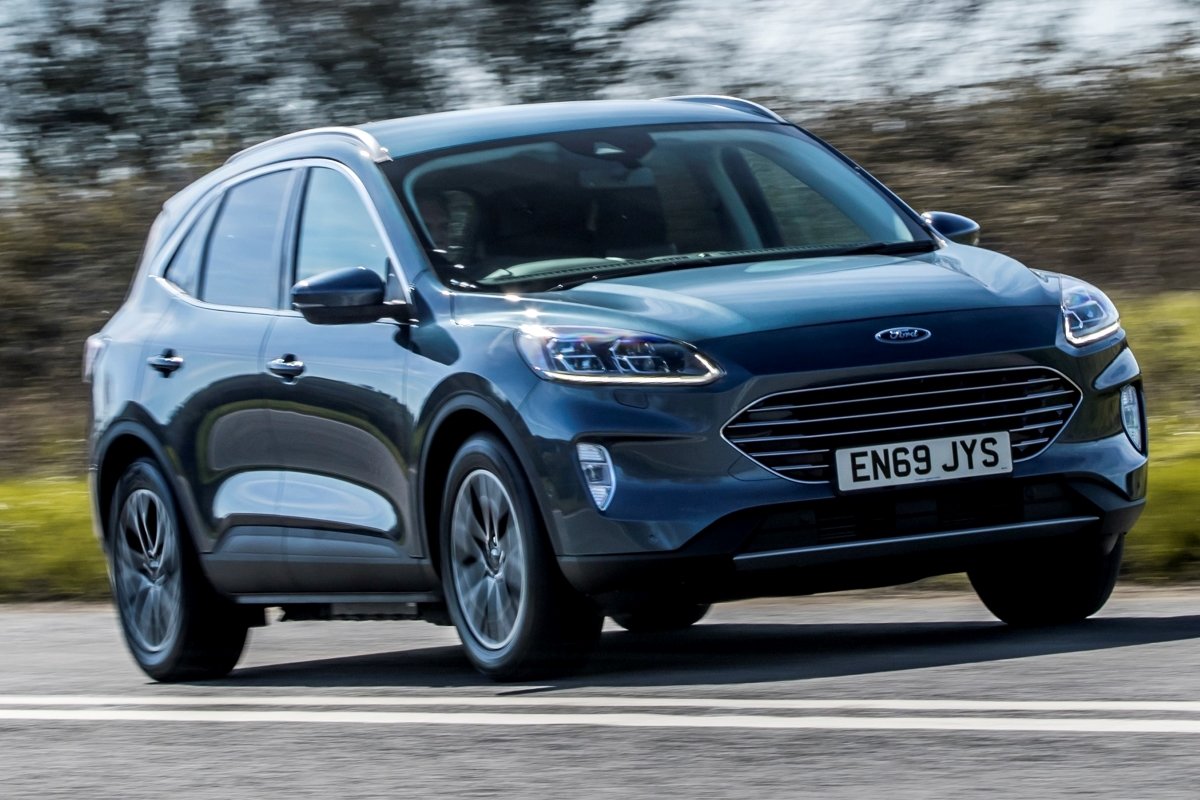
As the larger car, the Kuga naturally has an advantage in passenger space. It offers ample head and legroom for adults in the back, and the rear seats can slide to trade legroom for boot space. With the seats pushed forward, the boot offers 475 litres, which is competitive, if not class-leading.
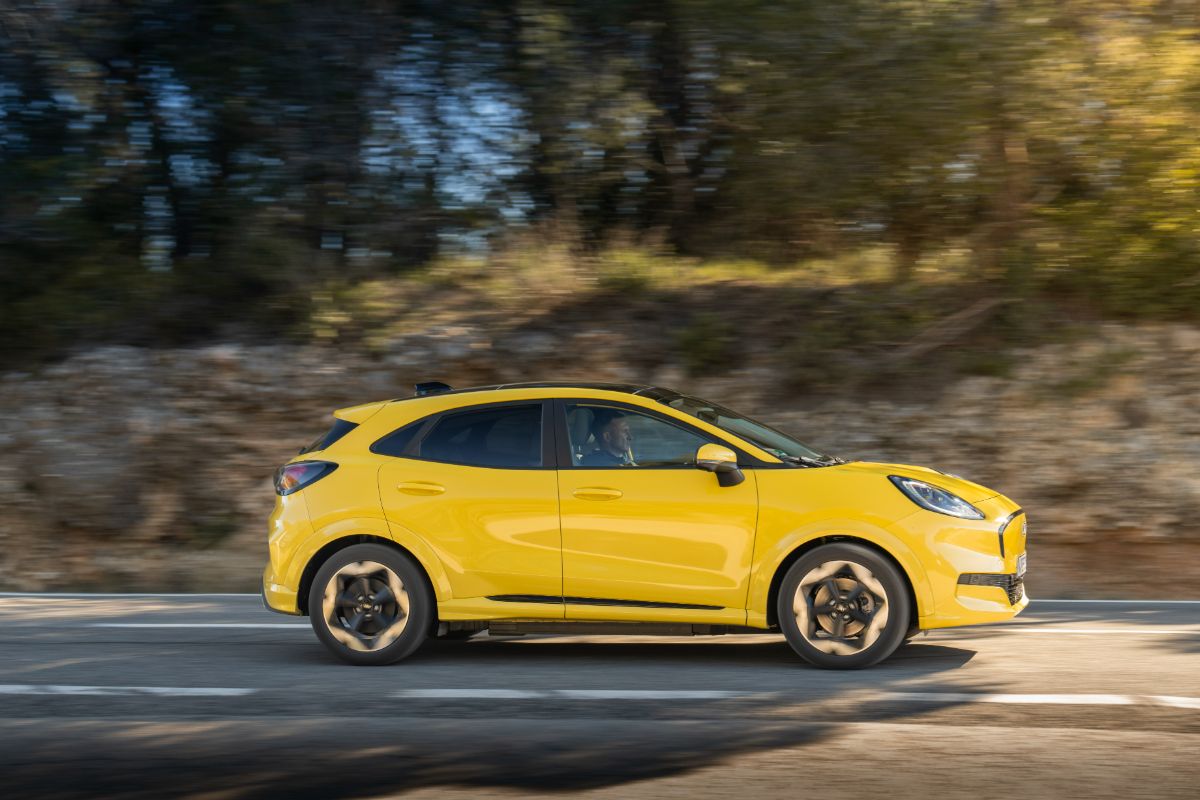
The Puma, however, is surprisingly practical. Despite its smaller size, there's enough room in the back for children or adults on shorter trips. Its real party trick is the boot. At 456 litres, it's huge for a small SUV, and it features the clever 'MegaBox' – a deep, waterproof storage area under the boot floor that's perfect for muddy boots or wet gear. This makes the Puma a more versatile load-carrier than its dimensions suggest.
Driving Impressions
Ford Kuga driving score: 4/5
Ford Puma driving score: 5/5
Ford has a reputation for making cars that are good to drive, and neither of these SUVs disappoints. The Kuga is impressively agile for a family SUV, with direct steering and well-controlled handling that makes it feel composed on a winding road. It offers a comfortable ride that soaks up bumps well, making it a capable long-distance cruiser.
If driving fun is your priority, the Puma is in a league of its own. Based on the same platform as the Fiesta, it drives with the energy and agility of a hot hatch. It’s sharp in the corners and genuinely engaging, yet it remains comfortable enough for daily use. It proves that a practical crossover doesn't have to be dull. The Kuga is a pleasant car to drive, but the Puma is the clear winner for driver enjoyment.
Technology and Equipment
Ford Kuga technology and equipment score: 4/5
Ford Puma technology and equipment score: 4/5
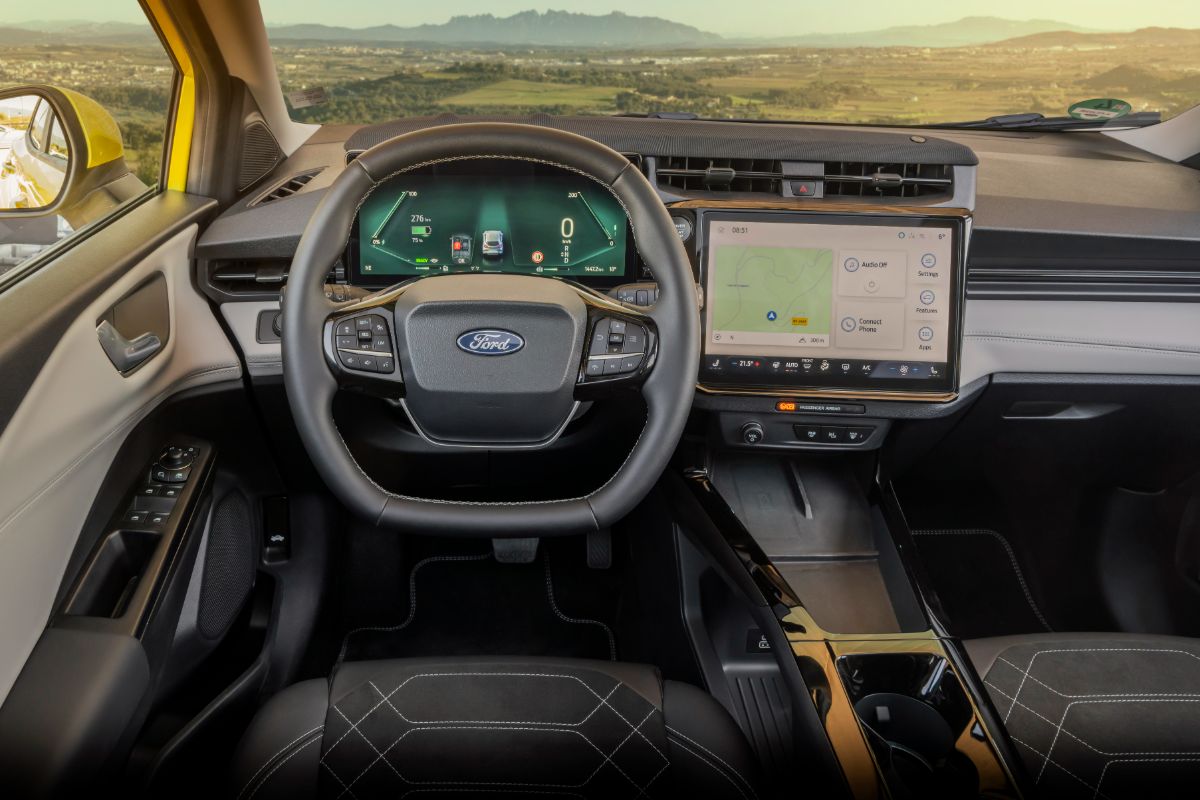
Both the Kuga and Puma come with a good level of standard equipment. Entry-level models get essentials like air conditioning, parking sensors, and Ford's SYNC infotainment system on an 8-inch touchscreen. Moving up the range adds features like digital driver's displays, heated seats, and LED headlights.
The Kuga has a few more high-end options available, such as a powered tailgate, befitting its position above the Puma in the range. However, the Puma fights back, with facelifted models from 2024 getting a large 12-inch central touchscreen with wireless Apple CarPlay and Android Auto. Both cars have earned a five-star Euro NCAP safety rating, so whichever you choose, you're getting a well-equipped and safe vehicle.
Running Costs
Ford Kuga running costs score: 4/5
Ford Puma running costs score: 5/5
When it comes to running costs, your choice of engine makes all the difference. The Kuga’s plug-in hybrid (PHEV) model is the star performer, with an official electric-only range of up to 35 miles. This puts it in a low benefit-in-kind (BIK) tax bracket, making it an attractive option for company car drivers.
The Puma’s 1.0-litre EcoBoost mild-hybrid petrol engine is efficient, returning around 50mpg, but the real headline-grabber is the all-electric Puma Gen-E. It offers the promise of very low running costs, especially if you can charge at home, though its initial purchase price is higher. For those looking to minimise their day-to-day spend, the Puma range, particularly the Gen-E, has a slight edge.
CarGurus Buyer Insights
| Ford Kuga | Ford Puma | |
|---|---|---|
| CarGurus expert rating | 4 out of 5 | 5 out of 5 |
| CarGurus user rating | 4.5 out of 5 | 3.9 out of 5 |
| Percentage of good/great deals available on CarGurus* | 32.8% | 34.3% |
| Overall CarGurus rating | 4.4 out of 5 | 4.5 out of 5 |
The Verdict
Ford Kuga Overall CarGurus rating: 4.4/5
Ford Puma Overall CarGurus rating: 4.5/5
This is a tough choice between two very capable Ford SUVs, but based on our comprehensive CarGurus ratings, the Ford Puma emerges as the winner.
The Puma’s combination of genuinely fun handling, stylish looks, and surprisingly clever practicality gives it a unique appeal in the crowded small SUV market. It’s a car that puts a smile on your face without sacrificing everyday usability. Our expert reviewers rate it highly, and with the addition of the all-electric Gen-E model, its running cost credentials are also strong.
This doesn't mean the Kuga should be overlooked. If you need more rear passenger space or are a company car driver who can take advantage of the plug-in hybrid's low tax rates, it remains an excellent and sensible choice. However, as an overall package, the Ford Puma’s blend of fun and function is hard to resist, making it our pick in this sibling showdown.
Ford Kuga Pros and Cons
| Pros | Cons |
|---|---|
| Spacious rear seats | Less fun to drive than the Puma |
| Efficient plug-in hybrid option | Boot space is only average for the class |
| Comfortable and refined ride | Interior quality could be better |
Ford Puma Pros and Cons
| Pros | Cons |
|---|---|
| Excellent fun to drive | Rear passenger space is tight for adults |
| Clever and practical 'MegaBox' boot | Some rivals have more premium interiors |
| Stylish looks and strong equipment | Higher purchase price for Gen-E electric model |
*The Overall CarGurus rating: that informs these recommendations is based on CarGurus' proprietary market data from January 2026, CarGurus expert reviews, and CarGurus user reviews.