If you're looking for a reliable and efficient hybrid SUV, Honda has two strong contenders in its line-up. But while they share a badge and a focus on hybrid power, the HR-V and the larger CR-V are aimed at quite different buyers.
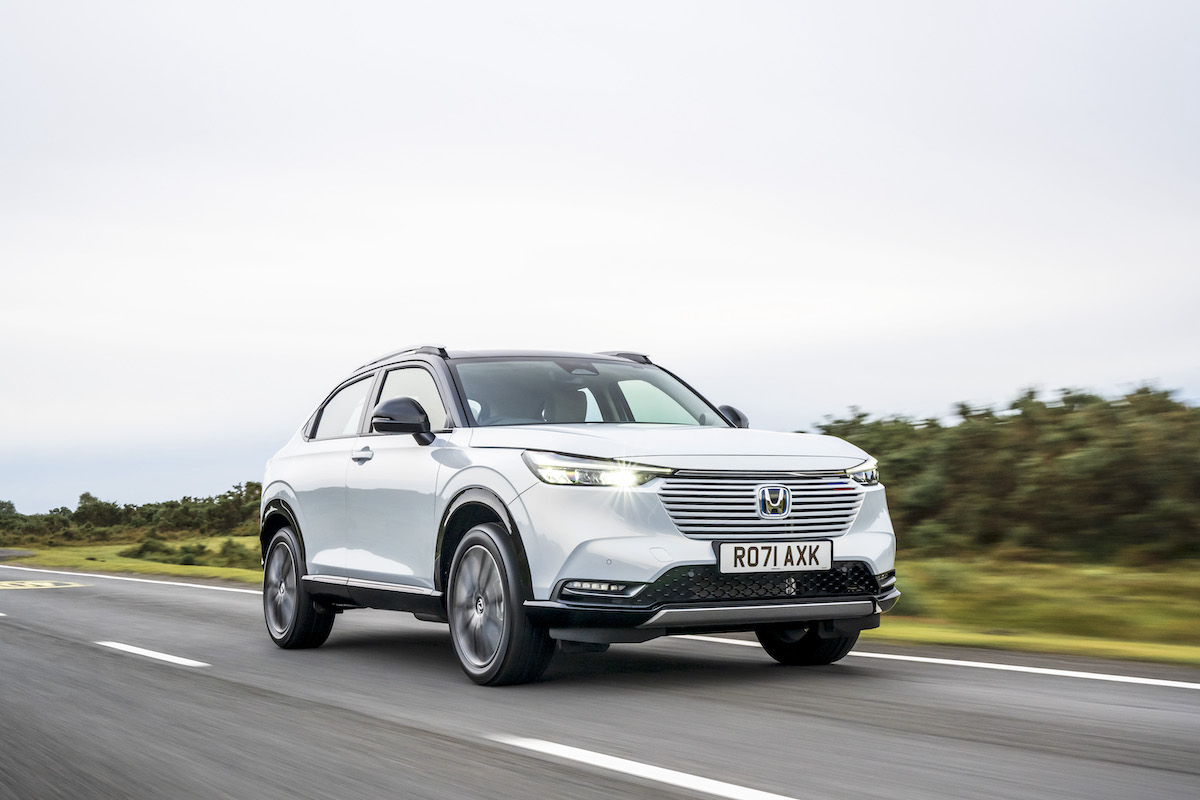
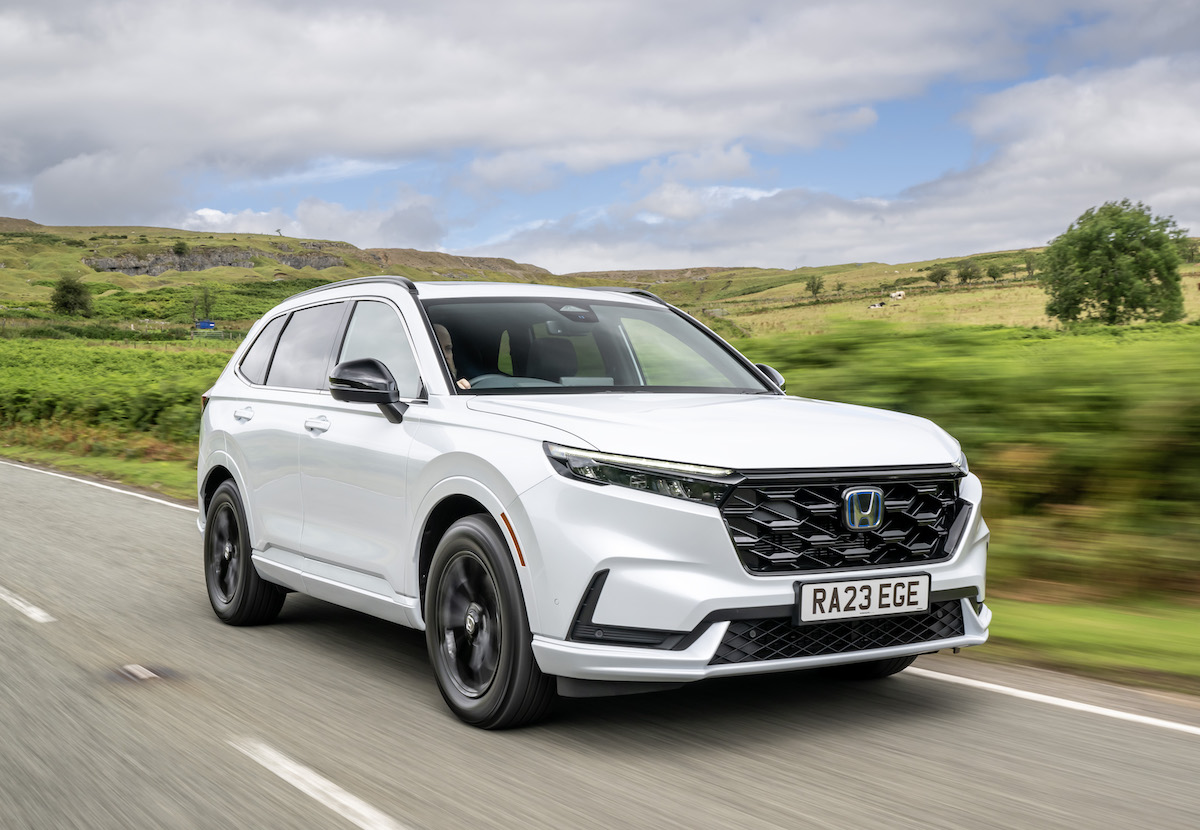
The HR-V is a compact SUV with coupe-like styling and some clever interior tricks, designed for those who want efficiency and practicality in a smaller package. The CR-V, on the other hand, has grown into a much larger, more premium family vehicle, aiming to tempt buyers away from rivals like the Kia Sportage and even the BMW X3. Both are only available as hybrids, but which one is the right fit for you?
Honda HR-V vs Honda CR-V
Practicality
Honda HR-V practicality score: 3/5
Honda CR-V practicality score: 5/5
This is where the size difference between the two cars becomes most obvious. The CR-V is the clear winner, offering a huge amount of space for passengers and luggage. Rear legroom is exceptional, and the back seats can slide and recline, giving you flexibility to balance passenger comfort and boot space. At 587 litres (or an even bigger 617 litres in the plug-in hybrid), the boot is vast and ready for any family holiday.
The HR-V is a mixed bag. It has one brilliant feature: Honda's 'Magic Seats'. These rear seats can fold completely flat, or the bases can flip up like cinema seats, allowing you to carry tall items in the rear footwells. It's a genuinely useful touch. However, while rear legroom is decent, the sloping roofline means headroom is tight for taller adults. The biggest issue is the boot, which at just 319 litres is small for a family SUV. For pure, uncomplicated space, the CR-V is in a different league.
Driving Impressions
Honda HR-V driving score: 3/5
Honda CR-V driving score: 3/5
Both cars use Honda's hybrid technology, but the experience from behind the wheel is quite different. The HR-V's system is efficient, but it feels underpowered. You often have to work the engine hard to keep up with traffic, which results in a lot of noise and drone, particularly on the motorway. The suspension does a good job of soaking up bumps, but it's not a car that enjoys being rushed.
The CR-V uses a more powerful and sophisticated 2.0-litre hybrid setup. It's much smoother and quieter than the HR-V's, and often runs on electric power alone, making for a more relaxing drive. Performance is adequate for a big family car. There's also a plug-in hybrid (PHEV) version that offers up to 50 miles of electric-only range. The trade-off is that the extra weight of the PHEV's batteries means its ride isn't quite as settled as the standard hybrid's. Overall, the CR-V provides a more refined and capable driving experience.
Technology and Equipment
Honda HR-V technology and equipment score: 4/5
Honda CR-V technology and equipment score: 4/5
Honda is generous with standard equipment on both models. The HR-V comes with a 9.0-inch touchscreen, heated front seats, a reversing camera, and adaptive cruise control right from the entry-level model. Higher trims add features like a powered tailgate and a premium sound system. It's a strong offering for the class.
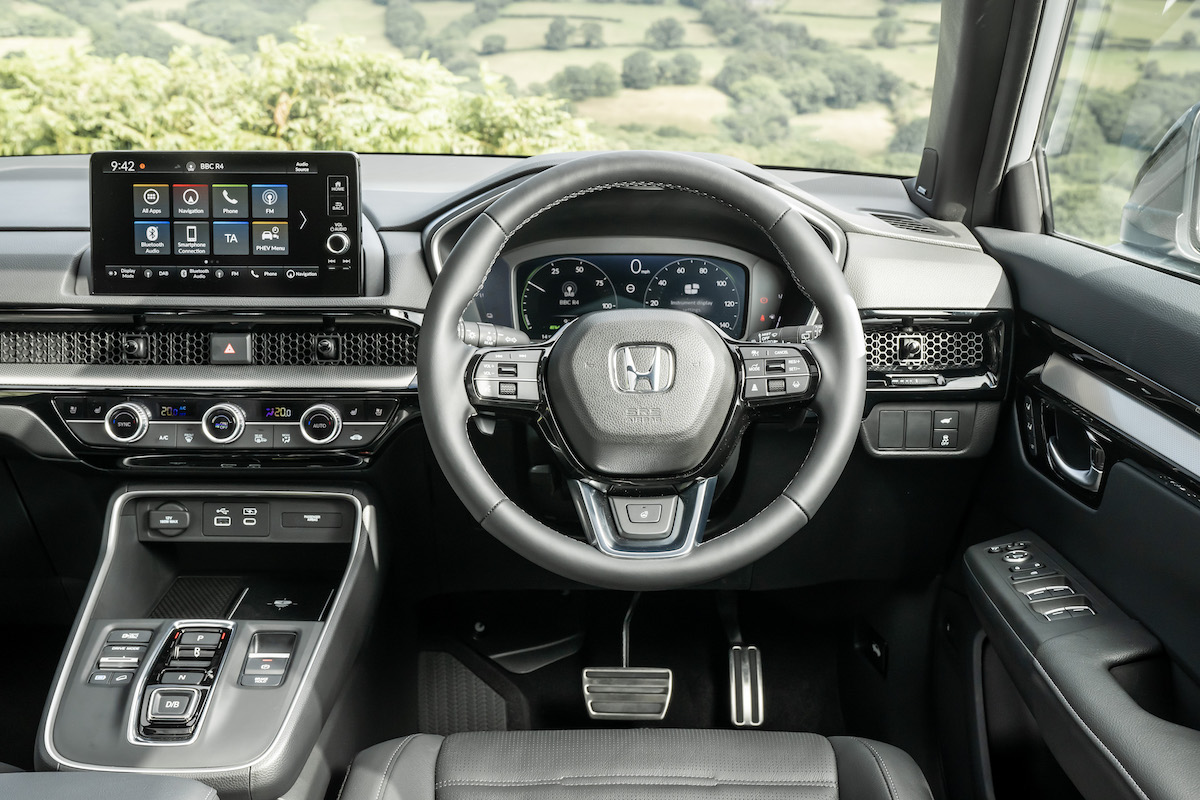
The CR-V builds on this with a more premium feel. Even the base model gets electrically adjustable heated leather seats, a panoramic sunroof, and wireless phone charging. Both cars share the same 9.0-inch infotainment system, which includes wireless Apple CarPlay and wired Android Auto. It's a big improvement on older Honda systems, but it can still be a little slow to respond compared to the best systems from rivals. While both are well-equipped, the CR-V's standard kit list has a more luxurious flavour.
Running Costs
Honda HR-V running costs score: 4/5
Honda CR-V running costs score: 4/5
As a smaller, lighter car, the HR-V is the more frugal of the two for private buyers. Its hybrid system can officially achieve around 52mpg, which is competitive for a small SUV and will help keep fuel bills down.
The CR-V's running costs depend heavily on which version you choose. The standard hybrid returns a respectable 42.2mpg. The real star for some will be the plug-in hybrid (PHEV). With an official electric range of 50 miles and very low CO2 emissions, it sits in a low benefit-in-kind (BIK) tax bracket, making it an attractive option for company car drivers. For those who can charge at home and have a short commute, the PHEV could result in tiny fuel bills. However, the CR-V's higher purchase price needs to be factored in.
CarGurus Buyer Insights
|
Honda HR-V |
Honda CR-V |
| CarGurus expert rating |
3 out of 5 |
3 out of 5 |
| CarGurus user rating |
5.0 out of 5 |
4.3 out of 5 |
| Percentage of good/great deals available on CarGurus* |
32.2% |
30.4% |
| Overall CarGurus rating |
4.2 out of 5 |
4.2 out of 5 |
The Verdict
Honda HR-V Overall CarGurus rating: 4.2/5
Honda CR-V Overall CarGurus rating: 4.2/5
This comparison ends in a rare tie. Both the Honda HR-V and the Honda CR-V achieve an identical Overall CarGurus rating of 4.2 out of 5, making this a genuine case of choosing the right tool for the job rather than declaring an outright winner.
The HR-V is a well-made and efficient small SUV with some genuinely clever features, particularly its versatile Magic Seats. However, it's compromised by a small boot and an engine that feels underpowered. It suits couples or small families who value efficiency and don't need vast amounts of space.
The CR-V is a significantly more practical, refined, and capable family car. The huge interior, premium feel, and the option of a tax-friendly plug-in hybrid make it a strong package that justifies its higher price tag. For most family SUV buyers who need space and comfort, the CR-V's superior all-round ability makes it the more sensible choice, even if the numbers say these two Hondas are evenly matched.
Honda HR-V Pros and Cons
| Pros |
Cons |
| Clever 'Magic Seats' add versatility |
Engine feels underpowered and noisy |
| Efficient hybrid system |
Small boot for a family SUV |
| Good level of standard equipment |
Rear headroom is limited |
Honda CR-V Pros and Cons
| Pros |
Cons |
| Huge amount of passenger and boot space |
More expensive to buy than rivals |
| Refined and smooth hybrid powertrain |
PHEV version's ride can be firm |
| Premium feel and high standard specification |
Infotainment not the best in class |
*The Overall CarGurus rating: that informs these recommendations is based on CarGurus' proprietary market data from May 2026, CarGurus expert reviews, and CarGurus user reviews.
Read Our Full Reviews: