
If you’re in the market for a premium electric car, you’re no longer limited to the usual German brands. The Hyundai Ioniq 5 and BMW i4 are perfect examples of the new choices available. They might not seem like direct rivals – the Hyundai is a spacious, futuristic crossover, while the BMW is a sleek electric saloon – but with similar price points and performance, they are definitely cross-shopped.
The Ioniq 5 brings head-turning retro-futuristic looks and an interior that feels more like a lounge than a car. The i4, meanwhile, takes a more traditional approach, wrapping BMW’s renowned driving dynamics and premium quality in a familiar four-door coupe shape. Both offer impressive electric range and technology, so which one is the better buy?
Hyundai Ioniq 5 vs BMW i4
- Practicality
- Driving Impressions
- Technology and Equipment
- Running Costs
- CarGurus Buyer Insights
- Verdict
Practicality
Hyundai Ioniq 5 practicality score: 5/5
BMW i4 practicality score: 3/5
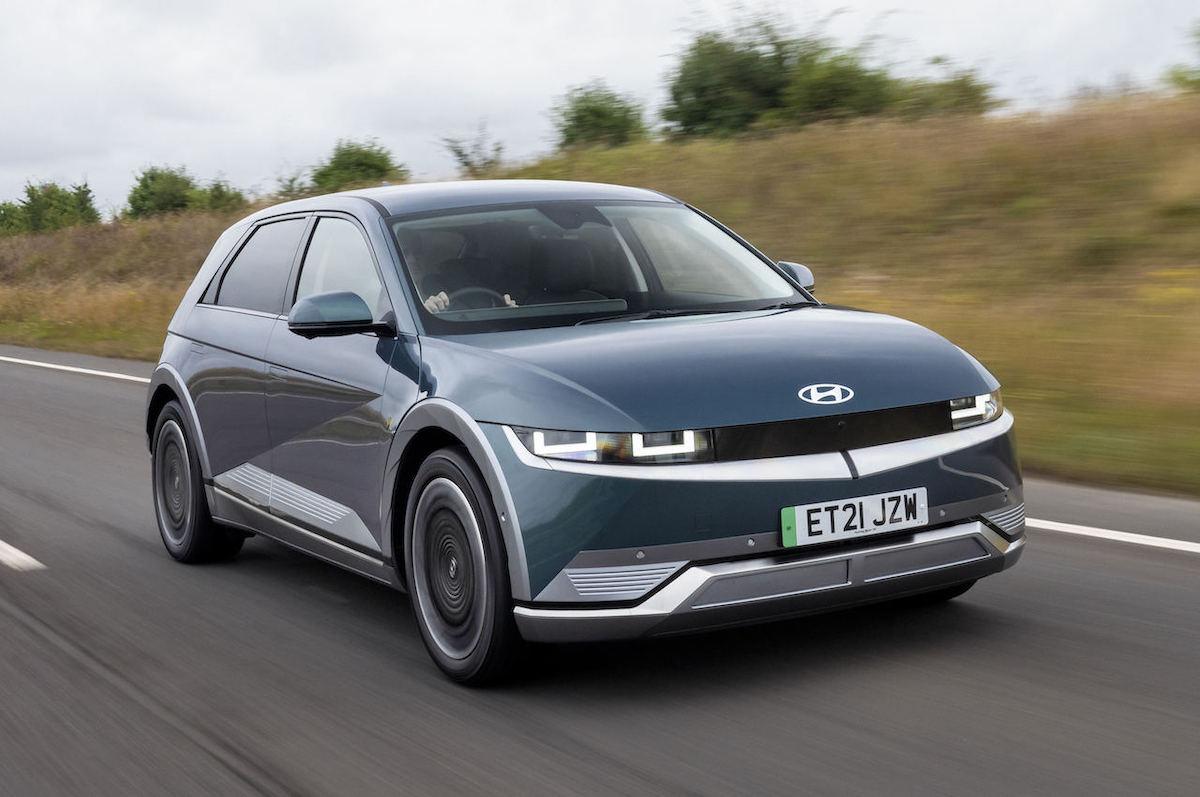
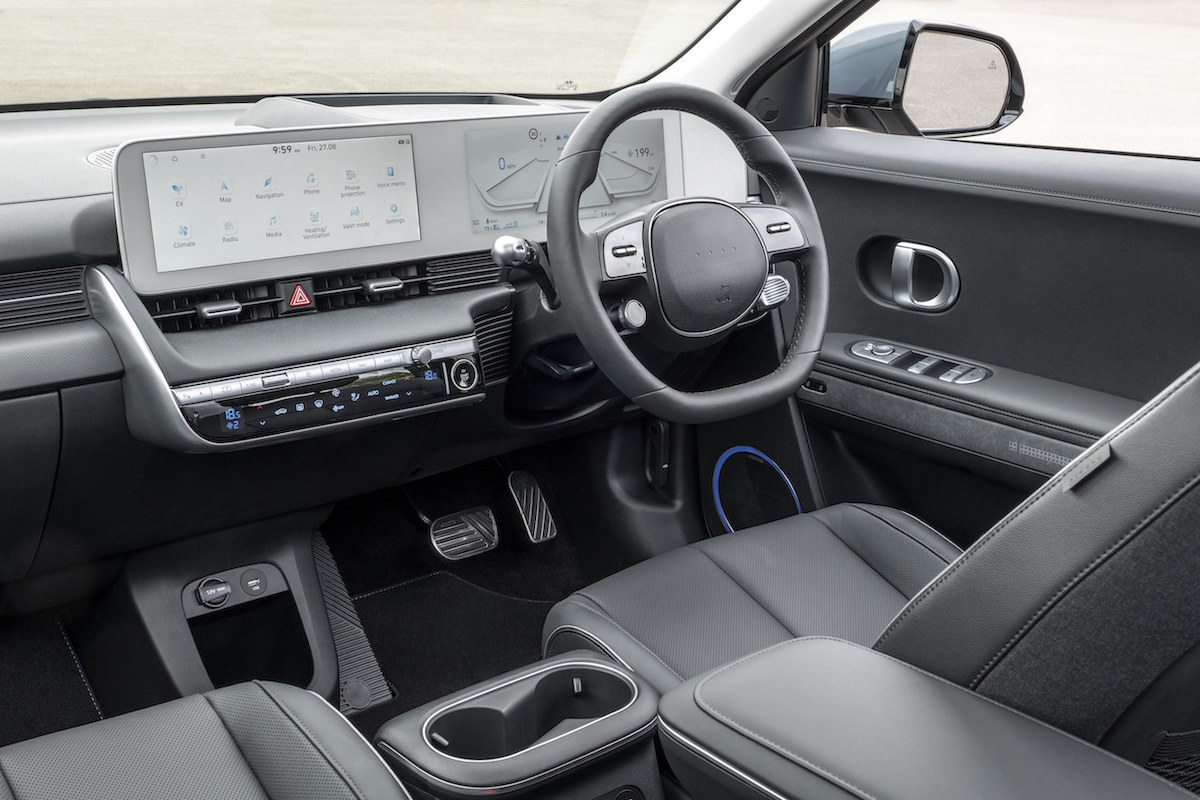
This is where the Ioniq 5’s crossover design pays dividends. Thanks to a long wheelbase and a completely flat floor, the interior is exceptionally spacious. The minimalist dashboard enhances the airy feel, and rear passengers are treated to limousine-like legroom. The rear seats can also slide and recline, adding to the versatility. With a 527-litre boot, it’s a properly practical family car.
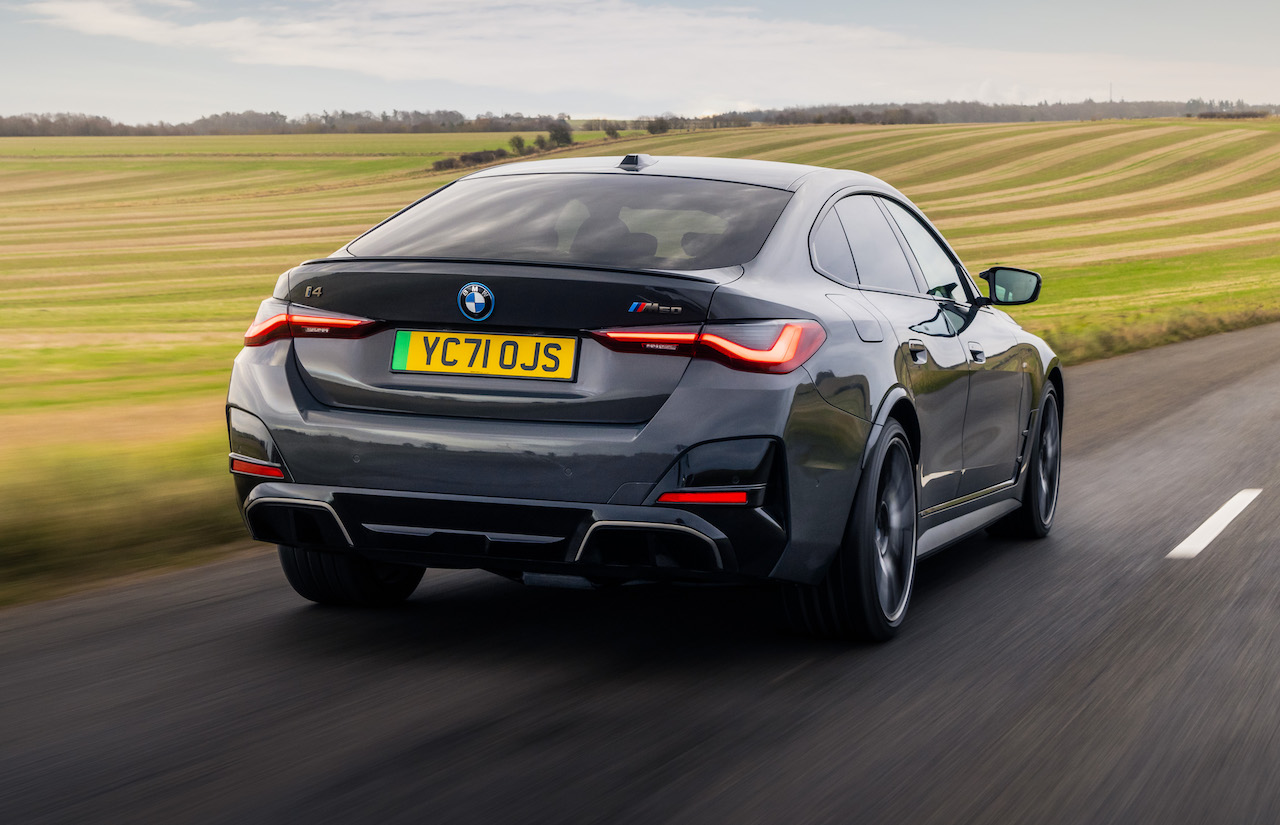
The BMW i4 is more conventional. As a sleek saloon, its priority is style over outright space. The 470-litre boot is a decent size for its class and has a useful hatchback-style opening, but it can’t match the Hyundai’s capacity. The i4’s sloping roofline and more traditional layout also mean rear-seat space is tighter, particularly for taller passengers. If carrying people and luggage in maximum comfort is your goal, the Ioniq 5 is the clear winner.
Driving Impressions
Hyundai Ioniq 5 driving score: 4/5
BMW i4 driving score: 5/5
If you want an EV that’s fun to drive, the BMW i4 is one of the best. It feels like a traditional BMW, with precise steering, agile handling, and a rear-wheel-drive balance that makes it engaging on any road. Performance is strong even in the entry-level eDrive40 model, while the M50 version is seriously quick. It proves that electric cars can be proper driver’s cars.
The Ioniq 5’s character is different. It prioritises a comfortable and relaxed driving experience. The ride is soft, and the cabin is quiet, making it a serene car for long journeys or cruising around town. It’s composed and easy to drive, but it doesn’t have the sporty edge of the BMW. That is, unless you consider the range-topping Ioniq 5 N, a genuine high-performance model that gives the i4 M50 a serious run for its money. For the rest of the range, however, the BMW is the more entertaining choice.
Technology and Equipment
Hyundai Ioniq 5 technology and equipment score: 5/5
BMW i4 technology and equipment score: 4/5
Hyundai has built a reputation for generous standard equipment, and the Ioniq 5 is a prime example. All models get a slick dual-screen setup with two 12.3-inch displays for instruments and infotainment. Apple CarPlay, Android Auto, a rear-view camera, and a host of advanced safety features are all included as standard. It feels modern and is packed with useful tech right out of the box.
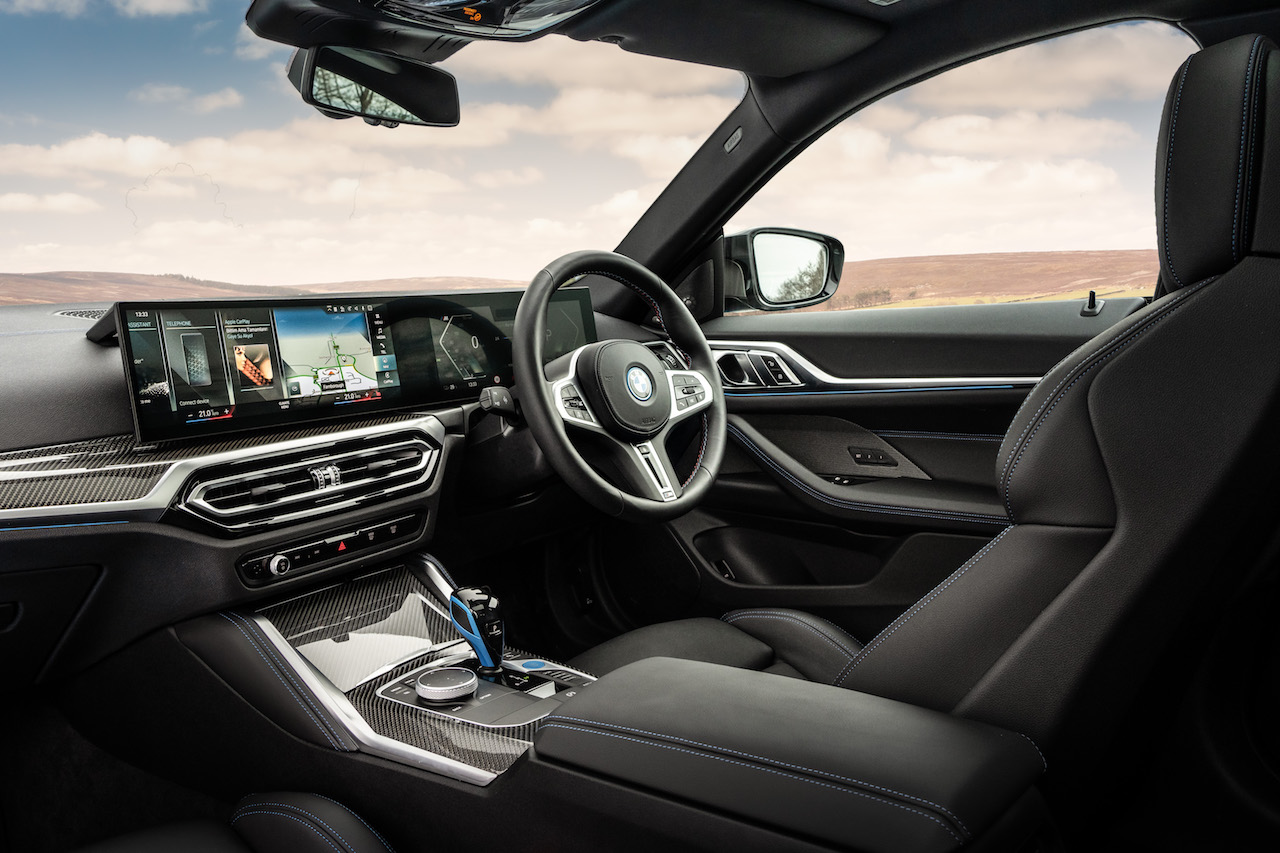
The BMW i4 also features an impressive curved display that combines the driver’s instruments and the main infotainment screen. The iDrive system is one of the best in the business, with sharp graphics and an intuitive rotary controller that makes it easy to use on the move. However, BMW makes you pay extra for certain features, such as keyless entry and some advanced driver aids, that come as standard on the Hyundai. Both cars are tech-heavy, but the Ioniq 5 offers better value.
Running Costs
Hyundai Ioniq 5 running costs score: 5/5
BMW i4 running costs score: 4/5
As electric cars, both the Ioniq 5 and i4 offer the potential for low running costs, especially if you can charge at home on a cheap overnight tariff. The main difference between them is the initial purchase price. The BMW i4 carries a premium badge and a premium price tag to match, starting at over £50,000. The Ioniq 5 is considerably more affordable.
Both cars are efficient and capable of long driving ranges. The Ioniq 5 also benefits from ultra-fast 800-volt charging architecture, meaning you can add 62 miles of range in just five minutes at a compatible charger. For long-term peace of mind, Hyundai offers a five-year, unlimited-mileage warranty, which is better than BMW’s three-year warranty. The lower purchase price and longer warranty give the Hyundai the edge on overall costs.
CarGurus Buyer Insights
| Hyundai Ioniq 5 | BMW i4 | |
|---|---|---|
| CarGurus expert rating | 5 out of 5 | 5 out of 5 |
| CarGurus user rating | 5.0 out of 5 | 3.0 out of 5 |
| Percentage of good/great deals available on CarGurus* | 31.7% | 35.2% |
| Overall CarGurus rating | 4.5 out of 5 | 4.2 out of 5 |
The Verdict
Hyundai Ioniq 5 Overall CarGurus rating: 4.5/5
BMW i4 Overall CarGurus rating: 4.2/5
While both are excellent electric cars, they appeal to different priorities. The BMW i4 is arguably the best driver’s car in its class, offering the sporty handling and premium feel its badge is famous for. However, that comes at a cost, both in its higher purchase price and its reduced practicality compared to the Hyundai.
Based on our comprehensive CarGurus ratings, the Hyundai Ioniq 5 takes the win. It scores higher with users and achieves a better overall rating. It’s an outstanding all-round package, combining futuristic style with unbeatable practicality, generous standard equipment, and a lower price point. It represents better value for money and is a more versatile choice for most buyers.
If your top priority is the ultimate electric driving experience and you’re willing to pay for it, the BMW i4 won’t disappoint. But for a brilliant blend of space, style, technology, and value, the Hyundai Ioniq 5 is the winner of this test.
Hyundai Ioniq 5 Pros and Cons
| Pros | Cons |
|---|---|
| Hugely spacious and practical interior | Ride can feel soft over bumps |
| Generous standard equipment | Not as sharp to drive as the BMW |
| Striking design and fast charging | Infotainment not as slick as iDrive |
BMW i4 Pros and Cons
| Pros | Cons |
|---|---|
| Excellent to drive | More expensive to buy |
| High-quality premium interior | Rear seat space is limited |
| Superb infotainment system | Stingy standard equipment list |
*The Overall CarGurus rating: that informs these recommendations is based on CarGurus' proprietary market data from January 2026, CarGurus expert reviews, and CarGurus user reviews.