If you're looking to switch to an electric family car, the Hyundai Ioniq 5 and Skoda Enyaq are two of the strongest options on the market. Both offer a desirable blend of practicality, long driving ranges, and modern technology, but they go about their business in different ways.
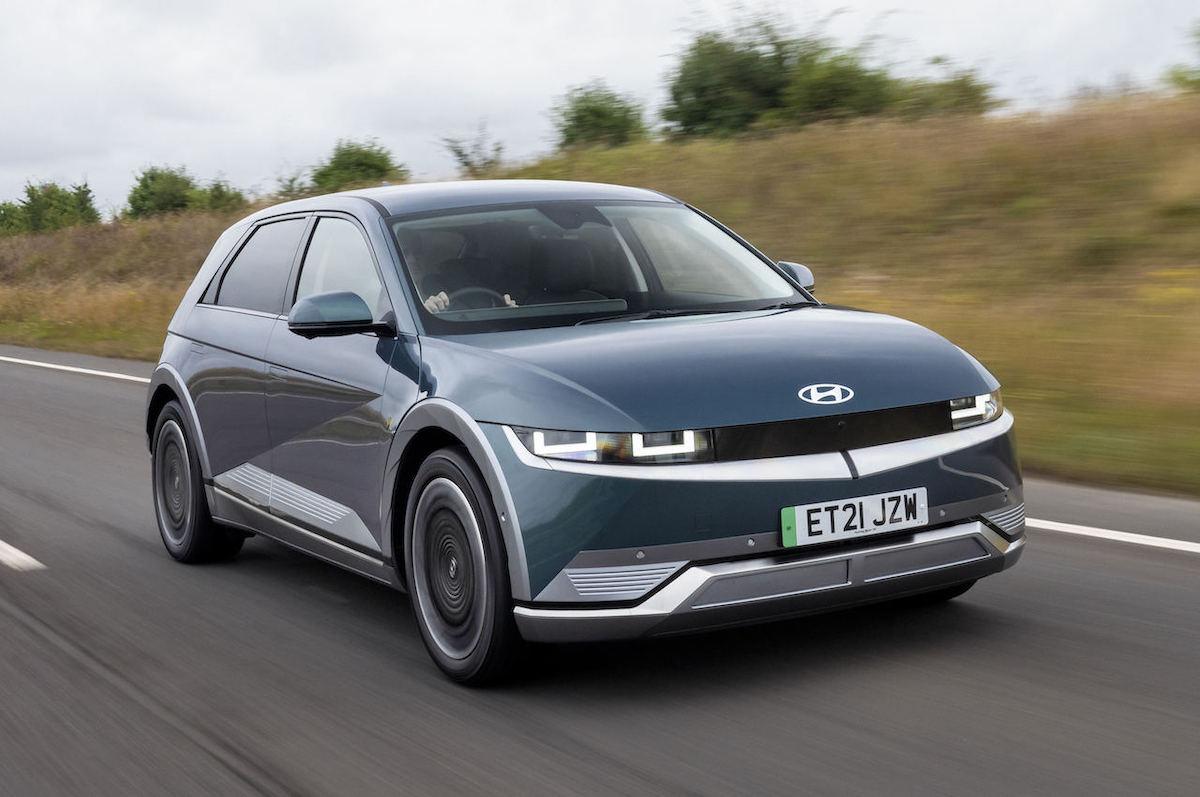
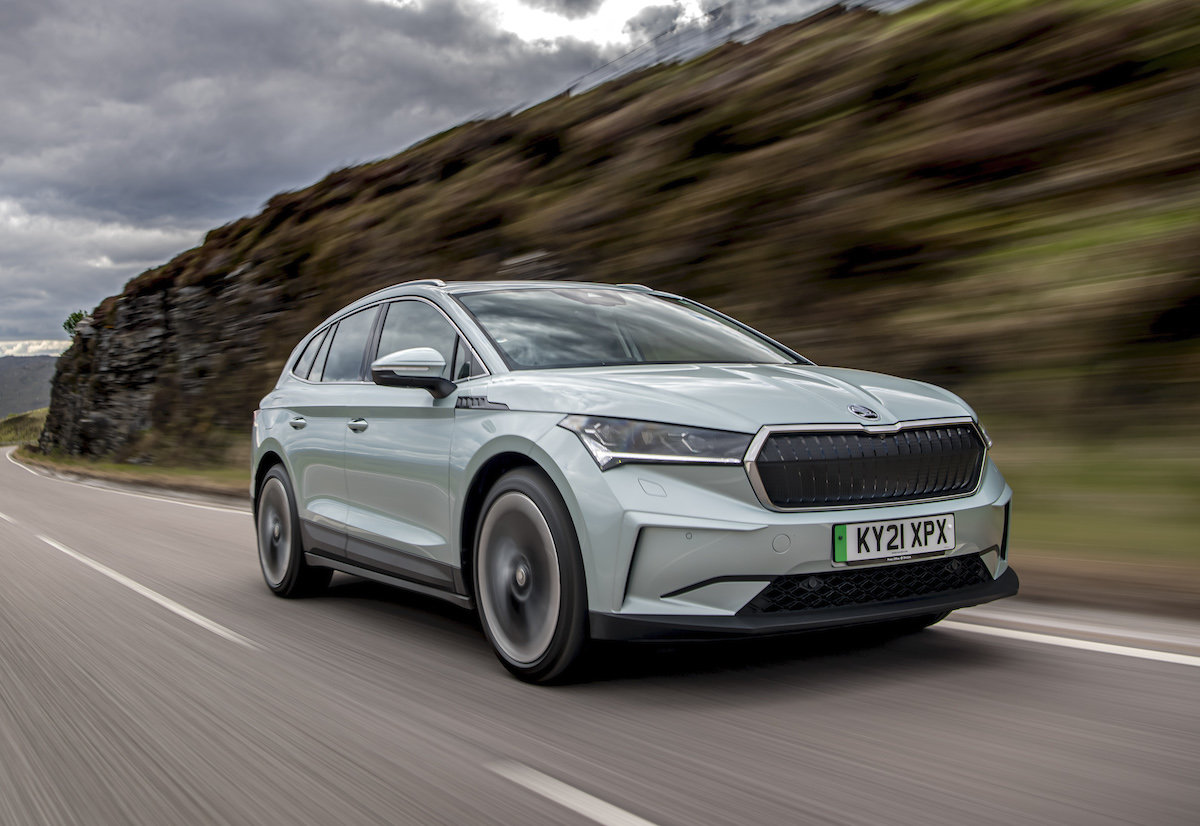
The Ioniq 5 turns heads with its bold, retro-futuristic styling, but beneath the sharp lines is a spacious, family-friendly interior and impressive tech. The Skoda Enyaq takes a more conventional approach, looking more like a traditional SUV, but it majors on practicality and offers a high-quality, comfortable cabin. With similar battery options and pricing, which of these electric SUVs is the right fit for you?
Hyundai Ioniq 5 vs Skoda Enyaq
Practicality
Hyundai Ioniq 5 practicality score: 5/5
Skoda Enyaq practicality score: 5/5
Both of these electric SUVs excel at practicality, but they prioritise different areas. The Skoda Enyaq's more traditional SUV shape gives it a large 585-litre boot, which is bigger than the Ioniq 5's 527-litre space. If carrying bulky items is a regular occurrence, the Skoda has a clear advantage.
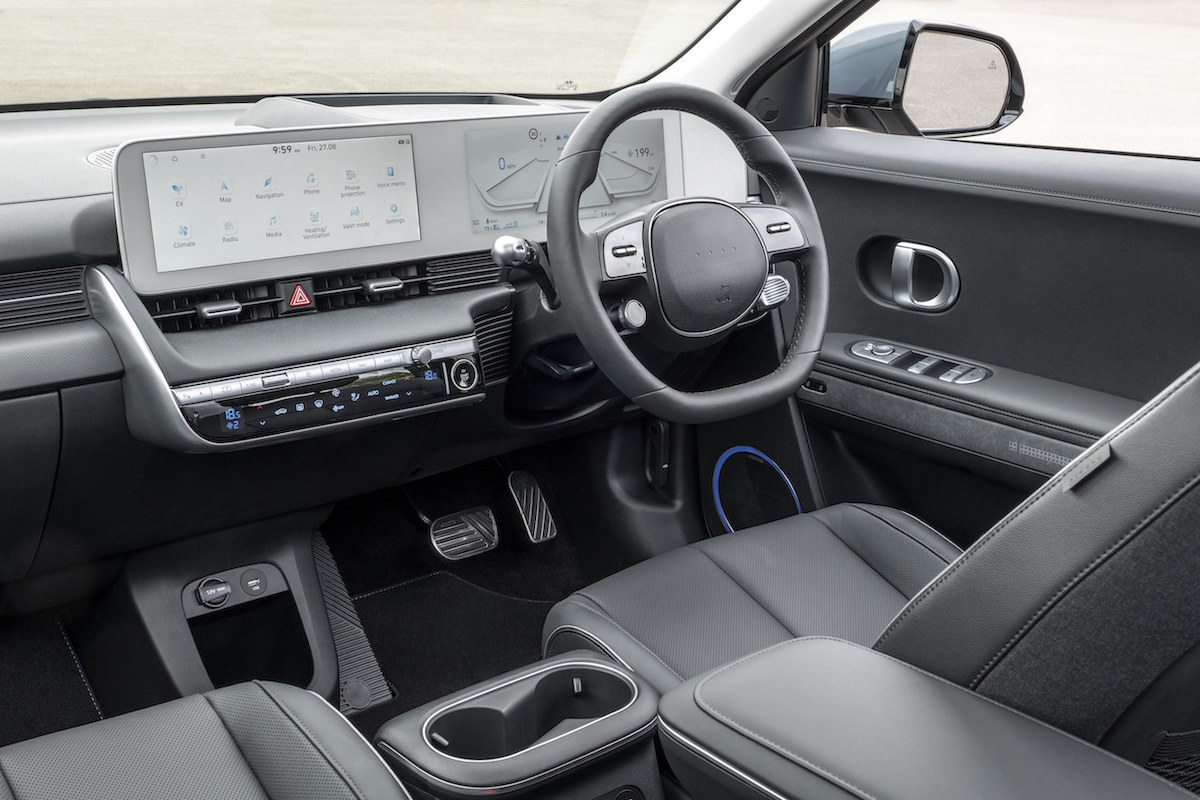
However, the Hyundai Ioniq 5 fights back with its clever interior. Thanks to a long wheelbase and a completely flat floor, passenger space is generous, particularly for those in the back. The minimalist design and features like a sliding centre console create a wonderfully airy and versatile cabin. The Enyaq is also spacious, with solid build quality, but the Ioniq 5's cabin feels more open and futuristic. It's a dead heat, with the Enyaq winning on boot space and the Ioniq 5 winning on passenger space and flexibility.
Driving Impressions
Hyundai Ioniq 5 driving score: 4/5
Skoda Enyaq driving score: 4/5
Neither of these cars is designed to be a sports car, focusing instead on comfort and refinement. The Ioniq 5 is quiet and smooth, with a ride that handles most bumps well. The steering is light, which is good for town driving, but it doesn't offer much feedback. Performance is brisk and effortless, as you'd expect from a capable EV.
The Skoda Enyaq is also comfortable, feeling composed and quiet on the motorway. It manages to soak up road imperfections well, even on large alloy wheels. Its steering feels a little more precise than the Hyundai's, but there is some body lean if you push it through corners. For those who want genuine excitement, Hyundai does offer the high-performance Ioniq 5 N, a blisteringly fast model that's in a different league. For the standard models, however, both cars offer a polished and relaxing driving experience.
Technology and Equipment
Hyundai Ioniq 5 technology and equipment score: 5/5
Skoda Enyaq technology and equipment score: 4/5
This is where the Hyundai Ioniq 5 pulls ahead. All models come with a slick dual-screen setup, featuring two 12.3-inch displays that are crisp, clear, and easy to use. The system is responsive and comes with Apple CarPlay and Android Auto. It's one of the better infotainment packages in the class.
The Skoda Enyaq features a larger 13-inch central touchscreen, but the software can be less intuitive to navigate. A bigger issue for some will be the lack of physical buttons for the climate control, which are integrated into the screen. While both cars are generously equipped with safety kit and convenience features from the base models up, the Ioniq 5's superior user interface gives it the win for technology.
Running Costs
Hyundai Ioniq 5 running costs score: 5/5
Skoda Enyaq running costs score: 4/5
As pure electric cars, both the Ioniq 5 and Enyaq offer low running costs, especially for company car drivers or those who can charge at home on a cheap overnight tariff. A full charge will cost significantly less than a tank of petrol or diesel, and servicing costs are also lower.
The key difference lies in charging speed. The Hyundai Ioniq 5 is built on an advanced 800-volt electrical system, which allows for ultra-fast charging. At a powerful enough public charger, it can replenish its battery from 10% to 80% in as little as 18 minutes. The Enyaq's charging is still quick, but it can't match the Ioniq 5's pace. For drivers who frequently undertake long journeys, this superior charging technology is a notable advantage and gives the Hyundai the edge in this category.
CarGurus Buyer Insights
|
Hyundai Ioniq 5 |
Skoda Enyaq |
| CarGurus expert rating |
5 out of 5 |
5 out of 5 |
| CarGurus user rating |
5.0 out of 5 |
5.0 out of 5 |
| Percentage of good/great deals available on CarGurus* |
30.6% |
35.3% |
| Overall CarGurus rating |
4.5 out of 5 |
4.4 out of 5 |
The Verdict
Hyundai Ioniq 5 Overall CarGurus rating: 4.5/5
Skoda Enyaq Overall CarGurus rating: 4.4/5
Both the Hyundai Ioniq 5 and Skoda Enyaq are excellent electric family cars that earn a top five-star rating from our experts. They are practical, comfortable, and affordable to run. However, there can only be one winner in this comparison.
Based on our comprehensive CarGurus Buyer Insights, the Hyundai Ioniq 5 takes the victory. It has a higher Overall CarGurus rating and matches the Enyaq's perfect user score. Its combination of standout design, a spacious and flexible cabin, superior infotainment, and game-changing fast-charging technology makes it a strong package.
The Skoda Enyaq remains a good choice, particularly if you value maximum boot space and a more understated, conventional feel. It's a capable all-rounder that won't disappoint. But the Ioniq 5's forward-thinking approach and technological advantages give it the edge, making it our winner in this head-to-head.
Hyundai Ioniq 5 Pros and Cons
| Pros |
Cons |
| Striking retro-futuristic design |
Smaller boot than the Enyaq |
| Advanced and intuitive tech |
Some cheaper-feeling interior plastics |
| Ultra-fast charging capability |
Steering could be more engaging |
Skoda Enyaq Pros and Cons
| Pros |
Cons |
| Massive boot space |
Slower charging speeds than Ioniq 5 |
| High-quality and practical interior |
Infotainment isn't as user-friendly |
| Comfortable and refined ride |
Less distinctive styling |
*The Overall CarGurus rating that informs these recommendations is based on CarGurus' proprietary market data from May 2026, CarGurus expert reviews, and CarGurus user reviews.
Read Our Full Reviews: