If you're looking to switch your family car to an all-electric model, the Hyundai Ioniq 5 and Volkswagen ID.4 are two of the strongest contenders on the market. Both offer the space, range, and technology to make EV ownership straightforward, but they go about it in different ways.
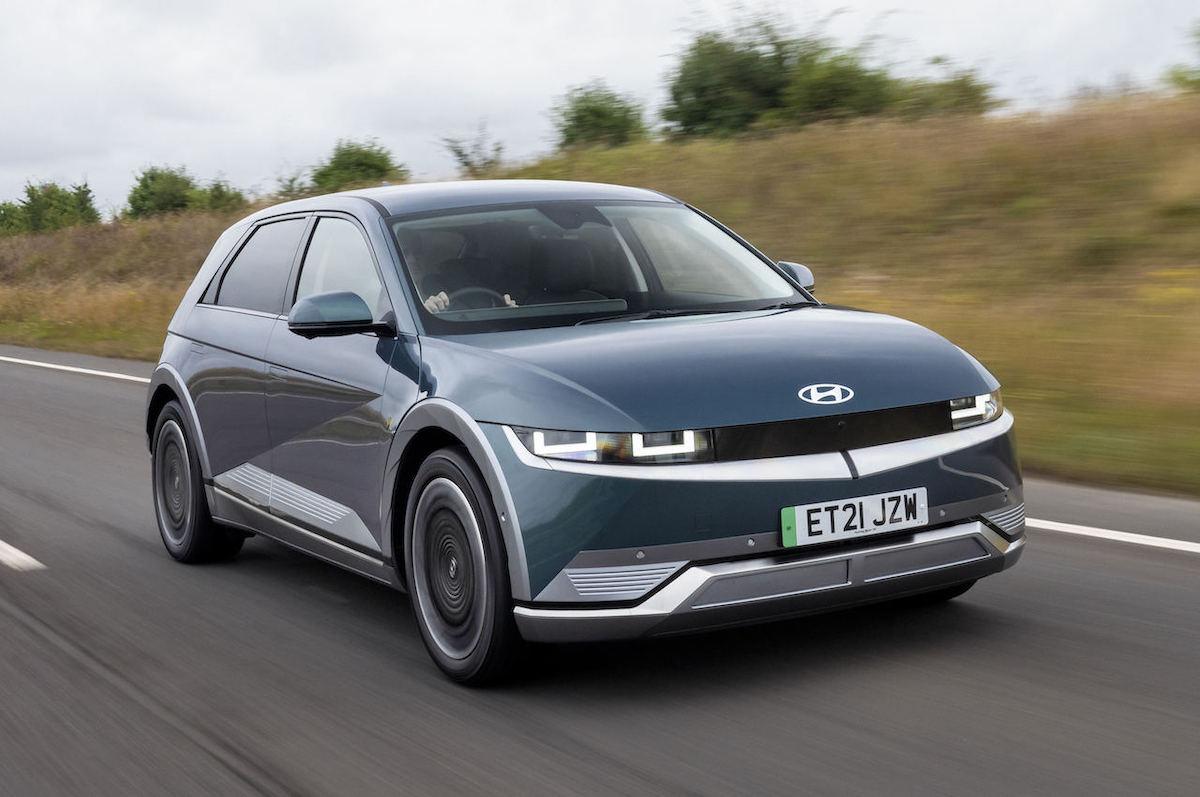
The Hyundai Ioniq 5 stands out with its bold, retro-futuristic design and an interior that feels more like a spacious lounge than a car. The Volkswagen ID.4, on the other hand, takes a more conventional approach, offering the familiar feel of a practical family SUV, just with battery power. So, which of these popular EVs is the right choice for you?
Hyundai Ioniq 5 vs Volkswagen ID.4
Practicality
Hyundai Ioniq 5 practicality score: 5/5
Volkswagen ID.4 practicality score: 4/5
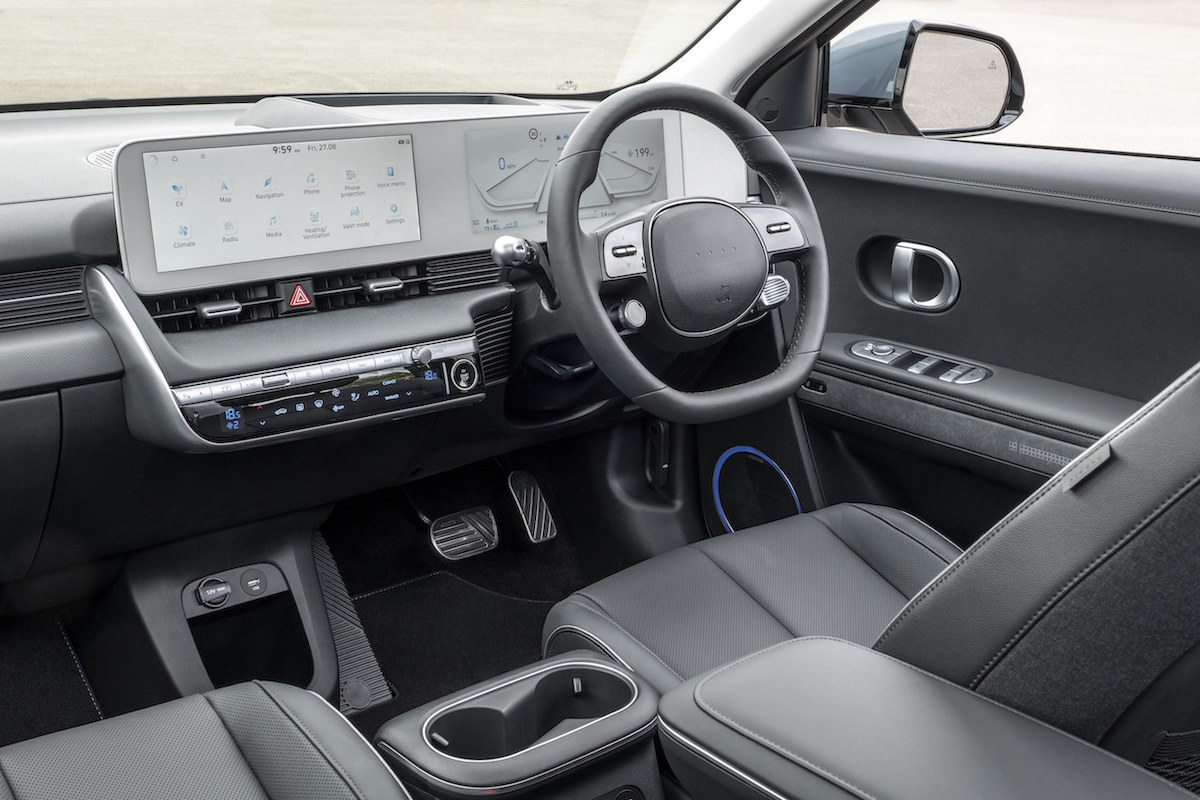
The Hyundai Ioniq 5's party piece is its interior space. Thanks to a long wheelbase and a completely flat floor, the cabin feels open and airy, with limousine-like legroom for rear passengers. The minimalist dashboard and clever features, like a sliding centre console, enhance this sense of versatility. Its 527-litre boot is a good size for family duties, and there's a small storage area under the bonnet for charging cables.
The Volkswagen ID.4 is also a spacious car. It actually has a slightly larger boot on paper, at 543 litres, and rear passenger space is generous. However, the boot itself is a bit shallow, and the rear seats don't fold completely flat, which can be a pain when loading bulky items. While both are practical family cars, the Ioniq 5's thoughtful design and more flexible interior give it the edge.
Driving Impressions
Hyundai Ioniq 5 driving score: 4/5
Volkswagen ID.4 driving score: 4/5
Neither of these EVs is designed to be a sports car, with both prioritising comfort and ease of use. The Ioniq 5 is a serene and relaxing car to drive. The steering is light, and the suspension does a good job of soaking up bumps, making it a quiet and comfortable cruiser. Performance from the standard rear-wheel-drive models is more than adequate for daily driving. One of its best features is the adjustable regenerative braking, controlled by paddles on the steering wheel, which allows for one-pedal driving.
The ID.4 feels a little more like a traditional car to drive. Its steering has more weight to it, and the car feels a bit more tied-down and composed on a twisty road. It's still a comfort-focused SUV, but it can be slightly more engaging than the Hyundai. For those seeking genuine high performance, the 641bhp Hyundai Ioniq 5 N is in a different league entirely, but for the standard models, it's a dead heat.
Technology and Equipment
Hyundai Ioniq 5 technology and equipment score: 5/5
Volkswagen ID.4 technology and equipment score: 3/5
This is where a clear gap opens up between the two cars. The Ioniq 5 comes as standard with a slick dual-screen setup, featuring two 12.3-inch displays for the instruments and infotainment. It's easy to use, looks good, and is packed with features like Apple CarPlay, Android Auto, and a host of driver assistance systems.
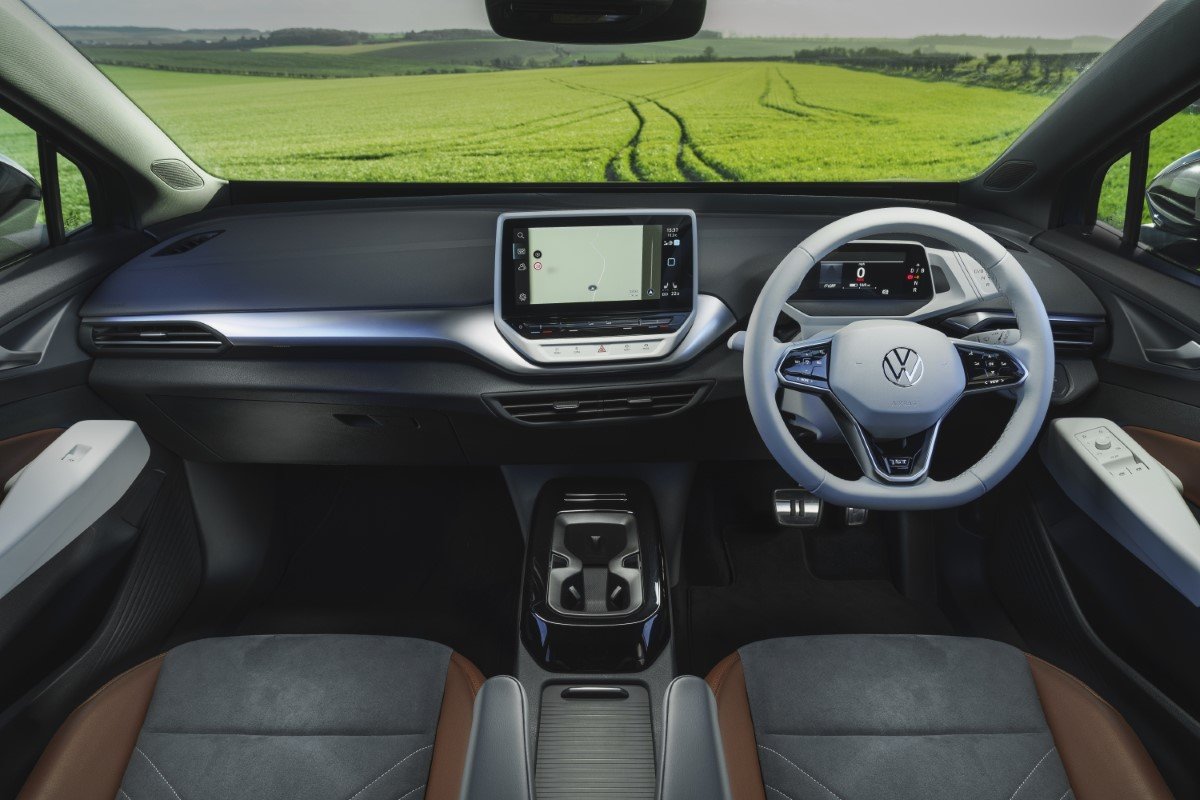
The ID.4 also gets a digital driver's display and a large central touchscreen, but its usability is a major drawback. The system relies heavily on touch-sensitive sliders and buttons for key functions like volume and climate control, which are frustrating and distracting to use on the move. While the VW is well-equipped, the Hyundai's tech is simply better executed and far more user-friendly.
Running Costs
Hyundai Ioniq 5 running costs score: 5/5
Volkswagen ID.4 running costs score: 4/5
As electric cars, both the Ioniq 5 and ID.4 offer the potential for low running costs, especially if you can charge at home on a cheap overnight electricity tariff. Both are available with different battery sizes, offering real-world ranges of between 220 and 290 miles depending on the model.
Where the Ioniq 5 pulls a significant advantage is in its charging speed. It's built on an 800-volt electrical system, similar to much more expensive EVs like the Porsche Taycan. This allows it to charge at speeds of up to 220kW, meaning a 10-80% top-up can take as little as 18 minutes on a powerful enough public charger. The ID.4's more conventional 400-volt system is slower, which could make a real difference on long journeys.
CarGurus Buyer Insights
|
Hyundai Ioniq 5 |
Volkswagen ID.4 |
| CarGurus expert rating |
5 out of 5 |
4 out of 5 |
| CarGurus user rating |
5.0 out of 5 |
0.0 out of 5 |
| Percentage of good/great deals available on CarGurus* |
30.6% |
30.9% |
| Overall CarGurus rating |
4.5 out of 5 |
3.9 out of 5 |
The Verdict
Hyundai Ioniq 5 Overall CarGurus rating: 4.5/5
Volkswagen ID.4 Overall CarGurus rating: 3.9/5
While both the Hyundai Ioniq 5 and Volkswagen ID.4 are capable electric family cars, there is a clear winner here. Based on our comprehensive CarGurus Buyer Insights, the Hyundai Ioniq 5 takes the victory.
The Ioniq 5 scores higher with our experts and has a perfect user rating. Its combination of standout design, a spacious and innovative interior, superior technology, and game-changing fast-charging capability makes it a difficult package to fault. It feels like a more forward-thinking and complete electric car.
The Volkswagen ID.4 is by no means a bad car; it's spacious, comfortable, and offers a reassuringly conventional driving experience that will appeal to many. However, it's let down by its frustrating infotainment system and slower charging speeds. For those reasons, the more accomplished Hyundai Ioniq 5 wins this test.
Hyundai Ioniq 5 Pros and Cons
| Pros |
Cons |
| Spacious and versatile interior |
Some interior plastics feel a bit cheap |
| Ultra-fast charging capability |
Ride can feel a little floaty |
| User-friendly technology |
Rear visibility isn't the best |
Volkswagen ID.4 Pros and Cons
| Pros |
Cons |
| Comfortable and easy to drive |
Frustrating infotainment controls |
| Good-sized boot and cabin |
Slower charging than the Ioniq 5 |
| Conventional, reassuring SUV styling |
Rear seats don't fold fully flat |
*The Overall CarGurus rating that informs these recommendations is based on CarGurus' proprietary market data from May 2026, CarGurus expert reviews, and CarGurus user reviews.
Read Our Full Reviews: