
If you're looking for a family-sized electric car, the Volkswagen ID.3 has been one of the default choices since it launched. It promised to be the electric equivalent of the VW Golf, offering sensible, practical, and affordable EV motoring for the masses.
Now, though, there's a new contender on the block, and it comes from Kia. The EV3 is a compact electric SUV with bold styling inspired by the flagship EV9, a high-tech interior, and the promise of a long range. It’s designed to shake up the market, but is it good enough to beat the established Volkswagen?
Kia EV3 vs Volkswagen ID.3
- Practicality
- Driving Impressions
- Technology and Equipment
- Running Costs
- CarGurus Buyer Insights
- Verdict
Practicality
Kia EV3 practicality score: 4/5
Volkswagen ID.3 practicality score: 4/5
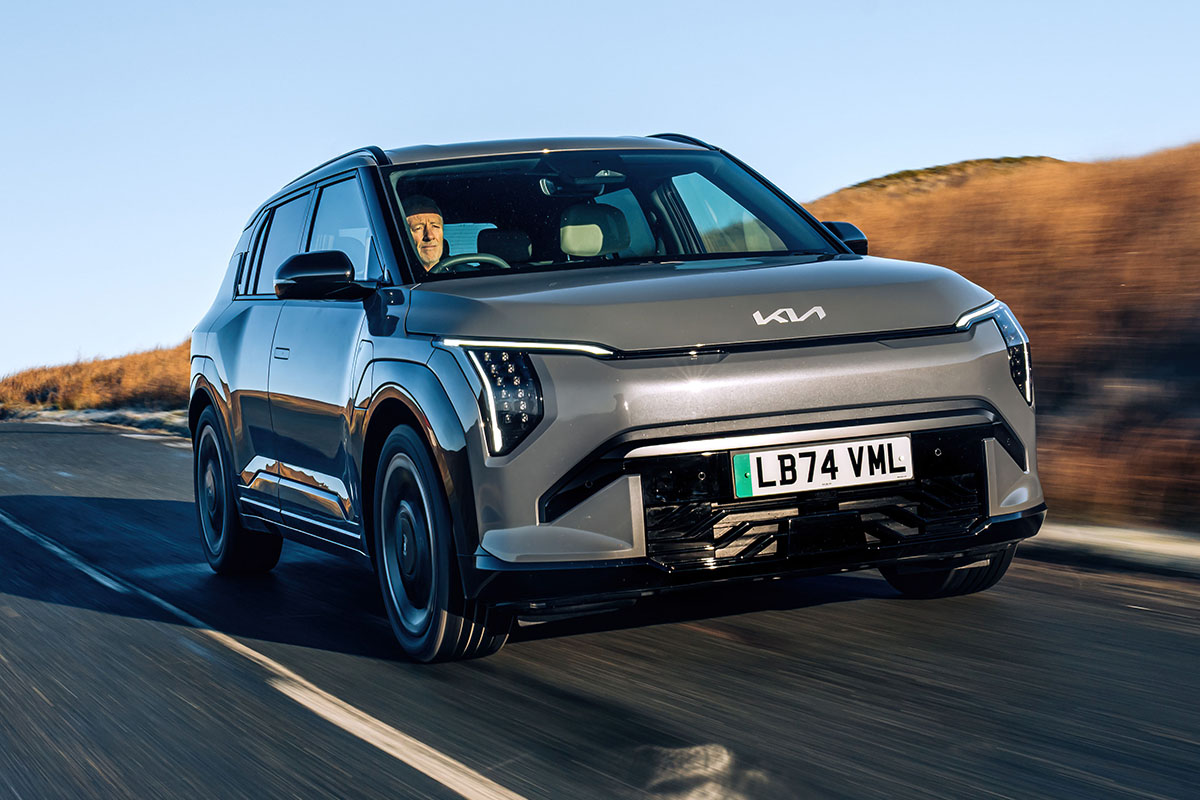
Both of these electric hatchbacks are designed with families in mind, and it shows. The Kia EV3's chunky, SUV-like proportions give it an advantage in boot space, offering a generous 460 litres, which is more than you'll find in many family cars from the class above. There’s also a useful 'frunk' (front trunk) for storing charging cables. Passenger space is good, with plenty of head and legroom in the back.
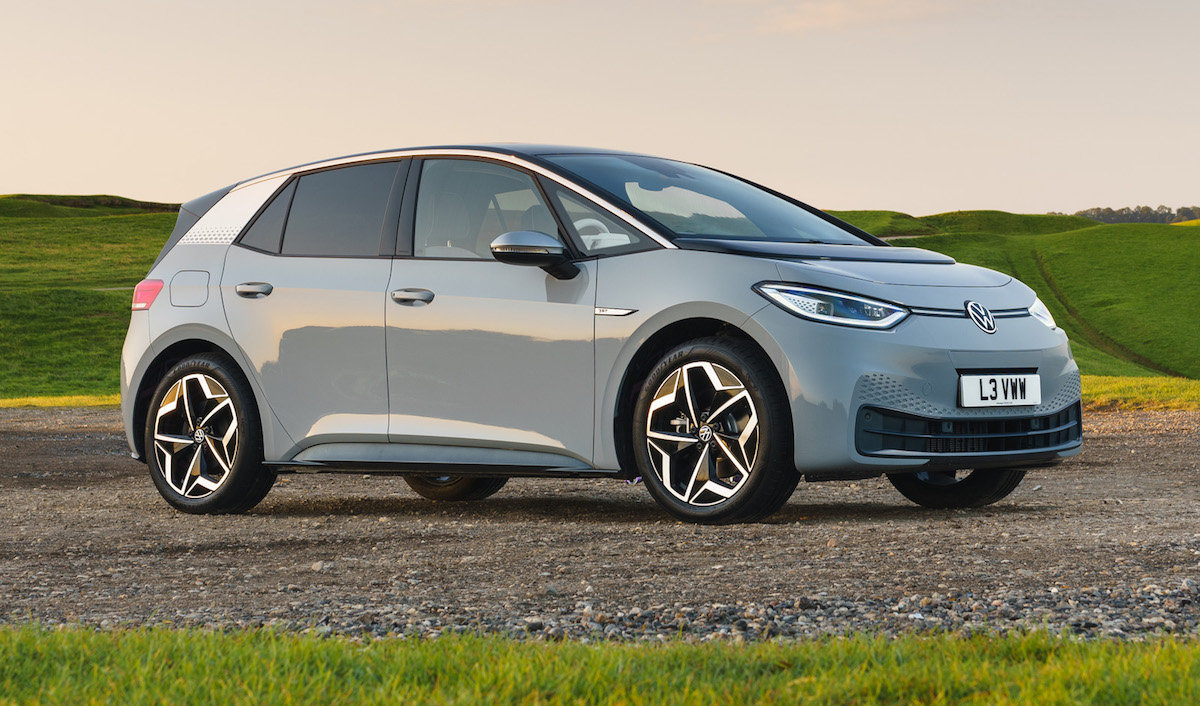
The Volkswagen ID.3 is no slouch, either. Its 385-litre boot is about the same size as a VW Golf's, and the interior feels spacious thanks to the flat floor that's typical of purpose-built EVs. While it can't quite match the EV3's outright luggage capacity, four adults will be comfortable on a long journey. For day-to-day family duties, both cars are more than up to the task.
Driving Impressions
Kia EV3 driving score: 4/5
Volkswagen ID.3 driving score: 4/5
On the road, these two cars have distinct characters. The Volkswagen ID.3 uses a rear-wheel-drive layout, which gives it a surprisingly agile and entertaining feel on a twisty road. It’s quiet, comfortable, and easy to drive in town, with a tight turning circle that makes parking a breeze. It feels like a mature and well-engineered product.
The Kia EV3 is front-wheel drive and prioritises comfort and stability. It’s a relaxing car to drive, with light steering and suspension that does a good job of soaking up bumps. While it’s not as engaging as the ID.3, it feels secure and composed at all speeds. Both cars offer the instant acceleration and silent running that make electric cars so pleasant to live with, so the choice comes down to whether you prefer the ID.3's agility or the EV3's relaxed nature.
Technology and Equipment
Kia EV3 technology and equipment score: 3/5
Volkswagen ID.3 technology and equipment score: 3/5
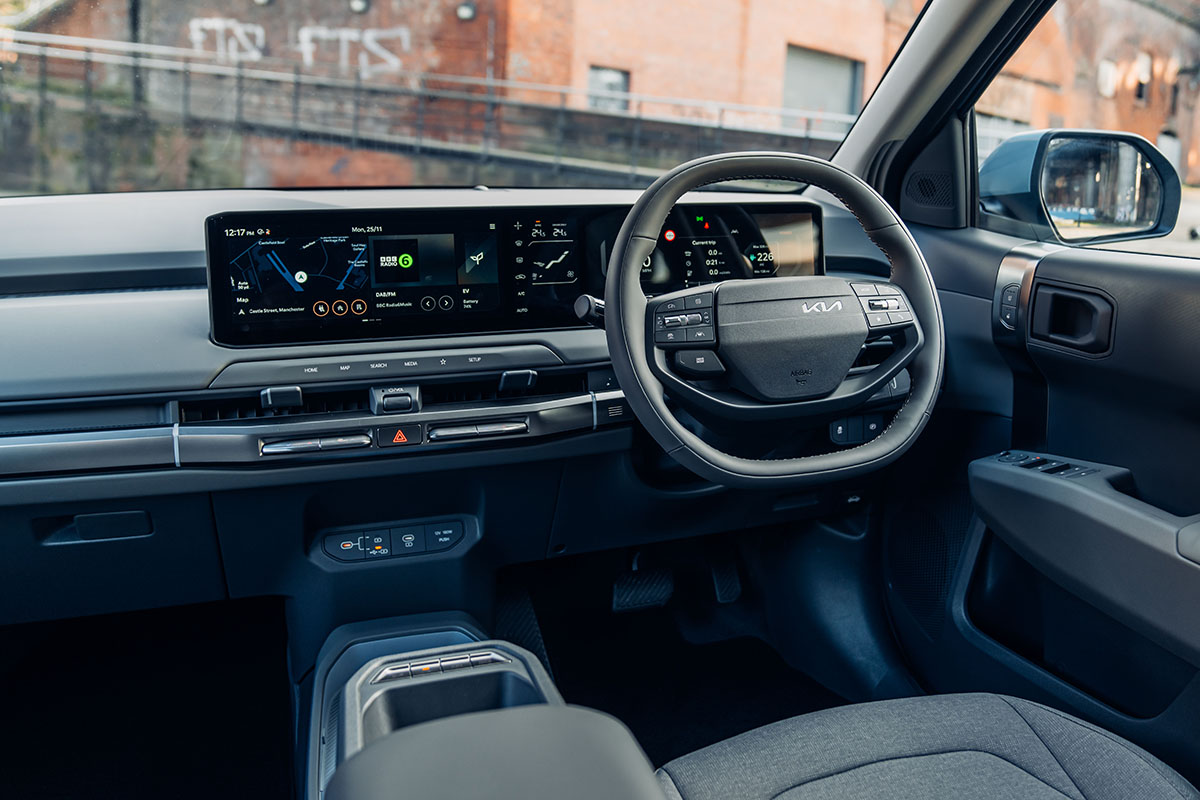
Inside, both cars take a minimalist, screen-focused approach. The Kia EV3 features a slick panoramic display that combines a digital driver’s screen and a central touchscreen. It looks impressive and comes with plenty of features, including Apple CarPlay and Android Auto. The system is generally responsive, but some functions are buried in sub-menus.
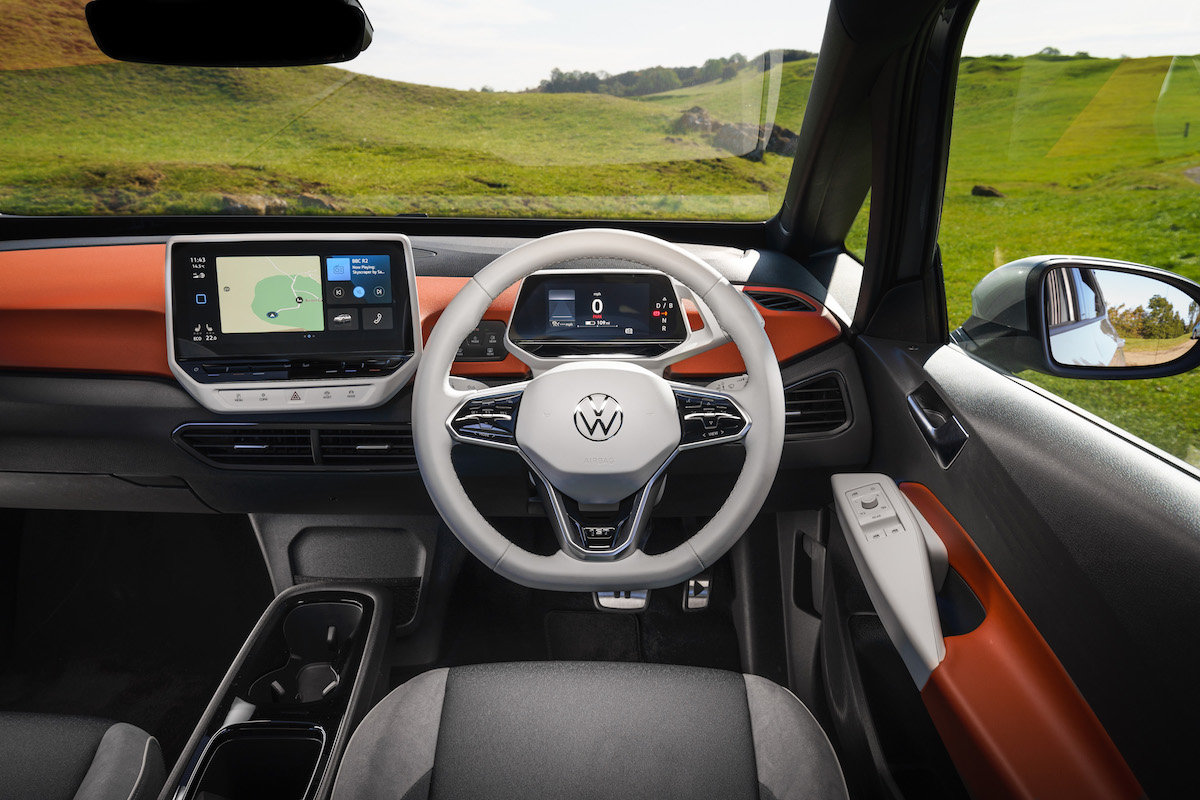
The ID.3's cabin is dominated by its central touchscreen. Early cars were criticised for their slow and sometimes buggy software, but this was improved with a 2023 facelift that also brought a larger screen and better-quality materials. However, the touch-sensitive sliders for volume and temperature, which don't light up at night, remain a source of frustration. Both cars are well-equipped, but neither offers a flawless user experience.
Running Costs
Kia EV3 running costs score: 3/5
Volkswagen ID.3 running costs score: 4/5
As electric cars, both the EV3 and ID.3 offer the potential for low running costs, especially if you can charge at home. The ID.3 is available with a couple of different battery sizes, with the larger 77kWh version offering an official range of over 300 miles. It has proven to be an efficient EV, and its widespread popularity means servicing and support are easy to find.
The Kia EV3 is also expected to be offered with two battery options, with the long-range model targeting a similar 300-plus-mile range. While its real-world efficiency is yet to be proven, the biggest trump card for any Kia is its seven-year, 100,000-mile warranty. This provides long-term peace of mind that Volkswagen's standard three-year warranty can't match. However, the ID.3's established track record gives it a slight edge in this category for now.
CarGurus Buyer Insights
| Kia EV3 | Volkswagen ID.3 | |
|---|---|---|
| CarGurus expert rating | 4 out of 5 | 4 out of 5 |
| CarGurus user rating | 0.0 out of 5 | 4.3 out of 5 |
| Percentage of good/great deals available on CarGurus* | 26.2% | 35.9% |
| Overall CarGurus rating | 3.8 out of 5 | 4.2 out of 5 |
The Verdict
Kia EV3 Overall CarGurus rating: 3.8/5
Volkswagen ID.3 Overall CarGurus rating: 4.2/5
The Kia EV3 is a bold and impressive new entry into the electric family car market. It offers standout styling, a practical and spacious interior, and the promise of Kia’s excellent warranty. It’s a compelling package that will undoubtedly attract a lot of buyers.
However, in this comparison, the established Volkswagen ID.3 takes the win. According to our CarGurus Buyer Insights, the ID.3 scores a higher overall rating of 4.2 out of 5. This is thanks to its proven abilities, higher user ratings, and a greater percentage of good and great value deals available on CarGurus. The ID.3’s enjoyable driving dynamics and recent interior quality improvements also help its case.
While the EV3 is a fantastic newcomer, the Volkswagen ID.3 remains a benchmark in this class. It’s a well-rounded, capable, and enjoyable electric car that has already won over thousands of owners, and for that, it earns the victory here.
Kia EV3 Pros and Cons
| Pros | Cons |
|---|---|
| Striking exterior design | Unproven real-world efficiency |
| Spacious and practical cabin | Not as engaging to drive as some rivals |
| Excellent seven-year warranty | Infotainment can be complex |
Volkswagen ID.3 Pros and Cons
| Pros | Cons |
|---|---|
| Agile and fun to drive | Frustrating infotainment controls |
| Improved interior on facelift models | Plain styling compared to the Kia |
| Proven efficiency and range | Shorter warranty than Kia's |
*The Overall CarGurus rating: that informs these recommendations is based on CarGurus' proprietary market data from January 2025, CarGurus expert reviews, and CarGurus user reviews.