
If you're browsing Kia's showroom for a new family car, you might find yourself stuck between two of its biggest hits: the Niro and the Sportage. They share the same badge, a bold design language, and an excellent warranty, but they're built for slightly different jobs.
The Niro is the sensible, efficiency-focused compact crossover, available exclusively with hybrid or electric power. The Sportage is its bigger, bolder sibling, a full-fat family SUV with striking looks and a more commanding presence on the road. Both are packed with tech and represent great value, so which one of these popular Kias deserves a spot on your driveway?
Kia Niro vs Kia Sportage
- Practicality
- Driving Impressions
- Technology and Equipment
- Running Costs
- CarGurus Buyer Insights
- Verdict

Practicality
Kia Niro practicality score: 4/5
Kia Sportage practicality score: 4/5
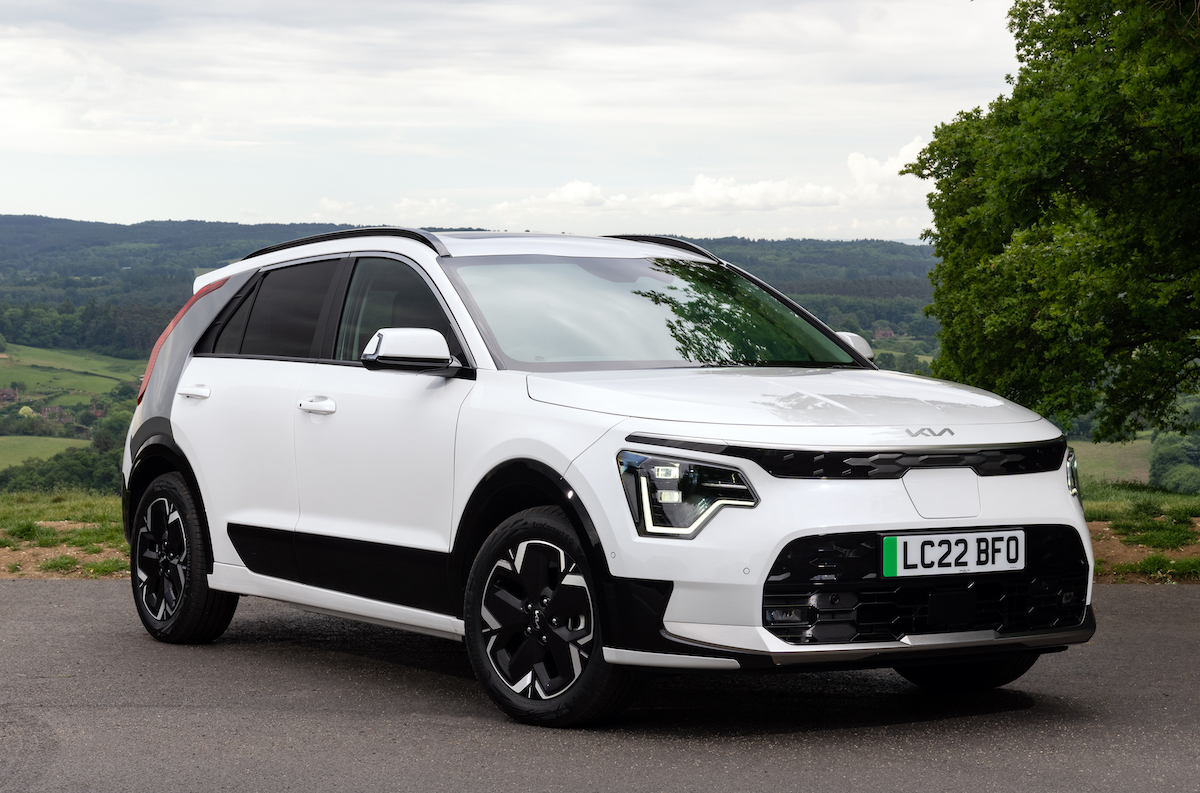
For a compact crossover, the Kia Niro is a bit of a Tardis. The regular hybrid model boasts a 451-litre boot, which is more than you'll find in key rivals like the Toyota C-HR. Rear-seat passengers are treated to genuinely impressive legroom, and the slightly raised ride height makes strapping kids into car seats that little bit easier. The plug-in hybrid (PHEV) does lose some boot space to its battery pack, dropping to 348 litres, but it’s still a very usable space.
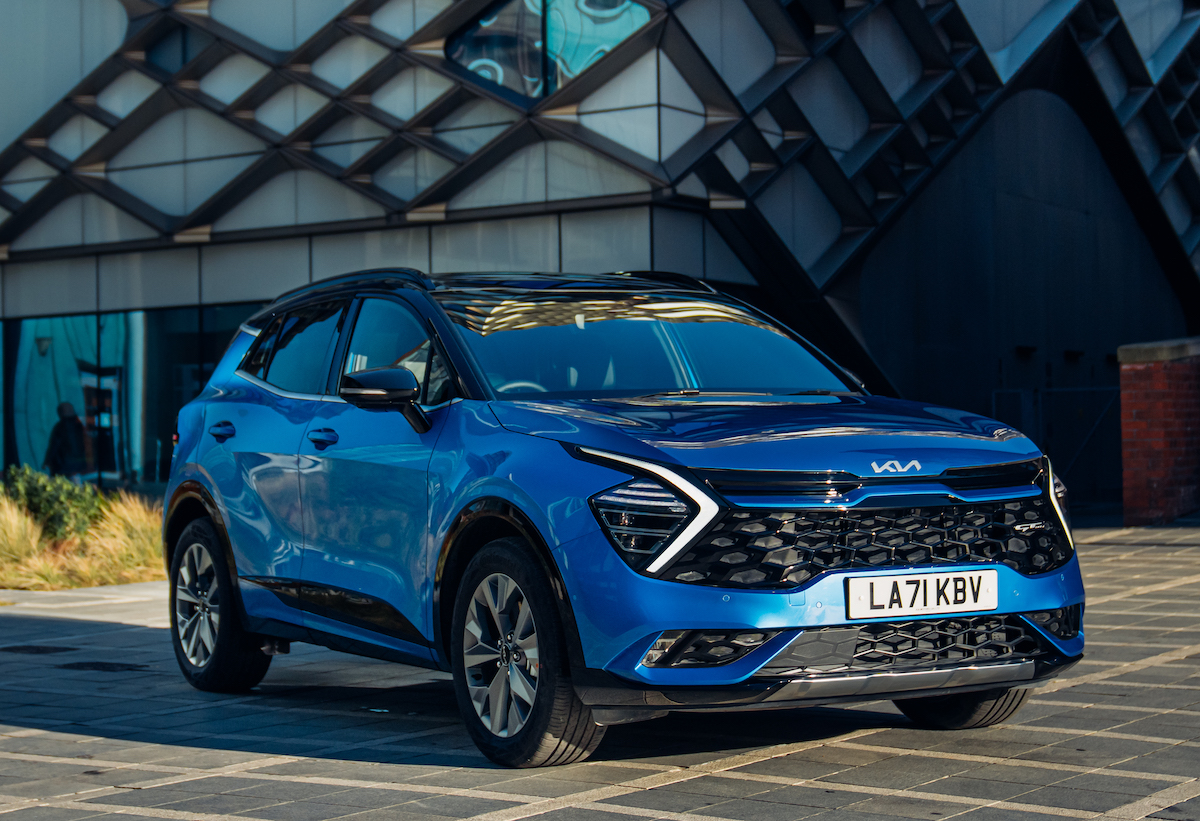
As the larger car, the Sportage naturally has an advantage in outright space. Its boot is vast, ranging from 526 to 591 litres depending on the powertrain, and it features a handy adjustable floor. Thanks to a long wheelbase, there's acres of room in the back for lanky teenagers, so long journeys should be complaint-free. While the Sportage offers more sheer volume, the Niro’s clever packaging makes it remarkably practical for its size, resulting in a dead heat on points.
Driving Impressions
Kia Niro driving score: 3/5
Kia Sportage driving score: 4/5
Neither of these Kias is a hot hatch in disguise, but the Sportage is certainly the more satisfying car to drive. It feels sharper and more agile than you might expect, with well-weighted steering and a ride that balances comfort with control. It feels substantial and composed on the motorway, making it a relaxing long-distance cruiser.
The Niro is perfectly pleasant, but its priorities are clearly comfort and ease of use. The light steering and supple suspension make it a doddle to navigate through tight city streets and multi-storey car parks. Its hybrid powertrain is smooth and quiet around town, though the petrol engine can sound a little strained when you ask for a sudden burst of acceleration. For relaxed daily driving, it's ideal, but the Sportage offers a more polished and engaging experience overall.
Technology and Equipment
Kia Niro technology and equipment score: 4/5
Kia Sportage technology and equipment score: 5/5
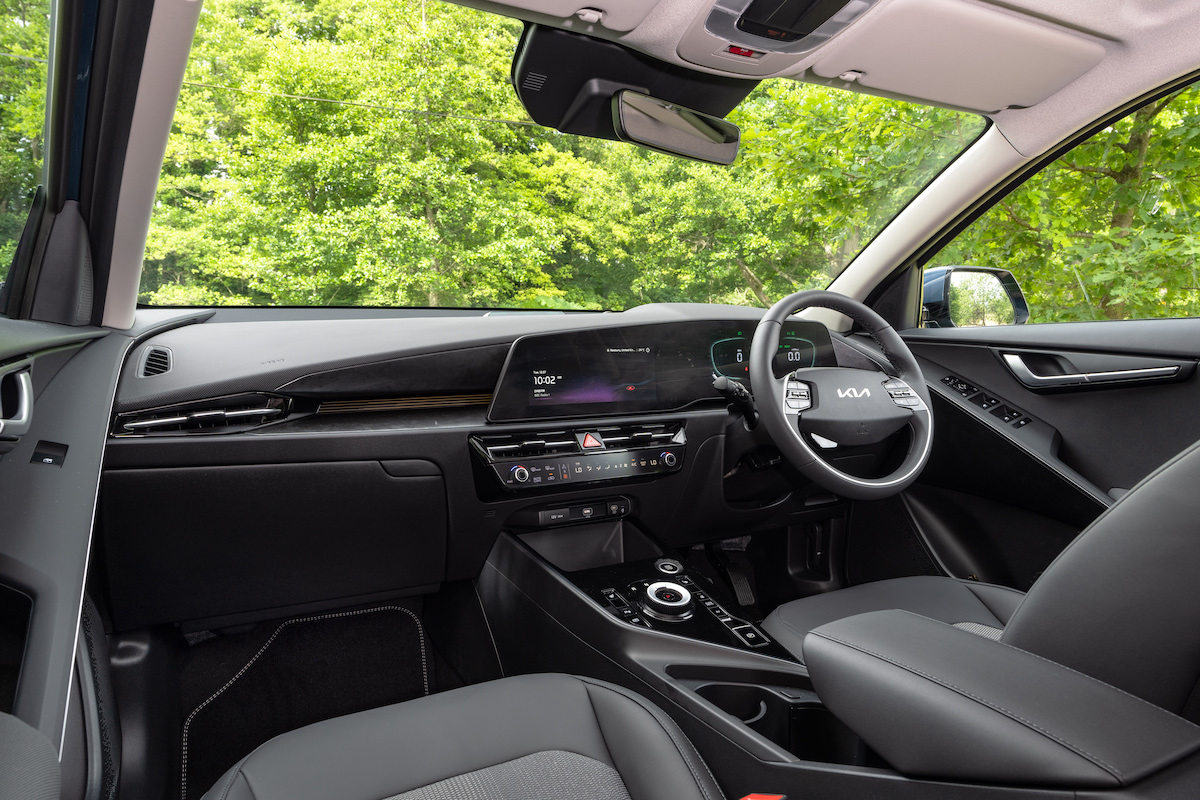
Kia has made a name for itself by loading its cars with standard kit, and this pair is no exception. Even the entry-level Niro '2' comes with features like a reversing camera and dual-zone climate control. Step up the range and you're treated to Kia's slick twin-screen infotainment and driver display setup, which looks and feels genuinely premium.
The Sportage follows the same script but takes it a step further. All models get a large touchscreen with Apple CarPlay and Android Auto, plus a suite of safety aids. Higher-spec models feel incredibly high-tech, boasting the full widescreen digital cockpit and features you’d expect on a premium German SUV. Both cars use Kia's excellent infotainment software, which is intuitive and responsive, but the Sportage's overall execution and feature list just give it the edge.
Running Costs
Kia Niro running costs score: 5/5
Kia Sportage running costs score: 4/5
This is where the Niro plays its trump card. Its entire range is built around efficiency. The standard self-charging hybrid can easily return over 60mpg, while the PHEV offers more than 30 miles of electric-only range. If your daily commute is short and you can charge at home, your petrol station visits will become a rarity.
The Sportage is by no means thirsty, but its larger size and weight mean it can't quite match the Niro's frugality. The self-charging hybrid will see you get around 48mpg, while the PHEV impresses with an official electric range of over 40 miles. Of course, both cars come with Kia’s industry-leading seven-year, 100,000-mile warranty, which is a massive bonus for long-term peace of mind and a huge factor in overall ownership costs. For pure day-to-day savings, however, the Niro is the clear winner.
CarGurus Buyer Insights
| Kia Niro | Kia Sportage | |
|---|---|---|
| CarGurus expert rating | 4 out of 5 | 5 out of 5 |
| CarGurus user rating | 4.4 out of 5 | 4.6 out of 5 |
| Percentage of good/great deals available on CarGurus* | 31.5% | 33.2% |
| Overall CarGurus rating | 4.3 out of 5 | 4.5 out of 5 |
The Verdict
Kia Niro Overall CarGurus rating: 4.3/5
Kia Sportage Overall CarGurus rating: 4.5/5
Both the Kia Niro and Kia Sportage are fantastic family cars that prove you don’t need a premium badge to get style, technology, and quality. Choosing between them really comes down to your personal priorities.
However, in this head-to-head, the Kia Sportage emerges as the winner. Our CarGurus Buyer Insights show it scores higher with both our experts and with owners, and its higher Overall CarGurus rating reflects its status as a brilliant all-rounder. It wraps a more engaging driving experience, superior tech, and greater practicality in a head-turning design.
This doesn't mean you should discount the Niro. If your main goals are minimising running costs and having a car that's effortless to drive and park in the city, it’s an outstanding choice and a winner in its own right. But as the more complete family package with broader appeal, the Kia Sportage takes the victory in this sibling rivalry.
Kia Niro Pros and Cons
| Pros | Cons |
|---|---|
| Excellent running costs and fuel economy | Engine can be noisy under acceleration |
| Surprisingly spacious and practical interior | Less engaging to drive than the Sportage |
| Easy to drive and manoeuvre in town | PHEV model has a smaller boot |
Kia Sportage Pros and Cons
| Pros | Cons |
|---|---|
| Striking exterior design | Not as fuel efficient as the Niro |
| High-tech and high-quality interior | Larger size can be tricky on tight streets |
| Great to drive and very practical | Some rivals have even bigger boots |
*The Overall CarGurus rating: that informs these recommendations is based on CarGurus' proprietary market data from January 2026, CarGurus expert reviews, and CarGurus user reviews.