
If you’re looking to switch to a premium electric SUV, Mercedes-Benz offers two compelling but different options from its EQ family: the EQB and the EQC. Both carry the prestigious three-pointed star and deliver a silent, zero-emission driving experience, but they are aimed at slightly different buyers.
The EQB is the practical choice, packaging the brand’s tech and quality into a boxy, versatile SUV with the rare option of seven seats. The EQC, on the other hand, was Mercedes' first dedicated EV. It’s a more luxurious, coupe-styled SUV that prioritises comfort and performance for five occupants. So, which of these electric Mercs is the right fit for you?
Mercedes-Benz EQB vs Mercedes-Benz EQC
- Practicality
- Driving Impressions
- Technology and Equipment
- Running Costs
- CarGurus Buyer Insights
- Verdict


Practicality
Mercedes-Benz EQB practicality score: 4/5
Mercedes-Benz EQC practicality score: 4/5
Practicality is where the EQB plays its trump card. Its upright, boxy design, inherited from the petrol-powered GLB, allows for a spacious and airy cabin. The main attraction is the optional third row of seats, making it one of the very few seven-seat electric cars on the market. While those rearmost seats are best suited for children, their inclusion offers a level of flexibility the EQC can’t match. As a five-seater, boot space is generous.
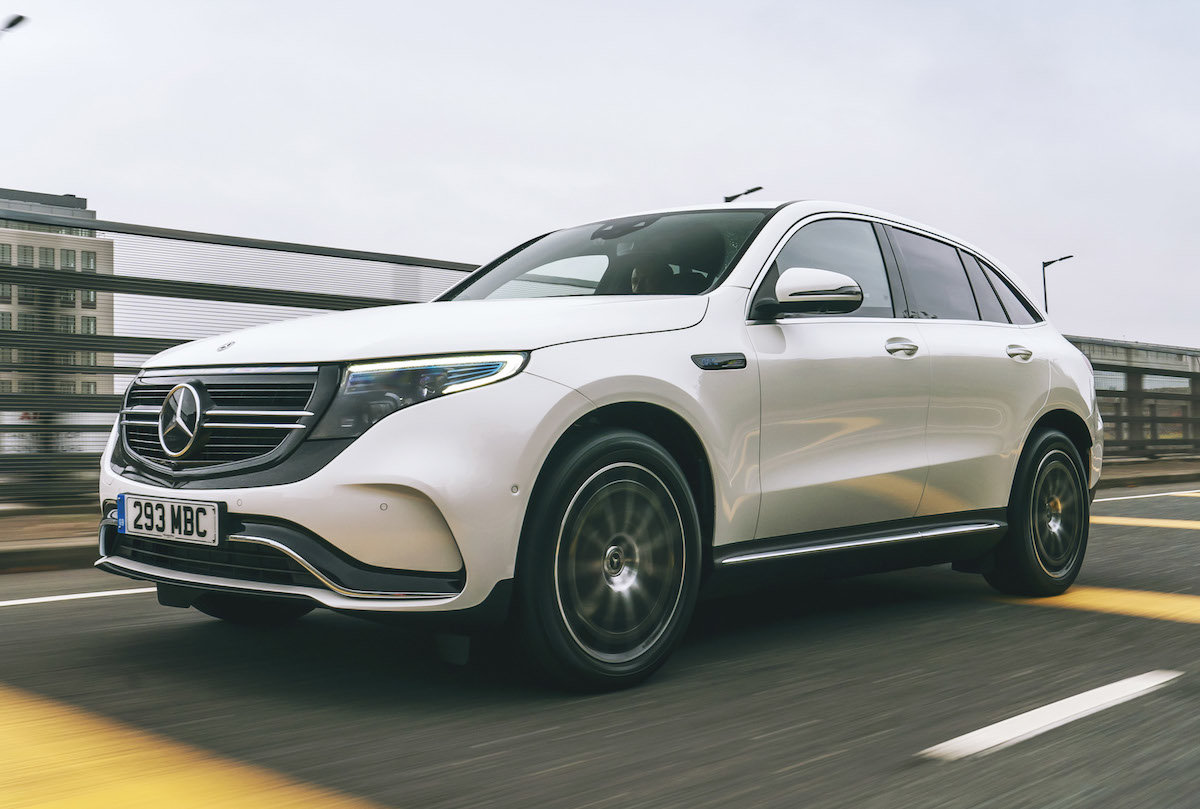
The EQC is a more conventional five-seat SUV. It’s longer and wider than the EQB, and passengers in the front and back have plenty of room to get comfortable. However, its sleeker, more coupe-like roofline means boot space is adequate rather than cavernous, and it lacks the outright versatility of its smaller sibling. For carrying five people in comfort it’s excellent, but if you occasionally need to transport a couple of extra kids, the EQB is the clear winner.
Driving Impressions
Mercedes-Benz EQB driving score: 4/5
Mercedes-Benz EQC driving score: 4/5
Both of these electric SUVs are designed for comfort and refinement rather than sporty thrills. The EQB is quiet, smooth, and easy to drive around town, with light steering and a comfortable ride. Performance is more than adequate, especially in the dual-motor EQB 350 4Matic model, which provides brisk, confident acceleration. It’s a relaxing car to cover long distances in, feeling stable and secure on the motorway.
The EQC takes that refinement a step further. It feels exceptionally well-insulated from the outside world, with barely any wind or road noise making its way into the cabin. The standard dual-motor setup delivers strong and effortless performance, making it feel quicker than the EQB in a straight line. The suspension is tuned for softness, allowing the EQC to glide over most road imperfections. Neither car is particularly engaging on a twisty road, but as comfortable, premium transport, they both excel.
Technology and Equipment
Mercedes-Benz EQB technology and equipment score: 4/5
Mercedes-Benz EQC technology and equipment score: 4/5
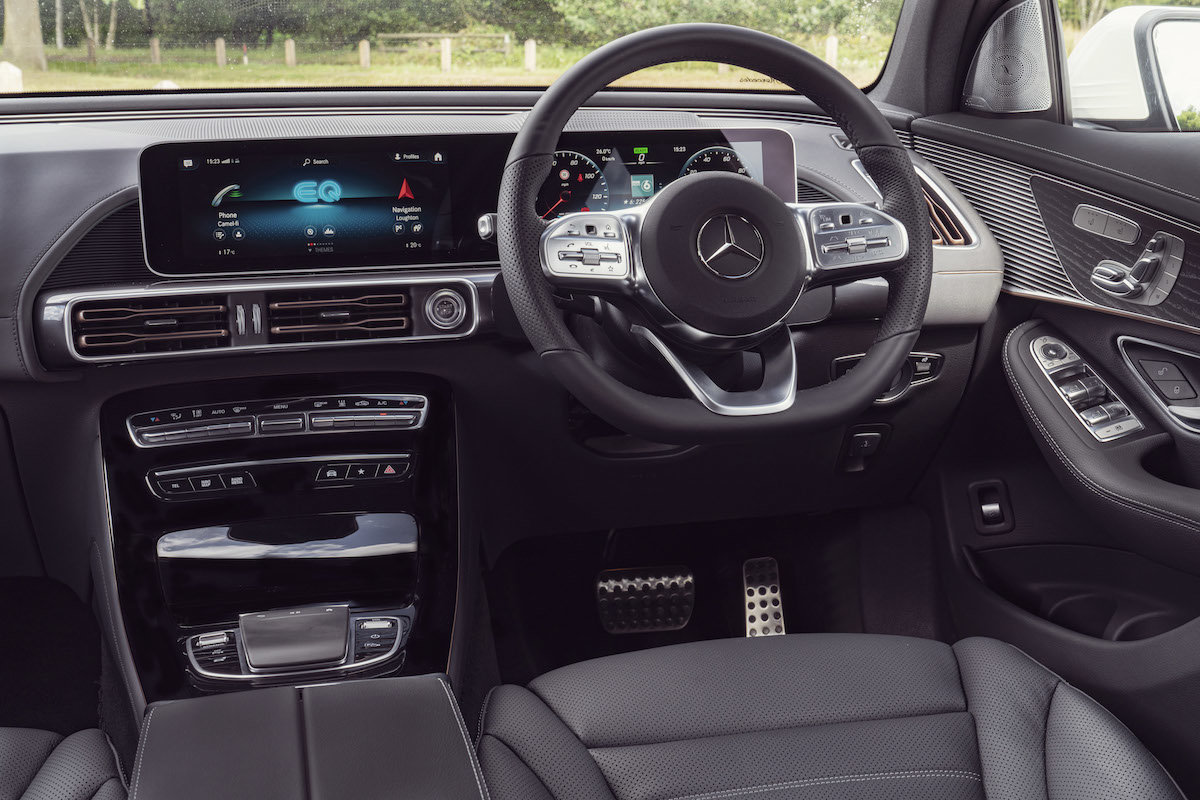
Step inside either car and you’re greeted by a wall of screens. Both the EQB and EQC feature Mercedes’ slick MBUX infotainment system, which pairs two large displays for the driver’s instruments and central touchscreen. The system is feature-rich, graphically impressive, and can be controlled via touch, a touchpad, or the excellent "Hey Mercedes" voice assistant.
Standard equipment is generous on both models, with features like heated seats, a reversing camera, and LED headlights included from the entry-level trims. As the more expensive model, the EQC feels a little more plush inside, with higher-grade materials used throughout the cabin. However, the technology on offer is broadly similar, and neither car will leave you feeling short-changed on toys and gadgets. It’s a dead heat.
Running Costs
Mercedes-Benz EQB running costs score: 5/5
Mercedes-Benz EQC running costs score: 4/5
As pure electric vehicles, both the EQB and EQC offer the potential for low running costs, especially if you can charge at home. You’ll pay no road tax (VED) and will be exempt from congestion charges. The official range for the EQB 350 is up to 257 miles, while the EQC 400 manages up to 255 miles. In real-world driving, you can expect to get closer to 200 miles from a full charge in both.
The EQB gets a higher score in this category primarily due to its greater efficiency. Being a slightly smaller and lighter car, it uses its battery charge more effectively than the powerful EQC. This, combined with a lower initial purchase price on the used market, means the EQB should be the cheaper car to own and run over time. Both cars come with a three-year, unlimited-mileage warranty from the factory.
CarGurus Buyer Insights
| Mercedes-Benz EQB | Mercedes-Benz EQC | |
|---|---|---|
| CarGurus expert rating | 4 out of 5 | 4 out of 5 |
| CarGurus user rating | 4.0 out of 5 | 4.5 out of 5 |
| Percentage of good/great deals available on CarGurus* | 33.3% | 35.6% |
| Overall CarGurus rating | 4.3 out of 5 | 4.3 out of 5 |
The Verdict
Mercedes-Benz EQB Overall CarGurus rating: 4.3/5
Mercedes-Benz EQC Overall CarGurus rating: 4.3/5
This is one of the closest contests we’ve seen. Both the Mercedes-Benz EQB and EQC are high-quality, desirable electric SUVs that deliver on the premium promise of their badge. They are comfortable, packed with technology, and offer a refined driving experience.
Based on our comprehensive CarGurus Buyer Insights, it’s a dead heat, with both cars achieving an identical Overall CarGurus rating of 4.3 out of 5. Our experts rate them equally, and while the EQC has slightly higher user ratings and a greater percentage of good deals available, it’s not enough to separate them on our overall scoring.
Therefore, the choice comes down to your personal priorities. If you need the flexibility of seven seats and value practicality and efficiency above all else, the Mercedes-Benz EQB is the logical choice. If, however, you’re looking for a more luxurious five-seat cabin, stronger performance, and supreme refinement, the Mercedes-Benz EQC is the better fit. In this battle of the electric Mercs, there is no wrong answer – only the one that’s right for you.
Mercedes-Benz EQB Pros and Cons
| Pros | Cons |
|---|---|
| Available with seven seats | Third-row seats are for children only |
| Efficient for its size | Interior quality not quite up to EQC standards |
| Practical, boxy shape | Based on a combustion-engine platform |
Mercedes-Benz EQC Pros and Cons
| Pros | Cons |
|---|---|
| Strong performance as standard | Less practical than the EQB |
| High-quality, luxurious interior | Not as efficient as some rivals |
| Supremely refined and quiet ride | Only five seats |
*The Overall CarGurus rating: that informs these recommendations is based on CarGurus' proprietary market data from January 2026, CarGurus expert reviews, and CarGurus user reviews.