A huge range of models and powertrains has been available, including rear-wheel drive and four-wheel drive models, and four-cylinder, five-cylinder, six-cylinder and eight-cylinder engines. Hybrid technology has been added in recent years, while AMG models have, from the start, offered wild performance and prodigious power. While SUVs and electric vehicles may be a key focus for Mercedes-Benz today, the E-Class remains one of its core models and is as relevant as it ever was.
Our guide to the Mercedes-Benz E-Class looks at the model’s history in the UK, with the lowdown on which models are available, and what to look out for if you’re considering buying one.
Frequently Asked Questions
Which Mercedes-Benz E-Class years are the best?
The current Mercedes-Benz E-Class is a hugely impressive car, but the 2016-2023 model is arguably the best choice as a used buy. It still looks and feels like a bang-up-to-date luxury car and, although far from cheap, it gives you a lot for your money.
Which Mercedes-Benz E-Class years are the worst?
The worst years for Mercedes-Benz E-Class reliability seem to be the earlier third-generation models from 2002 to 2006. A number of common issues affect these cars, including faulty brake control units, engine balance shaft issues and turbo failure on diesel versions. A mid-life update in 2006 improved things.
Is a used Mercedes-Benz E-Class a good deal?
The Mercedes-Benz E-Class can be a great deal if you’re looking for a luxurious, well-equipped car full of high-tech features. Prices are on the high side, but most E-Class models have a reputation for being long-lasting and every example gives you a car with elegant looks and lots of prestige.
Mercedes-Benz E-Class Pros and Cons
Pros:
- Comfortable and spacious
- Lots of high-tech kit
- High-quality look and feel
Cons:
- Some versions are expensive
- Not as enjoyable to drive as a BMW 5 Series
- Any issues can be costly to fix
Mercedes-Benz E-Class Generations
6th Generation (2023-present)
Body Styles:
- Four-door saloon
- Five-door estate
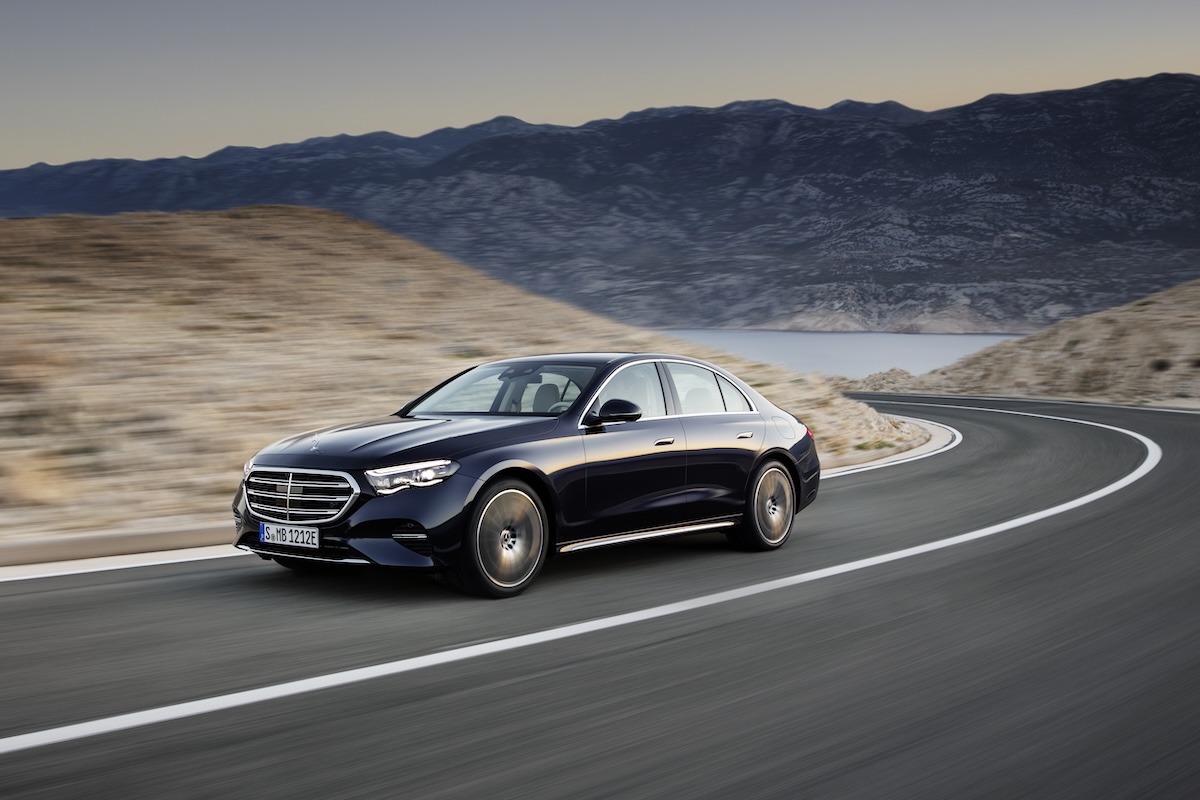
The sixth-generation Mercedes-Benz E-Class has been on sale in the UK since autumn 2023 and, in addition to all the usual E-Class qualities, it’s a tech-lover’s dream. High-tech gadgets include a driver-facing camera for Zoom calls or selfies (when parked…), an augmented-reality sat-nav display and an AI-based system that predicts your chosen destination or which radio station you want to listen to. Some versions have a front grille that lights up and all have a raft of semi-autonomous driving features. And yet it still looks and feels like an E-Class.
This time around, the design of the E-Class is more distinct from Mercedes-Benz’s other saloon models, with a curvy headlight design and gloss-black front grille surround. The interior is a world away from the restrained E-Class models of the 90s and early noughties, with a glitzy digital display behind the steering wheel and a 14.4-inch central touchscreen. It’s also available with a third (12.3-inch) screen for the front passenger, so you end up with more screen than dashboard. As awash with high-tech features as it is, traditional E-Class features such as ultra-comfortable seats, high-grade materials and palatial legroom are present and correct.
The model lineup comprises petrol, diesel and hybrid power and all have a nine-speed automatic gearbox as standard. The core petrol models are the E200 and E300 e: both have a 2.0-litre, four-cylinder petrol engine, but while the E200 has mild hybrid technology, the E300 e is a plug-in hybrid. It’s a similar story with the diesels: the E220 d and E 300 de share the same 2.0-litre, four-cylinder diesel engine, but the E220 d is a mild hybrid, and the E300 de is a plug-in hybrid. At the top end of the core lineup is the E450 d 4Matic, which has a 3.0-litre six-cylinder diesel engine, mild hybrid tech and four-wheel drive (the other models are rear-wheel drive).
For now, the only high-performance model is the Mercedes-AMG E 53 Hybrid 4Matic+: it’s a plug-in hybrid with a 3.0-litre six-cylinder engine, four-wheel drive and a 0-62mph time of less than four seconds. Even faster, more powerful AMG models are likely in the pipeline. There’s no coupe or convertible version of this E-Class: Mercedes-Benz has reverted to a separate model line for those, this time called CLE.
Trim levels offered over time include Urban Edition, AMG Line, AMG Line Premium, AMG Line Premium Plus, Exclusive Premium and Exclusive Premium Plus. Mercedes-AMG models have been available over time in Premium, Night Edition Premium Plus and Edition 1 trim levels. Every E-Class is lavishly equipped, with a wealth of advanced safety and tech features as standard. You’d expect as much, given that prices start at more than £56,000, and rise to more than £100,000 for high-spec Mercedes-AMG models.
It’s too early to predict the reliability of the latest E-Class, but if it follows the pattern set by its predecessors, it should be dependable. New Mercedes-Benz cars come with a three-year warranty with no mileage limit, while the battery of plug-in hybrid models is covered for six years or 62,500 miles.
5th Generation (2016-2023)
Body Styles:
- Four-door saloon
- Five-door estate
- Two-door convertible
- Two-door coupe
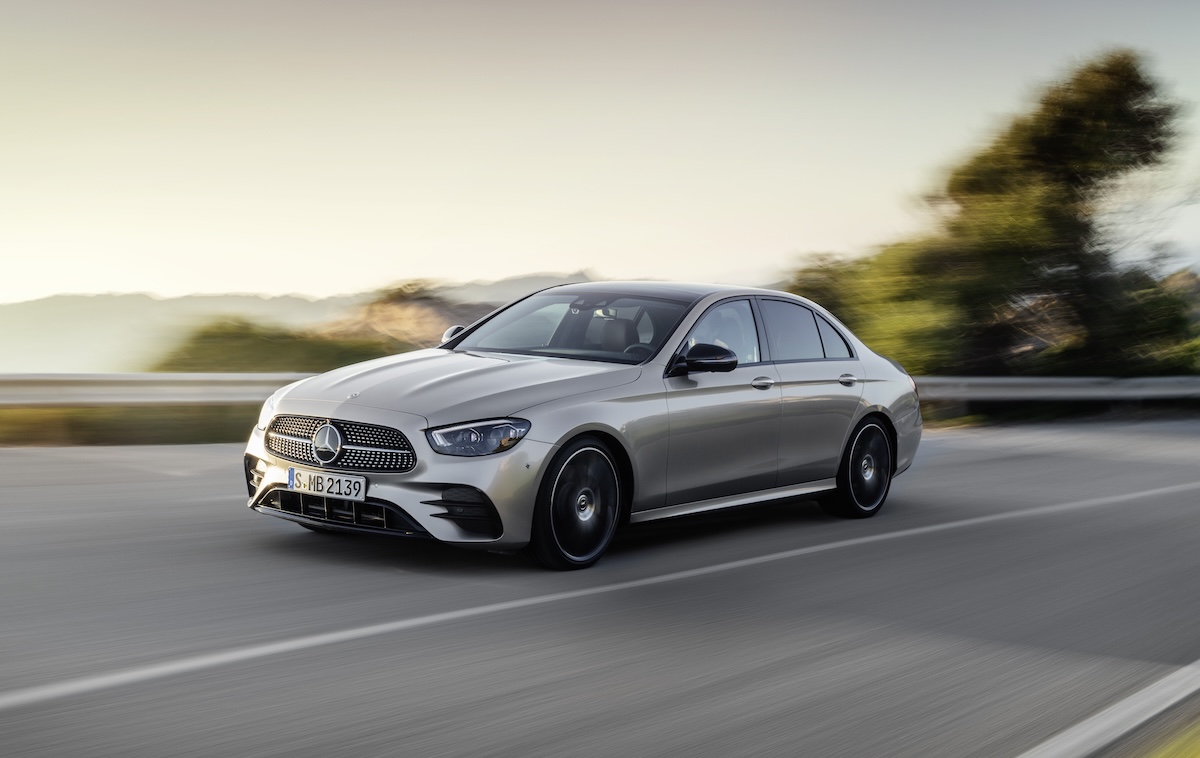
In fifth-generation form, the Mercedes-Benz E-Class saloon looked more like a scaled-down S-Class than ever, which is no bad thing. It also shared a lot of the larger car’s advanced features, and even though it’s no longer on sale new, it remains an incredibly high-tech car. Introduced in 2016, it’s available as a saloon, estate, coupe or convertible. There’s also the E-Class All Terrain, a version of the estate with extra ground clearance, some SUV-style bodywork add-ons and 4Matic all-wheel drive as standard. It’s a rare beast, with a small number sold new between 2017 and 2020.
A touch larger and sleeker than the previous model on the outside, the fifth-generation E-Class is dramatically different on the inside, with a curvy dashboard featuring circular air vents. It’s not to all tastes but it has an undeniable wow factor and the luxurious, high-tech feel is enhanced by a dashboard dominated by large display screens.
The wealth of engines and drivetrains available over the car’s seven-year run can be broken down into four main groups. The first two are the core models, which have either four-cylinder petrol and diesel engines (E200, E220 d, E300 d) or six-cylinder petrol and diesel engines (E450 4Matic, E350 d and E400 d). Then there are plug-in hybrid models – E300 de and E300 e – one petrol and one diesel, both of which pair a four-cylinder engine with an electric motor. Lastly, there are two high-performance Mercedes-AMG models: the E 53 4Matic has a 3.0-litre six-cylinder engine, while the E 63 S 4Matic+ has an eight-cylinder engine. All versions have a nine-speed automatic gearbox as standard; most are rear-wheel drive, but those with four-wheel drive have ‘4Matic’ in their model name.
Trim levels include SE, AMG Line, AMG Line Premium and AMG Line Edition. Even the earliest entry-level models have near-luxury-car levels of equipment, including LED headlights, a reversing camera, heated front seats with part-electric adjustment, front- and rear parking sensors, and either leather or artificial leather upholstery. Most models have Apple CarPlay/Android Auto integration. A wealth of driver assistance and safety features are standard, and even more were added in 2020 as part of a mid-life update that also included a range of cosmetic tweaks, including re-shaped headlights and bumpers, and an upgraded infotainment system.
The 2016-2023 Mercedes-Benz E-Class feels like a very well-built car and its reliability record is sound. The latest used examples should still have some of Mercedes-Benz’s three-year/unlimited-mileage warranty remaining. Problems to look out for include juddering brakes and glitchy infotainment systems, and if you’re buying a car with air suspension, check that it’s working properly because any repairs could be costly.
4th Generation (2009-2016)
Body Styles:
- Four-door saloon
- Five-door estate
- Two-door convertible
- Two-door coupe
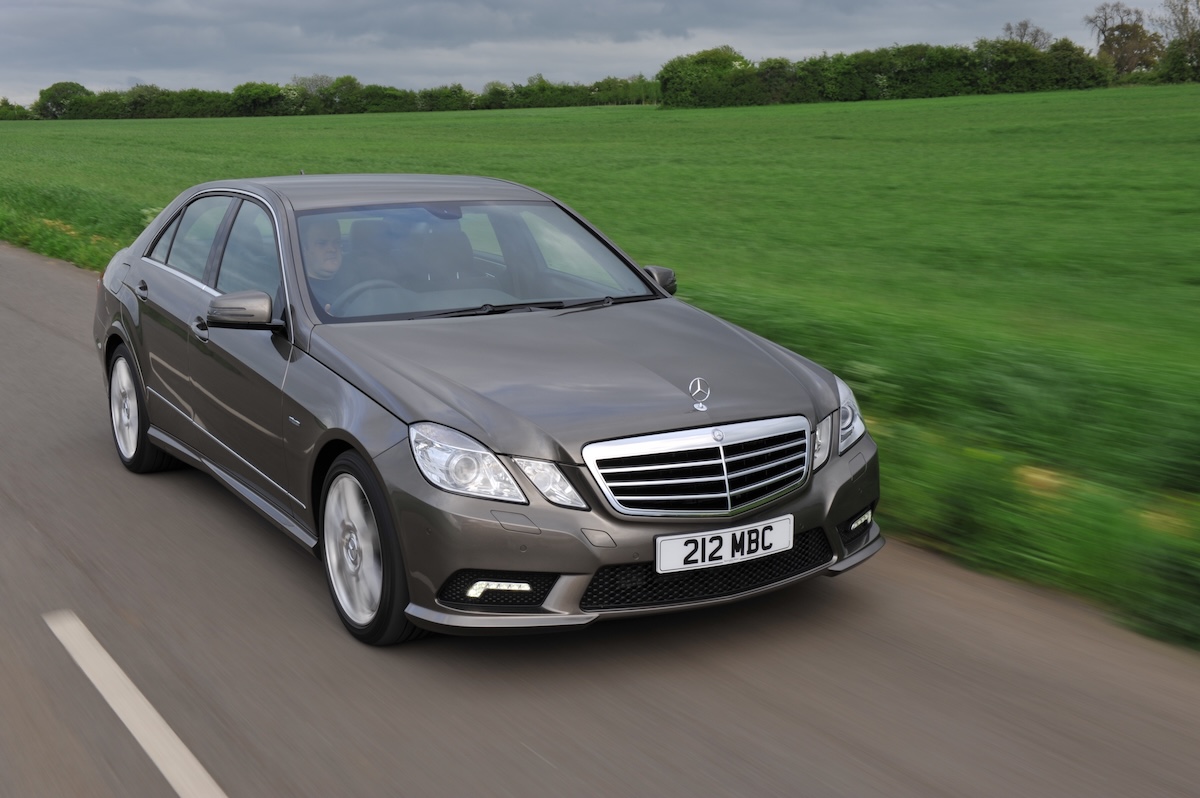
The fourth-generation Mercedes-Benz E-Class finds the model on very familiar ground. Roomy, solid, comfortable and restrained, it’s everything you expect of an E-Class. The saloon and estate models – introduced in spring 2009 – grew slightly in size, while the coupe and convertible followed a few months later. Despite their E-Class badges, the coupe and convertible are in fact – as with the CLK models they replaced – based on the smaller C-Class models of their time, sharing their basic platform and dimensions, but with an interior design and tech aligned to the E-Class.
As ever, the model range was broad, with fuel-efficient four-cylinder diesel models at one end, and incredibly powerful twin-turbo V8 AMG models at the other. While entry-level models have rear-wheel drive and a six-speed manual gearbox, most versions come with a seven-speed automatic gearbox and some have 4Matic four-wheel drive. The engine lineup includes E200 CDI, E220 CDI, E250 CDI four-cylinder diesels, and E350 CDI and E350 BlueTec six-cylinder diesels. Petrol options include E200 and E250 four-cylinder units, the six-cylinder E350, and the E500 V8. The E63 AMG is the high-performance range-topper with a 5.5-litre V8 pushing out 518bhp.
As usual, many of the advanced features of the larger S-Class became available for the E-Class. These include adaptive cruise control (labelled Distronic), a night-vision system, a lane-keep-assist system and voice control. Even the most basic E-Class of the era is well-equipped, with artificial leather- or genuine leather upholstery, climate control, heated front seats, front- and rear parking sensors, automatic wipers and a powered tailgate for estate models.
The mid-life update for this E-Class took place in 2013 and it was much more far-reaching than usual. The entire front of the car was re-styled, while the unusual circular creases along the back doors of the saloon and estate models were straightened out. It all adds up to a much sleeker, more modern-looking car and there were numerous tech and equipment upgrades to go with it. The engines were updated, with the most interesting addition being the new E300 BlueTEC Hybrid model, a diesel hybrid with combined fuel economy of more than 65mpg, according to official figures.
Like most E-Class models, the fourth-generation car is generally dependable and capable of mega miles as long as it’s been well maintained. There are a few issues to look out for: any rumbling and vibrations could suggest worn engine mounts, while failing fuel injectors can be a problem for diesel engines. Water pump failure can afflict some cars, and with automatic versions, make sure the transmission shifts smoothly.
3rd Generation (2002-2009)
Body Styles:
- Four-door saloon
- Five-door estate
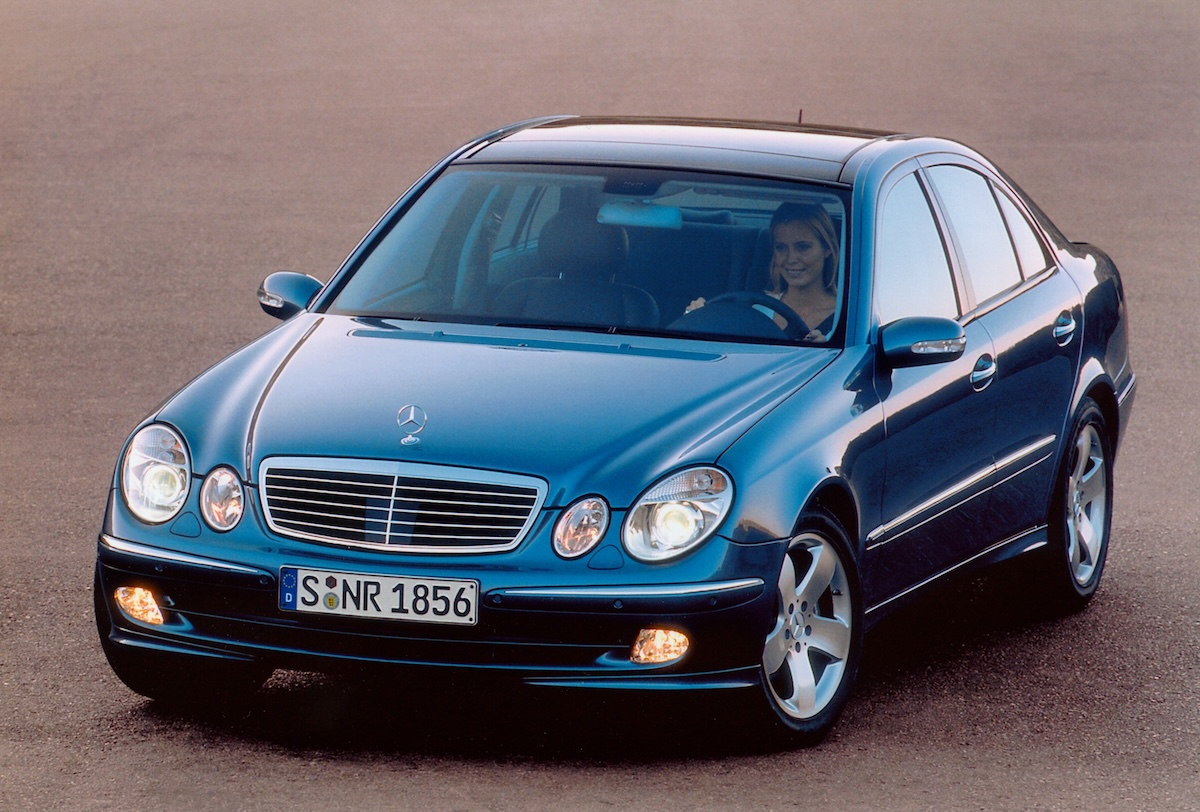
The third-generation Mercedes-Benz E-Class that went on sale in 2002 was a confident step into the noughties. At the same time as retaining all the traditional E-Class virtues, it had a much more modern character than before, with sleeker bodywork and a greater emphasis on driving appeal. Only saloon and estate models were available: Mercedes-Benz’s mid-size coupe/convertible model of the time was the C-Class-based CLK.
Although it’s not much more spacious inside than the previous E-Class (despite being larger on the outside), the third-generation E-Class is a very practical car, especially in estate form. The interior has aged well: the mass of switches dates it, but it looks comparatively modern for a car that’s twenty years old.
A range of four-cylinder, six-cylinder and eight-cylinder engines were available. Popular petrol options include the E200 Kompressor, a supercharged, four-cylinder unit, and the E350 CGI, a 3.5-litre V6. Diesel options include the big-selling E220 CDI four-cylinder and the E320 CDI, with its gutsy six-cylinder engine. While lower-cost versions had a six-speed manual gearbox as standard, many E-Class models were specified with, or had as standard, a five-speed- or seven-speed automatic gearbox. Initially the high-performance, BMW M5-rivalling version of this E-Class was the E55 AMG, which has a supercharged 5.4-litre V8 with 469bhp. In 2006 it was replaced by the E63 AMG, which has a 6.2-litre naturally aspirated V8 that produces 507bhp.
The main trim levels available from launch were Classic, Elegance and Avantgarde. There were no real holes in the specs: even entry-level Classic models have six airbags, climate control, ESP, part-electric seat adjustment and automatic wipers, although you had to move up to Elegance trim to add electric-folding door mirrors. Extras for Avantgarde trim include xenon headlamps, sport suspension and part-leather upholstery. Options when new included a heated steering wheel, ventilated front seats and, a first for the E-Class saloon, a panoramic glass sunroof. An update in 2006 brought minor cosmetic changes, engine and equipment upgrades, and the introduction of a new Sport trim level.
While you’ll find plenty of Mercedes-Benz E-Class models of this era that have covered big mileages, they’re not immune to problems. Pre-2006 models can have major brake issues and electrical gremlins, while rattling or faded interior trim isn’t uncommon. In general, a post-2006 example that’s been well maintained is worth paying more for.
2nd Generation (1995-2002)
Body Styles:
- Four-door saloon
- Five-door estate
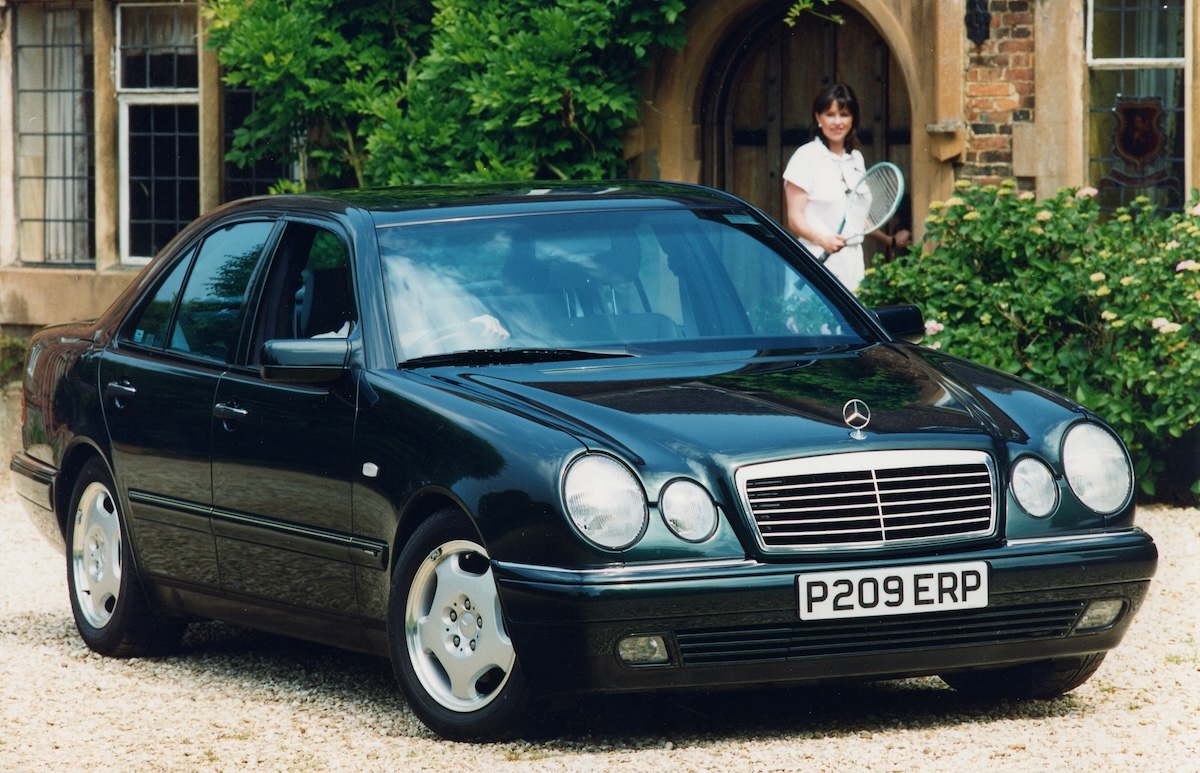
It might seem odd that the second-generation Mercedes-Benz E-Class was introduced just two years after the first-generation model, but that’s because the first one was actually just a renamed version of an existing model. The second-generation car, then, was the first to wear the name from the start. Longer and wider – but slightly lower – than the first E-Class, the second-gen model has a more rounded design and distinctive circular ‘quad’ headlights. While it might not have the clean-cut elegance of its predecessor, it has presence, even now. Despite being only marginally larger, interior space increased dramatically and is one of the car’s main attractions. Another plus point is the E-Class’ advanced (for the time) features. High-tech items such as side airbags, steering wheel-mounted controls and xenon headlights were available as standard, or as options, when new.
A huge selection of engine and drivetrains were available during the model’s seven years on sale, with four-cylinder, five-cylinder and six-cylinder diesels and four-cylinder, six-cylinder and eight-cylinder petrols. Popular choices include the E200 Kompressor and E320 petrol models and the E220 CDI diesel. Most used examples have an automatic gearbox, which suits the car’s relaxed character well. For a (much) more sporty drive there’s the E55 AMG, which has a 5.4-litre V8 with 349bhp. Saloon or estate body styles were available; although the Mercedes-Benz CLK coupe and convertible models of the time have a similar look to the E-Class, they are actually based on the C-Class.
The general consensus is that the second-generation E-Class isn’t as well-engineered as the first one, but there are still enough around to prove that it’s a generally solid proposition. Rust has killed off many of them, however: it can strike anywhere but is especially prevalent under the body and around the wheel arches.
1st Generation (1993-1995)
Body Styles:
- Four-door saloon
- Five-door estate
- Two-door convertible
- Two-door coupe
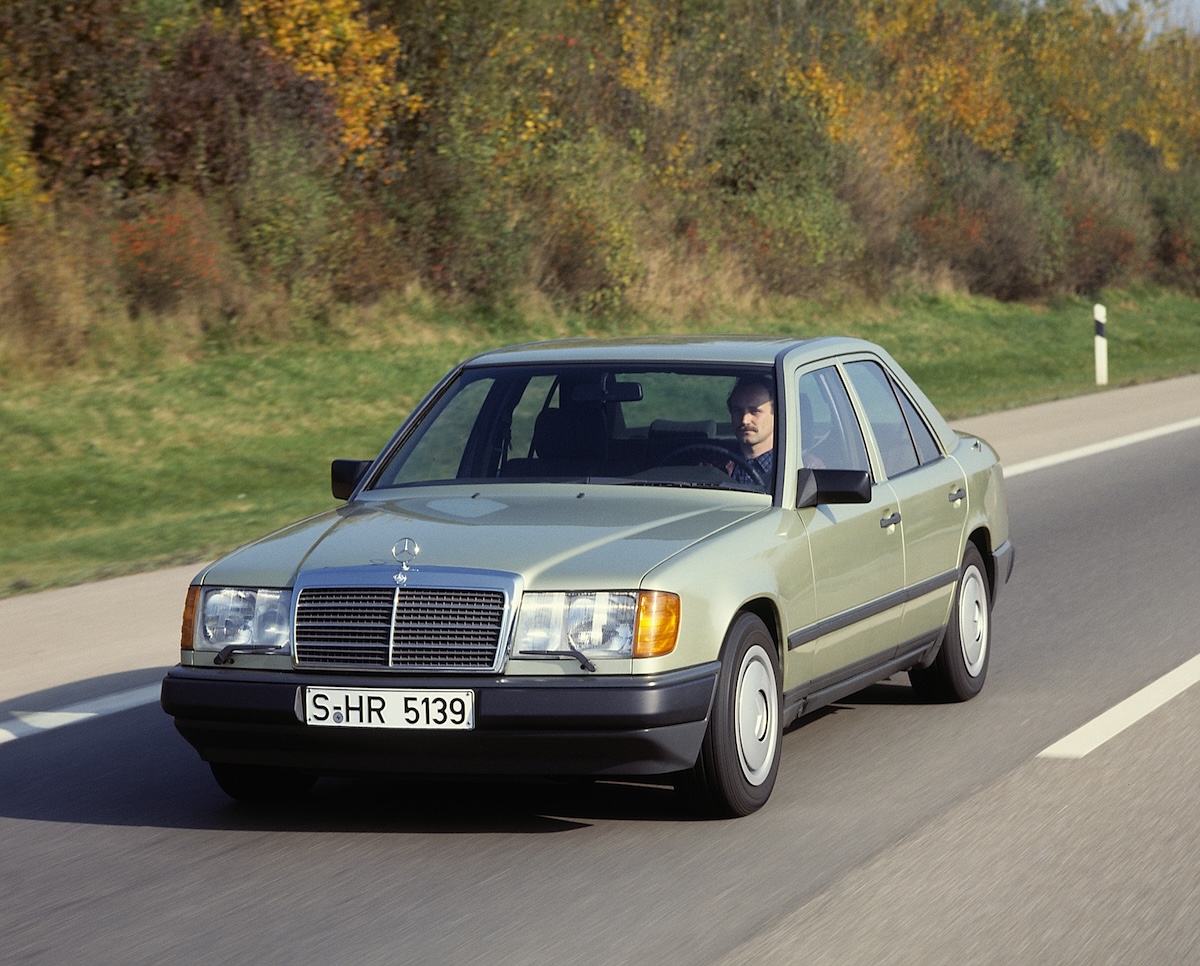
The first-generation Mercedes-Benz E-Class wasn’t an all-new model. It was actually a re-named version of the existing ‘W124’ generation of saloon, estate, coupe and convertible models which could trace its lineage all the way back to the W110 models of the 1960s, and arguably even the W120 cars from the 1950s. The new E-Class simply picked up where its predecessor left off, as one of the most elegant, high-tech executive cars of its time.
Right from the start there was a wide choice of engines, with four-cylinder and six-cylinder petrol units and a high-performance V8. There were a few diesel options, too, with five-cylinder and six-cylinder examples. All models have rear-wheel drive and most have an automatic gearbox. Available safety features included two front airbags and anti-lock brakes, technology that didn’t become common on some mainstream cars until many years later.
Despite its reputation for longevity and build quality, the Mercedes-Benz E-Class of this era is now thirty years old and the condition of those that remain depends on how well they’ve been maintained. Rust (or badly repaired rust) is certainly something to look out for: it can be a major issue that’s not cost-effective to repair.
Related Topics: