The Infiniti Q50 is the Japanese brand’s answer to the BMW 3 Series; a mid-size saloon with a premium look and feel that offers some powerful engine choices and a slightly more sporty character than average. Introduced to the UK in 2013, the Q50 is the car that Infiniti – Nissan’s premium offshoot – hoped would finally crack the UK market, after years of slow sales following the brand’s introduction in 2009. The Q50 offers a similar mix of qualities to its predecessor, the Infiniti G37. The Q50 has a more European flavour, however, and central to that is a wider engine range. The G37 was only available with a thirsty V6 petrol, but while the Q50 still offers that, it also gives you the option of four-cylinder petrol and diesel engines, and hybrid power. It’s available only as a saloon: the coupe and convertible versions of the Q50 are badged separately as Q60.
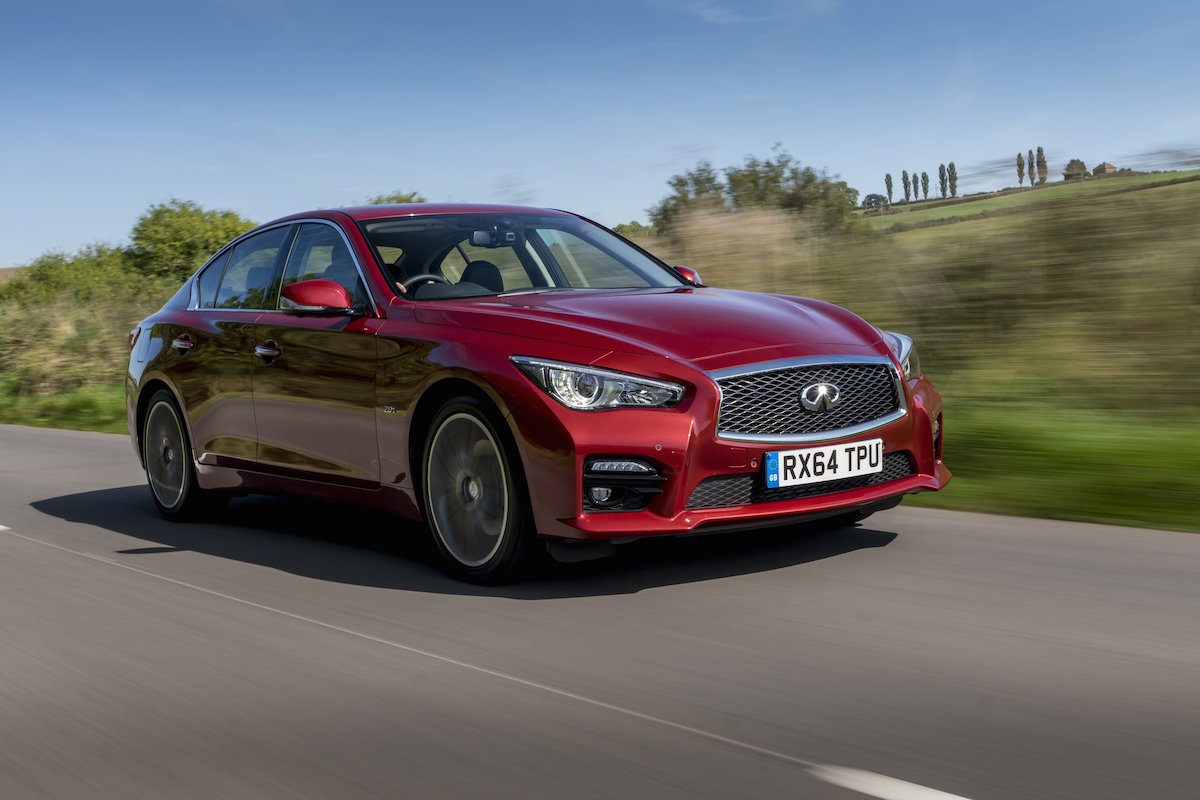
Although a very similar size and shape to the G37, the Q50 has a slightly sleeker look, with slimmer lights and more sculpted sides. It’s much the same size as rivals such as the BMW 3 Series and Mercedes-Benz C-Class, although slightly longer overall. Most versions are rear-wheel drive, but some models have four-wheel drive. A number of tech innovations give the Q50 a more modern feel than the G37, with more advanced safety features and the availability of a high-tech steering system called Direct Adaptive Steering.
One of the key selling points for Infiniti cars was the generous level of equipment for the money, and the Q50 ticks that box. All but the earliest entry-level models come with lots of kit. Unusually, the Q50 changed very little during the seven years it was on sale in the UK. An update in late 2015 brought a new V6 engine and minor tweaks to the steering and suspension, but that’s about it. Sales never amounted to what Infiniti had hoped for and the Q50 – along with every other Infiniti model – went off sale in 2020 when the brand pulled out of the UK market altogether.
Our guide to the Infiniti Q50 covers the model’s history in the UK, looking at which models were available, what to look out for, and which are the best and worst versions you can buy.
Infiniti Q50 Generations
Frequently Asked Questions
Which Infiniti Q50 years are the best?
There’s an argument that the earliest Infiniti Q50 models are the best since they are the cheapest to buy and the model changed little over the years. It could be worth going for a post-2016 model, however, since this gives you a wider range to choose from and incorporates steering and suspension updates that make it better to drive.
Which Infiniti Q50 years are the worst?
With such a low number sold, there’s no definitive data on which Infiniti Q50 model years are the worst for reliability. Warped brakes can affect just about any version, while premature turbo failure can be an issue for 3.0t versions of any age.
Is a used Infiniti Q50 a good deal?
A used Infiniti is a brave choice as a used car since it’s something of an unknown quantity. It could be a good deal if you’re simply looking for something a bit different to other mid-size premium saloons, although the reality is that there are plenty of solid reasons why it didn’t sell very well.
Infiniti Q50 Pros and Cons
Pros:
- Fuel-efficient diesel engine
- Most versions have lots of kit
- Powerful V6 petrol
Cons:
- Dull interior
- Felt dated by the end of its seven-year run
- Not especially good to drive
Infiniti Q50 Generations
First Generation (2009-2013)
Bodystyles:
Only one generation of Infiniti Q50 was sold in the UK, between 2013 and 2020. It was part of a major push to make Infiniti – Nissan’s premium brand – a success here, with the aim to do what Toyota did with Lexus, its premium offshoot. A smidge over 2600 Q50s were sold during its seven-year run, so it’s safe to say that it didn’t do good business. In fact, Infiniti as a brand never caught on, and pulled out of the UK entirely in 2020.
It wasn’t for lack of trying, however, and a lot of effort was put into making the Q50 more attuned to European tastes than the Q37 it replaced. Much of that down to a far wider choice of engines. From launch, there was a 167 bhp 2.1-litre diesel engine (badged 2.2d). This was a Mercedes-Benz engine used as part of a shared technology agreement between the two brands. There was also a hybrid option that combined a 3.5-litre V6 petrol engine with a 50kW electric motor for a total output of 351 bhp. A few months after launch, a four-cylinder, 2.0-litre turbocharged petrol engine (also shared with some Mercedes-Benz models) with 208 bhp was added to the range. The final addition to the lineup – in late 2015 – was a turbocharged 3.0-litre V6 petrol (badged 3.0t) with a hearty 399 bhp. While the diesel was available with either a six-speed manual gearbox or a seven-speed automatic when new, all the others have a seven-speed auto’ as standard.
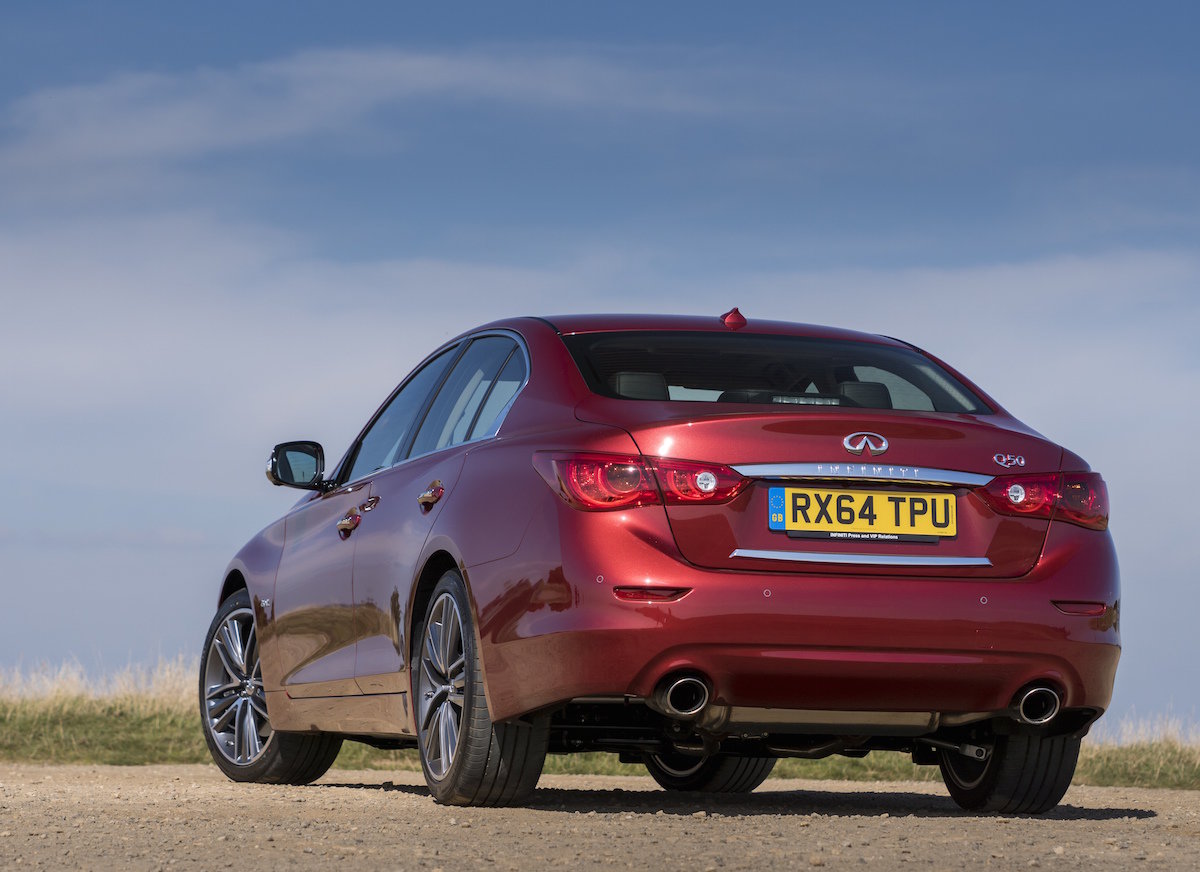
Rear-wheel drive is the default layout for each of them, too, although the hybrid is also available with four-wheel drive. The diesel is impressively fuel-efficient, giving more than 65mpg on average, according to official figures. You’re looking at mid-40s for both the 2.0t and the hybrid, while the 3.0t manages just over 30mpg.
Some high-spec models have what Infiniti called ‘Direct Adaptive Steering’, a high-tech system where there’s no mechanical link between the steering wheel and the front wheels. The general consensus is that it’s best avoided if possible since it feels artificial and doesn't inspire much confidence.
The interior is packed with tech features – including two touchscreens – and is well built, but looks rather dull. All versions are well-equipped. Even the earliest (unnamed) entry-level trim includes voice recognition, a rear-view camera and dual-zone climate control. The lineup changed over the years, with trim levels including Premium, Premium Tech, S Sport, Sport Tech, Luxe, Executive, Premium Executive and Sport Executive. Most include LED headlights, leather upholstery, heated and electrically adjustable front seats and electric steering column adjustment. Sportier versions have stiffer suspension, a different front bumper design and sport front seats.
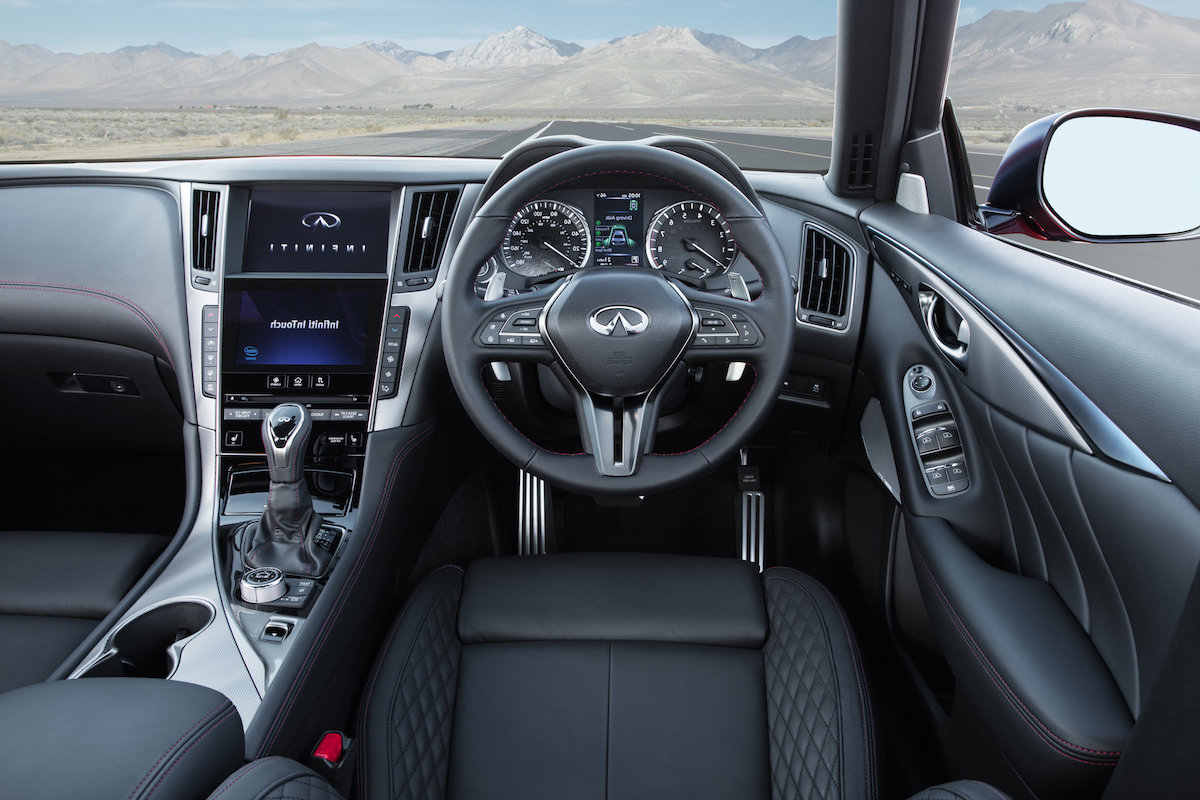
Despite a comparatively long production run, the Q50 didn’t change much over the years. An update in 2015 left the exterior and interior more or less untouched, but there were changes to the suspension for a smoother ride and the Direct Adaptive Steering system was modified to give a more reassuring feel.
With so few Q50s sold in the UK, there’s not a huge amount of robust reliability data out there. It has a generally solid reputation in the US – where many more were sold – but owners have cited problems with warped brakes across all versions, and some turbo failures in 3.0t models.
Related Topics: