If you're in the market for a family SUV, the Nissan Qashqai and Hyundai Tucson are almost certainly on your list. These two are titans of the segment, offering the practicality, technology, and style that UK buyers are looking for.
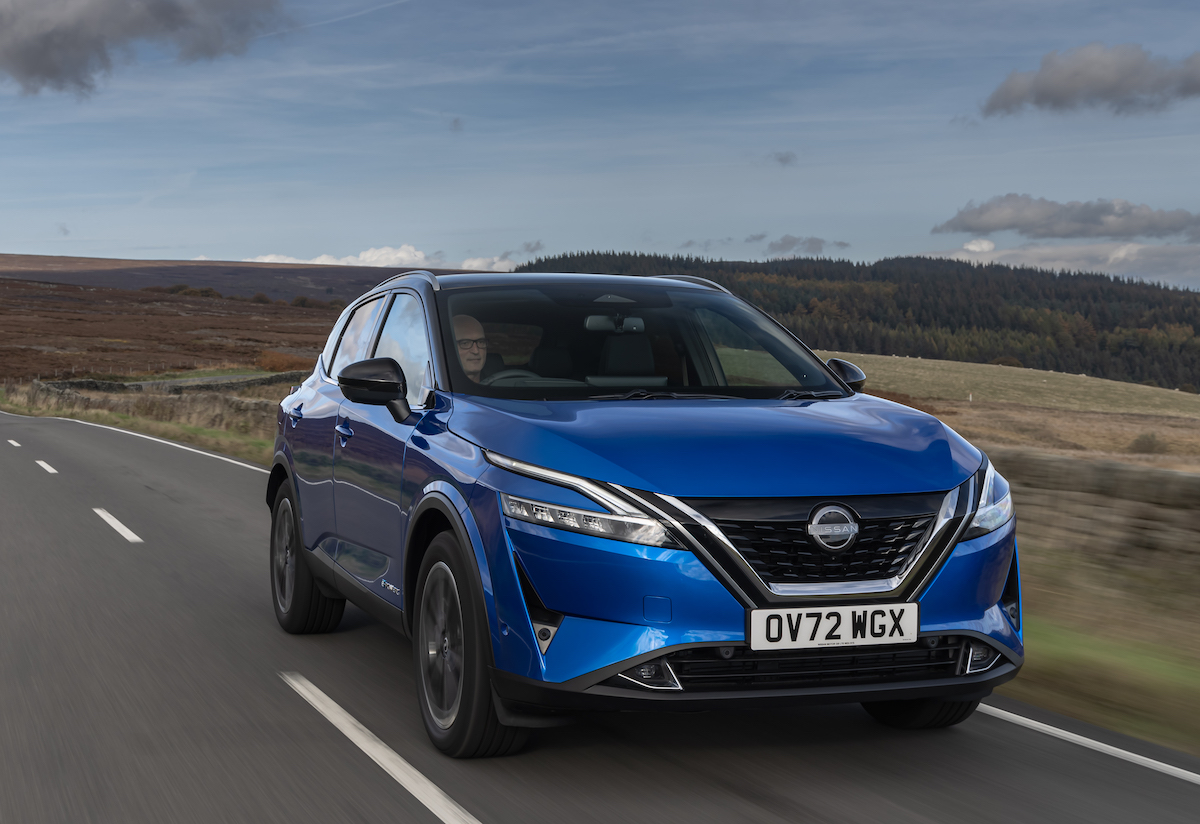
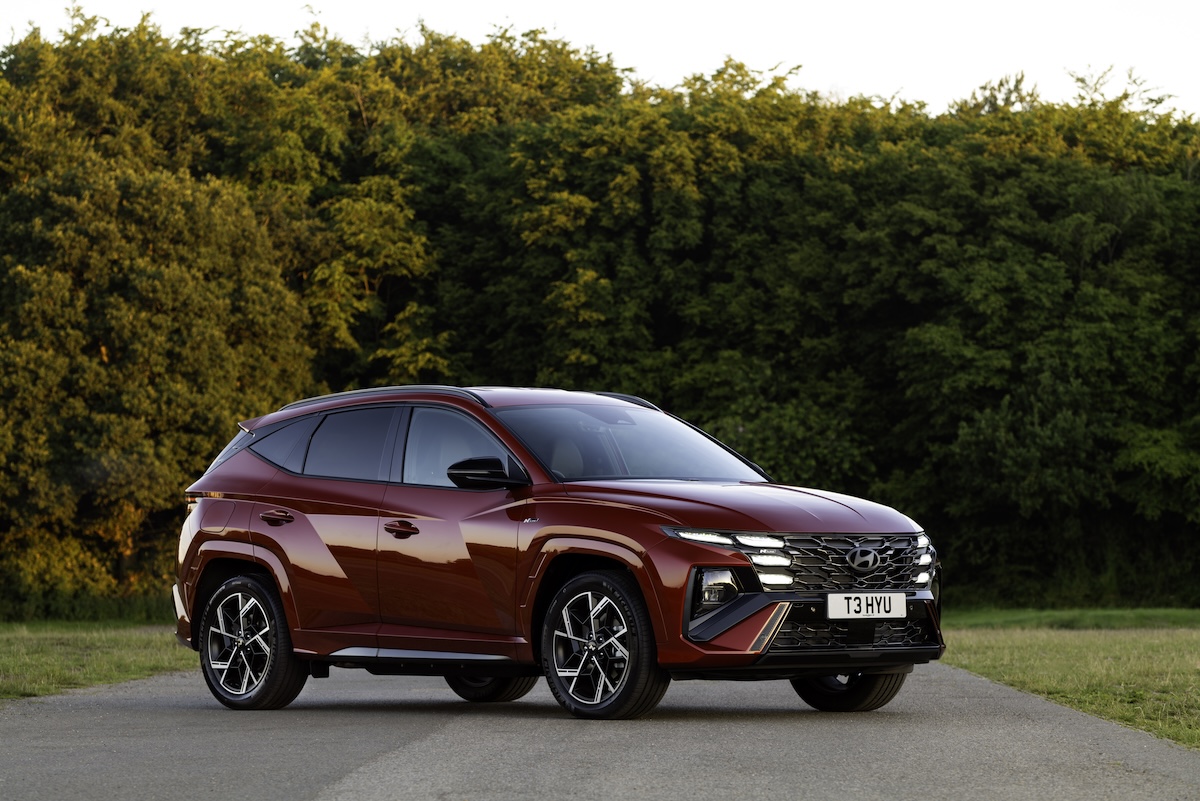
The Qashqai is the car that started the crossover craze, and this latest version brings sharper looks and a clever e-Power hybrid system. The Hyundai Tucson, on the other hand, has shaken up the class with its bold, futuristic design and a cabin packed with technology. Both are strong contenders, but which one is the better fit for you?
Nissan Qashqai vs Hyundai Tucson
Practicality
Nissan Qashqai practicality score: 4/5
Hyundai Tucson practicality score: 4/5
When it comes to family duties, both of these SUVs deliver. The Nissan Qashqai offers a useful 504-litre boot, which is a good size for the class, and comes with a handy adjustable floor. There's plenty of leg and headroom in the back for adults, making it a comfortable space for passengers.
The Hyundai Tucson, however, takes the lead on boot space. In its non-hybrid form, it boasts a huge 620-litre capacity. Even the hybrid models offer more luggage room than the Qashqai. Passenger space is also generous, with lots of room to stretch out in the back. While both are practical choices, if maximum boot space is your priority, the Tucson has the edge.
Driving Impressions
Nissan Qashqai driving score: 4/5
Hyundai Tucson driving score: 4/5
The Qashqai keeps its engine range simple. You can have a 1.3-litre mild-hybrid petrol engine or the more interesting e-Power hybrid. The e-Power model uses its petrol engine as a generator to power an electric motor, which gives it the smooth, instant response of an electric car without the need to plug in. The Qashqai is comfortable and handles neatly, making it an easy and pleasant car to drive.
The Tucson offers a much wider menu of powertrains, including a standard petrol, a mild hybrid, a 'self-charging' hybrid, and a plug-in hybrid (PHEV) with a useful 40-mile electric range. The regular hybrids offer a good blend of performance and economy. The Tucson is comfortable for the most part, though it can feel a bit firm over bumps on larger wheels. It's a capable cruiser, but the Qashqai feels a little more composed on a twisty road.
Technology and Equipment
Nissan Qashqai technology and equipment score: 4/5
Hyundai Tucson technology and equipment score: 4/5
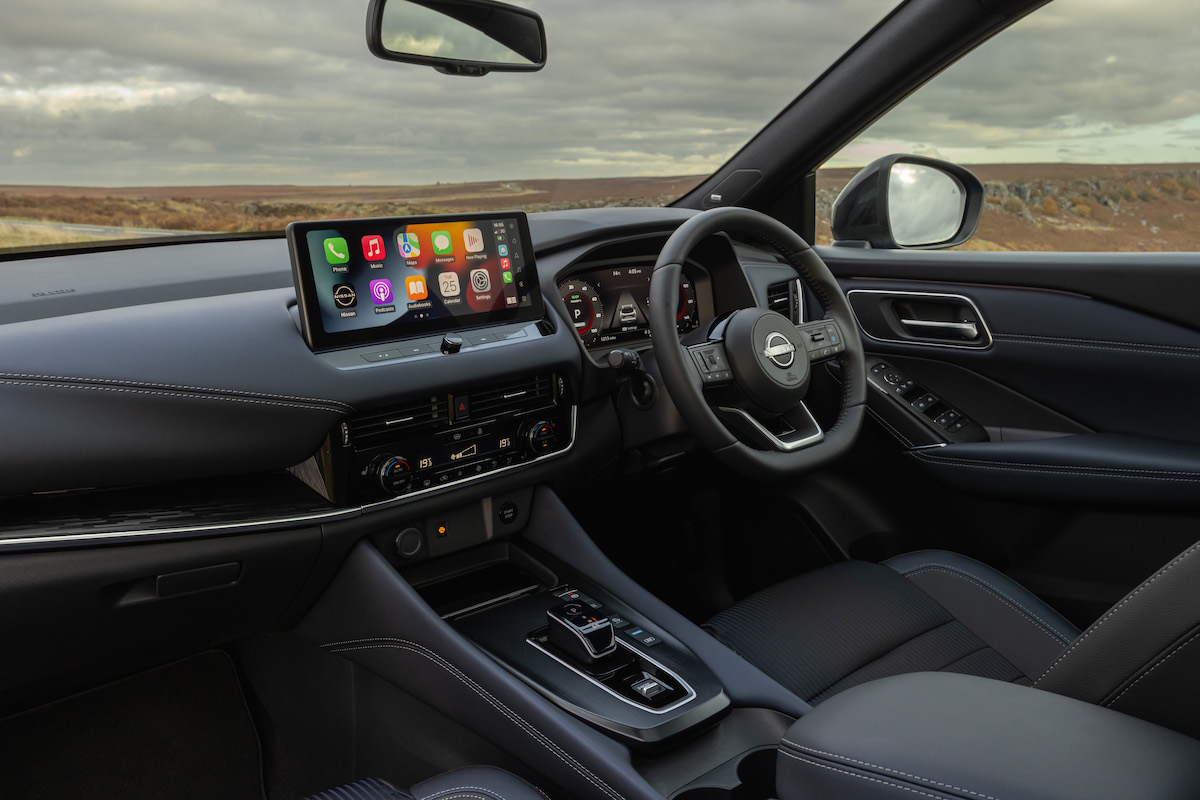
Step inside, and both cars offer plenty of modern tech. The Qashqai comes with a central touchscreen (upgraded to a larger 12.3-inch screen on later models) that's straightforward to use. Standard equipment is good across the range, with features like LED headlights and adaptive cruise control often included.
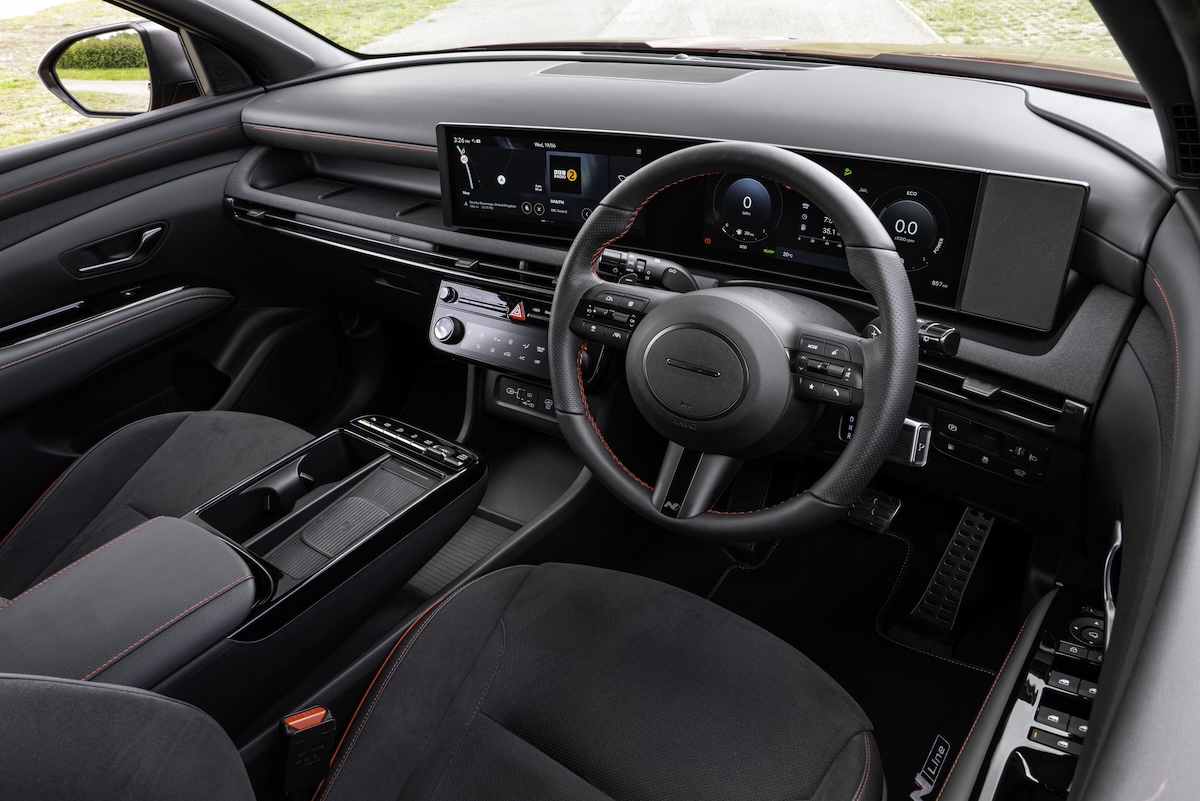
The Hyundai Tucson feels a bit more special inside, especially on post-facelift models with their slick, curved dual 12.3-inch screens. It creates a premium feel that matches the car's upmarket ambitions. Even lower-spec models are well equipped, and the cabin materials and design give the Tucson a slight advantage in terms of showroom appeal.
Running Costs
Nissan Qashqai running costs score: 4/5
Hyundai Tucson running costs score: 4/5
For the mild-hybrid petrol models, there isn't much to separate the Qashqai and Tucson, with both returning around 40-45mpg. The Tucson's plug-in hybrid offers the potential for low fuel bills if you can charge it regularly, while its self-charging hybrid is a good all-rounder, capable of over 50mpg.
The biggest difference in ownership costs, however, comes down to peace of mind. Nissan provides a standard three-year, 60,000-mile warranty. Hyundai, on the other hand, offers its excellent five-year, unlimited-mileage warranty. That extra cover is a significant benefit, particularly for those buying a used car or planning to keep their car for a long time.
CarGurus Buyer Insights
|
Nissan Qashqai |
Hyundai Tucson |
| CarGurus expert rating |
4 out of 5 |
4 out of 5 |
| CarGurus user rating |
4.6 out of 5 |
4.8 out of 5 |
| Percentage of good/great deals available on CarGurus* |
32.0% |
33.1% |
| Overall CarGurus rating |
4.4 out of 5 |
4.5 out of 5 |
The Verdict
Nissan Qashqai Overall CarGurus rating: 4.4/5
Hyundai Tucson Overall CarGurus rating: 4.5/5
This is a close-fought contest between two of the best family SUVs on the market. However, based on our comprehensive CarGurus Buyer Insights, the Hyundai Tucson takes the victory. It scores higher with users, offers a greater percentage of good and great deals, and its higher Overall CarGurus rating of 4.5 out of 5 edges out the Qashqai's 4.4.
The Nissan Qashqai remains a superb all-rounder. It's comfortable, easy to drive, practical enough for most families, and its e-Power hybrid system is a refined and efficient choice. It's the sensible, well-judged option that does everything well.
The Hyundai Tucson, however, makes a stronger case overall. Its bold design turns heads, its interior feels a class above, and it offers more boot space and a wider range of powertrains. Crucially, its five-year, unlimited-mileage warranty provides superior long-term peace of mind compared to Nissan's three-year cover. If you value striking design, maximum practicality, and that longer warranty, the Tucson is the one to have. It's a worthy winner in this battle of the family SUVs.
Nissan Qashqai Pros and Cons
| Pros |
Cons |
| Refined e-Power hybrid option |
Less powertrain choice than Tucson |
| Comfortable and composed ride |
Boot isn't the biggest in class |
| Generous standard equipment |
Shorter warranty than the Hyundai |
Hyundai Tucson Pros and Cons
| Pros |
Cons |
| Striking exterior and interior design |
Ride can be firm on larger wheels |
| Huge boot and spacious cabin |
Entry-level engine feels underpowered |
| Excellent five-year warranty |
Polarising looks |
*The Overall CarGurus rating: that informs these recommendations is based on CarGurus' proprietary market data from May 2026, CarGurus expert reviews, and CarGurus user reviews.
Read Our Full Reviews: