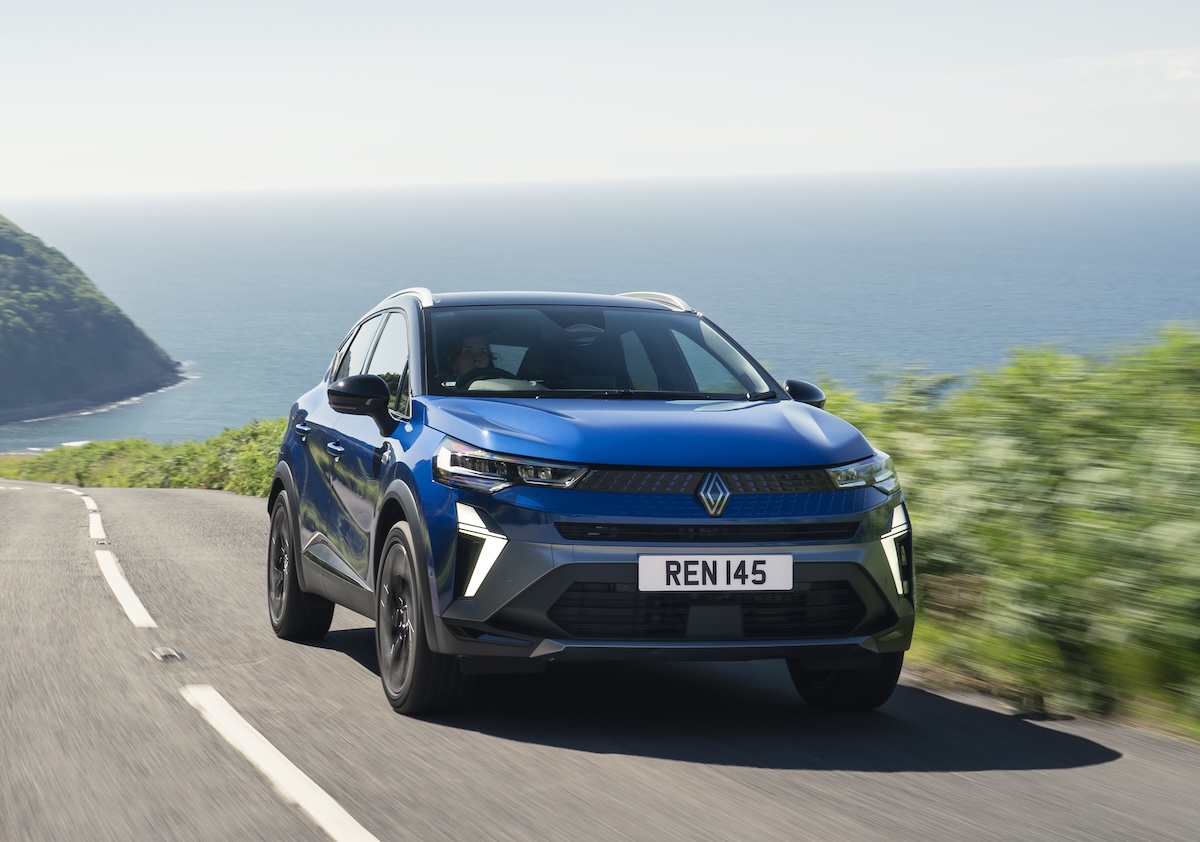
The compact crossover market is one of the most crowded, with nearly every manufacturer offering its take on the perfect blend of style, practicality, and efficiency. Two of the most distinctive contenders are the Renault Captur and the Nissan Juke.
The second-generation Captur, launched in 2020, builds on the success of the original with a more sophisticated design and improved practicality. The Nissan Juke, on sale since 2019, is a more refined and grown-up version of the car that started the trend for boldly-styled small SUVs. Both offer efficient hybrid power and target buyers who want something more interesting than a regular hatchback, so which one is the better choice?
Renault Captur vs Nissan Juke
Practicality
Renault Captur practicality score: 4/5
Nissan Juke practicality score: 4/5
The Renault Captur has a clever trick up its sleeve: a sliding rear bench. This allows you to prioritise either rear legroom or boot space. With the seats slid forward, the boot expands from a useful 422 litres to a substantial 536 litres. The Juke's boot is a fixed 422 litres, so it can't match the Captur for outright luggage capacity. It's worth noting that choosing the hybrid version of either car reduces boot space to accommodate the batteries.
In the cabin, both cars can fit four adults, but the Captur feels a little more spacious and airy, especially in the back. The Juke is much improved over the original, but its smaller rear windows and tighter headroom can make it feel a bit more enclosed for taller passengers. For families that need maximum flexibility for carrying people and luggage, the Captur's sliding rear seat gives it a clear advantage.
Driving Impressions
Renault Captur driving score: 4/5
Nissan Juke driving score: 3/5
Neither of these crossovers is designed to be a sports car, with the focus firmly on comfort and ease of use. The Captur provides a comfortable and quiet ride, making it a relaxing companion on long motorway journeys and around town. Its E-Tech hybrid system is smooth and runs on electric power frequently in urban driving, although the automatic gearbox can sometimes be slow to respond when you ask for a sudden burst of speed.
The Juke has a slightly firmer setup, which gives it a more connected feel on a winding road. The steering is well-weighted and it handles tidily, but the trade-off is a ride that can feel a bit jittery over bumps at low speeds. The Juke's hybrid also features Nissan's clever e-Pedal, which allows for one-pedal driving in some situations. Overall, the Captur has the edge for refinement and comfort, while the Juke offers a little more driver engagement.
Technology and Equipment
Renault Captur technology and equipment score: 4/5
Nissan Juke technology and equipment score: 3/5
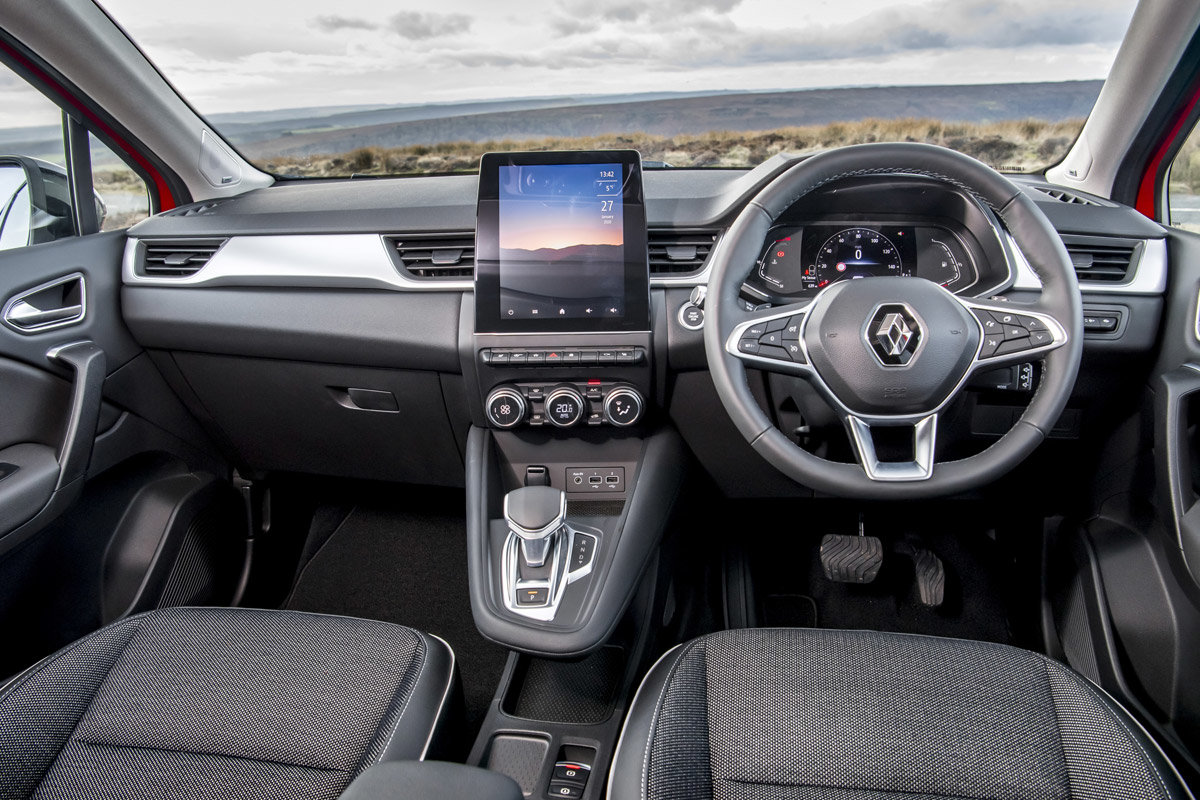
Following a 2024 facelift, the Captur now boasts one of the best infotainment systems in its class. Mid-range models and above get a large 10.4-inch portrait touchscreen powered by Google. It's intuitive to use, features Google Maps, and has reliable voice recognition. Helpfully, there are still physical buttons for the climate controls.
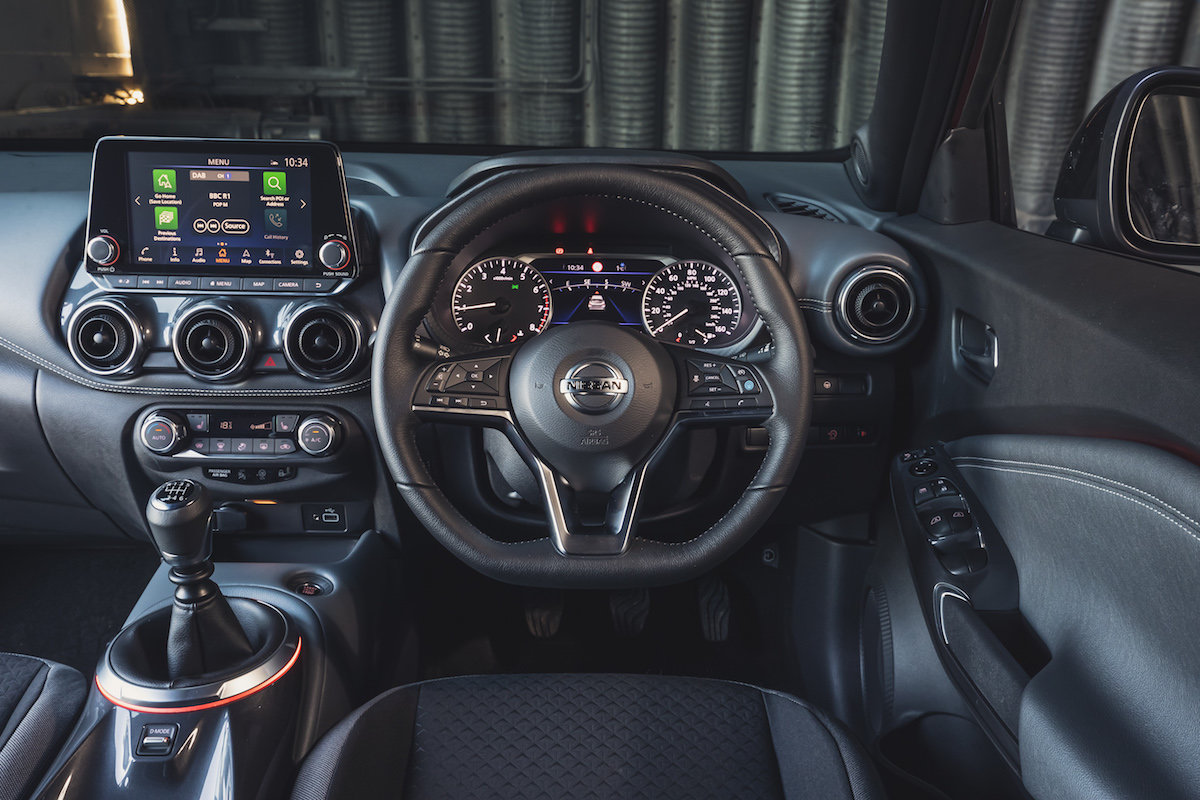
The Juke also received a tech update in 2024, with most models getting a new 12.3-inch central screen and a digital driver's display. The graphics are sharp, but the system isn't as simple to navigate as the Captur's Google-based setup. Both cars come with plenty of standard kit, including Apple CarPlay and Android Auto, but the Captur's superior and more user-friendly infotainment system gives it the win in the technology stakes.
Running Costs
Renault Captur running costs score: 4/5
Nissan Juke running costs score: 3/5
As you'd expect from modern compact crossovers, both the Captur and Juke offer appealing running costs. The hybrid models are the stars, with the Captur E-Tech officially returning up to 60mpg and the Juke Hybrid close behind at 59mpg. In real-world driving, especially around town, you can get close to these figures.
The non-hybrid petrol versions are also efficient, with both cars managing official figures in the high 40s for mpg. Insurance groups and residual values are broadly similar for both models, meaning neither should cost you a fortune to own. The Captur's slightly more efficient hybrid powertrain gives it a marginal advantage, but both represent good value in this segment.
CarGurus Buyer Insights
|
Renault Captur Review (2020-present) |
Nissan Juke Mk2 Review (2020-present) |
| CarGurus expert rating |
4 out of 5 |
3 out of 5 |
| CarGurus user rating |
4.4 out of 5 |
4.4 out of 5 |
| Percentage of good/great deals available on CarGurus* |
34.0% |
33.3% |
| Overall CarGurus rating |
4.4 out of 5 |
4.2 out of 5 |
The Verdict
Renault Captur Overall CarGurus rating: 4.4/5
Nissan Juke Overall CarGurus rating: 4.2/5
While both the Renault Captur and Nissan Juke are strong contenders in the compact crossover class, there can only be one winner. Based on our comprehensive CarGurus Buyer Insights, the victory goes to the Renault Captur.
With a higher Overall CarGurus rating of 4.4 out of 5, the Captur proves itself to be the better all-round package. It scores higher than the Juke in our expert ratings for driving, technology, and running costs. Its superior practicality, thanks to that clever sliding rear bench, and its class-leading Google infotainment system make it a more sensible and user-friendly choice for most buyers.
The Nissan Juke puts up a good fight with its head-turning style and engaging drive, and it matches the Captur in user reviews. However, the Captur's blend of comfort, practicality, technology and value is a combination that's hard to ignore, making it our winner in this comparison.
Renault Captur Pros and Cons
| Pros |
Cons |
| Sliding rear bench adds versatility |
Hybrid boot space is reduced |
| Excellent Google-based infotainment |
Not the most engaging to drive |
| Comfortable ride and efficient hybrid |
Some interior plastics feel ordinary |
Nissan Juke Pros and Cons
| Pros |
Cons |
| Distinctive, bold styling |
Less practical than the Captur |
| Engaging handling and steering feel |
Infotainment isn't as intuitive |
| Updated interior with large screens |
Rear headroom is tight for tall adults |
*The Overall CarGurus rating that informs these recommendations is based on CarGurus' proprietary market data from May 2026, CarGurus expert reviews, and CarGurus user reviews.
Read Our Full Reviews: