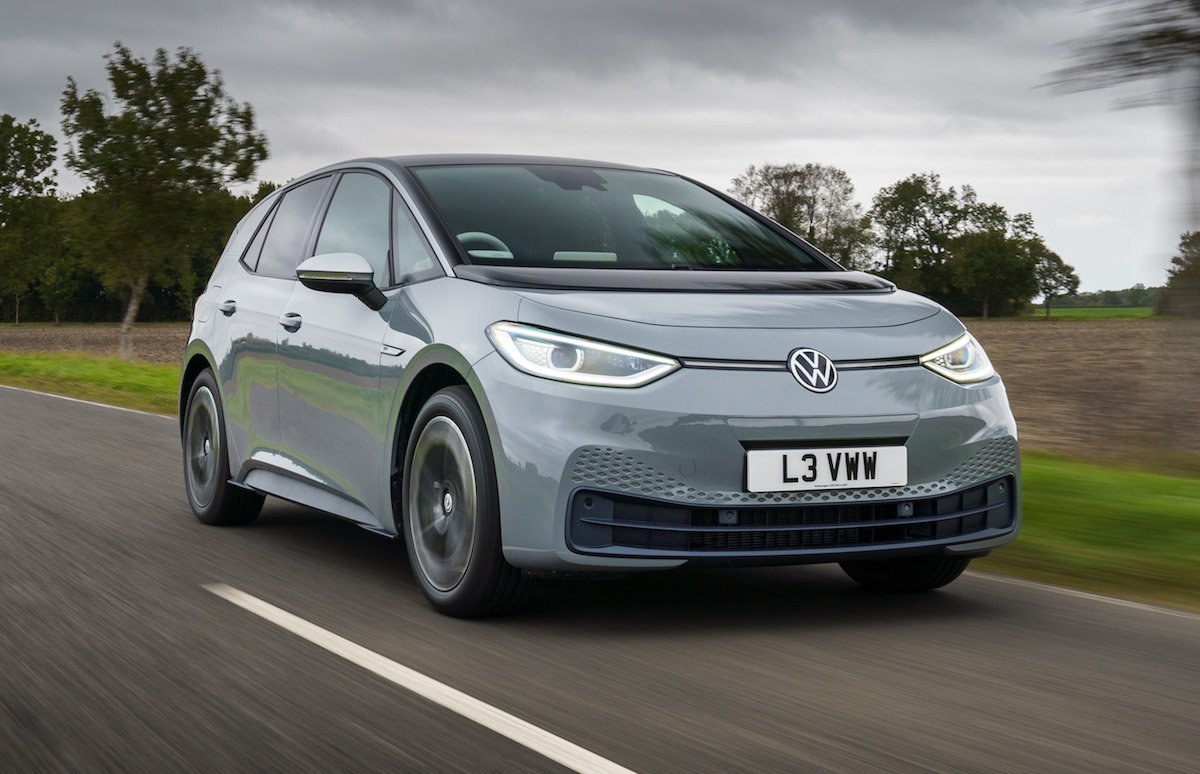
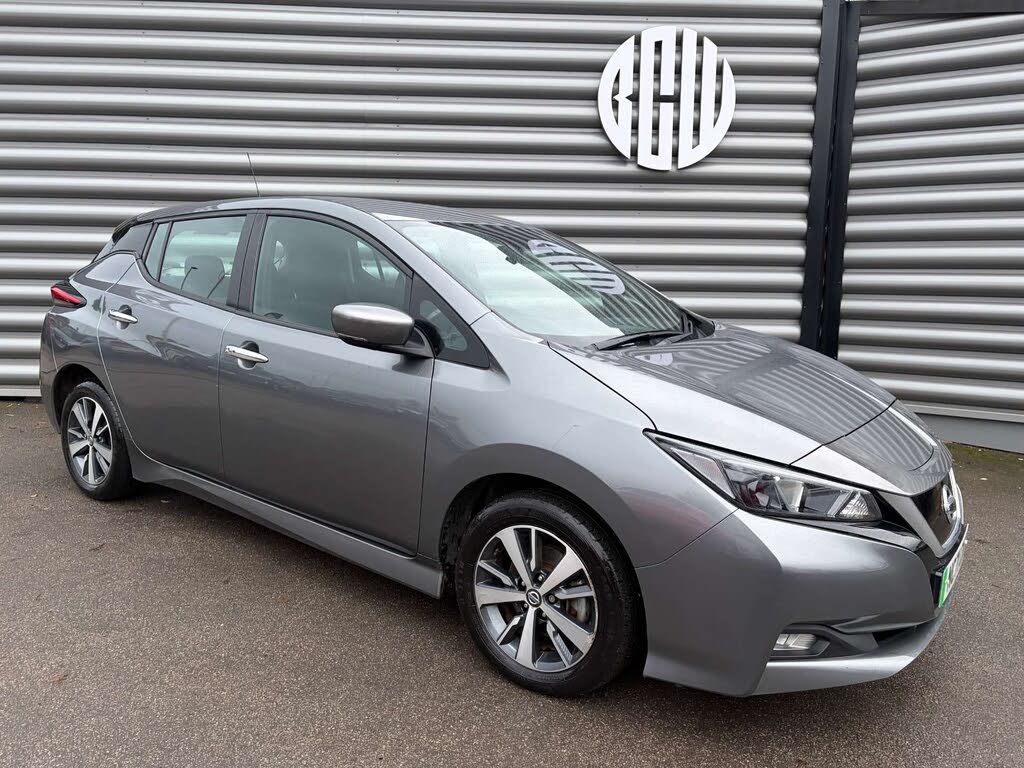
If you're looking for an electric family hatchback, the Volkswagen ID.3 and Nissan Leaf are two of the most established names in the game. The ID.3 was VW's first purpose-built EV, designed to be the electric equivalent of the iconic Golf. It brings futuristic styling and a modern, minimalist interior.
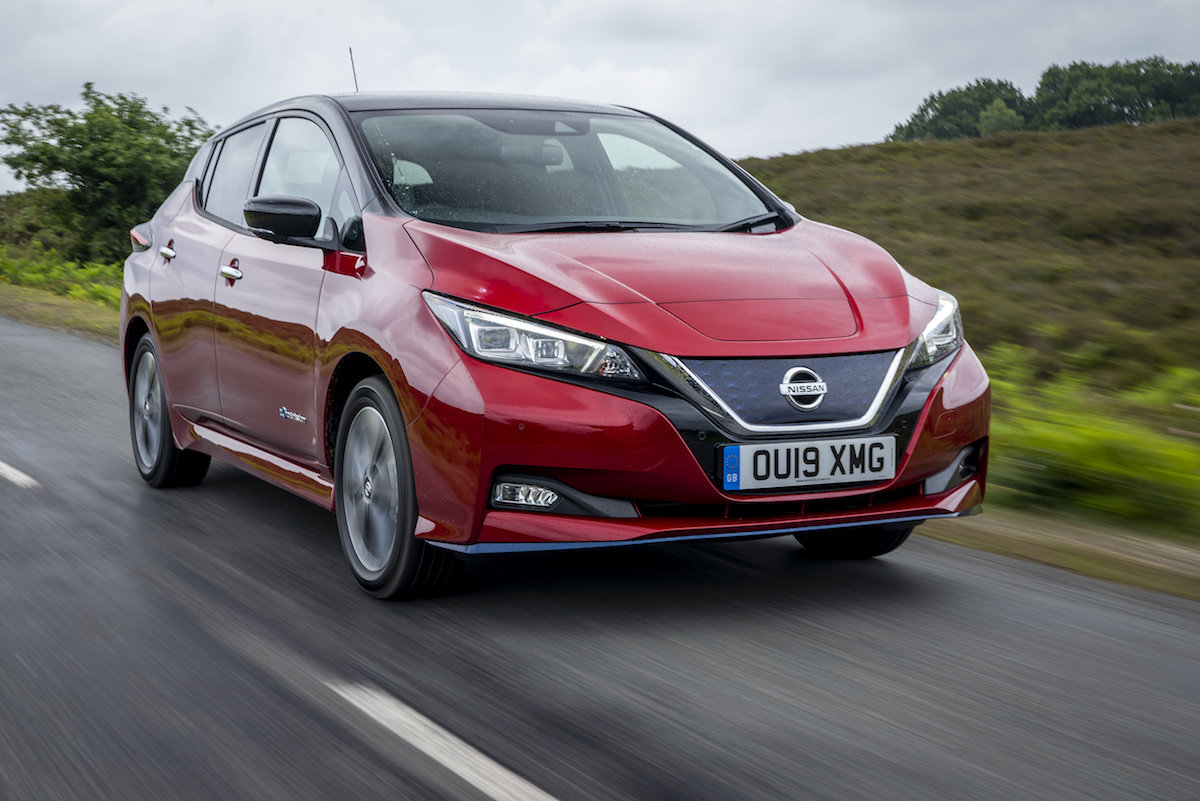
The Nissan Leaf, on the other hand, is a true pioneer of the electric car world. This second-generation model, sold until early 2024, wrapped its proven electric tech in a more conventional and sharply styled package. With the Leaf now an attractive used buy and the ID.3 having had a few years to mature, which of these electric hatchbacks makes the most sense?
Volkswagen ID.3 vs Nissan Leaf
Practicality
Volkswagen ID.3 practicality score: 4/5
Nissan Leaf practicality score: 4/5
On paper, the Nissan Leaf has a clear advantage in boot space, offering a generous 435 litres to the ID.3's 385 litres. That extra capacity is noticeable and makes the Leaf a strong contender for families who need to carry bulky items. However, the ID.3 fights back with better passenger space. Thanks to its dedicated EV platform, there's more head- and legroom for rear-seat passengers than in the Leaf.
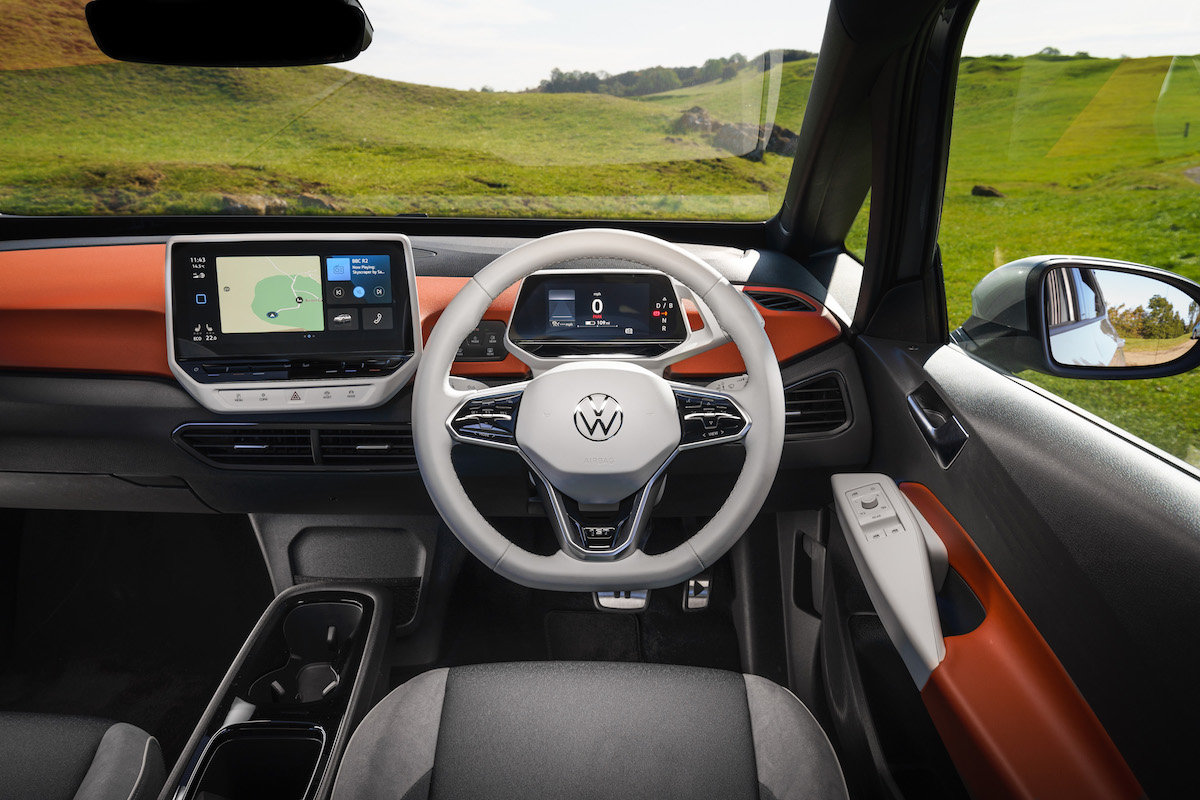
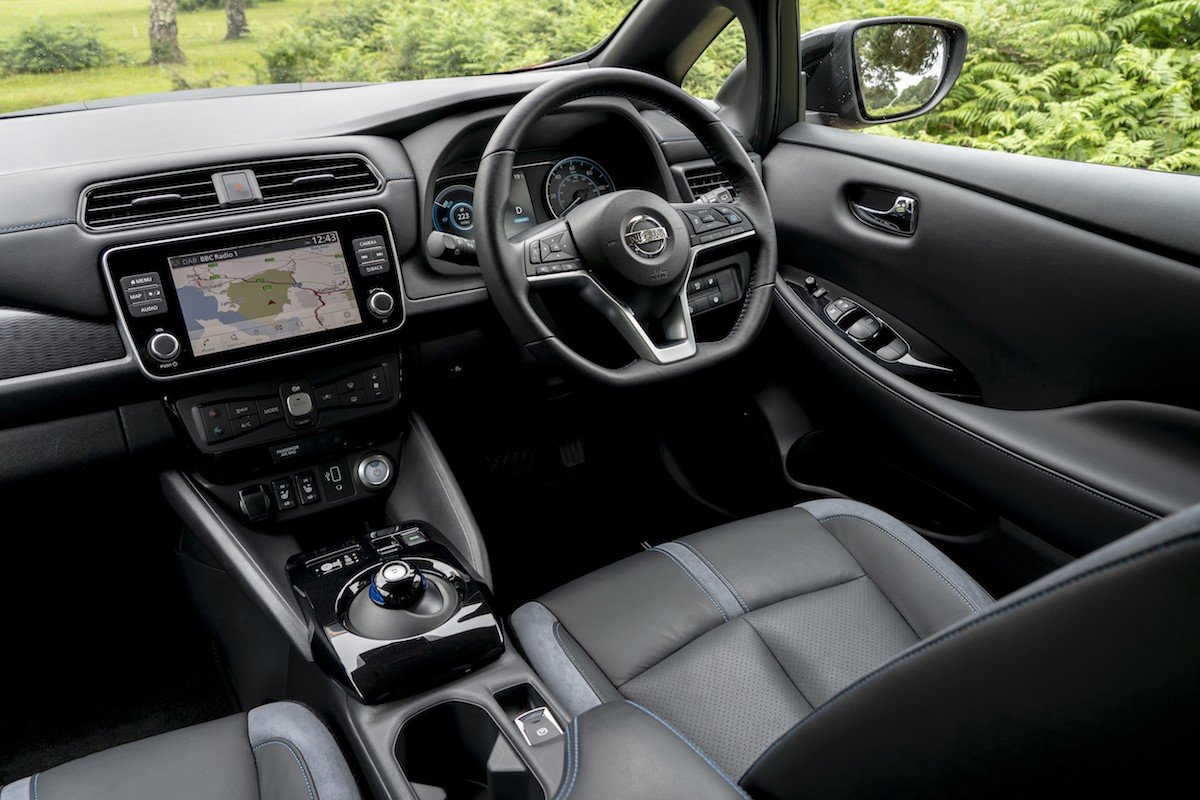
Up front, the ID.3 offers a better driving position, with plenty of adjustment in the seat and steering wheel. The Leaf is less accommodating, particularly for taller drivers, as its steering wheel only adjusts for height, not reach. It's also worth noting that the long-range 77kWh version of the ID.3 is a strict four-seater. For pure luggage capacity the Leaf wins, but for passenger comfort, the ID.3 has the edge.
Driving Impressions
Volkswagen ID.3 driving score: 4/5
Nissan Leaf driving score: 3/5
Both cars offer the quiet, smooth, and instant acceleration that makes EVs so relaxing to drive. The ID.3's rear-mounted motor produces 201bhp, giving it brisk performance, but it's tuned for calmness rather than outright sportiness. Its rear-wheel-drive layout, combined with a low centre of gravity, gives it composed and tidy handling, though the ride can feel a little firm over sharp bumps.
The Leaf is available with either 148bhp or 214bhp (in the e+ model). The standard car has enough punch for town driving and feels comfortable on the motorway. Its standout feature is the 'e-Pedal', which allows for one-pedal driving by using strong regenerative braking to slow the car to a stop. It's a system that can make city driving feel effortless once you're used to it. While the ID.3 is the more engaging car to drive on a winding road, the Leaf's e-Pedal is a clever feature for urban journeys.
Technology and Equipment
Volkswagen ID.3 technology and equipment score: 3/5
Nissan Leaf technology and equipment score: 3/5
Both cars come with a good level of standard equipment, including large central touchscreens, digital driver's displays, and key safety features like adaptive cruise control. The ID.3's minimalist cabin is dominated by its infotainment screen, which looks modern but can be frustrating to use on the move, with key functions hidden in sub-menus.
The Leaf's system is more conventional, with more physical buttons, making it more user-friendly. Both support Apple CarPlay and Android Auto. The biggest technological difference lies in their charging capabilities. The ID.3 uses the modern and widespread CCS standard for rapid charging, while the Leaf uses the older CHAdeMO plug, which is being phased out at new charging stations. This gives the ID.3 a significant advantage for long-distance travel and future-proofing.
Running Costs
Volkswagen ID.3 running costs score: 4/5
Nissan Leaf running costs score: 4/5
As electric cars, both the ID.3 and Leaf offer the potential for low running costs, with zero road tax (VED) and exemption from clean air zone charges. When charging at home, both are cheap to run. In terms of efficiency, the Leaf often performs better in real-world driving, achieving between 3.6 and 4.0 miles per kWh. The ID.3 can be less efficient, sometimes dipping below 3.0 miles per kWh at motorway speeds.
However, the ID.3 claws back an advantage on servicing. It only needs a check-up every two years, regardless of mileage. The Leaf requires a service every year or 18,000 miles. While both cars are far cheaper to run than a petrol or diesel equivalent, the ID.3's longer service intervals are a welcome convenience.
CarGurus Buyer Insights
|
Volkswagen ID.3 |
Nissan Leaf |
| CarGurus expert rating |
4 out of 5 |
3 out of 5 |
| CarGurus user rating |
0.0 out of 5 |
3.8 out of 5 |
| Percentage of good/great deals available on CarGurus* |
33.9% |
31.2% |
| Overall CarGurus rating |
3.9 out of 5 |
4.1 out of 5 |
The Verdict
Volkswagen ID.3 Overall CarGurus rating: 3.9/5
Nissan Leaf Overall CarGurus rating: 4.1/5
This is a close contest between two capable electric family cars, but there has to be a winner. Based on our comprehensive CarGurus Buyer Insights, the Nissan Leaf takes the victory with a higher Overall CarGurus rating of 4.1 out of 5.
The Leaf wins because it offers a proven, reliable package that resonates well with owners, as reflected in its stronger user rating of 3.8 out of 5. Its generous boot space makes it practical for family life, and the e-Pedal system provides a relaxing driving experience around town. While the ID.3 scores higher with our experts, the Leaf's combination of real-world usability and owner satisfaction gives it the edge in our overall assessment.
That said, the ID.3 remains a strong choice for certain buyers. Its modern EV platform delivers better passenger space and more engaging handling, while its CCS rapid charging capability is a significant advantage for anyone planning longer journeys. If future-proofing and charging infrastructure are priorities, the ID.3 makes a lot of sense. However, for those who value proven reliability and everyday practicality, the Nissan Leaf is the car to choose.
Volkswagen ID.3 Pros and Cons
| Pros |
Cons |
| Modern EV platform with long range options |
Real-world efficiency can be poor |
| Fast CCS charging standard |
Frustrating infotainment system |
| Spacious cabin and good driving position |
Less boot space than the Leaf |
Nissan Leaf Pros and Cons
| Pros |
Cons |
| Large and practical boot |
Outdated CHAdeMO rapid charging |
| Simple, easy-to-use e-Pedal |
Driving position lacks adjustment |
| Proven reliability |
Shorter range than rivals |
*The Overall CarGurus rating that informs these recommendations is based on CarGurus' proprietary market data from May 2026, CarGurus expert reviews, and CarGurus user reviews.
Read Our Full Reviews: