
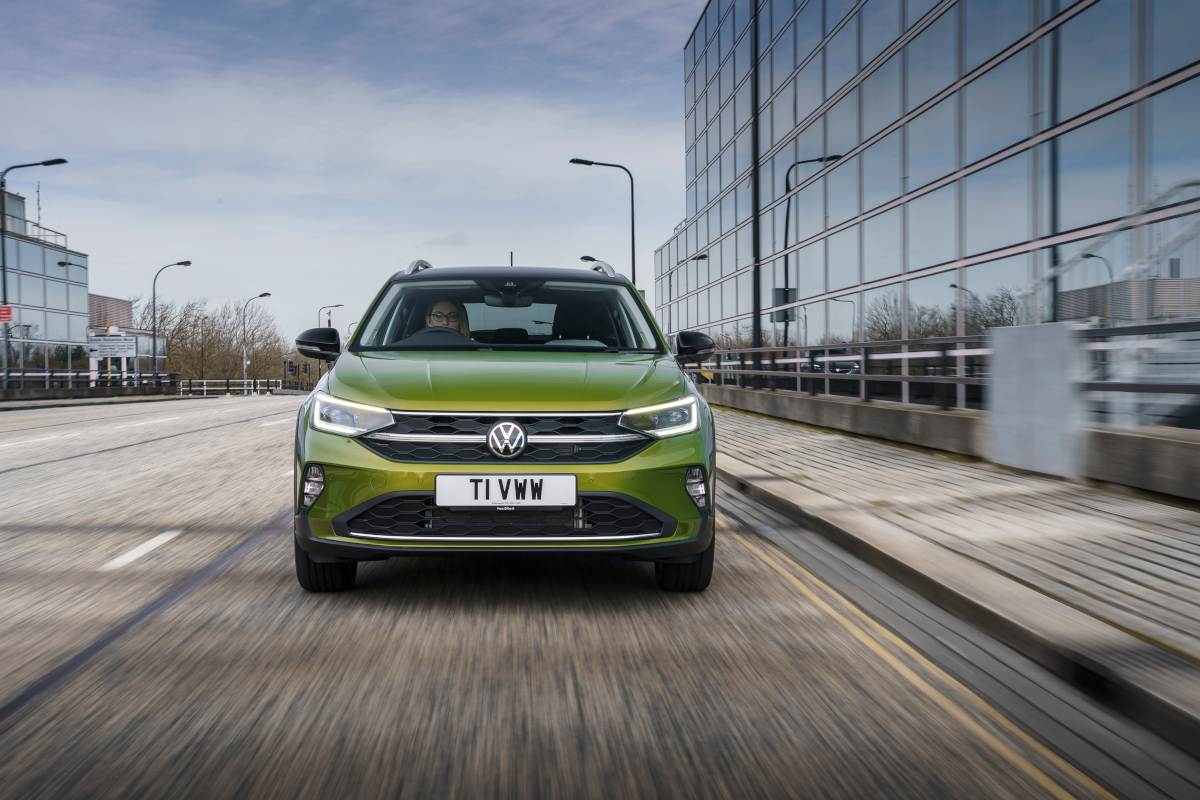
If you're in the market for a small Volkswagen SUV, you might find yourself facing an interesting family feud. The German brand offers two contenders in this popular class: the stylish Taigo and the practical T-Cross.
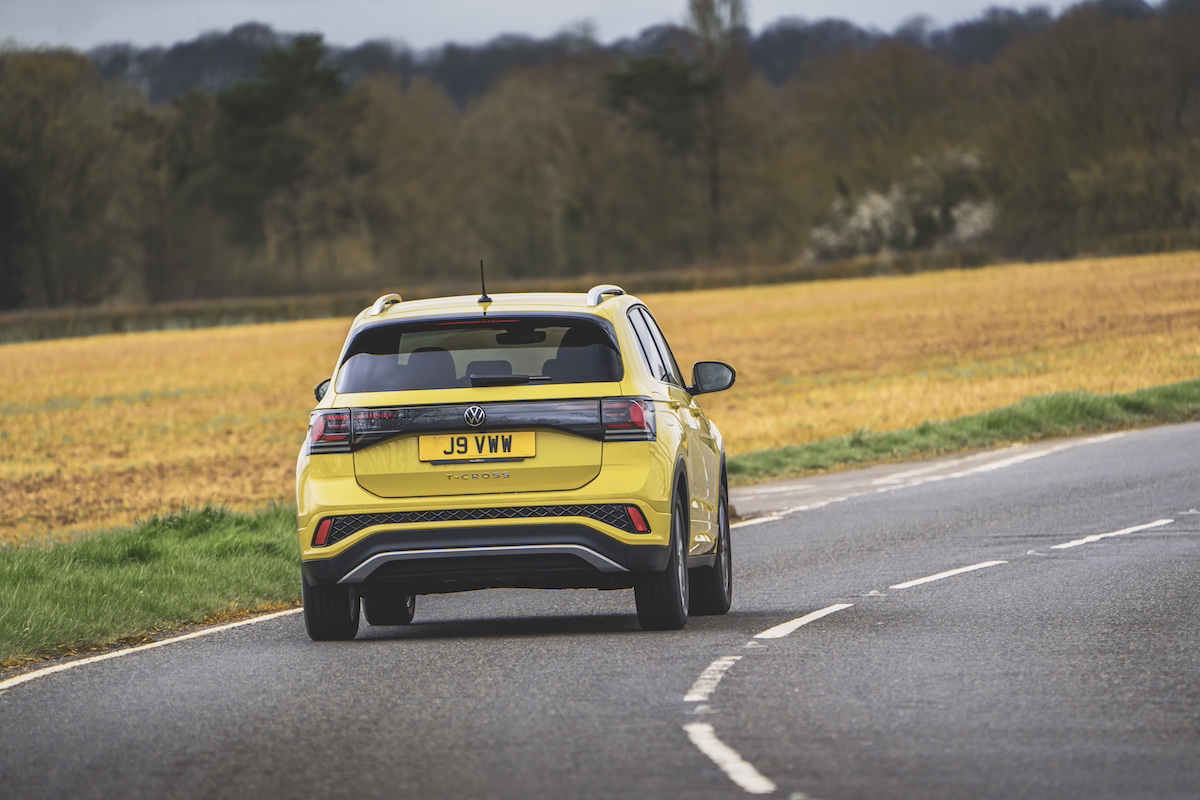
Launched in 2021, the Taigo is a compact SUV with a sloping, coupe-like roofline designed to appeal to buyers who prioritise style. The T-Cross, which has been around since 2019, takes a more traditional approach with its boxy, upright shape that maximises interior space. With both cars sharing their mechanical underpinnings with the popular Polo supermini, the choice really comes down to what you value most: fashion or function?
Volkswagen Taigo vs Volkswagen T-Cross
- Practicality
- Driving Impressions
- Technology and Equipment
- Running Costs
- CarGurus Buyer Insights
- Verdict
Practicality
Volkswagen Taigo practicality score: 4/5
Volkswagen T-Cross practicality score: 4/5
Despite their compact footprints, both of these VWs offer a decent amount of interior space. The Taigo is surprisingly accommodating for a coupe-SUV; even with its sloping roof, there’s enough headroom in the back for adults. Its 440-litre boot is also a good size, larger than the one in a VW Golf and competitive with rivals like the Ford Puma.
However, the T-Cross has a clever trick up its sleeve that gives it the edge in versatility. It features a sliding rear bench seat, which allows you to prioritise either rear legroom or boot space. With the seats pushed back, the boot holds 385 litres. Slide them forward, and that expands to a more useful 455 litres. This flexibility makes the T-Cross a more adaptable family car, even if the Taigo’s fixed boot is perfectly adequate for most needs.
Driving Impressions
Volkswagen Taigo driving score: 3/5
Volkswagen T-Cross driving score: 4/5
Since both cars are based on the Polo, it’s no surprise that they share the same range of efficient petrol engines. You can choose between a 1.0-litre three-cylinder (with either 94bhp or 113bhp) or a more powerful 148bhp 1.5-litre four-cylinder. For most drivers, the 113bhp 1.0-litre engine offers the best blend of performance and economy.
Neither car is designed to be a thrilling sports car; comfort is the main priority. The Taigo has a smooth ride, but its light steering doesn’t offer much feedback, making it feel competent rather than engaging. The T-Cross is one of the more comfortable cars in its class, with well-judged suspension that soaks up bumps effectively. It feels a little more composed and tidy through the corners than the Taigo, making it the more pleasant car to drive day-to-day. If you want driving fun, a Ford Puma is a better bet, but for relaxed cruising, the T-Cross has the edge here.
Technology and Equipment
Volkswagen Taigo technology and equipment score: 4/5
Volkswagen T-Cross technology and equipment score: 3/5
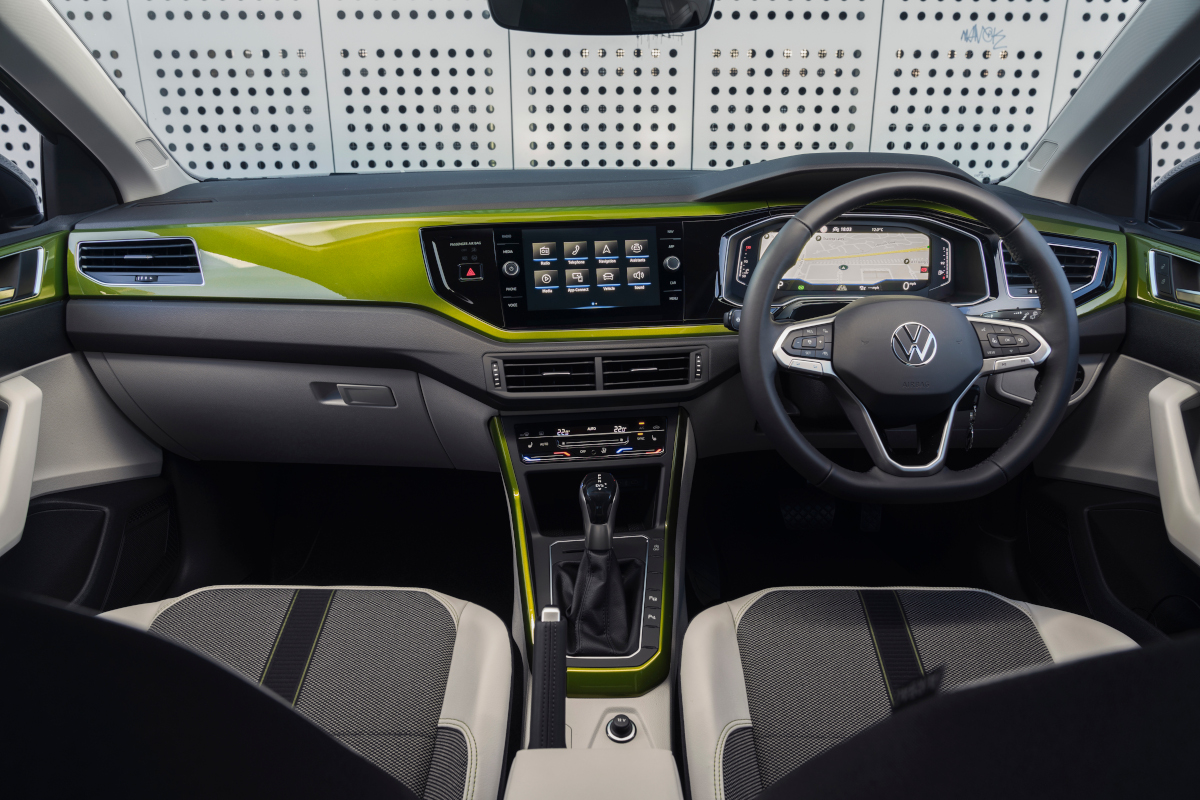
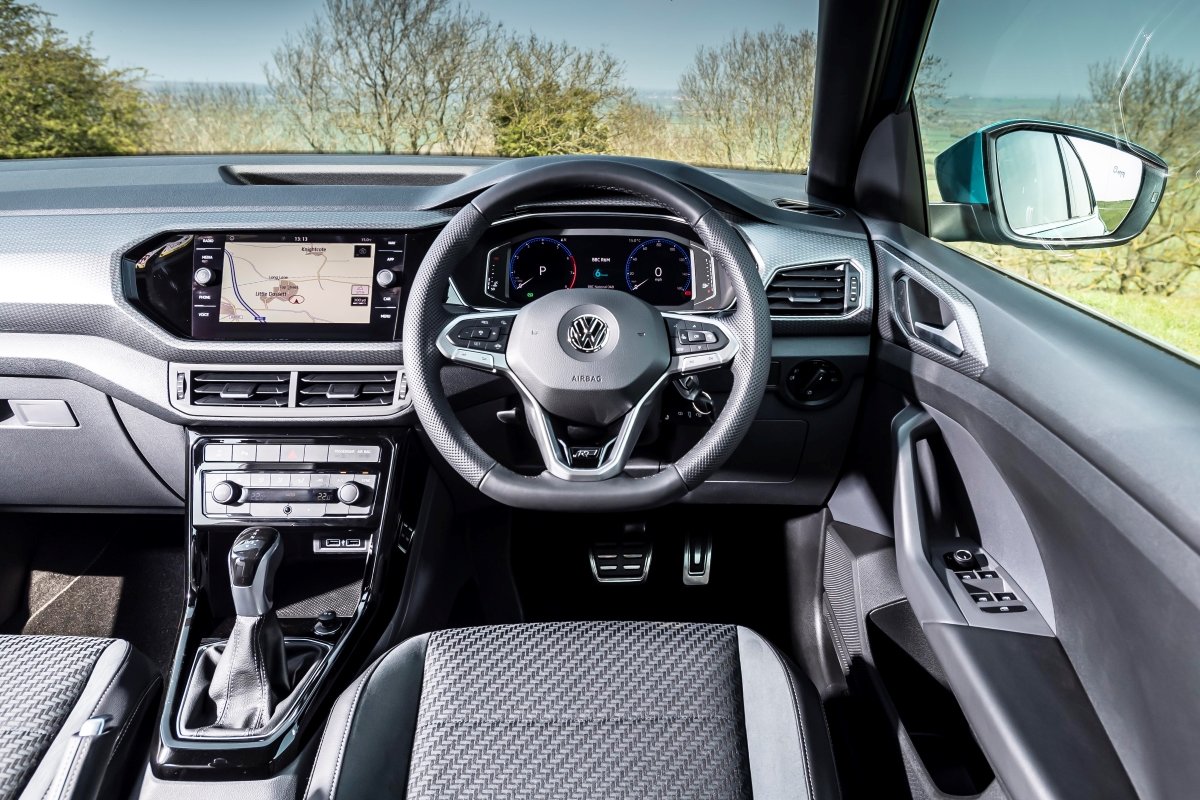
Inside, there’s a noticeable difference between the two. The Taigo’s cabin is let down by some hard, scratchy plastics that don’t feel particularly premium. On the plus side, it comes generously equipped from the entry-level model, with an 8-inch touchscreen, wireless phone charging, and adaptive cruise control all included as standard.
The T-Cross initially suffered from similar interior quality issues. However, a major facelift in 2024 brought a significant upgrade, with much softer, higher-quality materials that give it the premium feel you’d expect from a VW. This update did, however, replace simple physical climate dials with less intuitive touch-sensitive panels. Both cars feature user-friendly infotainment systems with standard Apple CarPlay and Android Auto. While the facelifted T-Cross has the nicer cabin, the Taigo’s strong standard equipment list gives it a slight advantage in the technology stakes.
Running Costs
Volkswagen Taigo running costs score: 4/5
Volkswagen T-Cross running costs score: 4/5
As you might expect from two cars that share so much, running costs are very similar. Purchase prices are in line with key rivals, and because they use the same engines, fuel economy is almost identical. The 1.0-litre engines are the most frugal, capable of returning close to 50mpg. The more powerful 1.5-litre engine is officially rated at around 46mpg.
For used car buyers, it’s worth noting that early T-Cross models were available with a 1.6-litre TDI diesel engine that offered even better fuel economy, though this was discontinued. Both cars are expected to hold their value reasonably well, which helps keep PCP finance deals competitive. Servicing costs are also identical, making this category a dead heat.
CarGurus Buyer Insights
| Volkswagen Taigo | Volkswagen T-Cross | |
|---|---|---|
| CarGurus expert rating | 3 out of 5 | 4 out of 5 |
| CarGurus user rating | 0.0 out of 5 | 4.0 out of 5 |
| Percentage of good/great deals available on CarGurus* | 34.0% | 31.1% |
| Overall CarGurus rating | 3.8 out of 5 | 4.2 out of 5 |
The Verdict
Volkswagen Taigo Overall CarGurus rating: 3.8/5
Volkswagen T-Cross Overall CarGurus rating: 4.2/5
While both of these compact Volkswagen SUVs are competent and easy to live with, there is a clear winner. Based on our comprehensive CarGurus Buyer Insights, the Volkswagen T-Cross takes the victory.
The T-Cross scores higher with both our experts and with owners, resulting in a superior Overall CarGurus rating. Its clever sliding rear seats provide a level of practicality and versatility that the Taigo can’t match, and its more composed ride makes it a more comfortable daily driver. The significantly improved interior quality on post-2024 facelift models also gives it a more premium feel.
The Taigo is by no means a bad car, and its distinctive coupe styling will certainly appeal to those who want to stand out from the crowd. But for most buyers, the T-Cross’s blend of comfort, flexibility, and quality makes it the more sensible and satisfying choice.
Volkswagen Taigo Pros and Cons
| Pros | Cons |
|---|---|
| Distinctive coupe styling | Some cheap-feeling interior plastics |
| Generous standard equipment | Less practical than the T-Cross |
| Good-sized boot for its class | Not particularly engaging to drive |
Volkswagen T-Cross Pros and Cons
| Pros | Cons |
|---|---|
| Versatile sliding rear seats | Not as exciting to drive as some rivals |
| Comfortable and composed ride | Facelift models have fiddly touch controls |
| Improved interior on facelift models | Styling is more conventional |
*The Overall CarGurus rating: that informs these recommendations is based on CarGurus' proprietary market data from January 2026, CarGurus expert reviews, and CarGurus user reviews.