
If you’re looking for a small Volkswagen SUV, you might think the choice is simple. But the brand offers two distinct models that cater to different tastes: the Taigo and the T-Roc. At first glance, they seem to occupy similar territory, but they represent different philosophies in the popular crossover market.
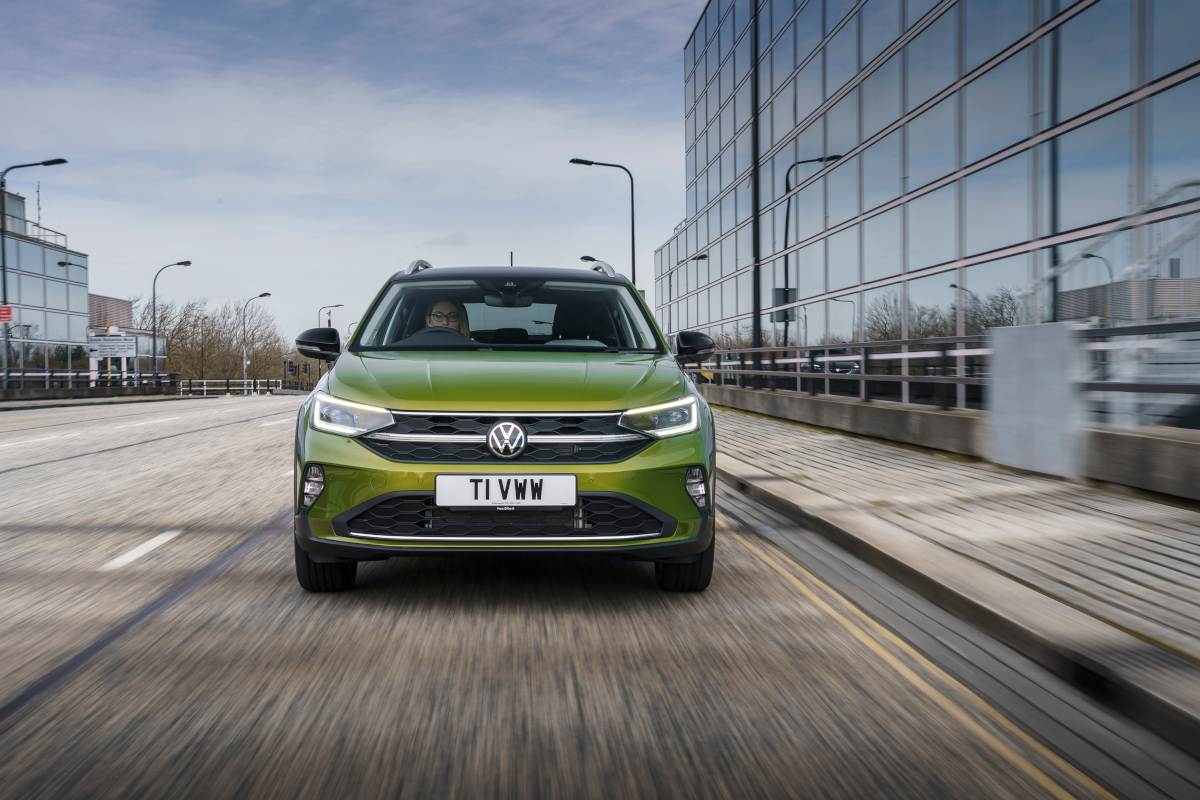
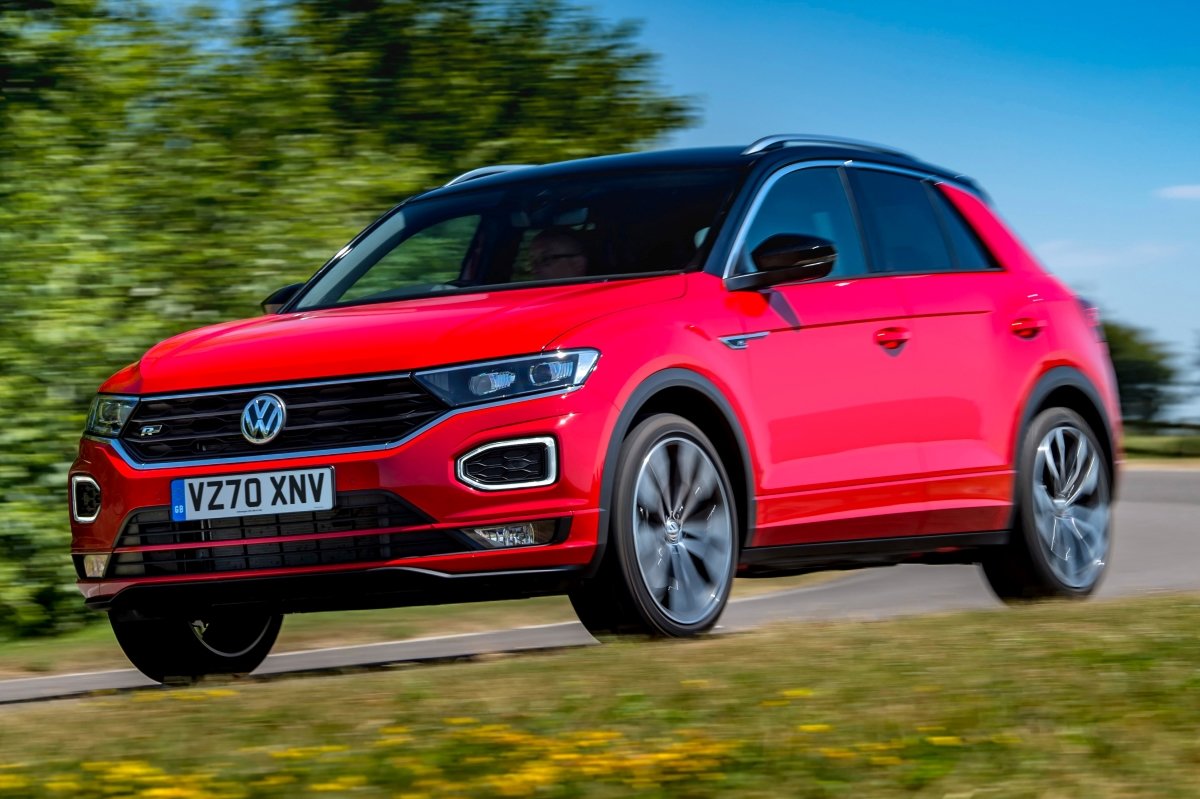
The Taigo is the newer of the two, bringing a dash of coupe-like style to a practical, Polo-based platform. Its sloping roofline is designed to catch the eye. The T-Roc, on the other hand, is a more established player, offering a conventional SUV shape that’s closer in size to a Volkswagen Golf. It promises a more traditional blend of space and versatility. So, should you go for the stylish newcomer or the proven all-rounder?
Volkswagen Taigo vs Volkswagen T-Roc
- Practicality
- Driving Impressions
- Technology and Equipment
- Running Costs
- CarGurus Buyer Insights
- Verdict
Practicality
Volkswagen Taigo practicality score: 4/5
Volkswagen T-Roc practicality score: 3/5
You might expect the Taigo’s sleek roofline to compromise its usefulness, but it’s surprisingly practical. Its 440-litre boot is impressive for a car based on the compact Polo, and it offers more luggage space than many rivals. Rear headroom is decent, and there’s enough legroom for four adults to travel in reasonable comfort. It proves that style doesn’t always have to mean sacrificing space.
The T-Roc offers a slightly larger boot at 445 litres in front-wheel-drive form, but this shrinks to 392 litres if you opt for a model with 4Motion all-wheel drive. While its more upright shape gives it a roomier-feeling cabin, especially for rear passengers, its overall practicality is more on par with rivals in its class rather than a standout feature. The Taigo scores highly here because it packs a lot of space into a smaller footprint, making it a clever piece of packaging.
Driving Impressions
Volkswagen Taigo driving score: 3/5
Volkswagen T-Roc driving score: 4/5
Both of these crossovers prioritise comfort over sporty handling, but the T-Roc offers a more comprehensive and engaging experience. The Taigo is available with a choice of 1.0-litre or 1.5-litre turbocharged petrol engines, all driving the front wheels. The 148bhp 1.5-litre is a smooth performer, but the smaller engines can feel a little strained. The ride is comfortable and it’s easy to drive, but the light steering doesn’t offer much in the way of feedback.
The T-Roc provides a much wider range of options. Alongside the familiar 1.0-litre and 1.5-litre petrols, you can have a more powerful 2.0-litre petrol with 4Motion all-wheel drive, efficient diesel engines, and even a high-performance 296bhp T-Roc R. While it also leans towards a comfortable ride, the T-Roc feels a bit more substantial and composed on the road. The greater choice of engines and the availability of all-wheel drive give it a clear advantage.
Technology and Equipment
Volkswagen Taigo technology and equipment score: 4/5
Volkswagen T-Roc technology and equipment score: 3/5
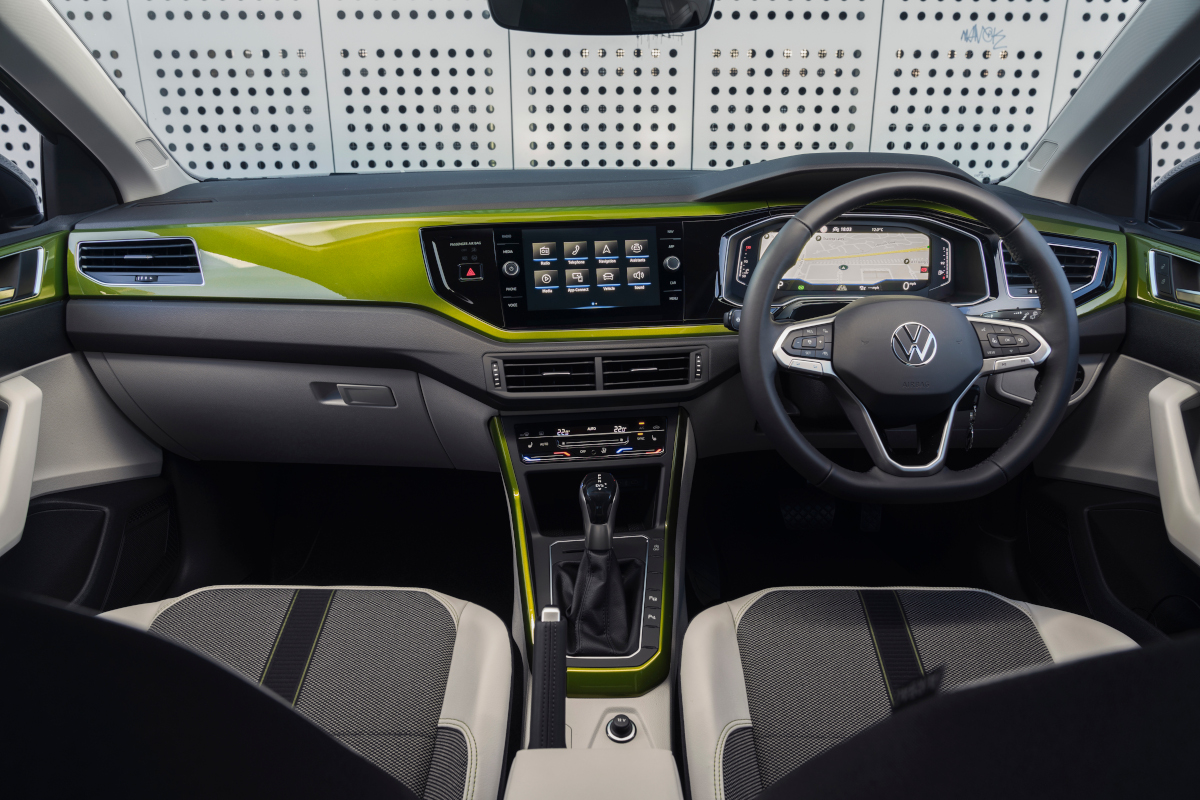
When it comes to the cabin, it’s a mixed bag for both cars. The Taigo’s interior is logically laid out, but it’s let down by some hard, scratchy plastics that feel out of place for the price. However, it scores well for its generous standard equipment. Even entry-level models come with an 8-inch touchscreen, wireless phone charging, adaptive cruise control, and LED headlights, which is a strong offering.
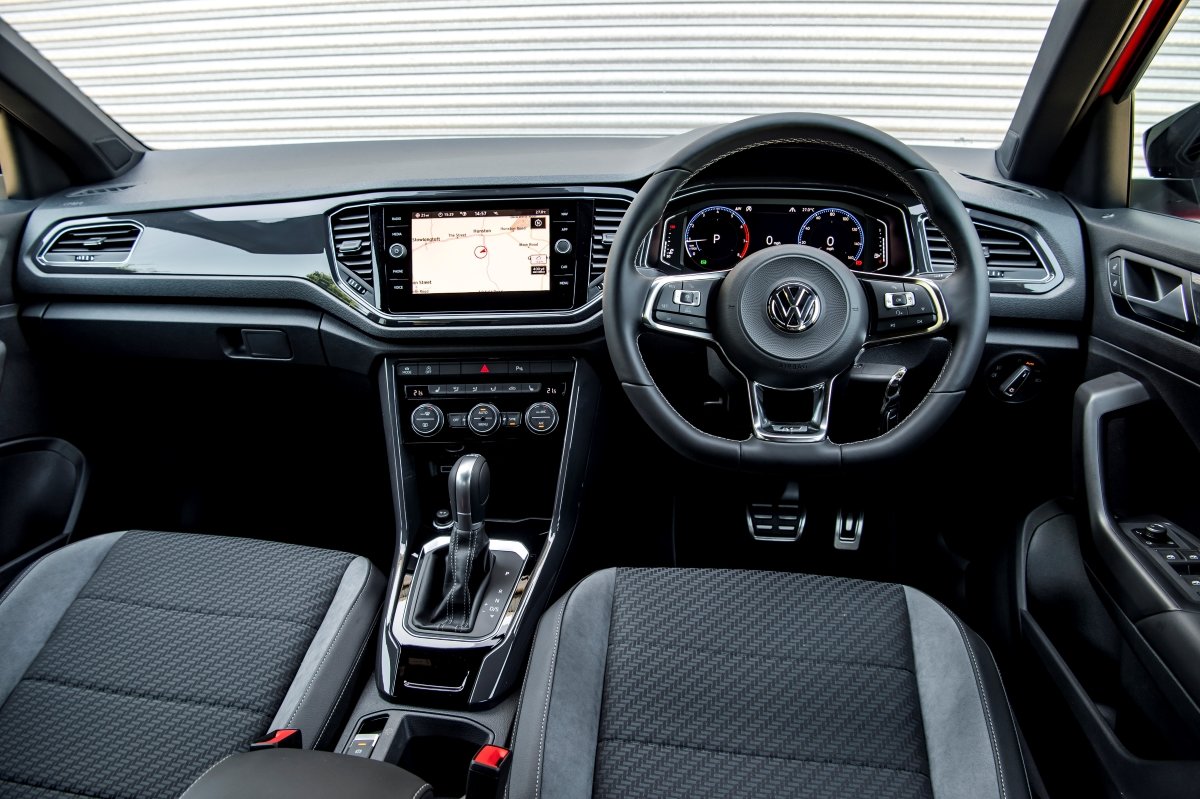
The T-Roc initially suffered from similar complaints about interior quality, though a 2022 facelift introduced a soft-touch dashboard that improved the cabin ambience. While its equipment levels are good, the Taigo is more generous from the get-go. The T-Roc’s infotainment system is effective, but the Taigo’s strong standard specification across the range gives it the edge in the technology race.
Running Costs
Volkswagen Taigo running costs score: 4/5
Volkswagen T-Roc running costs score: 4/5
Neither of these cars will break the bank to run. The Taigo’s petrol engines offer decent fuel economy, with the 1.0-litre units capable of around 50mpg in normal driving, while the more powerful 1.5-litre should return about 40mpg. As a popular model, it’s expected to hold its value reasonably well.
The T-Roc offers a wider spread of running costs. The petrol engines are similarly efficient to the Taigo’s, but the availability of diesel power is a big plus for high-mileage drivers, with the 2.0-litre TDI capable of over 50mpg. The high-performance versions will be thirstier, of course. With strong resale values and a choice of efficient engines, both cars are competitive, making it difficult to separate them on day-to-day costs.
CarGurus Buyer Insights
| Volkswagen Taigo | Volkswagen T-Roc | |
|---|---|---|
| CarGurus expert rating | 3 out of 5 | 4 out of 5 |
| CarGurus user rating | 0.0 out of 5 | 4.1 out of 5 |
| Percentage of good/great deals available on CarGurus* | 34.0% | 32.3% |
| Overall CarGurus rating | 3.8 out of 5 | 4.3 out of 5 |
The Verdict
Volkswagen Taigo Overall CarGurus rating: 3.8/5
Volkswagen T-Roc Overall CarGurus rating: 4.3/5
While the Volkswagen Taigo and T-Roc are both competent small SUVs, they are aimed at slightly different buyers. The Taigo makes a strong case with its stylish looks, surprising practicality, and generous standard equipment list. It’s a fashionable and efficient choice.
However, it’s the Volkswagen T-Roc that takes the win in this comparison. According to our CarGurus Buyer Insights, it achieves a higher Overall CarGurus rating of 4.3 out of 5. It feels like the more mature and well-engineered car, with a higher-quality interior (on post-facelift models) and a more composed driving experience. Crucially, its broader range of engines, including efficient diesels and the option of all-wheel drive, gives it a versatility the Taigo can’t match. For those reasons, the T-Roc is our pick.
Volkswagen Taigo Pros and Cons
| Pros | Cons |
|---|---|
| Stylish coupe-SUV looks | Interior quality could be better |
| Impressive boot space for its size | Limited engine choice |
| Generous standard equipment | Only available with front-wheel drive |
Volkswagen T-Roc Pros and Cons
| Pros | Cons |
|---|---|
| Wide range of engine options | Some rivals are sharper to drive |
| Available with 4Motion all-wheel drive | Boot space shrinks on 4WD models |
| Improved interior on facelifted models | Less standard equipment than the Taigo |
*The Overall CarGurus rating: that informs these recommendations is based on CarGurus' proprietary market data from January 2026, CarGurus expert reviews, and CarGurus user reviews.