Mazda CX-5 Review (2012-2017)
Mazda CX-5 cars for sale
4.0
Expert review
Pros
Nimble handling and precise steering
Every version is well equipped
Deserves its reputation for reliability
Cons
Petrol engines are a bit weedy at low revs
The cabin doesn't match the finish quality of premium rivals
A Honda CR-V has more space for people and luggage
The CarGurus verdict
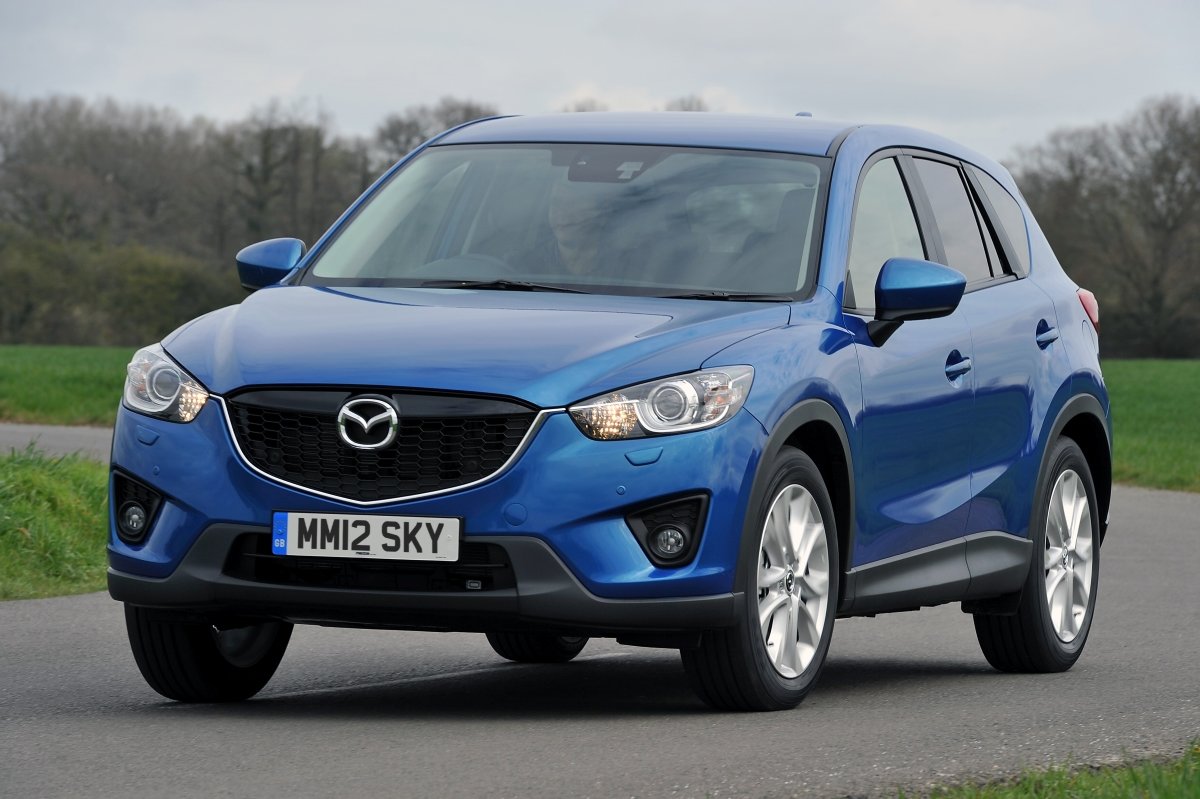
The Mazda CX-5 makes a really good used buy. Smart looks and sharp but comfortable driving manners make it desirable, while impressive reliability, generous space, family-friendly practicality and low running costs tick the sensible boxes. Safety standards are high, especially if you find a car with the optional safety pack, while equipment levels are generous across the board.
You can’t really go wrong. Perhaps the petrol is a bit weedy compared with the diesels, the warranty could be longer, and there could be a little less road noise in the cabin at higher speeds. The standard of finish could also be better, but even so, we rate the Mazda CX-5 as one of the best used SUVs you can buy.

What is the Mazda CX-5?
Mazda’s first SUV was the CX-7, which was initially sold with just a petrol engine at a time when most SUVs were diesels. A diesel model did arrive, but the CX-7 never really flew out of showrooms.
Lessons had been learned by the time the first-generation CX-5 arrived on the new car market in 2012. Smaller and more efficient than the CX-7, and with a choice of petrol and diesel engines, it was a much more successful car – so much so, that Mazda followed it up with a second-generation in 2017.

How practical is it?
Passenger space in the CX-5 is plentiful, with enough head and legroom for two adults to travel comfortably in the rear seats. You can fit a third person in, but it'll be tight for shoulder room. For those carrying child seats, note the rear bench isn't really wide enough for two child seats with an adult sitting in between. For that kind of use an MPV such as a Volkswagen Touran or Citroen C4 Picasso is better.
Boot space is reasonable, however, with 503 litres with the seats upright. That's more than you'll find in a Nissan Qashqai or Skoda Yeti, and competitive with rivals like the Kia Sportage, but well beaten by the huge 589-litre boot in the fourth-generation Honda CR-V.
What's it like to drive?
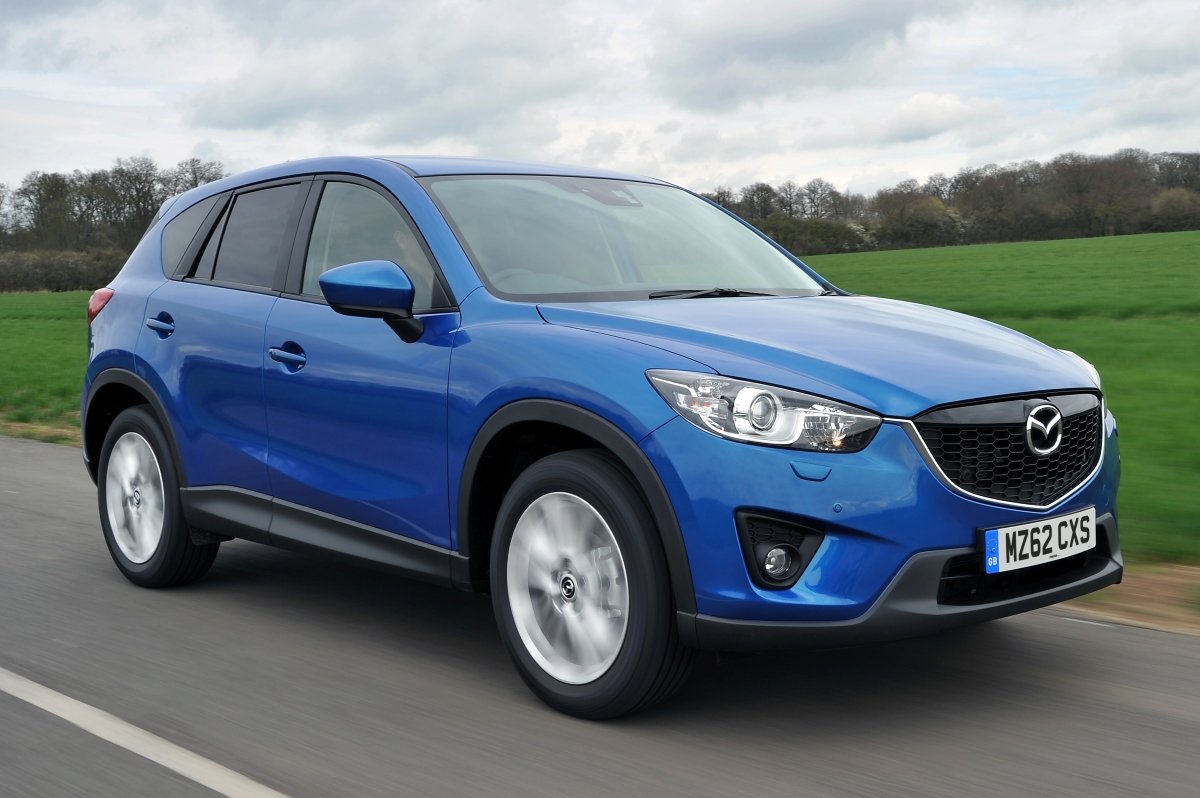
The CX-5 handles with verve and agility, and the higher-powered diesel has plenty of overtaking punch. Mazda’s clever engineers succeed in making the car fun without suffering from an overly firm ride, although high-spec cars on 19-inch alloy wheels aren’t as forgiving of badly surfaced roads as cars with smaller alloys.
From the driver's seat, the CX-5’s biggest flaws are excessive wind and road noise, which can be tiresome on a long drive. Revisions to the car in 2014 addressed this criticism to an extent, and tweaks to the suspension aimed to further improve ride comfort.
Most buyers went for one of the diesels. There was a pair of 2.2-litre diesel engines to choose between, one with 148bhp and one with 173bhp. Both had plenty of mid-range pull as well as healthy power outputs. Both featured Mazda’s i-Stop system to save fuel by stopping and restarting the engine in traffic.
The 163bhp 2.0-litre petrol engine also featured i-Stop and, although more powerful than the entry-level diesel, it needs to be revved hard to get the best from it.
Both two- and four-wheel-drive models were available to lower-powered diesel buyers, while the higher-powered diesel was always a 4x4. All petrol models were front-wheel drive.

Technology, equipment & infotainment
Trim levels included SE-L, SE-L Nav, Sport and, Sport Nav. Mazda wasn’t stingy with equipment, either, so even the most basic SE-L cars had 17-inch alloy wheels, dual-zone climate control air-conditioning, Bluetooth, cruise control, front and rear parking sensors, and a 5.8-inch colour display screen. As the name implies, 'Nav' models were fitted with satellite navigation.
In 2015, more tech was added, including the option of blind spot monitoring and a 7.0-inch infotainment screen in place of the 5.8-inch screen of earlier cars.
Mazda took the opportunity to improve cabin quality at the same time, which was initially a weakness of the CX-5 compared with premium SUVs such as the Audi Q2 and BMW X1. The cabin looks good in pictures but up close, the plastics in earlier cars are a little hard and unattractive. The later cars are better, but still lack the premium quality of some rivals.

Mazda CX-5 running costs
By SUV standards, a used Mazda CX-5 has low running costs. That’s especially true of a front-wheel drive diesel, but there’s no gas-guzzler to avoid if you want affordable bills.
The first-generation CX-5 was economy tested to the old NEDC protocol, which tended to exaggerate real-world fuel economy, so the 61.4mpg official combined figure for the 148bhp front-wheel drive diesel with a manual gearbox is a bit optimistic. Reckon on mpg in the mid- to high 40s in reality.
Choose the same engine but with an automatic gearbox and economy worsens considerably. Officially, 53.3mpg is achievable, so expect more like 40mpg. The extra weight and frictional loses from a 4x4 drivetrain also hurt economy, so bank on all-wheel drive models being thirstier than the two-wheel drive cars.
Choose the 173bhp 2.2-litre diesel AWD, and the official combined figure is 54.3mpg for the manual and 51.4mph for the auto. On the road, the manual is more likely to return low 40s mpg. The auto will be in the high 30s or low 40s if driven gently. Given the performance that the higher-powered diesel is capable of, these are respectable returns.
That just leaves the petrol. Believe the official figures and you will look forward to 47.1mpg. Close to 40mpg is more likely.
As for insurance, the petrols start from group 15 of 50, which is low for an SUV of this size. The 148bhp diesels start at group 18, while the 173bhp cars are group 21 or higher. Service intervals are every 12,500 miles or annually, whichever comes first.

Mazda CX-5 reliability
The good news: the Mazda CX-5 is a very reliable car. The bad news: the Mazda only has a three-year, 60,000 mile warranty, a long way short of the Kia Sportage’s seven years. Given the car's age, no first-generation CX-5 will be covered by that, so unless you buy one with a used car warranty, or take out cover yourself, any unexpected bills will be down to you.
Touch wood, you shouldn't need to dip into your pocket, because the CX-5 performs well in reliability and owner satisfaction studies. Petrol cars, in particular, rarely seem to give their owners any trouble.
That’s not to say that the diesels are often faulty, but like any car with a diesel particulate filter (DPF), a CX-5 diesel won’t respond well to a life of short, stop-start journeys. Longer trips and higher speeds are needed to get the exhaust up to a temperature that allows the DPF to regenerate. If you test drive a diesel, make sure the DPF warning light isn’t illuminated.
There were several recalls for the first-generation CX-5. Problems include a faulty vacuum pump in the braking system, loose fuel injectors, and failing boot struts.
Most cars will have had the necessary fixes carried out by now. To check if any used Mazda CX-5 you are thinking of buying has recall work outstanding, go to the recall checker on the gov.uk website and enter the registration number.
- Mazda was ahead of the curve with the safety kit fitted to the CX-5. Autonomous emergency braking (AEB) wasn’t commonplace in 2012, but the CX-5 featured AEB in the form of Mazda’s Smart City Brake Support, which can apply the brakes if the driver is slow to spot a hazard at speeds of up to 19mph. Mazda also offered a safety pack as an option on AWD Sport and Sport Nav models, with Rear Vehicle Monitoring, Lane Departure Warning System and High Beam Control. These efforts were rewarded with a five-star rating from Euro NCAP.
- Every Mazda CX-5 features Skyactiv technology. This is Mazda's catch-all term for technical features that save fuel and lower emissions. With the CX-5, Mazda focused on making the chassis light, using high-compression engines, and efficient six-speed manual and automatic gearboxes. Together, these measures gave the CX-5 some of the best fuel economy and emissions of any comparable SUV at the time. The front-wheel drive, lower-powered diesel led the way, with an official combined figure of 61.4mpg (under the old NEDC test) with a manual gearbox. With an automatic gearbox, that drops to 53.3mpg.
- If the budget stretches far enough, the fresher 2015 version is the used Mazda CX-5 to have. The most obvious change is the bigger screen for the satnav and infotainment system, but there were other improvements, too. These later cars come with a DAB radio, and manual height adjustment for the front passenger seat. Extra safety kit was added, including Rear Smart City Brake Support, which applies the brakes if the system detects an imminent rear impact while reversing at speeds of between 2mph and 5mph. Range-topping models gained LED headlights and gunmetal alloy wheels.
- If you want to tow a caravan or trailer: Pick the 173bhp 2.2-litre AWD. It's heavier than the rest of the range, which helps with stability while towing, and the beefy 310lb ft of torque means there’s plenty of mid-range muscle to handle a heavy trailer or a horsebox.
- If you want the best all-rounder: Choose the 148bhp 2.2-litre diesel. Thanks to Mazda’s Skyactiv tech, this engine delivers good economy and low emissions, but it still performs well, as it’s only slightly slower than the 173bhp version. We’d stick with the front-wheel drive car unless you really need the bad weather capabilities of the 4x4.
- If you want a petrol: The 163bhp petrol is your only choice. Mazda choose to go its own way with this engine, ignoring the trend for small capacity turbocharged petrols and sticking with a relatively large capacity of 2.0-litres. The result is a reasonably efficient engine, but one that needs plenty of revs.
- If you want all the toys: go for Sport Nav trim. As the name suggests, you get satellite navigation, along with 19-inch alloys, bi-xenon headlights, keyless entry, heated seats, leather upholstery, a reversing camera, and a powerful Bose stereo with nine speakers. Plenty of new Mazda buyers went for the top-spec car, so it shouldn't be hard to track down a good used example.
