Citroen C3 Aircross Review 2025 | A small yet practical crossover with petrol or electric power
Citroen C3 Aircross cars for sale
4.0
Expert review
Pros
Excellent ride quality
Smart dashboard design
Great value
Cons
Optional third-row seating is cramped
Engine can get noisy in petrol versions
Not particularly involving to drive
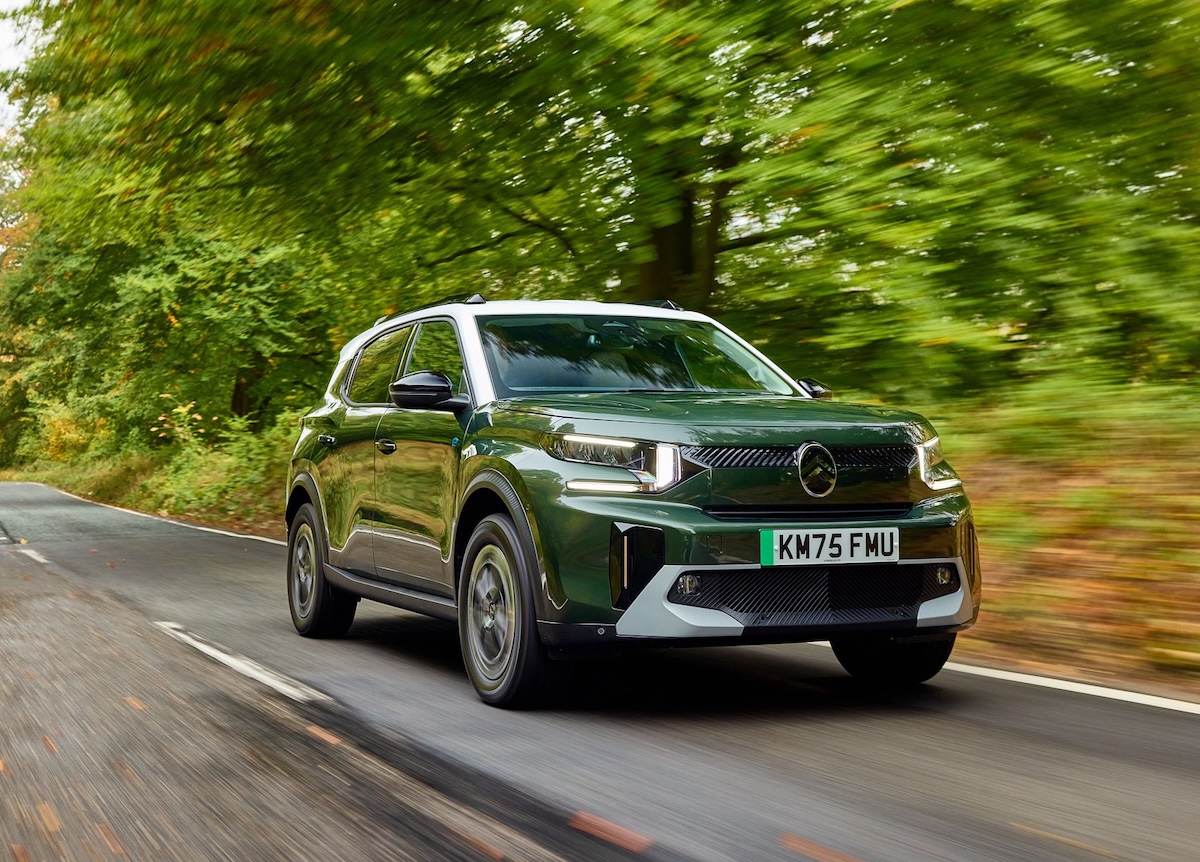
The CarGurus verdict
It’s true that the seven-seat version of the Citroen C3 Aircross feels as though it’s trying to pack too much in, so if it’s a seven-seater you’re after, you might be better off looking elsewhere. But in five-seat form, the C3 Aircross is a brilliant small family car, offering a winning blend of practicality and comfort for a bargain price.
Granted, it isn’t the fastest car in the world, and if you’re looking for a car that’s thrilling to drive, you’ll probably want to look elsewhere anyway. But the C3’s strengths will make it an extremely useful family car, easy to drive on the daily grind, and all with a side helping of charm and character.
What is the Citroen C3 Aircross?
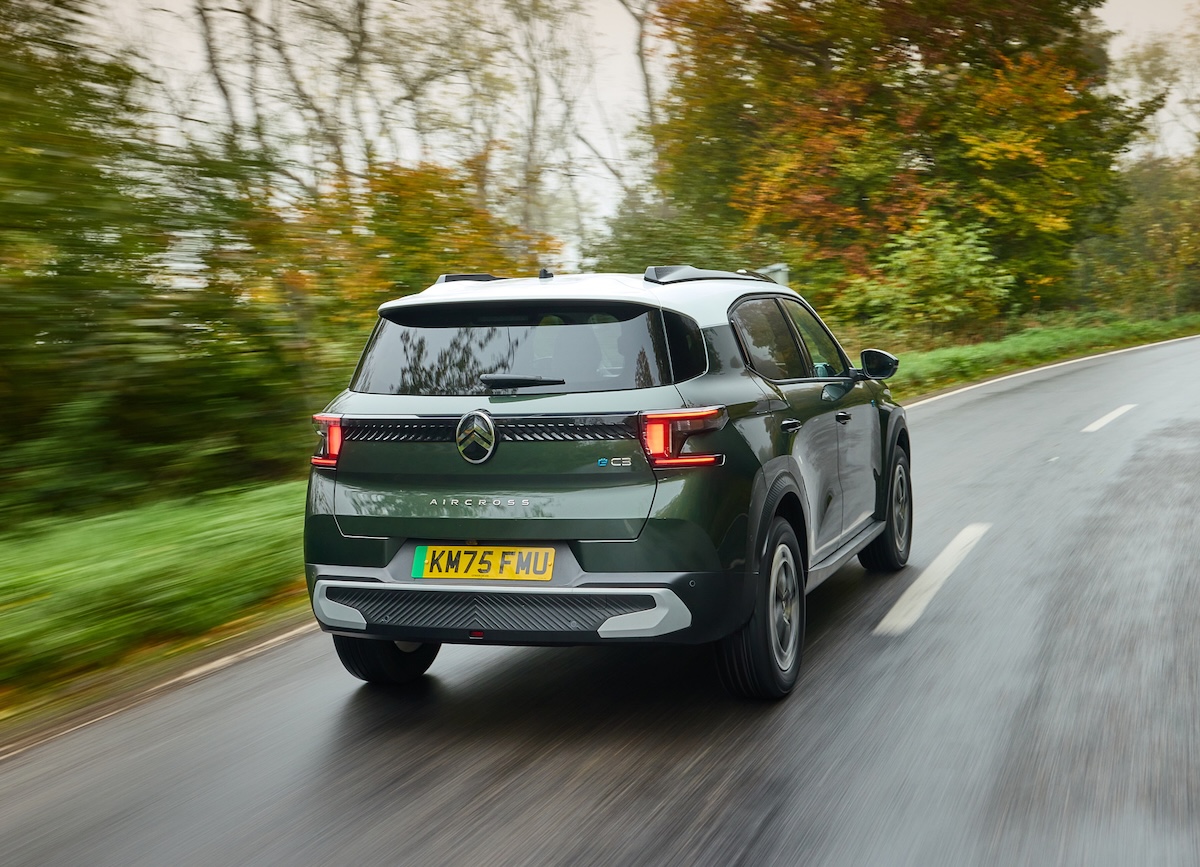
You might have been familiar with the old Citroen C3 and its Aircross sibling – a Vauxhall Corsa-sized supermini hatchback, and a small SUV based on the same car. Well, this time around, things have changed somewhat. Because the C3 has become a crossover, a bit like the old Aircross was. So where does that leave the new Aircross?
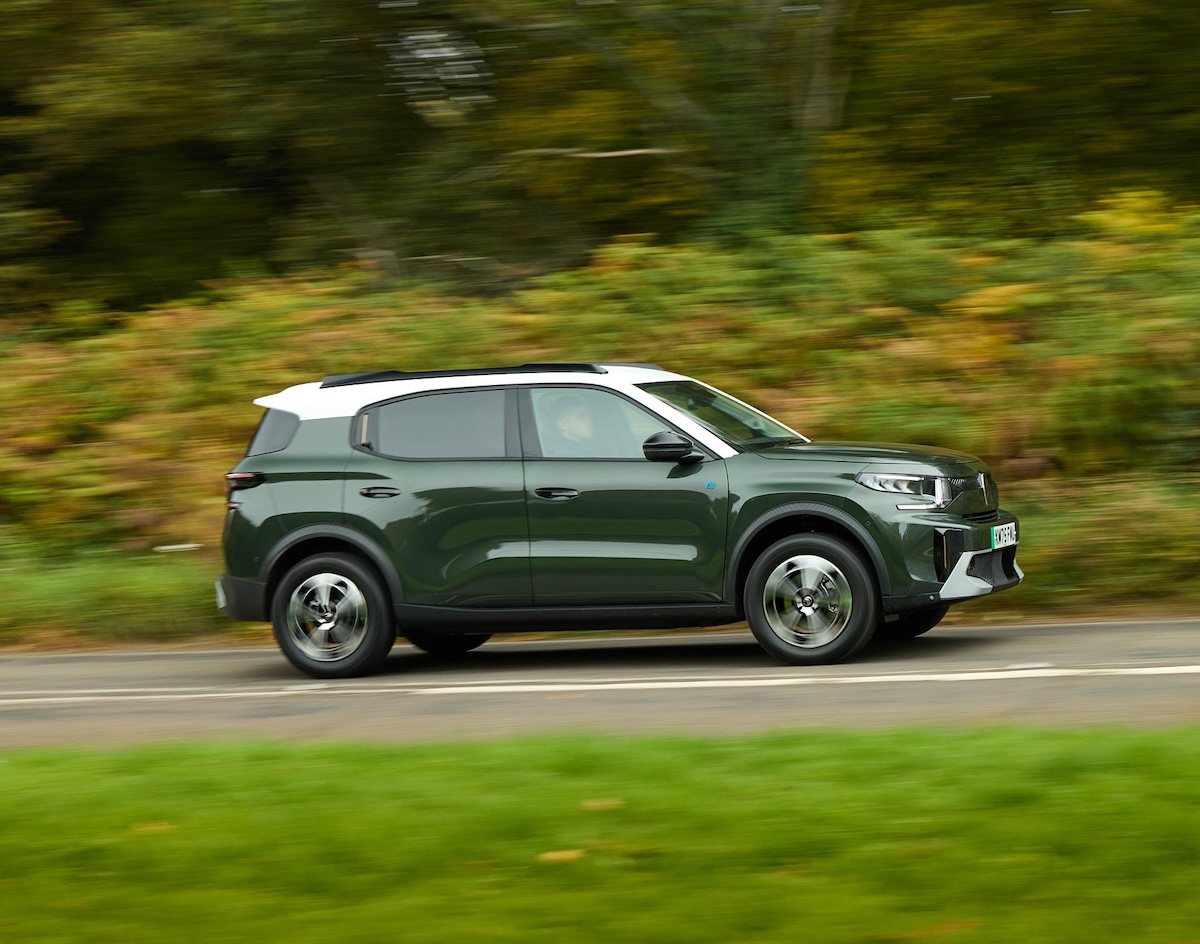
Well, it’s… another crossover. Only this time, Citroen’s lengthened the tail end to offer more boot space. Think of the new Citroen C3 Aircross as being something akin to a C3 ‘estate’ this time around, then. In fact, it’s pretty much the same car as its Stellantis stablemate, the Vauxhall Frontera.
As with the Frontera, the C3 Aircross comes with the option of a third row of seats, turning it into a seven-seater. And at this price, that makes it one of the cheapest seven-seaters money can buy.
That places it squarely in the crosshairs of the Dacia Jogger, or if the box for the seven-seat option remains unticked, spacious five-seat SUVs like the Skoda Kamiq and Renault Captur. All of these cars are vying for cash-conscious family buyers looking to maximise the amount of space and practicality they’re getting for their budget.
How practical is it?
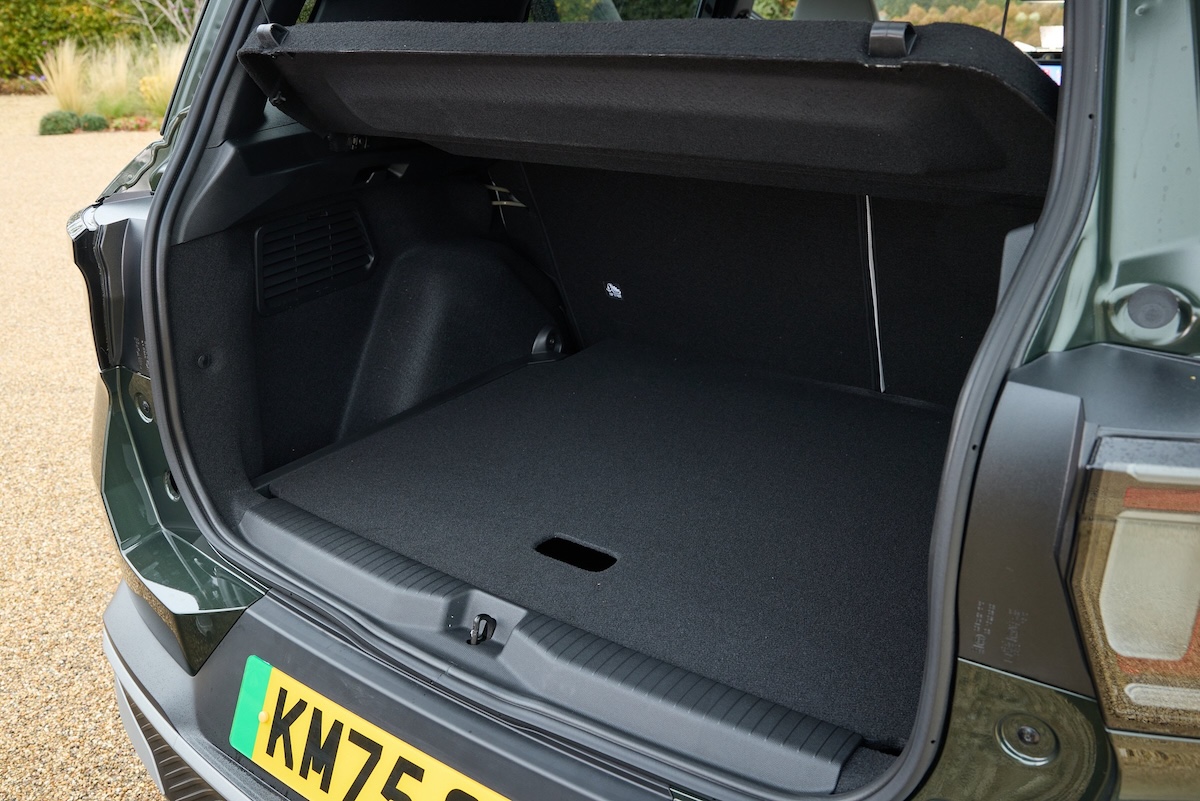
It’s in the boot where the C3 Aircross differs most obviously to the basic C3, so we’ll start there. In standard, five-seat form, you get a whopping 460 litres of space, meaning this small SUV can pack more in than the Fiat 600, or the Volkswagen T-Roc. Mind you, a Dacia Jogger offers over 100 litres more in five-seat form – but you’ll have to remove the back seats and find somewhere to store them to make the most of all that space.
In seven-seat form, you can’t actually remove the C3 Aircross’s extra row of seats, making it somewhat less versatile. Indeed, what Citroen’s done here is basically to bolt a couple of extra seats into the boot, and give you a flimsy two-piece cover to cover up the gaps left behind when they’re folded down.
As a result you can’t really put much heavy luggage in the boot of the seven-seat version, as it’ll make this flimsy boot ‘floor’ give way. Similarly, carrying dogs in the back with the seats folded isn’t advisable – the moment they put their paw in the wrong place, they’ll fall down into the gaps around the seats.
And of course, with the third row of seats in the upright position, boot space is reduced to virtually nil. Even with them upright, though, they’re not much use.
For an adult, anything more than a five-minute journey will feel like torture, even with the middle row of seats slid forward; there are no ISOFIX points in that third row, either, so you’ll have to use strapped-in child seats. Even then, these will take up what little leg room there is, leaving your kids with nowhere to put their pins.
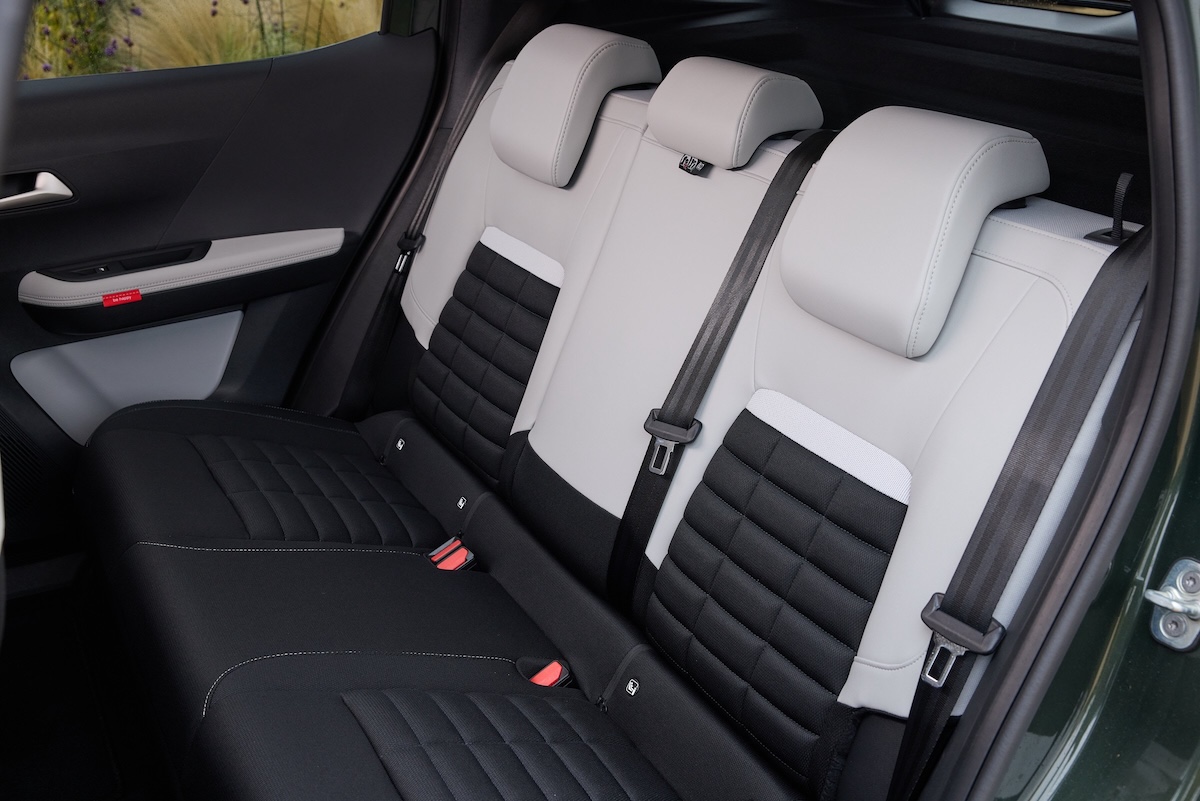
The seven-seat version is best avoided, then, but the five-seat C3 Aircross is much better. Granted, you don’t get the sliding rear seats any more, which feels like a missed opportunity from Citroen. Then again, you could argue that you don’t really need them when the boot is so big and well-shaped, now that there isn’t a pair of seats bolted into it.
The rear seats of the five-seat model are plenty roomy enough, too; the two outer seats get ISOFIX points (as does the front passenger seat), and their high position combines with the wide-opening rear doors to make buckling up a child seat a doddle.
In the front seats, space simply isn’t an issue; there’s loads of it. Less impressive is the steering wheel adjustment, which doesn’t offer quite enough reach, so if you’re a taller driver, you might not quite be able to find the right driving position.
And while Citroen’s special ‘advanced comfort’ seats — which use memory foam to add an extra layer of softness — are welcoming on first acquaintance, you do find after spending time with them that they lack support for your lower back.
What’s it like to drive?
As with the smaller C3, the C3 Aircross offers you the choice between petrol and electric power. Opt for the former, and you get a choice of two different engines. The cheapest is a 99bhp 1.2-litre turbo petrol, which comes with a six-speed manual gearbox. Or for a little more money, you can have a 134bhp version of the same engine that’s boosted by a very small electric motor and battery combo, making it a mild hybrid; this version comes with a six-speed dual-clutch automatic gearbox instead.
With a 0-62mph time of 10.1 seconds, the hybrid is the quickest version of the C3 Aircross (vs 10.6 in the pure petrol car), and it delivers enough mid-range punch to keep up with traffic, and pulls away smartly.
You do have to push it quite hard to get the full benefit of its performance — for example, on an uphill stretch of acceleration, or when overtaking. And when you do so, it can get quite vocal.
There’s only one electric option at the moment, with a 111bhp motor and a 44kWh gross battery capacity, which gives a real-world range of around 150 miles (likely less in the winter, given you don’t get a heat pump), and you might imagine the power deficit and the extra weight of the battery might make the electric e-C3 feel similarly asthmatic, and that’s certainly true at motorway speeds.
But the electric motor’s torque does at least mean it feels sprightly away from the traffic lights and gutsy in town traffic, belying the 12.9-second 0-62mph time. A 54kWh version with a 154bhp motor is slated to join the range later – and if you can wait, that’s likely to be the best of both worlds.
Because the electric version’s battery is fairly light, it doesn’t do too much to hamper the way the C3 drives. So whichever model you choose, you get a car that feels much the same, with a heavy emphasis on comfort.
Citroen’s clever suspension does a brilliant job of glossing over churned-up patches of tarmac, and ironing out bumps. As a result, the C3 offers the sort of comfort you’d usually expect from a much bigger, more expensive car.
For all its SUV styling, don’t expect to be able to use your C3 Aircross on rough ground. Where the old version featured a useful ‘grip control’ mode, which gave it a modicum of off-road ability, this new one doesn’t get any such system, and unlike the Dacia Duster, there’s no four-wheel-drive option.
Technology, equipment & infotainment
There are only two trim levels to choose from in the C3 Aircross range, making it relatively simple to decide which version you want. Even the entry-level Plus is reasonably well equipped for the price, though, with LED headlights, alloy wheels, electric windows all round, roof rails, rear parking sensors, a reversing camera, automatic lights and windscreen wipers, cruise control, and a digital radio.
Step up to the Max model for heated seats, a heated steering wheel, front parking sensors, and satellite navigation. Electric versions of both models get a 100kW on-board DC charger.
The seven-seat version isn’t available as a stand-alone model; instead, you choose which C3 Aircross you want, and add the third row of seats as an optional extra. The downside is that this option isn’t available on the e-C3 Aircross, so if you want electric power and seven seats in one car, you’ll have to look elsewhere.
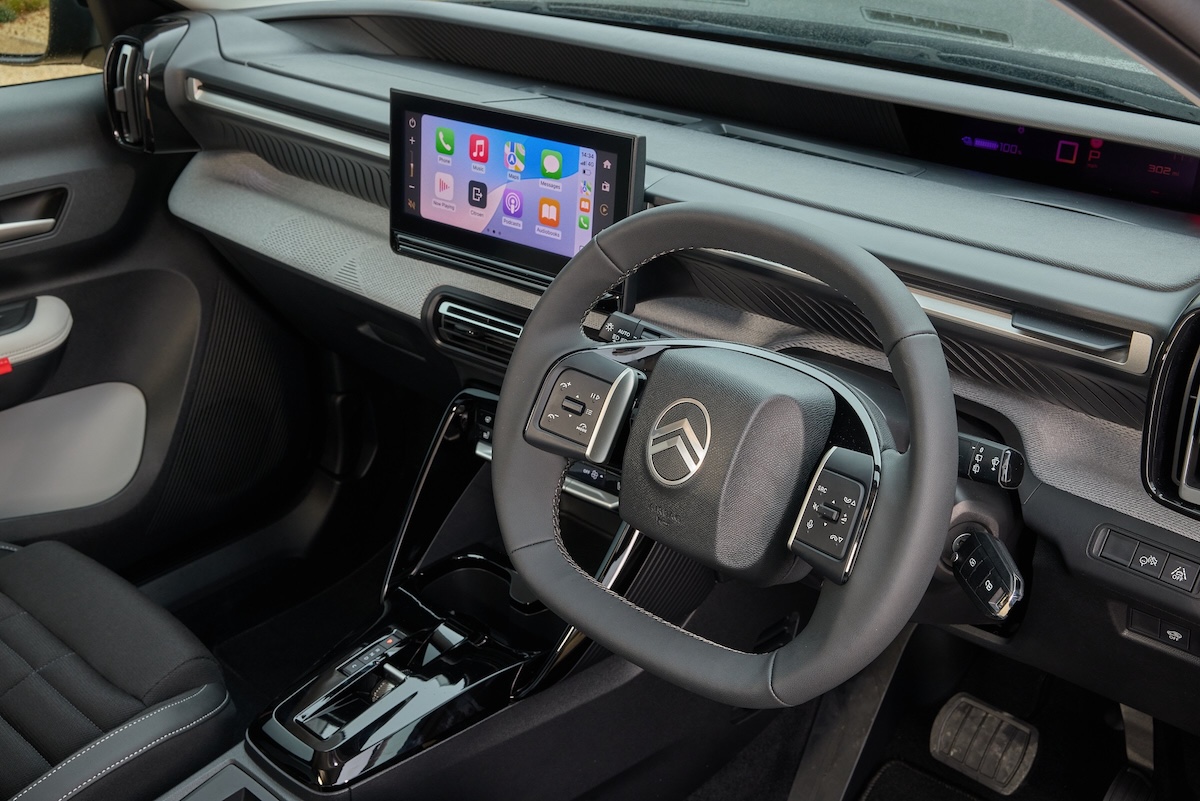
Every C3 Aircross comes as standard with Apple CarPlay and Android Auto, so you don’t actually need to interact with the touchscreen all that much if you have a smartphone.
If you don’t, however, you’ll find the touchscreen itself has a fairly sparse-looking interface, though this is no bad thing as it means it’s quick to respond, with none of the fancy animations that slow things down in some of the posher Citroens.
The menu system could be better, though; some functions are fiddly to get access to, and the combination of swiping and menu layers takes a bit of getting used to. It’s a shame there’s no physical volume knob, too – you have to resort to using an on-screen slider to adjust the volume, which can be really distracting, and hard to do if you’re on a bumpy road.
Happily, there are proper physical controls for most of the climate functions, which means you don’t have to head into the touchscreen to access these, as you do in some other cars these days.
Another high point is the small, simple display in front of the driver, which eschews fancy graphics in favour of simple black and white numbers and bars to show your speed, engine temperature, fuel remaining (or battery percentage and range, in the electric model), and any warning lights. It’s clear and easy to read, and makes you wonder why other cars bother with a full-on virtual dial display.
The rest of the C3 Aircross’s cockpit is equally pleasing, with eye-catching styling, a good mix of different material colours and textures, and some snazzy ambient lighting. There’s also a useful ledge in front of the passenger, where they might choose to prop up a smartphone in order to stream videos on a long journey; a USB charging socket directly adjacent makes this entirely feasible. The downside is that the plastics on the doors feel rather cheap and scratchy.
Citroen C3 Aircross running costs
This is really the C3 Aircross’s trump card – it’s no exaggeration to say that it’s one of the most affordable new cars on sale today. And given the amount of space you get inside, the starting price of just over £20,000 makes it terrific value. Just be aware that the mechanically identical Vauxhall Frontera is even more affordable still.
The same applies to the electric version, which commands a premium of just over £2,500 compared with the petrol model (again, the Frontera is even cheaper). While there are some cheaper electric alternatives available, none offers anywhere near as much space as the C3 Aircross or Frontera.
Besides, if you’re buying an electric car and charging it up at home, you should soon make up that difference in fuel savings. Not that the C3 Aircross is a particularly thirsty car; in the real world, the entry-level petrol version’s fuel economy should be 40-45mpg on average, while the hybrid model will raise that to 45-50mpg.
Electric versions aren’t enormously efficient by the standards of EVs, which comes as a bit of a surprise as they have such a light battery. You should see around 3 miles per kWh in everyday use, which isn’t quite as good as you’d get from some pricier Hyundai or Kia EVs, despite their heavier batteries.
In terms of car tax, both electric and hybrid versions will be subject to the same flat rate for alternative-fuel vehicles from April 2025; the pure petrol model will pay £10 more a year, however.
Citroen C3 Aircross reliability
The C3 Aircross is still too new for us to have any concrete reliability data on it specifically, but Citroen’s reliability record of late has been commendable, with a strong showing in the 2024 What Car? Reliability Survey. Meanwhile, the C3 Aircross’s bigger sibling, the Citroen C4, won the Auto Express Driver Power award in 2023, having been voted Britain’s most best car to own in the magazine’s annual driver satisfaction study.
The C3 Aircross comes with a three-year, 60,000-miles warranty, though powertrain components – including the engine and gearbox – can be covered through a service-activated warranty arrangement, triggered only when the car is serviced at a main dealer, until the car is eight years or 100,000 miles old.
- The reason the C3 Aircross is so comfortable is because it uses clever suspension dampers that have hydraulic bump stops at each end of their travel, which helps to provide extra damping. Not only does this cushion the car more over bumps, but it means the dampers themselves can be stiffer, reducing that nauseating waft you sometimes get in cars with softer suspension over bumps.
- There are funky design touches all over the C3 Aircross. For example, there are little images of French iconography baked into the surrounds of the rear three quarter windows – an Eiffel Tower, a cockerel, and Notre Dame. The textured plastic on the front and rear bumpers features a chevron motif, meanwhile, echoing the Citroen logo, and inside, there are little red tags on the door pulls with slogans like ‘be cool’ and ‘have fun’. Naff, yes, but at least it’s a bit different to the norm.
- If you find the modern driver aids mandated by the Euro NCAP tests too intrusive, you’ll love the C3 Aircross, because you can disable both the nagging lane departure warning and the irritating (and sometimes erroneous) speed limit warning systems easily. Buttons for both systems are located adjacent to each other beside the steering wheel- allowing you to turn both off with one swift movement.
- If you want the best version of the C3: Choose the Hybrid 136 model in Max form. It’s the most expensive internal combustion-engined C3, but because this is a cheap car, it’s still not actually that costly. And you get a lot of toys and a frugal petrol engine for you money.
- If you’re on a budget: Opt for Plus trim, by all means, but try to stretch to the Hybrid 136 engine, if you can. It’s a little more expensive, but the entry-level Turbo 100 engine will have its work cut out to shift the sizeable loads that big boot can take.
- If you want a cheap EV: Go for the e-C3 Aircross in Plus form. Granted, it’s not quite the most affordable electric car on the market, but it’s not far off – and you get much more car for your money than you do with the cheaper alternatives.
- If you want a bit more range: Wait for the bigger-battery version of the e-C3 to come along later in 2025.


