Ford Transit Courier Review (2023-present)
Ford Transit Courier cars for sale
4.0
Expert review
Pros
Enjoyable to drive
Most versions fairly well equipped
Competitive load bay and practicality
Cons
Some might find the driving position awkward
Predictably dour interior quality
Entry-level version is rather basic

The CarGurus verdict
As small vans go, the Ford Transit Courier is one of the best. It has the practicality that any van needs, but combines it with a driver appeal and cheerful character that few such vehicles can match. Most versions come with a good amount of luxury equipment, and the infotainment system isn’t too distracting to use on the move. Refinement is also surprisingly good.
Okay, so the interior plastics are a bit dour and the petrol engine can feel a little flat, but these misgivings are both not only totally forgivable, but also completely expected in a vehicle like this. If you or your company needs a new compact van, this thing should definitely be on your shopping list.
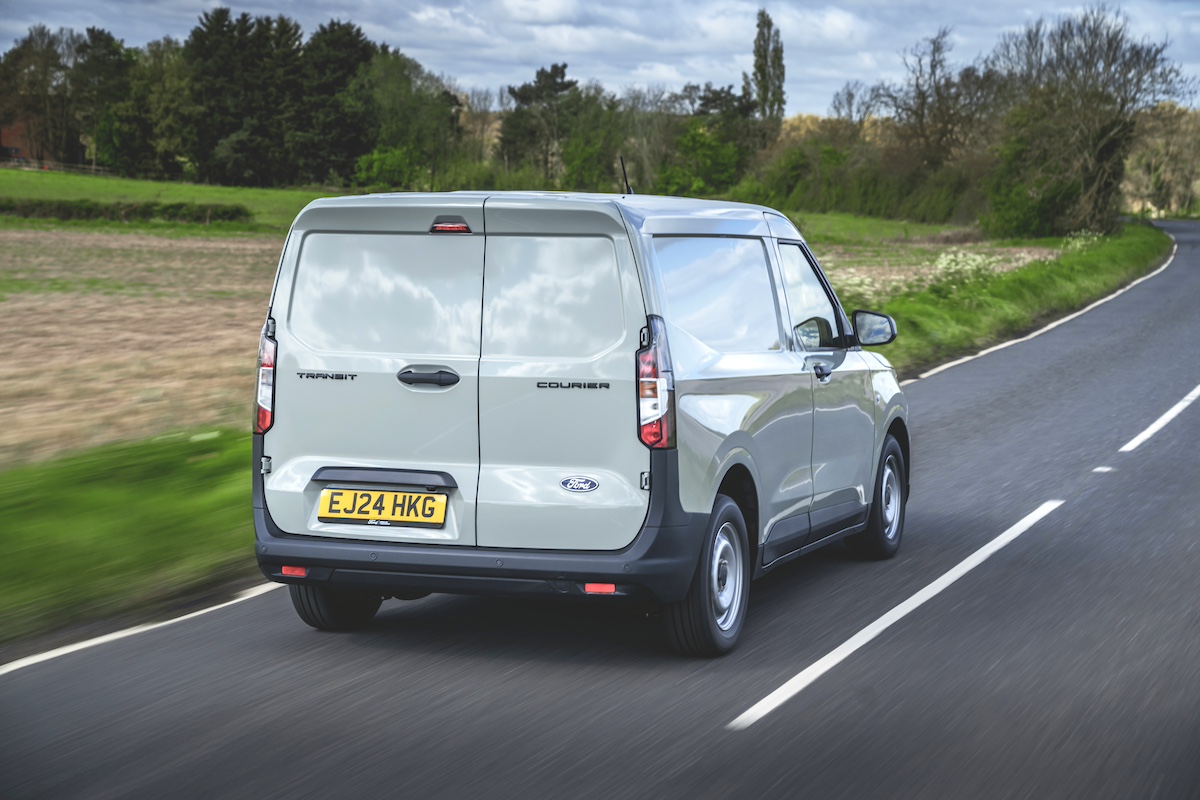
What is the Ford Transit Courier?
Whereas once upon a time, a Ford Transit was essentially a single van offered in a wide variety of forms to suit different purposes, the Transit name is now used for a family of Ford vans that cater for even more purposes. The Transit Courier is the smallest of them, sitting in Ford’s commercial vehicle range underneath the Transit Connect, Transit Custom, and the full-fat Transit. (Passenger car versions are also available fitted with windows and seats, but these are known in each case as the Tourneo instead of the Transit, so the Tourneo Courier, Tourneo Connect, Tourneo Custom, and so on.)
These days, most of Ford’s vans are built on dedicated commercial vehicle platforms that are shared with Volkswagen, and that’s due to a platform and parts-sharing deal struck by the two companies a few years back. The Transit Connect, for example, shares its underpinnings and tech with the latest Volkswagen Caddy Cargo. The Courier is a little bit different, though, because this vehicle is based on the same platform as the Ford Puma SUV. Even so, it’s not all that much smaller than the two vans mentioned, so both can be considered rivals, as can Stellantis-built compact vans such as the Citroen Berlingo, Peugeot Partner and Vauxhall Combo. Toyota also has an offering in the Proace City, as does Renault with the Kangoo, Fiat with the Doblo and Mercedes with the Citan.
In truth, the Courier is a bit smaller than all of these, because most manufacturers have stopped selling their smallest van offerings in recent years. However, the Ford is still roomier and more practical than pretty much the only other one left, the Fiat Fiorino.
How practical is it?
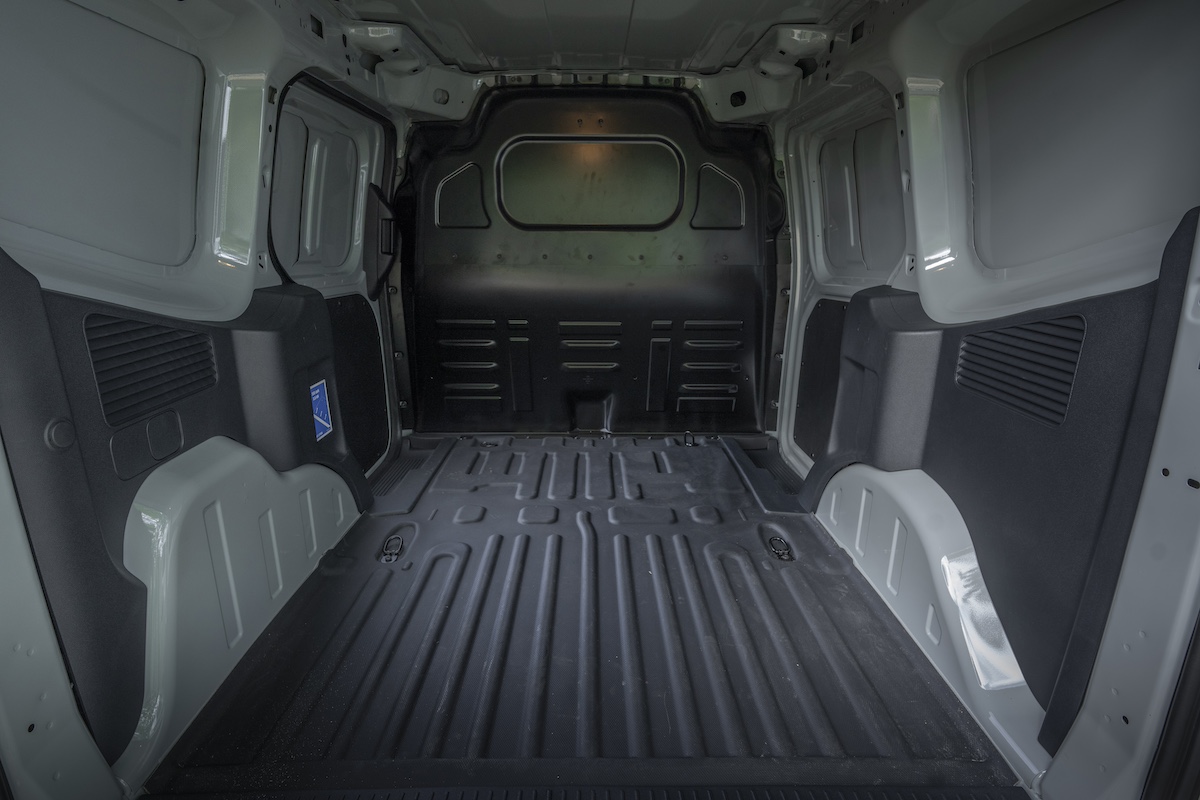
The Transit Courier is pretty small by van standards, but not everyone needs their van to have the maximum amount of loadspace, and for lots of tradespeople and businesses, the Courier will have plenty for the purposes required. The loadbay measures 1.80 metres long and 1.25 metres high, while there’s a width of 1.22 metres between the wheel arches. That’s enough for two Euro pallets, according to Ford, while the overall load capacity is given at 2.91 cubic metres. The maximum payload, meanwhile, is quoted at 820kg, depending on specification. The loadbay is covered with a hard-wearing plastic lining, and there are six lashing eyes riveted into the floor for tying down loads.
What's just as important as the space itself, though, is the access to that space. All versions have side-hinged rear doors on the back end, which open up to 90 degrees from the loadbay entrance. If you need even better access, you can unhook the hinge stoppers to allow the doors to open up to almost 180 degrees.
With entry-level Leader trim, that’s your lot in the way of access to the loadbay. The rest of the range, however, gets a useful sliding side door on the left-hand side of the vehicle, and if you’re prepared to pay extra for it, another can be added to the other side as an option.
Standard equipment on all versions includes a solid steel bulkhead between the cabin and the loadbay. You’ll notice that it protrudes into the loadbay by a few inches, which slightly reduces the width of the side-door’s loading aperture, but that should only become an issue when loading the very bulkiest of items. As an optional extra, you can have your bulkhead with a window, or with a through-loading hatch located beneath the passenger seat to improve you maximum load length. This load-through bulkhead allows you to carry long, narrow items up to 2.6 metres in length.
The bulkhead means you can’t slide the seats all that far back, which might impact the comfort of particularly tall drivers. There’s lots of height adjustment in the driver’s seat, but many will feel that their chair won’t go low enough. You also get height and reach adjustment on the steering column, but the range of movement is quite limited in both directions.
Obviously, the bulkhead means that your only rear visibility comes courtesy of your door mirrors, but these are both large and electrically adjustable. Reversing sensors are standard across the range, while Limited and Active trims also have a reversing camera. Your view to the rear-left-hand side of the Courier is rather limited at slanted junctions due to the shortage of side glass, but that’s the case in pretty much all panel vans.
You get absolutely loads of cabin storage in the Transit Courier. Large overhead storage shelves sit at the top of the windscreen, and you also get huge door bins, a large glovebox, and seemingly countless other little nooks and crannies for storing odds and ends.
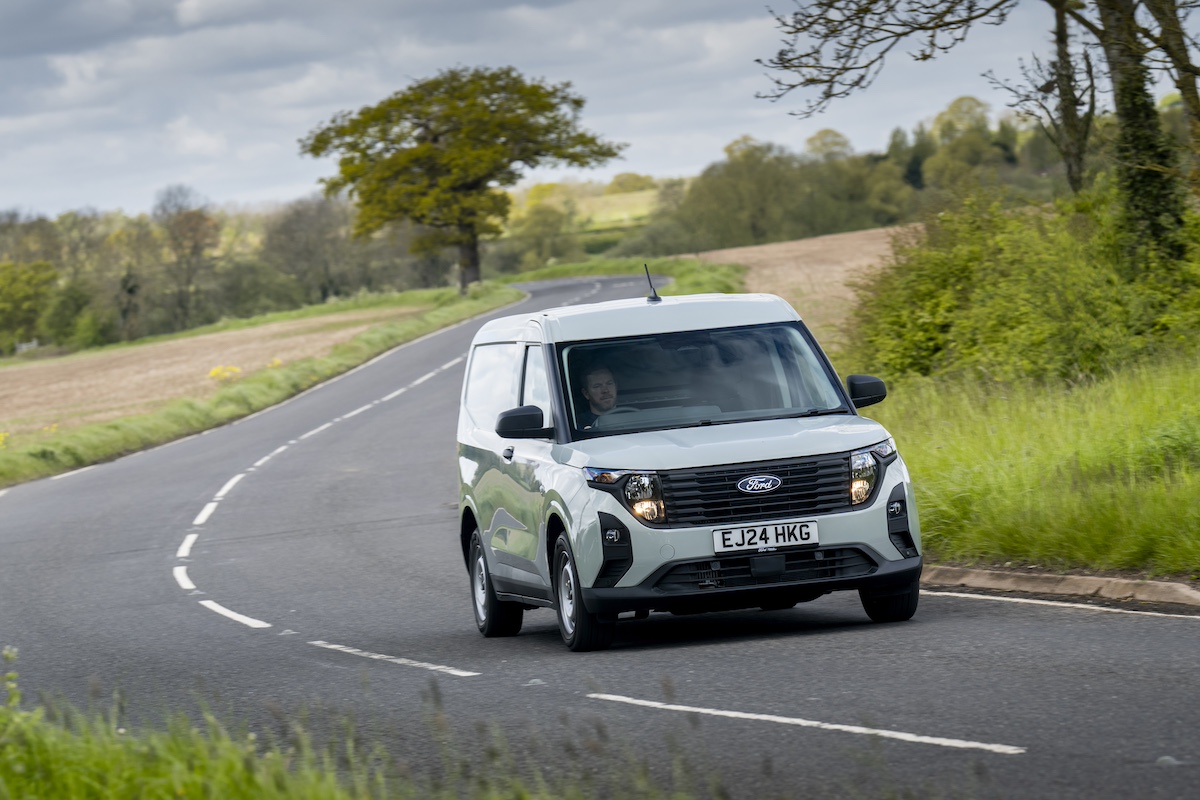
What’s it like to drive?
There’s an all-electric version of the Transit Courier on the way, but until that arrives, you have a more traditional range of combustion engines to choose from. There are two petrols, both turbocharged 1.0-litre, three-cylinder Ecoboost units. The 99bhp version comes solely with a six-speed manual gearbox, while the 123bhp version comes with either the six-speed manual or a seven-speed dual-clutch automatic.
Of these, we’ve only tried the more powerful engine paired with the manual gearbox, and even this one is fairly modest on the performance front. It’s fine for plodding around town and it’ll keep up with motorway traffic, but if you need anything more from it - such as when you come up against any sort of incline - then the tiny engine can’t help but get overwhelmed by the weight of the vehicle. You’ll need several downshifts, and your engine will be working its socks off until the slope is out of the way. Not that that’s a massive issue, mind you, because the gearshifts feel pleasantly slick and the engine is impressively smooth and quiet, even when it’s working hard.
We’ve also tried the other engine on offer, which is a 1.5-litre EcoBlue diesel, and is available solely with a six-speed manual transmission. You may be worried by the fact it only has 99bhp, but being a diesel, it also has a vast slug of readily available low-end torque, and this makes it feel considerably more eager and responsive: not a great deal faster, ultimately, but your progress is easier and less laboured. It’s not quite as quiet or smooth as the petrol, but it’s still very good on that score, and the fact it’s working less hard for more of the time improves refinement levels further.
As we’ve said, while Ford’s other vans are based on dedicated commercial vehicle platforms, the Courier sits on the same architecture as the sharp-handling Ford Puma SUV, which itself is derived from the brilliant-but-now-defunct Ford Fiesta. And that’s a very good thing. Ok, so the Courier doesn’t handle with quite the same verve on the road due to the extra roll caused by its taller, heavier body, but it still changes direction with an eagerness you might not be expecting of a van. That’s helped by very decent grip levels and quick, accurate steering.
Granted, this agility does mean that the ride has an edge to it that you might not be expecting, so it’s not as cosseting as some rivals. Importantly, though, it stops well short of being uncomfortable, so if you spend your working day clock-watching, that won’t be the reason.
Technology, equipment & infotainment
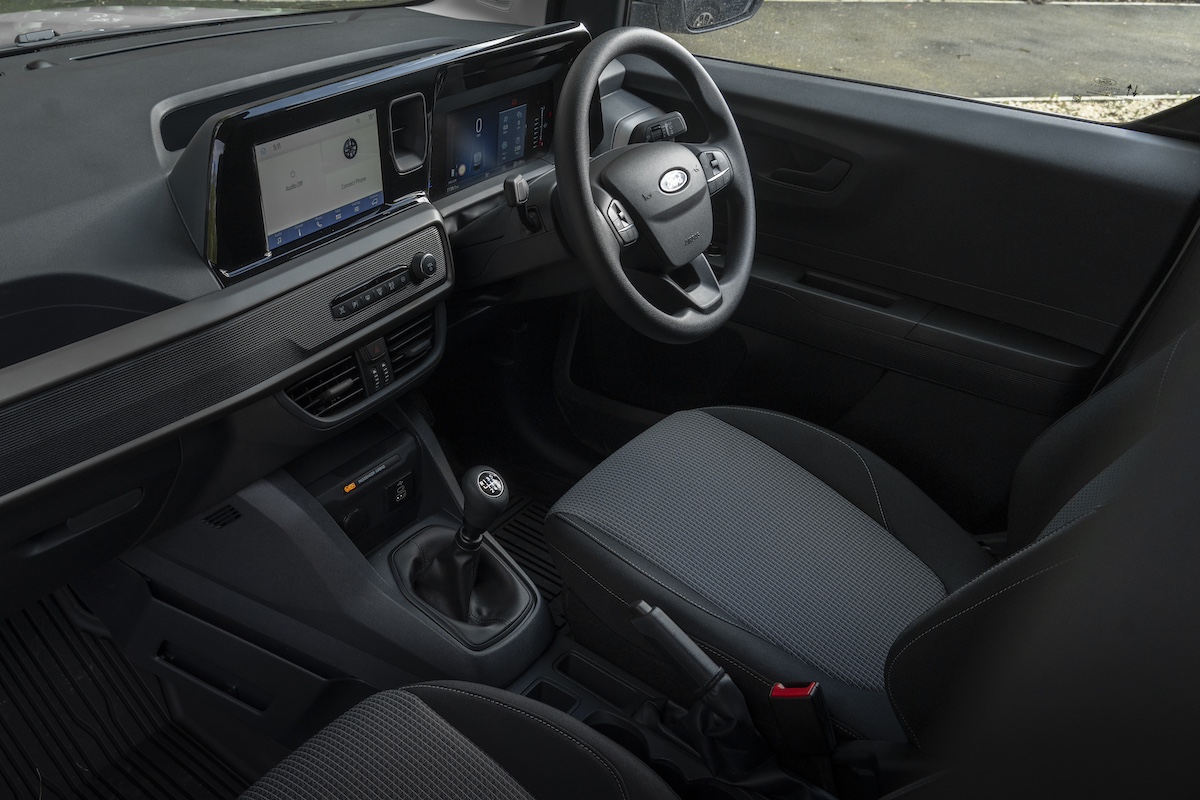
There are four trim levels available with the Transit Courier: Leader, Trend, Limited and Active. All of them have the same SYNC4 infotainment system, which brings together an 8.0-inch touchscreen in the middle of the dashboard and a configurable digital instrument cluster behind the steering wheel. The system includes Apple CarPlay and Android Auto, plus Bluetooth and DAB radio, while the audio system has four speakers and steering wheel controls. You also have two USBs to plug devices into.
No version gets satnav as standard, but you can add it by specifying an option pack that also includes adaptive cruise control. That said, the adaptive cruise is actually more of a reason to add the pack than the navigation is, because the standard smartphone integration means you can just display your phone’s navigation function on the car’s big screen.
Touchscreens in cars are often overcomplicated, making them difficult and distracting to use on the move. However, the Courier’s system isn’t actually too bad on that score: it has all the functionality you want, but it’s not absolutely crammed with features, so finding your way around isn’t too bamboozling. The menus are arranged fairly logically, the graphics are sharp, and the screen has good sensitivity and responsiveness.
We’re not massive fans of the fact that you have to operate the vehicle’s ventilation system through the touchscreen, rather than with physical buttons and knobs. However, there’s a shortcut button that immediately takes you to the ventilation display, and the display itself is well designed and easy to use.
In terms of the other kit you get, entry-level Leader trim is a little basic, with 15-inch steel wheels, powered windows, and heated, power-adjusted door mirrors, rear parking sensors and cruise control with speed limiter.
We’d definitely say that Trend trim is worth the upgrade, because it adds wheel trims, the sliding side door, front fog lamps, heated seats and steering wheel, a heated windscreen, a driver armrest and, most critically, air-conditioning.
Upgrading from there involves choosing between Limited or Active trim, which have similar equipment. Limited gets 16-inch alloy wheels, front parking sensors, automatic wipers, keyless start, a wireless phone charger, a reversing camera, and climate control. Active trim does without the climate control, and instead, you’re compensated with SUV-like styling touches that include black roof rails, extra wheel arch cladding, and front- and rear scuff plates.
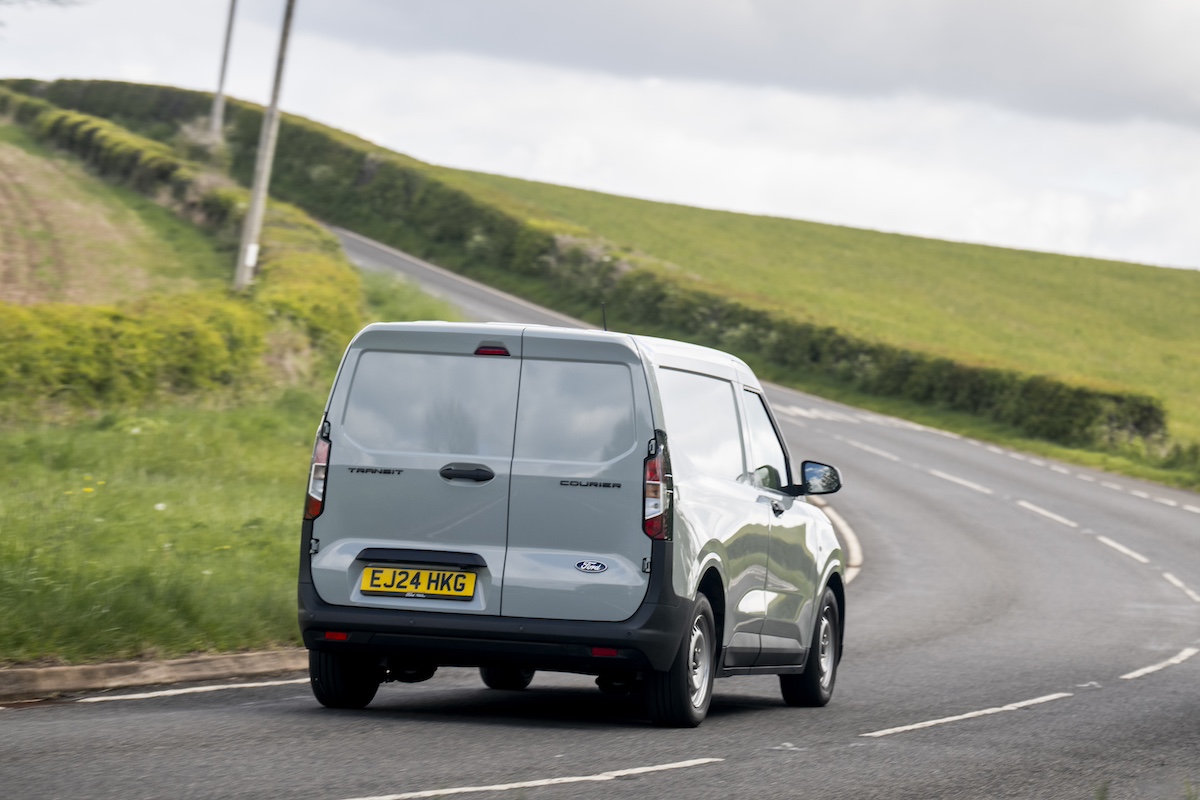
Ford Transit Courier running costs
If you buy brand new, prices for the Ford Transit Courier start at around £21,000, inclusive of VAT, rising to around £27,000 for the top-of-the-range version. That’s pretty competitive by class standards.
As well as sharing a platform with the Puma SUV, the Transit Courier also shares some of the same Ecoboost petrol engines, although unfortunately, they aren’t fitted with the same mild-hybrid technology that they are in the Puma. Fuel economy is still pretty decent, though: the entry-level 99bhp petrol engine returns around 43mpg according to official WLTP figures, while the 123bhp version of the same engine returns around 42mpg, and that’s regardless of whether you have it with the six-speed manual gearbox or the seven-speed automatic.
The 1.5-litre Ecoblue diesel powertrain does better, returning between 51- 55mpg depending on your trim level. CO2 emissions are also correspondingly low. You’ll definitely want the diesel if you regularly cover large motorway distances, but if the majority of your journeys are short urban ones, then one of the petrols might suit you better.
In terms of insurance, there’s very little in it between the various versions. The entry-level 99bhp petrol version falls into insurance group 25 (these run from 1 to 50, 50 being the most expensive), while all other variants sit in group 26.
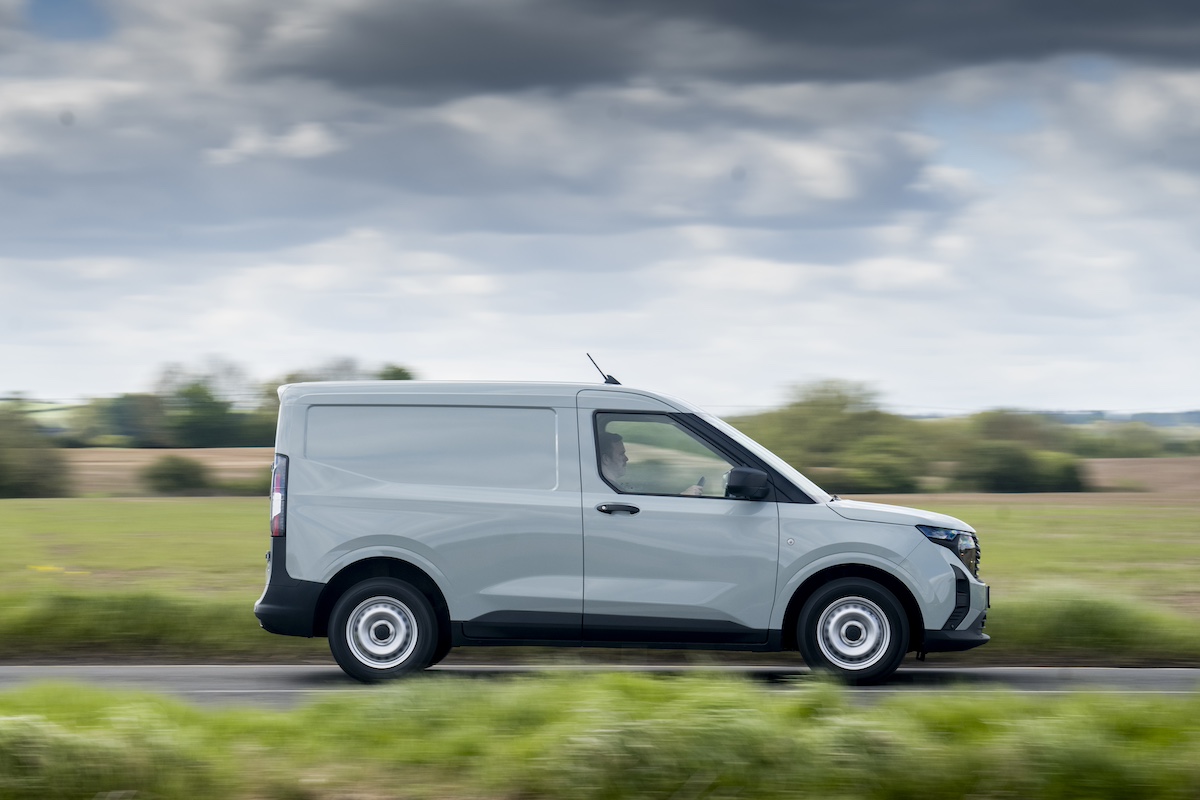
Ford Transit Courier reliability
Reliability data is currently pretty limited where the Transit Courier is concerned. It shares a platform and parts with the Puma SUV, which doesn’t disgrace itself in the reliability surveys we usually look at, but it doesn’t exactly cover itself in glory, either. The car placed 17th out of 22 models considered in the Small SUV class of the 2023 What Car? Reliability Survey, but Ford did better in the overall manufacturer standings, placing 17th out of the 32 car-makers considered.
Being a van, you’d hope that the Transit Courier would improve on that performance. After all, commercial vehicles are designed to handle constant, relentless use without missing a beat, because every minute a van spends off the road is a minute spent not earning.
Ford’s warranty is a decidedly unremarkable three-year, 60,000-mile arrangement.
- Standard safety kit on the Transit Courier includes six airbags, automatic high-beam headlights, and an eCall emergency assistance function that automatically alerts the emergency services with your precise location if you have an accident. Standard driver assistance features include automatic emergency brake assist, lane keep assist, traffic sign recognition and driver attention alert. On all grades, an option pack is available that adds adaptive cruise control (with stop and go function when specified with the automatic gearbox), blind spot assistance, and cross traffic alert. The pack also includes satnav.
- The Ford Transit Courier van has earned the highest Platinum standard in Euro NCAP’s commercial vehicle ratings. Unlike with car ratings, though, these ratings are more about the provision of active driver assistance systems, and how effective they are, rather than crash safety.
- Interior quality in the Ford Transit Courier is about what you’d expect. Yes the colour scheme is rather grey and monotonous, while the plastics in the cabin are rather drab and unappealing, but that’s the norm in a commercial vehicle. That’s because, in a working vehicle, you'd much rather have surfaces that are durable and wipe-clean instead of ones that would mark at the slightest provocation.
- If you often travel long distances: Get yourself the diesel version. If your mileage is high enough, it won’t take you all that long to recoup the extra cost to buy the vehicle in the first place through savings made by the superior fuel economy. You’ll also enjoy punchier performance and easier cruising.
- If you mostly travel short distances: Stick with one of the petrols. Not only will it take much longer for the diesel’s better fuel economy to pay you back, but diesels need regular sustained runs at high motorway speed so that their diesel particulate filter (DPF) doesn’t clog up and fail. If this isn’t happening, you could face a hefty repair bill and time off the road.
- If it’s all about the bottom line: If you’re trying to keep the outlay on your van as low as possible, then you could stick with entry-level Leader trim, as it has most of the basics. However, not having air-con would be fairly miserable almost everyday, so for that reason alone, we’d recommend upgrading to Trend trim at least.
- If you fancy a few luxuries: Then either the Limited or the Active are for you, both of which get a very decent slice of luxury kit. You’ll decide for yourself whether you’d prefer the Limited’s climate control ventilation system or the Active’s more rugged SUV-esque looks.


