Hyundai Ioniq 5 2026 review | A brilliant electric family car
Hyundai IONIQ 5 cars for sale
5.0
Expert review
Pros
Very spacious and practical interior
Packed with safety equipment and technology
Ultra-rapid charging speeds
Cons
Driving experience could be more polished
Relatively cheap-looking inside
Not as reliable as the related Kia EV6
The CarGurus verdict
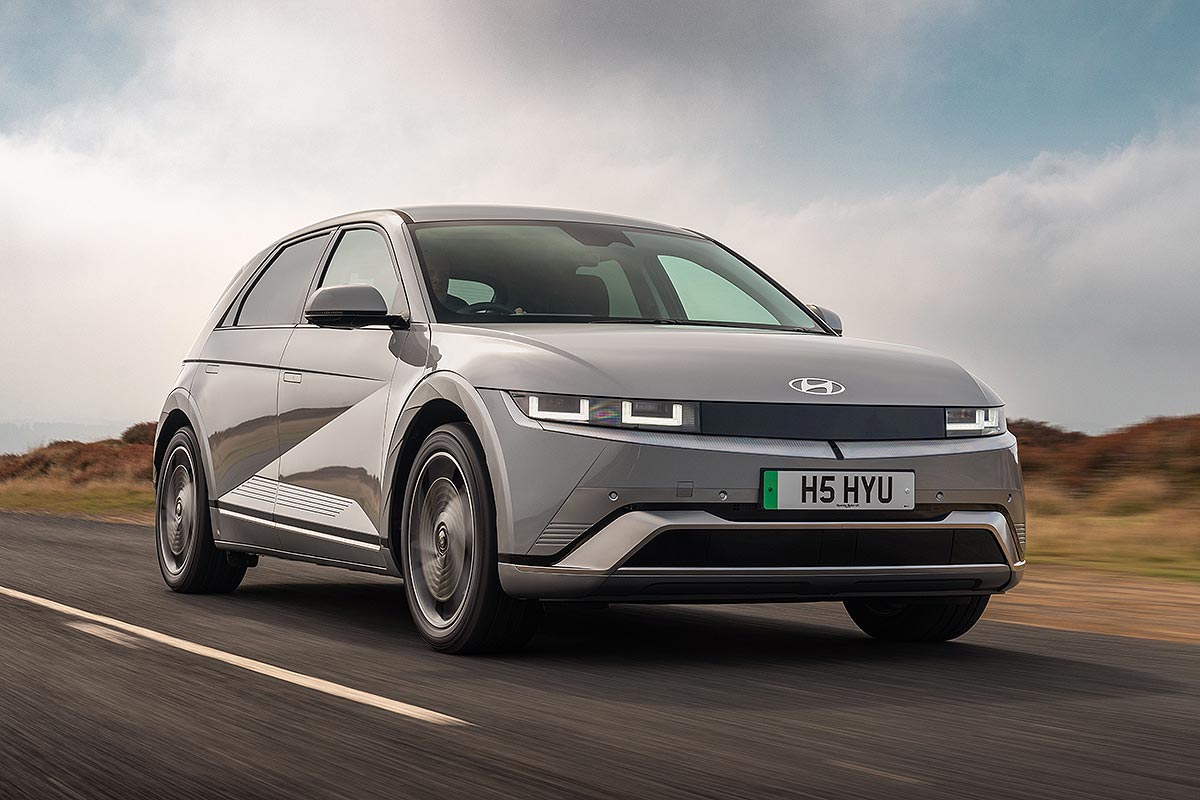
The Hyundai Ioniq 5 is an exceptional piece of design and, following its recent update, it remains one of the best family EVs you can buy. Not only for the convenience of its ultra-rapid charging, but also for its roomy and practical interior, decent dynamics and technology focus. It’s a really brilliant package as a family car.
While the Ioniq 5 N has to be considered a totally different entity, it’s just as recommendable. It’s easily the best enthusiast’s electric car on sale, short of the vastly more expensive Porsche Taycan.
We love the Ioniq 5, whether it’s the base Advance with a small battery, or the N, which has redefined what we expect from performance EVs. Whatever version you choose, the Ioniq 5 is simply a great car.
What is the Hyundai Ioniq 5?
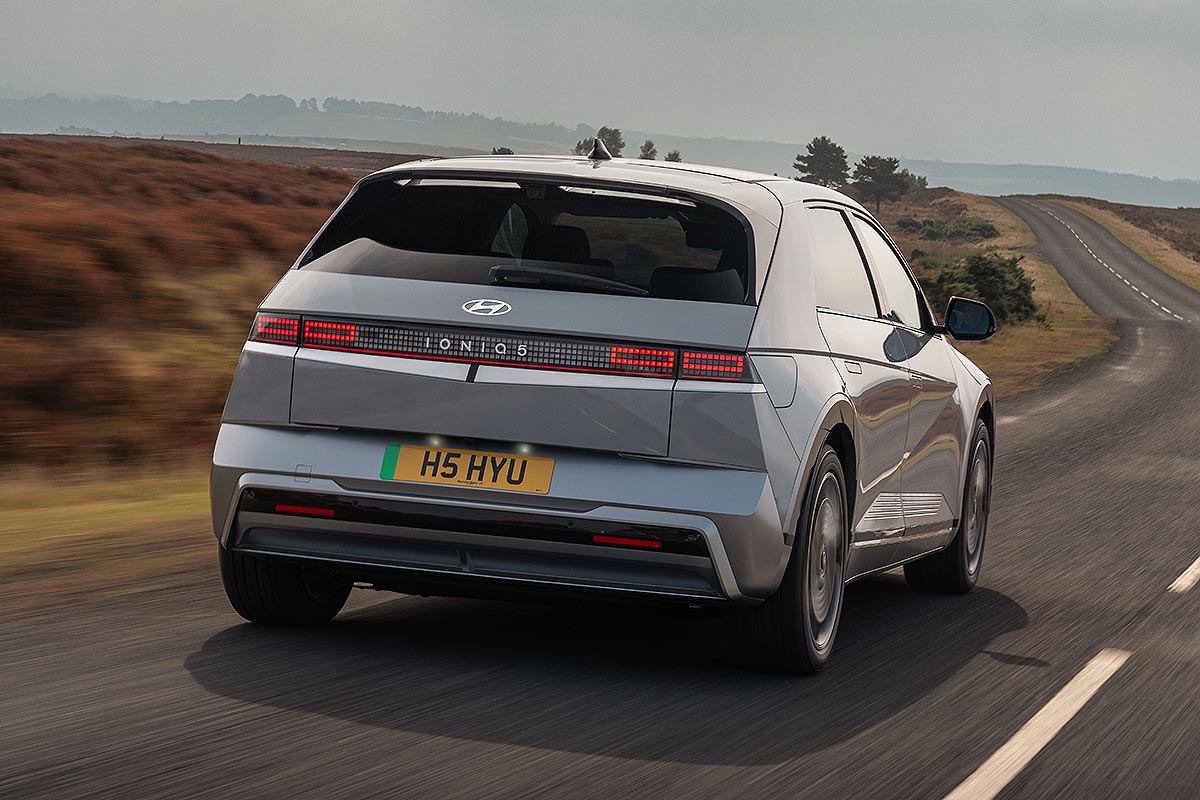
The Hyundai Ioniq 5 is a deceptive looking car. See its sharply creased, future-retro styling in photos, and it resembles a normal hatchback of Volkswagen Golf proportions. Stand next to it, however, and the Hyundai’s 4.7m length becomes very apparent, and you realise that it’s actually the size and bulk of a family SUV. Factor in prices that stretch between £40,000 and £50,000, and the Ioniq 5 is a rival for electric SUVs such as the Skoda Enyaq, Volkswagen ID.4, Peugeot E-3008, Tesla Model Y and Kia EV6 (with which it shares a platform and tech) – rather than for smaller hatchbacks like the Volkswagen ID.3.
Launched in 2021, with minor updates in 2022 and 2023, the Ioniq 5 was fully facelifted in 2024, bringing improved efficiency and tweaked trim levels. As a result, you can now choose 63kWh or 84kWh batteries depending on the specification, delivering a WLTP-tested range of 273 or 320 miles respectively (note: this applies to rear-wheel-drive models, rather than less efficient all-wheel-drive versions).
The Ioniq 5 is only available as an electric vehicle; there are no petrol, diesel or hybrid variants. That said, you can look to the excellent Hyundai Tucson for similar practicality with traditional powertrains.
If it’s more power and all-wheel drive you’re after, there’s also the Hyundai Ioniq 5 N. This is not ‘just’ a fast version of the Ioniq 5. The N has completely different suspension and steering, a wider track and fully variable all-wheel drive. It can even mimic an eight-speed gearbox and the sound of a high-performance petrol engine (or a jet plane). Given that it’s got 641bhp and will do 0-62mph in 3.4 seconds, it’s not overstating the case to say the 5 N is a competitor for cars like the BMW M3 and Mercedes-AMG C63. It’s more than good enough to steal sales from them, too. Indeed, as a driving experience, it’s one of the best EVs full-stop.

How practical is it?
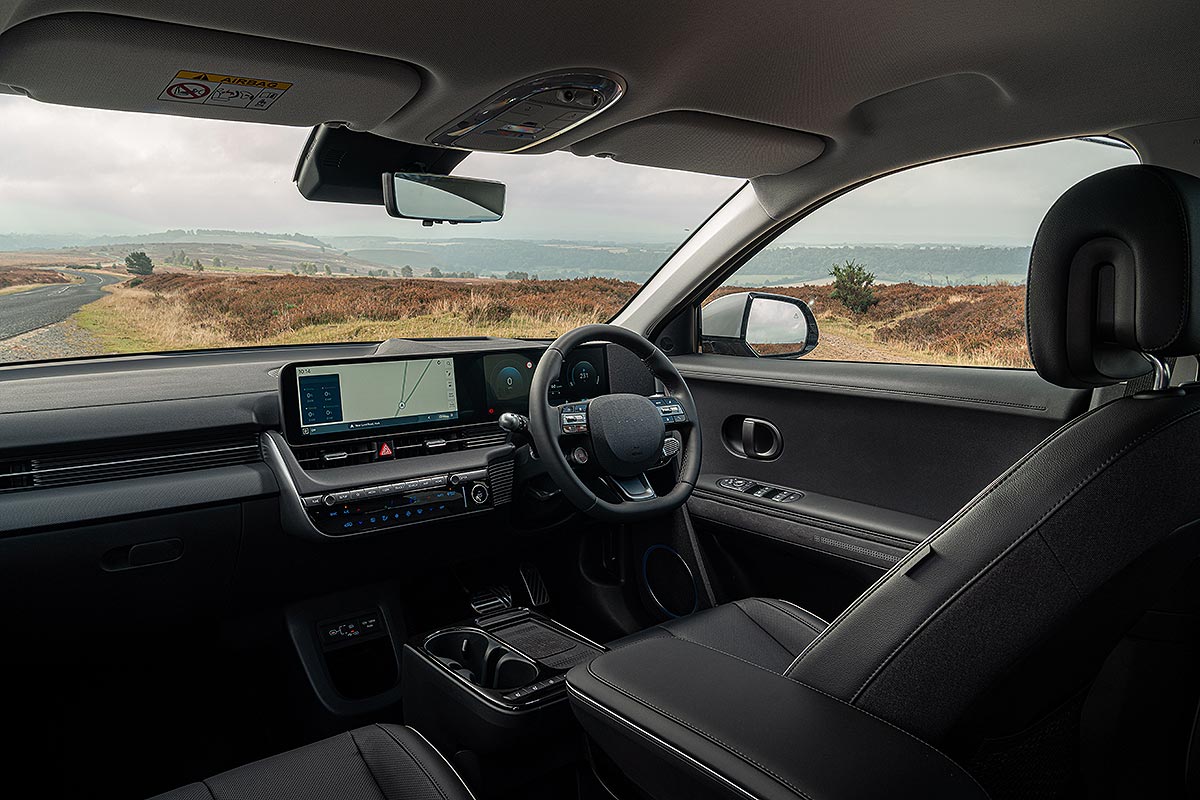
If images have led you to believe this car is about the same size as a family hatchback, jump inside and you’ll feel as though you were promised a chapel and given a cathedral. The Hyundai Ioniq 5 has a remarkably spacious, airy cabin with a very minimalist dashboard that has few details to distract from the bold horizontal lines of its design. The upright, twin 12.3-inch screens (one a central touchscreen, the other a digital driver’s readout) are the focal points, and the portal to all useful and interesting things about the Ioniq 5. This sort of smooth, architectural-looking interior is very fashionable in a post-Tesla world, but it still feels shockingly modern when you slide into the driver’s seat.
Some of the materials do feel a little cheap, mind; it would be an overstatement to say the Ioniq 5 is up there with Polestar et al for perceived quality. Still, it is a lovely thing to look at and sit in. If you add the optional ‘premium relaxation seats’, the front chairs can fully recline and you gain a leg-rest, so you can nap in first-class comfort while the car recharges. There’s enough headroom for passengers in the front and back to bring their top hats, while the rear seats offer genuinely limo-like legroom. They also slide forwards and backwards, and have reclining backs for extra comfort. The flat floor in the back means a third passenger will be fairly comfortable in the middle, too.
The boot borders on huge. At 520 litres it is, again, more like what you’d expect from a large family SUV than a hatchback, although it is a touch shallower than we’d like. Fold the rear seats down and you get 1,580 litres of space to play with. However, it’s worth noting that, while there is no lip between the boot floor and the base of the rear seats, the seats themselves don’t fold completely flat. Underfloor storage offers further convenience, but most will choose to keep the cables in the ‘frunk’ beneath the bonnet. It provides 57 litres of space, or 24 litres in all-wheel-drive versions.
Should the standard package not be practical enough, there’s a range of accessories available when you order new. The vehicle-to-load (V2L) connector allows you to use your Hyundai as a battery to charge devices or power appliances, for example. There’s also a retractable tow bar, along with various boot and floor mats, a cage to separate the cabin from a pooch in the boot, and a tailgate-mounted bicycle rack. A couple of decals are available, too, which do nothing for practicality but will, as we all know, make your car feel faster.
All in all, this is a cracking family EV. And the same goes for the Ioniq 5 N, which obviously gets sports seats and various performance-oriented style tweaks and upgrades (yet is still a hugely spacious and practical family car).

What's it like to drive?
When it comes to the standard Ioniq 5, you’re getting a very serene, if rather heavy-feeling family car. That’s no doubt because the Ioniq 5 is rather heavy, tipping the scales at 1,880kg for the 63kWh, rear-wheel-drive version, 1,985kg for the 84kWh car and a whopping 2,100kg for the 84kWh model with all-wheel drive.
The steering is light and consistent in the way it weights up through corners, but it’s rather numb and never encourages you to enjoy a good road. Instead, you tend to sit back and relax, which is absolutely fine. Ride comfort is decent, and very settled on the motorway, if a little lumpy over scruffy urban roads. There’s quite a bit of body float over high-speed undulations on country roads, but the Hyundai generally feels calm and confident – whether you’re in town, on a twisty road, or racking up lots of miles on the motorway.
We haven’t driven the four-wheel-drive Hyundai Ioniq 5, but performance isn’t an issue even for the rear-driven car. With a 0-62mph time of between 7.5- and 8.5 seconds, depending on whether you go for the bigger or smaller battery (power output is 168bhp with the smaller battery and 228bhp with the larger one), it’s more than quick enough off the line, and picks up heartily even if you ask for a mid-range sprint into motorway traffic. For reference, the all-wheel-drive 84kWh version has an impressive 320bhp, and will sprint to 62mph in 5.3 seconds. Excluding the Ioniq 5 N, all models have a top speed of 114mph.
The regenerative braking has various different levels ranging from barely noticeable to Hyundai’s ‘i-Pedal’ one-pedal driving mode, which is very heavy and uses adaptive tech to react when it senses a car up ahead. You can also choose any of the lighter brake regeneration modes to deliver a constant braking strength when you ease off the accelerator. Or you can activate the automatic mode, so that you benefit from your chosen regen strength and the car will brake for traffic or junctions up ahead. You toggle through these modes via the steering wheel paddles, making it easy to control the regenerative braking as you see fit. It’s all impressively flexible and intuitive.
The current battery sizes of 63kWh and 84kWh were introduced with the 2024 facelift. Prior to that, depending on the model year, there were 58kWh, 72.6kWh and 77.4kWh batteries, so be sure to check which version you are getting if you buy used.
As for how the Hyundai Ioniq 5 N drives? Well, it’s another world to the standard car. The suspension is taut yet comfortable enough to live with, and it feels playful yet manageable. Sure, it doesn’t steer and handle with the sweet purity of an Alfa Romeo Giulia Quadrifoglio, but the Ioniq’s aggressive performance, engaging manners and array of genuinely brilliant soundtracks make it just as much fun. It’s a truly spectacular performance car; one of the best out there, regardless of whether you’re comparing it to petrol or electric contemporaries.
Technology, equipment & infotainment
At launch, the lineup consisted of the SE Connect, Premium, Ultimate and launch edition ‘Project 45’. A couple of years later there was the special Namsan Edition, too. Now there are five trim levels to choose from: Advance, Premium, N Line, Ultimate and N Line S. Back in 2021, prices started at a fiver less than £37,000, so for the lineup to start at a fraction under £41,000 five years later is quite good.
Even the entry-level Ioniq 5 Advance gets adaptive cruise control with a semi-autonomous driving mode that helps to steer and brake the car, as well as autonomous emergency braking that will apply the anchors if it senses an imminent collision with a pedestrian, bicycle or another car.
You also get the big 12.3-inch touchscreen infotainment system with over-the-air software updates, Bluetooth, Android Auto and wireless Apple CarPlay on every model. There’s wireless phone charging across the range, too. The screen isn’t as graphically sharp as those in Audi and BMW vehicles, but it’s still one of the easier systems to use and we’ve no qualms with the features it offers.
The digital driver’s display has some very funky graphics that appear to have been copied from a ’90s desktop screensaver. Keyless entry, heated seats, a rear parking camera and driver’s electric lumbar adjustment are standard across the range, too.
Step up to the Ioniq 5 Premium and you get adaptive LED headlights, part-leatherette upholstery, a powered tailgate and blinds in the rear windows, among other extras. The N Line gets style upgrades such as 20-inch wheels rather than the 19-inch rims of the Advance and Premium models, while the Ultimate features a head-up display, electric rear-view mirror (it can be moved to turn off the screen-camera, going back to a regular mirror), Bose sound system with seven speakers and an almighty subwoofer, ventilated and heated front seats, plus heated outer rear seats (apologies to the person in the middle of the back row).
Go for the top-spec N Line S and you get a panoramic roof, styling tweaks inside and out, a 360-degree parking camera, blind-spot cameras (located under the door mirrors, these display the side rearward view of the direction you are indicating) and electric sliding rear seats. There’s also Smart Park Assist, which allows the car to park itself, whether it's reversing into a bay or parallel parking. Equally, if two people have parked too close to you and you can’t open the doors, you can use the key to make the car move forwards.
It’s worth noting that all Ioniq 5s benefit from software over-the-air updates. This means Hyundai can beam bug fixes and upgrades directly to your car, rather than you needing to visit a dealership every time.

Hyundai Ioniq 5 running costs
The Hyundai Ioniq 5 will be much cheaper to run than any equivalent petrol or diesel car if you charge it at home, and it’s competitively priced versus most electric rivals including the Skoda Enyaq and Tesla Model Y. Monthly PCP finance costs could be better, and you’ll likely find slightly cheaper payments among some of those key rivals. But the costs aren’t unreasonable given the equipment, range and practicality that the Ioniq 5 offers.
Charging the Hyundai Ioniq 5 at home will cost around £13 for the 63kWh car, or £17 for the 84kWh model, although that will vary depending on your home tariff. Use cheap off-peak electricity and you can expect those costs to halve, which would mean as little as 3p per mile (assuming efficiency of 3.3 miles/kWh – i.e. a real-world range of 200 or 270 miles for the small- and big-battery models, respectively).
The Ioniq 5 N is hardly cheap, at around £66,000, or about £13,000 more than a brand new Porsche Cayman. But that’s actually strong value next to cars that offer comparable performance and space. Running costs will be lower than any petrol car with equivalent performance, too. Having said that, the 5 N is still a hugely powerful car, so it’ll be expensive to insure. You’ll also want to factor in regular new tyres and more frequent servicing.

Hyundai Ioniq 5 reliability
Hyundai generally has a good reputation for reliability, and its standard five-year, unlimited-mileage warranty backs that up. The Ioniq 5 was rated sixth out of nine electric SUVs included in the 2024 What Car? Reliability Survey, which was reasonable yet not terrible, as it was still more reliable than most piston-engined equivalents.
Things look a little different in the most recent survey, however. While Hyundai as a brand is ranked 14th out of 30 manufacturers, the Ioniq 5 finished in 18th place out of 19 cars in the electric vehicle rankings. What Car? details how 42 percent of Ioniq 5s went wrong, compared to 30 percent of Kia EV6s, despite their shared underpinnings.
- The Hyundai Ioniq 5 is one of the fastest charging cars on sale. It has an 800V electrical system, so if you plug into a powerful enough ultra-rapid charger, it can charge at 220kW for a 100-mile top-up in less than 10 minutes. Find a 350kW ultra-rapid charger, meanwhile, and you can charge the battery from 10-80 percent in only 18 minutes, depending on the model. Most drivers will charge at home, and a 7kW home wallbox will do the job in around 13 hours for the big battery car, or more like ten for the smaller one. Charging is by Type 2 and CCS socket (the European standard and the same for almost every new EV). You can also control charging times and pre-set the cabin temperature ready for your departure via a phone app, so in winter everything will be nice and toasty before you hit the road.
- Go for any Ioniq 5 other than the base Advance model and you get vehicle-to-load (V2L) charging as standard. This means you can charge an electrical device – or even another electric car – from the Hyundai’s lithium-ion battery. It’s slow charging, but is still a great feature to have. Want to run a fridge while you’re camping, or charge your laptop while you’re doing some work and charging the car? Now you can. A three-pin, 230v plug is inside the car, while you can purchase an external adaptor that goes directly into the car’s charging port.
- A heat pump is now standard on every Ioniq 5, which brings more efficient running in cold weather. So your driving range won’t drop so much when you turn the cabin heating on. The Ioniq 5 also has a phone app that lets you pre-condition the cabin in advance.
- If you want a family electric car: The Hyundai Ioniq 5 is huge inside, very safe, quiet and comfortable on the road. Go for the Premium RWD with whichever battery suits your needs; don’t simply opt for the big one as it has a longer range. The smaller one offers a decent range and charges very quickly, so if you only do a handful of long journeys each year, we’d pick the cheaper car.
- If you want the sporty one: It’s got to be the N, with its completely different suspension hardware, reworked steering, fully variable all-wheel drive and 641bhp. It's great fun, and fast enough to embarrass many sports cars with more prestigious badges. The most performance from a standard Ioniq 5 is the all-wheel-drive model with an 84kWh battery. Its 320bhp will get you to 62mph in 5.3 seconds. Overall, though, it isn’t truly sporty. The Ioniq 5 N is the real deal.
- If you cover a lot of miles: Go for an Ioniq 5 with the 84kWh battery and, although it’s limited to specific trim levels, don’t be tempted by all-wheel drive. Not only does it steal space from the front boot, it also reduces your potential range. For example, in the case of the N Line, Hyundai claims a maximum 320 miles of range for the rear-wheel-drive version and 307 miles for the all-wheel-drive car. The ultimate long-range heroes are either the Advance or Premium trims with the 84kWh battery and rear-wheel drive. These can manage 354 miles.
- If you’re a company car driver: Benefit-In-Kind tax (BIK) is very low on pure electric cars right now, and promises to stay that way for the next couple of years at least. So even going for a high-spec Ioniq 5 doesn’t impact your company car tax costs that much. That’s why we’d have the Hyundai Ioniq 5 Ultimate AWD if your company will allow it. If you need to pick a version with a more moderate P11D valuation, go for Premium trim with rear-wheel drive, and whichever battery best suits your needs. You’ll be getting a good value, practical and high-spec EV at a good price.


