Range Rover Sport 2026 review | Range Rover luxury in a pair of trainers
Land Rover Range Rover Sport cars for sale
4.0
Expert review
Pros
Fantastically luxurious interior
Great to drive on and off road
Impressive electric-only range on PHEV models
Cons
Potential question marks over brand reliability
No seven-seat option
Higher-spec models are very pricey
The CarGurus verdict
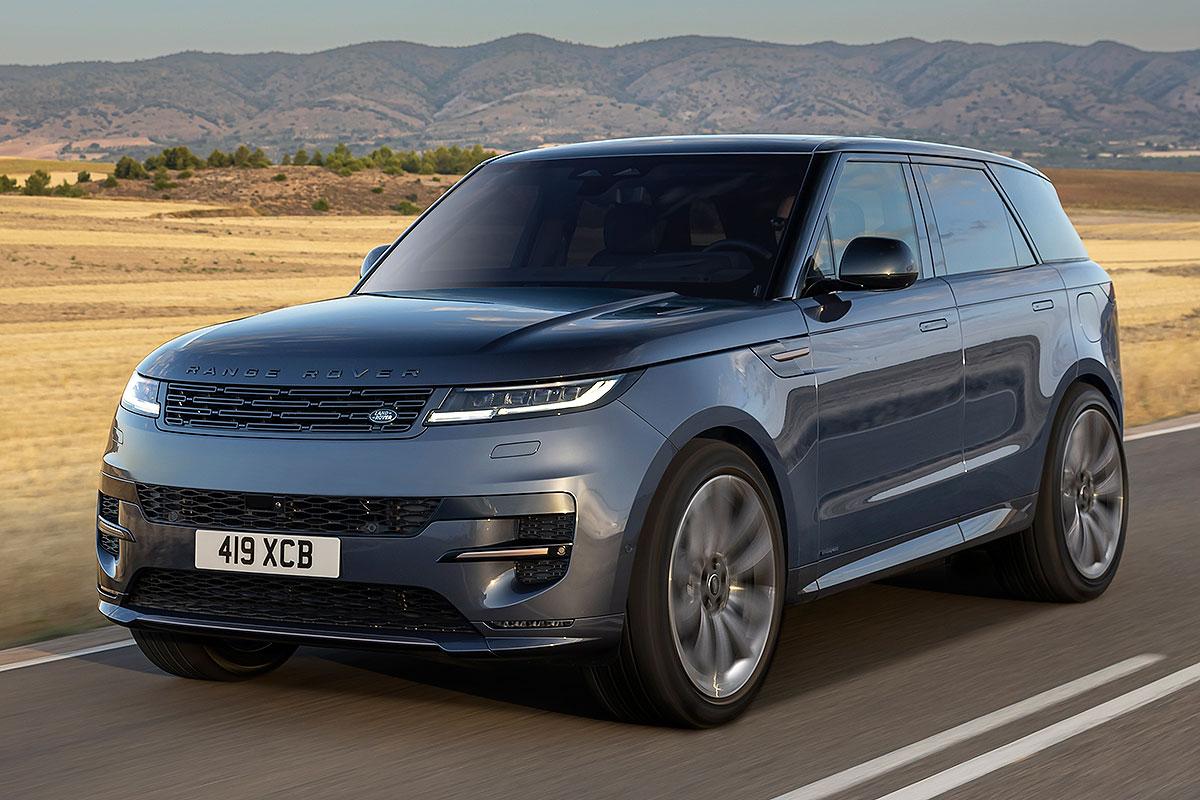
The Range Rover Sport is a world-class luxury SUV. From its modern, lavish-feeling interior, to the smooth yet balanced way it drives, it is a delight to spend time in. And that applies whether you’re after a relaxing drive home or enjoying a good road. The array of powertrains and trims means there is also guaranteed to be a model to suit you – especially when a pure electric version joins the lineup.
However, the durability concerns can’t be ignored, despite our hopes these new Range Rover models will change that pervasive cloud of reliability woe that has hung over Land Rover for too long. It also can’t be ignored that this is now one of the more expensive options in an already pricey lineup of posh 4x4s, and it’s a shame that four-wheel steer only comes on the truly expensive models. For these reasons, we’ve docked the outstanding Range Rover Sport a star from the five stars overall that, in our hearts, we’d really like to give it.

What is the Range Rover Sport?
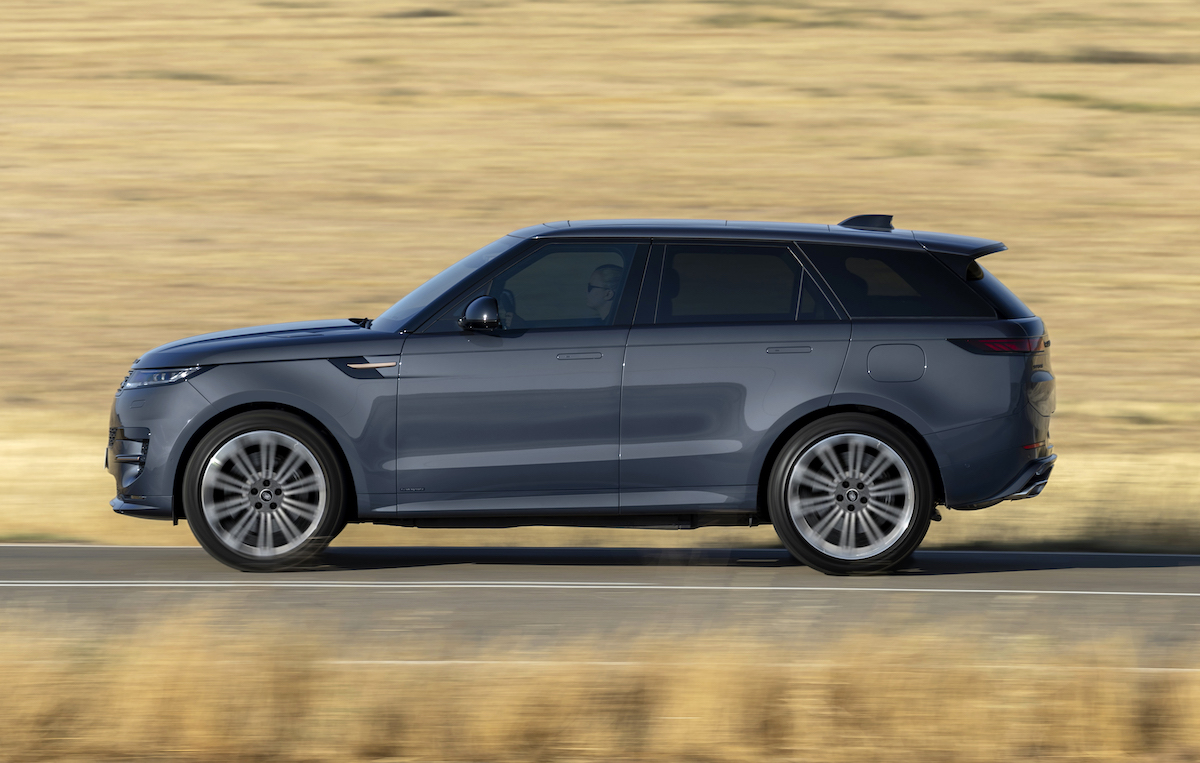
The latest Range Rover Sport takes many of its styling cues from its larger sibling: the flagship Range Rover. The smooth, minimalist surfacing, high waistline and clean, boxy silhouette are unmistakable. From the front, the two cars can look remarkably similar, although the Sport distinguishes itself at the rear with a more streamlined light bar and a subtly more dynamic stance.
Despite being positioned as the more driver-focused alternative within the Range Rover line-up, the Sport remains a substantial SUV. At just under five metres long, it’s slightly larger than key rivals such as the BMW X5, while alternatives including the BMW X6, Audi Q8, Mercedes-Benz GLE and Porsche Cayenne also fall within its competitor set.
Introduced in 2022, this third-generation model is based on JLR’s MLA-Flex platform, bringing improvements in refinement, technology and electrification. Unlike earlier versions, however, the Range Rover Sport is no longer offered in seven-seat guise. Buyers needing extra passenger capacity will need to look to alternatives such as the Range Rover itself, Land Rover Defender or Land Rover Discovery.
How practical is it?
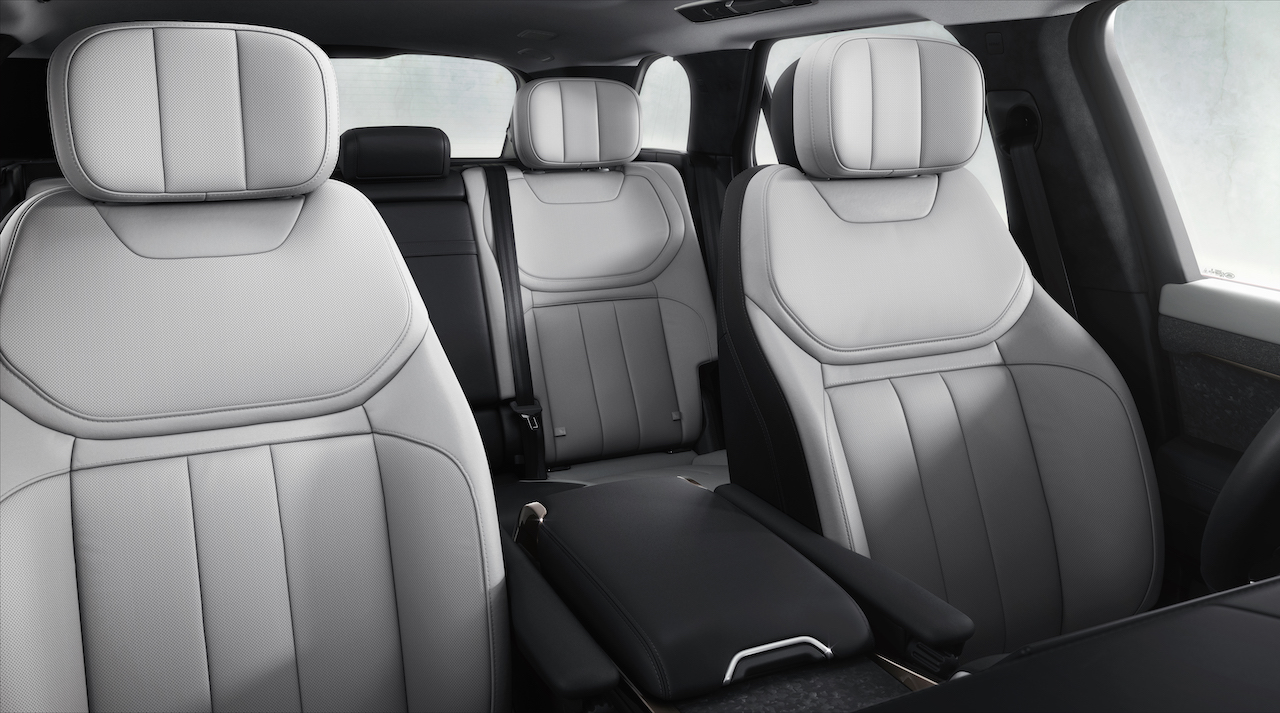
Very practical, although the lack of a seven-seat option does feel like a drawback compared with some rivals. Even so, there’s limousine-like space in the rear seats, with plenty of legroom and headroom even for taller adults. Two USB charging ports and cupholders come as standard, while a wide range of optional extras – including electrically reclining and massaging rear seats – allow buyers to add an extra layer of luxury if desired. That said, it feels slightly stingy that features such as rear climate control and retractable sunblinds are either optional or only standard on high-end models. This is a very expensive car, after all.
The boot is generously sized, offering 647 litres of luggage space behind the rear seats. Land Rover has even managed to package a space-saver wheel beneath the boot floor, including on plug-in hybrid models – something that isn’t always possible in electrified SUVs. A boot divider is optional rather than standard, which again feels a little mean at this price point, but it’s a worthwhile addition for keeping loose items secure.
Unlike the full-size Range Rover, the Range Rover Sport uses a conventional one-piece tailgate rather than a split design. Its rear seats fold flat, while the adaptive air suspension allows the car to be lowered via controls in the boot to make loading large objects easier.
Naturally, the seats up front are really comfy and spacious. Every Range Rover Sport gets real leather upholstery with 20-way electric seat controls and lumbar adjustment for the driver, not to mention a fixed panoramic glass roof that makes the interior feel light and airy. Higher-end models up the ante with seat ventilation and a massage function.
Fit and finish is great, with Land Rover working hard to improve the general sense of quality in its interiors for this generation of Range Rover and Range Rover Sport. Everything from the switch damping to the general feel of the materials is appropriately plush for a luxury car.

What's it like to drive?
Engine options include a trio of six-cylinder diesel mild-hybrids, a pair of six-cylinder petrol plug-in hybrids, plus twin-turbo V8 models at the top of the range, including for the flagship SV. The V8 models offer a greater performance focus, but don’t discount the plug-in hybrid Range Rover Sport models if you want both pace and efficiency.
Combining JLR’s Ingenium 3.0-litre engine with a 38.2 kWh lithium-ion battery (with a usable capacity of 31.8kWh), the latest Range Rover Sport plug-in hybrid models – badged P460e and P550e – offer up to 71.5 miles of electric-only range according to the official figures. We’ve only driven the earlier P440e version, which essentially shared the same hardware and delivered a combined output of 434bhp, so the current P460e should feel broadly similar in character and performance. The more powerful P550e uses the same basic powertrain but increases output to 542bhp, offering even stronger performance without sacrificing electric range.
Even in the ‘lesser’ of the two PHEVs, performance is pretty impressive, at 5.5 seconds to 62mph – despite the Sport weighing well over 2.5 tonnes. The electric motor and petrol engine work well together, blurring the shift between power sources so that, while it’s still slightly noticeable, there’s no unpredictable change in pedal response to worry about. It all feels smooth and reassuringly predictable.
Having said that, it’s in pure electric mode that the Range Rover Sport really shines if a comfortable family SUV is what you’re after. In this drive mode, it’s super quiet and chilled, flowing down the road in eerily seamless fashion. That’s not to say that the petrol engine isn’t extremely agreeable, too. This in-line motor and its eight-speed automatic gearbox deliver a really slick experience, gelling well whether you’re after a relaxed drive home or a keen drive on your favourite road. It is a bit odd that Land Rover has chosen to pipe fake engine noise into the cabin, which is really noticeable at low speeds if you have it turned on, and isn’t all that pleasant to listen to. The engine itself might not be the most sonorous, but it’s more than enjoyable enough without the synthetic aural accompaniment.
Ride comfort is just fantastic. Despite the huge 20-inch alloy wheels that are standard even on the entry-level S model, the Range Rover’s standard adaptive air suspension sponges up big bumps with nothing but a well restrained bob from the car’s nose.
Which makes it all the more impressive that the Range Rover Sport lives up to its badge with surprisingly poised handling. Don’t get us wrong, you can feel the mass and size of the car even if you choose Sport mode and aim to enjoy some good corners. But in the context of big, heavy SUVs, the Range Rover has impressive body control, and tucks into corners with a zeal and precision that belies its weight. You really can revel in the broad-ranging delights of the Range Rover Sport whether you’re going for a fun drive or just soaking up the world-class refinement and comfort. The light steering helps here, as it builds with oily progressiveness and makes life easy without destroying the sense of connection with the front wheels.
Rear-wheel steering is standard on higher-end models such as the Autobiography and optional on selected trims depending on specification. It’s a great feature as it seriously reduces the Range Rover Sport’s rather huge 12.5-metre turning circle to a more hatchback-like 10.95 metres, making it far easier to manoeuvre around tight car parks.
We haven’t tried any other powertrains, but given the more powerful plug-in hybrid is only marginally quicker, it’s hard to see why you’d pay the extra money. We’ve tried the diesel and the V8 in the ‘proper’ Range Rover, and both are utterly superb. In fact, the diesel really is hard to argue with, bringing great refinement and feeling more than potent and responsive enough, regardless of being one of the cheapest models. The V8 is well-heeled naughtiness in the big Range Rover; more subdued than in rivals like the Bentley Bentayga, but still velvety and deeply joyous to use in anger if that’s what takes your fancy.
Technology, equipment & infotainment
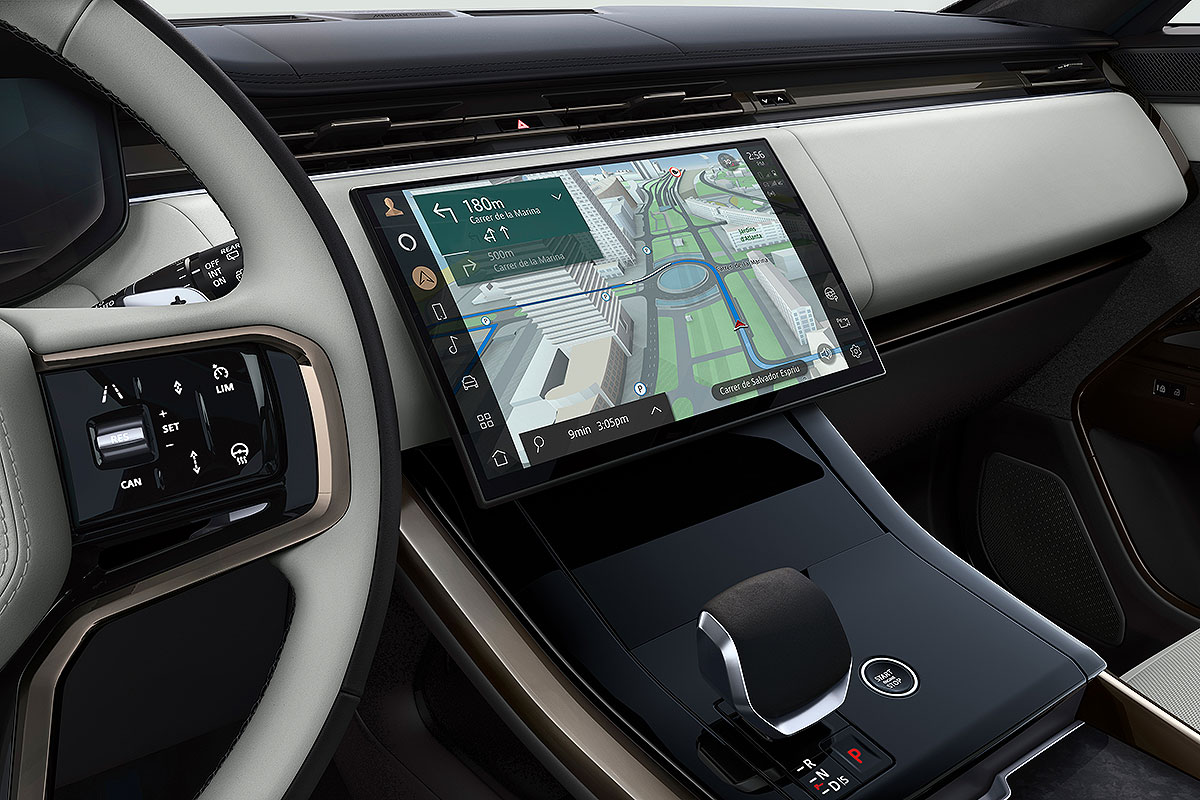
The Range Rover Sport gets a 13.1-inch touchscreen infotainment system with the company’s latest ‘Pivi Pro’ software. This means configurable home screen shortcuts, crisp graphics and all the features you’d expect, including wireless Apple CarPlay and Android Auto connectivity. The built-in navigation system can also intelligently manage energy use in plug-in hybrid versions, suggesting when it’s most efficient to use electric or petrol power, while displaying live traffic data and nearby charging points.
It's worth noting that, since launch, Land Rover has swapped out the physical climate control dials for touch settings within the screen itself. It means the dashboard has an even clear, more minimalist look... but many will miss the convenience of physical dials and buttons, particularly as they were among the more tactile controls out there.
You can enable haptic feedback, which makes the screen vibrate when you press an icon, although this is accompanied by an audible blip that some drivers may find unnecessary. Thankfully, both can be switched off. The screen itself is responsive enough, even if it occasionally needs a firmer prod than is ideal. It also helps that the gear selector doubles as a wrist rest, supporting your hand while you interact with the display – a small but genuinely useful ergonomic touch.
A comprehensive suite of driver assistance systems is available, including adaptive cruise control with steering assist, lane-keep assist and traffic-jam functionality. Many versions also feature a 360-degree parking camera.
Even the entry-level S is packed with equipment, including 20-inch alloy wheels, a Meridian sound system, 12-way electric heated front seats, leather upholstery, a heated steering wheel, dual-zone climate control and LED headlights, so you may not feel the need to upgrade to one of the more expensive trim levels.
Stepping up to the SE adds 21-inch wheels, ‘Windsor’ leather upholstery and pixel LED headlights, while the Dynamic SE is essentially an SE with some cosmetic upgrades designed to give the Range Rover Sport a sportier look.
Autobiography ups the ante with 22-inch wheels, digital LED headlights, 22-way electric front seats with heating, ventilation and a massage function, plus an upgraded Meridian 3D sound system.
The flagship Range Rover Sport SV sits at the top of the range, with variants including the SV Black and SV Carbon design themes.

Range Rover Sport running costs
No luxury performance SUV is ever going to be cheap to run, and the Range Rover Sport is no exception. Indeed, it’s one of the more expensive options in the class, so if purchase price or monthly payments are a priority, you may want to consider alternatives such as the Audi Q7, BMW X5 or Lexus RX. Or Land Rover’s own Defender and Discovery, of course.
That said, the Range Rover Sport comes well equipped as standard, and strong residual values result from consistently high demand for used examples. For buyers who plan to sell after a few years, this could help offset the hefty upfront cost.
In terms of fuel economy, the diesel mild-hybrid models (D250, D300 and D350) officially return up to 39mpg in official WLTP tests. The plug-in hybrid models deliver impressive economy figures, but these should be taken with a pinch of salt, as they rely heavily on regular charging and frequent electric driving to achieve them. If the petrol engine is doing most of the work, real-world economy may actually fall below the diesel models due to the added weight of the battery system. On the plus side, an electric-only range of 71.5 miles is excellent for a car of this size, provided you recharge it regularly.
Insurance costs are predictably high, as you would expect for a large SUV with powerful engines. Servicing intervals are every 12 months or 10,000 miles, and fixed-price service plans are available, although they tend to be relatively expensive.
Range Rover Sport reliability
Land Rover has developed a reputation for patchy reliability over the years. Unfortunately, the 2025 What Car? Reliability Survey did little to improve that perception, with Land Rover finishing a disappointing 26th out of 30 manufacturers based on feedback from owners of cars up to five years old. Only Jaguar, Fiat, Nissan and MG ranked lower.
On a more positive note, the Range Rover Sport itself performed relatively well in its class, placing fifth out of 16 luxury cars and SUVs – one position higher than the previous-generation model.
It’s also worth remembering that this latest Range Rover Sport is an entirely new generation, built on a new platform with significantly revised powertrains and updated technology, so long-term reliability data is still limited. As such, it deserves some benefit of the doubt.
The standard warranty covers three years with unlimited mileage, alongside three years of free roadside assistance. That’s broadly in line with many rivals, although some manufacturers now offer more. We think an extended warranty would likely improve buyer confidence, given Land Rover’s reputation.
- The Range Rover Sport is a popular option for motorists who tow heavy loads, and this model won’t disappoint. Most versions can haul up to 3,000kg braked, while V8 models increase this to a maximum of 3,500kg. You’ll need to pay around £1,500 for the Towing Pack, which adds an electrically deployable tow bar. It also includes Advanced Tow Assist, allowing the car’s semi-automated parking system to steer for you when reversing a trailer or caravan.
- The Range Rover Sport plug-in hybrids (now badged P460e and P550e) are among the few PHEVs to support DC rapid charging. Using a CCS connection, they can charge at up to 50kW, allowing a 10-80 percent top-up in around an hour under ideal conditions – significantly faster than many plug-in hybrid rivals. A typical 7kW home wallbox will replenish the battery in roughly five hours, while a domestic three-pin socket takes considerably longer.
- Off-road performance in the Range Rover Sport is as good as it gets when it comes to sports SUVs. A wading depth of 900mm is impressive (and applies to the PHEVs as well as the standard cars), while the active four-wheel drive can be tailored to the terrain via the Terrain Select rotary mode switch in the cabin. There are more hardcore off-roaders, of course, but the Range Rover Sport is the best of its ilk.
- If you want the best value: Go for entry-level S trim. It delivers all the luxury touches most buyers expect at a relatively sensible price for a Range Rover Sport. The only real omission is four-wheel steering. Engine choice is limited to the D250 diesel mild-hybrid, but if that’s too modest, stepping up to SE unlocks the D300 diesel or P460e plug-in hybrid.
- If you want the best company car: The plug-in hybrid P460e is the smart choice. It’s significantly cheaper than the P550e but offers very similar real-world performance and electric range. Its low CO2 emissions mean comparatively favourable Benefit-in-Kind tax rates: important on a car this expensive. For business owners, the electrified powertrain also improves tax efficiency.
- If you’re a high-mileage driver: The D300 diesel makes the most sense. While the plug-in hybrids can be extremely efficient if regularly charged, they lose their advantage on long motorway runs once the battery is depleted. The D300 offers a better blend of strong performance and real-world fuel economy than the entry-level D250.
- If you want the best family all-rounder: The P460e is the most refined and relaxed version in daily use, especially if you can charge at home. However, if charging isn’t convenient, one of the diesel engines still makes sense. If your commute or school run involves tight streets and lots of corners, consider the Autobiography trim with its added four-wheel steering.