Porsche Cayenne 2026 review | A large SUV that drives like a Porsche
Porsche Cayenne cars for sale
4.0
Expert review
Pros
Brilliant to drive
Tremendous performance
Spacious and practical
Cons
Divisive styling
Costly to run
The smaller Porsche Macan is more agile

The CarGurus verdict
The Porsche Cayenne is a very talented upmarket SUV. It’s rewarding to drive, effortlessly quick, impressively spacious and easy to live with, yet still manages to feel more engaging than a large luxury SUV really has any right to. Few rivals combine family practicality, long-distance comfort and driver appeal quite so convincingly.
What’s also impressive is the breadth offered by the Cayenne range. Pick the right specification and the Porsche can serve as a rival to anything from a Range Rover Sport to a Bentley Bentayga or Lamborghini Urus, while the plug-in hybrid models add useful electric range without sacrificing the car’s performance character. There’s now a fully electric Cayenne as well, but we’ve covered that model in a separate review.
It is admittedly a big and costly SUV that will prove expensive to run, but that won’t come as a surprise to many buyers. Porsche’s options list can also make an already expensive car even pricier, and some rivals offer more luxury for the money. Even so, the Cayenne is one of the best-driving large SUVs around, and one of the few cars of this type that genuinely deserves its sporting badge. If its size is an issue, however, you should consider the smaller Porsche Macan.
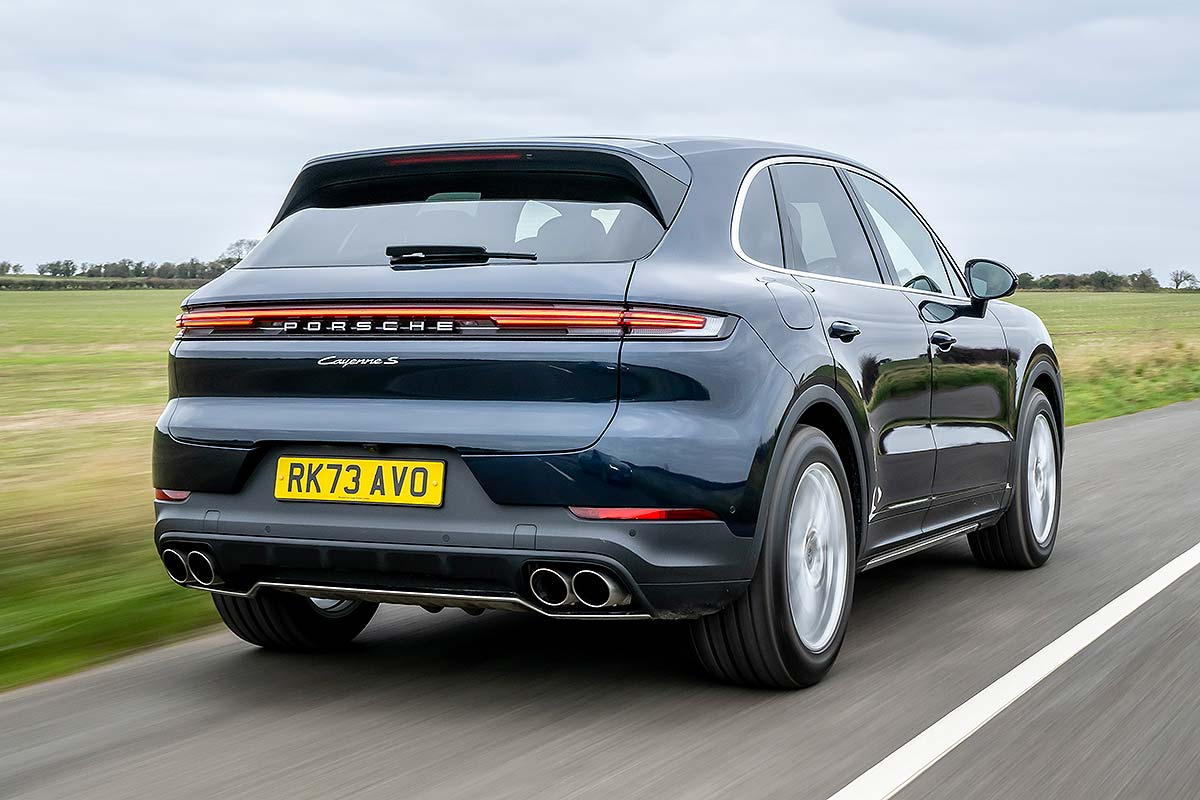
What is the Porsche Cayenne?
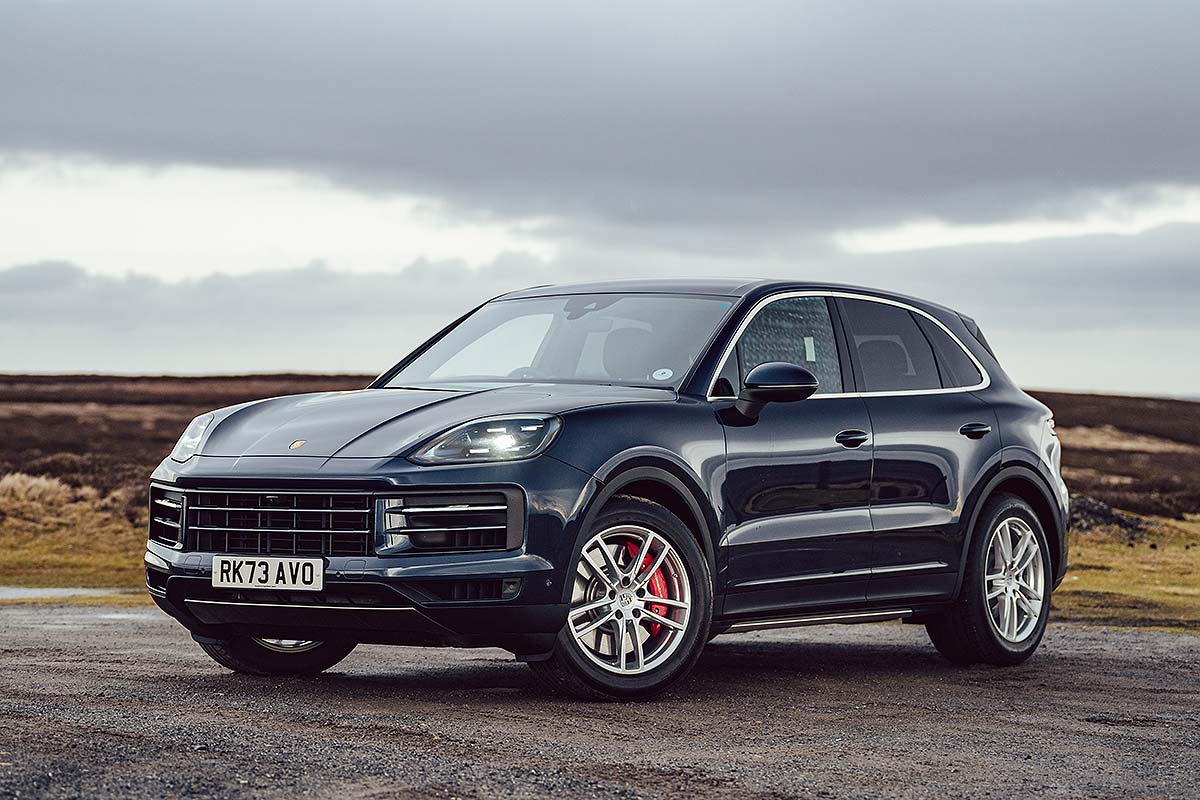
The Porsche Cayenne SUV has long been the go-to choice for buyers who want an upmarket, high-performance SUV. This third-generation model continues that trend. Launched in 2017 and heavily updated in 2023, the latest Cayenne is a convincing answer to the question of whether a large luxury SUV can still feel like a ‘proper’ Porsche.
Porsche didn’t just give the previous Cayenne a tweak and send it out as a new model. This third-generation car gained a new platform, more modern styling, a fresh engine lineup and a host of new chassis and technology options. It’s also lighter than its predecessor, despite a small increase in size, and more practical inside, thanks to a roomier interior and a larger boot.
The Porsche Cayenne range has changed considerably over time. Diesel engines have long since disappeared, with the current lineup focused on petrol and plug-in hybrid power. Depending on the version, buyers can choose a six-cylinder petrol engine, V8 performance models and a selection of ‘E-Hybrid plug-in hybrids. The extremely quick Turbo E-Hybrid sits at the top of the pile.
Porsche also offers the sleeker Cayenne Coupe, which trades a little practicality for a more rakish roofline and a sportier look. A fully electric Cayenne is now part of the family too, but that model is covered separately.
However you view it, the Cayenne is a high-quality, high-performance SUV that can tackle daily duties and family life with ease, while being more compelling and rewarding to drive than most rivals. So yes, a large luxury SUV can indeed feel like a proper Porsche.
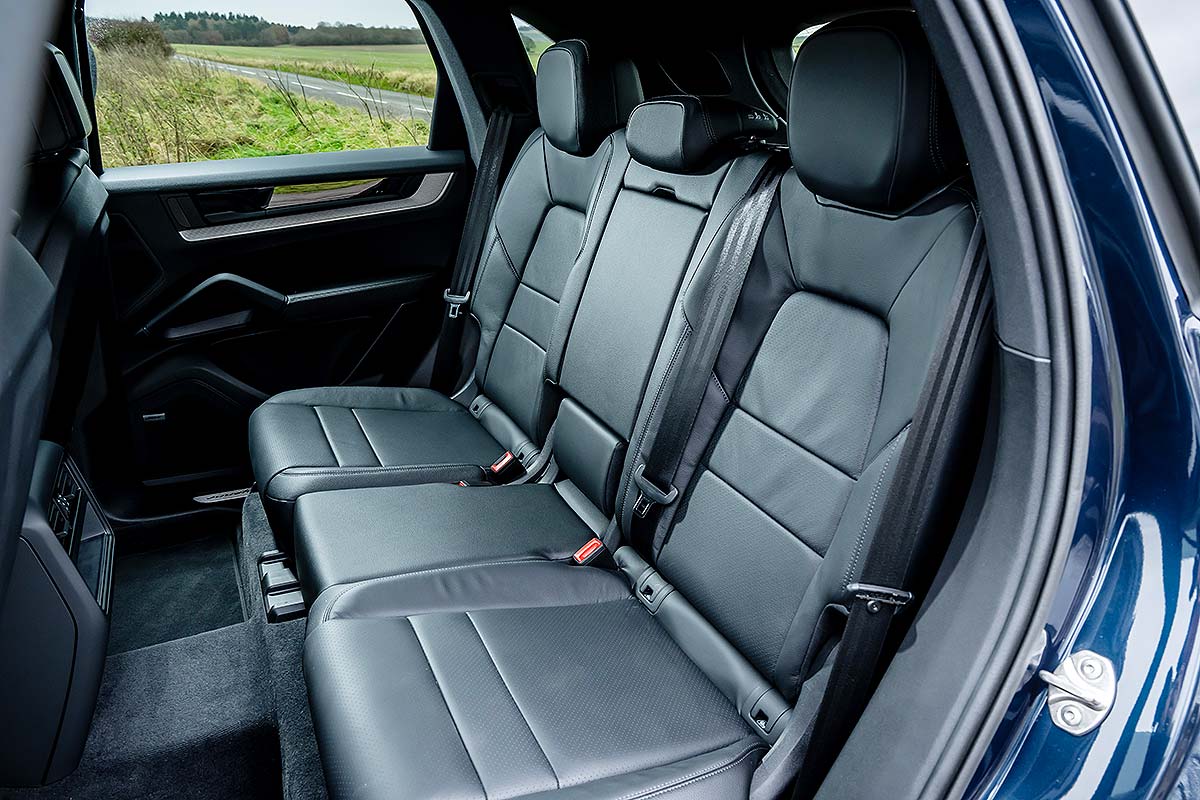
How practical is it?
The latest Cayenne is a big car on the outside, but that does translate into a lot of space for passengers and luggage. In fact, few large performance SUVs are as practical and family-friendly as the Porsche, which can accommodate almost everything you throw at it.
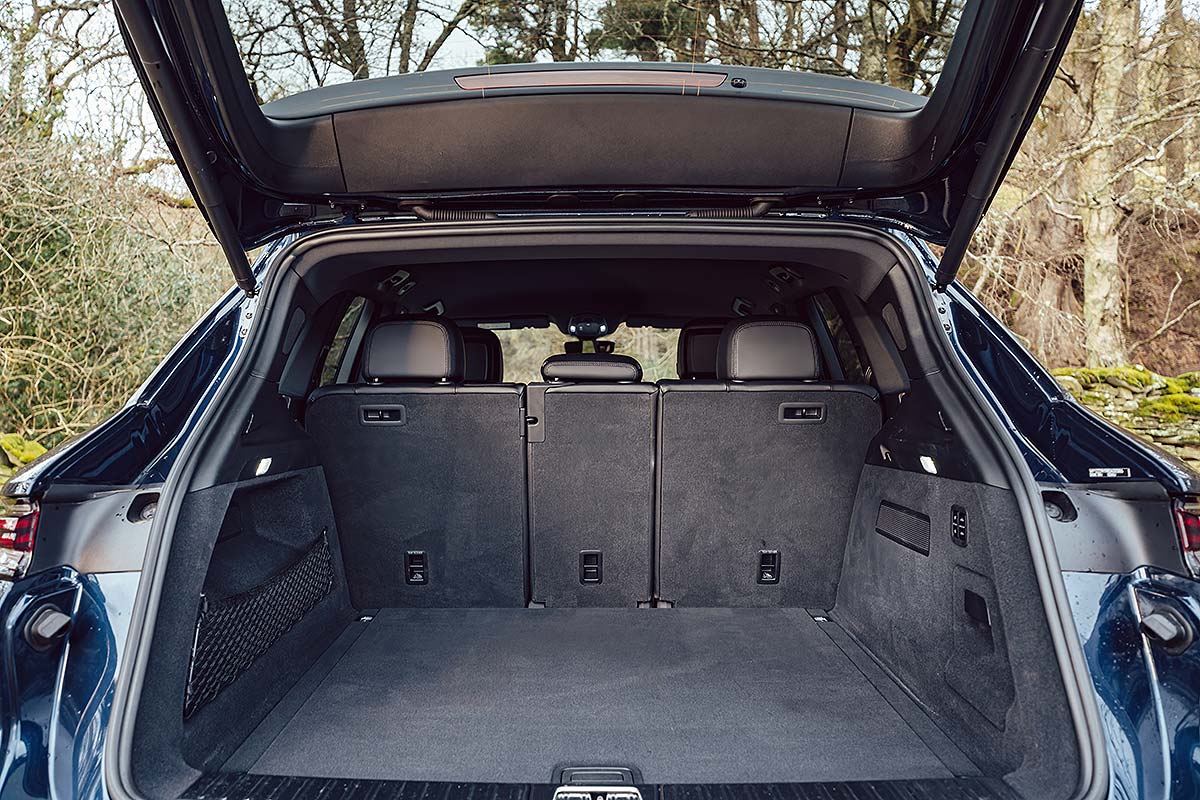
Occupants in the back get plenty of room to stretch out, with enough space for three adults to sit abreast without feeling hemmed in. This is also true of the Coupe models, where the rear seat bases are lowered to compensate for the sleeker roofline. What’s more, the rear bench reclines and slides back and forth, so you can choose between extra space for people or luggage.
Speaking of which, the boot has an impressive capacity of 772 litres in the standard SUV, which is 100 litres more than its already cavernous predecessor. Drop the rear seats and the available storage climbs to a van-like 1,708 litres. Bear in mind, however, that the need to accommodate a large battery means space in the plug-in hybrid models drops to as little as 621 litres with the rear bench in place, or 1,557 litres with it folded down. The Cayenne Coupe is less practical again, with 592 litres in petrol form (although that’s still a useful amount of space for a car with ‘Coupe’ in its name).
The driver and front-seat passenger get plenty of space to stretch out, while an extremely wide range of seat and steering wheel adjustment makes it easy to get comfortable. It’s also clear the Cayenne was designed with families in mind, as there is loads of useful storage space, including large door bins, a lidded compartment between the front seats, several cupholders and enough USB and power sockets to ensure your smartphone-obsessed teens are always connected.
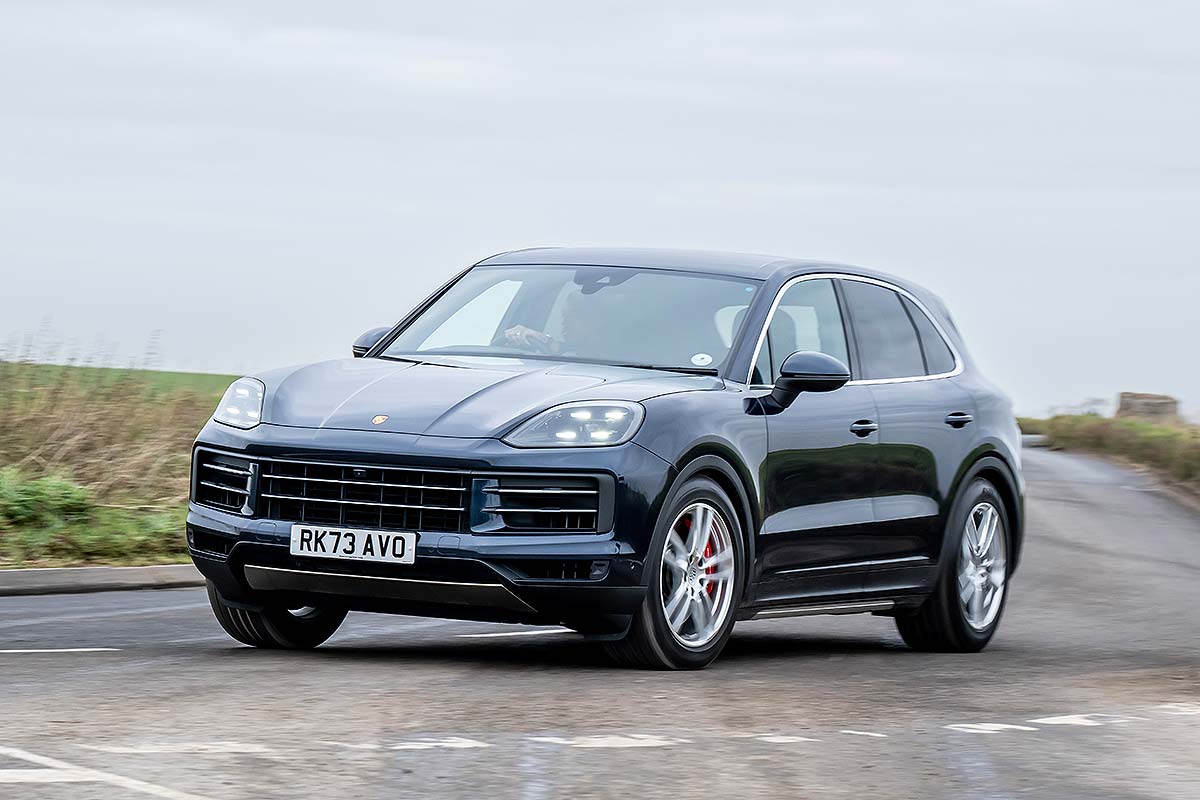
What's it like to drive?
As ever, the Cayenne’s real brilliance is that it combines the space, practicality and comfort of a large SUV with genuine driving thrills. It’s still a big old bus, but virtually no other SUV of this size and weight drives with such poise and polish as the Porsche.
Even the entry-level Cayenne is quick, with its 348bhp turbocharged 3.0-litre V6 giving a 0-62mph time of 5.7 seconds with the Sport Chrono package fitted. The plug-in hybrid Cayenne E-Hybrid is faster still, combining petrol and electric power for a total output of 464bhp and a 0-62mph time of 4.9 seconds. From here, the range only gets more serious. The Cayenne S now uses a 4.0-litre twin-turbo V8 with 468bhp, while the S E-Hybrid produces 512bhp. The GTS ups the non-hybrid ante further with 493bhp, but the most powerful model is now the Turbo E-Hybrid, which combines a V8 with electric assistance for a mighty 729bhp and 0-62mph in 3.7 seconds.
Even so, it’s the way the Cayenne deals with the corners between straight stretches of road that is most impressive. Despite weighing as much as a modest semi-detached house, the Porsche dives into and out of bends with the sort of zeal you’d normally associate with something much smaller and lighter.
Its steering is quick and meatily weighted, there’s strong grip and limpet-like four-wheel-drive traction, while Porsche’s chassis tech keeps body movements impressively well controlled. Specify the expensive 48-volt active anti-roll bars and the Cayenne will scoot through corners with barely any body-roll. It also benefits from strong brakes that stop the car quickly and offer great feel and progression through the pedal.
Take it a little easier, though, and the Porsche turns into a refined and relaxed executive express. Adaptive dampers mean you can dial up a supple ride at the touch of a button, while wind, road and engine noise are well suppressed. The Cayenne even feels at home around town, where that elevated driving position and good visibility make it a doddle to place accurately. Its eight-speed automatic gearbox also shuffles gears with the speed and smoothness of a Monte Carlo casino croupier dealing a deck of cards.
And if you’re bored with the beaten track, you can always head into the wilderness. True, not many Cayenne owners will take their cars onto rutted and muddy tracks, but with its air suspension raised and one of the off-road driving modes engaged, the Porsche is more capable than its polished image might suggest. Just don’t expect it to challenge a Land Rover Defender in the rough stuff...
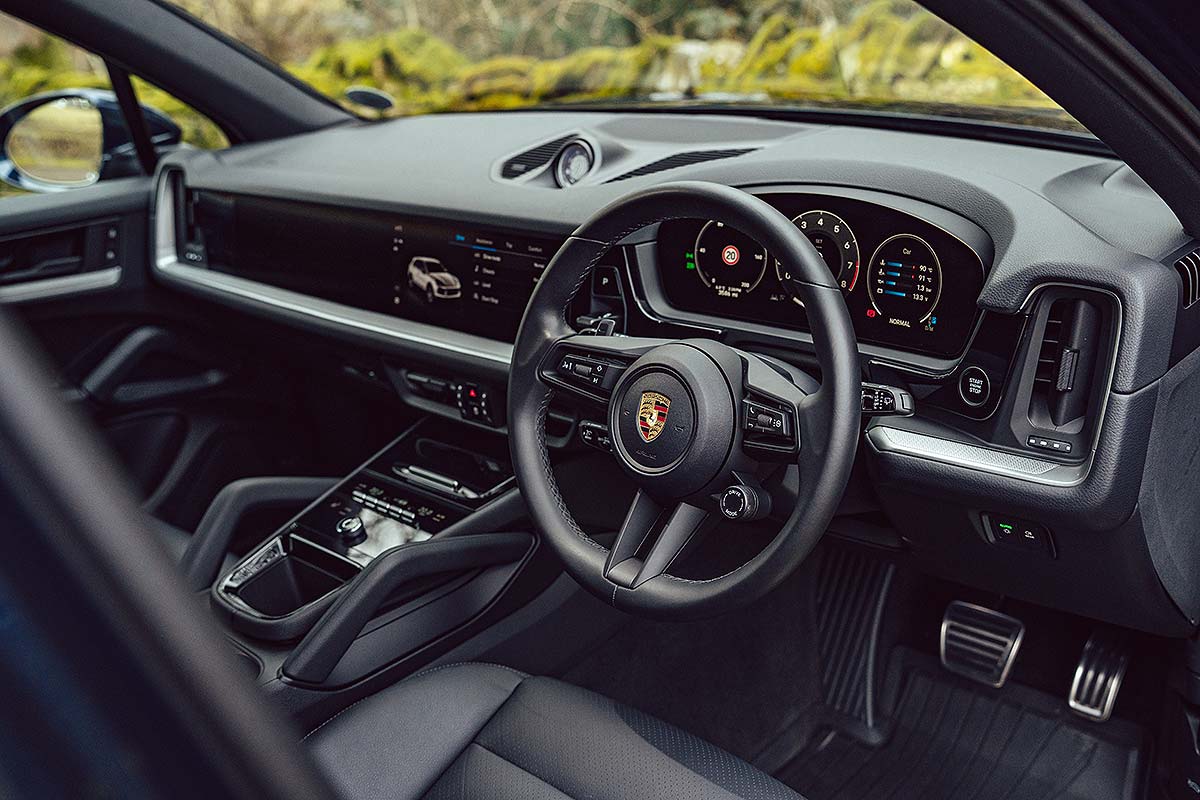
Technology, equipment & infotainment
An entry-level Cayenne has a standard equipment list that includes LED headlights, heated and electrically adjustable front seats, dual-zone climate control air-con, front and rear parking sensors, smartphone integration, digital radio, online navigation and an electric tailgate. That might sound quite extensive, but this is still a Porsche, so the cost soon racks up if you start ticking boxes on the options list. Many features that feel like they should be standard on a luxury SUV at this price are optional, or bundled into expensive add-on packs.
The Cayenne’s cabin was given a major overhaul as part of the 2023 update, with Porsche introducing its latest ‘Driver Experience’ layout. This added a fully digital 12.6-inch curved instrument panel, a 12.3-inch central touchscreen and, optionally, a 10.9-inch passenger display that allows the front-seat passenger to operate media or navigation functions without distracting the driver.
The Porsche Communication Management (PCM) system looks slick and is relatively easy to use, helped by clear graphics, quick responses and the fact that Porsche hasn’t completely abandoned physical switchgear. There is still a proper volume control, for instance, while the climate panel combines touch-sensitive operation with proper switches. It’s more intuitive than many screen-heavy systems as a result. Smartphone integration now includes both Apple CarPlay and Android Auto, with wireless charging and USB-C ports also provided.
The third-generation Cayenne was crash-tested by Euro NCAP in 2017, scoring the full five stars, with 95 percent for adult occupant protection and 80 percent for child occupant protection. That rating has now expired, but it still provides some reassurance to buyers. The Cayenne is also available with a wide range of driver assistance systems, including autonomous emergency braking, adaptive cruise control, lane keeping assistance, night vision and parking assistance. Some of these features are on the lengthy options list, however.
Porsche Cayenne running costs
A Porsche Cayenne will be an expensive car to run, regardless of which version you opt for, but that’s par for the course with a large, high-performance SUV. Unsurprisingly, given its weight, power and all-wheel drive, good fuel economy isn’t the forte of conventional petrol Cayennes. A standard model officially returns between 24.1mpg and 26.4mpg combined, while CO2 emissions range from 243g/km to 266g/km.
Those figures get progressively worse as you climb the petrol-powered range. The V8 Cayenne S officially returns 22.4-23.6mpg, while the GTS drops slightly further, to 22.3-23.3mpg. CO2 emissions are correspondingly high, so every petrol Cayenne attracts expensive first-year VED rates. And because no Cayenne costs less than the expensive-car supplement threshold of £40,000, you’ll also have to pay the additional VED premium for five years from the second year of registration.
There’s no high-efficiency, low-CO2 diesel variant of the Cayenne any more, but consolation comes in the form of the plug-in hybrid models. The Cayenne E-Hybrid combines a petrol engine with a much larger battery than earlier versions, giving it an official electric range of up to 48 miles in SUV form, or slightly more in some Coupe versions. The official fuel economy and CO2 figures look far more appealing than those of the petrol models, but they rely heavily on the car being charged regularly and driven on electric power as often as possible. If you rarely plug it in, you’ll be dragging around a large luxury SUV with the added weight of a depleted hybrid battery.
The plug-in hybrid models can make a lot of sense for company-car users and buyers with shorter commutes, especially if you can charge at home. Porsche’s current E-Hybrid models also charge more quickly than earlier versions, thanks to a larger battery and improved hardware, so it’s easier to make proper use of the battery range in regular driving.
Servicing is required at least every 20,000 miles or two years, regardless of variant, although the on-board computer will let you know if attention is needed before then. Ownership costs such as insurance, tyres and brakes will be high compared with less premium SUVs, and consumables can become particularly costly on the heavier and more powerful cars. On the plus side, strong residual values should keep overall running costs in check.
Porsche Cayenne reliability
As a new car, the Porsche Cayenne comes with a three-year, unlimited-mileage warranty. That’s not exceptional compared with mainstream offerings such as Kia’s seven-year, 100,000-mile warranty, but it’s pretty standard in the premium sector.
Porsche also includes three years of roadside assistance, which adds useful reassurance if you’re heading out on a long journey or taking the car abroad. Given the Cayenne’s complexity, performance and potential repair costs, that extra support is worth having.
Porsche’s reliability record is OK rather than outstanding. In the latest What Car? Reliability Survey, the brand finished 19th out of 30 manufacturers, while the Cayenne itself came 13th out of 16 luxury cars and SUVs. That doesn’t make it a disaster by any means, but it does suggest buyers shouldn’t assume Porsche ownership will be completely trouble-free.
As is often the case, the quality of service provided can depend heavily on the dealership in question, so it’s worth investigating the reputation of your local Porsche Centre. Similarly, it’s worth exploring whether there are reputable independent Porsche specialists nearby, because they should be able to offer lower prices once the car is out of warranty.
The Porsche Approved Pre-Owned Cars scheme is a strong option if you want a used Cayenne. Approved cars are inspected, prepared and sold with a minimum 24-month Porsche warranty and Porsche Assistance cover, while the Porsche Approved Warranty itself can apply without a mileage limit during the contract term for a vehicle aged up to 15 years. That could offer valuable peace of mind on a car as complex as the Cayenne.
There have been a handful of Cayenne recalls over the years, so it’s worth using the government website, or speaking to a Porsche dealer, to check whether the car you’re interested in is subject to any outstanding recall work, or whether it has already been updated and fixed.
- The Cayenne Coupe is designed to be a more athletic-looking alternative to the standard Cayenne, serving as a rival to cars such as the BMW X6 and Range Rover Sport. It sits slightly lower and has different exterior styling to the standard Cayenne, while there are also some minor equipment differences. It’s not quite as practical, but is otherwise much like the Cayenne on which it’s based. You’ve really got to like how the Coupe looks to justify choosing it over the regular SUV.
- There is now a fully electric Porsche Cayenne, too. That’s worth knowing, because the electric version is a distinct model rather than just another derivative of the petrol and plug-in hybrid Cayenne range covered here. If you want zero-emissions driving and up to 399 miles of range, without giving up the Porsche badge or family SUV practicality, this will be the version to look at.
- This third-generation Cayenne is based on the clever, scalable ‘MLB evo’ architecture developed within the Volkswagen Group. It means the Porsche shares elements of its structure with SUVs such as the Audi Q7, Bentley Bentayga, Lamborghini Urus and Volkswagen Touareg, as well as lower-riding machines like the Audi A8 and Porsche Panamera. As ever, though, Porsche’s chassis tuning and powertrain calibration help the Cayenne to feel very different from its relatives.
- The best all-rounder: The standard Cayenne is your best option if you just want a premium SUV that is great to drive. It might not be the quickest or most powerful choice, but its 348bhp turbocharged 3.0-litre V6 still delivers plenty of performance for most buyers, and it offers a compelling blend of relative value, lower running costs, practicality and car-park cachet. All Cayennes have an excellent eight-speed Tiptronic automatic transmission, so there is otherwise nothing to differentiate them on that front.
- For impressive electric range and low CO2 emissions: The Cayenne E-Hybrid, in either standard SUV or Coupe form, is worth looking at if emissions, tax efficiency or short-distance electric running are important. It combines petrol and electric power for a total of 464bhp, and can travel up to 52 miles on electric power alone. Just remember that, like any plug-in hybrid, it only makes real sense if you can charge it regularly.
- For high-performance thrills: One of the V8 Cayennes should be near the top of your list if you want an SUV with serious power and speed. The Cayenne S now uses a 4.0-litre twin-turbo V8 with 468bhp, while the GTS ups that number to 493bhp and adds a sharper, more driver-focused chassis setup. It’s the one to choose if you want a Cayenne that leans more heavily into the Porsche side of its personality.
- For maximum wow-factor: Go straight for the range-topping Cayenne Turbo E-Hybrid, which blends electric assistance with a powerful twin-turbo V8 for a heavy-hitting 729bhp. The result is 0-62mph in 3.7 seconds, a top speed of 183mph and a level of performance that feels absurd in a large luxury SUV. It won’t be cheap to run, but you’ll be having too much fun to care.