MG MG5 2020-2025 review | A bargain electric estate car
MG MG5 cars for sale
4.0
Expert review
Pros
One of the most affordable EVs on the market
Spacious and practical
Very low running costs
Cons
The maximum charging speed is only 50kW
Lots of body lean when cornering
No facility to search for charging stations in the nav
The CarGurus verdict
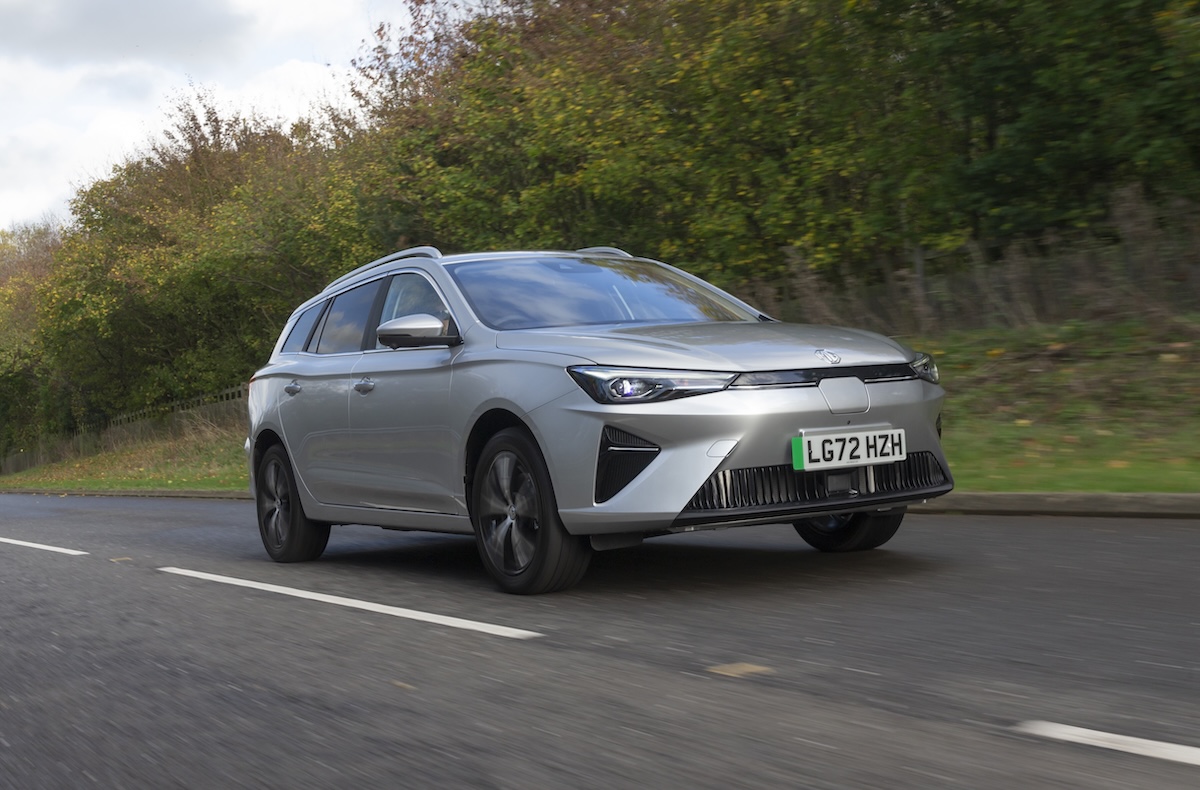
The MG5 isn’t a car that trades on desirability, but it is a thoroughly practical, common-sense electric car that’s pleasant to drive and has a decent real-world range. More importantly, it's the best-value electric estate car on the used car market by a comfortable margin.
The slow charging on earlier models could be frustrating, but the facelifted version addressed that issue. And in every other respect, from the interior finish and roominess to equipment, dynamics and efficiency, the MG5 is more than adequate and easy to recommend.

What is the MG MG5?
The MG5 EV was the only electric estate car sold in the UK at launch in 2020. It offered no-nonsense value and family-friendly practicality in a market dominated by electric crossovers. Similar in size to a Volkswagen Golf Estate, yet significantly cheaper than EV rivals such as the Citroen e-C4, Kia Niro EV and Volkswagen ID.3, it carved out a niche as a spacious and affordable alternative. The final version, phased out in early 2025, used a 61.1kWh battery and a 154bhp front-mounted electric motor to deliver an official range of 249 miles, a real-world figure of around 220 miles and surprisingly brisk performance. It also supported up to 87kW rapid charging for 10-80% top-ups in around 35 minutes.
A major facelift in 2022 brought sharper styling, a revised cabin and an updated infotainment system, but the MG5 stayed true to its original formula: simplicity, practicality and value for money. For taking the dogs for a walk or loading the boot with garden rubbish for a run to the recycling centre, the MG5 is hard to beat in the electric sector. MG has now ceased production, meaning the MG5 now lives on solely as a used buy. Even so, its combination of range, efficiency, charging performance and estate-car practicality ensures it remains an appealing option for families seeking a sensibly priced EV with more space than most small electric SUVs.
A further part of the MG5’s appeal is MG’s long warranty. The MG5 EV came with a seven-year/80,000-mile warranty from new, with its high-voltage battery getting the same cover. The warranty is transferable to future owners, which should provide some peace of mind when looking at a used example.

How practical is it?
For a good while, the MG5 EV occupied a niche all of its own as the UK’s only all-electric estate car. That’s no longer the case, but the newcomers tend to be expensive models such as the Audi A6 Avant e-tron, BMW i5 Touring, Porsche Taycan Cross Turismo and Volkswagen ID.7 Tourer. Only the Vauxhall Astra Electric Sports Tourer and Peugeot e-308 SW come close on price, but the MG remains one of the most affordable ways to combine estate-car practicality with zero tailpipe emissions.
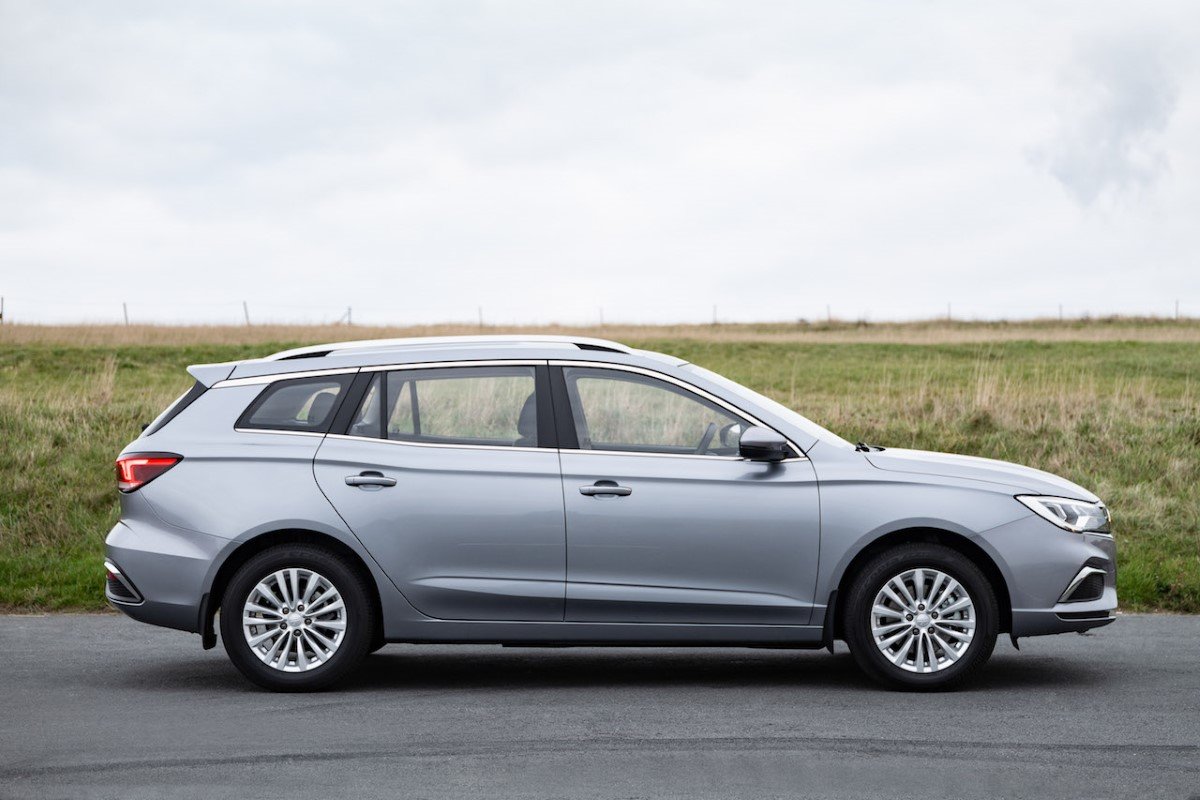
Predictably, space is one of the MG5’s biggest strengths. There is generous room in the back for adults, with enough legroom and headroom for even taller passengers. There are also two Isofix points in the back for child seats. Quality isn’t perfect – you’ll find a few exposed edges and the odd patch of cost-cutting trim – but the MG5 majors on usable space for the money.
The boot is the real selling point. With the rear seats in place, there is 479 litres of luggage capacity (or 578 litres if you load to the roof), which easily trumps most similarly priced electric hatchbacks. Fold the 60:40 rear bench and the space increases to 1,367 litres, although the load floor isn’t completely flat. Still, for carrying children, dogs, bicycles, DIY supplies or holiday suitcases, the MG is undoubtedly one of the most practical electric cars you can buy.

What's it like to drive?
The MG5 EV drives a lot like it looks: unassuming, sensible and largely unremarkable. We’d even add ‘unmemorable’, which for a lot of buyers is perfectly fine. Its 154bhp electric motor gives it enough punch to inspire confidence when joining a motorway, and the ride is impressively soft, especially on the SE model’s 16-inch alloy wheels (the posher Trophy gets 17-inch rims). The trade-off is noticeable body-roll when cornering and a general sense that the MG5 would rather waft than hustle.
There are three driving modes to choose from, including a Sport setting that adds more weight to the steering than feels natural. There’s also an Eco mode, but the MG5 works best in its Normal setting, where the steering feels secure, if a little stodgy.
Regenerative braking is controlled via a small switch on the dashboard, which allows you to cycle through three levels of regeneration. It’s not as convenient as the steering wheel paddles you get in a Hyundai Kona Electric or Kia Niro EV, but the system itself is effective and easy to live with. It doesn’t quite offer full one-pedal driving like the Nissan Leaf, but you can drive smoothly with minimal effort.
It’s also worth noting that the MG5 was offered with several battery configurations, launching with a 52.2kWh pack with 214 miles of range. This was offered briefly alongside the newer 61.1kWh Long Range version before being discontinued. Later MG5s all use the larger battery, along with updated styling and improved technology. They offer an official range of 250 miles (SE trim) or 235 miles (Trophy).
Overall, the MG5 delivers a competent and relaxed driving experience with respectable range. It’s showing its age in many areas, especially in light of the newer electric estate cars to hit the market, but its fuss-free simplicity is oddly appealing.

Technology, equipment & infotainment
The MG5’s cabin might look and feel a bit basic, but equipment levels are genuinely impressive. In its final years on sale, the MG5 was offered in two trim levels – SE and Trophy – both using the newer 10.25-inch touchscreen infotainment system and MG’s iSmart connected services.
The entry-level SE boasts 16-inch alloy wheels, LED headlights, a 10.25-inch touchscreen with sat-nav, Apple CarPlay and Android Auto, adaptive cruise control, a reversing camera, keyless entry, a leather steering wheel, V2L (Vehicle-to-Load) capability, three drive modes, three regen' settings, a 7.0-inch driver display, four USB ports and a suite of driver assistance systems.
The Trophy model adds 17-inch alloy wheels, leather upholstery, heated front seats, an electrically adjustable driver’s seat, automatic climate control, an auto-dimming rear-view mirror, rain-sensing wipers, rear privacy glass and 360-degree cameras.
Earlier, pre-facelift models were offered in Excite and Exclusive trims. Both used an older 8.0-inch touchscreen with Apple CarPlay and Android Auto, while the Exclusive version added the likes of heated leather seats, climate control and keyless entry. The infotainment system isn’t a match for the newer version, but the Exclusive is the one to look out for when buying a pre-facelift MG5.
MG MG5 running costs
The MG5 should be a cheap car to run, regardless of its age or trim level. When new, it comfortably undercut most electric hatchbacks and SUVs, and although more affordable new electric cars are now available, the MG5 remains one of the cheapest electric cars on the used market. And that’s before you factor in the impressive seven-year warranty.
Officially, the 61.1kWh battery delivers 250 miles of range in the SE model or 235 miles in the Trophy, but in our experience you should see around 200-220 miles in real-world driving. Choose an MG5 with the earlier 52.2kWh battery and you can look forward to an official 214 miles of range, or 170 miles in reality.
Charging costs will vary depending on your home electricity tariff, or which type of public charger you’re using. However, the MG5 is likely to cost less to run than an equivalent estate car with a petrol or diesel engine. DC rapid charging at up to 87kW means the MG5 can go from 10-80% charge in around 35 minutes, while a full charge should take around 10 hours when using a home wallbox.
Insurance is broadly in line with mainstream family hatchbacks, and although VED (road tax) is no longer free for new electric cars, you should benefit from free entry to Ultra Low Emission Zones (ULEZ). It’s worth noting that electric cars will no longer be exempt from the London Congestion Charge from 2026, although they do get a 25% discount.
The MG5 is likely to lose value faster than more desirable EVs, but that’s good news now that you can only buy he car used, because the first owner will have taken most of the financial hit, meaning that MG5 is even more of a bargain.

MG MG5 reliability
MG didn’t exactly shine in the 2025 What Car? Reliability Survey, finishing 30th out of 30 manufacturers, with almost a third of owners reporting a fault. Most of the issues related to components like the infotainment system, while half of all affected owners had to wait over a week for their car to be fixed. The headline result reflects MG rather than the MG5 specifically, but it’s worth considering if you’re buying a used example.
The good news is that the MG5 performed far better than the brand average, achieving a respectable 94.1% rating in the model-by-model results, and finishing eighth out of 18 cars on the list of EVs: beating many premium cars in the process. Around a fifth of MG5s had a problem, with the battery pack the most common culprit, but MG covered the majority of repairs. It’s also worth remembering that the MG5 comes with a seven-year or 80,000-mile warranty.
- The MG5 charges via a nose-mounted Type 2/CCS port that works with almost every public charger in the UK. Earlier versions were limited to 50kW rapid charging, but the later 61.1kWh battery boosted this to 100kW, cutting the potential recharging time to around half an hour.
- Even from launch, the MG5 came with a suite of driver assistance systems, including autonomous emergency braking, lane-keep assist and adaptive cruise control. It also offers Traffic Jam Assist, which manages steering, braking and acceleration at low speeds to ease the pain of congestion.
- One of the MG5’s most useful party tricks is Vehicle-to-Load (V2L). With the optional cable, you can run external appliances such as electric bikes, camping gear, laptops or even an airbed pump directly from the car’s battery. It’s fully managed via the 10.25-inch touchscreen and turns the MG5 into a capable mobile power source.
- If you’re buying on a budget: Stick with the SE model, which feels like a major step up from the old Excite trim in terms of equipment and comes with the larger 61.1kWh battery as standard. It covers the basics exceptionally well for an affordable electric estate car.
- If you want all the toys: The case for moving up to the range-topping model Trophy isn’t as strong as it was before the facelift, but it still represents a lot of car for the money. You get more equipment and a cabin that feels more premium than before.
- If you want a cheap, practical car for local trips: Don’t dismiss cars with the older 52.2kWh battery. EVs are great for short journeys, and around 170 miles of real-world range means that some drivers might only need to recharge once a week to cover their typical daily routine.
- If you want the best family all-rounder: The MG5 Trophy is the pick. Beyond the wipe-clean advantages of leather upholstery, having keyless entry is a sanity-saver when you’ve got your hands full of children and shopping bags (while the car keys lurk somewhere in the depths of a pocket or rucksack).


