Nissan Leaf Review (2011-2016)
Nissan Leaf cars for sale
3.0
Expert review
Pros
A true electric car pioneer
Cheap to buy and run
Very reliable
Cons
Very short range of early cars
Cheap-looking and dated interior
Lacks the kerbside appeal of a Renault Zoe
The CarGurus verdict
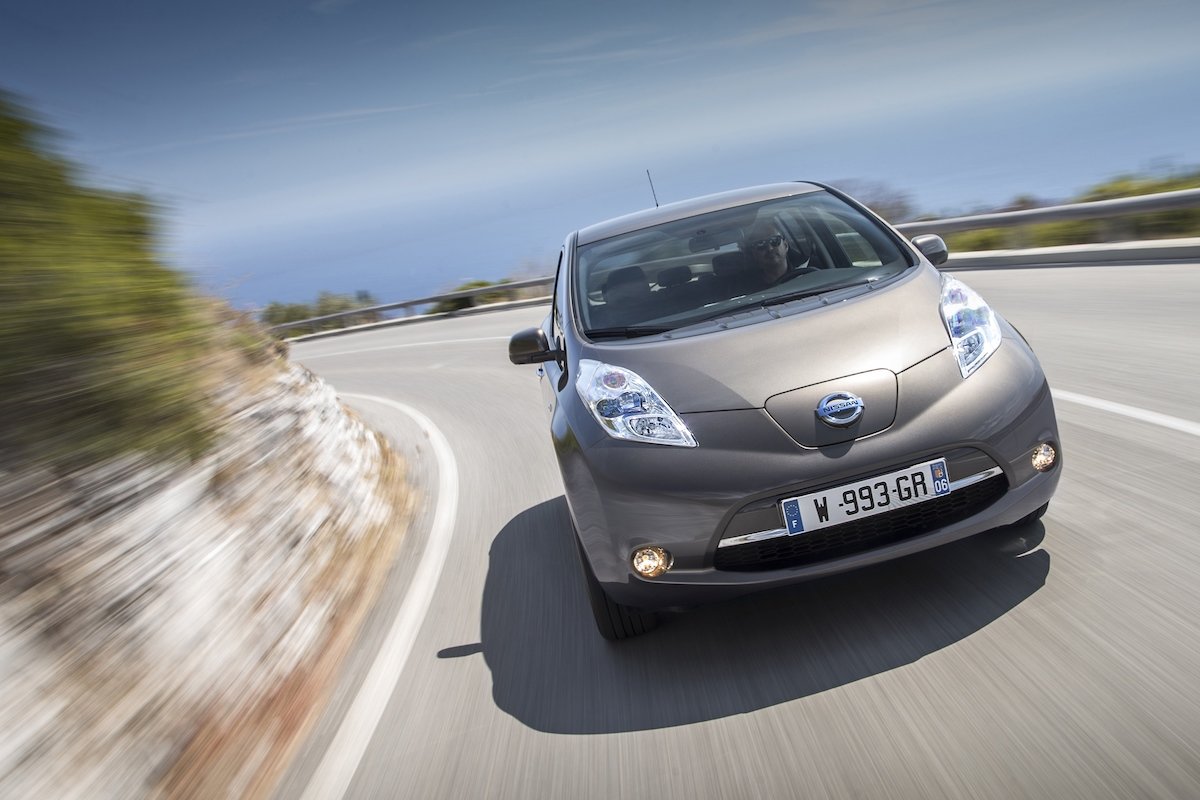
The Nissan Leaf does have limitations. The driving range could be an issue for some, although many run the earliest, lowest-range cars without ever experiencing range anxiety. The interior feels and looks durable but cheap, and the infotainment and nav is quite dated. Not only that, but few people consider the Leaf a good-looking car; the cute Renault Zoe and avant-garde BMW i3 have far more kerbside appeal.
For all that, the mk1 Nissan Leaf is just about the cheapest way into a used electric car, yet it’s comfy, perfectly adequate to drive, practical enough for family life, unfailingly reliable and comically cheap to run. Even if you ignore the environmental benefits, the Nissan Leaf is probably one of the most common sense purchases you can make, just as long as you can charge up at home and want an affordable, reliable daily runabout.
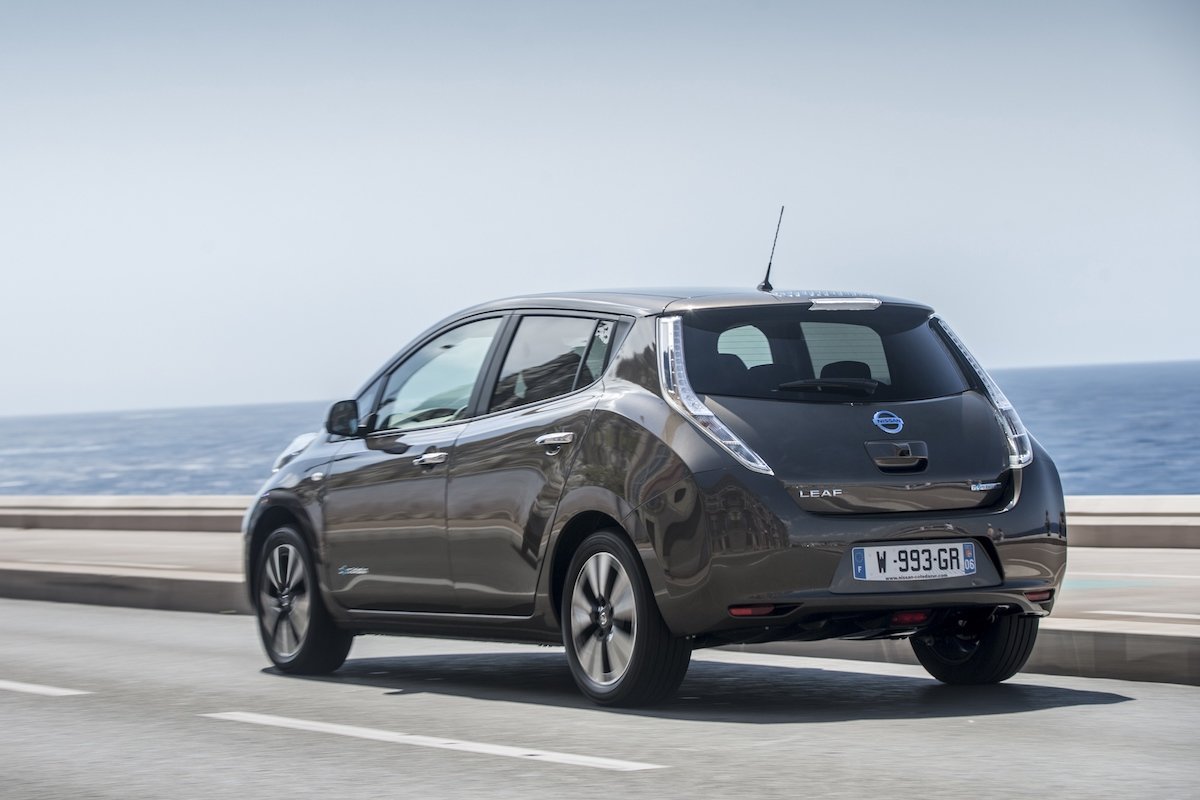
The Nissan Leaf was first introduced in 2010. It was a brave car for being the first to offer a pure electric powertrain in an affordable hatchback. When we say affordable, the first-generation Leaf was still much more expensive than an equivalent petrol or diesel car, but the tax and fuel savings went a long way to making up for that, not to mention the environmental benefits of having zero tailpipe emissions.
The Leaf was available with a battery lease, which offered peace of mind to those worried about the battery life and also substantially reduced the cost of buying the car. As a used car, the mk1 Leaf is fairly affordable even with the battery so it makes more sense to buy it outright, and it’ll make it easier to sell the car on, too, if you wish to. Plus, the batteries are proving to be extremely robust and there are plenty of examples out there with 150,000 miles and more. However, while faults or failures in the Leaf’s battery are extremely rare, the range that the car will cover in between charges does fall over time.
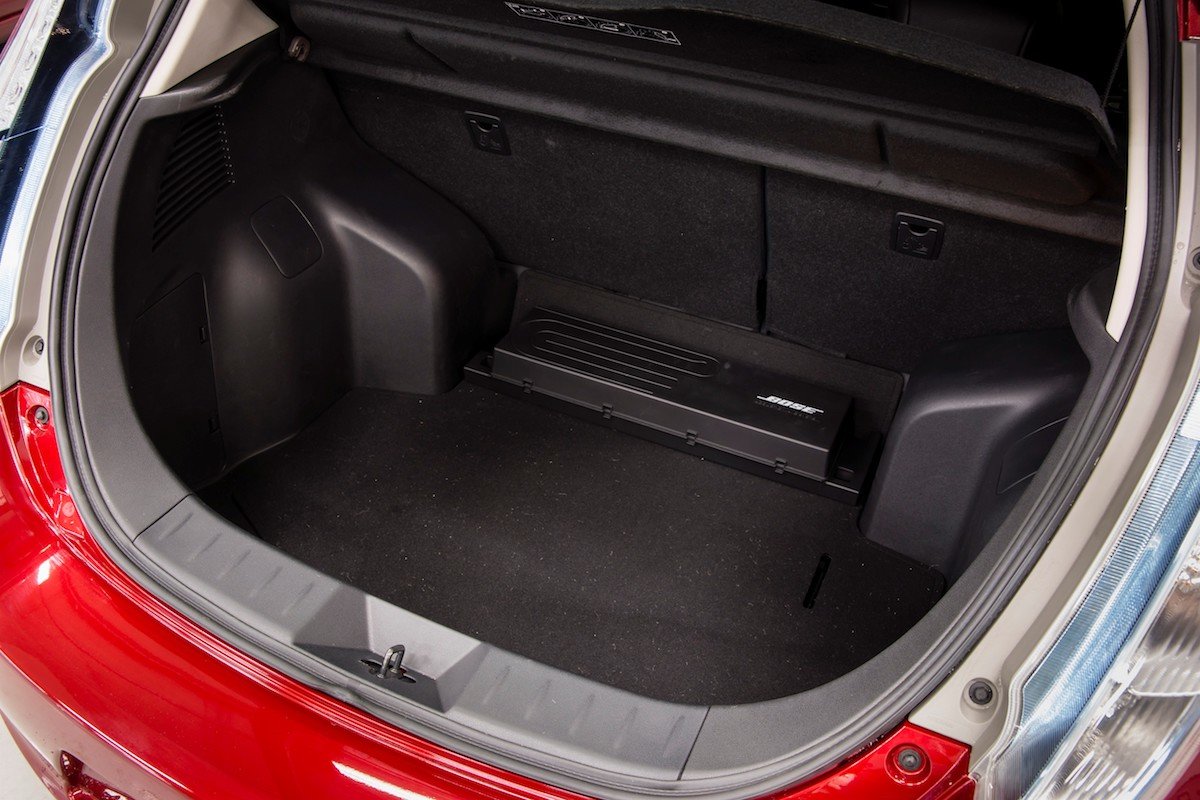
Being five-door only, with good safety standards and a boot big enough to easily take a light buggy and a few bags, the Leaf is plenty practical enough for a small family.
The driving position is more likely to annoy you than the practicality. The steering wheel doesn’t adjust for reach – only height – and the high-set seat offers a fairly restricted range of movement, so taller drivers may struggle to get comfortable.
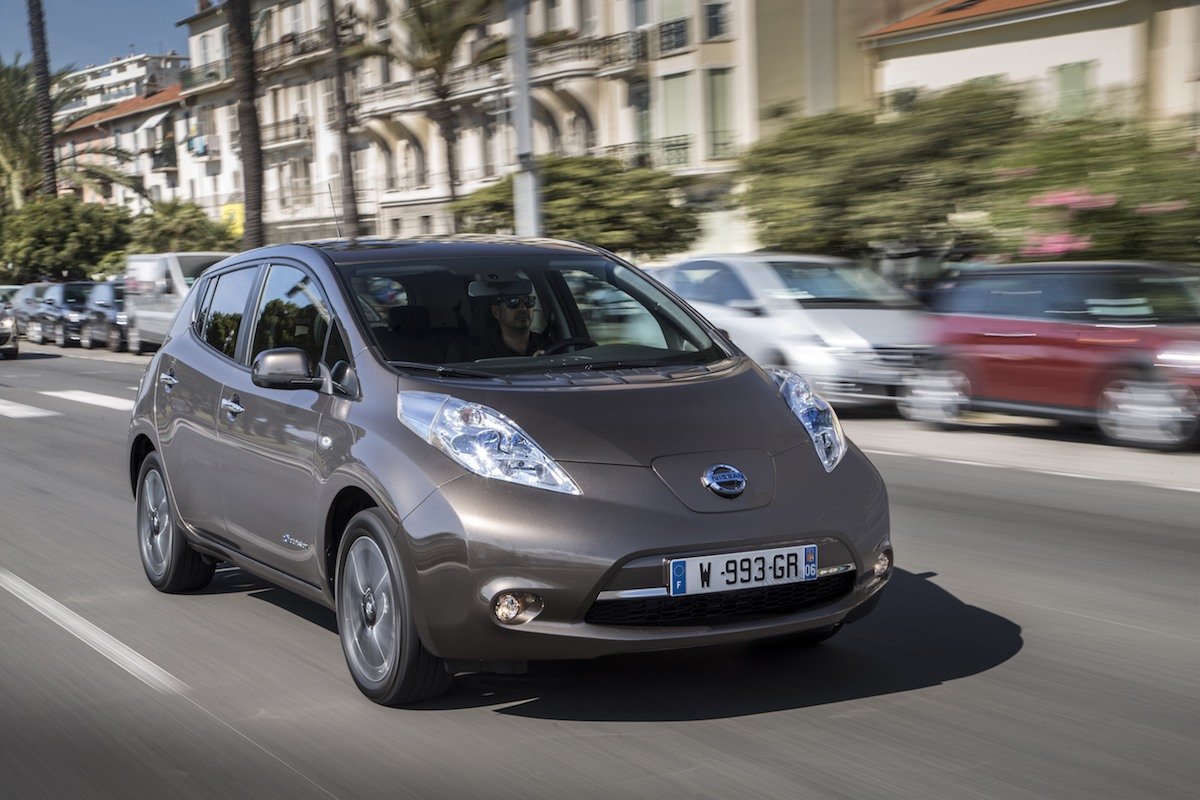
It’s a doddle. Stick it in Drive and prod the throttle and you’re away; there’s no clutch or gearbox to speak of, so you don’t need to worry about changing gear.
The ride isn’t the smoothest, but it’s comfortable enough over most bumps, and while the Leaf is hardly exciting to drive, it’s still safe and easy-going, which is exactly what you need in a family hatchback.
Expect the earliest Leaf models to do around 60 miles in varied real world driving; they’re best reserved for motorists who only ever need the car for short hops, or as a second car in the household.
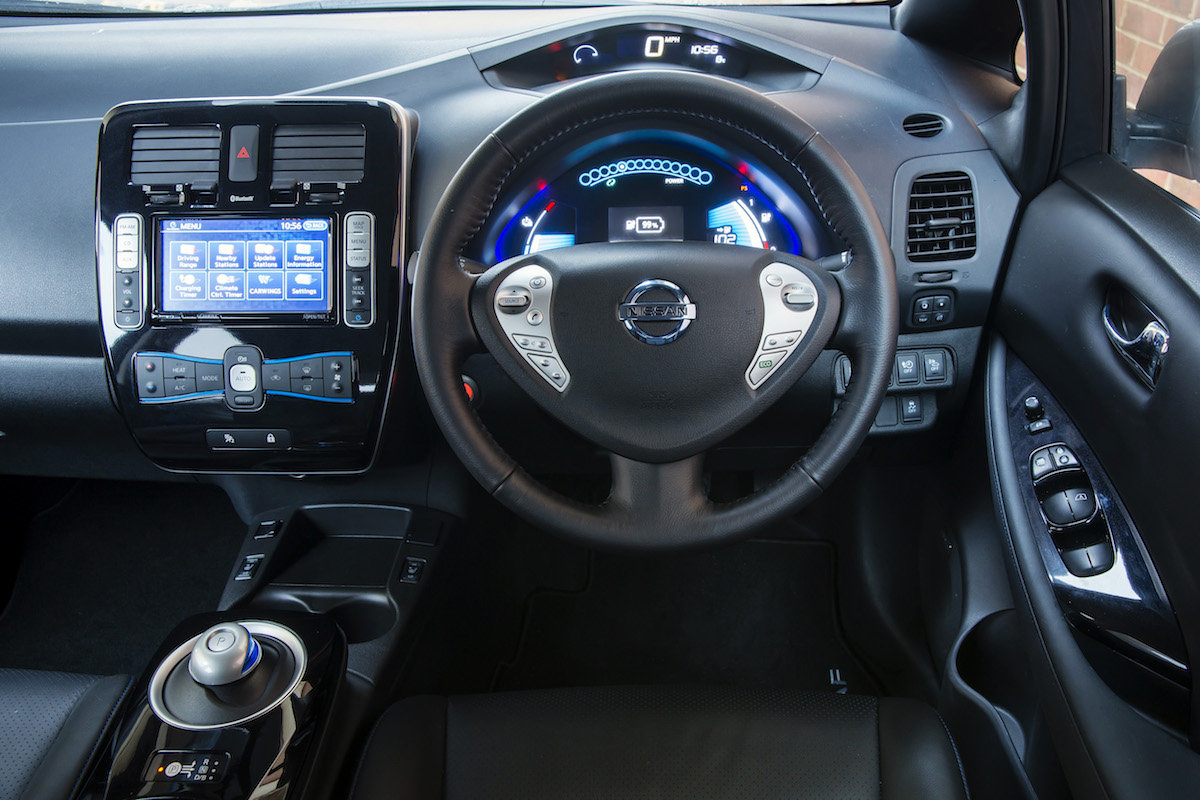
A bigger 24kWh battery and efficiency upgrades were introduced in 2013, and should deliver around 80 miles in real-world driving. As of 2015 a 30kWh battery was offered, which will push your everyday driving range up to some 100 miles. Remember that driving range varies drastically depending on conditions and how you drive; an EV goes further in town, while the range will drop quickly at motorway speeds. Cold weather eats away at an electric car’s efficiency, too.
Charging takes up to 10 hours from a normal domestic socket, but buying a used Nissan Leaf – or indeed any electric car – makes you eligible for a government grant that cuts the cost of a home charger to some £400. We’d always advise that you get one fitted if you’re getting an electric car.
The Leaf will take about seven hours to charge from a 7kW home wall box, unless you’ve got a car fitted with the 6.6kWh on-board charger, which was optional on all early Leaf models and became standard on higher spec Acenta- and Tekna cars from 2015. It’s worth looking out for, since it reduces the full charge time from a 7kW home wall box to under five hours.
Those Nissan Leaf models that came with a CHAdeMO socket for rapid charging – which included all but the base model from 2013 onwards – can get a 20-80% battery top-up in around 30 minutes from a 50kW charger. CHAdeMO-compatible charging stations are fairly common, but the standard European fast charging plug type is now the CCS socket, and it’s likely that CHAdeMO chargers will become less common since every manufacturer, including Nissan, now uses CCS charging.
The Nissan Leaf’s battery system isn't thermally cooled when fast charging, which is something that most modern EVs have as it improves charging speeds and battery longevity.
In short, the mk1 Nissan Leaf isn’t great for long journeys. It doesn’t charge as quickly as more modern EVs and you may struggle to find a compatible rapid charger.
But plenty of motorists do, quite understandably, want a used EV that’ll just do short commutes and school runs, and here the Leaf is one of the best electric family cars you could choose. It’s one of the cheapest used electric cars you can buy, it’s comfy and easy to drive, and most trims have the essential comforts including air conditioning and parking sensors.
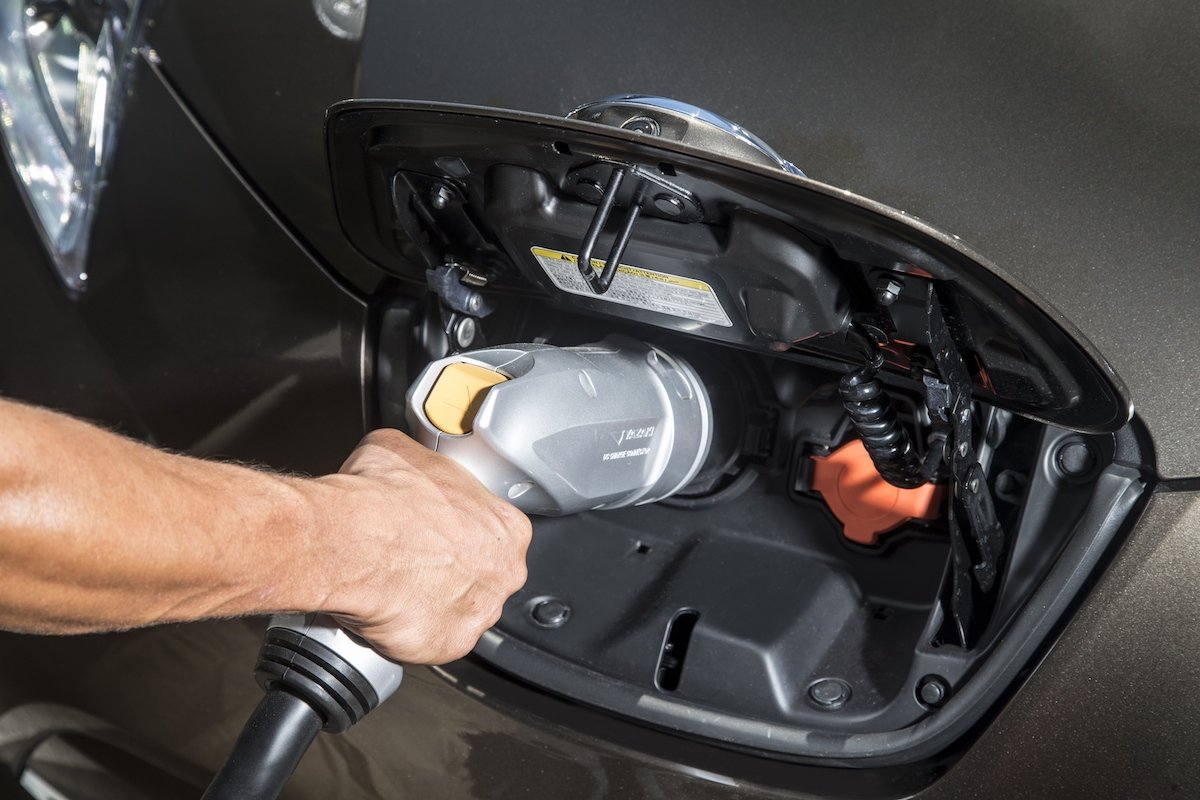
The mk1 Nissan Leaf is one of the cheapest cars you can run. Charge it up at home on a normal domestic electricity tariff and it’ll cost between £3 and £4.50 depending on the battery size in your Leaf and what you pay per kWh. Charging up overnight could halve those costs if you have cheaper electricity in off-peak hours, as most people do. Even without off-peak savings, the Leaf will cost around 5p per mile, which is about a third of what you’ll pay to fuel a petrol car doing 40mpg.
Servicing is cheap in the Leaf, too. You should have it serviced every 12 months or 18,000 miles (it's a shame that intervals aren’t longer, as they are on some rival electric cars), but Nissan only charges around £100 for a minor service and £150 for a major service.
The tax savings on electric cars are very good, too, especially if you live in or around central London where the Nissan Leaf gets free entry to the congestion and ULEZ zones. Electric cars are also eligible for cheaper parking in many areas of the capital and other major cities, many of which are also considering fines for non-electric vehicles in the future.
The Leaf falls into insurance groups 20–23, which means that it'll be very affordable to insure and will cost much the same as rivals including the BMW i3, Renault Zoe and Hyundai IONIQ, as well as conventional rivals like the Ford Focus.
Electric cars tend to be much more reliable than petrol and diesel cars, since an electric motor only has around three moving parts. The mk1 Leaf has an excellent reputation for reliability even by EV standards, topping the 2018 Auto Express ownership satisfaction survey in the electric car category, with 96% of those surveyed saying they’d not had a fault at all.
The thing that most buyers worry about with used EVs is the batteries, but it needn’t be a concern. Electric car batteries have proven to be extremely reliable over the years, and while you should factor in that they will lose some of their performance over time, there’s no need to ever replace the battery pack. There are plenty of mk1 Nissan Leafs with 150,000 miles or more on the original battery, and still going strong. The Leaf is, in fact, a popular choice for inner-city taxi drivers, in part for its durability as well as its low running costs. As the last decade of mainstream electric cars have proven, if you can live with the range, electric is far more reliable than fossil fuel.
There have been a few recalls, notably two for cars built in 2013 and 2014, relating to a steering column clip and start buttons. Cars built between February and March 2017 were recalled to check the headlight angle.
It’s also worth checking that the satnav's SD card is in place and functioning properly, as a replacement cards are expensive.
Otherwise there really is very little that goes wrong on the Nissan Leaf, which is another reason why it makes such a great choice for a second car in a family household.
- Before the 2013 update, the Leaf was only available with light coloured upholstery that marks quite badly, which is another reason why we’d recommend going for one of the facelifted cars if you can stretch to it.
- Check that the cables needed to charge the Leaf are present and in good condition; they cost £300 or more to replace, although they are widely available online. You can also buy eight-metre cables (most standard cables are 4.5-metres long) if you need extra length for access to your home wall box. The Leaf should have two cables: one with a Type 2 plug that allows you to charge at a home wall box or one of the slow public chargers often found in supermarket and town centre car parks; and one with a standard three-pin plug that lets you charge the car at any normal domestic socket. You don’t need a cable to plug into the CHAdeMO socket, as this socket is only compatible with public DC rapid chargers, and DC rapid chargers always have the charging cables built into the station itself.
- All Nissan Leafs came with the same 107bhp electric motor, which meant a 0-62mph time of under 10 seconds and a top speed of just over 90mph. Performance is not what the Leaf is about, but it’s surprisingly punchy up to about 40mph before the response trails off at higher speeds. Its futuristic ‘mouse’ gear shifter offers a ‘B’ mode, which increases regenerative braking forces so the car slows down in a more pronounced way as soon as you lift off the throttle without any need to touch the brakes. It sounds odd if you’ve not experienced it, but it’s a way to top up the battery using the car’s natural forward motion when coasting, helping to increase the driving range. It’s also a neat function to help manage the car’s speed when you’re going down a steep hill.
- If you want the best performance: Even if you’re on a tight budget, try to go for a car built in 2013 or later. The slightly bigger battery and better regenerative braking is useful, and these cars actually had different cell chemistry that retains battery performance over the years a little better than the earliest cars. And on a patriotic note, these later cars were also built in the UK.
- If you want the best balance of purchase cost, range and comfort: A 2013 or later Acenta trim level is for you. It gets a CHAdeMO socket for rapid charging (base Visia trim did without this), satnav, alloy wheels and climate control. Try to find one with the 6.6kW on-board charger, which cuts the charge time from a normal 7kW wall box to under five hours.
- If you’re after the longest-range you can get: Look at the 30kWh models that arrived in 2015. These models will do 100 miles in varied everyday use, although cold weather and motorway miles will rapidly see that drop to more like 80 miles or less, so bear that in mind if you want to do routine motorway miles in your Leaf. Also make sure that you get a car with the CHAdeMO rapid charging so that motorway top-ups are much easier. Do consider a Renault Zoe instead of the Leaf, too, if range is a big factor. The early Zoes cost a similar amount to buy as an early Leaf, and tend to go a little further in everyday driving.
- If you're looking for luxury: For the most tech-filled and luxurious Leaf, look to 2015 or later Tekna models. These got LED headlights, leather upholstery and a Bose audio system. There was even a Black Edition sold in 2017 as the final flourish to the mk1 Leaf, complete with black styling upgrades and even more kit.
- If you value a big boot: Look to later cars that got slightly more boot space through improved packaging. Just avoid the 2015 to 2017 Tekna models, as they had a speaker in the boot that took up a lot of space.

