Hyundai IONIQ Review (2017-2022)
Hyundai IONIQ cars for sale
4.0
Expert review
Pros
Choice of electrified powertrains
Futuristic styling
Low running costs
Cons
Not much fun to drive
Sloping roofline compromises rear headroom
Fidgety ride of EV and PHEV models
The CarGurus verdict
The Hyundai Ioniq is a car with three personalities, but all of them are fairly benign, to some extent or other. The Hybrid is filled up with petrol; the Plug-in takes petrol and electricity; while the Electric is only for charging. However, they all contribute to making the world a better place, and owning one is not only a good thing to do from the point of the view of the environment, but it’s also a cheaper form of motoring.
Its comfortable cabin and decent on-road manners mean that owning an Ioniq should be a pleasing proposition, and that’s before we consider the financial savings and reliability. Yes, some rivals of the time are perhaps more fun to drive – the VW Golf GTE and e-Golf, and the BMW i3 spring to mind – but the Ioniq is a car that is aimed firmly at families and their needs. The Electric model in particular represents a relatively affordable and enjoyable route into EV ownership.

What is the Hyundai Ioniq?
As we move closer and closer to an all-electric future on the road, one of the biggest questions for consumers who want to ‘go green’, but still want or need to own a car, is whether to go electric now, or hedge their bets for a few more years in a hybrid model.
Hyundai made that dilemma easier with its Ioniq model, which is available in self-charging hybrid, plug-in hybrid (PHEV) or full electric (EV) variants. Whatever your final answer to the hybrid/electric question, Hyundai has an Ioniq for you.
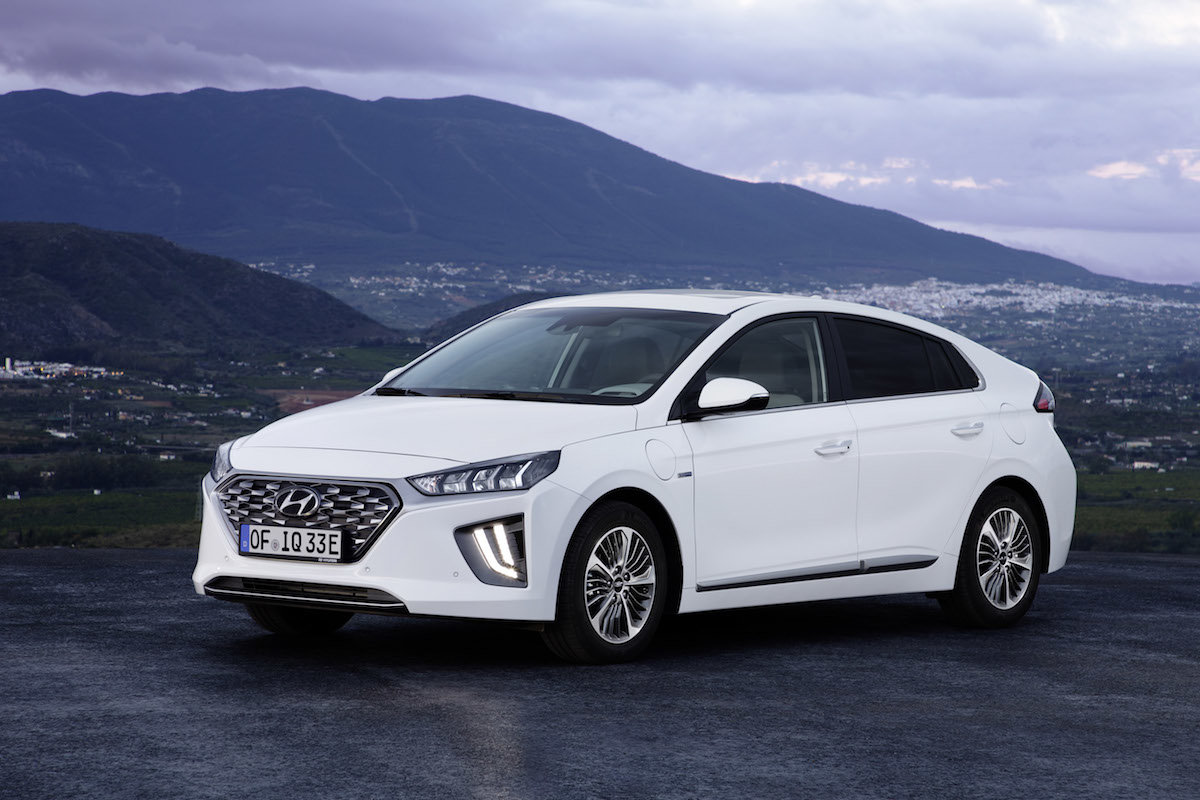
The Ioniq is a fairly conventional family hatchback, but one with slightly sleeker looks that have been clearly influenced by the need for an efficient aerodynamic shape, which helps set it apart from more upright rivals such as the VW Golf. The swooping roof and subtle bodywork character lines mean that it looks quite elegant, with the hatchback-mounted spoiler adding a sporty touch.
Introduced in 2017, the Ioniq was subtly facelifted in 2019, with mildly tweaked looks and some suspension changes aimed at improving comfort. For the electric model, there was the addition of a bigger battery that increased the range.
In 2022, Hyundai decided that we were far enough down the road to mass electrification, and therefore decided to pull the plug (sorry!) on this version of the Ioniq, and so it went off sale to be superceded by the fully electric Ioniq 5 hatchback.

How practical is it?
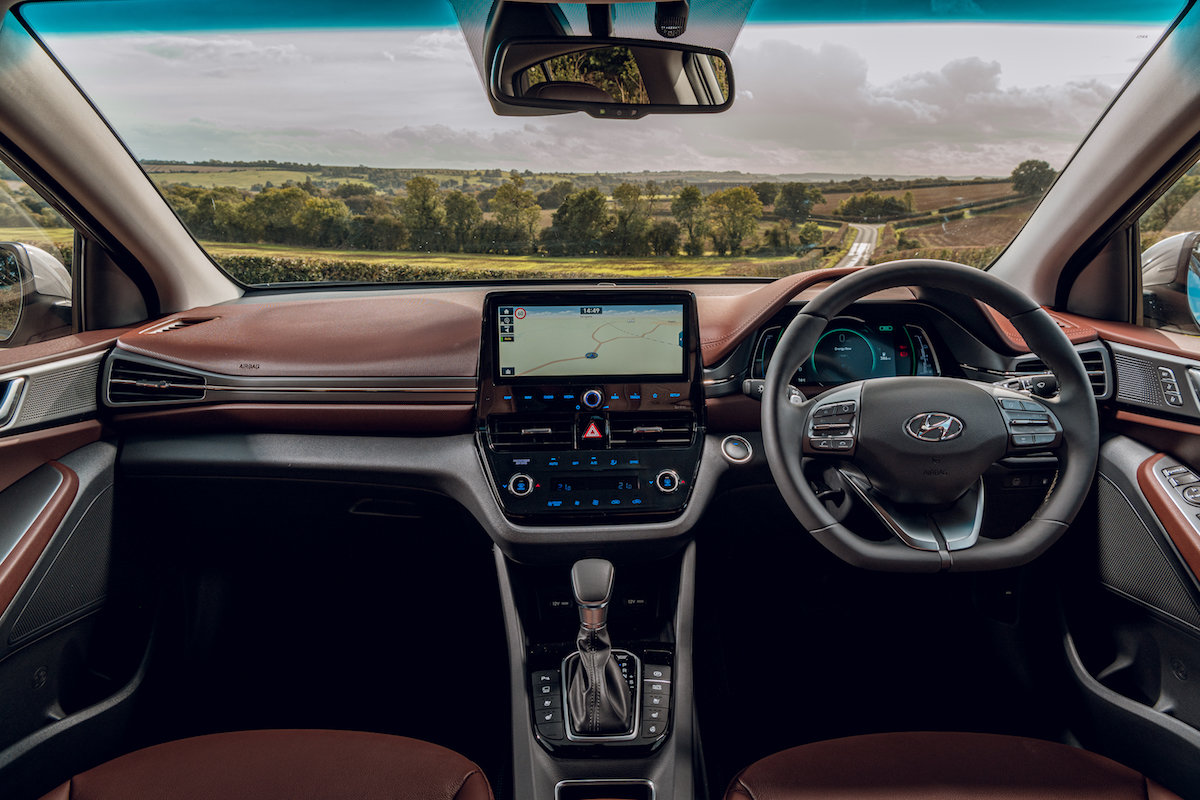
Inside, the Ioniq feels light and airy, with the more visible surfaces covered in high-quality, soft-touch materials, giving the car a sense of comfort. The seats are comfortable and supportive, the driving position offers excellent visibility and the dashboard has solid-feeling switches that are easy to reach, while the steering wheel also has controls for various functions.
The front of the Ioniq is spacious and there’s enough legroom in the rear for adults, but that sloping aerodynamic roofline does limit rear headroom, so taller passengers might feel a little cramped.
The designers and engineers at Hyundai have managed to pull off the tricky task of making the boot practical and spacious, despite the need to package a load of batteries. The Hybrid’s 443 litres is bigger than many in the class, thanks in no small part to the fact the battery has been positioned beneath the rear seats rather than under the boot floor.
The electric Ioniq has a bigger battery, obviously, but its 350-litre boot space is pretty much on a par with that of the Nissan Leaf, while the PHEV’s 341 litres still matches the capacity of a small family hatchback, and is a lot bigger than that of the Volkswagen Golf GTE.

What's it like to drive?
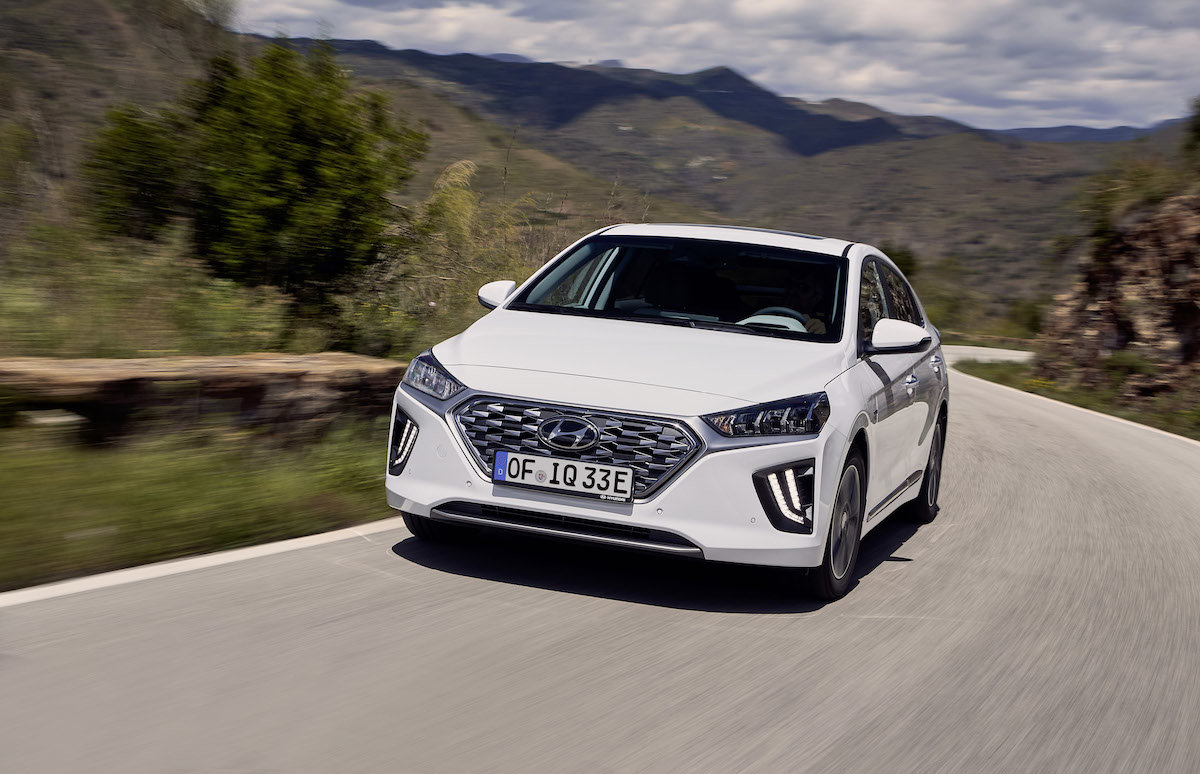
You buy a car like the Ioniq for its economy rather than its performance, but while it’s not exactly a stellar performer, it's perfectly accomplished, whether driving around town, on a country road or a motorway. The steering is light, but accurate, there’s enough grip to make the car feel secure and body roll is well contained. It’s not fun as such, but the Ioniq is composed and capable.
The two hybrid cars have dual-clutch (DCT) gearboxes, rather than the continuous variable transmission (CVT) in the Prius and many other hybrids, but while that means the engine has less of a tendency to sound thrashy, the gearchanges aren’t the smoothest. Moreover, there can be some jerkiness as the car shuffles between petrol and electric propulsion. There is some wind- and road noise, but sound-deadening and refinement are generally pretty good.
Still, performance is good enough from these two hybrid models, the 1.6-litre petrol engine being helped by an injection of energy from the electric motor. That said, these aren’t engines that like to be worked too hard, as they can sound strained. It's best to be light-footed on the throttle and try and make the most of the car’s ability to run in electric mode for short periods, or longer periods in the case of the PHEV, as you can see in the 'Three things to know' section.
Perhaps the best of the bunch is the Electric, which serves up brisk and seamless acceleration from its electric motor, even in the early 119bhp model (the facelifted cars get 134bhp). If you haven’t driven an EV before, then the instant acceleration will get you grinning, while with no gears to deal with, the car is easy and smooth to drive.
The Ioniq’s ride quality is variable, depending on which version you choose. The Hybrid is the most comfortable and, while the PHEV and EV versions are decent enough, the heavier batteries do make them feel slightly more fidgety when confronted by broken road surfaces. That said, post-facelift cars do have a slightly smoother and quieter ride, although the improvements are small.
Technology, equipment and infotainment
There are three trim levels available with the different Ioniq variants. SE comes with standard equipment that includes 15-inch alloy wheels, DAB with Bluetooth, adaptive cruise control, rear parking sensors with rear view camera, autonomous emergency braking, lane keep assist system and tyre pressure monitoring.
Premium adds keyless entry, heated front seats, a heated steering wheel, bi-xenon headlights, 7.0-inch touchscreen display, integrated satellite navigation, Android Auto and Apple CarPlay and wireless phone charging.
The range-topping Premium SE trim tops up the standard features with heated and ventilated leather seats, heated outer rear seats, heated leather steering wheel, a driver’s seat with an integrated memory system, blind spot detection with rear cross traffic alert, front parking assist and 17-inch alloy wheels.
Cars introduced after the 2019 facelift also got an improved touchscreen infotainment system that was more responsive and featured clearer graphics. Either way, all are fairly straightforward to use on the move, requiring you to take your eyes off the road for only as long as necessary.

Hyundai Ioniq running costs
Buyers who have already jumped on to the electrification bandwagon have either done so for environmental reasons, or because they want lower motoring costs. The Ioniq meets both these needs, and does so with three different powertrain options.
The Ioniq Hybrid, with its 1.6-litre GDi petrol engine, officially returns a frugal 83.1mpg on the combined cycle of urban and extra urban driving. It’s an impressive figure, but you'll only get close to achieving it if you spend a lot of time in urban driving environments, where the electric motor kicks in on a regular basis, and frequent deceleration keeps the batteries topped up.
The Ioniq Plug-in uses the same 1.6-litre GDi engine, but the additional 31-mile range that the batteries offer (although that range also depends on how you drive the car) means that it can officially return 256.8mpg. That figure looks incredible, but tnat's only because PHEV powertrains always deliver unrepresentatively high figures in these laboratory-based economy tests, because of the way the tests are set up. The only way to achieve it in the real world is to charge the batteries regularly and mostly drive the car using the energy from them, so you're rarely - if ever - having to call on the petrol engine.
The calculations are different for the Ioniq Electric. With an EV, the range is the thing, so the 174 miles of older cars, or 193 miles for those sold from 2019, is what's important. As with petrol or diesel cars, where mpg can vary, depending on how enthusiastically you drive, so the range of an EV can fall significantly if you spend a lot of time at higher speeds on the motorway, which is worth bearing in mind when choosing an electric car. Cold weather can also have a large negative effect on your achievable range.
Insurance shouldn’t cost the earth for whichever Ioniq you go for, with groups ranging from 10 for the Hybrid, to 17 for the electric version.
Hyundai Ioniq reliability
The Ioniq has some contradictory results when it comes to its reliability, as reported in customer satisfaction surveys. In one such study, it was ranked ninth in the list of the 75 most reliable cars. In another, it was eighth out of 10 hybrids, although those hybrids are probably more reliable, on average, than conventional petrol or diesel cars.
Hyundai does well in tables of the most reliable manufacturers, usually being found in the top half of the list.
The warranty for the Ioniq is, as it is for all Hyundai products, above the industry standard. The five-year, unlimited-mileage warranty package is supplemented by an eight-year, 125,000-mile warranty for the batteries. It's bettered by the seven-year warranty of the Kia Niro, although that has a 100,000-mile limit and its breakdown package is a single year, rather than the five offered by Hyundai.
To date, there have been no recalls and no reports from owners of any recurring issues. It’s worth noting that EVs such as the Ioniq Electric tend to have fewer problems, as the absence of an internal combustion engine drastically reduces the number of moving parts that can go wrong.
- The Ioniq is not to be confused with Hyundai’s Ioniq 5, which is a much bigger and more upmarket machine with a much longer electric range. The Ioniq 5 hatchback was later joined by the Ioniq 6 saloon.
- So what are the differences between the three versions of the original Ioniq? The Ioniq Hybrid has a 32kW electric motor that supports the 1.6-litre engine to deliver 139bhp and allows it to drive on electric power in very short bursts. The Hyundai Ioniq Plug-in Hybrid has an 8.9kWh battery that means it can travel up to 31 miles on electrical energy alone, with the same 1.6-litre petrol engine as the regular Hybrid taking over when you want to conserve electrical energy or when it’s run out. The Hyundai Ioniq Electric initially had a 28kWh battery, but this was upgraded to 38.3kWh in 2019, so the original range of 174 miles increased to 193 miles. It can charge up to 80% of its capacity in 33 minutes, when using a 50kW charger.
- The Ioniq not only has a clean bill of health from an environmental point of view, but it also has one when it comes to safety, too. Euro NCAP gave the Ioniq a five-star rating when it was tested in 2016, with a 91% adult occupant score and an 80% child occupant score. In addition to the standard safety equipment, such as airbags and Isofix child seat anchor points, a host of preventative safety features are also standard, including autonomous emergency braking and lane keep assist.
- If you want to dive headlong into electric vehicle ownership, then the Ioniq Electric is the choice for you. With its zero tailpipe emissions, it’s perfect if you live in a city with poor air quality that might already have a Clean Air Zone that restricts what kinds of vehicles can drive within it without charge. The 174-mile range (193 miles from cars sold from 2019) isn’t the highest, but it should be enough for most owners.
- If you want to sample what electric motoring can offer, but aren’t quite ready to commit, the Ioniq Plug-in hybrid is a better bet. It enables limited electric-only driving (for up to 31 miles), but if you also travel longer distances on a regular basis, the petrol engine is on hand to get you where you're going once the battery runs dry.
- If you like the idea of a hybrid car, but perhaps can’t easily plug a car into an electricity source or charger, then the Ioniq Hybrid will be the choice for you. The petrol engine is the core of the hybrid powertrain, but it also helps charge the batteries, so you still get some zero-emissions driving.


